Vermont: Hazardous conditions and crashes — Part 1 Practice Test
Questions in this part include: “What should you never combine on the same vehicle?”
Independent educational site · not affiliated with any government agency or DMV
Ready? Test yourself
- Instant feedback with an explanation
- Every answer cites its source in the manual
- Your best score is saved on this device
- Keyboard: press 1 to 4 to answer and Enter for the next question
Questions are original and based on the official manual "Vermont Driver's Manual" (2025 edition (VN-007 07/2024)), Vermont Department of Motor Vehicles.
All 18 questions in this practice test
Take the test above first, then use this list to study. Tap “Show answer” to see the correct answer and explanation.
Show the questions and answersHide the questions
-
If your wheels drop off the pavement onto a low shoulder, what should you do?
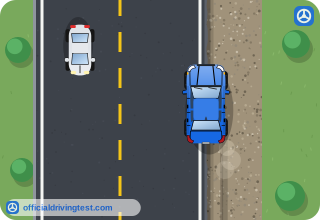
- Brake firmly and then steer sharply back onto the pavement right away
- Speed up and turn back onto the pavement at once to regain control of the vehicle
- Stop on the shoulder and wait for the road crew to help you
- Reduce speed without braking, then turn back onto the pavement carefully at a slow speed
Show answer
Correct answer: Reduce speed without braking, then turn back onto the pavement carefully at a slow speed
Slow down without braking and turn carefully back onto the pavement at a slow speed.
Source: Vermont Driver's Manual (2025 edition (VN-007 07/2024)), page 37 · Open this page in the manual (Manual page 37)
-
When hazardous driving conditions are predicted, what is best to do?
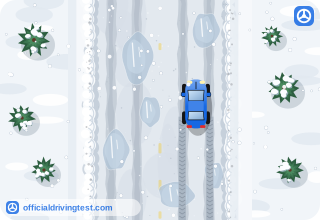
- Stay home and avoid unnecessary travel
- Drive only after it gets dark outside
- Travel in a group of several vehicles
- Drive more slowly with the windows down
Show answer
Correct answer: Stay home and avoid unnecessary travel
The manual says it is best to stay home and avoid unnecessary travel when hazardous conditions are predicted.
Source: Vermont Driver's Manual (2025 edition (VN-007 07/2024)), page 46 · Open this page in the manual (Manual page 46)
-
If you are caught out in a storm, what should you not use?
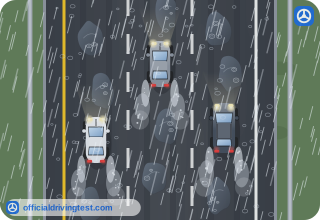
- Low beam headlights
- Windshield wipers
- Cruise control
- Your turn signals
Show answer
Correct answer: Cruise control
The manual says to reduce your speed, stay alert and not use cruise control in a storm.
Source: Vermont Driver's Manual (2025 edition (VN-007 07/2024)), page 46 · Open this page in the manual (Manual page 46)
-
What should you do when you come upon a "road closed" sign or traffic barricades during a storm?
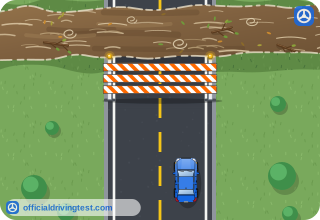
- Drive around them slowly and carefully
- Follow other vehicles that pass them
- Drive past them if the road looks dry
- Not drive around them and obey detour signs
Show answer
Correct answer: Not drive around them and obey detour signs
Bridges and roadbeds may be washed away or undermined, so you must not drive around barricades or past road closed signs.
Source: Vermont Driver's Manual (2025 edition (VN-007 07/2024)), page 46 · Open this page in the manual (Manual page 46)
-
What may flood waters wash away or undermine?
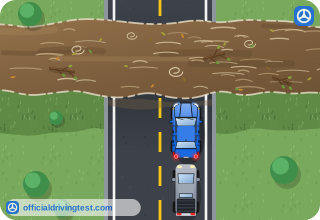
- Bridges, culverts and roadbeds
- Only unpaved roads in rural areas
- Only traffic signs along the road
- Only the guardrails beside a road
Show answer
Correct answer: Bridges, culverts and roadbeds
Flood waters may wash away or undermine bridges, culverts and roadbeds.
Source: Vermont Driver's Manual (2025 edition (VN-007 07/2024)), page 46 · Open this page in the manual (Manual page 46)
-
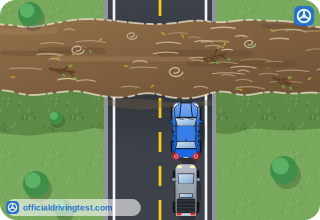
Why should you not drive where water is over the road?
- Water always makes the brakes lock up suddenly
- It is illegal to drive in the rain
- The depth is not always obvious and may hide washouts
- Wet roads cannot be seen at night
Show answer
Correct answer: The depth is not always obvious and may hide washouts
The depth of the water is hard to judge and it may hide washouts, and a vehicle's motor can stall in water.
Source: Vermont Driver's Manual (2025 edition (VN-007 07/2024)), page 46 · Open this page in the manual (Manual page 46)
-
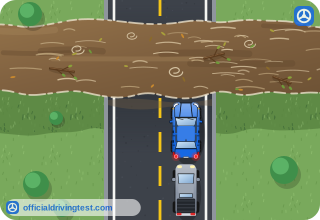
What can happen to a vehicle motor in water over the road?
- It runs more smoothly
- It can stall, leaving you stranded or trapped
- It cools faster and runs better
- It automatically turns on the hazard lights
Show answer
Correct answer: It can stall, leaving you stranded or trapped
Vehicle motors stall in water, and you could become stranded or trapped.
Source: Vermont Driver's Manual (2025 edition (VN-007 07/2024)), page 46 · Open this page in the manual (Manual page 46)
-
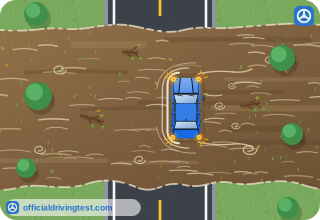
If your vehicle stalls in a flooded area, what should you do?
- Stay inside until the water stops rising
- Try to restart it for several minutes
- Wait for the water to go down before leaving
- Abandon it as soon as possible
Show answer
Correct answer: Abandon it as soon as possible
Flood waters can rise rapidly and sweep away a car and its occupants, so you should abandon a stalled vehicle as soon as possible.
Source: Vermont Driver's Manual (2025 edition (VN-007 07/2024)), page 46 · Open this page in the manual (Manual page 46)
-
As little as how much water can make it difficult to walk and can obstruct hazards from view?
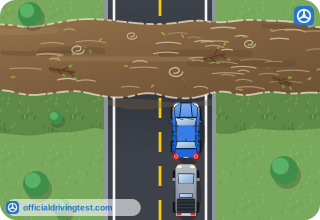
- 4 inches
- 10 inches
- 1 foot
- 2 feet
Show answer
Correct answer: 4 inches
The manual warns that as little as 4 inches of flood water can make it hard to walk and hide hazards.
Source: Vermont Driver's Manual (2025 edition (VN-007 07/2024)), page 46 · Open this page in the manual (Manual page 46)
-
Who is wind especially hazardous for?
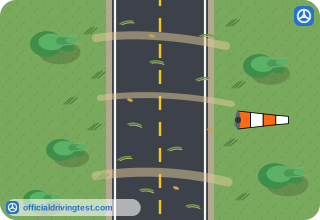
- Only motorcyclists on a main road
- Only drivers who are on bridges
- Large vehicles and drivers towing trailers
- Only drivers of small passenger cars
Show answer
Correct answer: Large vehicles and drivers towing trailers
Wind is a problem for all motorists, but it is especially hazardous for large vehicles and drivers towing trailers.
Source: Vermont Driver's Manual (2025 edition (VN-007 07/2024)), page 46 · Open this page in the manual (Manual page 46)
-
In high wind, what is the best practice?
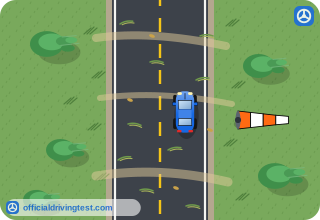
- Driving at higher speeds to get through quickly
- Driving at slower speeds
- Driving in the left lane
- Following other vehicles closely
Show answer
Correct answer: Driving at slower speeds
The manual says driving at slower speeds is the best practice in wind.
Source: Vermont Driver's Manual (2025 edition (VN-007 07/2024)), page 46 · Open this page in the manual (Manual page 46)
-
What should you never do about downed wires in the roadway?
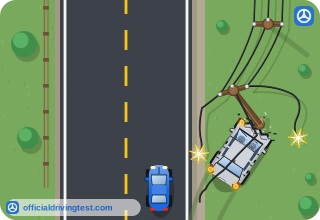
- Slow down well before them
- Stay alert for them at night
- Check the weather warnings
- Get near or cross them
Show answer
Correct answer: Get near or cross them
Strong winds and heavy snow or ice may bring down trees and wires, and you should never get near or cross downed wires.
Source: Vermont Driver's Manual (2025 edition (VN-007 07/2024)), page 46 · Open this page in the manual (Manual page 46)
-
When visibility is poor, such as in fog, heavy rain or heavy snow, which lights should you use?
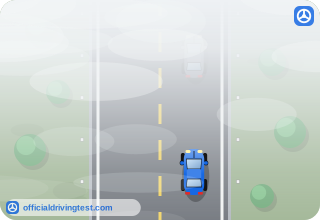
- Low beam headlights
- High beam headlights
- Parking lights only
- Hazard lights only
Show answer
Correct answer: Low beam headlights
The manual says to use your low beam headlights when visibility is poor.
Source: Vermont Driver's Manual (2025 edition (VN-007 07/2024)), page 46 · Open this page in the manual (Manual page 46)
-
The law requires headlights to be turned on if you cannot clearly see persons or vehicles at what distance ahead?
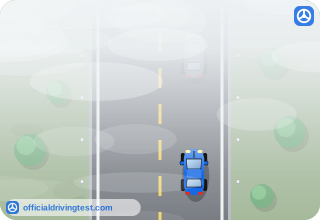
- 100 feet
- 300 feet
- 500 feet
- 1,000 feet
Show answer
Correct answer: 500 feet
If you cannot clearly see persons or vehicles 500 feet ahead, the law requires headlights to be on.
Source: Vermont Driver's Manual (2025 edition (VN-007 07/2024)), page 46 · Open this page in the manual (Manual page 46)
-
Why does the manual call winter the most difficult driving season?
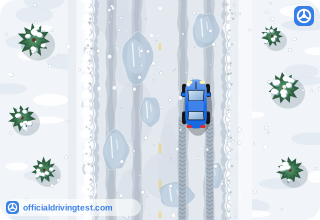
- Roads are always closed to traffic
- Snow, ice and fewer hours of daylight
- Drivers must always use tire chains
- Speed limits are higher in winter
Show answer
Correct answer: Snow, ice and fewer hours of daylight
Winter brings snow and ice to deal with and fewer hours of daylight.
Source: Vermont Driver's Manual (2025 edition (VN-007 07/2024)), page 46 · Open this page in the manual (Manual page 46)
-
What should the windshield washer reservoir be filled with before winter?
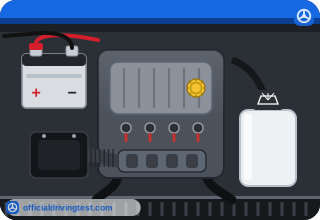
- Plain tap water only
- Antifreeze made for engines
- Used motor oil from the engine
- A fluid made for winter use
Show answer
Correct answer: A fluid made for winter use
The manual says to fill the windshield washer reservoir with a fluid made for winter use.
Source: Vermont Driver's Manual (2025 edition (VN-007 07/2024)), page 46 · Open this page in the manual (Manual page 46)
-
Where should you have good snow tires, and when should you put them on?
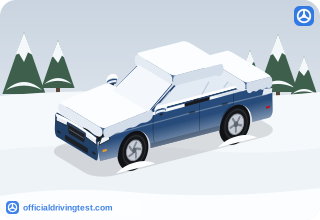
- On all four wheels, and early
- On the front wheels only, in the first snowfall
- On the drive wheels only, in January
- On the rear wheels only, after the first snow
Show answer
Correct answer: On all four wheels, and early
The manual advises good snow tires on all four wheels, put on early, so you are not caught without them in the first snowfall.
Source: Vermont Driver's Manual (2025 edition (VN-007 07/2024)), page 46 · Open this page in the manual (Manual page 46)
-
What should you never combine on the same vehicle?
- Snow tires and a spare tire
- New tires and clean wipers
- Different types of tires
- Two different brands of antifreeze
Show answer
Correct answer: Different types of tires
The manual says never to combine different types of tires on the same vehicle.
Source: Vermont Driver's Manual (2025 edition (VN-007 07/2024)), page 46 · Open this page in the manual (Manual page 46)