Vermont: Hazardous conditions and crashes
Winter driving, skids, fog, floods, brake and tire problems, the road test maneuvers, and what to do after a crash. Split into 4 shorter tests so you're not stuck in one long quiz.
Independent educational site · not affiliated with any government agency or DMV
Choose a part
Hazardous conditions and crashes — Part 1
Questions in this part include: “What should you never combine on the same vehicle?”
StartHazardous conditions and crashes — Part 2
Questions in this part include: “What does the manual advise for winter travel routes?”
StartHazardous conditions and crashes — Part 3
Questions in this part include: “At night, what should you turn on so work crews or rescuers can see you if you are stranded?”
StartHazardous conditions and crashes — Part 4
Questions in this part include: “What is a driver involved in a crash required by law to do?”
StartAll 72 Hazardous conditions and crashes questions with answers
Choose a part above to take a practice test, or study every question and answer here.
Show the questions and answersHide the questions
-
If your wheels drop off the pavement onto a low shoulder, what should you do?
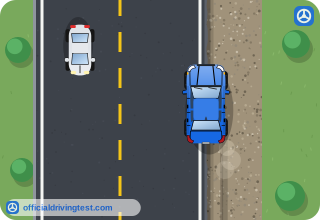
- Brake firmly and then steer sharply back onto the pavement right away
- Speed up and turn back onto the pavement at once to regain control of the vehicle
- Stop on the shoulder and wait for the road crew to help you
- Reduce speed without braking, then turn back onto the pavement carefully at a slow speed
Show answer
Correct answer: Reduce speed without braking, then turn back onto the pavement carefully at a slow speed
Slow down without braking and turn carefully back onto the pavement at a slow speed.
Source: Vermont Driver's Manual (2025 edition (VN-007 07/2024)), page 37 · Open this page in the manual (Manual page 37)
-
When hazardous driving conditions are predicted, what is best to do?
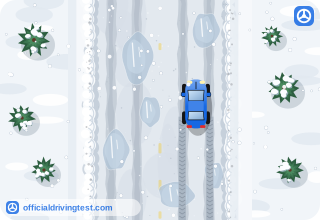
- Stay home and avoid unnecessary travel
- Drive only after it gets dark outside
- Travel in a group of several vehicles
- Drive more slowly with the windows down
Show answer
Correct answer: Stay home and avoid unnecessary travel
The manual says it is best to stay home and avoid unnecessary travel when hazardous conditions are predicted.
Source: Vermont Driver's Manual (2025 edition (VN-007 07/2024)), page 46 · Open this page in the manual (Manual page 46)
-
If you are caught out in a storm, what should you not use?
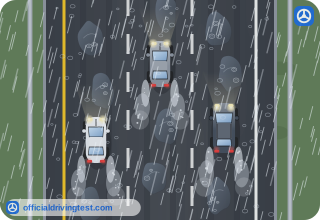
- Low beam headlights
- Windshield wipers
- Cruise control
- Your turn signals
Show answer
Correct answer: Cruise control
The manual says to reduce your speed, stay alert and not use cruise control in a storm.
Source: Vermont Driver's Manual (2025 edition (VN-007 07/2024)), page 46 · Open this page in the manual (Manual page 46)
-
What should you do when you come upon a "road closed" sign or traffic barricades during a storm?
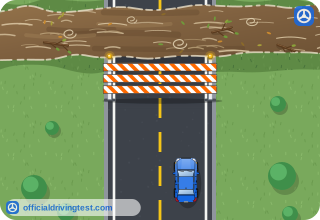
- Drive around them slowly and carefully
- Follow other vehicles that pass them
- Drive past them if the road looks dry
- Not drive around them and obey detour signs
Show answer
Correct answer: Not drive around them and obey detour signs
Bridges and roadbeds may be washed away or undermined, so you must not drive around barricades or past road closed signs.
Source: Vermont Driver's Manual (2025 edition (VN-007 07/2024)), page 46 · Open this page in the manual (Manual page 46)
-
What may flood waters wash away or undermine?
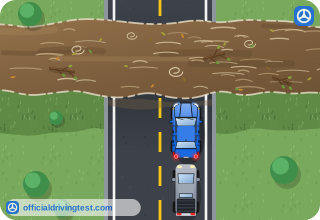
- Bridges, culverts and roadbeds
- Only unpaved roads in rural areas
- Only traffic signs along the road
- Only the guardrails beside a road
Show answer
Correct answer: Bridges, culverts and roadbeds
Flood waters may wash away or undermine bridges, culverts and roadbeds.
Source: Vermont Driver's Manual (2025 edition (VN-007 07/2024)), page 46 · Open this page in the manual (Manual page 46)
-
Why should you not drive where water is over the road?
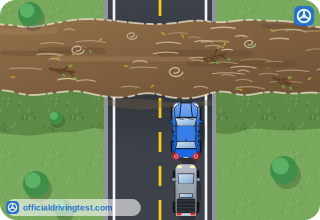
- Water always makes the brakes lock up suddenly
- It is illegal to drive in the rain
- The depth is not always obvious and may hide washouts
- Wet roads cannot be seen at night
Show answer
Correct answer: The depth is not always obvious and may hide washouts
The depth of the water is hard to judge and it may hide washouts, and a vehicle's motor can stall in water.
Source: Vermont Driver's Manual (2025 edition (VN-007 07/2024)), page 46 · Open this page in the manual (Manual page 46)
-
What can happen to a vehicle motor in water over the road?
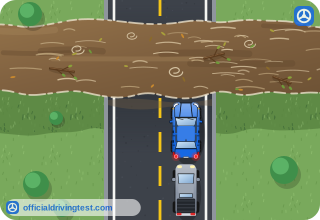
- It runs more smoothly
- It can stall, leaving you stranded or trapped
- It cools faster and runs better
- It automatically turns on the hazard lights
Show answer
Correct answer: It can stall, leaving you stranded or trapped
Vehicle motors stall in water, and you could become stranded or trapped.
Source: Vermont Driver's Manual (2025 edition (VN-007 07/2024)), page 46 · Open this page in the manual (Manual page 46)
-
If your vehicle stalls in a flooded area, what should you do?
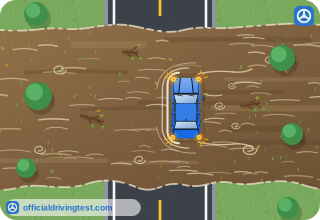
- Stay inside until the water stops rising
- Try to restart it for several minutes
- Wait for the water to go down before leaving
- Abandon it as soon as possible
Show answer
Correct answer: Abandon it as soon as possible
Flood waters can rise rapidly and sweep away a car and its occupants, so you should abandon a stalled vehicle as soon as possible.
Source: Vermont Driver's Manual (2025 edition (VN-007 07/2024)), page 46 · Open this page in the manual (Manual page 46)
-
As little as how much water can make it difficult to walk and can obstruct hazards from view?
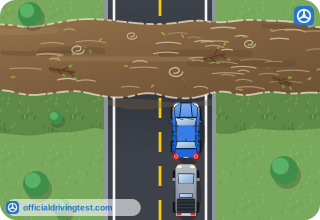
- 4 inches
- 10 inches
- 1 foot
- 2 feet
Show answer
Correct answer: 4 inches
The manual warns that as little as 4 inches of flood water can make it hard to walk and hide hazards.
Source: Vermont Driver's Manual (2025 edition (VN-007 07/2024)), page 46 · Open this page in the manual (Manual page 46)
-
Who is wind especially hazardous for?
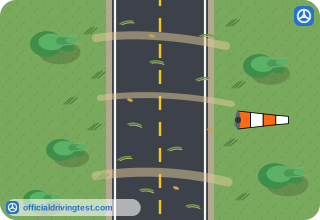
- Only motorcyclists on a main road
- Only drivers who are on bridges
- Large vehicles and drivers towing trailers
- Only drivers of small passenger cars
Show answer
Correct answer: Large vehicles and drivers towing trailers
Wind is a problem for all motorists, but it is especially hazardous for large vehicles and drivers towing trailers.
Source: Vermont Driver's Manual (2025 edition (VN-007 07/2024)), page 46 · Open this page in the manual (Manual page 46)
-
In high wind, what is the best practice?
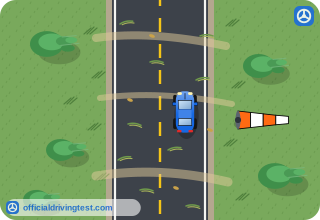
- Driving at higher speeds to get through quickly
- Driving at slower speeds
- Driving in the left lane
- Following other vehicles closely
Show answer
Correct answer: Driving at slower speeds
The manual says driving at slower speeds is the best practice in wind.
Source: Vermont Driver's Manual (2025 edition (VN-007 07/2024)), page 46 · Open this page in the manual (Manual page 46)
-
What should you never do about downed wires in the roadway?
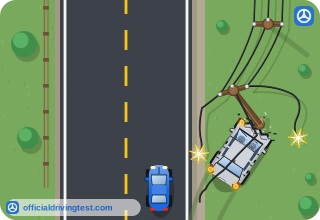
- Slow down well before them
- Stay alert for them at night
- Check the weather warnings
- Get near or cross them
Show answer
Correct answer: Get near or cross them
Strong winds and heavy snow or ice may bring down trees and wires, and you should never get near or cross downed wires.
Source: Vermont Driver's Manual (2025 edition (VN-007 07/2024)), page 46 · Open this page in the manual (Manual page 46)
-
When visibility is poor, such as in fog, heavy rain or heavy snow, which lights should you use?
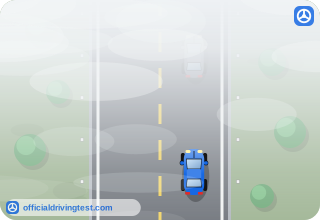
- Low beam headlights
- High beam headlights
- Parking lights only
- Hazard lights only
Show answer
Correct answer: Low beam headlights
The manual says to use your low beam headlights when visibility is poor.
Source: Vermont Driver's Manual (2025 edition (VN-007 07/2024)), page 46 · Open this page in the manual (Manual page 46)
-
The law requires headlights to be turned on if you cannot clearly see persons or vehicles at what distance ahead?
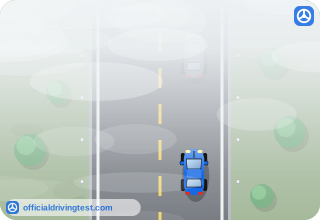
- 100 feet
- 300 feet
- 500 feet
- 1,000 feet
Show answer
Correct answer: 500 feet
If you cannot clearly see persons or vehicles 500 feet ahead, the law requires headlights to be on.
Source: Vermont Driver's Manual (2025 edition (VN-007 07/2024)), page 46 · Open this page in the manual (Manual page 46)
-
Why does the manual call winter the most difficult driving season?
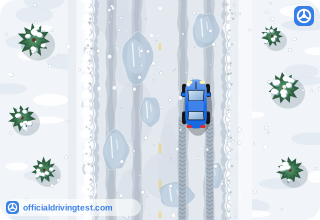
- Roads are always closed to traffic
- Snow, ice and fewer hours of daylight
- Drivers must always use tire chains
- Speed limits are higher in winter
Show answer
Correct answer: Snow, ice and fewer hours of daylight
Winter brings snow and ice to deal with and fewer hours of daylight.
Source: Vermont Driver's Manual (2025 edition (VN-007 07/2024)), page 46 · Open this page in the manual (Manual page 46)
-
What should the windshield washer reservoir be filled with before winter?
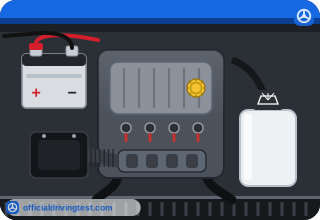
- Plain tap water only
- Antifreeze made for engines
- Used motor oil from the engine
- A fluid made for winter use
Show answer
Correct answer: A fluid made for winter use
The manual says to fill the windshield washer reservoir with a fluid made for winter use.
Source: Vermont Driver's Manual (2025 edition (VN-007 07/2024)), page 46 · Open this page in the manual (Manual page 46)
-
Where should you have good snow tires, and when should you put them on?
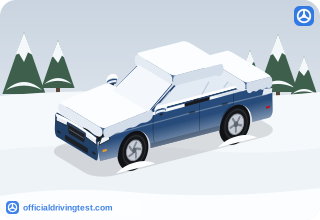
- On all four wheels, and early
- On the front wheels only, in the first snowfall
- On the drive wheels only, in January
- On the rear wheels only, after the first snow
Show answer
Correct answer: On all four wheels, and early
The manual advises good snow tires on all four wheels, put on early, so you are not caught without them in the first snowfall.
Source: Vermont Driver's Manual (2025 edition (VN-007 07/2024)), page 46 · Open this page in the manual (Manual page 46)
-
What should you never combine on the same vehicle?
- Snow tires and a spare tire
- New tires and clean wipers
- Different types of tires
- Two different brands of antifreeze
Show answer
Correct answer: Different types of tires
The manual says never to combine different types of tires on the same vehicle.
Source: Vermont Driver's Manual (2025 edition (VN-007 07/2024)), page 46 · Open this page in the manual (Manual page 46)
-
During ice or snow storms, especially when a traveler's advisory is issued, when should you drive?
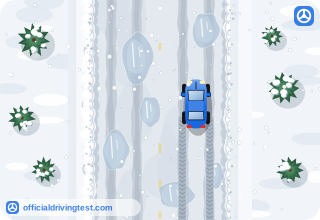
- Only on back roads
- Only if absolutely necessary
- Only with the heater on high
- Whenever you have snow tires
Show answer
Correct answer: Only if absolutely necessary
The manual says not to drive during ice or snow storms unless absolutely necessary.
Source: Vermont Driver's Manual (2025 edition (VN-007 07/2024)), page 47 · Open this page in the manual (Manual page 47)
-
If you must drive after an ice or snow storm, how much of the ice and snow should you clear from your vehicle?
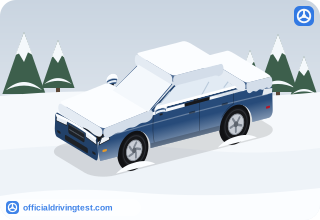
- Only the windshield glass
- Only the windows and the mirrors
- Only the snow on the roof
- All of it, from the entire vehicle
Show answer
Correct answer: All of it, from the entire vehicle
The manual says to completely clear the ice and snow from your entire vehicle and to keep your wipers clear of ice.
Source: Vermont Driver's Manual (2025 edition (VN-007 07/2024)), page 47 · Open this page in the manual (Manual page 47)
-
What should the inside of your windows be, in winter?
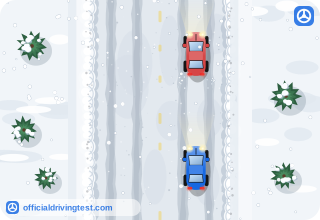
- Free of moisture
- Covered with a thin layer of fluid
- Open slightly at all times
- Cleaned only once a week
Show answer
Correct answer: Free of moisture
The manual says the inside of the windows should also be free of moisture.
Source: Vermont Driver's Manual (2025 edition (VN-007 07/2024)), page 47 · Open this page in the manual (Manual page 47)
-
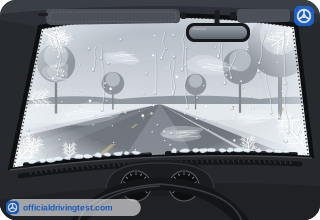
When sleet, freezing rain or snow start to fall, what can quickly form that you may not be able to see?
- Fog
- Hydroplaning pools
- Black ice
- Gravel
Show answer
Correct answer: Black ice
Black ice can form quickly when sleet, freezing rain or snow start to fall, and it may be invisible.
Source: Vermont Driver's Manual (2025 edition (VN-007 07/2024)), page 47 · Open this page in the manual (Manual page 47)
-
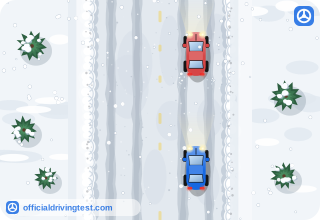
Which road locations are likely to freeze first?
- Straight rural roads
- Bridges, ramps and overpasses
- Parking lots
- Roads with two or more lanes
Show answer
Correct answer: Bridges, ramps and overpasses
Bridges, ramps and overpasses are likely to freeze first.
Source: Vermont Driver's Manual (2025 edition (VN-007 07/2024)), page 47 · Open this page in the manual (Manual page 47)
-
How well do vehicles with four wheel or all wheel drive grip on ice?
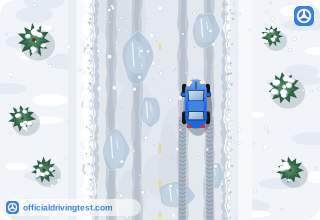
- They do not have good traction on ice
- They have excellent traction on ice
- They stop faster than other vehicles on ice
- They need no extra following distance
Show answer
Correct answer: They do not have good traction on ice
Even four wheel or all wheel drive vehicles lack good traction on ice.
Source: Vermont Driver's Manual (2025 edition (VN-007 07/2024)), page 47 · Open this page in the manual (Manual page 47)
-
On winter roads, what do all vehicles have difficulty doing?
- Starting the engine on very cold mornings
- Using the horn on a winter road
- Stopping, going through curves and changing lanes
- Driving in a straight line on ice
Show answer
Correct answer: Stopping, going through curves and changing lanes
All vehicles have difficulty stopping, going through curves and changing lanes on winter roads.
Source: Vermont Driver's Manual (2025 edition (VN-007 07/2024)), page 47 · Open this page in the manual (Manual page 47)
-
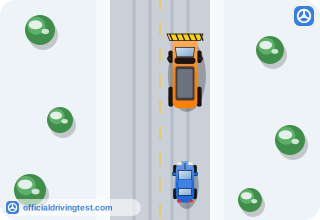
Why should you be especially careful near snowplows?
- They always travel faster than other cars
- They are hard to see in the snow they blow up
- They are narrower than other vehicles
- They always stop without any warning
Show answer
Correct answer: They are hard to see in the snow they blow up
Snowplows are hard to see because of blowing snow, are wider than other vehicles and often move more slowly.
Source: Vermont Driver's Manual (2025 edition (VN-007 07/2024)), page 47 · Open this page in the manual (Manual page 47)
-
What does the manual advise for winter travel routes?
- Take back roads to avoid heavy traffic jams
- Travel alone so you can move faster
- Travel at night when roads are empty
- Stay on main roads and avoid back road shortcuts
Show answer
Correct answer: Stay on main roads and avoid back road shortcuts
The manual says to travel in the day, not alone, to tell others your route and schedule, and to stay on main roads.
Source: Vermont Driver's Manual (2025 edition (VN-007 07/2024)), page 47 · Open this page in the manual (Manual page 47)
-
What is the least amount of gas the manual says to always have in your vehicle in winter?
- At least a half tank
- At least a quarter tank
- At least a third of a tank
- At least a full tank
Show answer
Correct answer: At least a half tank
The manual advises always having at least a half tank of gas.
Source: Vermont Driver's Manual (2025 edition (VN-007 07/2024)), page 47 · Open this page in the manual (Manual page 47)
-
Which item is on the manual’s list of things to keep in your vehicle for winter?
- A bag of road salt
- A tow rope
- Kitty litter or sand
- Spare wiper blades only
Show answer
Correct answer: Kitty litter or sand
Kitty litter or sand is on the manual's list of items to keep in your vehicle in winter, along with a scraper, shovel and flashlight.
Source: Vermont Driver's Manual (2025 edition (VN-007 07/2024)), page 47 · Open this page in the manual (Manual page 47)
-
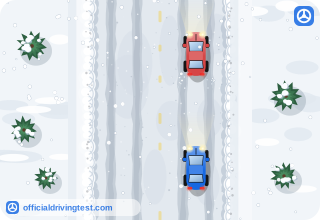
If you are caught in a blizzard or stranded, what should you do?
- Walk along the highway to look for help from others
- Pull off the highway, use hazard lights, hang a flag
- Keep driving until you find a shelter
- Leave the vehicle and wait by the road
Show answer
Correct answer: Pull off the highway, use hazard lights, hang a flag
The manual says to pull off the highway, turn on hazard lights and hang a distress flag from the door handle, an antenna or a window.
Source: Vermont Driver's Manual (2025 edition (VN-007 07/2024)), page 47 · Open this page in the manual (Manual page 47)
-
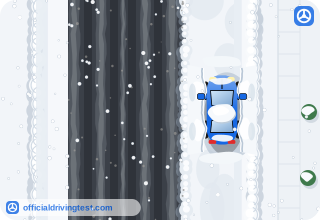
If you are stranded in a blizzard, where should you remain?
- Beside the road, away from the vehicle
- Walking along the road for help
- Under a tree or other natural cover
- Inside your vehicle
Show answer
Correct answer: Inside your vehicle
Stay in your vehicle because rescuers are most likely to find you there, and do not set out on foot unless a building is clearly close.
Source: Vermont Driver's Manual (2025 edition (VN-007 07/2024)), page 47 · Open this page in the manual (Manual page 47)
-
Why is it risky to set out on foot for a building that seems close during a blizzard?
- Blowing snow distorts distances, so it may be too far
- Buildings in a blizzard are usually locked
- Rescuers only search for people near a highway
- Cold air is much worse outside a vehicle
Show answer
Correct answer: Blowing snow distorts distances, so it may be too far
Blowing snow distorts distances, and a building that seems close may be too far to walk to in deep snow.
Source: Vermont Driver's Manual (2025 edition (VN-007 07/2024)), page 47 · Open this page in the manual (Manual page 47)
-
When stranded in a blizzard, how long should you run the engine and heater to keep warm?
- Continuously
- About 10 minutes every day
- About 10 minutes each hour
- About 45 minutes each hour
Show answer
Correct answer: About 10 minutes each hour
The manual says to run the engine and heater about 10 minutes each hour.
Source: Vermont Driver's Manual (2025 edition (VN-007 07/2024)), page 47 · Open this page in the manual (Manual page 47)
-
When the engine is running in a blizzard, what should you do for ventilation?
- Close all windows tightly
- Open a downwind window slightly
- Open all windows fully
- Open an upwind window fully
Show answer
Correct answer: Open a downwind window slightly
Opening a downwind window slightly provides ventilation while the engine runs.
Source: Vermont Driver's Manual (2025 edition (VN-007 07/2024)), page 47 · Open this page in the manual (Manual page 47)
-
Why should you keep snow clear of the exhaust pipe when the engine is running in a blizzard?
- To keep the engine from overheating
- To keep the tires from freezing solid
- To make the vehicle easier to see
- To help protect against carbon monoxide
Show answer
Correct answer: To help protect against carbon monoxide
A blocked exhaust pipe can lead to carbon monoxide poisoning, so keep snow clear of it.
Source: Vermont Driver's Manual (2025 edition (VN-007 07/2024)), page 47 · Open this page in the manual (Manual page 47)
-
When several people are stranded in a vehicle in a blizzard, how should they sleep?
- Take turns, with one person always awake
- Everyone sleeps at once to save energy
- Only the driver is allowed to stay awake
- Everyone stays awake until it is light
Show answer
Correct answer: Take turns, with one person always awake
One person should stay awake at all times to look for rescue crews while the others take turns sleeping.
Source: Vermont Driver's Manual (2025 edition (VN-007 07/2024)), page 47 · Open this page in the manual (Manual page 47)
-
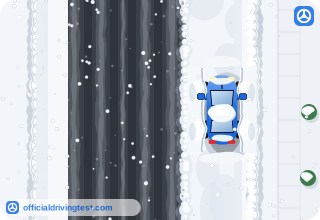
When stranded in a blizzard, what should you drink to avoid dehydration, and what should you not drink?
- Drink alcohol to stay warm
- Drink nothing until you are rescued
- Drink fluids, but not alcohol
- Drink only coffee or hot tea
Show answer
Correct answer: Drink fluids, but not alcohol
The manual says to drink fluids to avoid dehydration but not to drink alcohol.
Source: Vermont Driver's Manual (2025 edition (VN-007 07/2024)), page 47 · Open this page in the manual (Manual page 47)
-
At night, what should you turn on so work crews or rescuers can see you if you are stranded?
- The high beams
- The inside light
- The windshield wipers
- The radio
Show answer
Correct answer: The inside light
Turning on the inside light at night helps work crews and rescuers see you.
Source: Vermont Driver's Manual (2025 edition (VN-007 07/2024)), page 47 · Open this page in the manual (Manual page 47)
-
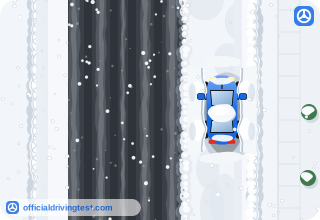
If stranded in a remote area, how can you attract the attention of rescue personnel searching by airplane?
- Light a large fire in the open area next to the road
- Drive in large circles in an open field at night
- Keep the headlights on during the day
- Stomp HELP or SOS in an open area and line it with rocks
Show answer
Correct answer: Stomp HELP or SOS in an open area and line it with rocks
The manual says to stomp large block letters spelling HELP or SOS in an open area and line them with rocks or tree limbs.
Source: Vermont Driver's Manual (2025 edition (VN-007 07/2024)), page 47 · Open this page in the manual (Manual page 47)
-
According to the manual, what causes most skids?
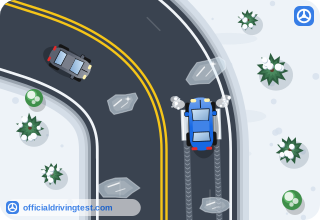
- The driver's failure to react in time to adjust speed to road conditions
- Brakes that are applied too gently on dry pavement
- Tires that are inflated more than the owner's manual allows
- Other drivers who cut in front of your vehicle at a short distance
Show answer
Correct answer: The driver's failure to react in time to adjust speed to road conditions
Most skids happen because the driver does not react in time to change the vehicle's speed to suit snow, ice, rain, gravel or wet leaves.
Source: Vermont Driver's Manual (2025 edition (VN-007 07/2024)), page 48 · Open this page in the manual (Manual page 48)
-
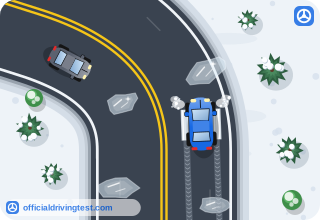
Which kind of vehicle may give you no warning that a skid is beginning?
- A rear-wheel drive vehicle
- A vehicle with stability control
- A front-wheel drive vehicle
- A vehicle with anti-lock brakes
Show answer
Correct answer: A front-wheel drive vehicle
In a rear-wheel drive vehicle you can usually feel the start of a skid, but a front-wheel drive vehicle may give no such warning.
Source: Vermont Driver's Manual (2025 edition (VN-007 07/2024)), page 48 · Open this page in the manual (Manual page 48)
-
Front-wheel drive vehicles handle better in snow. What does the manual say about their traction?
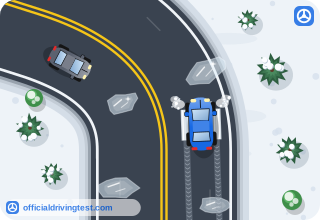
- It is flawless, so a skid cannot occur
- It is not flawless, and skids can occur unexpectedly
- It is better than that of any other vehicle on ice
- It works only when the road surface is dry
Show answer
Correct answer: It is not flawless, and skids can occur unexpectedly
Front-wheel drive vehicles handle better in snow, but their traction is not flawless and skids can still happen without warning.
Source: Vermont Driver's Manual (2025 edition (VN-007 07/2024)), page 48 · Open this page in the manual (Manual page 48)
-
What should you do first to slow down on a slippery road?
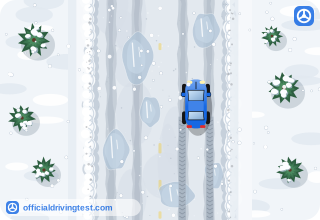
- Press the brake pedal firmly
- Shift the vehicle into neutral
- Pump the brake pedal several times
- Take your foot off the gas pedal
Show answer
Correct answer: Take your foot off the gas pedal
Taking your foot off the gas pedal lowers your speed and helps keep the vehicle under control on a slippery road.
Source: Vermont Driver's Manual (2025 edition (VN-007 07/2024)), page 48 · Open this page in the manual (Manual page 48)
-
On a slippery road, you have taken your foot off the gas pedal and need to slow down more. How should you use the brakes?
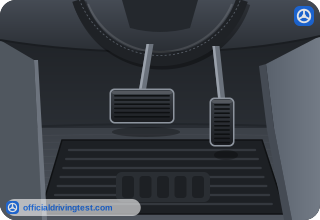
- Press them quickly and release them quickly
- Gently squeeze them with slow, steady pressure
- Pump them rapidly until the vehicle stops
- Hold them down hard until the wheels lock
Show answer
Correct answer: Gently squeeze them with slow, steady pressure
If you need to slow down more, the manual says to gently squeeze the brakes with slow, steady pressure and let the wheels keep rolling.
Source: Vermont Driver's Manual (2025 edition (VN-007 07/2024)), page 48 · Open this page in the manual (Manual page 48)
-
On a slippery road, what should you do if the wheels start to lock up while you are braking?
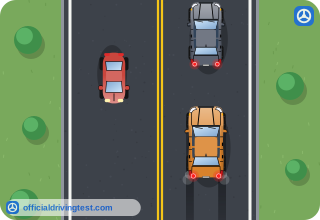
- Press the brake pedal harder
- Shift into a higher gear
- Ease off the brake pedal
- Turn the steering wheel sharply to the right
Show answer
Correct answer: Ease off the brake pedal
When the wheels begin to lock up, easing off the brake pedal lets them keep rolling.
Source: Vermont Driver's Manual (2025 edition (VN-007 07/2024)), page 48 · Open this page in the manual (Manual page 48)
-
As you slow down on a slippery road, what may also be helpful?
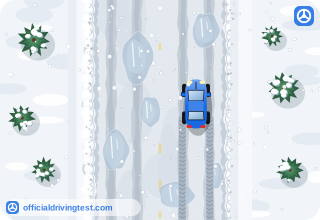
- Shifting into a lower gear
- Shifting into a higher gear
- Switching on the cruise control
- Shifting the vehicle into neutral
Show answer
Correct answer: Shifting into a lower gear
The manual says that shifting into a lower gear may also help as you slow down on a slippery road.
Source: Vermont Driver's Manual (2025 edition (VN-007 07/2024)), page 48 · Open this page in the manual (Manual page 48)
-
How should you brake in a vehicle that has anti-lock brakes on a slippery road?
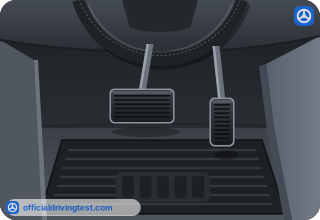
- Use steady brake pressure and do not pump the brakes
- Pump the brakes several times a second
- Release the brake pedal whenever it vibrates
- Alternate between the brake and the gas pedal
Show answer
Correct answer: Use steady brake pressure and do not pump the brakes
With anti-lock brakes you apply steady pressure; pumping the brakes is not the right method.
Source: Vermont Driver's Manual (2025 edition (VN-007 07/2024)), page 48 · Open this page in the manual (Manual page 48)
-
What is the best way to recover from a skid in both front-wheel and rear-wheel drive vehicles?
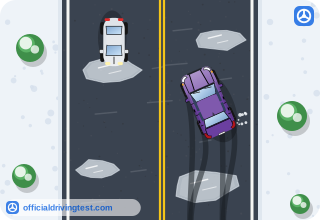
- Brake firmly and hold the pedal down
- Accelerate hard to regain traction
- Steer in the direction you want to go
- Take your hands off the steering wheel
Show answer
Correct answer: Steer in the direction you want to go
The best recovery is the same for front-wheel and rear-wheel drive vehicles: steer in the direction you want the vehicle to go.
Source: Vermont Driver's Manual (2025 edition (VN-007 07/2024)), page 48 · Open this page in the manual (Manual page 48)
-
What happens if you hit the brakes during a skid?
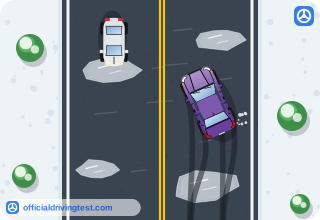
- It stops the skid sooner
- It will just make the skid worse
- It has no effect on the skid
- It helps only in a rear-wheel drive vehicle
Show answer
Correct answer: It will just make the skid worse
Hitting the brakes makes a skid worse, so you should steer instead.
Source: Vermont Driver's Manual (2025 edition (VN-007 07/2024)), page 48 · Open this page in the manual (Manual page 48)
-
After a skid begins, what might you have to do to get your vehicle completely under control?
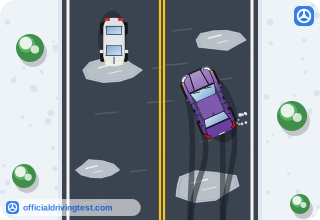
- Press the brake pedal repeatedly
- Shift into neutral and coast
- Switch off the engine
- Steer left and right a few times
Show answer
Correct answer: Steer left and right a few times
You may need to steer left and right a few times before the vehicle is fully under control.
Source: Vermont Driver's Manual (2025 edition (VN-007 07/2024)), page 48 · Open this page in the manual (Manual page 48)
-
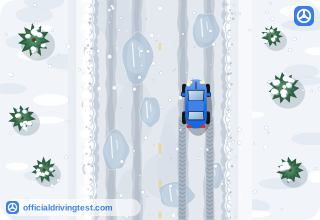
What does the manual say about stability control and similar vehicle improvements?
- They let you ignore road and weather conditions
- They make braking unnecessary on slippery roads
- They work only when the road is covered with ice
- They may help, but cannot replace driver caution
Show answer
Correct answer: They may help, but cannot replace driver caution
Stability control may help, but it is not a substitute for driver caution.
Source: Vermont Driver's Manual (2025 edition (VN-007 07/2024)), page 48 · Open this page in the manual (Manual page 48)
-
What does the manual say it is a good idea to do to learn how your vehicle handles on icy or snowy surfaces?
- Drive on an interstate at a low speed
- Practice on a busy street with an experienced driver
- Go to an empty parking lot
- Practice on a rural road during the first snowfall
Show answer
Correct answer: Go to an empty parking lot
An empty parking lot is a safe place to learn how your vehicle handles on ice or snow.
Source: Vermont Driver's Manual (2025 edition (VN-007 07/2024)), page 48 · Open this page in the manual (Manual page 48)
-
According to the manual, what causes most crashes?
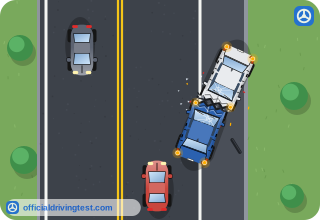
- Poor decisions made by drivers
- Vehicle equipment failures
- Bad weather
- Poorly marked roads
Show answer
Correct answer: Poor decisions made by drivers
The manual says poor decisions made by drivers cause most crashes.
Source: Vermont Driver's Manual (2025 edition (VN-007 07/2024)), page 58 · Open this page in the manual (Manual page 58)
-
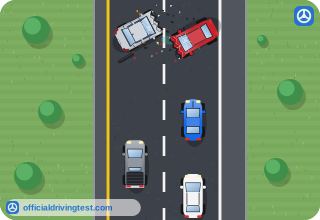
Which of these is an example of a poor decision that causes crashes?
- Checking your mirrors and blind spots
- Yielding the right-of-way
- Driving too close to the vehicle in front
- Driving only when well rested
Show answer
Correct answer: Driving too close to the vehicle in front
The manual lists driving too close to the vehicle in front among the poor decisions that cause crashes.
Source: Vermont Driver's Manual (2025 edition (VN-007 07/2024)), page 58 · Open this page in the manual (Manual page 58)
-
What is a driver involved in a crash required by law to do?
- Drive on quickly to avoid a second crash
- Call the insurance company before anything else
- Wait for the other driver to leave
- Stop and give any assistance reasonably necessary
Show answer
Correct answer: Stop and give any assistance reasonably necessary
The manual says a driver in a crash must stop and give any reasonably necessary assistance.
Source: Vermont Driver's Manual (2025 edition (VN-007 07/2024)), page 58 · Open this page in the manual (Manual page 58)
-
After a crash, what does the manual say to do with the involved vehicles if possible?
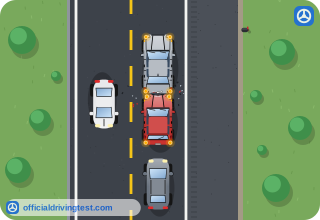
- Leave them where they stopped until help arrives
- Move them onto the shoulder, out of the lanes
- Turn them around to face oncoming traffic
- Tow them away before the police arrive
Show answer
Correct answer: Move them onto the shoulder, out of the lanes
Moving vehicles to the shoulder reduces the chance of someone else crashing into them.
Source: Vermont Driver's Manual (2025 edition (VN-007 07/2024)), page 58 · Open this page in the manual (Manual page 58)
-
At a crash scene, what should you do if someone is injured?
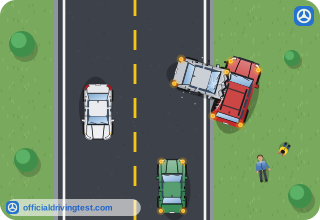
- Move the person to your vehicle
- Wait until the police pass by
- Call 911
- Drive the person home
Show answer
Correct answer: Call 911
The manual says to call 911 if someone is injured.
Source: Vermont Driver's Manual (2025 edition (VN-007 07/2024)), page 58 · Open this page in the manual (Manual page 58)
-
Why does the manual say to leave an injured person where they are?
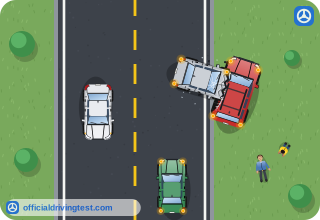
- You may injure the person more by moving them
- The person will be able to walk after a few minutes
- The police will not be able to find the person
- The person is better off in the road
Show answer
Correct answer: You may injure the person more by moving them
Moving an injured person the wrong way can cause more injury, so the manual says to leave them where they are.
Source: Vermont Driver's Manual (2025 edition (VN-007 07/2024)), page 58 · Open this page in the manual (Manual page 58)
-
What should you do for an injured person at a crash scene besides calling 911?
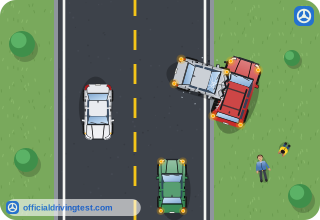
- Keep the person warm and calm
- Give the person food and water
- Have the person walk around
- Cover the person’s face
Show answer
Correct answer: Keep the person warm and calm
The manual says to keep the injured person warm and calm while waiting for help.
Source: Vermont Driver's Manual (2025 edition (VN-007 07/2024)), page 58 · Open this page in the manual (Manual page 58)
-
What does the manual say about a police officer who responds to a crash scene?
- The police will decide who pays for damages
- The police will always side with the driver who stopped first
- The police will not take sides for one driver or the other
- The police will not respond to a 911 call
Show answer
Correct answer: The police will not take sides for one driver or the other
The manual says the officer obtains the facts and will not take sides.
Source: Vermont Driver's Manual (2025 edition (VN-007 07/2024)), page 58 · Open this page in the manual (Manual page 58)
-
Which items will you have to show to the police officer at a crash scene?
- Your license and a written statement from the other driver
- Your license, proof of valid registration and insurance
- Your license and your inspection sticker only
- Your registration and your birth certificate
Show answer
Correct answer: Your license, proof of valid registration and insurance
At a crash scene you must show the police your license, proof of valid registration and insurance.
Source: Vermont Driver's Manual (2025 edition (VN-007 07/2024)), page 58 · Open this page in the manual (Manual page 58)
-
At a crash scene, to whom else must you show your license?
- Only the other driver involved in the crash
- Only the police officer who responds to it
- Only witnesses who stop at the crash scene
- Anyone injured or whose property was damaged
Show answer
Correct answer: Anyone injured or whose property was damaged
The manual says you must also show your license to anyone who is injured or whose property is damaged.
Source: Vermont Driver's Manual (2025 edition (VN-007 07/2024)), page 58 · Open this page in the manual (Manual page 58)
-
If you hit a parked vehicle, cause damage, and cannot find the owner, what must you do?
- Leave without doing anything if the damage is small
- Leave your name, address and phone number on or in it
- Wait one hour for the owner and then drive away
- Report it to the DMV and not leave a note
Show answer
Correct answer: Leave your name, address and phone number on or in it
You must leave a note with your name, address and phone number in or on the vehicle so the owner knows whom to contact.
Source: Vermont Driver's Manual (2025 edition (VN-007 07/2024)), page 58 · Open this page in the manual (Manual page 58)
-
After a crash, when must you make a written report to the Department of Motor Vehicles if any person has been injured?
- Within 24 hours
- Within 7 days
- Within 30 days
- Within 72 hours
Show answer
Correct answer: Within 72 hours
If anyone is injured or damage is over $3,000, you must send a written report to the DMV within 72 hours.
Source: Vermont Driver's Manual (2025 edition (VN-007 07/2024)), page 58 · Open this page in the manual (Manual page 58)
-
After a crash with no injuries, damage over what amount requires a written report to the Department of Motor Vehicles?
- $3,000
- $500
- $1,000
- $5,000
Show answer
Correct answer: $3,000
A written report to the DMV is required if any person is injured or if the damage is over $3,000.
Source: Vermont Driver's Manual (2025 edition (VN-007 07/2024)), page 58 · Open this page in the manual (Manual page 58)
-
According to the manual, why are crash reports made?
- They set insurance rates for drivers
- They decide which driver loses the license
- They help the state improve roadways
- They replace the need to call the police
Show answer
Correct answer: They help the state improve roadways
The manual says crash reports help the state improve roadways.
Source: Vermont Driver's Manual (2025 edition (VN-007 07/2024)), page 58 · Open this page in the manual (Manual page 58)
-
Where can you get a Vermont Crash Report, according to the manual?
- At any post office in Vermont
- At any town clerk’s office in Vermont
- At any inspection station in Vermont
- At any Vermont Police Department
Show answer
Correct answer: At any Vermont Police Department
The manual says a crash report is available at any Vermont Police Department or from the DMV.
Source: Vermont Driver's Manual (2025 edition (VN-007 07/2024)), page 58 · Open this page in the manual (Manual page 58)
-
What can mile markers be used for after a crash outside a city?
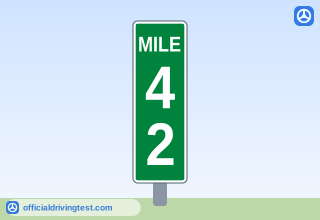
- To pinpoint the exact location of the crash scene
- To measure how fast each vehicle was traveling
- To work out which driver was at fault
- To estimate how much damage the vehicles took
Show answer
Correct answer: To pinpoint the exact location of the crash scene
Mile markers help identify the exact spot of a crash, and that information helps the police when you report it.
Source: Vermont Driver's Manual (2025 edition (VN-007 07/2024)), page 59 · Open this page in the manual (Manual page 59)
-
If you have a crash with another vehicle, what does the other driver have the right to see?
- Your medical records and employment history
- Your driving record and past crash reports
- Your license, registration and insurance information
- Your vehicle's inspection and repair history
Show answer
Correct answer: Your license, registration and insurance information
After a crash with another vehicle, the other driver is entitled to see your license, registration and insurance information.
Source: Vermont Driver's Manual (2025 edition (VN-007 07/2024)), page 59 · Open this page in the manual (Manual page 59)
-
Where must a Vermont driver report a crash that happened in another state?
- In Vermont only, because the driver is licensed there
- In the state where the crash happened
- Only in the state where the vehicle is registered
- Crashes in other states do not have to be reported
Show answer
Correct answer: In the state where the crash happened
A Vermont driver's crash in another state must be reported in the state where the crash happened.
Source: Vermont Driver's Manual (2025 edition (VN-007 07/2024)), page 59 · Open this page in the manual (Manual page 59)
-
After a crash with another vehicle, which information should you get from the other driver?
- Name, address and Social Security number
- Name, employer and insurance policy cost
- Name, phone number and date of birth
- Name, address, license and registration numbers
Show answer
Correct answer: Name, address, license and registration numbers
The manual lists the other driver's name, address, license number and registration number as details to get at a crash scene.
Source: Vermont Driver's Manual (2025 edition (VN-007 07/2024)), page 59 · Open this page in the manual (Manual page 59)
-
After a crash, whose names and addresses is it also good to get, besides the other driver's?
- Only the police officers who come to the crash scene
- Only the passengers who were riding in your own vehicle
- The tow truck driver and the shop that repairs your car
- The other vehicle's occupants and all persons who saw it
Show answer
Correct answer: The other vehicle's occupants and all persons who saw it
Besides the other driver, it is good to get names and addresses of the other vehicle's occupants and of everyone who saw the crash.
Source: Vermont Driver's Manual (2025 edition (VN-007 07/2024)), page 59 · Open this page in the manual (Manual page 59)