Tennessee: Speed and space — Part 6 Practice Test
Questions in this part include: “What does the manual say about passing and the speed limit?” · “According to the manual, when do collisions involving multiple vehicles often happen?”
Independent educational site · not affiliated with any government agency or DMV
Ready? Test yourself
- Instant feedback with an explanation
- Every answer cites its source in the manual
- Your best score is saved on this device
- Keyboard: press 1 to 4 to answer and Enter for the next question
Questions are original and based on the official manual "Tennessee Comprehensive Driver License Manual" (March 2025 printing), Tennessee Department of Safety and Homeland Security.
All 19 questions in this practice test
Take the test above first, then use this list to study. Tap “Show answer” to see the correct answer and explanation.
Show the questions and answersHide the questions
-
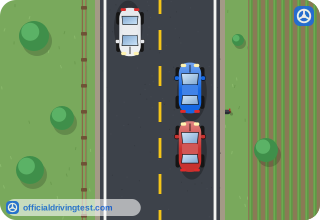
How can you help keep a driver behind you at a safe distance?
- Change lanes often so the driver cannot follow you
- Keep a steady speed and signal early before you slow or turn
- Drive close to the center line of the road
- Turn on hazard flashers whenever you slow down
Show answer
Correct answer: Keep a steady speed and signal early before you slow or turn
A steady speed and early signals give the driver behind you time to react.
Source: Tennessee Comprehensive Driver License Manual (March 2025 printing), page 94 · Open this page in the manual (Manual page 94)
-
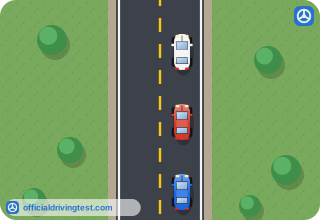
As a general rule, how many vehicles should you pass at one time?
- Two vehicles at a time
- As many as the road allows
- Only one vehicle at a time
- Up to three vehicles at a time
Show answer
Correct answer: Only one vehicle at a time
The manual's general rule is to pass only one vehicle at a time.
Source: Tennessee Comprehensive Driver License Manual (March 2025 printing), page 94 · Open this page in the manual (Manual page 94)
-
What does the manual say about passing and the speed limit?
- You may exceed the speed limit by 5 mph while passing
- Passing does not entitle you to exceed the speed limit
- You may exceed the limit if the road is clear
- Passing is allowed at any speed on a two-lane road
Show answer
Correct answer: Passing does not entitle you to exceed the speed limit
The manual states that passing does not give you the right to go over the speed limit.
Source: Tennessee Comprehensive Driver License Manual (March 2025 printing), page 94 · Open this page in the manual (Manual page 94)
-
At 55 M.P.H., about how long does the manual say you need to complete the pass of a single vehicle?
- About three seconds
- About five seconds
- About twenty seconds
- About ten seconds
Show answer
Correct answer: About ten seconds
The manual says a pass at 55 M.P.H. takes about ten seconds, so you need a ten-second gap in oncoming traffic and enough sight distance.
Source: Tennessee Comprehensive Driver License Manual (March 2025 printing), page 94 · Open this page in the manual (Manual page 94)
-
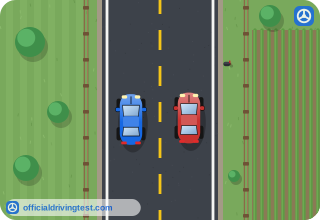
According to the manual, you should NOT pass unless what is true?
- You have enough room to return to your lane
- The vehicle ahead is a large truck
- You have flashed your headlights twice
- The vehicle ahead is below 55 M.P.H.
Show answer
Correct answer: You have enough room to return to your lane
The manual says not to pass without enough space to get back into your lane.
Source: Tennessee Comprehensive Driver License Manual (March 2025 printing), page 94 · Open this page in the manual (Manual page 94)
-
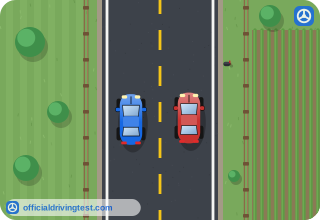
After passing, when does the manual say it is safest to return to the driving lane?
- As soon as your front bumper passes the other vehicle
- After you honk to warn the other driver
- When you see both its headlights in your rearview mirror
- When you see one headlight in your side mirror
Show answer
Correct answer: When you see both its headlights in your rearview mirror
Waiting until both headlights show in the rearview mirror helps you leave enough room to return to your lane.
Source: Tennessee Comprehensive Driver License Manual (March 2025 printing), page 94 · Open this page in the manual (Manual page 94)
-
When finishing a pass, what should you not count on other drivers to do?
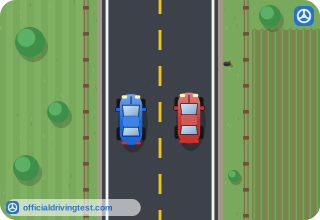
- Move onto the shoulder
- Make room for you
- Increase their speed
- Flash their headlights at you
Show answer
Correct answer: Make room for you
You need to have enough room behind the vehicle you passed so you can return safely; do not depend on others to make room.
Source: Tennessee Comprehensive Driver License Manual (March 2025 printing), page 94 · Open this page in the manual (Manual page 94)
-
Another driver passes you without enough room. What does the manual say to do?
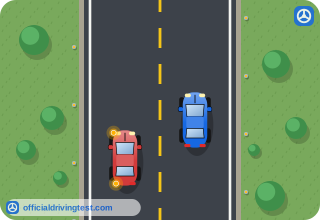
- Speed up to stay beside the passing driver
- Move toward the center line to block the vehicle
- Slow down and allow room for it to return to the lane
- Follow the passing driver as closely as possible
Show answer
Correct answer: Slow down and allow room for it to return to the lane
The manual says not to make a situation worse: slow down and leave room for the passing driver to return safely.
Source: Tennessee Comprehensive Driver License Manual (March 2025 printing), page 95 · Open this page in the manual (Manual page 95)
-
What minimum space cushion should you keep between your car and the vehicle ahead so that you have an emergency out available?
- At least two seconds
- At least one second
- About one car length
- About half a second
Show answer
Correct answer: At least two seconds
Keeping at least a two second cushion gives you room for an emergency out.
Source: Tennessee Comprehensive Driver License Manual (March 2025 printing), page 97 · Open this page in the manual (Manual page 97)
-
For which of these road conditions does the manual say you must slow down to be safe?
- A straight, dry road
- A road with fresh paint on the edge lines
- A sharp curve or a rough or damaged road
- A road with light traffic and good visibility
Show answer
Correct answer: A sharp curve or a rough or damaged road
You must slow down for a sharp curve or when the road is rough or damaged.
Source: Tennessee Comprehensive Driver License Manual (March 2025 printing), page 101 · Open this page in the manual (Manual page 101)
-
Which of these is listed as a factor in how traffic conditions vary?
- The color of the vehicles
- The price of fuel
- The number of passengers riding in each vehicle on the road
- Volume of vehicles, such as rush hour, mid-day or night
Show answer
Correct answer: Volume of vehicles, such as rush hour, mid-day or night
The manual lists volume of vehicles, traffic control devices, work zones, road type, weather and speed limits.
Source: Tennessee Comprehensive Driver License Manual (March 2025 printing), page 101 · Open this page in the manual (Manual page 101)
-
According to the manual, when do collisions involving multiple vehicles often happen?
- When all drivers move at the same speed
- When drivers keep a two second cushion behind the vehicle ahead
- When drivers go faster or slower than other traffic
- When drivers signal early
Show answer
Correct answer: When drivers go faster or slower than other traffic
Vehicles moving the same way at the same speed cannot hit each other, so differing speeds cause collisions.
Source: Tennessee Comprehensive Driver License Manual (March 2025 printing), page 101 · Open this page in the manual (Manual page 101)
-
Wherever people or traffic gather, what is limited?
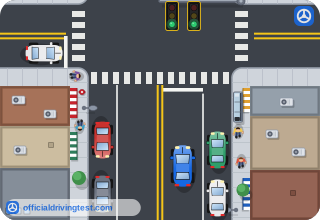
- Your room to maneuver
- Your need to use signals
- Your ability to see signs
- The number of lanes
Show answer
Correct answer: Your room to maneuver
In a crowded space your room to maneuver is limited, so you need to lower your speed to have time to react.
Source: Tennessee Comprehensive Driver License Manual (March 2025 printing), page 101 · Open this page in the manual (Manual page 101)
-
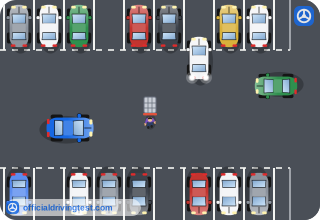
Why may you need to lower your speed in shopping centers, parking lots and downtown areas?
- Speed limits there are always lower than on other roads and strictly enforced
- Pedestrians always have the right of way there
- Traffic signals there are timed to slow drivers
- Vehicles and people stop, start and move in different directions quickly and randomly
Show answer
Correct answer: Vehicles and people stop, start and move in different directions quickly and randomly
These are busy areas where vehicles and people move unpredictably.
Source: Tennessee Comprehensive Driver License Manual (March 2025 printing), page 101 · Open this page in the manual (Manual page 101)
-
If you see brake lights coming on several vehicles ahead of you, what may you need to do?
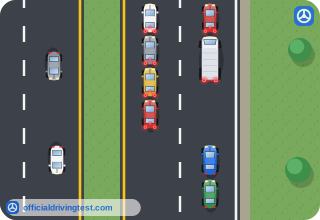
- Change lanes immediately
- Adjust your speed for the traffic conditions
- Sound your horn
- Move closer to the vehicle ahead to see better
Show answer
Correct answer: Adjust your speed for the traffic conditions
Brake lights on several vehicles ahead are a sign to adjust speed for traffic.
Source: Tennessee Comprehensive Driver License Manual (March 2025 printing), page 101 · Open this page in the manual (Manual page 101)
-
What do rush hours often bring?
- Heavy traffic and drivers who always seem to be in a hurry
- Lighter traffic and drivers who are never in a hurry
- Fewer vehicles on the road
- Lower speed limits on all roads
Show answer
Correct answer: Heavy traffic and drivers who always seem to be in a hurry
Rush hours often have heavy traffic and hurried drivers.
Source: Tennessee Comprehensive Driver License Manual (March 2025 printing), page 101 · Open this page in the manual (Manual page 101)
-
The road is wet and slippery. What should you allow for a motorcyclist?
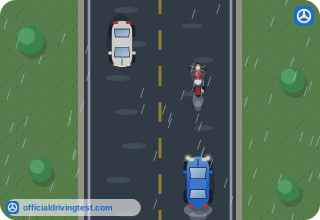
- Less following distance
- The same following distance
- More following distance
- No following distance at all
Show answer
Correct answer: More following distance
Bad weather and slippery surfaces cause greater problems for motorcyclists than for cars.
Source: Tennessee Comprehensive Driver License Manual (March 2025 printing), page 107 · Open this page in the manual (Manual page 107)
-
How does the stopping distance of an RV compare with a car?
- It is shorter, because RVs are larger
- It is longer, because RVs are heavier
- It is the same
- It depends only on the color
Show answer
Correct answer: It is longer, because RVs are heavier
RVs are heavier than cars and need a longer stopping distance.
Source: Tennessee Comprehensive Driver License Manual (March 2025 printing), page 115 · Open this page in the manual (Manual page 115)
-
What following distance does the manual list for Phase Two practice?
- 1-second following distances
- 6-second following distances
- Safe 2-second following distances
- One car length at any speed
Show answer
Correct answer: Safe 2-second following distances
In Phase Two the new driver practices keeping a safe two-second following distance.
Source: Tennessee Comprehensive Driver License Manual (March 2025 printing), page 117 · Open this page in the manual (Manual page 117)