South Dakota: Vehicle checks and basic control — Looking Behind, Lane Changes, Headlights Practice Test
Questions in this part include: “When must you check traffic behind you more often?” · “When is it very important to check behind your vehicle as you slow down?”
Independent educational site · not affiliated with any government agency or DMV
Ready? Test yourself
- Instant feedback with an explanation
- Every answer cites its source in the manual
- Your best score is saved on this device
- Keyboard: press 1 to 4 to answer and Enter for the next question
Questions are original and based on the official manual "South Dakota Driver License Manual" (Revised 11/2024), South Dakota Department of Public Safety.
All 24 questions in this practice test
Take the test above first, then use this list to study. Tap “Show answer” to see the correct answer and explanation.
Show the questions and answersHide the questions
-
When must you check traffic behind you more often?
- When traffic is heavy
- When traffic is light
- When the road is dry
- When driving on a straight road
Show answer
Correct answer: When traffic is heavy
The manual says you need to check more often when traffic is heavy so you know if someone is following closely or coming up too fast.
Source: South Dakota Driver License Manual (Revised 11/2024), page 49
-
Which of these counts as changing lanes?
- Slowing down for traffic in your own lane
- Stopping at a red light
- Entering the roadway from the curb or shoulder
- Following a curve in the road
Show answer
Correct answer: Entering the roadway from the curb or shoulder
The manual includes moving from one lane to another, merging from an entrance ramp and entering the roadway from the curb or shoulder.
Source: South Dakota Driver License Manual (Revised 11/2024), page 49
-
How can you see vehicles in your blind spots before changing lanes?
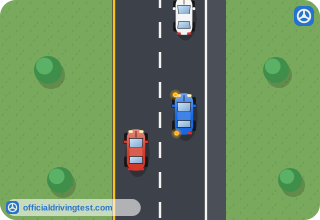
- Look carefully in the rear-view mirror
- Physically turn your head and look
- Look carefully in the side mirrors
- Slow down until the vehicles pass
Show answer
Correct answer: Physically turn your head and look
Blind spots cannot be seen through the mirrors, so you must turn your head and look.
Source: South Dakota Driver License Manual (Revised 11/2024), page 49
-
How far from an intersection must all drivers signal a turn?
- At least 25 feet
- At least 50 feet
- At least 300 feet
- At least 100 feet
Show answer
Correct answer: At least 100 feet
The manual lists signaling at least 100 feet from an intersection when turning or changing lanes.
Source: South Dakota Driver License Manual (Revised 11/2024), page 49
-
At higher speeds, which signal timing does the manual call better?
- Signaling 1 second before you wish to turn
- Signaling only at the moment you begin turning the wheel
- Signaling at least 4 to 5 seconds before you wish to turn
- Signaling 15 seconds before you wish to turn
Show answer
Correct answer: Signaling at least 4 to 5 seconds before you wish to turn
At higher speeds the manual says to signal at least 4 to 5 seconds before the turn.
Source: South Dakota Driver License Manual (Revised 11/2024), page 49
-
While checking traffic to the sides or over your shoulder, how long may you take your eyes off the road ahead?
- No more than an instant
- Up to 3 seconds
- Up to 5 seconds
- As long as the road is empty
Show answer
Correct answer: No more than an instant
Traffic ahead could stop suddenly, so you check quickly and keep track of what is in front of you.
Source: South Dakota Driver License Manual (Revised 11/2024), page 49
-
When is it very important to check behind your vehicle as you slow down?
- Only on roads with a posted speed limit above 55 miles per hour
- Where a driver behind would not expect it, like private driveways
- Only when you are already stopped
- Only when the driver behind has a large vehicle
Show answer
Correct answer: Where a driver behind would not expect it, like private driveways
Drivers behind may not expect a slowdown at driveways or parking spaces, so you check behind you first.
Source: South Dakota Driver License Manual (Revised 11/2024), page 49
-
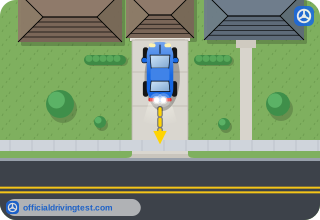
When you must back up, how should you look behind the vehicle?
- Use only the rearview mirror
- Turn around and look directly through the rear window
- Check the mirrors and look through a side window
- Look through the side window as you roll
Show answer
Correct answer: Turn around and look directly through the rear window
The manual says not to depend on the rearview or side mirrors when backing.
Source: South Dakota Driver License Manual (Revised 11/2024), page 49
-
Why should you back slowly?
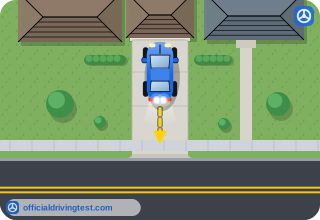
- The vehicle is much harder to steer while you are backing
- The brakes work less well when the vehicle is in reverse
- The mirrors do not show the rear corners
- Other drivers expect you to back slowly
Show answer
Correct answer: The vehicle is much harder to steer while you are backing
Steering is harder when backing, so a slow speed gives you better control.
Source: South Dakota Driver License Manual (Revised 11/2024), page 49
-
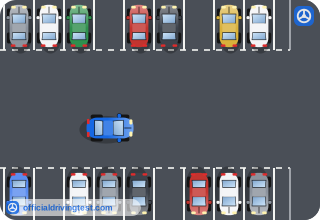
In a shopping center, what kind of parking space does the manual suggest you try to find?
- One close to the entrance so you can leave again quickly
- One at the end of a row near the curb
- One you can drive through, so you can drive forward when you leave
- One where you can back in and leave forward
Show answer
Correct answer: One you can drive through, so you can drive forward when you leave
Backing is hard to do safely, so the manual suggests a space where you can drive through and then leave forward.
Source: South Dakota Driver License Manual (Revised 11/2024), page 49
-
When backing is necessary, what does the manual suggest whenever possible?
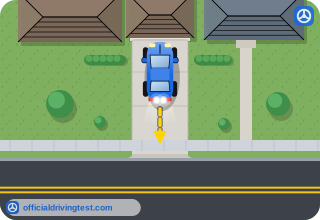
- Back up with the doors open so you can see around
- Back up with the hazard lights off
- Turn off the radio and use the horn
- Use a person outside the vehicle to help you back up
Show answer
Correct answer: Use a person outside the vehicle to help you back up
A helper outside the vehicle can see what you cannot, which makes backing safer.
Source: South Dakota Driver License Manual (Revised 11/2024), page 49
-
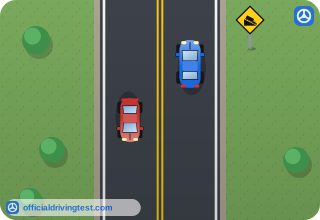
When going down a long or steep hill, what should you check?
- The fuel gauge
- The mirrors
- The tire pressure
- The oil level
Show answer
Correct answer: The mirrors
Vehicles often build up speed on a steep grade, so check the mirrors for large trucks and buses that may be going too fast.
Source: South Dakota Driver License Manual (Revised 11/2024), page 50
-
Whose responsibility is it to make sure your vehicle is visible to other roadway users?
- The other drivers’
- The police’s
- Your own
- The vehicle owner’s only
Show answer
Correct answer: Your own
The manual says it is your responsibility to make your vehicle visible.
Source: South Dakota Driver License Manual (Revised 11/2024), page 54
-
What good rule applies on rainy, snowy, or foggy days?
- If you turn on the wipers, turn on the headlights
- Use only the parking lights while you drive
- Use the high beams
- Turn on the 4-way flashers
Show answer
Correct answer: If you turn on the wipers, turn on the headlights
Headlights make vehicles easier to see in these conditions.
Source: South Dakota Driver License Manual (Revised 11/2024), page 54
-
When should you turn on your headlights as evening comes?
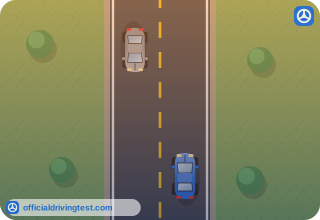
- When it begins to get dark
- Only after it is fully dark
- Only when other drivers turn theirs on
- Only on unlit roads
Show answer
Correct answer: When it begins to get dark
Even turning them on a little early helps other drivers see you.
Source: South Dakota Driver License Manual (Revised 11/2024), page 54
-
What are parking lights for?
- Driving in light fog
- Driving at dusk
- Parked vehicles only
- Driving in heavy rain
Show answer
Correct answer: Parked vehicles only
When you must drive with lights on, use the headlights.
Source: South Dakota Driver License Manual (Revised 11/2024), page 54
-
When driving away from a rising or setting sun, what should you do?
- Turn on only the parking lights
- Turn on the headlights
- Use the horn at intersections
- Drive on the shoulder
Show answer
Correct answer: Turn on the headlights
Drivers coming toward you may have trouble seeing your vehicle because of the glare.
Source: South Dakota Driver License Manual (Revised 11/2024), page 54
-
How far do high beams let you see compared with low beams?
- Half as far
- The same distance
- Four times as far
- Twice as far
Show answer
Correct answer: Twice as far
High beams help at night when there are no oncoming vehicles.
Source: South Dakota Driver License Manual (Revised 11/2024), page 55
-
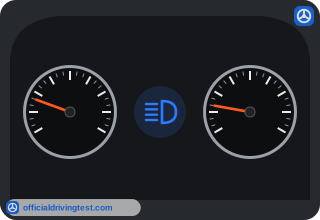
When should you use high beams at night?
- Only on lighted city streets
- Only when following another vehicle
- Whenever there are no oncoming vehicles
- Whenever it is raining hard
Show answer
Correct answer: Whenever there are no oncoming vehicles
High beams are especially important on unfamiliar roads, in construction areas, or where people may be along the road.
Source: South Dakota Driver License Manual (Revised 11/2024), page 55
-
How close to an oncoming vehicle should you be when you dim your high beams?
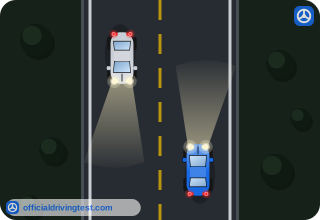
- Within 500 feet
- Within 100 feet
- Within 200 feet
- Within 1000 feet
Show answer
Correct answer: Within 500 feet
Dim the high beams whenever you come within 500 feet, about one block, of an oncoming vehicle.
Source: South Dakota Driver License Manual (Revised 11/2024), page 55
-
When should you use low beams behind another vehicle?
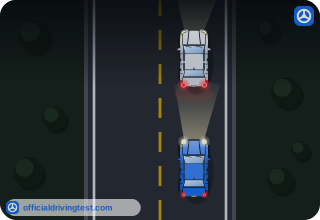
- Only when you are closer than 100 feet behind it
- Only when it is raining hard
- Only when the other driver flashes the lights
- Closer than 500 feet behind it, or in heavy traffic
Show answer
Correct answer: Closer than 500 feet behind it, or in heavy traffic
Low beams avoid glare for the driver ahead.
Source: South Dakota Driver License Manual (Revised 11/2024), page 55
-
Which lights should you use in fog, snow, or hard rain?
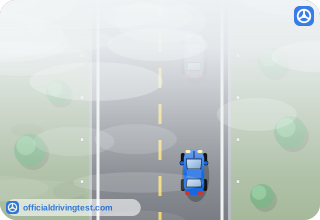
- High beams
- Low beams
- Parking lights only
- Hazard flashers only
Show answer
Correct answer: Low beams
Light from high beams reflects, causing glare and making it harder to see ahead.
Source: South Dakota Driver License Manual (Revised 11/2024), page 55
-
What should you do if an approaching driver fails to dim their headlights?
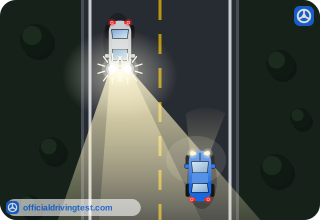
- Brake hard and stop in the lane until it passes
- Flash the high beams, then look toward the right side of the road
- Turn off your own headlights until that vehicle has passed
- Look straight at the oncoming lights
Show answer
Correct answer: Flash the high beams, then look toward the right side of the road
Looking toward the right side keeps you from being blinded and lets you see the road edge.
Source: South Dakota Driver License Manual (Revised 11/2024), page 55
-
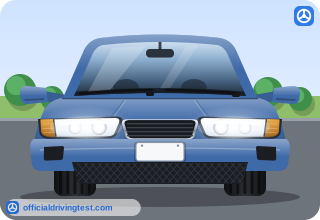
Daytime running lights are not meant to replace headlights in which conditions?
- Clear daylight on a dry, open road
- Daytime driving in light city traffic
- Sunny days on the highway
- Night driving and fog, rain, or snow
Show answer
Correct answer: Night driving and fog, rain, or snow
Daytime running lights do not replace headlights for night driving or when it is foggy, raining or snowing.
Source: South Dakota Driver License Manual (Revised 11/2024), page 55