South Dakota: Vehicle checks and basic control — Inspecting Your Vehicle: Tires, Brakes, Lights Practice Test
Questions in this part include: “When checking tread depth with a penny, how do you place the penny in the tread groove?” · “What should you do if your vehicle pulls to one side?”
Independent educational site · not affiliated with any government agency or DMV
Ready? Test yourself
- Instant feedback with an explanation
- Every answer cites its source in the manual
- Your best score is saved on this device
- Keyboard: press 1 to 4 to answer and Enter for the next question
Questions are original and based on the official manual "South Dakota Driver License Manual" (Revised 11/2024), South Dakota Department of Public Safety.
All 18 questions in this practice test
Take the test above first, then use this list to study. Tap “Show answer” to see the correct answer and explanation.
Show the questions and answersHide the questions
-
Where can you find the recommended PSI number for your tires on the vehicle?
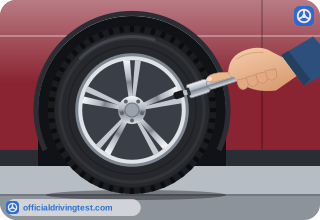
- On a plate on the underside of the hood
- On the valve stem cap
- On a sticker on the inside door jamb
- On the rear license plate
Show answer
Correct answer: On a sticker on the inside door jamb
The manual says to open the car door and look at the sticker on the inside jamb for the PSI number.
Source: South Dakota Driver License Manual (Revised 11/2024), page 23
-
When should you check tire pressure with a gauge?
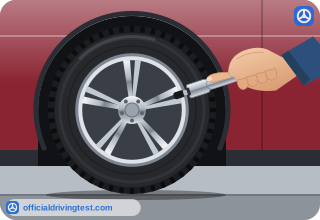
- Right after a long highway drive
- When the tires are cold
- Once the tires have warmed up
- While the engine is running hot
Show answer
Correct answer: When the tires are cold
The manual says to make sure the tires are cold when you check their pressure.
Source: South Dakota Driver License Manual (Revised 11/2024), page 23
-
When checking tread depth with a penny, how do you place the penny in the tread groove?
- With Lincoln’s head pointing up and out
- Lying flat across the top of the tread
- On its edge with the coin sideways
- With Lincoln’s head going in first
Show answer
Correct answer: With Lincoln’s head going in first
The penny goes into the deepest-looking groove headfirst, so Lincoln’s head is the part that goes into the tread.
Source: South Dakota Driver License Manual (Revised 11/2024), page 23
-
In the penny tread test, what does it mean if you can see all of Lincoln’s head?
- The tires still have plenty of tread
- The tires only need more air
- The tires should be rotated, not replaced
- The tires are too worn and must be replaced
Show answer
Correct answer: The tires are too worn and must be replaced
If all of Lincoln’s head shows, the tread is too shallow, so you should not drive on the tires and should replace them.
Source: South Dakota Driver License Manual (Revised 11/2024), page 23
-
What should you do if the brake pedal goes to the floor?
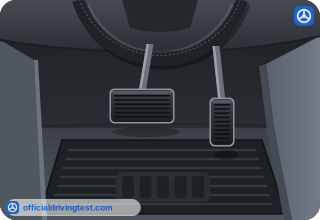
- Keep driving, since brakes wear in with use
- Have a mechanic check the brakes
- Wait for the next oil change to look at them
- Check the tire pressure first
Show answer
Correct answer: Have a mechanic check the brakes
Brakes that do not seem to work properly, make noise, smell funny or let the pedal go to the floor should be checked by a mechanic.
Source: South Dakota Driver License Manual (Revised 11/2024), page 23
-
How should you check that your turn signals, brake lights, taillights and headlights are working?
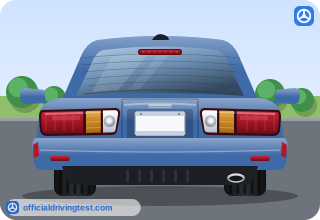
- From the driver’s seat using the mirrors
- By listening for a clicking sound
- From the outside of the vehicle
- By waiting for a warning at the exam station
Show answer
Correct answer: From the outside of the vehicle
The manual says these lights should be checked from the outside of the vehicle.
Source: South Dakota Driver License Manual (Revised 11/2024), page 23
-
What do your brake lights tell other road users?
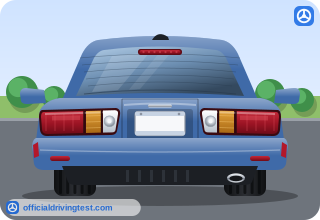
- That you are stopping
- That you are turning
- That you are speeding up
- That you are changing lanes
Show answer
Correct answer: That you are stopping
Brake lights signal to others that you are stopping, while turn signals show that you are turning.
Source: South Dakota Driver License Manual (Revised 11/2024), page 23
-
What can an out-of-line headlight do?
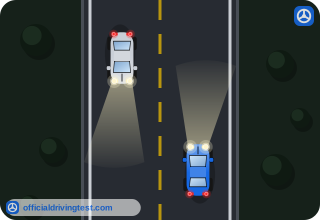
- Blind other drivers
- Weaken your brake lights
- Overheat the engine
- Wear the tires faster
Show answer
Correct answer: Blind other drivers
A headlight that is out of line can shine where it does not help you and may blind other drivers.
Source: South Dakota Driver License Manual (Revised 11/2024), page 23
-
What should you do if other drivers keep flashing their headlights at you?
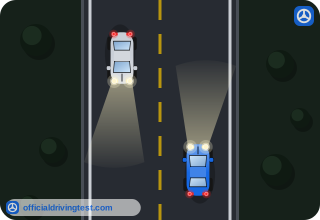
- Switch to your parking lights
- Clean the inside of the windshield
- Have a mechanic check your headlights
- Replace the windshield wipers
Show answer
Correct answer: Have a mechanic check your headlights
Constant flashing from other drivers, or trouble seeing at night, is a sign that a mechanic should check the headlights.
Source: South Dakota Driver License Manual (Revised 11/2024), page 23
-
Why should a damaged windshield be replaced?
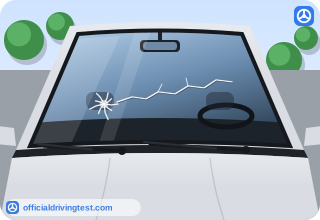
- It makes the wipers wear out much sooner than normal
- Damaged glass can break more easily in a minor collision
- It lowers the vehicle’s fuel economy
- It keeps the washer fluid from flowing
Show answer
Correct answer: Damaged glass can break more easily in a minor collision
The manual says damaged glass breaks more easily in a minor collision or when something hits it, so it should be replaced.
Source: South Dakota Driver License Manual (Revised 11/2024), page 24
-
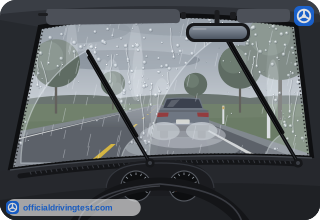
What should you do if your wiper blades are not clearing water well?
- Adjust the mirrors
- Turn the wipers off
- Switch to the high beams
- Replace them
Show answer
Correct answer: Replace them
Wipers that do not clear water well are no longer in good operating condition and should be replaced.
Source: South Dakota Driver License Manual (Revised 11/2024), page 24
-
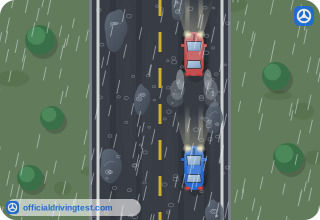
What can worn or bald tires do when the road is wet?
- Shorten the stopping distance and improve traction
- Make the vehicle easier to turn
- Improve traction on the pavement
- Increase stopping distance and make turning harder
Show answer
Correct answer: Increase stopping distance and make turning harder
Worn or bald tires lengthen the distance needed to stop and make turning harder on wet roads.
Source: South Dakota Driver License Manual (Revised 11/2024), page 24
-
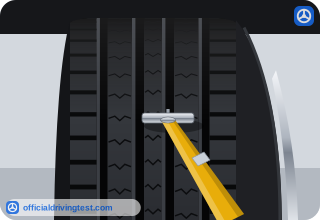
Worn tires can cause hydroplaning and increase the chance of what?
- Overheating the engine
- Having a flat tire
- Wearing out the brake pads
- Draining the battery
Show answer
Correct answer: Having a flat tire
The manual says worn tires can cause hydroplaning and also make a flat tire more likely.
Source: South Dakota Driver License Manual (Revised 11/2024), page 24
-
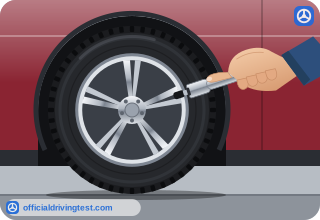
What do unbalanced tires and low tire pressure cause?
- Slower tire wear and better fuel economy
- Shorter stopping distances
- Faster tire wear and lower fuel economy
- Easier steering at highway speeds
Show answer
Correct answer: Faster tire wear and lower fuel economy
Unbalanced tires and low pressure wear the tires faster, reduce fuel economy and make the vehicle harder to steer or stop.
Source: South Dakota Driver License Manual (Revised 11/2024), page 24
-
What should you do if your vehicle pulls to one side?
- Have a mechanic check it
- Add air to all four tires
- Drive slower until it stops
- Replace the wiper blades
Show answer
Correct answer: Have a mechanic check it
A vehicle that pulls to one side, bounces or has a shaking steering wheel should be checked by a mechanic.
Source: South Dakota Driver License Manual (Revised 11/2024), page 24
-
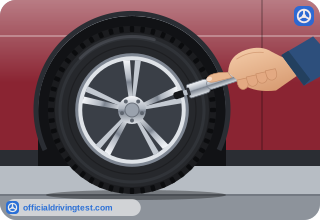
If your tire’s PSI is above the number listed on the door jamb, what should you do?
- Let air out until it matches
- Add more air until it matches
- Drive on the tire until it warms up
- Leave it as it is
Show answer
Correct answer: Let air out until it matches
When the tire pressure is higher than the number on the door jamb, you let air out until it matches.
Source: South Dakota Driver License Manual (Revised 11/2024), page 24
-
What should you do if the vehicle is hard to turn or does not turn when you first turn the steering wheel?
- Add antifreeze to the washer fluid bottle
- Check the brake lights
- Have the steering checked by a mechanic
- Replace the wiper blades
Show answer
Correct answer: Have the steering checked by a mechanic
A steering system that is not working properly makes it hard to control direction, so a mechanic should check it.
Source: South Dakota Driver License Manual (Revised 11/2024), page 24
-
If a vehicle bounces a lot after a bump or a stop, what may it need?
- A new exhaust system
- New shocks or other suspension parts
- A different set of wiper blades
- More air in the tires
Show answer
Correct answer: New shocks or other suspension parts
Heavy bouncing after a bump or stop may mean the shocks or other suspension parts need to be replaced.
Source: South Dakota Driver License Manual (Revised 11/2024), page 24