South Dakota: Vehicle checks and basic control
Inspecting tires, lights, brakes and windows, adjusting the seat and mirrors, starting, steering, backing, turn and hand signals, the horn and headlights. Split into 7 shorter tests so you're not stuck in one long quiz.
Independent educational site · not affiliated with any government agency or DMV
Choose a part
Vehicle checks and basic control — Inspecting Your Vehicle: Tires, Brakes, Lights
Questions in this part include: “When checking tread depth with a penny, how do you place the penny in the tread groove?”
StartVehicle checks and basic control — Exhaust, Engine, Windshield and Windows
Questions in this part include: “Which of these is a job of the exhaust system?”
StartVehicle checks and basic control — Vehicle Maintenance, Seat, and Mirrors
Questions in this part include: “According to the manual, whose duty is it to make certain a vehicle is safe to operate?”
StartVehicle checks and basic control — Secure Your Load, Trip Planning, Basic Driving
Questions in this part include: “What may happen to a driver who fails to properly secure a load and causes a crash?”
StartVehicle checks and basic control — Steering, Hand Position, and Backing Up
Inspecting tires, lights, brakes and windows, adjusting the seat and mirrors, starting, steering, backing, turn and hand signals, the horn and headlights. — Part 5
StartVehicle checks and basic control — Looking Behind, Lane Changes, Headlights
Questions in this part include: “When must you check traffic behind you more often?”
StartVehicle checks and basic control — Horn, Signaling, and Night Driving
Questions in this part include: “After accelerating smoothly out of a turn, what should you make sure of?”
StartAll 142 Vehicle checks and basic control questions with answers
Choose a part above to take a practice test, or study every question and answer here.
Show the questions and answersHide the questions
-
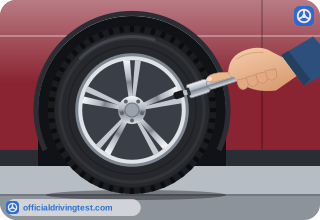
Where can you find the recommended PSI number for your tires on the vehicle?
- On a plate on the underside of the hood
- On the valve stem cap
- On a sticker on the inside door jamb
- On the rear license plate
Show answer
Correct answer: On a sticker on the inside door jamb
The manual says to open the car door and look at the sticker on the inside jamb for the PSI number.
Source: South Dakota Driver License Manual (Revised 11/2024), page 23
-
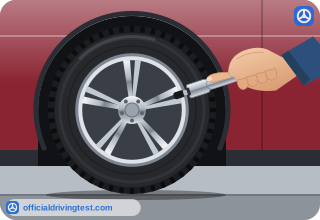
When should you check tire pressure with a gauge?
- Right after a long highway drive
- When the tires are cold
- Once the tires have warmed up
- While the engine is running hot
Show answer
Correct answer: When the tires are cold
The manual says to make sure the tires are cold when you check their pressure.
Source: South Dakota Driver License Manual (Revised 11/2024), page 23
-
When checking tread depth with a penny, how do you place the penny in the tread groove?
- With Lincoln’s head pointing up and out
- Lying flat across the top of the tread
- On its edge with the coin sideways
- With Lincoln’s head going in first
Show answer
Correct answer: With Lincoln’s head going in first
The penny goes into the deepest-looking groove headfirst, so Lincoln’s head is the part that goes into the tread.
Source: South Dakota Driver License Manual (Revised 11/2024), page 23
-
In the penny tread test, what does it mean if you can see all of Lincoln’s head?
- The tires still have plenty of tread
- The tires only need more air
- The tires should be rotated, not replaced
- The tires are too worn and must be replaced
Show answer
Correct answer: The tires are too worn and must be replaced
If all of Lincoln’s head shows, the tread is too shallow, so you should not drive on the tires and should replace them.
Source: South Dakota Driver License Manual (Revised 11/2024), page 23
-
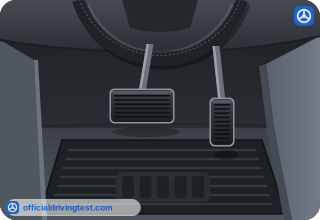
What should you do if the brake pedal goes to the floor?
- Keep driving, since brakes wear in with use
- Have a mechanic check the brakes
- Wait for the next oil change to look at them
- Check the tire pressure first
Show answer
Correct answer: Have a mechanic check the brakes
Brakes that do not seem to work properly, make noise, smell funny or let the pedal go to the floor should be checked by a mechanic.
Source: South Dakota Driver License Manual (Revised 11/2024), page 23
-
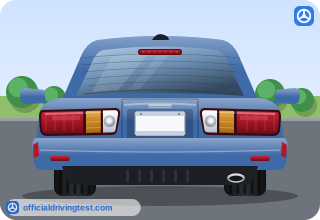
How should you check that your turn signals, brake lights, taillights and headlights are working?
- From the driver’s seat using the mirrors
- By listening for a clicking sound
- From the outside of the vehicle
- By waiting for a warning at the exam station
Show answer
Correct answer: From the outside of the vehicle
The manual says these lights should be checked from the outside of the vehicle.
Source: South Dakota Driver License Manual (Revised 11/2024), page 23
-
What do your brake lights tell other road users?
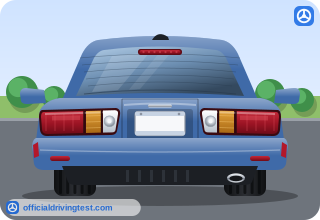
- That you are stopping
- That you are turning
- That you are speeding up
- That you are changing lanes
Show answer
Correct answer: That you are stopping
Brake lights signal to others that you are stopping, while turn signals show that you are turning.
Source: South Dakota Driver License Manual (Revised 11/2024), page 23
-
What can an out-of-line headlight do?
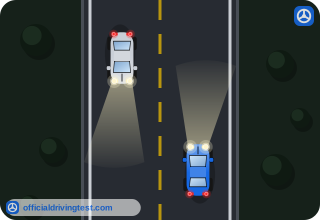
- Blind other drivers
- Weaken your brake lights
- Overheat the engine
- Wear the tires faster
Show answer
Correct answer: Blind other drivers
A headlight that is out of line can shine where it does not help you and may blind other drivers.
Source: South Dakota Driver License Manual (Revised 11/2024), page 23
-
What should you do if other drivers keep flashing their headlights at you?
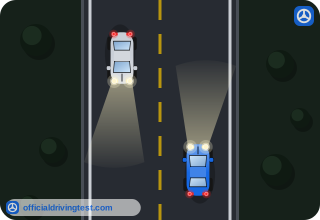
- Switch to your parking lights
- Clean the inside of the windshield
- Have a mechanic check your headlights
- Replace the windshield wipers
Show answer
Correct answer: Have a mechanic check your headlights
Constant flashing from other drivers, or trouble seeing at night, is a sign that a mechanic should check the headlights.
Source: South Dakota Driver License Manual (Revised 11/2024), page 23
-
Why should a damaged windshield be replaced?
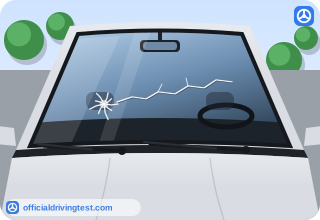
- It makes the wipers wear out much sooner than normal
- Damaged glass can break more easily in a minor collision
- It lowers the vehicle’s fuel economy
- It keeps the washer fluid from flowing
Show answer
Correct answer: Damaged glass can break more easily in a minor collision
The manual says damaged glass breaks more easily in a minor collision or when something hits it, so it should be replaced.
Source: South Dakota Driver License Manual (Revised 11/2024), page 24
-
What should you do if your wiper blades are not clearing water well?
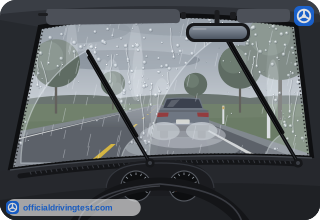
- Adjust the mirrors
- Turn the wipers off
- Switch to the high beams
- Replace them
Show answer
Correct answer: Replace them
Wipers that do not clear water well are no longer in good operating condition and should be replaced.
Source: South Dakota Driver License Manual (Revised 11/2024), page 24
-
What can worn or bald tires do when the road is wet?
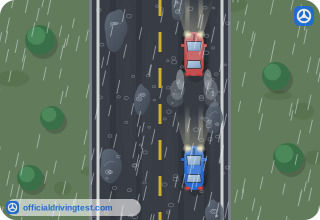
- Shorten the stopping distance and improve traction
- Make the vehicle easier to turn
- Improve traction on the pavement
- Increase stopping distance and make turning harder
Show answer
Correct answer: Increase stopping distance and make turning harder
Worn or bald tires lengthen the distance needed to stop and make turning harder on wet roads.
Source: South Dakota Driver License Manual (Revised 11/2024), page 24
-
Worn tires can cause hydroplaning and increase the chance of what?
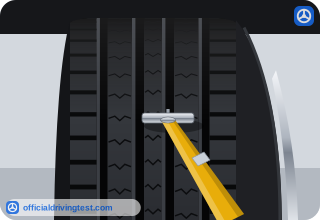
- Overheating the engine
- Having a flat tire
- Wearing out the brake pads
- Draining the battery
Show answer
Correct answer: Having a flat tire
The manual says worn tires can cause hydroplaning and also make a flat tire more likely.
Source: South Dakota Driver License Manual (Revised 11/2024), page 24
-
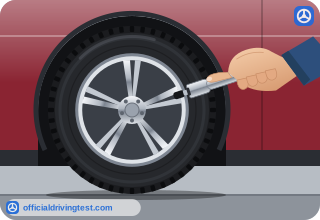
What do unbalanced tires and low tire pressure cause?
- Slower tire wear and better fuel economy
- Shorter stopping distances
- Faster tire wear and lower fuel economy
- Easier steering at highway speeds
Show answer
Correct answer: Faster tire wear and lower fuel economy
Unbalanced tires and low pressure wear the tires faster, reduce fuel economy and make the vehicle harder to steer or stop.
Source: South Dakota Driver License Manual (Revised 11/2024), page 24
-
What should you do if your vehicle pulls to one side?
- Have a mechanic check it
- Add air to all four tires
- Drive slower until it stops
- Replace the wiper blades
Show answer
Correct answer: Have a mechanic check it
A vehicle that pulls to one side, bounces or has a shaking steering wheel should be checked by a mechanic.
Source: South Dakota Driver License Manual (Revised 11/2024), page 24
-
If your tire’s PSI is above the number listed on the door jamb, what should you do?
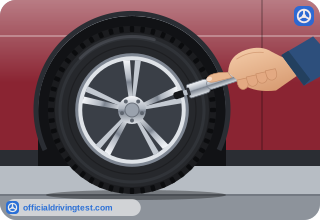
- Let air out until it matches
- Add more air until it matches
- Drive on the tire until it warms up
- Leave it as it is
Show answer
Correct answer: Let air out until it matches
When the tire pressure is higher than the number on the door jamb, you let air out until it matches.
Source: South Dakota Driver License Manual (Revised 11/2024), page 24
-
What should you do if the vehicle is hard to turn or does not turn when you first turn the steering wheel?
- Add antifreeze to the washer fluid bottle
- Check the brake lights
- Have the steering checked by a mechanic
- Replace the wiper blades
Show answer
Correct answer: Have the steering checked by a mechanic
A steering system that is not working properly makes it hard to control direction, so a mechanic should check it.
Source: South Dakota Driver License Manual (Revised 11/2024), page 24
-
If a vehicle bounces a lot after a bump or a stop, what may it need?
- A new exhaust system
- New shocks or other suspension parts
- A different set of wiper blades
- More air in the tires
Show answer
Correct answer: New shocks or other suspension parts
Heavy bouncing after a bump or stop may mean the shocks or other suspension parts need to be replaced.
Source: South Dakota Driver License Manual (Revised 11/2024), page 24
-
What can gases from a leaky exhaust cause inside a vehicle?
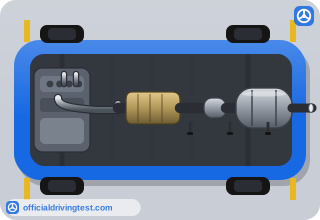
- Only a bad smell in the cabin
- Slower tire wear
- Brakes that fade
- Death in a very short time
Show answer
Correct answer: Death in a very short time
The manual warns that leaking exhaust gases can kill people inside a vehicle very quickly.
Source: South Dakota Driver License Manual (Revised 11/2024), page 24
-
What should you never do with a motor in a closed garage?
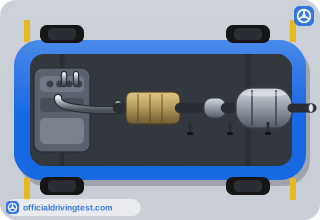
- Let it cool
- Turn off the lights
- Check the oil
- Run it
Show answer
Correct answer: Run it
Running a motor in a closed garage is dangerous because of the exhaust gases, so the manual says never to do it.
Source: South Dakota Driver License Manual (Revised 11/2024), page 24
-
What should you do if you sit in a vehicle with the motor running for a long period of time?
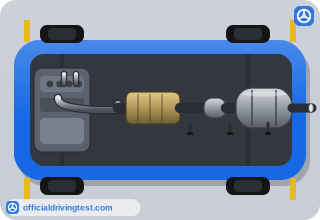
- Turn the headlights on
- Open a window
- Set the parking brake
- Lock the doors
Show answer
Correct answer: Open a window
Opening a window protects you from exhaust gases while the motor runs for a long time.
Source: South Dakota Driver License Manual (Revised 11/2024), page 24
-
Which of these is a job of the exhaust system?
- Supplying fuel to the engine from the tank
- Charging the battery
- Moving engine gases to the rear of the vehicle
- Cooling the brake pads
Show answer
Correct answer: Moving engine gases to the rear of the vehicle
The exhaust system reduces engine noise, cools the hot gases and carries them to the rear of the vehicle.
Source: South Dakota Driver License Manual (Revised 11/2024), page 24
-
Why is it important to have the exhaust system checked periodically?
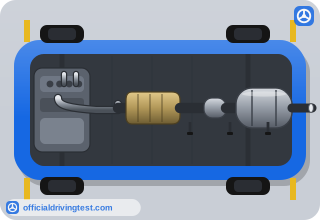
- Many exhaust leaks cannot be easily heard
- Exhaust leaks always make a loud noise
- It keeps the tires from wearing out
- It makes the engine start faster
Show answer
Correct answer: Many exhaust leaks cannot be easily heard
Some leaks are loud, but many are not, so regular checks are needed.
Source: South Dakota Driver License Manual (Revised 11/2024), page 24
-
What can a poorly running engine do?
- Lose power needed for normal driving and emergencies
- Improve your fuel economy
- Make the air cleaner
- Make the vehicle easier to steer at highway speeds
Show answer
Correct answer: Lose power needed for normal driving and emergencies
A poorly running engine may lose power that you need in normal driving and in emergencies, among other problems.
Source: South Dakota Driver License Manual (Revised 11/2024), page 24
-
Under the South Dakota law quoted in the manual, front windshields and front side windows may not be covered with film or glass that reduces light transmittance below what level?
- 25%
- 45%
- 35%
- 55%
Show answer
Correct answer: 35%
The cited law does not allow windshields and front side windows to be covered so that light transmittance falls below 35%.
Source: South Dakota Driver License Manual (Revised 11/2024), page 24
-
Under the South Dakota law quoted in the manual, rear windows may not reduce light transmission below what level?
- 10%
- 20%
- 30%
- 40%
Show answer
Correct answer: 20%
The cited law sets the rear window limit at 20% light transmission, with an enforcement tolerance.
Source: South Dakota Driver License Manual (Revised 11/2024), page 24
-
What enforcement tolerance does the manual give for the rear window light transmission limit?
- 3%
- 5%
- 15%
- 9%
Show answer
Correct answer: 9%
The rear window limit of 20% light transmission comes with an enforcement tolerance of 9%.
Source: South Dakota Driver License Manual (Revised 11/2024), page 24
-
How far down the windshield may film extend?
- To the top of the dashboard
- To the base of the wipers
- To the lower edge of the windshield above the dashboard
- No lower than the AS-1 line or the lowest point of the sun visor
Show answer
Correct answer: No lower than the AS-1 line or the lowest point of the sun visor
The law says film may not extend downward beyond the AS-1 line or past the lowest point of the sun visor.
Source: South Dakota Driver License Manual (Revised 11/2024), page 24
-
What does the South Dakota law quoted in the manual say about sun screening devices on a windshield?
- They are allowed if they cover less than half of it
- They may not obstruct or reduce the driver’s clear view
- They are allowed if they are removable
- They are allowed only on the passenger side
Show answer
Correct answer: They may not obstruct or reduce the driver’s clear view
The law prohibits sun screening devices placed on a windshield in a way that obstructs or reduces the driver’s clear view.
Source: South Dakota Driver License Manual (Revised 11/2024), page 24
-
How much can dirt on the lenses of your headlights, backup, brake and taillights reduce the light?
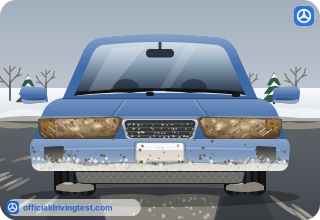
- By 10%
- By 25%
- By 50%
- By 75%
Show answer
Correct answer: By 50%
The manual says dirty lenses can cut the light by 50%, so keep them clean.
Source: South Dakota Driver License Manual (Revised 11/2024), page 24
-
When should you use antifreeze wash in the window washer bottle?
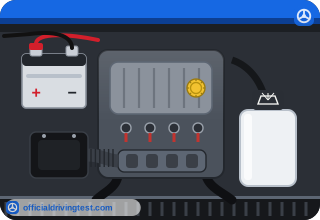
- When the temperature could fall below freezing
- Only when the temperature is above freezing
- When the wipers are new
- Only after a heavy rain
Show answer
Correct answer: When the temperature could fall below freezing
Antifreeze wash keeps the washer fluid from freezing when the temperature could drop below freezing.
Source: South Dakota Driver License Manual (Revised 11/2024), page 24
-
Before driving, which windows should you clear of snow, ice or frost?
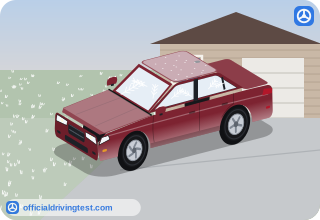
- All windows: the front, sides and back
- Only the windshield
- Only the windshield and the driver’s window
- Only the windshield and the rear window
Show answer
Correct answer: All windows: the front, sides and back
Snow, ice or frost should be cleared from all windows, on the front, sides and back of the vehicle.
Source: South Dakota Driver License Manual (Revised 11/2024), page 24
-
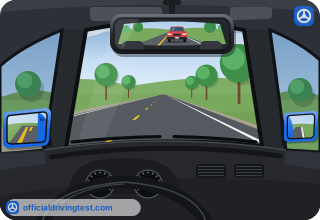
Why should you not hang things from the mirror or put decals on the windshield?
- They can drain the battery
- They can make the wipers stick
- They could block your view
- They can damage the dashboard
Show answer
Correct answer: They could block your view
Items hanging from the mirror and cluttered decals can block your view of the road.
Source: South Dakota Driver License Manual (Revised 11/2024), page 24
-
What does smoking in a vehicle cause on the windows?
- Ice that forms on the outside glass
- A film that builds up on the inside glass
- Cracks in the windshield
- A coating that lowers the outside mirrors
Show answer
Correct answer: A film that builds up on the inside glass
Smoke leaves a film on the inside of the glass, so the inside of the windows should be kept clean.
Source: South Dakota Driver License Manual (Revised 11/2024), page 24
-
According to the manual, whose duty is it to make certain a vehicle is safe to operate?
- The vehicle manufacturer’s
- The exam station’s
- The insurance company’s
- The driver’s
Show answer
Correct answer: The driver’s
The manual states that it is the duty of drivers to make certain the vehicles they drive are safe to operate.
Source: South Dakota Driver License Manual (Revised 11/2024), page 23
-
Compared with a well-maintained vehicle, a vehicle in bad shape costs
- less to run
- about the same to run
- less to insure
- more to run
Show answer
Correct answer: more to run
A vehicle in bad shape is unsafe and costs more to run than one that is maintained.
Source: South Dakota Driver License Manual (Revised 11/2024), page 23
-
What should you follow for routine maintenance of your vehicle?
- The advice of other drivers
- Your vehicle owner’s manual
- A set schedule of once a year
- The posted speed limit
Show answer
Correct answer: Your vehicle owner’s manual
The manual says to follow your vehicle owner’s manual for routine maintenance.
Source: South Dakota Driver License Manual (Revised 11/2024), page 23
-
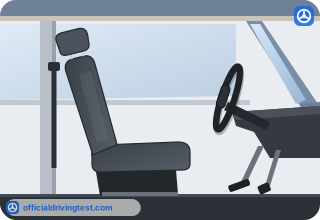
How should you be seated when you drive?
- Reclined slightly, with your feet resting on the pedals
- Leaning forward with your arms bent
- Upright, with your back against the seat and feet on the floor
- Slouched so your back stays relaxed
Show answer
Correct answer: Upright, with your back against the seat and feet on the floor
The manual says to sit upright with your back against the seat and your feet on the floor.
Source: South Dakota Driver License Manual (Revised 11/2024), page 25
-
What can improper seating positions, such as slouching, result in?
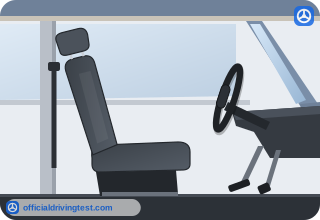
- Reduced effectiveness of the vehicle’s restraint system
- Faster tire wear
- Slower stopping because of worn brake components
- Poorer fuel economy
Show answer
Correct answer: Reduced effectiveness of the vehicle’s restraint system
Slouching and other improper seating positions can make the vehicle’s restraint system work less well.
Source: South Dakota Driver License Manual (Revised 11/2024), page 25
-
When you adjust your seat, what should your foot be able to do?
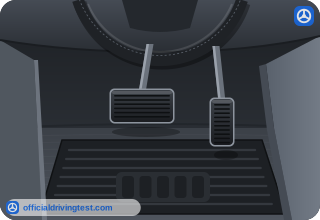
- Pivot from brake to accelerator while your heel stays on the floor
- Reach both pedals while your heel is lifted off the floor
- Rest on the brake while the other foot is on the floor
- Press the pedals without bending your knee
Show answer
Correct answer: Pivot from brake to accelerator while your heel stays on the floor
The seat should let your foot pivot smoothly from the brake to the accelerator with your heel on the floor.
Source: South Dakota Driver License Manual (Revised 11/2024), page 25
-
How high should the top of the steering wheel be?
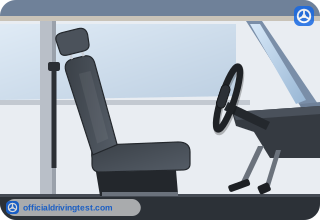
- No higher than the top of your head and above your chin
- Level with your belt buckle
- No higher than the top of your shoulders and below chin level
- Level with your elbows
Show answer
Correct answer: No higher than the top of your shoulders and below chin level
The top of the steering wheel should be no higher than the top of your shoulders and below chin level.
Source: South Dakota Driver License Manual (Revised 11/2024), page 25
-
How much space should there be between your chest and the steering wheel?
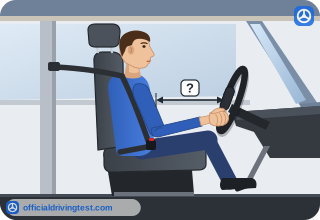
- 4 inches
- 10 inches
- 6 inches
- 15 inches
Show answer
Correct answer: 10 inches
The manual says there should be 10 inches between your chest and the steering wheel.
Source: South Dakota Driver License Manual (Revised 11/2024), page 25
-
What are head restraints designed to prevent?
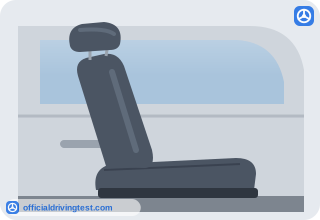
- Glare from headlights
- Slouching
- Seatbelt slack
- Whiplash
Show answer
Correct answer: Whiplash
Head restraints are designed to prevent whiplash.
Source: South Dakota Driver License Manual (Revised 11/2024), page 25
-
How should a head restraint be adjusted?
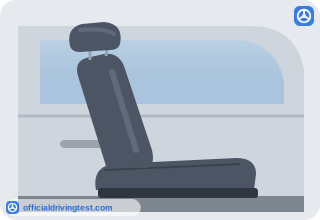
- It sits at the level of your shoulders
- It rests against your neck only
- It sits a few inches behind your head, below your ears
- It contacts the back of your head and is not below ear level
Show answer
Correct answer: It contacts the back of your head and is not below ear level
The head restraint should touch the back of your head and not sit below the level of your ears.
Source: South Dakota Driver License Manual (Revised 11/2024), page 25
-
Which mirror is the primary mirror for the view to the rear of the vehicle?
- The left outside mirror
- The inside mirror
- The right outside mirror
- A mirror mounted on the dashboard
Show answer
Correct answer: The inside mirror
The manual calls the inside mirror the primary mirror for the view to the rear.
Source: South Dakota Driver License Manual (Revised 11/2024), page 25
-
How should you adjust the rearview mirror?
- So that it shows only the road surface
- So that it shows mostly the back seat
- So that it frames the rear window
- So that it shows the left lane only
Show answer
Correct answer: So that it frames the rear window
The rearview mirror is adjusted so that it frames the rear window.
Source: South Dakota Driver License Manual (Revised 11/2024), page 25
-
If your vehicle has a day/night mirror, how should it be set?
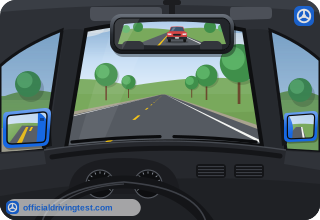
- For the time of day you are driving
- To night, so the mirror always dims glare
- To day at all times
- Facing the rear seat
Show answer
Correct answer: For the time of day you are driving
The day/night mirror should always be set for the time of day you are driving.
Source: South Dakota Driver License Manual (Revised 11/2024), page 25
-
What should outside mirrors be adjusted to do?
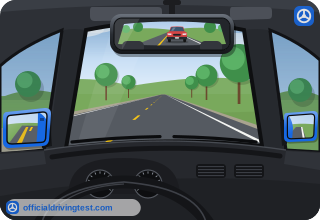
- Reduce blind spots and give maximum visibility to the sides and rear
- Show as much of the sides of your own vehicle as possible
- Show only the lane directly behind you, never the adjacent lanes
- Replace the need to check blind spots
Show answer
Correct answer: Reduce blind spots and give maximum visibility to the sides and rear
Outside mirrors are adjusted to reduce blind spots and to give maximum visibility to the sides and rear.
Source: South Dakota Driver License Manual (Revised 11/2024), page 25
-
To set the left side mirror using the method the manual encourages, what should the driver do?
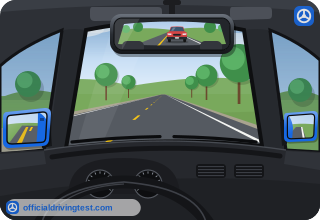
- Sit upright with your head centered and set the mirror to show the whole side of the vehicle
- Lean toward the center console and aim the mirror at the rear tire
- Rest the head against the closed window and set the mirror to barely show the edge of the vehicle
- Sit normally and aim the mirror at the lane beside you
Show answer
Correct answer: Rest the head against the closed window and set the mirror to barely show the edge of the vehicle
For the left mirror, the driver rests his or her head against the window and sets it to barely show the vehicle’s edge.
Source: South Dakota Driver License Manual (Revised 11/2024), page 25
-
To set the right-side mirror using the method the manual encourages, where should the driver’s head be?
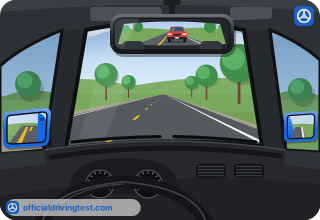
- Resting against the closed right window, as on the left side
- Directly below the rearview mirror or above the center console
- Against the driver’s head restraint
- Level with the left side mirror
Show answer
Correct answer: Directly below the rearview mirror or above the center console
For the right mirror, the driver leans right so the head is below the rearview mirror or above the center console.
Source: South Dakota Driver License Manual (Revised 11/2024), page 25
-
How much additional viewing area to each side does the manual’s outside mirror adjustment add?
- 2 to 4 degrees
- 5 to 8 degrees
- 20 to 24 degrees
- 12 to 16 degrees
Show answer
Correct answer: 12 to 16 degrees
The manual says this outside mirror setting adds 12 to 16 degrees of additional viewing area to each side.
Source: South Dakota Driver License Manual (Revised 11/2024), page 25
-
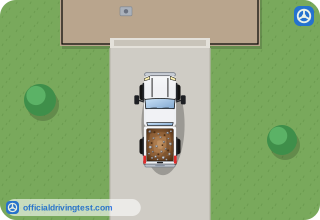
When is a load considered secure?
- When most of it is tied down with one rope
- When the heaviest items are placed near the rear of the vehicle
- Only when nothing can slide, shift, fall, sift or become airborne
- When it has been checked one time before leaving
Show answer
Correct answer: Only when nothing can slide, shift, fall, sift or become airborne
A load counts as secure only when nothing can slide, shift, fall or sift onto the road or become airborne.
Source: South Dakota Driver License Manual (Revised 11/2024), page 28
-
What may happen to a driver who fails to properly secure a load and causes a crash?
- A costly fine and jail time
- Only a warning
- Loss of the vehicle
- A required driving class only
Show answer
Correct answer: A costly fine and jail time
The manual says such drivers may face a costly fine and jail time.
Source: South Dakota Driver License Manual (Revised 11/2024), page 28
-
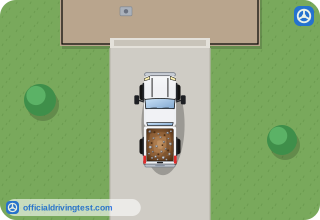
What does the manual say to use to tie down a load?
- Rope, netting, or straps
- Tape, string, or glue
- Loose blankets
- Wire or glue
Show answer
Correct answer: Rope, netting, or straps
The manual lists rope, netting or straps for tying down a load.
Source: South Dakota Driver License Manual (Revised 11/2024), page 28
-
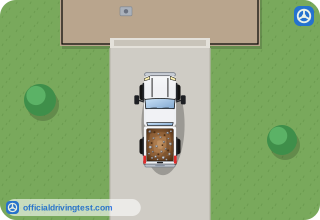
How should you tie large objects when securing a load?
- To other, smaller objects
- To the top of the load only
- Directly to your vehicle or trailer
- Loosely, so that they can shift as you drive
Show answer
Correct answer: Directly to your vehicle or trailer
Large objects are tied directly to the vehicle or trailer.
Source: South Dakota Driver License Manual (Revised 11/2024), page 28
-
What does the manual say about animals when you secure a load?
- They need no securing
- They should also be properly secured
- They should ride loose in the cargo area
- They should ride only in the front seat
Show answer
Correct answer: They should also be properly secured
The manual reminds drivers that animals should also be properly secured.
Source: South Dakota Driver License Manual (Revised 11/2024), page 28
-
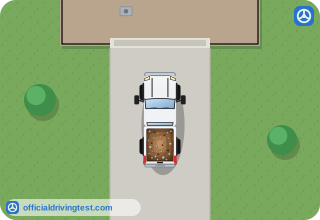
What should you always do to make sure your load is secure?
- Drive fast to test it
- Cover it and drive off
- Check it only after a crash
- Double check it
Show answer
Correct answer: Double check it
The manual says to always double check your load to make sure it is secure.
Source: South Dakota Driver License Manual (Revised 11/2024), page 28
-
Which of these should you NOT do when you secure a load?
- Tie it down with straps
- Double check it
- Tie large objects to the vehicle
- Overload your vehicle or trailer
Show answer
Correct answer: Overload your vehicle or trailer
The manual says not to overload your vehicle or trailer.
Source: South Dakota Driver License Manual (Revised 11/2024), page 28
-
According to the trip planning section, what is the best way to prolong the life of your car and save on fuel?
- Drive only on highways
- Use it as little as possible
- Warm it up before every trip
- Drive only at night
Show answer
Correct answer: Use it as little as possible
The manual says the best way to prolong a car’s life and save fuel is to use it as little as possible.
Source: South Dakota Driver License Manual (Revised 11/2024), page 28
-
Why does the trip planning section advise avoiding driving during heavy traffic?
- It uses less fuel
- It saves wear on the vehicle by keeping it warm
- It causes extra wear and tear on you and the vehicle
- It shortens the trip
Show answer
Correct answer: It causes extra wear and tear on you and the vehicle
Heavy traffic causes extra wear and tear on you and on the vehicle.
Source: South Dakota Driver License Manual (Revised 11/2024), page 28
-
Which of these does the trip planning section suggest to help reduce driving costs?
- Use carpools or share rides whenever possible
- Drive alone in heavy traffic
- Make a separate trip for each errand you have
- Never use public transportation
Show answer
Correct answer: Use carpools or share rides whenever possible
The manual suggests carpools and shared rides whenever possible.
Source: South Dakota Driver License Manual (Revised 11/2024), page 28
-
When you plan and combine your trips, what should you try to do?
- Go to as many places as possible on any one trip
- Make a separate trip for each place
- Drive only when the roads are completely empty
- Add more places to go each day
Show answer
Correct answer: Go to as many places as possible on any one trip
Combining trips means going to as many places as possible on one trip, which cuts down the number of trips.
Source: South Dakota Driver License Manual (Revised 11/2024), page 28
-
What does the trip planning section suggest you do before going out to get something?
- Go at a time of heavy traffic
- Go to each place separately
- Call ahead to make sure it is ready
- Drive by to see if the lot is full
Show answer
Correct answer: Call ahead to make sure it is ready
Calling ahead saves trips by making sure the item you need is available or ready.
Source: South Dakota Driver License Manual (Revised 11/2024), page 28
-
What is the first step to help reduce your driving costs?
- Switch to a smaller vehicle
- Determine your overall transportation needs
- Drive on the highway
- Buy a newer vehicle with better mileage
Show answer
Correct answer: Determine your overall transportation needs
The manual says first to determine your overall transportation needs.
Source: South Dakota Driver License Manual (Revised 11/2024), page 28
-
To start the engine, where should the gear selector lever be, with your right foot on the brake pedal?
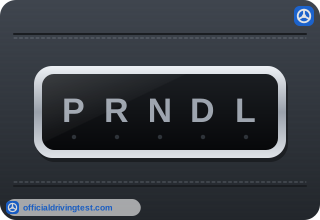
- Drive
- Reverse
- Low
- Park
Show answer
Correct answer: Park
The manual says to place your right foot on the brake and check that the gear selector lever is in park.
Source: South Dakota Driver License Manual (Revised 11/2024), page 29
-
Before you start the vehicle, what should you make sure about the parking brake?
- It is off
- It is half released
- It is on only on hills
- It is on
Show answer
Correct answer: It is on
The manual says to make sure the parking brake is on before you start the vehicle.
Source: South Dakota Driver License Manual (Revised 11/2024), page 29
-
If the vehicle has a manual transmission, what must be true before starting it?
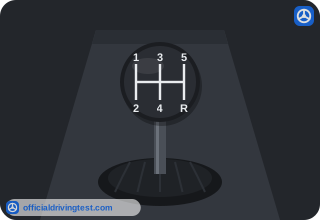
- It must be in first gear
- It must not be in gear
- It must be in reverse
- The clutch must be released
Show answer
Correct answer: It must not be in gear
A vehicle with a manual transmission must not be in gear when you start it, and some also need the clutch depressed.
Source: South Dakota Driver License Manual (Revised 11/2024), page 29
-
After you turn the ignition switch to the on position, what should you check?
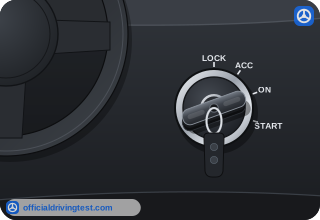
- The lug nuts
- The tread depth of each tire
- Indicator lights and gauges
- The wiper blades
Show answer
Correct answer: Indicator lights and gauges
The manual says to check indicator lights and gauges, such as fuel level, ABS and air bags.
Source: South Dakota Driver License Manual (Revised 11/2024), page 29
-
Before you move the vehicle, which areas should you check?
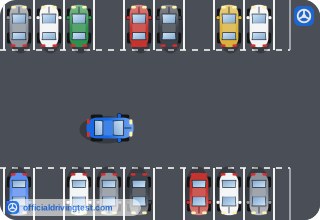
- Ahead for a safe path, and traffic to the sides and behind
- Only the path ahead and the traffic coming from behind
- Only traffic behind you
- Only traffic to the sides
Show answer
Correct answer: Ahead for a safe path, and traffic to the sides and behind
Before moving, check for a safe path ahead and for traffic to the sides and behind.
Source: South Dakota Driver License Manual (Revised 11/2024), page 29
-
How should you accelerate when moving the vehicle?
- Gradually and smoothly, with the heel of your foot on the floor
- Quickly, with your whole foot flat on the pedal and heel up
- Gradually, with your heel on the pedal
- Quickly, with your toes off the pedal
Show answer
Correct answer: Gradually and smoothly, with the heel of your foot on the floor
The manual says to accelerate gradually and smoothly with the top of the foot on the pedal and the heel on the floor.
Source: South Dakota Driver License Manual (Revised 11/2024), page 29
-
What can trying to start too fast cause, particularly on slippery surfaces?

- The engine to stall in every vehicle you drive
- The parking brake to engage
- The drive wheels to spin and the vehicle to slide
- The brakes to fail
Show answer
Correct answer: The drive wheels to spin and the vehicle to slide
Starting too fast can make the drive wheels spin and the vehicle slide, especially on slippery surfaces.
Source: South Dakota Driver License Manual (Revised 11/2024), page 29
-
Why should you practice using the clutch and accelerator in a manual-shift vehicle?
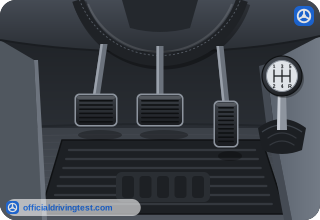
- So the brakes do not overheat
- So the engine does not over-rev or stall when shifting
- So the steering does not lock
- So the tires do not wear down unevenly on turns
Show answer
Correct answer: So the engine does not over-rev or stall when shifting
Practice with the clutch and accelerator keeps the engine from over-revving or stalling between gears.
Source: South Dakota Driver License Manual (Revised 11/2024), page 29
-
In a normal stop, how should you press the brake pedal?
- With your left foot
- By pressing and releasing quickly at the last moment
- With a quick tap, then release
- With steady pressure
Show answer
Correct answer: With steady pressure
The manual says to press the brake pedal with steady pressure until the vehicle stops.
Source: South Dakota Driver License Manual (Revised 11/2024), page 29
-
In which direction do you turn the steering wheel when you want the vehicle to move?
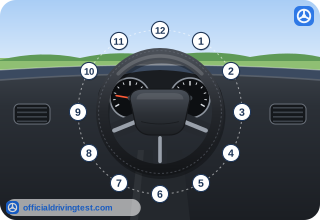
- In the direction you want the vehicle to move, forward or in reverse
- Away from the direction you want the vehicle to go in reverse
- Toward the center line when moving forward
- Only toward the right when moving in reverse
Show answer
Correct answer: In the direction you want the vehicle to move, forward or in reverse
The steering wheel is turned in the direction you want the vehicle to move, whether going forward or in reverse.
Source: South Dakota Driver License Manual (Revised 11/2024), page 29
-
Where should you look while steering?
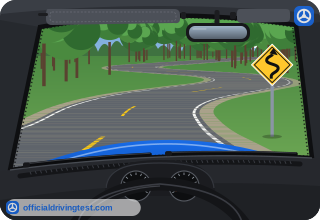
- Well down the road and on both sides of it
- At the road just in front of your vehicle
- At the dashboard
- At the vehicle directly ahead only
Show answer
Correct answer: Well down the road and on both sides of it
The manual says to look well down the road and on both sides, not just in front of your vehicle.
Source: South Dakota Driver License Manual (Revised 11/2024), page 29
-
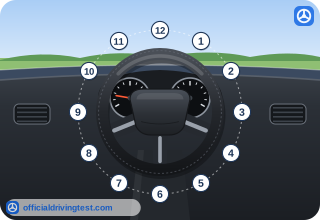
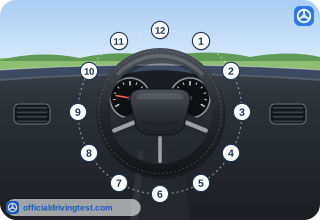
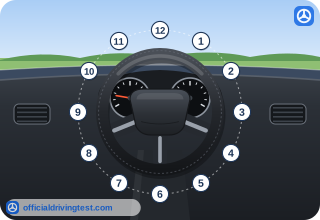
At which positions does the manual say to place your hands on the steering wheel?
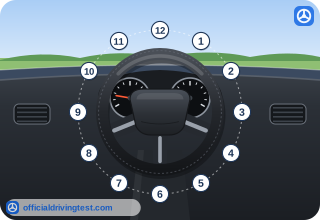
- 2 and 10 o’clock
- 1 and 11 o’clock
- 3 and 9 o’clock
- 4 and 8 o’clock
Show answer
Correct answer: 3 and 9 o’clock
Both hands go on the outside of the wheel at the 3 and 9 o’clock positions.
Source: South Dakota Driver License Manual (Revised 11/2024), page 29
-
Why is placing your hands at the 2 and 10 o’clock positions no longer recommended?
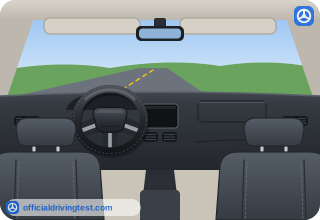
- It makes turning at high speed harder on a freeway
- It can be dangerous in a vehicle equipped with air bags
- It blocks the dashboard gauges
- It makes the horn hard to reach
Show answer
Correct answer: It can be dangerous in a vehicle equipped with air bags
The 2 and 10 positions can be dangerous when a vehicle has air bags.
Source: South Dakota Driver License Manual (Revised 11/2024), page 29
-
How should your grip on the steering wheel be?
- As tight as possible
- Light, with fingertips only
- Loose, with one hand
- Firm but gentle
Show answer
Correct answer: Firm but gentle
The manual says your grip should be firm but gentle.
Source: South Dakota Driver License Manual (Revised 11/2024), page 29
-
What part of your hands should you use on the steering wheel?
- The palms instead of your fingers
- Your thumbs wrapped around the rim
- The heels of your hands
- Your fingers instead of the palms
Show answer
Correct answer: Your fingers instead of the palms
The manual says to use your fingers, not your palms, on the wheel.
Source: South Dakota Driver License Manual (Revised 11/2024), page 29
-
Where should your thumbs be on the steering wheel?
- Hooked inside the rim
- Up along the face of the steering wheel
- Resting on the horn
- Wrapped around the back of the rim
Show answer
Correct answer: Up along the face of the steering wheel
The manual says to keep your thumbs up along the face of the steering wheel.
Source: South Dakota Driver License Manual (Revised 11/2024), page 29
-
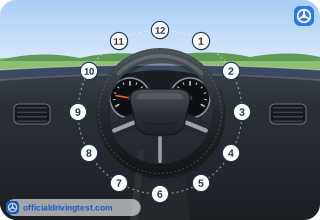
What should you never do while turning the steering wheel?
- Use your fingers instead of your palms
- Keep your thumbs up
- Grip it from the inside of the wheel
- Turn it by hand
Show answer
Correct answer: Grip it from the inside of the wheel
The manual says never to turn the wheel while gripping it from the inside.
Source: South Dakota Driver License Manual (Revised 11/2024), page 29
-
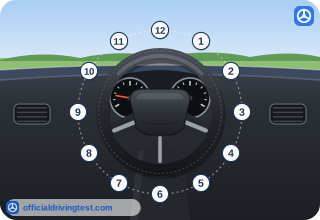
Which technique does the manual say to use when turning sharp corners?
- Hand-over-hand
- Palm-over-palm
- One-handed steering
- Letting the wheel slip through your fingers
Show answer
Correct answer: Hand-over-hand
For sharp corners, the manual says to turn the wheel using the hand-over-hand technique.
Source: South Dakota Driver License Manual (Revised 11/2024), page 29
-
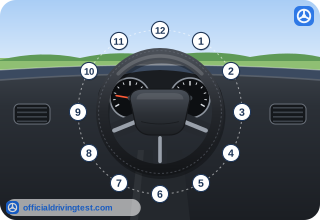
How should you straighten the steering wheel when you complete a turn?
- By hand
- By letting it slip through your fingers
- By lifting your foot off the accelerator
- By braking hard
Show answer
Correct answer: By hand
The manual says to straighten the wheel by hand and warns that letting it slip through your fingers could be dangerous.
Source: South Dakota Driver License Manual (Revised 11/2024), page 29
-
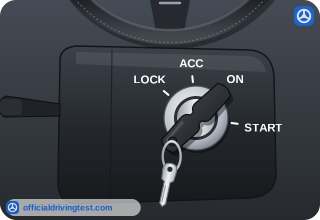
What should you never do with the ignition while the vehicle is still in motion?
- Turn it to the “on” position
- Leave the key in it
- Turn it to the “lock” position
- Check the gauges
Show answer
Correct answer: Turn it to the “lock” position
Turning the ignition to lock while moving locks the steering, and you would lose control of the vehicle.
Source: South Dakota Driver License Manual (Revised 11/2024), page 29
-
What happens if you turn the ignition to the “lock” position while the vehicle is moving and then try to turn the wheel?
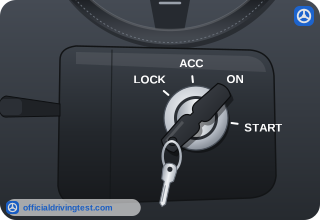
- The engine speeds up
- The steering locks and you lose control of the vehicle
- The brakes lock
- The engine stalls and the headlights go off at once
Show answer
Correct answer: The steering locks and you lose control of the vehicle
The steering wheel locking device will lock the steering, and you will lose control of the vehicle.
Source: South Dakota Driver License Manual (Revised 11/2024), page 29
-
Why should you check behind the vehicle before you get in to back up?
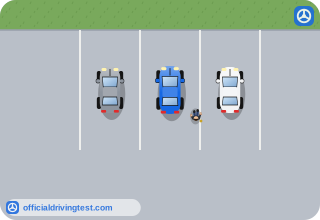
- The mirrors do not work well when the vehicle is parked
- The wheels may be turned
- Children and small objects cannot be seen from the driver’s seat
- The exhaust may be hot enough to burn small children
Show answer
Correct answer: Children and small objects cannot be seen from the driver’s seat
Children and small objects cannot be seen from the driver’s seat, so check behind the vehicle first.
Source: South Dakota Driver License Manual (Revised 11/2024), page 30
-
When backing up, where should you grasp the steering wheel with your left hand?
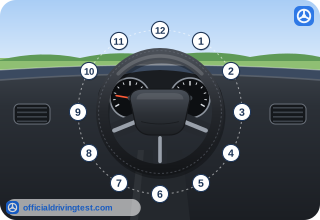
- At the 12 o’clock position
- At the 3 o’clock position
- At the 6 o’clock position
- At the 9 o’clock position
Show answer
Correct answer: At the 12 o’clock position
The manual says to grasp the steering wheel at the 12 o’clock position with your left hand when backing up.
Source: South Dakota Driver License Manual (Revised 11/2024), page 30
-
When backing up, where should you look?
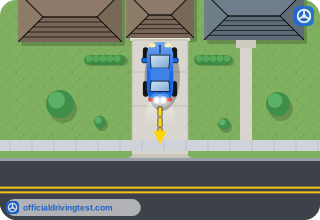
- Directly through the rear window
- Only in the rearview mirror
- Only in the outside mirrors
- At the front of the vehicle
Show answer
Correct answer: Directly through the rear window
You should place your right arm on the back of the passenger seat and look directly through the rear window.
Source: South Dakota Driver License Manual (Revised 11/2024), page 30
-
What should you keep in mind about mirrors when you back up?
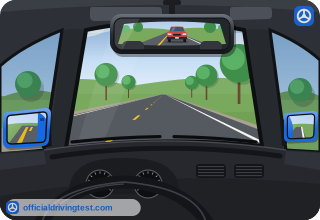
- They show the whole area directly behind the vehicle
- They show only the left side
- They do not show the area immediately behind the vehicle
- They work best at night
Show answer
Correct answer: They do not show the area immediately behind the vehicle
Mirrors help in backing, but they do not show the area immediately behind the vehicle.
Source: South Dakota Driver License Manual (Revised 11/2024), page 30
-
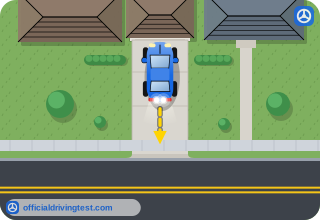
How should you accelerate when backing up?
- Quickly, to cut the time spent backing
- Gently and smoothly, keeping your speed slow
- Fast at first, then slow
- Only in short bursts
Show answer
Correct answer: Gently and smoothly, keeping your speed slow
When backing up, accelerate gently and smoothly and keep your speed slow, because the vehicle is much harder to steer.
Source: South Dakota Driver License Manual (Revised 11/2024), page 30
-
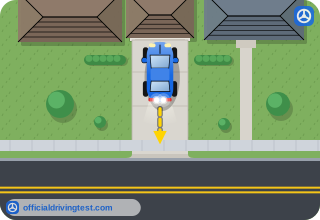
When backing up, which way should you steer?
- Slightly in the direction the front of the vehicle should move
- Sharply toward the curb
- Toward the center of the road
- Slightly in the direction the rear of the vehicle should move
Show answer
Correct answer: Slightly in the direction the rear of the vehicle should move
You steer slightly in the direction that you want the rear of the vehicle to move.
Source: South Dakota Driver License Manual (Revised 11/2024), page 30
-
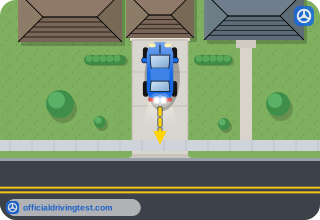
If you are backing up while turning, what should you do?
- Look only to the rear
- Use only the rearview mirror and outside mirrors
- Look only at the right side
- Make quick checks to the front and sides
Show answer
Correct answer: Make quick checks to the front and sides
When backing while turning, make quick checks to the front and sides in addition to looking to the rear.
Source: South Dakota Driver License Manual (Revised 11/2024), page 30
-
How long should you continue looking to the rear when backing up?
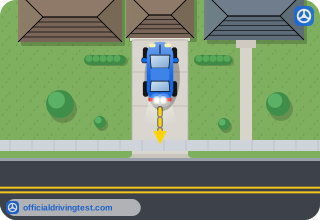
- Until the vehicle is in reverse
- Until coming to a complete stop
- Until you reach the curb
- Until you reach 5 mph
Show answer
Correct answer: Until coming to a complete stop
The manual says to keep looking to the rear until you come to a complete stop.
Source: South Dakota Driver License Manual (Revised 11/2024), page 30
-
After accelerating smoothly out of a turn, what should you make sure of?
- That your hazard lights are on
- That your turn signal is cancelled
- That your high beams are on
- That your parking brake is set
Show answer
Correct answer: That your turn signal is cancelled
The manual says to accelerate smoothly, make sure the turn signal is cancelled, and check traffic to the rear.
Source: South Dakota Driver License Manual (Revised 11/2024), page 38
-
When must you check traffic behind you more often?
- When traffic is heavy
- When traffic is light
- When the road is dry
- When driving on a straight road
Show answer
Correct answer: When traffic is heavy
The manual says you need to check more often when traffic is heavy so you know if someone is following closely or coming up too fast.
Source: South Dakota Driver License Manual (Revised 11/2024), page 49
-
Which of these counts as changing lanes?
- Slowing down for traffic in your own lane
- Stopping at a red light
- Entering the roadway from the curb or shoulder
- Following a curve in the road
Show answer
Correct answer: Entering the roadway from the curb or shoulder
The manual includes moving from one lane to another, merging from an entrance ramp and entering the roadway from the curb or shoulder.
Source: South Dakota Driver License Manual (Revised 11/2024), page 49
-
How can you see vehicles in your blind spots before changing lanes?
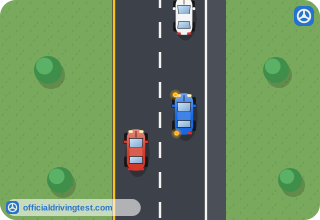
- Look carefully in the rear-view mirror
- Physically turn your head and look
- Look carefully in the side mirrors
- Slow down until the vehicles pass
Show answer
Correct answer: Physically turn your head and look
Blind spots cannot be seen through the mirrors, so you must turn your head and look.
Source: South Dakota Driver License Manual (Revised 11/2024), page 49
-
How far from an intersection must all drivers signal a turn?
- At least 25 feet
- At least 50 feet
- At least 300 feet
- At least 100 feet
Show answer
Correct answer: At least 100 feet
The manual lists signaling at least 100 feet from an intersection when turning or changing lanes.
Source: South Dakota Driver License Manual (Revised 11/2024), page 49
-
At higher speeds, which signal timing does the manual call better?
- Signaling 1 second before you wish to turn
- Signaling only at the moment you begin turning the wheel
- Signaling at least 4 to 5 seconds before you wish to turn
- Signaling 15 seconds before you wish to turn
Show answer
Correct answer: Signaling at least 4 to 5 seconds before you wish to turn
At higher speeds the manual says to signal at least 4 to 5 seconds before the turn.
Source: South Dakota Driver License Manual (Revised 11/2024), page 49
-
While checking traffic to the sides or over your shoulder, how long may you take your eyes off the road ahead?
- No more than an instant
- Up to 3 seconds
- Up to 5 seconds
- As long as the road is empty
Show answer
Correct answer: No more than an instant
Traffic ahead could stop suddenly, so you check quickly and keep track of what is in front of you.
Source: South Dakota Driver License Manual (Revised 11/2024), page 49
-
When is it very important to check behind your vehicle as you slow down?
- Only on roads with a posted speed limit above 55 miles per hour
- Where a driver behind would not expect it, like private driveways
- Only when you are already stopped
- Only when the driver behind has a large vehicle
Show answer
Correct answer: Where a driver behind would not expect it, like private driveways
Drivers behind may not expect a slowdown at driveways or parking spaces, so you check behind you first.
Source: South Dakota Driver License Manual (Revised 11/2024), page 49
-
When you must back up, how should you look behind the vehicle?
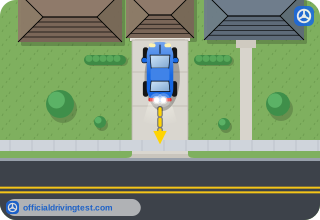
- Use only the rearview mirror
- Turn around and look directly through the rear window
- Check the mirrors and look through a side window
- Look through the side window as you roll
Show answer
Correct answer: Turn around and look directly through the rear window
The manual says not to depend on the rearview or side mirrors when backing.
Source: South Dakota Driver License Manual (Revised 11/2024), page 49
-
Why should you back slowly?
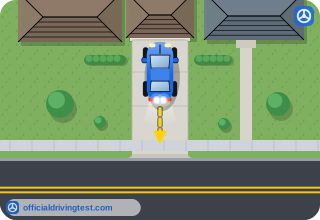
- The vehicle is much harder to steer while you are backing
- The brakes work less well when the vehicle is in reverse
- The mirrors do not show the rear corners
- Other drivers expect you to back slowly
Show answer
Correct answer: The vehicle is much harder to steer while you are backing
Steering is harder when backing, so a slow speed gives you better control.
Source: South Dakota Driver License Manual (Revised 11/2024), page 49
-
In a shopping center, what kind of parking space does the manual suggest you try to find?
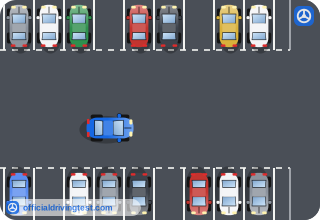
- One close to the entrance so you can leave again quickly
- One at the end of a row near the curb
- One you can drive through, so you can drive forward when you leave
- One where you can back in and leave forward
Show answer
Correct answer: One you can drive through, so you can drive forward when you leave
Backing is hard to do safely, so the manual suggests a space where you can drive through and then leave forward.
Source: South Dakota Driver License Manual (Revised 11/2024), page 49
-
When backing is necessary, what does the manual suggest whenever possible?
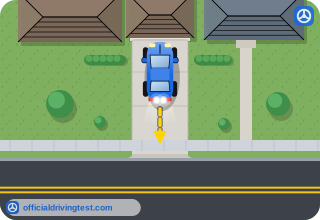
- Back up with the doors open so you can see around
- Back up with the hazard lights off
- Turn off the radio and use the horn
- Use a person outside the vehicle to help you back up
Show answer
Correct answer: Use a person outside the vehicle to help you back up
A helper outside the vehicle can see what you cannot, which makes backing safer.
Source: South Dakota Driver License Manual (Revised 11/2024), page 49
-
When going down a long or steep hill, what should you check?
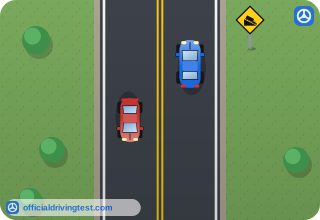
- The fuel gauge
- The mirrors
- The tire pressure
- The oil level
Show answer
Correct answer: The mirrors
Vehicles often build up speed on a steep grade, so check the mirrors for large trucks and buses that may be going too fast.
Source: South Dakota Driver License Manual (Revised 11/2024), page 50
-
Whose responsibility is it to make sure your vehicle is visible to other roadway users?
- The other drivers’
- The police’s
- Your own
- The vehicle owner’s only
Show answer
Correct answer: Your own
The manual says it is your responsibility to make your vehicle visible.
Source: South Dakota Driver License Manual (Revised 11/2024), page 54
-
What good rule applies on rainy, snowy, or foggy days?
- If you turn on the wipers, turn on the headlights
- Use only the parking lights while you drive
- Use the high beams
- Turn on the 4-way flashers
Show answer
Correct answer: If you turn on the wipers, turn on the headlights
Headlights make vehicles easier to see in these conditions.
Source: South Dakota Driver License Manual (Revised 11/2024), page 54
-
When should you turn on your headlights as evening comes?
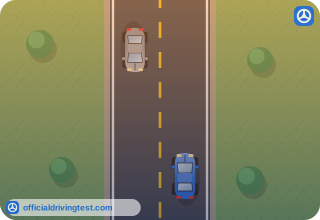
- When it begins to get dark
- Only after it is fully dark
- Only when other drivers turn theirs on
- Only on unlit roads
Show answer
Correct answer: When it begins to get dark
Even turning them on a little early helps other drivers see you.
Source: South Dakota Driver License Manual (Revised 11/2024), page 54
-
What are parking lights for?
- Driving in light fog
- Driving at dusk
- Parked vehicles only
- Driving in heavy rain
Show answer
Correct answer: Parked vehicles only
When you must drive with lights on, use the headlights.
Source: South Dakota Driver License Manual (Revised 11/2024), page 54
-
When driving away from a rising or setting sun, what should you do?
- Turn on only the parking lights
- Turn on the headlights
- Use the horn at intersections
- Drive on the shoulder
Show answer
Correct answer: Turn on the headlights
Drivers coming toward you may have trouble seeing your vehicle because of the glare.
Source: South Dakota Driver License Manual (Revised 11/2024), page 54
-
How far do high beams let you see compared with low beams?
- Half as far
- The same distance
- Four times as far
- Twice as far
Show answer
Correct answer: Twice as far
High beams help at night when there are no oncoming vehicles.
Source: South Dakota Driver License Manual (Revised 11/2024), page 55
-
When should you use high beams at night?
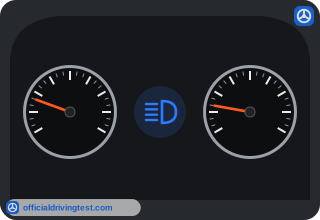
- Only on lighted city streets
- Only when following another vehicle
- Whenever there are no oncoming vehicles
- Whenever it is raining hard
Show answer
Correct answer: Whenever there are no oncoming vehicles
High beams are especially important on unfamiliar roads, in construction areas, or where people may be along the road.
Source: South Dakota Driver License Manual (Revised 11/2024), page 55
-
How close to an oncoming vehicle should you be when you dim your high beams?
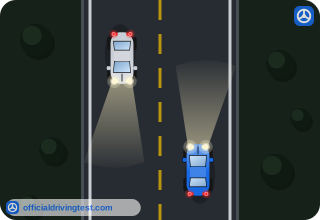
- Within 500 feet
- Within 100 feet
- Within 200 feet
- Within 1000 feet
Show answer
Correct answer: Within 500 feet
Dim the high beams whenever you come within 500 feet, about one block, of an oncoming vehicle.
Source: South Dakota Driver License Manual (Revised 11/2024), page 55
-
When should you use low beams behind another vehicle?
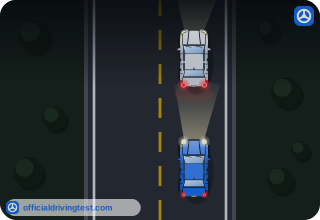
- Only when you are closer than 100 feet behind it
- Only when it is raining hard
- Only when the other driver flashes the lights
- Closer than 500 feet behind it, or in heavy traffic
Show answer
Correct answer: Closer than 500 feet behind it, or in heavy traffic
Low beams avoid glare for the driver ahead.
Source: South Dakota Driver License Manual (Revised 11/2024), page 55
-
Which lights should you use in fog, snow, or hard rain?
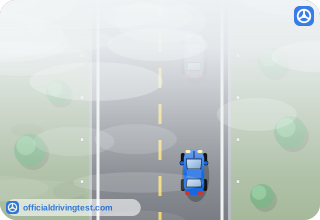
- High beams
- Low beams
- Parking lights only
- Hazard flashers only
Show answer
Correct answer: Low beams
Light from high beams reflects, causing glare and making it harder to see ahead.
Source: South Dakota Driver License Manual (Revised 11/2024), page 55
-
What should you do if an approaching driver fails to dim their headlights?
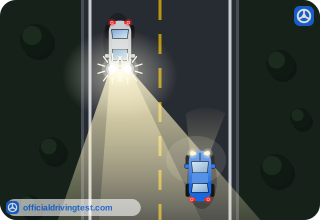
- Brake hard and stop in the lane until it passes
- Flash the high beams, then look toward the right side of the road
- Turn off your own headlights until that vehicle has passed
- Look straight at the oncoming lights
Show answer
Correct answer: Flash the high beams, then look toward the right side of the road
Looking toward the right side keeps you from being blinded and lets you see the road edge.
Source: South Dakota Driver License Manual (Revised 11/2024), page 55
-
Daytime running lights are not meant to replace headlights in which conditions?
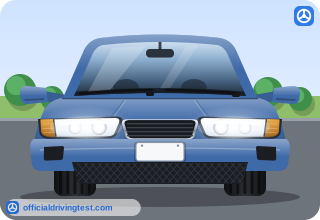
- Clear daylight on a dry, open road
- Daytime driving in light city traffic
- Sunny days on the highway
- Night driving and fog, rain, or snow
Show answer
Correct answer: Night driving and fog, rain, or snow
Daytime running lights do not replace headlights for night driving or when it is foggy, raining or snowing.
Source: South Dakota Driver License Manual (Revised 11/2024), page 55
-
If there is no immediate danger, how should you use the horn?
- A light tap
- A long steady blast
- A sharp blast
- Several taps in a row
Show answer
Correct answer: A light tap
A light tap should be all that is needed unless there is danger.
Source: South Dakota Driver License Manual (Revised 11/2024), page 55
-
Which of these is a time to give the horn a light tap?
- When you want another driver to hurry up and move
- When another driver makes an error
- When you want someone to drive faster
- Where you cannot see what is ahead, such as a sharp curve
Show answer
Correct answer: Where you cannot see what is ahead, such as a sharp curve
The manual lists a steep hill, a sharp curve or exiting a narrow alley as times for a light tap.
Source: South Dakota Driver License Manual (Revised 11/2024), page 55
-
When should you give the horn a sharp blast?
- When you greet a friend
- When another vehicle is in danger of hitting you
- When a driver slows for no reason
- When a pedestrian is crossing at an intersection
Show answer
Correct answer: When another vehicle is in danger of hitting you
If there is danger, do not be afraid to sound a sharp blast on the horn.
Source: South Dakota Driver License Manual (Revised 11/2024), page 55
-
In which situation should you not use the horn?
- When passing a driver who starts to turn into your lane
- When you cannot see what is ahead on a sharp curve
- Around blind pedestrians
- When another vehicle is in danger of hitting you
Show answer
Correct answer: Around blind pedestrians
Using the horn inappropriately could scare or anger another road user.
Source: South Dakota Driver License Manual (Revised 11/2024), page 55
-
When should you signal?
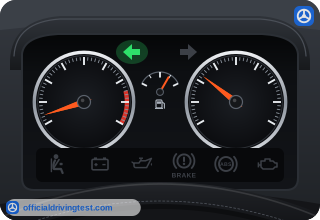
- Only when other vehicles are close by on the roadway
- Every time you change direction, even if no one else is around
- Only at intersections with traffic signals
- Only when a vehicle is behind you
Show answer
Correct answer: Every time you change direction, even if no one else is around
It is easy to miss someone who needs to know what you are doing.
Source: South Dakota Driver License Manual (Revised 11/2024), page 56
-
If there are driveways between you and where you want to turn, when should you signal?
- Before you reach them
- After you have passed them
- As soon as you see your turn
- Only after you have started the turn
Show answer
Correct answer: After you have passed them
If you signal earlier, another driver may think you plan to turn there and pull into your path.
Source: South Dakota Driver License Manual (Revised 11/2024), page 56
-
After you make a turn or lane change, what should you check?
- That the headlights are on
- That the hazard lights are on
- That the mirrors are adjusted
- That the turn signal shuts off
Show answer
Correct answer: That the turn signal shuts off
If it stays on, others might think you plan to turn again.
Source: South Dakota Driver License Manual (Revised 11/2024), page 56
-
How can you warn drivers behind you that you are about to slow down where they may not expect it?
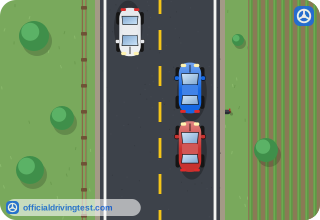
- Quickly tap the brake pedal 3 or 4 times
- Press the brake pedal firmly once
- Flash the high beams
- Sound the horn three times in a row
Show answer
Correct answer: Quickly tap the brake pedal 3 or 4 times
Tapping the brake pedal quickly lets those behind you know you are about to slow down.
Source: South Dakota Driver License Manual (Revised 11/2024), page 56
-
Why should you signal when you park or turn just before an intersection?
- The intersection may be closed to all traffic that day
- Traffic ahead may be turning
- Following traffic may expect you to continue to the intersection
- The signal light may be red
Show answer
Correct answer: Following traffic may expect you to continue to the intersection
Drivers behind may expect you to go on, so you signal that you will slow down.
Source: South Dakota Driver License Manual (Revised 11/2024), page 56
-
When may hand and arm signals be used in addition to turn signals?
- When the road is dry and traffic is moving very slowly
- When driving in a school zone
- When driving below 25 mph
- When bright sunlight makes flashing turn signals hard to see
Show answer
Correct answer: When bright sunlight makes flashing turn signals hard to see
Hand and arm signals can also be used for an antique vehicle that may not have turn signals.
Source: South Dakota Driver License Manual (Revised 11/2024), page 56
-
An antique vehicle that may lack turn signals is defined as one manufactured before when?
- July 1, 1948
- July 1, 1958
- July 1, 1968
- January 1, 1958
Show answer
Correct answer: July 1, 1958
The manual gives July 1, 1958 as the date for an antique vehicle.
Source: South Dakota Driver License Manual (Revised 11/2024), page 56
-
In the standard hand signals, how do you signal a left turn?
- Hand pointing up
- Hand pointing down
- Hand pointing straight out
- Hand pointing straight ahead
Show answer
Correct answer: Hand pointing straight out
The left turn hand signal is a hand pointing straight out.
Source: South Dakota Driver License Manual (Revised 11/2024), page 56
-
In the standard hand signals, how do you signal a right turn?
- Hand pointing up
- Hand pointing straight out
- Hand pointing down
- Hand pointing back
Show answer
Correct answer: Hand pointing up
The right turn hand signal is a hand pointing up.
Source: South Dakota Driver License Manual (Revised 11/2024), page 56
-
In the standard hand signals, how do you signal to stop or slow down?
- Hand pointing down
- Hand pointing straight out
- Hand pointing up
- Hand waving back and forth
Show answer
Correct answer: Hand pointing down
The stop or slow down hand signal is a hand pointing down.
Source: South Dakota Driver License Manual (Revised 11/2024), page 56
-
A vehicle is coming toward you at night with its high beams on. Where should you look to keep from being blinded?
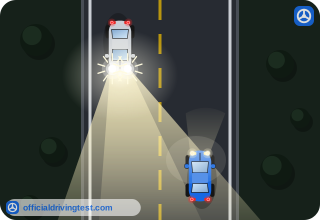
- Straight into the oncoming headlights
- Toward the right side of the road
- Toward the left side of the road
- Down at the dashboard
Show answer
Correct answer: Toward the right side of the road
Looking toward the right side of the road keeps you from being distracted or momentarily blinded by the bright lights.
Source: South Dakota Driver License Manual (Revised 11/2024), page 66
-
What kind of headlight beam should you use when you are following close behind another vehicle at night?
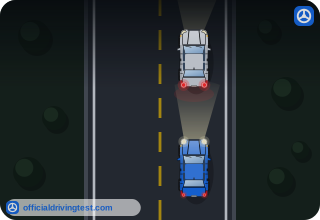
- High beams
- Parking lights only
- Fog lights only
- Low beams
Show answer
Correct answer: Low beams
Use low beams, not high beams, when you are following close behind another vehicle.
Source: South Dakota Driver License Manual (Revised 11/2024), page 66
-
Why should you use low beams in fog, rain, or snow?
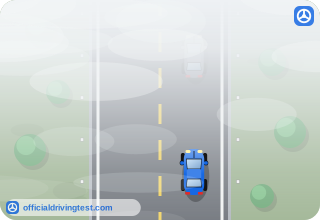
- Low beams are brighter and show more of the road ahead of you
- State law requires high beams to be turned off in all bad weather
- Light from high beams may cause glare and make it harder to see ahead
- High beams use more fuel and wear out the bulbs much faster
Show answer
Correct answer: Light from high beams may cause glare and make it harder to see ahead
Bright light from high beams bounces back in fog, rain, or snow and causes glare, which makes the road harder to see.
Source: South Dakota Driver License Manual (Revised 11/2024), page 66
-
What should you avoid doing when oncoming headlights are shining at you at night?
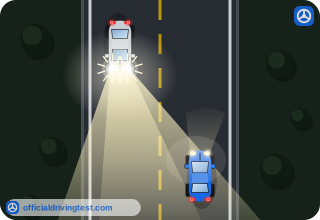
- Looking directly into the oncoming headlights
- Keeping your eyes searching the road in front of you
- Looking toward the right side of the road
- Using your low beams
Show answer
Correct answer: Looking directly into the oncoming headlights
Looking straight into oncoming headlights can blind you, so you keep your eyes searching the road in front of the vehicle.
Source: South Dakota Driver License Manual (Revised 11/2024), page 66
-
When driving at night, what should you try to find by searching well ahead of your headlight beams?
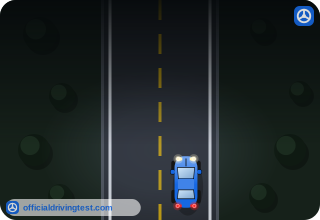
- Reflective mile markers
- The painted edge line
- Other drivers' turn signals
- Dark shapes on the roadway
Show answer
Correct answer: Dark shapes on the roadway
Searching beyond the reach of the headlights lets you spot dark shapes on the road in time to react.
Source: South Dakota Driver License Manual (Revised 11/2024), page 66
-
Why should you glance occasionally to the right and left when driving at night?
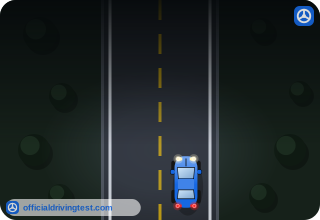
- To check whether other drivers behind you are using their high beams
- To find the edge of the pavement and hazards that may come from the sides
- To read the road signs that are farther away from the road ahead
- To rest your eyes from the glare of the oncoming headlights at night
Show answer
Correct answer: To find the edge of the pavement and hazards that may come from the sides
Glancing to both sides helps you locate the pavement edge and notice hazards that may enter from the sides.
Source: South Dakota Driver License Manual (Revised 11/2024), page 66
-
Why should you not wear sunglasses or colored lenses when driving at night or on an overcast day?
- They make oncoming headlights look dimmer than they are
- They are against South Dakota law at night
- They make it harder to judge your own speed
- They reduce how well you can see
Show answer
Correct answer: They reduce how well you can see
Tinted or colored lenses cut down how well you see, which is a problem in low light.
Source: South Dakota Driver License Manual (Revised 11/2024), page 66
-
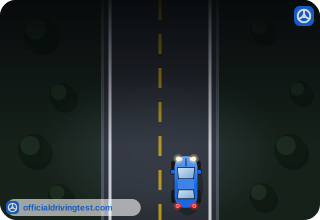
What limits how far ahead you can see when driving at night?
- The width of the road
- The speed of the traffic around you
- The light provided by your headlights
- The color of the pavement
Show answer
Correct answer: The light provided by your headlights
At night the distance you can see to the front is limited by the light your headlights provide.
Source: South Dakota Driver License Manual (Revised 11/2024), page 66
-
What should you never use on slippery roads?

- Low beams
- Cruise control
- Your turn signals
- Your seatbelt
Show answer
Correct answer: Cruise control
The manual says never to use cruise control on slippery roads.
Source: South Dakota Driver License Manual (Revised 11/2024), page 67
-
During a night storm, what should you avoid using to prevent glare?
- Low beams
- Windshield wipers
- Your headlights
- High beams
Show answer
Correct answer: High beams
High beams cause glare in a storm, so you should avoid them.
Source: South Dakota Driver License Manual (Revised 11/2024), page 67