South Dakota: Vehicle checks and basic control — Secure Your Load, Trip Planning, Basic Driving Practice Test
Questions in this part include: “What may happen to a driver who fails to properly secure a load and causes a crash?” · “When you plan and combine your trips, what should you try to do?”
Independent educational site · not affiliated with any government agency or DMV
Ready? Test yourself
- Instant feedback with an explanation
- Every answer cites its source in the manual
- Your best score is saved on this device
- Keyboard: press 1 to 4 to answer and Enter for the next question
Questions are original and based on the official manual "South Dakota Driver License Manual" (Revised 11/2024), South Dakota Department of Public Safety.
All 22 questions in this practice test
Take the test above first, then use this list to study. Tap “Show answer” to see the correct answer and explanation.
Show the questions and answersHide the questions
-
When is a load considered secure?
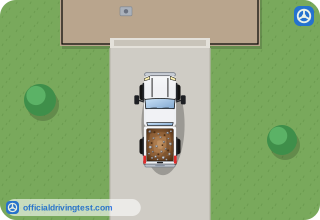
- When most of it is tied down with one rope
- When the heaviest items are placed near the rear of the vehicle
- Only when nothing can slide, shift, fall, sift or become airborne
- When it has been checked one time before leaving
Show answer
Correct answer: Only when nothing can slide, shift, fall, sift or become airborne
A load counts as secure only when nothing can slide, shift, fall or sift onto the road or become airborne.
Source: South Dakota Driver License Manual (Revised 11/2024), page 28
-
What may happen to a driver who fails to properly secure a load and causes a crash?
- A costly fine and jail time
- Only a warning
- Loss of the vehicle
- A required driving class only
Show answer
Correct answer: A costly fine and jail time
The manual says such drivers may face a costly fine and jail time.
Source: South Dakota Driver License Manual (Revised 11/2024), page 28
-
What does the manual say to use to tie down a load?
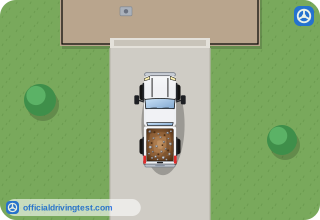
- Rope, netting, or straps
- Tape, string, or glue
- Loose blankets
- Wire or glue
Show answer
Correct answer: Rope, netting, or straps
The manual lists rope, netting or straps for tying down a load.
Source: South Dakota Driver License Manual (Revised 11/2024), page 28
-
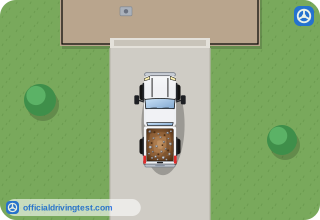
How should you tie large objects when securing a load?
- To other, smaller objects
- To the top of the load only
- Directly to your vehicle or trailer
- Loosely, so that they can shift as you drive
Show answer
Correct answer: Directly to your vehicle or trailer
Large objects are tied directly to the vehicle or trailer.
Source: South Dakota Driver License Manual (Revised 11/2024), page 28
-
What does the manual say about animals when you secure a load?
- They need no securing
- They should also be properly secured
- They should ride loose in the cargo area
- They should ride only in the front seat
Show answer
Correct answer: They should also be properly secured
The manual reminds drivers that animals should also be properly secured.
Source: South Dakota Driver License Manual (Revised 11/2024), page 28
-
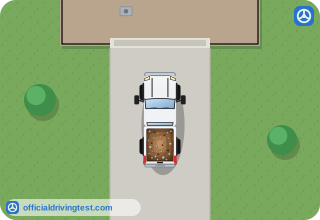
What should you always do to make sure your load is secure?
- Drive fast to test it
- Cover it and drive off
- Check it only after a crash
- Double check it
Show answer
Correct answer: Double check it
The manual says to always double check your load to make sure it is secure.
Source: South Dakota Driver License Manual (Revised 11/2024), page 28
-
Which of these should you NOT do when you secure a load?
- Tie it down with straps
- Double check it
- Tie large objects to the vehicle
- Overload your vehicle or trailer
Show answer
Correct answer: Overload your vehicle or trailer
The manual says not to overload your vehicle or trailer.
Source: South Dakota Driver License Manual (Revised 11/2024), page 28
-
According to the trip planning section, what is the best way to prolong the life of your car and save on fuel?
- Drive only on highways
- Use it as little as possible
- Warm it up before every trip
- Drive only at night
Show answer
Correct answer: Use it as little as possible
The manual says the best way to prolong a car’s life and save fuel is to use it as little as possible.
Source: South Dakota Driver License Manual (Revised 11/2024), page 28
-
Why does the trip planning section advise avoiding driving during heavy traffic?
- It uses less fuel
- It saves wear on the vehicle by keeping it warm
- It causes extra wear and tear on you and the vehicle
- It shortens the trip
Show answer
Correct answer: It causes extra wear and tear on you and the vehicle
Heavy traffic causes extra wear and tear on you and on the vehicle.
Source: South Dakota Driver License Manual (Revised 11/2024), page 28
-
Which of these does the trip planning section suggest to help reduce driving costs?
- Use carpools or share rides whenever possible
- Drive alone in heavy traffic
- Make a separate trip for each errand you have
- Never use public transportation
Show answer
Correct answer: Use carpools or share rides whenever possible
The manual suggests carpools and shared rides whenever possible.
Source: South Dakota Driver License Manual (Revised 11/2024), page 28
-
When you plan and combine your trips, what should you try to do?
- Go to as many places as possible on any one trip
- Make a separate trip for each place
- Drive only when the roads are completely empty
- Add more places to go each day
Show answer
Correct answer: Go to as many places as possible on any one trip
Combining trips means going to as many places as possible on one trip, which cuts down the number of trips.
Source: South Dakota Driver License Manual (Revised 11/2024), page 28
-
What does the trip planning section suggest you do before going out to get something?
- Go at a time of heavy traffic
- Go to each place separately
- Call ahead to make sure it is ready
- Drive by to see if the lot is full
Show answer
Correct answer: Call ahead to make sure it is ready
Calling ahead saves trips by making sure the item you need is available or ready.
Source: South Dakota Driver License Manual (Revised 11/2024), page 28
-
What is the first step to help reduce your driving costs?
- Switch to a smaller vehicle
- Determine your overall transportation needs
- Drive on the highway
- Buy a newer vehicle with better mileage
Show answer
Correct answer: Determine your overall transportation needs
The manual says first to determine your overall transportation needs.
Source: South Dakota Driver License Manual (Revised 11/2024), page 28
-
To start the engine, where should the gear selector lever be, with your right foot on the brake pedal?
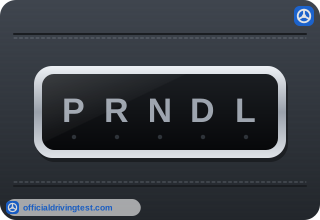
- Drive
- Reverse
- Low
- Park
Show answer
Correct answer: Park
The manual says to place your right foot on the brake and check that the gear selector lever is in park.
Source: South Dakota Driver License Manual (Revised 11/2024), page 29
-
Before you start the vehicle, what should you make sure about the parking brake?
- It is off
- It is half released
- It is on only on hills
- It is on
Show answer
Correct answer: It is on
The manual says to make sure the parking brake is on before you start the vehicle.
Source: South Dakota Driver License Manual (Revised 11/2024), page 29
-
If the vehicle has a manual transmission, what must be true before starting it?
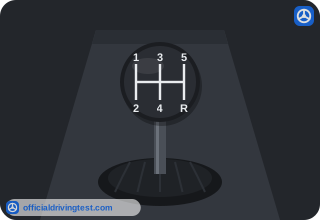
- It must be in first gear
- It must not be in gear
- It must be in reverse
- The clutch must be released
Show answer
Correct answer: It must not be in gear
A vehicle with a manual transmission must not be in gear when you start it, and some also need the clutch depressed.
Source: South Dakota Driver License Manual (Revised 11/2024), page 29
-
After you turn the ignition switch to the on position, what should you check?
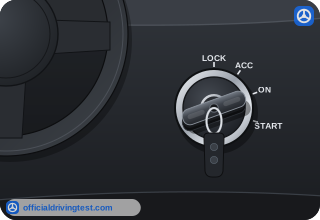
- The lug nuts
- The tread depth of each tire
- Indicator lights and gauges
- The wiper blades
Show answer
Correct answer: Indicator lights and gauges
The manual says to check indicator lights and gauges, such as fuel level, ABS and air bags.
Source: South Dakota Driver License Manual (Revised 11/2024), page 29
-
Before you move the vehicle, which areas should you check?
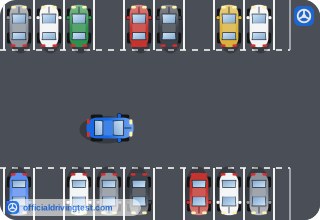
- Ahead for a safe path, and traffic to the sides and behind
- Only the path ahead and the traffic coming from behind
- Only traffic behind you
- Only traffic to the sides
Show answer
Correct answer: Ahead for a safe path, and traffic to the sides and behind
Before moving, check for a safe path ahead and for traffic to the sides and behind.
Source: South Dakota Driver License Manual (Revised 11/2024), page 29
-
How should you accelerate when moving the vehicle?
- Gradually and smoothly, with the heel of your foot on the floor
- Quickly, with your whole foot flat on the pedal and heel up
- Gradually, with your heel on the pedal
- Quickly, with your toes off the pedal
Show answer
Correct answer: Gradually and smoothly, with the heel of your foot on the floor
The manual says to accelerate gradually and smoothly with the top of the foot on the pedal and the heel on the floor.
Source: South Dakota Driver License Manual (Revised 11/2024), page 29
-
What can trying to start too fast cause, particularly on slippery surfaces?

- The engine to stall in every vehicle you drive
- The parking brake to engage
- The drive wheels to spin and the vehicle to slide
- The brakes to fail
Show answer
Correct answer: The drive wheels to spin and the vehicle to slide
Starting too fast can make the drive wheels spin and the vehicle slide, especially on slippery surfaces.
Source: South Dakota Driver License Manual (Revised 11/2024), page 29
-
Why should you practice using the clutch and accelerator in a manual-shift vehicle?
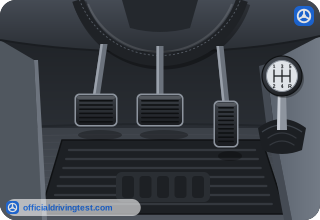
- So the brakes do not overheat
- So the engine does not over-rev or stall when shifting
- So the steering does not lock
- So the tires do not wear down unevenly on turns
Show answer
Correct answer: So the engine does not over-rev or stall when shifting
Practice with the clutch and accelerator keeps the engine from over-revving or stalling between gears.
Source: South Dakota Driver License Manual (Revised 11/2024), page 29
-
In a normal stop, how should you press the brake pedal?
- With your left foot
- By pressing and releasing quickly at the last moment
- With a quick tap, then release
- With steady pressure
Show answer
Correct answer: With steady pressure
The manual says to press the brake pedal with steady pressure until the vehicle stops.
Source: South Dakota Driver License Manual (Revised 11/2024), page 29