Pennsylvania: Road signs
Regulatory, warning, and guide signs and what to do when you see them. Split into 4 shorter tests so you're not stuck in one long quiz.
Independent educational site · not affiliated with any government agency or DMV
Choose a part
Road signs — Part 1
Regulatory, warning, and guide signs and what to do when you see them. — Part 1
Road signs — Part 2
Questions in this part include: “What can happen if an unauthorized vehicle is parked in a space marked with a RESERVED PARKING sign?”
Road signs — Part 3
Regulatory, warning, and guide signs and what to do when you see them. — Part 3
Road signs — Part 4
Questions in this part include: “Besides posted signs, what is another clue that a road is one-way?”
Questions are original and based on the official manual "Pennsylvania Driver's Manual" (Pub 95), Pennsylvania Department of Transportation (PennDOT), Bureau of Driver Licensing.
All 73 Road signs questions with answers
Choose a part above to take a practice test, or study every question and answer here.
Show the questions and answersHide the questions
1Part 119 questions
-
What do regulatory signs tell drivers?
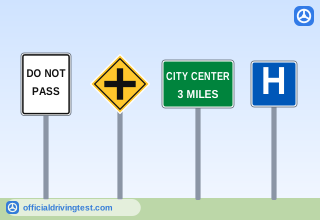
- General information about services and distances
- Possible hazards or changes in roadway conditions ahead
- What you must do, or must not do, according to the law
- Only which lane to use for through traffic
Show answer
Correct answer: What you must do, or must not do, according to the law
Regulatory signs tell you what you must do, or must not do, according to the law.
Source: Pennsylvania Driver's Manual (Pub 95), page 10 · Open this page in the manual (Manual page 10)
-
At an intersection with a STOP sign, what must you do?
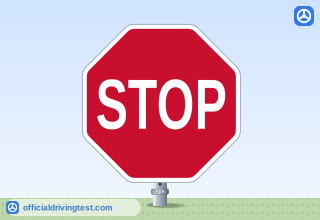
- Slow down enough to check for traffic, without a full stop
- Stop only if another vehicle is approaching the intersection
- Yield only if a pedestrian is visibly crossing
- Stop completely, then check for pedestrians and cross traffic
Show answer
Correct answer: Stop completely, then check for pedestrians and cross traffic
At a STOP sign you must stop completely, check for pedestrians and cross traffic, and clear the intersection before you go again; slowing down without a full stop is illegal.
Source: Pennsylvania Driver's Manual (Pub 95), page 10 · Open this page in the manual (Manual page 10)
-
At a YIELD sign, when must you come to a complete stop?
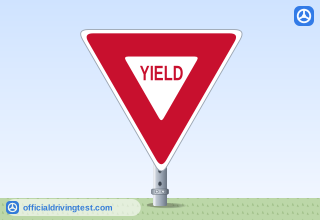
- Only when necessary to yield to traffic or pedestrians
- Every time, even when no other traffic is approaching
- Only at night, when other traffic is harder to see
- Never — a YIELD sign never requires stopping
Show answer
Correct answer: Only when necessary to yield to traffic or pedestrians
At a YIELD sign, you stop only when it is necessary; otherwise proceed when you can do so safely without interfering with normal traffic flow.
Source: Pennsylvania Driver's Manual (Pub 95), page 10 · Open this page in the manual (Manual page 10)
-
Where is a DO NOT ENTER sign placed?
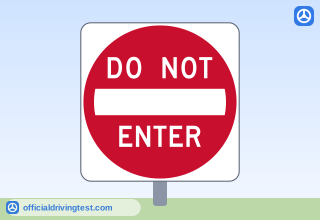
- At the far end of a one-way street or ramp
- Only at railroad crossings
- Only in school zones
- At the beginning of a one-way street or ramp
Show answer
Correct answer: At the beginning of a one-way street or ramp
The DO NOT ENTER sign is put at the beginning of one-way streets and ramps to tell you not to drive onto that street or ramp in the direction you are heading.
Source: Pennsylvania Driver's Manual (Pub 95), page 11 · Open this page in the manual (Manual page 11)
-
What is the purpose of a WRONG WAY sign?
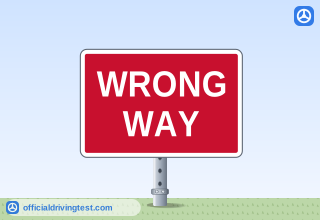
- It alerts you if you accidentally turned onto a one-way street or ramp
- It replaces the need for a DO NOT ENTER sign at the start of the street
- It marks the end of a divided highway and the start of two-way traffic
- It indicates a detour around a closed one-way street or ramp
Show answer
Correct answer: It alerts you if you accidentally turned onto a one-way street or ramp
WRONG WAY signs are placed farther down the one-way street or ramp to catch your attention if you accidentally turn onto it.
Source: Pennsylvania Driver's Manual (Pub 95), page 11 · Open this page in the manual (Manual page 11)
-
What does a ONE WAY sign indicate?
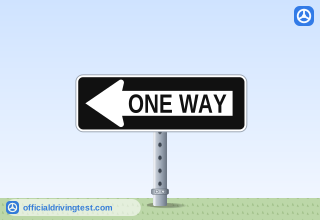
- Traffic may move in either direction on that street
- Traffic may move only in the direction the sign points
- The road ends ahead
- Parking is allowed only in the direction indicated
Show answer
Correct answer: Traffic may move only in the direction the sign points
The ONE WAY sign means traffic is allowed to move only in the direction the sign is pointing.
Source: Pennsylvania Driver's Manual (Pub 95), page 11 · Open this page in the manual (Manual page 11)
-
A DIVIDED HIGHWAY sign means the road you are on intersects with a divided highway, which consists of:
- A single two-way roadway with a center turn lane
- A roadway with no marked centerline
- Two one-way roadways separated by a median or guide rail
- Three lanes with reversible traffic direction
Show answer
Correct answer: Two one-way roadways separated by a median or guide rail
A divided highway is really two one-way roadways that are separated by a median or a guide rail.
Source: Pennsylvania Driver's Manual (Pub 95), page 11 · Open this page in the manual (Manual page 11)
-
At the DIVIDED HIGHWAY intersection described in the manual, what turns are permitted at the first roadway you reach, and then at the second?
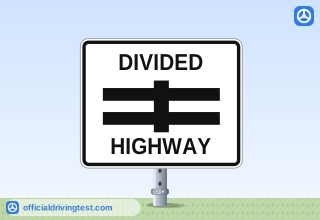
- Left only at the first roadway, then right only at the second
- Right or left at both roadways
- U-turns only at both roadways
- Right only at the first roadway, then left only at the second
Show answer
Correct answer: Right only at the first roadway, then left only at the second
At the first roadway of a divided highway you can only turn right, and at the second roadway you can only turn left.
Source: Pennsylvania Driver's Manual (Pub 95), page 11 · Open this page in the manual (Manual page 11)
-
NO TRUCKS, NO BICYCLES and NO PEDESTRIAN CROSSING signs mean:
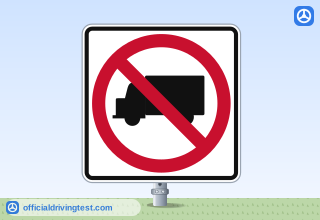
- Those operators or pedestrians may not use that roadway
- Those operators must yield to all other traffic on the road
- Those operators must reduce speed by half
- Those signs apply only during rush hour
Show answer
Correct answer: Those operators or pedestrians may not use that roadway
Operators of trucks, bicycles and pedestrians may not use roadways where these signs are posted.
Source: Pennsylvania Driver's Manual (Pub 95), page 11 · Open this page in the manual (Manual page 11)
-
What does a NO U-TURN sign prohibit?
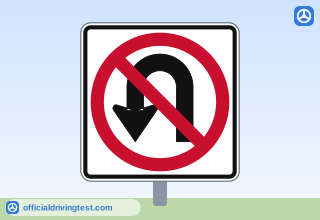
- Right turns from any lane at that intersection
- Making a complete turn to go in the opposite direction
- Left turns from any lane at that intersection
- Passing another vehicle going in the same direction
Show answer
Correct answer: Making a complete turn to go in the opposite direction
A NO U-TURN sign prohibits making a complete turn to go in the opposite direction.
Source: Pennsylvania Driver's Manual (Pub 95), page 11 · Open this page in the manual (Manual page 11)
-
What does a NO RIGHT TURN sign indicate at an intersection?
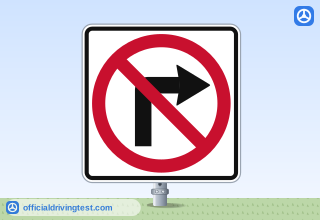
- Right turns are permitted only on red
- U-turns are prohibited
- Right turns are prohibited at that intersection
- Right turns are permitted only for buses
Show answer
Correct answer: Right turns are prohibited at that intersection
A NO RIGHT TURN sign indicates that right turns are prohibited at that intersection.
Source: Pennsylvania Driver's Manual (Pub 95), page 11 · Open this page in the manual (Manual page 11)
-
What does a NO LEFT TURN sign indicate at an intersection?
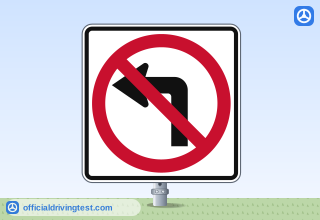
- Left turns are permitted only on green arrow
- Left turns are permitted only during off-peak hours
- U-turns are permitted instead
- Left turns are prohibited at that intersection
Show answer
Correct answer: Left turns are prohibited at that intersection
A NO LEFT TURN sign indicates that left turns are prohibited at that intersection.
Source: Pennsylvania Driver's Manual (Pub 95), page 11 · Open this page in the manual (Manual page 11)
-
Where a NO PARKING sign is posted, what does it mean?
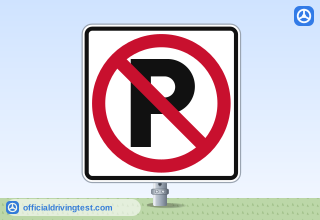
- You may not park a vehicle at that location
- You may park for up to 15 minutes
- Parking is allowed only for permit holders
- Parking is allowed only at night
Show answer
Correct answer: You may not park a vehicle at that location
You may not park a vehicle at locations where a NO PARKING sign is posted.
Source: Pennsylvania Driver's Manual (Pub 95), page 11 · Open this page in the manual (Manual page 11)
-
A DO NOT PASS sign is placed in areas where:
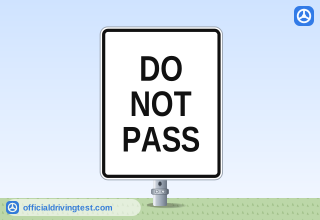
- pedestrians may not cross the roadway at any point
- you may not pass any vehicles going in the same direction
- you may not exceed the posted speed limit
- bicycles may not use the roadway at any time
Show answer
Correct answer: you may not pass any vehicles going in the same direction
A DO NOT PASS sign may be placed in areas where you may not pass any vehicles going in the same direction.
Source: Pennsylvania Driver's Manual (Pub 95), page 11 · Open this page in the manual (Manual page 11)
-
The DO NOT PASS sign is often accompanied by which yellow pennant-shaped sign?
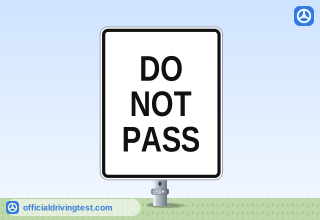
- SCHOOL ZONE AHEAD
- DIVIDED HIGHWAY BEGINS
- NO PASSING ZONE
- YIELD AHEAD
Show answer
Correct answer: NO PASSING ZONE
The DO NOT PASS sign is often accompanied by the yellow pennant-shaped NO PASSING ZONE sign.
Source: Pennsylvania Driver's Manual (Pub 95), page 11 · Open this page in the manual (Manual page 11)
-
A lane use control sign showing an arrow pointing left, posted over the left lane at an intersection where the adjoining lane may turn left or go straight, means:
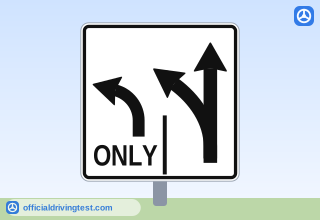
- traffic in the left lane may go straight or turn left
- the left lane is closed ahead
- traffic in the left lane must merge right before the intersection
- traffic in the left lane must turn left
Show answer
Correct answer: traffic in the left lane must turn left
This sign indicates that at the intersection ahead, traffic in the left lane must turn left, while traffic in the adjoining lane may turn left or continue straight.
Source: Pennsylvania Driver's Manual (Pub 95), page 11 · Open this page in the manual (Manual page 11)
-
A CENTER LANE LEFT TURN ONLY sign marks a lane that is:
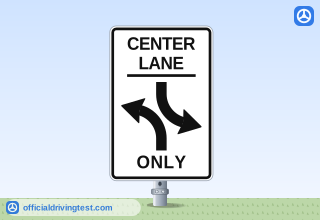
- only for left-turning vehicles from either direction
- open to through traffic only during rush hour
- reserved for buses and emergency vehicles only
- for U-turns only
Show answer
Correct answer: only for left-turning vehicles from either direction
This sign indicates a lane reserved for the exclusive use of left-turning vehicles in either direction, and is not to be used for through traffic or passing.
Source: Pennsylvania Driver's Manual (Pub 95), page 11 · Open this page in the manual (Manual page 11)
-
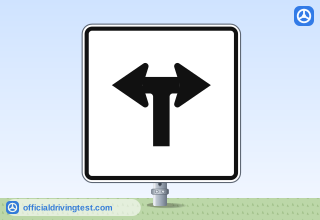
If you are in a lane controlled by a sign showing arrows pointing both left and right ("Turn to Left or Right"), what may you do?
- Only go straight through the intersection
- Travel in either direction the arrows point
- Only turn left
- Only turn right
Show answer
Correct answer: Travel in either direction the arrows point
If you are in a lane controlled by a sign showing arrows in two directions, you may travel in either direction the arrows point.
Source: Pennsylvania Driver's Manual (Pub 95), page 12 · Open this page in the manual (Manual page 12)
-
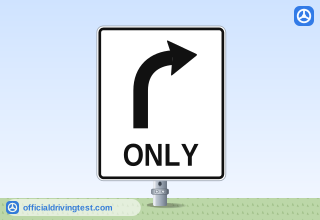
If you are in a lane controlled by a sign with a turn arrow and the word "ONLY" (such as TURN RIGHT ONLY), what must you do at the intersection?
- You may go straight if no other lane is open
- You may choose to go straight or turn
- You must turn, even if you entered that lane in error
- The sign is only a suggestion, not a requirement
Show answer
Correct answer: You must turn, even if you entered that lane in error
In a lane controlled by a turn arrow and the word "ONLY," you must make the turn shown, even if you are in that lane in error.
Source: Pennsylvania Driver's Manual (Pub 95), page 12 · Open this page in the manual (Manual page 12)
2Part 218 questions
-
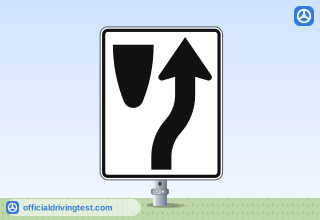
What do KEEP RIGHT signs direct drivers to do?
- Stay in the left lane at all times
- Exit the highway immediately
- Merge left before a traffic island or divider
- Keep to the right of a traffic island or divider
Show answer
Correct answer: Keep to the right of a traffic island or divider
KEEP RIGHT signs direct drivers to keep to the right of the traffic island or divider.
Source: Pennsylvania Driver's Manual (Pub 95), page 12 · Open this page in the manual (Manual page 12)
-
A RIGHT TURN SIGNAL sign posted close to a traffic signal indicates that:
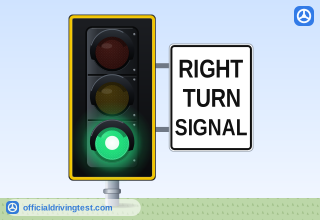
- the signal controls right turn movements
- right turns are prohibited at that intersection
- the signal is malfunctioning
- right turns must yield to pedestrians only
Show answer
Correct answer: the signal controls right turn movements
This sign is posted close to a traffic signal to indicate that the signal controls right turn movements.
Source: Pennsylvania Driver's Manual (Pub 95), page 12 · Open this page in the manual (Manual page 12)
-
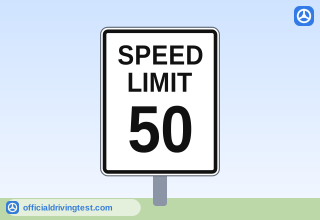
A SPEED LIMIT sign indicates:
- The minimum legal speed at all times
- The maximum legal speed under ideal conditions
- The average speed of traffic on that road
- The recommended speed only during poor weather
Show answer
Correct answer: The maximum legal speed under ideal conditions
A SPEED LIMIT sign indicates the maximum legal speed under ideal conditions for the stretch of highway where it is posted.
Source: Pennsylvania Driver's Manual (Pub 95), page 12 · Open this page in the manual (Manual page 12)
-
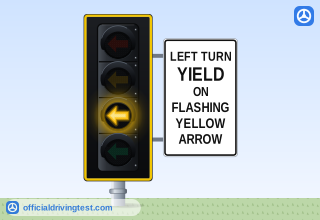
A LEFT TURN YIELD ON FLASHING YELLOW ARROW sign tells drivers that a left turn is permitted when the yellow arrow is flashing, but that they must:
- stop completely before turning regardless of traffic
- only turn if a police officer is present
- wait for the signal to turn green
- yield to oncoming traffic because the turn is not protected
Show answer
Correct answer: yield to oncoming traffic because the turn is not protected
This sign indicates a left turn is permitted when the yellow arrow is flashing, but you must yield to oncoming traffic because the turn is not protected.
Source: Pennsylvania Driver's Manual (Pub 95), page 12 · Open this page in the manual (Manual page 12)
-
A LEFT TURN YIELD ON GREEN sign, posted near a left-turn traffic signal, reminds drivers that left turns are not protected when:
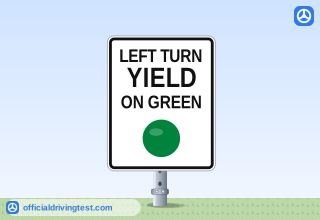
- the circular green signal comes on
- the flashing yellow arrow is operating
- the signal is red
- the pedestrian signal is active
Show answer
Correct answer: the circular green signal comes on
This sign indicates a left turn is permitted but you must yield to oncoming traffic; it reminds drivers left turns are not protected when the circular green signal comes on.
Source: Pennsylvania Driver's Manual (Pub 95), page 12 · Open this page in the manual (Manual page 12)
-
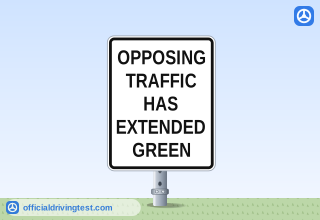
An OPPOSING TRAFFIC HAS EXTENDED GREEN sign is posted where:
- left turns are entirely prohibited at that intersection
- opposing traffic may still move after your signal has turned red
- your lane always has the right-of-way over opposing traffic
- the traffic signal at that intersection is not functioning
Show answer
Correct answer: opposing traffic may still move after your signal has turned red
This sign is posted where opposing traffic may continue to move after your signal has turned red.
Source: Pennsylvania Driver's Manual (Pub 95), page 12 · Open this page in the manual (Manual page 12)
-
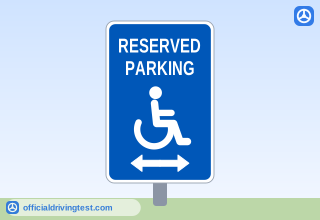
A RESERVED PARKING sign, even though it is not black and white, is classified as which type of sign?
- A warning sign
- A guide sign
- A regulatory sign
- An informational-only sign with no legal force
Show answer
Correct answer: A regulatory sign
Although the RESERVED PARKING sign is not black and white, it is a regulatory sign that marks parking reserved for disabled persons or severely disabled veterans.
Source: Pennsylvania Driver's Manual (Pub 95), page 12 · Open this page in the manual (Manual page 12)
-
What can happen if an unauthorized vehicle is parked in a space marked with a RESERVED PARKING sign?
- Nothing, unless a disabled person needs the space at that exact moment
- Only a warning is issued for a first offense
- The sign has no legal enforcement, only a moral one
- The vehicle is subject to a fine and towing costs
Show answer
Correct answer: The vehicle is subject to a fine and towing costs
Unauthorized vehicles parked in reserved parking spaces are subject to a fine and towing costs.
Source: Pennsylvania Driver's Manual (Pub 95), page 12 · Open this page in the manual (Manual page 12)
-
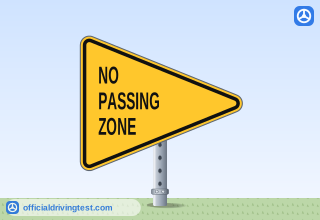
Where is the NO PASSING ZONE pennant sign placed?
- On the right side of the road facing oncoming traffic
- In the center of the roadway
- On the left side of the road facing the driver
- Only at railroad crossings
Show answer
Correct answer: On the left side of the road facing the driver
The NO PASSING ZONE sign is placed on the left side of the road facing the driver.
Source: Pennsylvania Driver's Manual (Pub 95), page 13 · Open this page in the manual (Manual page 13)
-
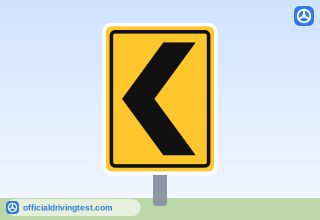
CHEVRON signs, used along a curve, indicate that:
- the road ahead is closed
- there is a railroad crossing ahead
- you must reduce speed to the posted advisory limit only
- the road bends in the direction the chevron points
Show answer
Correct answer: the road bends in the direction the chevron points
There is a sharp change in the direction of the road; the road bends in the direction the chevron points.
Source: Pennsylvania Driver's Manual (Pub 95), page 13 · Open this page in the manual (Manual page 13)
-
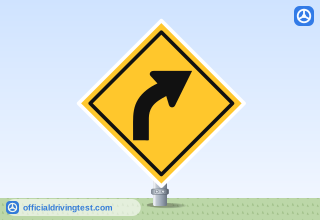
When approaching a RIGHT CURVE sign, how should you position your vehicle?
- Slightly to the right of the center of your lane
- In the center of your lane only
- Slightly to the left of the center of your lane
- As close to the shoulder as possible
Show answer
Correct answer: Slightly to the right of the center of your lane
As you drive through a right-bending curve, you need to slow down and position your vehicle slightly to the right of the center of your lane.
Source: Pennsylvania Driver's Manual (Pub 95), page 13 · Open this page in the manual (Manual page 13)
-
A SHARP LEFT TURN sign (as opposed to a regular LEFT CURVE sign) indicates:
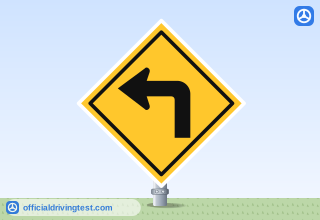
- that the curve has already ended and you may speed up
- a sharp turn ahead that requires slowing down substantially
- a gentler curve than a standard left curve sign
- that no other traffic uses this road
Show answer
Correct answer: a sharp turn ahead that requires slowing down substantially
A SHARP LEFT TURN sign means the road ahead turns sharply to the left, and you need to slow down substantially.
Source: Pennsylvania Driver's Manual (Pub 95), page 13 · Open this page in the manual (Manual page 13)
-
A SET OF CURVES sign indicates that the road ahead:
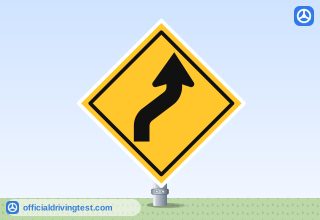
- curves only once, gently, to the left
- is a dead end
- curves one way and then back the other way
- has a railroad crossing
Show answer
Correct answer: curves one way and then back the other way
The SET OF CURVES sign means the road ahead curves first in one direction and then back in the other direction.
Source: Pennsylvania Driver's Manual (Pub 95), page 13 · Open this page in the manual (Manual page 13)
-
How does a RIGHT AND LEFT SHARP TURNS sign differ from a SET OF CURVES sign?
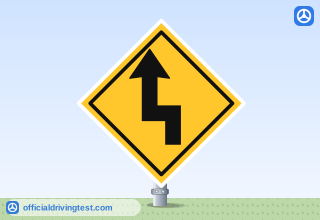
- It indicates the same gentle curves, just in reverse order
- It indicates only a single curve
- It indicates a winding road with three or more curves
- It indicates sharp turns, so you must slow down substantially
Show answer
Correct answer: It indicates sharp turns, so you must slow down substantially
The RIGHT AND LEFT SHARP TURNS sign means the road ahead turns sharply first in one direction and then back in the other, requiring you to slow down substantially.
Source: Pennsylvania Driver's Manual (Pub 95), page 13 · Open this page in the manual (Manual page 13)
-
A WINDING ROAD sign indicates that the road ahead has:
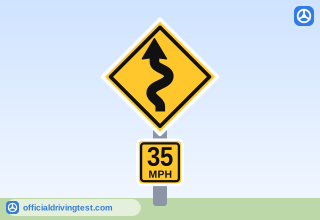
- three or more curves in a row
- exactly one curve
- two curves in opposite directions
- no curves, but a steep grade
Show answer
Correct answer: three or more curves in a row
The WINDING ROAD (SERIES OF CURVES) sign indicates there are three or more curves in a row on the road ahead.
Source: Pennsylvania Driver's Manual (Pub 95), page 14 · Open this page in the manual (Manual page 14)
-
A ONE DIRECTION LARGE ARROW sign warns that:
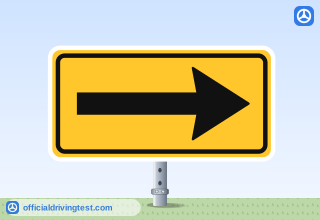
- the road ahead is one-way in the direction of the arrow
- the road ahead changes direction at an extreme angle
- a merge is required immediately
- the road ahead has a railroad crossing
Show answer
Correct answer: the road ahead changes direction at an extreme angle
Before you reach an extreme curve marked with this sign, slow down as much as you would to make a turn at an intersection.
Source: Pennsylvania Driver's Manual (Pub 95), page 14 · Open this page in the manual (Manual page 14)
-
A ROAD ENTERING CURVE sign warns that:
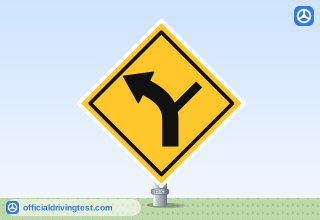
- the main road ends at a T-intersection just past the curve
- trucks traveling too fast may roll over on the curve
- the main road curves left with a side road entering from the right
- a divided highway begins ahead, just past the curve
Show answer
Correct answer: the main road curves left with a side road entering from the right
The main road curves to the left with a side road entering from the right; a driver preparing to enter may not see you approaching around the curve.
Source: Pennsylvania Driver's Manual (Pub 95), page 14 · Open this page in the manual (Manual page 14)
-
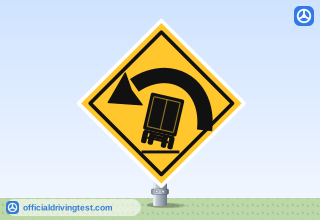
A TRUCK ROLLOVER sign identifies curves where:
- only passenger vehicles are permitted
- trucks must stop before proceeding
- trucks are prohibited entirely
- trucks at excessive speeds may roll over
Show answer
Correct answer: trucks at excessive speeds may roll over
This sign identifies curves where trucks traveling at excessive speeds have a potential to rollover.
Source: Pennsylvania Driver's Manual (Pub 95), page 14 · Open this page in the manual (Manual page 14)
3Part 318 questions
-
An ADVISORY SPEED sign posted below a curve warning sign showing "25 MPH" tells you:
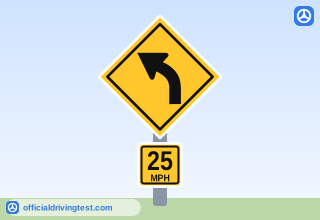
- the highest speed you should use around that curve
- the minimum speed required through the curve
- the legal speed limit for the entire highway
- the speed limit only for trucks
Show answer
Correct answer: the highest speed you should use around that curve
An advisory speed sign shows the highest speed you should travel around the curve, such as 25 mph for a sharp left curve.
Source: Pennsylvania Driver's Manual (Pub 95), page 14 · Open this page in the manual (Manual page 14)
-
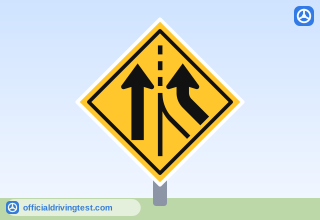
An ADDED LANE sign means merging is not necessary because:
- the entering traffic must come to a complete stop first
- the ramp is closed
- the entering traffic uses a new lane added to the roadway
- the major roadway will narrow ahead
Show answer
Correct answer: the entering traffic uses a new lane added to the roadway
An ADDED LANE sign means merging is not necessary because the entering traffic uses a new lane that has been added to the roadway.
Source: Pennsylvania Driver's Manual (Pub 95), page 14 · Open this page in the manual (Manual page 14)
-
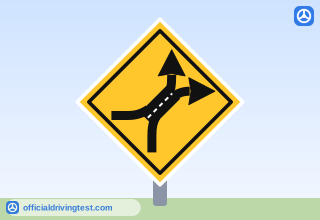
A WEAVE AREA sign warns that:
- the road ahead is closed for construction
- you are approaching the start of a divided highway
- a passing lane is beginning
- you will merge while some traffic exits across your path
Show answer
Correct answer: you will merge while some traffic exits across your path
A WEAVE AREA sign is used to warn that you will be merging with another roadway as some traffic is exiting and crossing your path.
Source: Pennsylvania Driver's Manual (Pub 95), page 14 · Open this page in the manual (Manual page 14)
-
A DIVIDED HIGHWAY BEGINS sign warns that the highway ahead becomes a divided highway. What should you do?
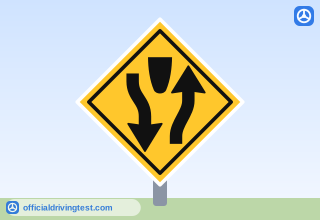
- Keep to the right of the divider or median
- Move to the left of the divider or median
- Straddle the median for better visibility
- Stop before entering the divided section
Show answer
Correct answer: Keep to the right of the divider or median
As the highway becomes divided, keep to the right of the divider or median.
Source: Pennsylvania Driver's Manual (Pub 95), page 15 · Open this page in the manual (Manual page 15)
-
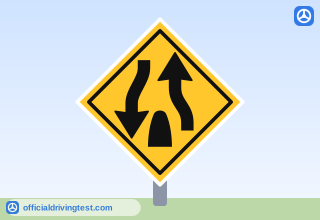
A DIVIDED HIGHWAY ENDS sign warns that you will soon be on a roadway with two-way traffic. What should you do?
- Keep to the left of the centerline
- Keep to the right of the centerline and watch for oncoming traffic
- Continue in either lane since the road is still divided
- Stop and wait for a signal before proceeding
Show answer
Correct answer: Keep to the right of the centerline and watch for oncoming traffic
When the divided highway ends, keep to the right of the centerline and watch for oncoming traffic.
Source: Pennsylvania Driver's Manual (Pub 95), page 15 · Open this page in the manual (Manual page 15)
-
A TWO-WAY TRAFFIC AHEAD sign warns that a one-way street or roadway ends ahead, and you will be traveling on a road with:
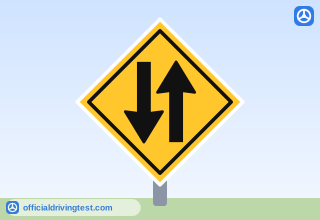
- a single lane shared in both directions
- a divided highway with a median
- two lanes moving in opposite directions
- no marked lanes at all
Show answer
Correct answer: two lanes moving in opposite directions
The one-way street or roadway ends ahead; you will then be traveling on a road with two lanes of traffic moving in opposite directions.
Source: Pennsylvania Driver's Manual (Pub 95), page 15 · Open this page in the manual (Manual page 15)
-
A LANE ENDS MERGE LEFT sign tells drivers that:
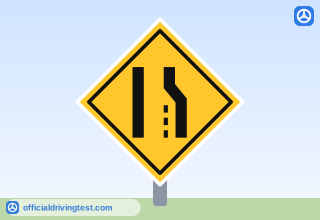
- the left lane on a multi-lane road will end ahead and traffic must merge right
- all lanes end ahead at a dead end
- a new lane is being added on the left
- one lane on a multi-lane roadway will end ahead and traffic in the right lane must merge left
Show answer
Correct answer: one lane on a multi-lane roadway will end ahead and traffic in the right lane must merge left
This sign tells you one lane on a multi-lane roadway will end ahead, and in this example the traffic in the right lane must merge left.
Source: Pennsylvania Driver's Manual (Pub 95), page 15 · Open this page in the manual (Manual page 15)
-
What is the purpose of intersection-type warning signs, such as the T-intersection or Y-intersection signs?
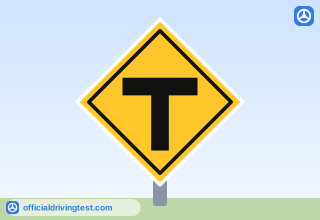
- To show in advance how the roads join each other
- To indicate the posted speed limit at the intersection
- To show which lane is reserved for left turns only
- To indicate that the intersection has a traffic signal
Show answer
Correct answer: To show in advance how the roads join each other
These signs let you know in advance how the roads join and warn of possible problems with the movements of other vehicles.
Source: Pennsylvania Driver's Manual (Pub 95), page 15 · Open this page in the manual (Manual page 15)
-
A TWO DIRECTION LARGE ARROW sign placed at the far side of a T-intersection tells you:
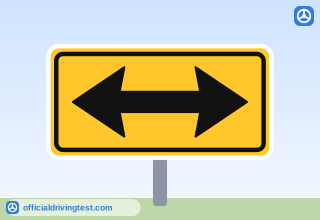
- you may continue straight through the intersection
- you can only go left or right at the intersection
- the intersection is closed ahead
- you must yield to all cross traffic
Show answer
Correct answer: you can only go left or right at the intersection
This sign tells you that you can only go left or right at a T-intersection, because the road you are on does not continue straight through.
Source: Pennsylvania Driver's Manual (Pub 95), page 15 · Open this page in the manual (Manual page 15)
-
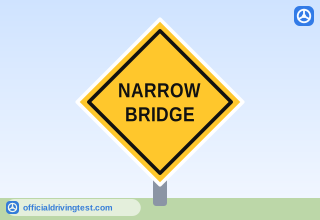
A NARROW BRIDGE OR UNDERPASS AHEAD sign warns that:
- the bridge or underpass is closed to all traffic
- the bridge is for pedestrians only
- each lane narrows and there is generally no shoulder
- a toll is required to cross
Show answer
Correct answer: each lane narrows and there is generally no shoulder
Each lane on the bridge or underpass becomes narrower, and there generally is no shoulder, so you need to slow down and stay in your lane.
Source: Pennsylvania Driver's Manual (Pub 95), page 15 · Open this page in the manual (Manual page 15)
-
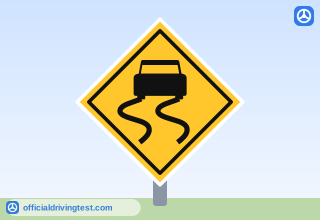
In wet weather, when you see a SLIPPERY WHEN WET sign, what should you do?
- Accelerate quickly through the area to reduce exposure time
- Brake hard well before the sign to test traction
- Ignore it unless it is actively raining
- Slow down, increase following distance and turn very slowly
Show answer
Correct answer: Slow down, increase following distance and turn very slowly
In wet weather, reduce your speed, increase your following distance, avoid quick acceleration or braking, and make turns at a very slow speed.
Source: Pennsylvania Driver's Manual (Pub 95), page 15 · Open this page in the manual (Manual page 15)
-
A DEER CROSSING sign is posted:
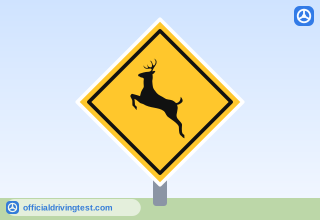
- in areas where deer often cross and deer crashes have occurred
- in every rural area, regardless of deer activity or crashes
- only near state game lands
- only during hunting season
Show answer
Correct answer: in areas where deer often cross and deer crashes have occurred
This sign is posted in areas where deer frequently cross and crashes with deer have occurred.
Source: Pennsylvania Driver's Manual (Pub 95), page 16 · Open this page in the manual (Manual page 16)
-
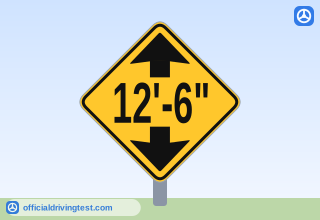
A LOW CLEARANCE sign, posted at an underpass, tunnel or parking garage entrance, means:
- only trucks are prohibited from entering the structure
- do not enter if your vehicle is taller than the posted height
- the structure is closed for repairs
- you must reduce speed to 10 mph before entering
Show answer
Correct answer: do not enter if your vehicle is taller than the posted height
Do not enter a low clearance area if your vehicle is taller than the height listed on the sign.
Source: Pennsylvania Driver's Manual (Pub 95), page 16 · Open this page in the manual (Manual page 16)
-
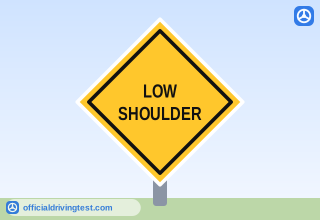
A LOW SHOULDER sign is used where the shoulder is:
- level with the road at all points
- unpaved but level with the road
- as much as three inches below the level of the road
- more than one foot below the level of the road
Show answer
Correct answer: as much as three inches below the level of the road
The LOW SHOULDER sign is used where the shoulder is as much as three inches below the level of the road.
Source: Pennsylvania Driver's Manual (Pub 95), page 16 · Open this page in the manual (Manual page 16)
-
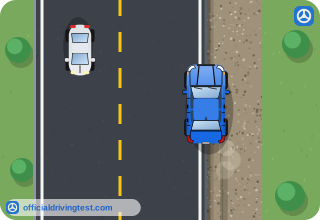
If one of your wheels drops off the roadway onto a low or soft shoulder, what should you do?
- Slam on the brakes immediately to stop before losing control
- Steer sharply back onto the roadway right away
- Accelerate to regain traction before correcting
- Do not slam on the brakes or steer sharply to get back on the road
Show answer
Correct answer: Do not slam on the brakes or steer sharply to get back on the road
If a wheel drops off onto a low or soft shoulder, do not slam on the brakes or steer sharply — you can easily lose control of your vehicle.
Source: Pennsylvania Driver's Manual (Pub 95), page 16 · Open this page in the manual (Manual page 16)
-
A HILL/DOWNGRADE sign warns of a steep hill ahead. What should you do?
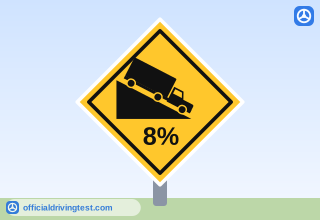
- Slow down and be ready to shift to a lower gear
- Speed up to maintain momentum up the next hill
- Ride the brakes continuously down the entire hill
- Shift into neutral to coast down the hill
Show answer
Correct answer: Slow down and be ready to shift to a lower gear
Slow down and be ready to shift to a lower gear to control your speed and save wear and tear on your brakes.
Source: Pennsylvania Driver's Manual (Pub 95), page 16 · Open this page in the manual (Manual page 16)
-
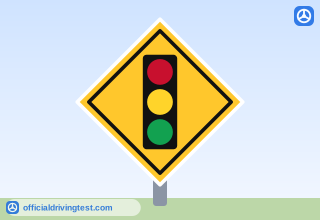
A TRAFFIC SIGNAL AHEAD sign warns you that:
- you must stop immediately at the sign
- a traffic signal ahead may be hidden by a curve or hill
- the traffic signal ahead is malfunctioning or turned off
- a railroad crossing signal is ahead
Show answer
Correct answer: a traffic signal ahead may be hidden by a curve or hill
A traffic signal is present at the intersection ahead; you may not be able to see it because of a curve or hill, and vehicles may be stopped ahead.
Source: Pennsylvania Driver's Manual (Pub 95), page 16 · Open this page in the manual (Manual page 16)
-
A STOP SIGN AHEAD sign warns that:
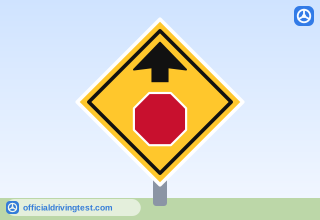
- you must stop at the location of this sign itself
- the intersection ahead has no traffic control at all
- a STOP sign is ahead, though you may not be able to see it
- a yield sign, not a stop sign, is actually ahead
Show answer
Correct answer: a STOP sign is ahead, though you may not be able to see it
A STOP sign is present at the intersection ahead which you may not be able to see; slow down in preparation to stop.
Source: Pennsylvania Driver's Manual (Pub 95), page 16 · Open this page in the manual (Manual page 16)
4Part 418 questions
-
If a SCHOOL sign is accompanied by a downward-pointing arrow, it means:
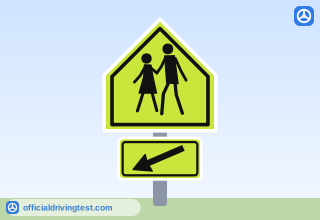
- the school zone has ended
- you are at the school zone crosswalk
- the school is closed
- the arrow points to the nearest exit route
Show answer
Correct answer: you are at the school zone crosswalk
A downward-pointing arrow on a SCHOOL sign means you are at the school zone crosswalk; slow down, watch for children crossing, and stop if necessary.
Source: Pennsylvania Driver's Manual (Pub 95), page 17 · Open this page in the manual (Manual page 17)
-
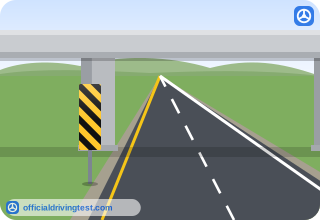
Roadside object markers (for hazards like underpass supports or guiderails) have stripes angled down in the direction you need to move to avoid the hazard. A Right Hazard marker tells you to:
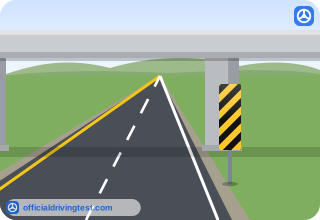
- keep to the right
- keep to either the left or right
- stop before the object
- keep to the left
Show answer
Correct answer: keep to the left
A Right Hazard marker (for an object on the right side of the road) tells you to keep to the left.
Source: Pennsylvania Driver's Manual (Pub 95), page 17 · Open this page in the manual (Manual page 17)
-
A Center Hazard object marker tells you to:
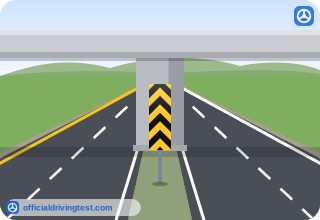
- keep to the left or right
- keep to the left only
- keep to the right only
- stop and wait for oncoming traffic to clear
Show answer
Correct answer: keep to the left or right
A Center Hazard marker tells you that you may keep to the left or to the right to avoid the object.
Source: Pennsylvania Driver's Manual (Pub 95), page 17 · Open this page in the manual (Manual page 17)
-
A Left Hazard marker tells you to:
- keep to the left
- keep to the right
- keep to the left or right
- reverse direction
Show answer
Correct answer: keep to the right
A Left Hazard marker (for an object on the left side of the road) tells you to keep to the right.
Source: Pennsylvania Driver's Manual (Pub 95), page 17 · Open this page in the manual (Manual page 17)
-
Guide signs, which provide information about intersecting roads, direct you to cities and towns, and point out hospitals, gas stations and other services, are usually shaped like:
- A diamond
- A horizontal rectangle
- An octagon
- A downward-pointing triangle
Show answer
Correct answer: A horizontal rectangle
Guide signs are usually horizontal rectangles.
Source: Pennsylvania Driver's Manual (Pub 95), page 19 · Open this page in the manual (Manual page 19)
-
Highway and expressway guide signs (such as exit signs) are:
- Yellow with black letters
- Orange with black letters
- Green with white letters
- Blue with white letters
Show answer
Correct answer: Green with white letters
Highway and expressway guide signs are green with white letters.
Source: Pennsylvania Driver's Manual (Pub 95), page 19 · Open this page in the manual (Manual page 19)
-
Highway and expressway guide signs for an exit are usually posted more than once - two advance signs plus one at the exit itself - mainly because:
- State law requires exactly three signs per exit
- Each sign shows a different exit number
- Only the third sign is official; the first two are advisory
- High speed and heavy traffic can make drivers miss a single sign
Show answer
Correct answer: High speed and heavy traffic can make drivers miss a single sign
Several signs are necessary because the high speed and heavy traffic on highways can cause drivers to miss seeing a single sign, and motorists may need to make one or more lane changes to exit.
Source: Pennsylvania Driver's Manual (Pub 95), page 19 · Open this page in the manual (Manual page 19)
-
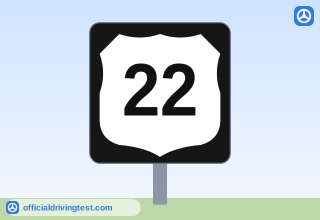
The sign shown, displaying only the number 22, is a:
- Keystone route marker
- Junction plate
- Direction plate
- U.S. Traffic Route marker
Show answer
Correct answer: U.S. Traffic Route marker
The route marker shows you the road is a U.S. Traffic Route.
Source: Pennsylvania Driver's Manual (Pub 95), page 21 · Open this page in the manual (Manual page 21)
-
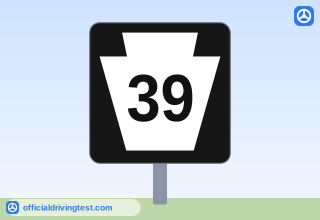
A keystone-shaped route marker sign identifies:
- A Pennsylvania Traffic Route
- A U.S. Traffic Route
- An interstate highway
- A tourist attraction route
Show answer
Correct answer: A Pennsylvania Traffic Route
The keystone marker shows you the road is a Pennsylvania Traffic Route.
Source: Pennsylvania Driver's Manual (Pub 95), page 21 · Open this page in the manual (Manual page 21)
-
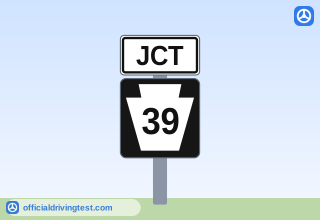
A 'JCT' plate above a route marker tells you that you are:
- Leaving the numbered route permanently
- Approaching the intersection of that route
- Entering a construction zone
- Approaching a toll plaza
Show answer
Correct answer: Approaching the intersection of that route
The junction plate on a route marker shows you are approaching the intersection of that Traffic Route.
Source: Pennsylvania Driver's Manual (Pub 95), page 21 · Open this page in the manual (Manual page 21)
-
A plate reading 'WEST' (or another compass direction) attached to a route marker tells you:
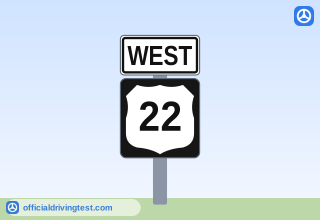
- The direction of the nearest rest area
- That the route is one-way westbound only
- The direction you are traveling on that route
- The direction to the state capital
Show answer
Correct answer: The direction you are traveling on that route
The direction plate on a route marker shows you the direction you are traveling on that Traffic Route.
Source: Pennsylvania Driver's Manual (Pub 95), page 21 · Open this page in the manual (Manual page 21)
-
A supplemental arrow shown with a route marker assembly, such as one pointing right under a 'Route 22 West' sign, indicates:
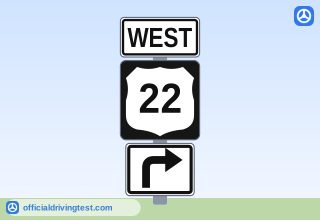
- A detour is in effect
- The route number is about to change
- Passing is not allowed ahead
- A turn is ahead to continue on that route
Show answer
Correct answer: A turn is ahead to continue on that route
The supplemental arrow on a route marker assembly means you are approaching a turn to continue on that route.
Source: Pennsylvania Driver's Manual (Pub 95), page 21 · Open this page in the manual (Manual page 21)
-
A route marker combined with a 'TO' trailblazer sign and a supplemental arrow means that to reach that numbered route, you must:
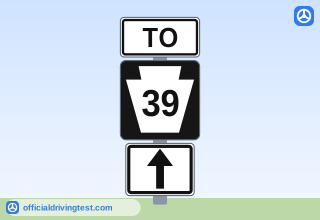
- Continue ahead
- Turn around immediately
- Exit at the next available ramp
- Stop and wait for a gap in traffic
Show answer
Correct answer: Continue ahead
The route marker sign and 'TO' trailblazer sign with the supplemental arrow mean that to gain access to that route, you must continue ahead.
Source: Pennsylvania Driver's Manual (Pub 95), page 21 · Open this page in the manual (Manual page 21)
-
Signs that are blue with white letters or symbols and show services such as hospitals, food, gas, diesel and lodging located at the next exit are called:
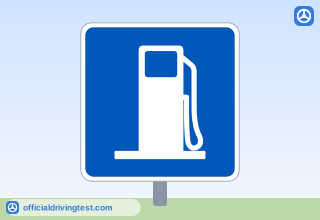
- Regulatory signs
- Service signs
- Route markers
- Warning signs
Show answer
Correct answer: Service signs
Service signs are square or rectangular, blue with white letters or symbols, and show the location of services at the next exit.
Source: Pennsylvania Driver's Manual (Pub 95), page 21 · Open this page in the manual (Manual page 21)
-
Square or rectangular signs, colored blue or brown with white lettering, that direct motorists to museums, historical landmarks, or state or national parks are called:
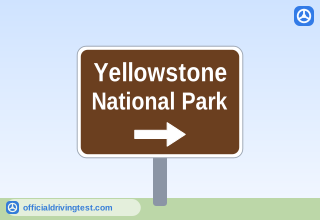
- Service signs
- Interstate shields
- Tourist-oriented directional signs
- Regulatory signs for parks and museums
Show answer
Correct answer: Tourist-oriented directional signs
Tourist-oriented directional signs are square or rectangular and may be blue or brown with white lettering, directing motorists to tourist attractions.
Source: Pennsylvania Driver's Manual (Pub 95), page 21 · Open this page in the manual (Manual page 21)
-
What sign will you typically see posted on your road as you approach an intersection with a divided highway?
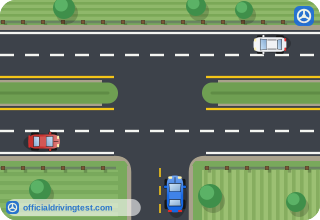
- YIELD
- NO OUTLET
- MERGE
- DIVIDED HIGHWAY
Show answer
Correct answer: DIVIDED HIGHWAY
You will usually see a DIVIDED HIGHWAY sign on your road as you approach the intersection.
Source: Pennsylvania Driver's Manual (Pub 95), page 49 · Open this page in the manual (Manual page 49)
-
Besides ONE WAY signs, what other signs will you typically see together where a road intersects a divided highway?
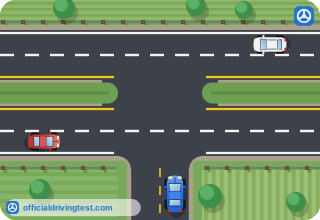
- WRONG WAY and DO NOT ENTER signs
- SPEED LIMIT and SCHOOL ZONE signs
- YIELD and STOP signs
- MERGE and LANE ENDS signs
Show answer
Correct answer: WRONG WAY and DO NOT ENTER signs
You will see ONE WAY, WRONG WAY and DO NOT ENTER signs all together at roads intersecting with divided highways.
Source: Pennsylvania Driver's Manual (Pub 95), page 49 · Open this page in the manual (Manual page 49)
-
Besides posted signs, what is another clue that a road is one-way?
- The road has a yellow centerline
- Vehicles parked on both sides all face the same way
- The road has no lane lines or pavement markings
- The road is unusually wide
Show answer
Correct answer: Vehicles parked on both sides all face the same way
Another clue a road is one way is when you see vehicles parked on both sides of the road headed in the same direction.
Source: Pennsylvania Driver's Manual (Pub 95), page 49 · Open this page in the manual (Manual page 49)