Pennsylvania: Traffic signals Practice Test
Red, yellow, and green lights, arrows, flashing signals, and railroad signals.
Independent educational site · not affiliated with any government agency or DMV
Ready? Test yourself
Answer to start, or tap Start below:
When traffic signals at an intersection are arranged vertically, which color is always on top?
- Instant feedback with an explanation
- Every answer cites its source in the manual
- Your best score is saved on this device
- Keyboard: press 1 to 4 to answer and Enter for the next question
Questions are original and based on the official manual "Pennsylvania Driver's Manual" (Pub 95), Pennsylvania Department of Transportation (PennDOT), Bureau of Driver Licensing.
All 27 questions in this practice test
Take the test above first, then use this list to study. Tap “Show answer” to see the correct answer and explanation.
Show the questions and answersHide the questions
-
When traffic signals at an intersection are arranged vertically, which color is always on top?
- Red
- Yellow
- Green
- It depends on the intersection
Show answer
Correct answer: Red
When traffic signals are arranged vertically, red is always on top and green is always on the bottom.
Source: Pennsylvania Driver's Manual (Pub 95), page 7 · Open this page in the manual (Manual page 7)
-
When traffic signals are arranged horizontally, which side is the red light always on?
- The right side
- The left side
- The center
- It depends on the intersection
Show answer
Correct answer: The left side
When traffic signals are arranged horizontally, red is always on the left and green is always on the right.
Source: Pennsylvania Driver's Manual (Pub 95), page 7 · Open this page in the manual (Manual page 7)
-
At an intersection with a steady red light and no marked stop line or crosswalk, where must you stop?
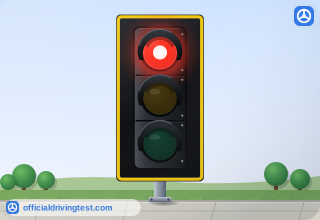
- Anywhere within the intersection
- At the nearest crosswalk on the far side
- Before entering the intersection
- You do not need to stop if no lines are marked
Show answer
Correct answer: Before entering the intersection
You must stop before the marked stop line or crosswalk; if there are no lines, stop before entering the intersection.
Source: Pennsylvania Driver's Manual (Pub 95), page 7 · Open this page in the manual (Manual page 7)
-
Under Pennsylvania law, when may you turn right on a steady red light?
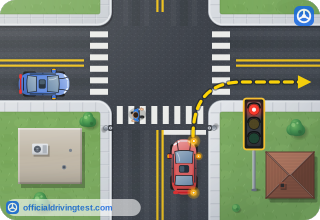
- Never, right turns on red are illegal statewide
- Only if a police officer waves you through
- At any time, without stopping, if no other vehicles are visible
- Only after stopping, checking for and yielding to pedestrians and other traffic, unless a NO TURN ON RED sign is posted
Show answer
Correct answer: Only after stopping, checking for and yielding to pedestrians and other traffic, unless a NO TURN ON RED sign is posted
You may turn right on red unless a NO TURN ON RED sign is posted, but you must first stop and yield to pedestrians and other traffic.
Source: Pennsylvania Driver's Manual (Pub 95), page 7 · Open this page in the manual (Manual page 7)
-
At a red light with no sign prohibiting the turn, when may you turn left after stopping and yielding?
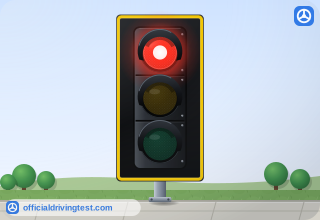
- From the left lane of a one-way street onto another one-way street
- Whenever no oncoming traffic is visible
- Only for commercial vehicles
- Never; left turns on red are not allowed anywhere in Pennsylvania
Show answer
Correct answer: From the left lane of a one-way street onto another one-way street
A left turn on red is allowed only from the left lane of a one-way street onto another one-way street, after stopping and yielding, unless a sign prohibits it.
Source: Pennsylvania Driver's Manual (Pub 95), page 7 · Open this page in the manual (Manual page 7)
-
What should you do when a steady yellow light appears as you approach an intersection?
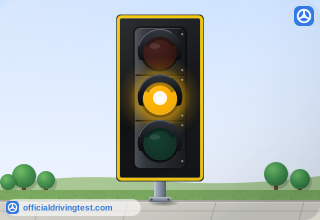
- Speed up to clear the intersection before it turns red
- Slow down and prepare to stop, unless you cannot stop safely
- Stop immediately regardless of your position
- Treat it the same as a flashing yellow light
Show answer
Correct answer: Slow down and prepare to stop, unless you cannot stop safely
A steady yellow light warns that red is coming; slow down and prepare to stop, unless you are within the intersection or cannot stop safely.
Source: Pennsylvania Driver's Manual (Pub 95), page 7 · Open this page in the manual (Manual page 7)
-
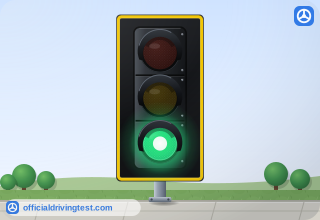
When you turn right or left on a steady green light, what must you do?
- Nothing extra; the green light gives you the right-of-way over everyone
- Sound your horn to alert pedestrians
- Yield to other vehicles and pedestrians within the intersection
- Wait for a green arrow
Show answer
Correct answer: Yield to other vehicles and pedestrians within the intersection
On a steady green light you may turn unless a sign tells you not to, but you must yield to other vehicles and pedestrians already within the intersection.
Source: Pennsylvania Driver's Manual (Pub 95), page 7 · Open this page in the manual (Manual page 7)
-
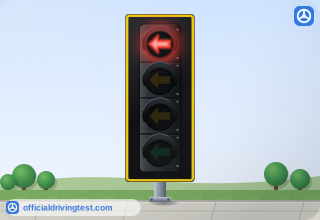
What does a steady red arrow mean?
- You may turn in the direction the arrow points without stopping
- Slow down and prepare to stop
- You must yield only to pedestrians before turning
- You must stop and may not turn in the direction the arrow points
Show answer
Correct answer: You must stop and may not turn in the direction the arrow points
A steady red arrow means you must stop and may not turn in the direction the arrow points; wait for a green arrow or a flashing yellow arrow. The same turns-on-red allowed at a steady red light are allowed at a steady red arrow.
Source: Pennsylvania Driver's Manual (Pub 95), page 7 · Open this page in the manual (Manual page 7)
-
If you are within the intersection or cannot stop safely when a steady yellow arrow appears, what should you do?
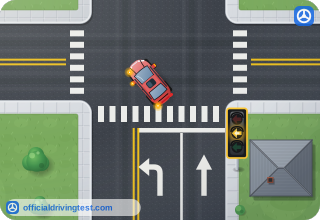
- Complete the turn you already began, with caution
- Stop immediately even if within the intersection
- Reverse out of the intersection
- Wait for the signal to turn green again
Show answer
Correct answer: Complete the turn you already began, with caution
A steady yellow arrow means the protected turn is ending; if you cannot stop safely or are already in the intersection, complete the turn you began with caution.
Source: Pennsylvania Driver's Manual (Pub 95), page 7 · Open this page in the manual (Manual page 7)
-
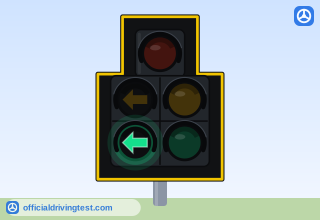
Why is a turn made during a steady green arrow phase called a "protected" turn?
- Because a police officer is present
- Because oncoming traffic is stopped by a red light
- Because pedestrians are prohibited from the crosswalk
- Because the turn lane is physically separated by a barrier
Show answer
Correct answer: Because oncoming traffic is stopped by a red light
During the green arrow phase, oncoming traffic faces a red light, so your turn is protected from conflicting traffic.
Source: Pennsylvania Driver's Manual (Pub 95), page 7 · Open this page in the manual (Manual page 7)
-
What does a flashing red light mean?
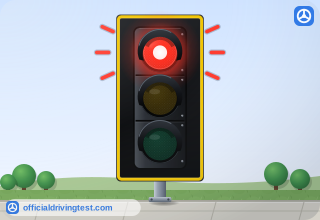
- Slow down and proceed with caution
- Yield only if pedestrians are present
- The same as a STOP sign — come to a complete stop
- Proceed without stopping if the intersection appears clear
Show answer
Correct answer: The same as a STOP sign — come to a complete stop
A flashing red light has the same meaning as a STOP sign: come to a complete stop, look both ways, and proceed only when the intersection is clear.
Source: Pennsylvania Driver's Manual (Pub 95), page 8 · Open this page in the manual (Manual page 8)
-
What does a flashing yellow light mean?
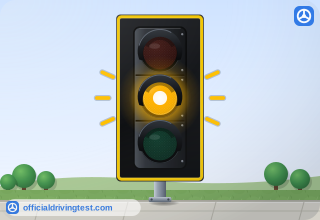
- Stop completely, then proceed when clear
- Yield only to oncoming traffic
- Stop only if turning
- Caution — slow down, look, and proceed with care
Show answer
Correct answer: Caution — slow down, look, and proceed with care
A flashing yellow light means caution: slow down, look, and proceed with care.
Source: Pennsylvania Driver's Manual (Pub 95), page 8 · Open this page in the manual (Manual page 8)
-
What must you do at a flashing yellow arrow?
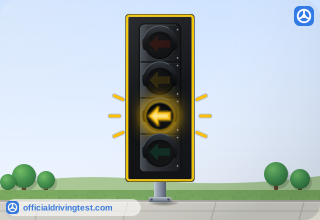
- Turn with caution, yielding to oncoming traffic and pedestrians
- Stop completely before turning
- Proceed with the right-of-way protected over oncoming traffic
- Treat it the same as a steady green arrow
Show answer
Correct answer: Turn with caution, yielding to oncoming traffic and pedestrians
A flashing yellow arrow means you may turn in that direction with caution, but you must first yield to oncoming traffic and pedestrians because the turn is not protected.
Source: Pennsylvania Driver's Manual (Pub 95), page 8 · Open this page in the manual (Manual page 8)
-
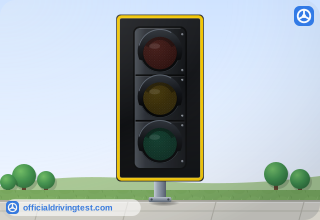
How should a non-functioning traffic signal be treated?
- As a yield sign for all directions
- As though it were a four-way STOP sign
- As a signal giving the right-of-way to the first lane of traffic
- You may proceed without stopping if no other vehicles are visible
Show answer
Correct answer: As though it were a four-way STOP sign
A non-functioning traffic signal should be treated as though it were a four-way STOP sign.
Source: Pennsylvania Driver's Manual (Pub 95), page 8 · Open this page in the manual (Manual page 8)
-
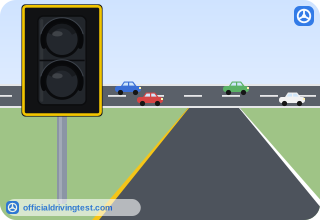
What is the purpose of ramp-metering signals on highway entrance ramps?
- To time traffic lights for cross streets
- To warn drivers of an upcoming toll booth
- To control traffic flow onto congested highways
- To indicate lane closures for construction
Show answer
Correct answer: To control traffic flow onto congested highways
Ramp-metering signals alternate between green and red to control the flow of traffic onto very congested highways, usually during peak rush hours.
Source: Pennsylvania Driver's Manual (Pub 95), page 8 · Open this page in the manual (Manual page 8)
-
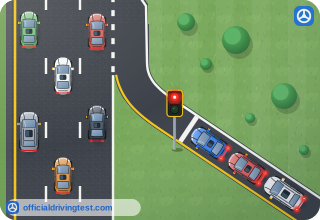
On a single-lane ramp with a ramp-metering signal, how many vehicles may enter the highway each time the light turns green?
- As many as can fit before the light changes
- Two vehicles
- There is no limit
- Only one vehicle
Show answer
Correct answer: Only one vehicle
On single-lane ramps, only one car may enter the highway each time the ramp-metering light turns green.
Source: Pennsylvania Driver's Manual (Pub 95), page 8 · Open this page in the manual (Manual page 8)
-
Does a green ramp-metering signal guarantee it is safe to enter the highway?
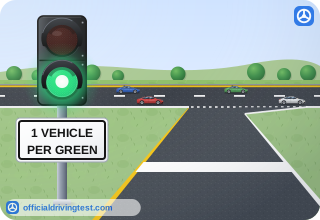
- No, you must still look for a safe gap in traffic before entering
- Yes, the green light gives you the right-of-way over highway traffic
- Yes, but only during rush hour
- No, you must come to a complete stop before entering regardless of the signal
Show answer
Correct answer: No, you must still look for a safe gap in traffic before entering
The green ramp-metering signal does not protect your entrance onto the highway — you must still look for a safe gap in traffic to enter.
Source: Pennsylvania Driver's Manual (Pub 95), page 8 · Open this page in the manual (Manual page 8)
-
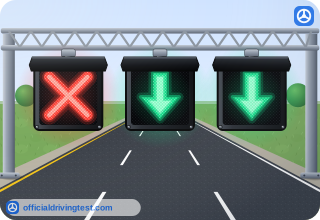
What does a steady downward green arrow displayed over a traffic lane mean?
- The lane is closed ahead
- You may use that lane
- You must merge out of the lane
- The lane is reserved for left turns only
Show answer
Correct answer: You may use that lane
A steady downward green arrow over a traffic lane means you may use that lane.
Source: Pennsylvania Driver's Manual (Pub 95), page 8 · Open this page in the manual (Manual page 8)
-
What does a steady yellow "X" displayed over a traffic lane mean?
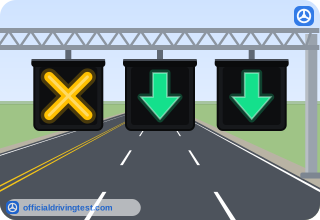
- You may use the lane normally
- The lane is permanently closed
- You must change lanes; the lane is about to reverse direction
- The lane is reserved for buses and emergency vehicles
Show answer
Correct answer: You must change lanes; the lane is about to reverse direction
A steady yellow X over a lane means you must change lanes safely because the direction of travel for that lane is about to be reversed.
Source: Pennsylvania Driver's Manual (Pub 95), page 8 · Open this page in the manual (Manual page 8)
-
What does a steady red "X" displayed over a traffic lane mean?
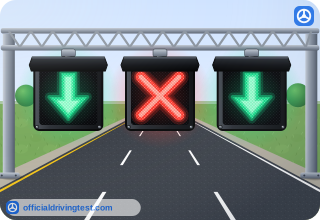
- You may use the lane with caution
- The lane is about to reverse direction
- You may only turn left from that lane
- You are not allowed to use that traffic lane
Show answer
Correct answer: You are not allowed to use that traffic lane
A steady red X over a lane means you are not allowed to use that traffic lane.
Source: Pennsylvania Driver's Manual (Pub 95), page 8 · Open this page in the manual (Manual page 8)
-
A white steady, one-way left-turn arrow displayed over a lane means:
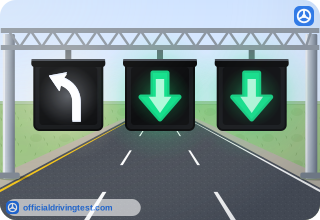
- You may only turn left from that lane
- You may go straight or turn left from that lane
- The lane is shared by left-turning drivers from both directions
- You may not use that lane
Show answer
Correct answer: You may only turn left from that lane
A white steady, one-way left-turn arrow over a lane means you may only turn left if you are in that lane.
Source: Pennsylvania Driver's Manual (Pub 95), page 8 · Open this page in the manual (Manual page 8)
-
A white steady, two-way left-turn arrow displayed over a lane means you may turn left from that lane, but:
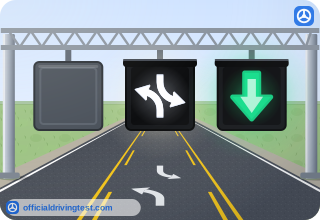
- only during off-peak hours
- oncoming drivers may also use it to turn left
- only if no oncoming traffic is present
- only commercial vehicles may use it
Show answer
Correct answer: oncoming drivers may also use it to turn left
A two-way left-turn arrow marks a lane shared by left-turning drivers approaching from both directions.
Source: Pennsylvania Driver's Manual (Pub 95), page 8 · Open this page in the manual (Manual page 8)
-
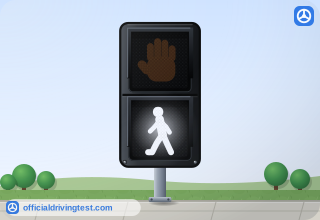
What should happen when a steady WALK signal or the lighted picture of a walking person comes on?
- Pedestrians must wait for a walk signal at every intersection, even without a signal present
- Pedestrians may cross only if no vehicles are visible
- Pedestrians should start crossing, but stay alert for turning vehicles that may not yield
- Pedestrians must finish crossing before the walk signal appears
Show answer
Correct answer: Pedestrians should start crossing, but stay alert for turning vehicles that may not yield
When a steady WALK signal comes on, pedestrians should start crossing but stay alert for turning vehicles that may not lawfully yield the right-of-way.
Source: Pennsylvania Driver's Manual (Pub 95), page 9 · Open this page in the manual (Manual page 9)
-
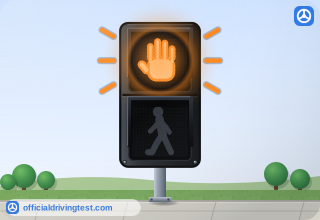
When the flashing DON'T WALK signal (or flashing upraised hand) begins, a pedestrian already in the street should:
- Immediately return to the near curb
- Stop and wait in the middle of the street
- Keep walking only if no vehicles are waiting to turn
- Finish crossing to the other side
Show answer
Correct answer: Finish crossing to the other side
If the DON'T WALK signal begins flashing while a pedestrian is already in the street, they should finish crossing.
Source: Pennsylvania Driver's Manual (Pub 95), page 9 · Open this page in the manual (Manual page 9)
-
When the flashing DON'T WALK signal begins, a pedestrian who has not yet left the curb should:
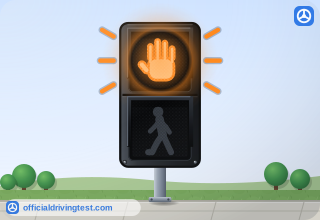
- Not start to cross
- Cross quickly before the signal changes to steady
- Cross only if the intersection is clear of vehicles
- Start crossing as long as the hand is still flashing
Show answer
Correct answer: Not start to cross
If the DON'T WALK signal begins flashing and a pedestrian has not left the curb, they should not start to cross.
Source: Pennsylvania Driver's Manual (Pub 95), page 9 · Open this page in the manual (Manual page 9)
-
If there are no pedestrian signals at an intersection, pedestrians must obey:
- Only stop signs, not traffic lights
- The red, yellow and green traffic lights
- No signal at all — they may cross at will
- Only the crosswalk markings
Show answer
Correct answer: The red, yellow and green traffic lights
If there are no pedestrian signals at the intersection, pedestrians must obey the red, yellow and green traffic lights.
Source: Pennsylvania Driver's Manual (Pub 95), page 9 · Open this page in the manual (Manual page 9)
-
School zone signals are flashing yellow signals placed on the school zone speed limit sign. When these signals are flashing, how fast may you travel?
- No faster than 25 mph
- No faster than 10 mph
- The regular posted speed limit for that road
- No faster than 15 mph
Show answer
Correct answer: No faster than 15 mph
You must travel no faster than 15 mph when school zone signals are flashing or during the time periods indicated on the sign.
Source: Pennsylvania Driver's Manual (Pub 95), page 9 · Open this page in the manual (Manual page 9)