Oregon: Speed and following distance
Oregon speed limits, the basic speed rule, keeping a space cushion, stopping distances, curves and driving in bad conditions. Split into 6 shorter tests so you're not stuck in one long quiz.
Independent educational site · not affiliated with any government agency or DMV
Choose a part
Speed and following distance — Part 1
Questions in this part include: “Unless a different speed is posted, what is the speed limit set in law for driving in alleys?”
StartSpeed and following distance — Part 2
Questions in this part include: “What does the basic rule require?”
StartSpeed and following distance — Part 3
Questions in this part include: “After traffic starts to move from a stop, what should you do?”
StartSpeed and following distance — Part 4
Questions in this part include: “Which of these can affect how far it takes you to stop a vehicle?”
StartSpeed and following distance — Part 5
Questions in this part include: “What should you do as you come out of a curve?”
StartSpeed and following distance — Part 6
Questions in this part include: “Which places freeze first and may be icy when the rest of the road is free of ice?”
StartAll 105 Speed and following distance questions with answers
Choose a part above to take a practice test, or study every question and answer here.
Show the questions and answersHide the questions
-
Unless a different speed is posted, what is the speed limit set in law for driving in alleys?
- 10 mph
- 20 mph
- 25 mph
- 15 mph
Show answer
Correct answer: 15 mph
The manual lists 15 miles per hour for alleys.
Source: Oregon Driver Manual (2026-2027), page 19 · Open this page in the manual (Manual page 19)
-
Unless a different speed is posted, what speed limit is set in law for narrow residential areas?
- 10 mph
- 15 mph
- 20 mph
- 25 mph
Show answer
Correct answer: 15 mph
Narrow residential areas are listed with the 15 miles per hour limit.
Source: Oregon Driver Manual (2026-2027), page 19 · Open this page in the manual (Manual page 19)
-
Unless a different speed is posted, what speed limit is set in law in any business district?
- 20 mph
- 15 mph
- 25 mph
- 30 mph
Show answer
Correct answer: 20 mph
Any business district is listed with the 20 miles per hour limit.
Source: Oregon Driver Manual (2026-2027), page 19 · Open this page in the manual (Manual page 19)
-
What speed limit applies within a school speed zone, as set in law?
- 15 mph
- 25 mph
- 20 mph
- 35 mph
Show answer
Correct answer: 20 mph
Within a school speed zone the limit set in law is 20 miles per hour.
Source: Oregon Driver Manual (2026-2027), page 19 · Open this page in the manual (Manual page 19)
-
Unless a different speed is posted, what speed limit is set in law in residential districts?
- 15 mph
- 25 mph
- 20 mph
- 35 mph
Show answer
Correct answer: 25 mph
Residential districts are listed with the 25 miles per hour limit.
Source: Oregon Driver Manual (2026-2027), page 19 · Open this page in the manual (Manual page 19)
-
Unless a different speed is posted, what speed limit is set in law in public parks?
- 15 mph
- 20 mph
- 35 mph
- 25 mph
Show answer
Correct answer: 25 mph
Public parks are listed with the 25 miles per hour limit.
Source: Oregon Driver Manual (2026-2027), page 19 · Open this page in the manual (Manual page 19)
-
What speed limit is set in law on ocean shores where vehicles are permitted, unless a different speed is posted?
- 15 mph
- 20 mph
- 25 mph
- 35 mph
Show answer
Correct answer: 25 mph
The manual lists 25 miles per hour on ocean shores if vehicles are permitted.
Source: Oregon Driver Manual (2026-2027), page 19 · Open this page in the manual (Manual page 19)
-
What speed limit is set in law on all roads and highways that do not meet any other definition, unless otherwise posted?
- 55 mph
- 45 mph
- 50 mph
- 65 mph
Show answer
Correct answer: 55 mph
The manual lists 55 miles per hour for all roads and highways not meeting any other definition unless otherwise posted.
Source: Oregon Driver Manual (2026-2027), page 19 · Open this page in the manual (Manual page 19)
-
What does the manual say about speed limits on interstate highways?
- They are 55 mph on every interstate
- They are always 65 mph
- They are the same as in residential districts
- They vary
Show answer
Correct answer: They vary
Interstate speed limits are not one fixed number; the manual says they will vary on interstate highways.
Source: Oregon Driver Manual (2026-2027), page 19 · Open this page in the manual (Manual page 19)
-
How does the manual define a speed limit?
- The speed at which most drivers usually travel on that road
- The maximum speed considered safe under ideal driving conditions
- The minimum speed required to keep traffic moving
- A recommended speed for all weather conditions
Show answer
Correct answer: The maximum speed considered safe under ideal driving conditions
A speed limit is the maximum speed considered safe for the area under ideal driving conditions.
Source: Oregon Driver Manual (2026-2027), page 19 · Open this page in the manual (Manual page 19)
-
The speed limits set in law for specific areas apply when no sign is posted. When do they stop applying?
- When a different speed is posted
- When the weather is clear
- When traffic is light
- When there are no other vehicles in sight
Show answer
Correct answer: When a different speed is posted
They apply whether posted or not, unless a different speed is posted.
Source: Oregon Driver Manual (2026-2027), page 19 · Open this page in the manual (Manual page 19)
-
What do variable advisory speed signs look like?
- They are black and white and say "speed limit"
- They are red and say "reduced speed"
- They are yellow and say "advisory speed"
- They are green and say "recommended speed"
Show answer
Correct answer: They are yellow and say "advisory speed"
Variable advisory speed signs are yellow and say "advisory speed".
Source: Oregon Driver Manual (2026-2027), page 20 · Open this page in the manual (Manual page 20)
-
What do variable advisory speed signs do?
- They set the legal minimum speed that every driver must keep on the road
- They recommend a speed based on conditions like heavy traffic or poor weather
- They show the speed limit for school zones
- They stay on all day to show the usual speed limit
Show answer
Correct answer: They recommend a speed based on conditions like heavy traffic or poor weather
These signs recommend a speed based on driving conditions and are turned on and off as needed.
Source: Oregon Driver Manual (2026-2027), page 20 · Open this page in the manual (Manual page 20)
-
Variable advisory speed signs are not speed limits. How may police enforce them?
- Like any other speed limit sign
- They cannot be enforced at all
- Only in school speed zones
- Through the basic rule law
Show answer
Correct answer: Through the basic rule law
The manual says these are not speed limits, but police may enforce them through the basic rule law.
Source: Oregon Driver Manual (2026-2027), page 20 · Open this page in the manual (Manual page 20)
-
What do variable speed limit signs look like?
- They are yellow and say "advisory speed"
- They are red and white and say "maximum speed"
- They are black and white and say "speed limit"
- They are orange and say "reduced speed"
Show answer
Correct answer: They are black and white and say "speed limit"
Variable speed limit signs are black and white and say "speed limit".
Source: Oregon Driver Manual (2026-2027), page 20 · Open this page in the manual (Manual page 20)
-
How may police enforce a variable speed limit sign?
- Like any other speed limit sign
- Only through the basic rule law
- Not at all, because it only gives advice
- Only when the weather is bad
Show answer
Correct answer: Like any other speed limit sign
Police may enforce variable speed limit signs like any other speed limit sign.
Source: Oregon Driver Manual (2026-2027), page 20 · Open this page in the manual (Manual page 20)
-
What do digital variable speed signs use to lower the speed limit when conditions require drivers to slow down?
- Radar units carried in police patrol vehicles
- Reports sent in by other drivers
- A timer set by the road crew
- Road, weather, traffic and visibility sensors
Show answer
Correct answer: Road, weather, traffic and visibility sensors
The digital signs use road, weather, traffic and visibility sensors to lower the speed limit when conditions require.
Source: Oregon Driver Manual (2026-2027), page 20 · Open this page in the manual (Manual page 20)
-
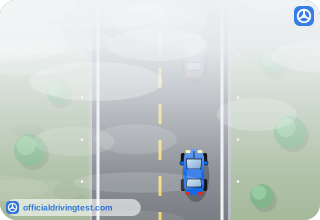
In poor weather such as fog, heavy rain or snow, why do variable speed signs lower the speed?
- Slower speeds let drivers save fuel in bad weather conditions
- Slower speeds give more time to react to hazards that are hard to see
- Slower speeds keep traffic out of the left lane
- Slower speeds make road signs easier to read at night
Show answer
Correct answer: Slower speeds give more time to react to hazards that are hard to see
The manual says slower speeds improve the line of sight by giving drivers more time to react to hazards that may be difficult to see.
Source: Oregon Driver Manual (2026-2027), page 20 · Open this page in the manual (Manual page 20)
-
In areas such as sharp curves, steep hills or construction zones, what do slower speeds from variable speed signs provide?
- More time to stop or maneuver safely and a larger space cushion
- A shorter trip time for drivers who use those roads often
- More room for passing on the left
- Faster response from traffic signals
Show answer
Correct answer: More time to stop or maneuver safely and a larger space cushion
Slower speeds there allow drivers more time to stop or maneuver safely and help provide a larger space cushion.
Source: Oregon Driver Manual (2026-2027), page 20 · Open this page in the manual (Manual page 20)
-
What does the basic rule require?
- Driving at the posted speed limit at all times, in any conditions
- Driving at the speed of the fastest traffic
- Driving at a speed that is reasonable and cautious for conditions
- Driving 5 mph below the limit on all roads
Show answer
Correct answer: Driving at a speed that is reasonable and cautious for conditions
The basic rule states you must drive at a speed that is reasonable and cautious for existing conditions.
Source: Oregon Driver Manual (2026-2027), page 20 · Open this page in the manual (Manual page 20)
-
Where and when does the basic rule apply?
- Only on roads with no posted speed limit
- On all roads at all times
- Only in bad weather
- Only in residential districts and business districts
Show answer
Correct answer: On all roads at all times
The basic rule applies on all roads at all times.
Source: Oregon Driver Manual (2026-2027), page 20 · Open this page in the manual (Manual page 20)
-
Which statement about the basic rule is correct?
- It allows you to drive a little over the limit when the road is clear
- It applies only on roads that have no posted limit
- It applies only when the weather is bad
- It does not allow you to drive over the speed limit
Show answer
Correct answer: It does not allow you to drive over the speed limit
The manual says the basic rule does not allow you to drive over the speed limit.
Source: Oregon Driver Manual (2026-2027), page 21 · Open this page in the manual (Manual page 21)
-
Can you violate the basic rule while driving slower than the speed limit?
- No, driving under the limit always complies
- Yes, but only on interstate highways
- Yes, if your speed is unsafe for existing conditions
- No, unless you are driving in a school speed zone
Show answer
Correct answer: Yes, if your speed is unsafe for existing conditions
Driving at a speed unsafe for existing conditions, even if slower than the limit, violates the basic rule.
Source: Oregon Driver Manual (2026-2027), page 21 · Open this page in the manual (Manual page 21)
-
If you drive slower than the normal speed of traffic and are not preparing to turn left, where must you drive?
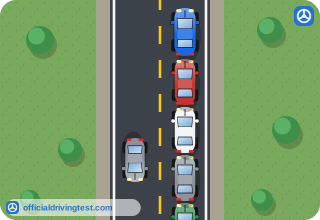
- In the right lane or as close as possible to the right edge of the road
- In the left lane with your hazard lights flashing at all times
- In the center of the road
- On the shoulder at all times
Show answer
Correct answer: In the right lane or as close as possible to the right edge of the road
Slower drivers must use the right lane or drive as closely as possible to the right curb or edge, unless preparing for a left turn.
Source: Oregon Driver Manual (2026-2027), page 21 · Open this page in the manual (Manual page 21)
-
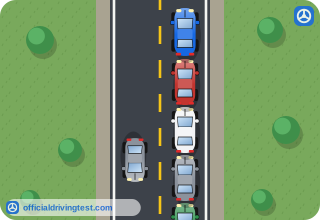
What should you do if you drive slower than the designated speed and traffic builds up behind you?
- Speed up until you are driving at the posted speed limit
- Stay in your lane and sound your horn
- Stop in the lane until traffic clears
- Pull off the road at the first safe area and let the traffic pass
Show answer
Correct answer: Pull off the road at the first safe area and let the traffic pass
The manual says to pull off at the first safe area and let the traffic behind you pass.
Source: Oregon Driver Manual (2026-2027), page 21 · Open this page in the manual (Manual page 21)
-
Where is racing illegal?
- Only on interstate highways
- On any road
- Only on roads with a center line
- Only in business districts
Show answer
Correct answer: On any road
It is illegal to race on any road.
Source: Oregon Driver Manual (2026-2027), page 21 · Open this page in the manual (Manual page 21)
-
Which of these can be racing?
- Any acceleration or speed contest or the making of a speed record
- Only a contest with a prize for the winner
- Only a contest between two vehicles that are side by side
- Only driving faster than the posted speed limit
Show answer
Correct answer: Any acceleration or speed contest or the making of a speed record
Racing can be any acceleration or speed contest or the making of a speed record.
Source: Oregon Driver Manual (2026-2027), page 21 · Open this page in the manual (Manual page 21)
-
Where should you try to keep a space cushion?
- Ahead of you only
- Behind you only
- Ahead and behind you, but not to the sides
- Ahead, to each side and behind you
Show answer
Correct answer: Ahead, to each side and behind you
The manual says to keep a cushion of space ahead, to each side and behind you.
Source: Oregon Driver Manual (2026-2027), page 26 · Open this page in the manual (Manual page 26)
-
What is the only way you can be sure you have enough time to react when another driver makes an unexpected or quick movement?
- Drive slightly faster than the traffic that is around you
- Keep your horn ready at all times
- Leave plenty of space between your vehicle and vehicles around you
- Drive in the left lane
Show answer
Correct answer: Leave plenty of space between your vehicle and vehicles around you
The only way to be sure you have enough time to react is by leaving plenty of space around your vehicle, which becomes a space cushion.
Source: Oregon Driver Manual (2026-2027), page 26 · Open this page in the manual (Manual page 26)
-
What happens as the speed you are traveling gets higher?
- You have less time to spot hazards and react to conditions
- You have more time to judge the speed of other traffic
- Your stopping distance becomes shorter
- You need a shorter following distance
Show answer
Correct answer: You have less time to spot hazards and react to conditions
The higher the speed, the less time you have to spot hazards, judge the speed of other traffic and react to conditions.
Source: Oregon Driver Manual (2026-2027), page 26 · Open this page in the manual (Manual page 26)
-
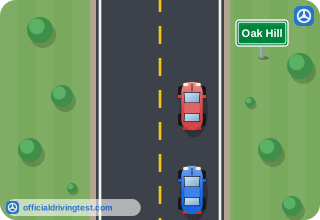
Why should you always maintain a safe following distance from the vehicle in front of you?
- You will use less fuel when driving on long trips
- You can pass the vehicle ahead more quickly
- The other driver will see you in the mirror
- You get a better view of the road and more time to react
Show answer
Correct answer: You get a better view of the road and more time to react
A safe following distance gives you a better view of the road and more time to react.
Source: Oregon Driver Manual (2026-2027), page 26 · Open this page in the manual (Manual page 26)
-
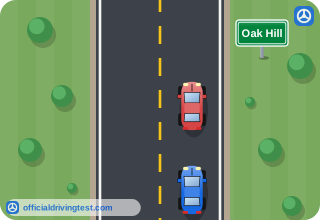
How is a safe following distance defined?
- 1-2 seconds
- 2-4 seconds
- 5-6 seconds
- 1 car length for every 10 mph
Show answer
Correct answer: 2-4 seconds
The manual defines a safe following distance as 2-4 seconds.
Source: Oregon Driver Manual (2026-2027), page 26 · Open this page in the manual (Manual page 26)
-
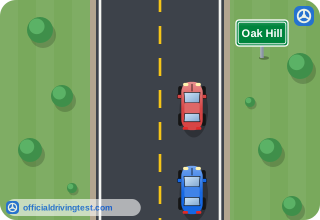
For speeds greater than 30 mph, how long should your safe following distance be?
- 4 seconds or more
- 1 second
- 3 seconds exactly
- 1 second for every 10 mph
Show answer
Correct answer: 4 seconds or more
For speeds greater than 30 mph, the safe following distance should be 4 seconds or more.
Source: Oregon Driver Manual (2026-2027), page 26 · Open this page in the manual (Manual page 26)
-
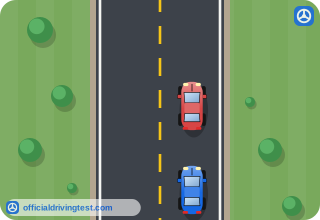
How can you determine if you are following too closely?
- Count the seconds it takes the vehicle ahead to stop
- Measure the distance in car lengths between your hood and the vehicle ahead
- Count the seconds from when the vehicle ahead passes a sign until you reach it
- Compare your speed with the speed limit
Show answer
Correct answer: Count the seconds from when the vehicle ahead passes a sign until you reach it
Watch for the rear of the vehicle ahead to pass something like a sign or pole, then count the seconds it takes you to reach the same spot.
Source: Oregon Driver Manual (2026-2027), page 27 · Open this page in the manual (Manual page 27)
-
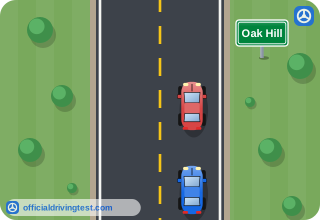
When are you following too closely, using the counting method?
- If you pass the mark after counting four seconds
- If you pass the mark before counting at least two seconds
- If you can no longer see the vehicle ahead
- If you pass the mark after counting five seconds
Show answer
Correct answer: If you pass the mark before counting at least two seconds
You are following too closely if you pass the mark before you finish counting at least two seconds.
Source: Oregon Driver Manual (2026-2027), page 27 · Open this page in the manual (Manual page 27)
-
You find you are following too closely. What should you do to check your new following distance?
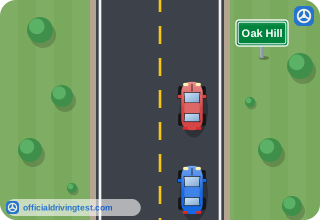
- Brake hard and count again at the same spot until two seconds
- Change lanes and stop counting
- Keep counting at the same spot until you pass it
- Add space and count again at another spot to check the new distance
Show answer
Correct answer: Add space and count again at another spot to check the new distance
Increase the space between you and the vehicle ahead and count again at another spot to check your new following distance.
Source: Oregon Driver Manual (2026-2027), page 27 · Open this page in the manual (Manual page 27)
-
When stopping behind another vehicle, what should you be able to see?
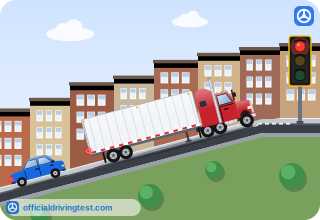
- The brake lights of the vehicle that is two cars ahead
- The license plate of the vehicle in front
- Where the rear tires of the vehicle in front meet the road
- The bumper of the vehicle behind you
Show answer
Correct answer: Where the rear tires of the vehicle in front meet the road
Make sure you can see where the rear tires of the vehicle in front meet the road.
Source: Oregon Driver Manual (2026-2027), page 27 · Open this page in the manual (Manual page 27)
-
After traffic starts to move from a stop, what should you do?
- Return to a safe following distance
- Stay close to the vehicle ahead to keep traffic moving
- Speed up to the speed limit right away
- Leave only the distance you left when stopped
Show answer
Correct answer: Return to a safe following distance
After traffic starts to move, return to a safe following distance.
Source: Oregon Driver Manual (2026-2027), page 27 · Open this page in the manual (Manual page 27)
-
Why should you increase your following distance on wet or slippery roads?
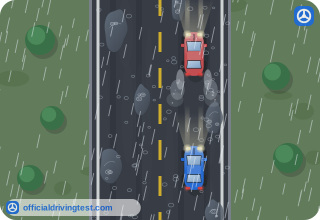
- Other drivers cannot see your brake lights
- Your speed limit is lower in the rain
- You will use more fuel
- You need more distance to stop your vehicle
Show answer
Correct answer: You need more distance to stop your vehicle
On wet or slippery roads you need more distance to stop your vehicle.
Source: Oregon Driver Manual (2026-2027), page 27 · Open this page in the manual (Manual page 27)
-
When the driver behind you wants to pass, what should you do?
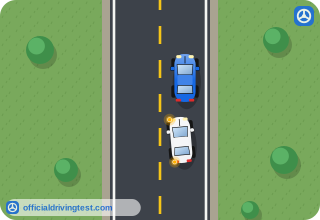
- Speed up so that the driver behind you cannot easily pass you
- Slow down to allow room in front of you for the passing vehicle
- Move onto the shoulder and stop
- Stay at the same speed and hold your lane
Show answer
Correct answer: Slow down to allow room in front of you for the passing vehicle
You should increase your following distance by slowing down so the passing vehicle has room to complete the pass.
Source: Oregon Driver Manual (2026-2027), page 27 · Open this page in the manual (Manual page 27)
-
Why should you increase your following distance when following people riding bicycles or motorcycles?
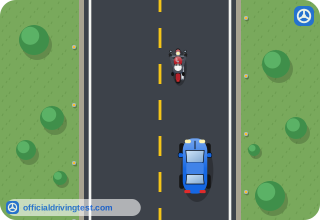
- You need extra room if the rider loses control or stops suddenly
- They are not allowed to use the same lane as your vehicle
- They cannot hear your horn
- Their brake lights are hard to see
Show answer
Correct answer: You need extra room if the rider loses control or stops suddenly
The manual says you need extra room in case the rider loses control or stops suddenly.
Source: Oregon Driver Manual (2026-2027), page 27 · Open this page in the manual (Manual page 27)
-
Why should you increase your following distance when you are directly behind a large vehicle?
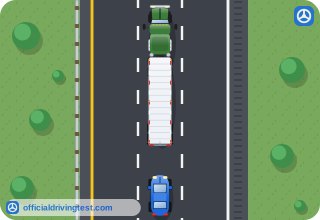
- Its driver must always stop suddenly without any warning
- Its exhaust makes the road slippery
- Its driver may not see you, and it blocks your view ahead
- It must travel below the speed limit
Show answer
Correct answer: Its driver may not see you, and it blocks your view ahead
Drivers of large vehicles may not be able to see you directly behind them, and these vehicles also block your view of the road ahead.
Source: Oregon Driver Manual (2026-2027), page 27 · Open this page in the manual (Manual page 27)
-
Why should you increase your following distance when you have a heavy load or are pulling a trailer?
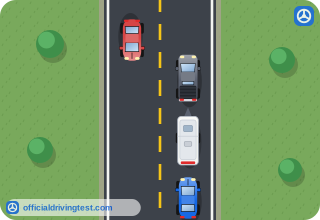
- The load always blocks your side mirrors
- The extra weight increases your stopping distance
- The trailer makes your vehicle faster
- Other drivers are not allowed to pass you
Show answer
Correct answer: The extra weight increases your stopping distance
The extra weight of a heavy load or trailer increases your stopping distance.
Source: Oregon Driver Manual (2026-2027), page 27 · Open this page in the manual (Manual page 27)
-
What should you do with your following distance in bad weather or darkness?
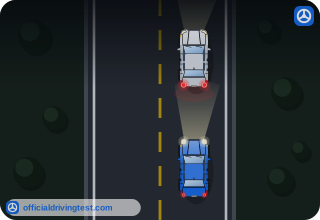
- Keep it the same, since all drivers slow down
- Decrease it so you can see the taillights ahead
- Match the distance you use in daylight
- Increase it to make up for decreased visibility
Show answer
Correct answer: Increase it to make up for decreased visibility
In bad weather or darkness, increase your following distance to make up for decreased visibility.
Source: Oregon Driver Manual (2026-2027), page 27 · Open this page in the manual (Manual page 27)
-
Why should you leave extra following room when you are stopped on a hill?
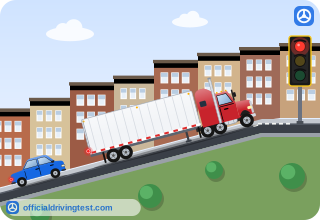
- The vehicle ahead may roll back when it starts to move
- Brake lights are harder to see when you are on a hill, especially at night
- The road surface on a hill is always slippery, so stopping takes longer
- Traffic signals on hills change more slowly than on level roads
Show answer
Correct answer: The vehicle ahead may roll back when it starts to move
When stopped on a hill, the vehicle ahead may roll back as it starts to move, so you need extra room.
Source: Oregon Driver Manual (2026-2027), page 28 · Open this page in the manual (Manual page 28)
-
Why does the manual recommend extra following room when you are learning to drive?
- Learner drivers must stay at least three car lengths behind other vehicles by law
- Your vehicle takes longer to stop when you hold a learner permit than a license
- The extra room gives you time to make critical decisions as you learn
- The extra room lets your instructor reach the brake pedal if needed
Show answer
Correct answer: The extra room gives you time to make critical decisions as you learn
The manual says the extra room provides time to make critical decisions while you are learning.
Source: Oregon Driver Manual (2026-2027), page 28 · Open this page in the manual (Manual page 28)
-
Why should you leave extra room ahead of you when approaching or in a work zone?
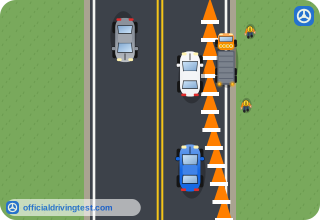
- Vehicles ahead are required to leave a gap in every lane
- Traffic may slow or stop unexpectedly in these areas
- Other drivers cannot see your brake lights there
- The posted speed always stays the same inside the work zone
Show answer
Correct answer: Traffic may slow or stop unexpectedly in these areas
Traffic in and near work zones may slow or stop unexpectedly, so you need more space.
Source: Oregon Driver Manual (2026-2027), page 28 · Open this page in the manual (Manual page 28)
-
You are driving alongside another vehicle on a multilane street and it may crowd your lane. What should you do, if possible?
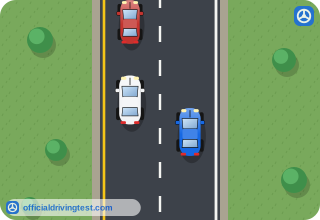
- Stay alongside the other vehicle and match its speed
- Sound your horn until the other driver moves over
- Brake hard and stop in your lane until it passes
- Drop back a little or move ahead of the other vehicle
Show answer
Correct answer: Drop back a little or move ahead of the other vehicle
To keep a space cushion to the side, drop back a little or move ahead of the other vehicle if possible.
Source: Oregon Driver Manual (2026-2027), page 28 · Open this page in the manual (Manual page 28)
-
To keep as much space as possible between you and oncoming vehicles, where is it generally safest to drive in your lane?
- Close to the center line
- In the center of your lane
- Along the right edge of your lane
- Along the left edge of your lane
Show answer
Correct answer: In the center of your lane
Driving in the center of your lane lets your vehicle move left or right to avoid a potential problem.
Source: Oregon Driver Manual (2026-2027), page 28 · Open this page in the manual (Manual page 28)
-
Vehicles are entering the freeway ahead of you and there is no one next to you. What does the manual say to do?
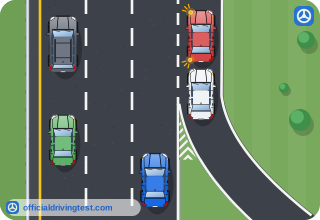
- Stay in your lane and sound your horn
- Move onto the shoulder
- Turn on your hazard lights
- Move over a lane
Show answer
Correct answer: Move over a lane
Moving over a lane makes room for vehicles entering the freeway.
Source: Oregon Driver Manual (2026-2027), page 28 · Open this page in the manual (Manual page 28)
-
How can you help other drivers who are signaling for a lane change make the move safely?
- Slow down or speed up a little, if needed
- Sound your horn to warn them you are there
- Move onto the shoulder to give them room
- Close the gap in front of you so they cannot cut in
Show answer
Correct answer: Slow down or speed up a little, if needed
The manual says to help drivers signaling for a lane change by slowing down or speeding up a little, if needed.
Source: Oregon Driver Manual (2026-2027), page 28 · Open this page in the manual (Manual page 28)
-
Why should you keep extra space between your vehicle and parked cars by moving away from them without leaving your lane?
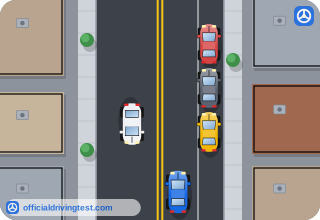
- Parked cars may suddenly drift out of their spaces and into your lane
- Parked cars are required to keep their lights on at all times of day
- A vehicle door may open in your path or someone may step out
- Parking meters can block your view of the road ahead of you
Show answer
Correct answer: A vehicle door may open in your path or someone may step out
A door may open in your path, or someone may step out of a vehicle or from between parked vehicles.
Source: Oregon Driver Manual (2026-2027), page 28 · Open this page in the manual (Manual page 28)
-
How can you warn the driver behind you in advance that you have to slow down or stop?
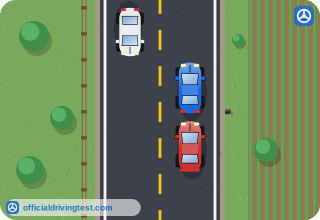
- Brake hard so the driver behind notices the change at once
- Flash your headlights at the driver behind you several times
- Turn on your hazard lights before you start to slow down
- Gently press the brake so your brake lights come on
Show answer
Correct answer: Gently press the brake so your brake lights come on
Signaling in advance by gently pressing the brake makes your brake lights alert the driver behind you.
Source: Oregon Driver Manual (2026-2027), page 28 · Open this page in the manual (Manual page 28)
-
Which action helps keep the driver behind you at a safe distance?
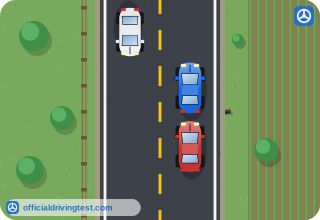
- Keeping a steady speed
- Changing your speed often
- Driving in the left lane
- Driving close to the center line
Show answer
Correct answer: Keeping a steady speed
The manual says keeping a steady speed and signaling in advance helps keep the driver behind you at a safe distance.
Source: Oregon Driver Manual (2026-2027), page 28 · Open this page in the manual (Manual page 28)
-
A vehicle behind you is following too closely and there is a right lane. What should you do?
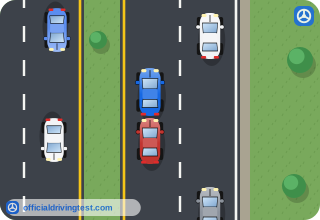
- Move over to the left lane
- Brake hard to make the driver back off
- Move over to the right
- Speed up to leave the driver behind
Show answer
Correct answer: Move over to the right
If a vehicle behind you is following too closely and there is a right lane, move over to the right.
Source: Oregon Driver Manual (2026-2027), page 28 · Open this page in the manual (Manual page 28)
-
A vehicle is following you too closely and you cannot move over. What should you do?
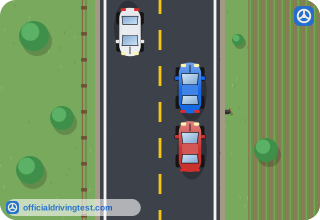
- Speed up to get away from it
- Slowly reduce your speed
- Brake hard to make the driver back off
- Stop in your lane
Show answer
Correct answer: Slowly reduce your speed
Slowly reducing your speed may encourage the vehicle to pass you or to stop tailgating.
Source: Oregon Driver Manual (2026-2027), page 29 · Open this page in the manual (Manual page 29)
-
A driver behind you is following too closely. Which action does the manual say never to use to discourage tailgating?
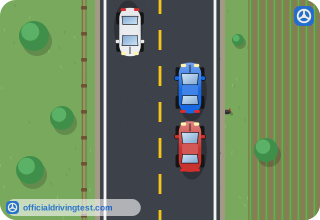
- Moving over to the right
- Slowly reducing your speed
- Braking hard
- Keeping a steady speed
Show answer
Correct answer: Braking hard
Braking hard to discourage tailgating is dangerous because you could get hit from behind.
Source: Oregon Driver Manual (2026-2027), page 29 · Open this page in the manual (Manual page 29)
-
Which of these can affect how far it takes you to stop a vehicle?
- The braking ability of your vehicle
- The color of the paint on your vehicle
- The model year of the vehicle you drive
- The size of the fuel tank in your vehicle
Show answer
Correct answer: The braking ability of your vehicle
Stopping distance depends on road and weather conditions, vehicle weight, reaction time and the braking ability of your vehicle.
Source: Oregon Driver Manual (2026-2027), page 29 · Open this page in the manual (Manual page 29)
-
How does driving faster affect your stopping distance, even in ideal conditions?
- It stays the same on dry roads
- The distance gets shorter
- The distance gets greater
- It changes only in bad weather
Show answer
Correct answer: The distance gets greater
The faster you drive, the greater your stopping distance, even in ideal conditions.
Source: Oregon Driver Manual (2026-2027), page 29 · Open this page in the manual (Manual page 29)
-
At 60 mph, the distance from recognizing a hazard and applying the brakes to a full stop is greater than the length of what?
- A city block
- A football field
- A school bus
- A freeway on-ramp
Show answer
Correct answer: A football field
The manual says that at 60 mph the stopping distance is greater than the length of a football field.
Source: Oregon Driver Manual (2026-2027), page 29 · Open this page in the manual (Manual page 29)
-
According to the manual's stopping-distance chart, how far does a vehicle travel from the point the driver recognizes a hazard until it stops when going 20 mph?
- 123 feet
- 189 feet
- 90 feet
- 69 feet
Show answer
Correct answer: 69 feet
The chart shows 69 feet for 20 mph.
Source: Oregon Driver Manual (2026-2027), page 29 · Open this page in the manual (Manual page 29)
-
According to the manual's stopping-distance chart, how far does a vehicle travel from the point the driver recognizes a hazard until it stops when going 30 mph?
- 69 feet
- 123 feet
- 189 feet
- 150 feet
Show answer
Correct answer: 123 feet
The chart shows 123 feet for 30 mph.
Source: Oregon Driver Manual (2026-2027), page 29 · Open this page in the manual (Manual page 29)
-
According to the manual's stopping-distance chart, how far does a vehicle travel from the point the driver recognizes a hazard until it stops when going 40 mph?
- 123 feet
- 268 feet
- 220 feet
- 189 feet
Show answer
Correct answer: 189 feet
The chart shows 189 feet for 40 mph.
Source: Oregon Driver Manual (2026-2027), page 29 · Open this page in the manual (Manual page 29)
-
According to the manual's stopping-distance chart, how far does a vehicle travel from the point the driver recognizes a hazard until it stops when going 50 mph?
- 268 feet
- 189 feet
- 359 feet
- 300 feet
Show answer
Correct answer: 268 feet
The chart shows 268 feet for 50 mph.
Source: Oregon Driver Manual (2026-2027), page 29 · Open this page in the manual (Manual page 29)
-
According to the manual's stopping-distance chart, how far does a vehicle travel from the point the driver recognizes a hazard until it stops when going 60 mph?
- 268 feet
- 420 feet
- 359 feet
- 300 feet
Show answer
Correct answer: 359 feet
The chart shows 359 feet for 60 mph.
Source: Oregon Driver Manual (2026-2027), page 29 · Open this page in the manual (Manual page 29)
-
What does scanning mean when you look ahead while driving?
- Looking only at the vehicle directly in front of you on the road
- Checking your mirrors every few seconds while you drive ahead
- Reading each road sign as soon as it comes into your view
- Taking in the entire scene, including the sides of the road
Show answer
Correct answer: Taking in the entire scene, including the sides of the road
Scanning means taking in the entire scene, including the sides of the road.
Source: Oregon Driver Manual (2026-2027), page 30 · Open this page in the manual (Manual page 30)
-
Why should you scan ahead for trouble spots as far as you can see?
- To avoid the need for last-minute moves
- To be able to drive closer to the vehicle ahead
- To avoid using your turn signals
- To keep your speed above that of other traffic
Show answer
Correct answer: To avoid the need for last-minute moves
Scanning ahead helps you avoid last-minute moves.
Source: Oregon Driver Manual (2026-2027), page 30 · Open this page in the manual (Manual page 30)
-
Which of these is a clue that a driver ahead may be going to slow down or stop?
- The driver’s headlights being turned off
- A window being opened
- Brake lights coming on
- The vehicle moving slightly to the left of its lane
Show answer
Correct answer: Brake lights coming on
The manual lists brake lights coming on, blinking turn signals, and a bicyclist or pedestrian ahead as clues.
Source: Oregon Driver Manual (2026-2027), page 30 · Open this page in the manual (Manual page 30)
-
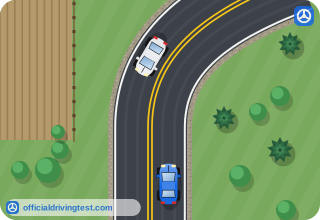
What should you do before you enter a curve?
- Speed up
- Slow down
- Move to the center line
- Shift to the shoulder
Show answer
Correct answer: Slow down
The manual says to slow down before you enter a curve.
Source: Oregon Driver Manual (2026-2027), page 30 · Open this page in the manual (Manual page 30)
-
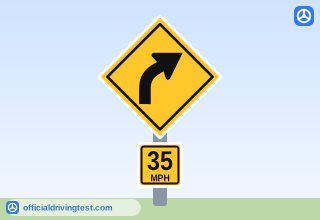
How can you use a curve sign that has a speed shown below it?
- As the minimum speed you must keep through the curve
- As the speed at which other traffic is allowed to pass you
- As a guide to your speed through the curve
- As a speed you must exceed to stay with the traffic flow
Show answer
Correct answer: As a guide to your speed through the curve
The manual says to use the speed shown below a curve sign as a guide, if posted.
Source: Oregon Driver Manual (2026-2027), page 30 · Open this page in the manual (Manual page 30)
-
Where should you position your vehicle while driving through a curve?
- Right on the center line, so you can see farther around the curve
- In the middle of your lane, to the right of the center line
- Along the right edge of your lane, away from oncoming vehicles
- In the left part of your lane to cut the curve more gently
Show answer
Correct answer: In the middle of your lane, to the right of the center line
In a curve, stay to the right of the center line and in the middle of your lane.
Source: Oregon Driver Manual (2026-2027), page 30 · Open this page in the manual (Manual page 30)
-
What should you do as you come out of a curve?
- Brake firmly until you are almost stopped
- Speed up sharply to make up for lost time
- Move to the center line to straighten your path
- Increase your speed gradually
Show answer
Correct answer: Increase your speed gradually
The manual says to increase your speed gradually as you come out of a curve.
Source: Oregon Driver Manual (2026-2027), page 30 · Open this page in the manual (Manual page 30)
-
What should you watch for that may be hidden around a curve?
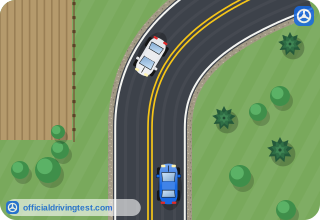
- People riding bicycles, pedestrians, or slow-moving vehicles
- Railroad crossings that have no warning signs or signals
- Traffic lights that have been turned off by the city
- Toll booths that have been closed for the night
Show answer
Correct answer: People riding bicycles, pedestrians, or slow-moving vehicles
The manual says to be alert for bicyclists, pedestrians, or slow-moving vehicles hidden around the curve.
Source: Oregon Driver Manual (2026-2027), page 30 · Open this page in the manual (Manual page 30)
-
You are near a school hours speed limit sign and are unsure whether it is a school day. What should you do?
- Drive the speed you think is safe
- Slow down to 15 mph
- Slow down to 20 mph
- Drive at the residential limit of 25 mph
Show answer
Correct answer: Slow down to 20 mph
If you are unsure whether it is a school day, the manual says to slow down to 20 mph.
Source: Oregon Driver Manual (2026-2027), page 49 · Open this page in the manual (Manual page 49)
-
When following a person riding a motorcycle, how much distance should you leave?
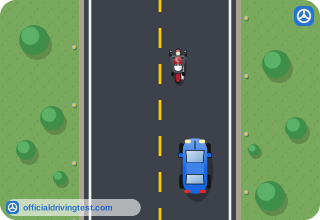
- The same distance you would leave behind another car
- More distance than you would leave behind another car
- Less distance, so the rider can see you in the mirrors
- Only a few feet, since motorcycles are small
Show answer
Correct answer: More distance than you would leave behind another car
The manual says to allow more distance behind a motorcycle than behind another car.
Source: Oregon Driver Manual (2026-2027), page 52 · Open this page in the manual (Manual page 52)
-
Weather and road conditions may affect people riding motorcycles and mopeds more than other vehicles. What should you do?
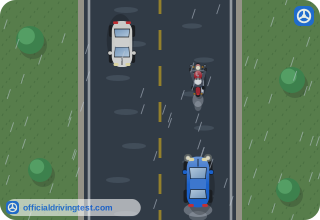
- Pass them as soon as possible
- Increase your following distance
- Stay in their blind spot
- Follow closely so they can see you
Show answer
Correct answer: Increase your following distance
The manual says to increase your following distance when conditions may affect motorcycles and mopeds.
Source: Oregon Driver Manual (2026-2027), page 52 · Open this page in the manual (Manual page 52)
-
Which areas around your vehicle must you be able to see?
- The front, sides, and rear
- The front and left side only
- The front and right side only
- The front and rear only
Show answer
Correct answer: The front, sides, and rear
The manual says you must be able to see what is to the front, sides, and rear of your vehicle.
Source: Oregon Driver Manual (2026-2027), page 73 · Open this page in the manual (Manual page 73)
-
Why should you avoid placing stickers or other objects on your vehicle’s windows?
- They can make the glass crack in cold weather
- They can make the engine run hotter
- They can limit your view of the road
- They can block the signal from your turn lights
Show answer
Correct answer: They can limit your view of the road
The manual warns that stickers or objects on the windows can limit your view of the road.
Source: Oregon Driver Manual (2026-2027), page 73 · Open this page in the manual (Manual page 73)
-
What is a defensive driver always aware of?
- Only the vehicles directly behind and beside them
- Their surroundings and possible escape routes
- Only the posted speed limit and signs
- The exact time of sunset each day
Show answer
Correct answer: Their surroundings and possible escape routes
A defensive driver is always aware of their surroundings and possible escape routes.
Source: Oregon Driver Manual (2026-2027), page 73 · Open this page in the manual (Manual page 73)
-
Defensive driving means knowing how to adjust your driving to allow for which of these?
- The color and style of your vehicle and tires
- The age and make of the vehicle in front of you
- The number of passengers riding behind you
- Your own physical, mental, and emotional condition
Show answer
Correct answer: Your own physical, mental, and emotional condition
The manual lists your own physical, mental, and emotional condition among the things to adjust your driving for.
Source: Oregon Driver Manual (2026-2027), page 73 · Open this page in the manual (Manual page 73)
-
What do hazardous conditions require?
- Faster speeds and shorter following distances
- Normal speeds and increased following distances
- Slower speeds and increased following distances
- Slower speeds and the same following distance
Show answer
Correct answer: Slower speeds and increased following distances
The manual says hazardous conditions require slower speeds and increased following distances.
Source: Oregon Driver Manual (2026-2027), page 76 · Open this page in the manual (Manual page 76)
-
According to the manual, when does driving become hazardous?
- Only when you are driving at night in the countryside
- When visibility is reduced or the road is wet, snowy, or icy
- Only when the road surface is covered with ice
- Only when traffic is heavy on the road you are using
Show answer
Correct answer: When visibility is reduced or the road is wet, snowy, or icy
Driving becomes hazardous when visibility is reduced or when the road surface is wet or covered with snow or ice.
Source: Oregon Driver Manual (2026-2027), page 76 · Open this page in the manual (Manual page 76)
-
Why is your reaction slower at night?
- Your headlights are brighter than daylight
- You can only see as far as your headlights
- Other drivers use their horns more often at night
- Road signs are not reflective at night
Show answer
Correct answer: You can only see as far as your headlights
At night your reaction is slower because you can only see as far as your headlights.
Source: Oregon Driver Manual (2026-2027), page 77 · Open this page in the manual (Manual page 77)
-
How can you be less blinded by the headlights of oncoming vehicles at night?
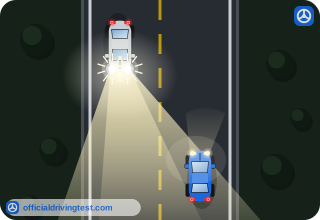
- Look directly into the oncoming lights so your eyes adjust to them
- Turn on your high beams so that the other driver will dim their lights
- Look at the center line of the road and ignore the other vehicle
- Look a little to the right of the oncoming lights, at the road edge or fog line
Show answer
Correct answer: Look a little to the right of the oncoming lights, at the road edge or fog line
Looking a little to the right of oncoming lights and watching the road edge or fog line helps you be less blinded by glare.
Source: Oregon Driver Manual (2026-2027), page 77 · Open this page in the manual (Manual page 77)
-
Why should you be careful when passing at dawn or dusk?
- The sun always blinds the passing driver
- Road markings are not visible at dawn or dusk
- Oncoming vehicles may not have their headlights on
- Passing is always illegal at those times
Show answer
Correct answer: Oncoming vehicles may not have their headlights on
At dawn or dusk oncoming vehicles may not have their headlights on, and you may not see them until it is too late.
Source: Oregon Driver Manual (2026-2027), page 77 · Open this page in the manual (Manual page 77)
-
What should you do as visibility decreases?
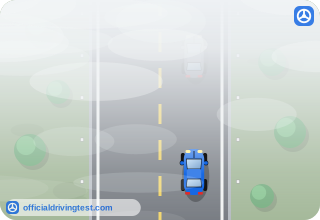
- Slow down
- Speed up to leave the area
- Stay at the same speed
- Follow closer to the vehicle ahead
Show answer
Correct answer: Slow down
The manual says to slow down as visibility decreases.
Source: Oregon Driver Manual (2026-2027), page 77 · Open this page in the manual (Manual page 77)
-
How should you apply the brakes when roads are wet?
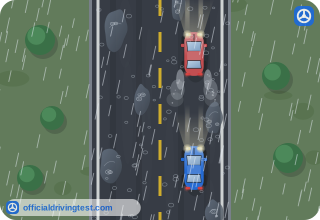
- Later and more firmly than usual
- Sooner and more gently than usual
- At the same time as usual
- Only by pumping them quickly
Show answer
Correct answer: Sooner and more gently than usual
When roads are wet, apply the brakes sooner and more gently than usual.
Source: Oregon Driver Manual (2026-2027), page 77 · Open this page in the manual (Manual page 77)
-
What does rain do to the distance needed to stop your vehicle?
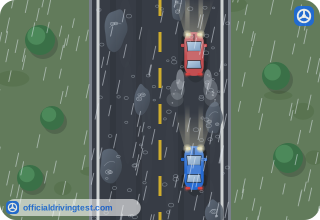
- It decreases the braking distance
- It does not change the braking distance
- It only changes it at night
- It increases the braking distance
Show answer
Correct answer: It increases the braking distance
Rain impairs your ability to see ahead and increases the braking distance needed to stop.
Source: Oregon Driver Manual (2026-2027), page 77 · Open this page in the manual (Manual page 77)
-
Why can even summer showers make roads slippery?
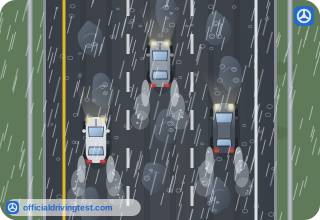
- Rain mixes with oil and dirt on the road
- Rain freezes quickly on the pavement
- Rain lowers the pressure in your tires
- Rain washes the painted markings off the road
Show answer
Correct answer: Rain mixes with oil and dirt on the road
Even summer showers can cause slippery roads when rain mixes with oil and dirt.
Source: Oregon Driver Manual (2026-2027), page 77 · Open this page in the manual (Manual page 77)
-
Which of these should you not do in wet conditions?
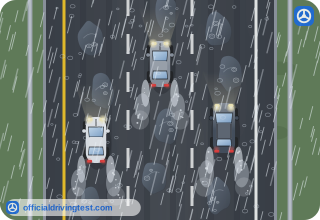
- Turn on your headlights
- Use cruise control
- Keep windows clear of moisture
- Apply the brakes gently
Show answer
Correct answer: Use cruise control
The manual says not to use cruise control in wet conditions.
Source: Oregon Driver Manual (2026-2027), page 77 · Open this page in the manual (Manual page 77)
-
What can happen when vehicle tires hydroplane over a wet road surface?
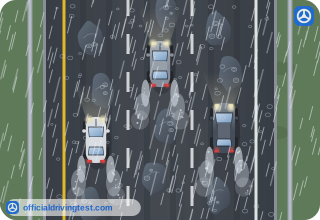
- The tires grip the wet road better than usual
- The brakes work faster than they normally do
- The engine stalls and the vehicle stops at once
- The ability to steer and stop can be reduced or lost
Show answer
Correct answer: The ability to steer and stop can be reduced or lost
When tires hydroplane (skim or float) over a wet surface, the ability to steer and stop can be reduced or lost.
Source: Oregon Driver Manual (2026-2027), page 78 · Open this page in the manual (Manual page 78)
-
Because tires can hydroplane on wet roads, what does the manual tell you to do?
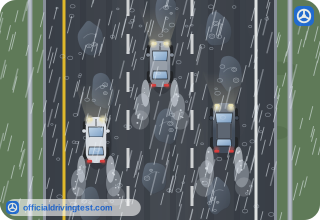
- Slow down when roads are wet
- Brake hard on wet roads
- Use cruise control on wet roads
- Follow the vehicle ahead closely
Show answer
Correct answer: Slow down when roads are wet
Tires can hydroplane (skim or float) on a wet road surface, and the manual says to slow down when roads are wet.
Source: Oregon Driver Manual (2026-2027), page 78 · Open this page in the manual (Manual page 78)
-
How should you drive on snow and ice?
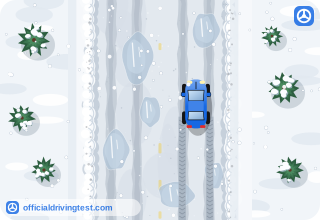
- At normal speeds, leaving more room ahead of your vehicle
- At slower speeds, leaving the same room ahead as usual
- At slower speeds, with cruise control turned on
- At slower speeds, leaving more room ahead of your vehicle
Show answer
Correct answer: At slower speeds, leaving more room ahead of your vehicle
Snow and ice call for slower speeds and more room between your vehicle and the vehicle ahead.
Source: Oregon Driver Manual (2026-2027), page 78 · Open this page in the manual (Manual page 78)
-
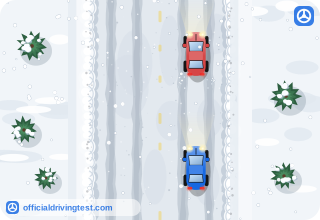
What do snow and ice do to the distance needed to stop your vehicle?
- They increase the braking distance
- They decrease the braking distance
- They have no effect on the braking distance
- They affect it only below freezing
Show answer
Correct answer: They increase the braking distance
Snow and ice impair your ability to see ahead and increase the braking distance needed to stop your vehicle.
Source: Oregon Driver Manual (2026-2027), page 78 · Open this page in the manual (Manual page 78)
-
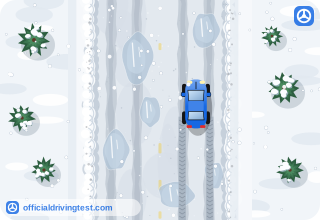
What should you do when police or highway officials say driving is very hazardous?
- Drive with your hazard lights on
- Drive only in the daytime
- Stay off the road
- Drive at the minimum speed
Show answer
Correct answer: Stay off the road
When police or highway officials say driving is very hazardous, stay off the road.
Source: Oregon Driver Manual (2026-2027), page 78 · Open this page in the manual (Manual page 78)
-
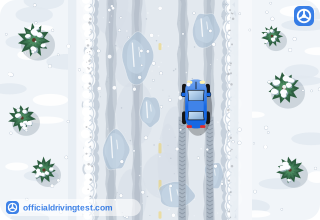
How should you press the gas pedal when driving on snow and ice?
- Firmly
- Gently
- In short, hard bursts
- Fully, to keep the tires turning
Show answer
Correct answer: Gently
Too much power may cause the tires to spin or the vehicle to slide, so gently press the gas pedal.
Source: Oregon Driver Manual (2026-2027), page 78 · Open this page in the manual (Manual page 78)
-
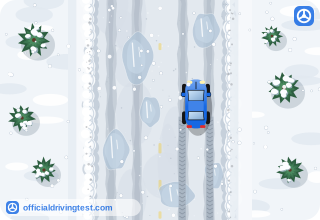
How should you use the brakes on snow and ice?
- Slam on them
- Press them firmly and hold
- Keep your foot resting on them
- Gently press and release them
Show answer
Correct answer: Gently press and release them
If you slam on the brakes, your vehicle will likely skid, so gently press and release them.
Source: Oregon Driver Manual (2026-2027), page 78 · Open this page in the manual (Manual page 78)
-
How can you get the “feel” of a snowy or icy road when you start driving?
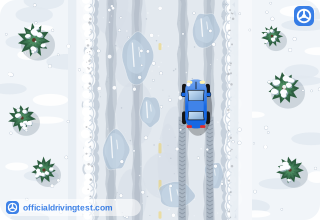
- Lightly try your brakes away from traffic
- Accelerate hard on a straight, open stretch
- Brake firmly in heavy traffic to test them
- Turn the wheel sharply back and forth in traffic
Show answer
Correct answer: Lightly try your brakes away from traffic
Get the feel of the road away from traffic and try your brakes lightly so you know what to expect.
Source: Oregon Driver Manual (2026-2027), page 78 · Open this page in the manual (Manual page 78)
-
How should you make turns on snow and ice to avoid a skid?
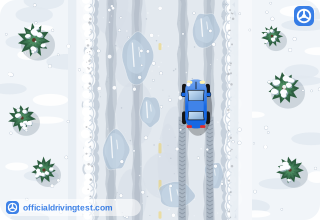
- At a high, steady speed
- While braking through the turn
- At a reduced, steady speed
- While speeding up through the turn
Show answer
Correct answer: At a reduced, steady speed
The manual says to make turns at a reduced, steady speed to avoid a skid.
Source: Oregon Driver Manual (2026-2027), page 78 · Open this page in the manual (Manual page 78)
-
Which places freeze first and may be icy when the rest of the road is free of ice?
- A road with a wide shoulder
- A bridge or a shaded area
- A straight stretch in sunlight
- A freshly paved road
Show answer
Correct answer: A bridge or a shaded area
A bridge or shaded area freezes first and may be icy when the rest of the road is free of ice.
Source: Oregon Driver Manual (2026-2027), page 78 · Open this page in the manual (Manual page 78)
-
How much power should you apply when going uphill on a snow or ice-covered road?
- As much power as possible to climb the hill quickly
- Very little, letting the vehicle roll back a little
- None, coasting up the hill with the gears in neutral
- Just enough to maintain motion without the wheels spinning
Show answer
Correct answer: Just enough to maintain motion without the wheels spinning
Apply just enough power to maintain motion without causing the wheels to spin.
Source: Oregon Driver Manual (2026-2027), page 78 · Open this page in the manual (Manual page 78)
-
When is a snow or ice-covered road likely to be most slippery?
- When the temperature is near the freezing point
- When the temperature is well below the freezing point
- When the temperature is above 50 degrees
- When the temperature is changing quickly
Show answer
Correct answer: When the temperature is near the freezing point
The road is likely to be most slippery when the temperature is near the freezing point rather than below freezing.
Source: Oregon Driver Manual (2026-2027), page 78 · Open this page in the manual (Manual page 78)
-
Which is advised when driving on snow and ice?
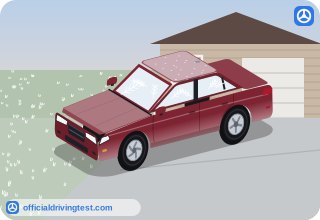
- Use cruise control to hold a steady speed
- Leave frost on the side windows
- Keep windows clear of snow, ice, and fog
- Keep your headlights off to avoid glare
Show answer
Correct answer: Keep windows clear of snow, ice, and fog
The manual says to keep windows clear of snow, ice and fog, and not to use cruise control.
Source: Oregon Driver Manual (2026-2027), page 78 · Open this page in the manual (Manual page 78)
-
Which driving habit helps improve gas mileage?
- Accelerating quickly from each stop
- Driving steadily within posted speed limits
- Letting the engine idle while waiting
- Making separate trips for each errand
Show answer
Correct answer: Driving steadily within posted speed limits
Driving steadily and avoiding exceeding posted speed limits improves gas mileage.
Source: Oregon Driver Manual (2026-2027), page 86 · Open this page in the manual (Manual page 86)
-
Which of these helps you save fuel?
- Letting the engine idle before leaving
- Taking separate trips for each errand
- Avoiding rapid starts and sudden stops
- Driving a little over the speed limit
Show answer
Correct answer: Avoiding rapid starts and sudden stops
Avoiding rapid starts and sudden stops is a listed fuel saving technique.
Source: Oregon Driver Manual (2026-2027), page 86 · Open this page in the manual (Manual page 86)