North Carolina: Emergencies and special situations
Skids, brake failure, breakdowns, crashes, bad weather, night driving and wildlife. Split into 6 shorter tests so you're not stuck in one long quiz.
Independent educational site · not affiliated with any government agency or DMV
Choose a part
Emergencies and special situations — Part 1
Questions in this part include: “How does the manual describe carbon monoxide?”
StartEmergencies and special situations — Part 2
Questions in this part include: “According to the manual, half of the inland flooding deaths in North Carolina tropical weather were caused by what?”
StartEmergencies and special situations — Part 3
Questions in this part include: “On which kind of road does the manual say to be especially cautious about wildlife?”
StartEmergencies and special situations — Part 4
Questions in this part include: “How does light pressure on the brake pedal dry wet brakes?”
StartEmergencies and special situations — Part 5
Questions in this part include: “If you need help after a breakdown, how does the manual say to signal it?”
StartEmergencies and special situations — Part 6
Questions in this part include: “If you are about to be hit from the rear and there are no vehicles in front of you, what should you do?”
StartAll 111 Emergencies and special situations questions with answers
Choose a part above to take a practice test, or study every question and answer here.
Show the questions and answersHide the questions
-
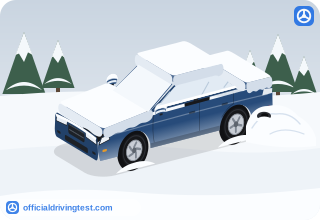
Why does the manual warn against warming up a car when snow may be blocking its exhaust pipe?
- The engine can freeze and stop
- The snow can melt and flood the engine
- The tires can freeze to the road
- Carbon monoxide can back up into the car
Show answer
Correct answer: Carbon monoxide can back up into the car
The manual says snow can block a car's exhaust pipe and warming up the car can cause carbon monoxide to back up into the car.
Source: North Carolina Driver Handbook (Revised May 2025), page 46 · Open this page in the manual (Manual page 46)
-
How does the manual describe carbon monoxide?
- An invisible gas with no smell, taste or color that is poisonous
- A gas with a strong smell that warns you of the danger
- A harmless gas that normally comes out of the exhaust pipe
- A gas that is visible as a gray cloud behind the vehicle
Show answer
Correct answer: An invisible gas with no smell, taste or color that is poisonous
The manual says carbon monoxide is an invisible gas that has no smell, taste or color but is poisonous, even deadly.
Source: North Carolina Driver Handbook (Revised May 2025), page 46 · Open this page in the manual (Manual page 46)
-
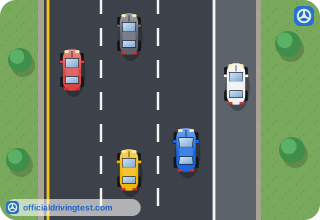
If a vehicle breakdown forces you to stop on an interstate, how should you signal for help?
- Tie a white cloth on the radio aerial or left-door handle and raise the hood
- Tie a red flag to the rear bumper, open the trunk and stay in the vehicle
- Tie an orange cloth on the right-door handle and open all four doors
- Stand at the edge of the travel lane and wave down a passing driver
Show answer
Correct answer: Tie a white cloth on the radio aerial or left-door handle and raise the hood
The manual says to move far off the road, tie a white cloth on the radio aerial or left-door handle and raise the hood.
Source: North Carolina Driver Handbook (Revised May 2025), page 64 · Open this page in the manual (Manual page 64)
-
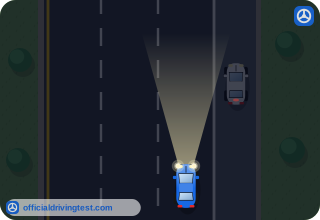
If a vehicle breakdown on an interstate occurs at night, what should you engage?
- The high-beam headlights and the horn until help arrives
- The interior dome light and the low-beam headlights only
- The vehicle's emergency flashers or parking lights
- The low-beam headlights only, with the hood closed
Show answer
Correct answer: The vehicle's emergency flashers or parking lights
The manual says to engage the emergency flashers or parking lights if the breakdown occurs at night.
Source: North Carolina Driver Handbook (Revised May 2025), page 64 · Open this page in the manual (Manual page 64)
-
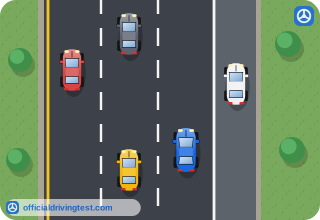
If you are a driver who spots a vehicle breakdown on an interstate, what should you do?
- Stop behind the vehicle and help push it back onto the road
- Immediately contact the State Highway Patrol or local law enforcement
- Stop and offer the driver a ride to the next exit
- Sound your horn until the driver moves the vehicle out of the lane
Show answer
Correct answer: Immediately contact the State Highway Patrol or local law enforcement
The manual says a driver who spots a breakdown should immediately contact the N.C. State Highway Patrol or local law enforcement.
Source: North Carolina Driver Handbook (Revised May 2025), page 64 · Open this page in the manual (Manual page 64)
-
When parking on or along a highway at night, what should you turn on?
- Your high-beam headlights
- Your emergency flashers
- Your low-beam headlights
- Your interior lights only
Show answer
Correct answer: Your emergency flashers
The manual says when parking on or along a highway, turn on your emergency flashers.
Source: North Carolina Driver Handbook (Revised May 2025), page 71 · Open this page in the manual (Manual page 71)
-
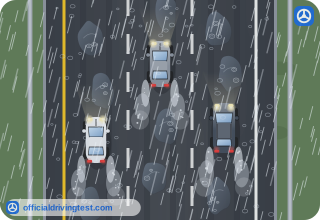
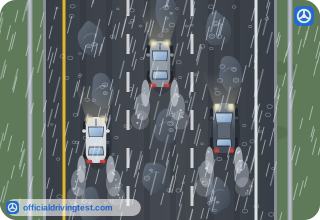
What is hydroplaning?
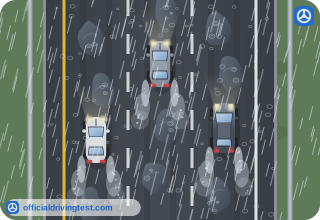
- A thin sheet of water gets between the road and the tires, so they lose contact
- The tires lock up because the brakes are pressed too hard on wet pavement
- The engine floods with water and stalls on the wet roadway
- The tires wear out quickly after driving on wet pavement for a long time
Show answer
Correct answer: A thin sheet of water gets between the road and the tires, so they lose contact
The manual says hydroplaning occurs when a thin sheet of water gets between the road surface and a vehicle's tires, causing them to lose contact with the road.
Source: North Carolina Driver Handbook (Revised May 2025), page 72 · Open this page in the manual (Manual page 72)
-
At what speed can hydroplaning start?
- As low as 10 miles per hour
- As low as 55 miles per hour
- As low as 30 miles per hour
- Only above 65 miles per hour
Show answer
Correct answer: As low as 30 miles per hour
The manual says hydroplaning can start at speeds as low as 30 miles per hour.
Source: North Carolina Driver Handbook (Revised May 2025), page 72 · Open this page in the manual (Manual page 72)
-
In how much water can hydroplaning begin?
- Water at least one foot deep
- Water little more than 1/8 inch deep
- Water at least six inches deep
- Water at least one inch deep
Show answer
Correct answer: Water little more than 1/8 inch deep
The manual says hydroplaning can start in water little more than 1/8 inch deep.
Source: North Carolina Driver Handbook (Revised May 2025), page 72 · Open this page in the manual (Manual page 72)
-
What happens to the chances of hydroplaning when your speed increases?
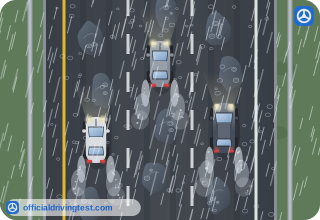
- They decrease
- They stay the same
- They disappear
- They increase
Show answer
Correct answer: They increase
The manual says when your speed increases, so do the chances of hydroplaning.
Source: North Carolina Driver Handbook (Revised May 2025), page 72 · Open this page in the manual (Manual page 72)
-
If you begin to hydroplane, what should you do first?
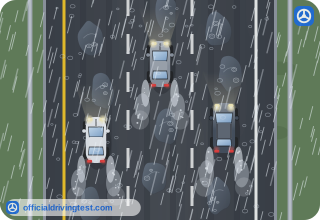
- Take your foot off the gas pedal
- Brake hard
- Jerk the steering wheel
- Accelerate to get out of the skid
Show answer
Correct answer: Take your foot off the gas pedal
The manual says if you begin to hydroplane, take your foot off the gas pedal.
Source: North Carolina Driver Handbook (Revised May 2025), page 72 · Open this page in the manual (Manual page 72)
-
If your vehicle hydroplanes, which instinct should you resist?
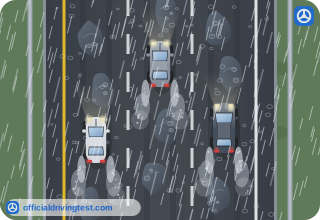
- Steering straight
- Taking your foot off the gas pedal
- Using the brakes
- Letting the car slow down
Show answer
Correct answer: Using the brakes
The manual says to resist your instinct to use the brakes if you hydroplane.
Source: North Carolina Driver Handbook (Revised May 2025), page 72 · Open this page in the manual (Manual page 72)
-
While hydroplaning, how should you handle the steering wheel?
- Turn it sharply to the side to try to regain traction quickly
- Keep it straight and let the car slow down until the tires grip the road
- Jerk it back and forth to try to regain grip on the road
- Hold it loosely and let the car drift across the lanes
Show answer
Correct answer: Keep it straight and let the car slow down until the tires grip the road
The manual says to keep the steering wheel straight and let the car's momentum decrease until the tires grip the road again.
Source: North Carolina Driver Handbook (Revised May 2025), page 72 · Open this page in the manual (Manual page 72)
-
What can send you into an uncontrollable skid once you begin to hydroplane?
- Turning on the windshield wipers while the road is wet
- Taking your foot off the gas pedal and keeping straight
- Keeping the steering wheel straight and steady the whole time
- Any sudden jerking of the steering wheel or a strong gust of wind
Show answer
Correct answer: Any sudden jerking of the steering wheel or a strong gust of wind
The manual says any sudden jerking of the steering wheel or even a strong gust of wind can send you into an uncontrollable skid.
Source: North Carolina Driver Handbook (Revised May 2025), page 72 · Open this page in the manual (Manual page 72)
-
Which tires help prevent hydroplaning at moderate speeds?
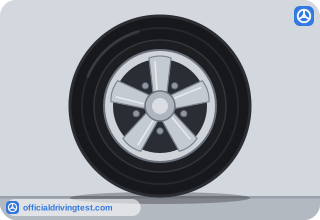
- Tires with deep, open treads that let water escape
- Tires with worn tread and low pressure
- Tires with smooth surfaces
- Tires that are over-inflated to the maximum
Show answer
Correct answer: Tires with deep, open treads that let water escape
The manual says tires with deep, open treads allow water to escape and help prevent hydroplaning at moderate speeds.
Source: North Carolina Driver Handbook (Revised May 2025), page 72 · Open this page in the manual (Manual page 72)
-
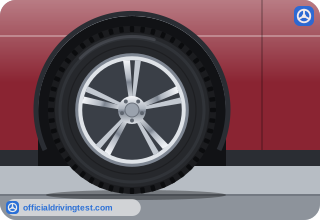
Which tires have less grip on the road and increase your chance of hydroplaning?
- Tires with deep, open treads
- Tires with pressure on the high side of specifications
- Tires with worn tread and those that are under-inflated
- Tires that were recently rotated
Show answer
Correct answer: Tires with worn tread and those that are under-inflated
The manual says tires with worn tread and those that are underinflated have less grip, increasing the chance of hydroplaning.
Source: North Carolina Driver Handbook (Revised May 2025), page 72 · Open this page in the manual (Manual page 72)
-
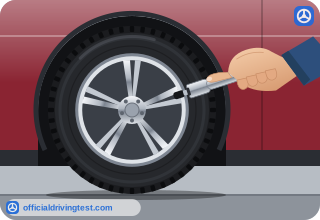
To properly handle skids, where should your tire pressure be relative to the manufacturer's specifications?
- On the low side rather than the high side
- On the high side rather than the low side
- Exactly in the middle
- It does not matter
Show answer
Correct answer: On the high side rather than the low side
The manual says it is better to have tire pressure on the high side, rather than the low side, of the manufacturer's specifications to handle skids.
Source: North Carolina Driver Handbook (Revised May 2025), page 72 · Open this page in the manual (Manual page 72)
-
Which is a warning sign of standing water that can lead to hydroplaning?
- A loud whistling sound coming from the engine compartment
- A vibrating brake pedal each time you slow down
- A fading of the headlights when you turn them on
- Visible reflections on the surface of the water
Show answer
Correct answer: Visible reflections on the surface of the water
The manual lists visible reflections on the water's surface, dimples from raindrops, a slushing sound from the tires and a loose feeling in the steering wheel.
Source: North Carolina Driver Handbook (Revised May 2025), page 72 · Open this page in the manual (Manual page 72)
-
Which sound made by your tires can warn of standing water?
- A "slushing" sound
- A squealing sound
- A humming sound
- A clicking sound
Show answer
Correct answer: A "slushing" sound
The manual says a slushing sound made by your tires is a warning sign of standing water.
Source: North Carolina Driver Handbook (Revised May 2025), page 72 · Open this page in the manual (Manual page 72)
-
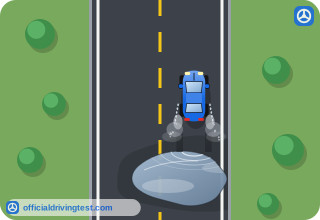
How long can puddles left by rain cause a car to hydroplane?
- Only while it is still raining
- For about 10 minutes after the rain stops
- For several hours, even days after the showers stop
- Only for the first hour after the rain stops
Show answer
Correct answer: For several hours, even days after the showers stop
The manual says rain leaves puddles for several hours, even days after the showers stop, that can cause a car to hydroplane.
Source: North Carolina Driver Handbook (Revised May 2025), page 72 · Open this page in the manual (Manual page 72)
-
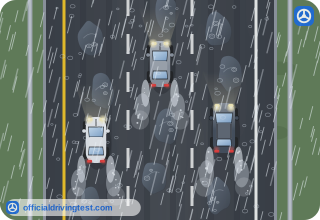
What should you never use when it is raining or after it has been raining?
- Your headlights
- Cruise control
- Your windshield wipers
- Your turn signals
Show answer
Correct answer: Cruise control
The manual says never to use cruise control when it is raining or after it has been raining.
Source: North Carolina Driver Handbook (Revised May 2025), page 72 · Open this page in the manual (Manual page 72)
-
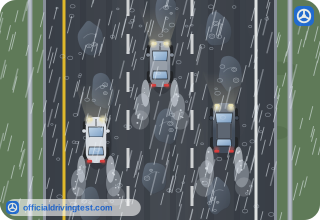
Why should you not use cruise control in wet conditions?
- Cruise control makes the tires lose air more quickly in wet weather
- Cruise control turns off the windshield wipers on wet pavement
- Cruise control increases the fuel used when the road is wet
- Turning it off could cost you time you need to keep control
Show answer
Correct answer: Turning it off could cost you time you need to keep control
The manual says if your vehicle starts to hydroplane, the time it takes to turn off the cruise control or tap the brake pedal could mean the difference in maintaining or losing control.
Source: North Carolina Driver Handbook (Revised May 2025), page 72 · Open this page in the manual (Manual page 72)
-
Since 1970, what share of deaths associated with tropical weather in North Carolina has inland flooding been responsible for?
- 85 percent
- 35 percent
- 60 percent
- 95 percent
Show answer
Correct answer: 85 percent
The manual states that inland flooding has caused 85 percent of tropical-weather deaths in North Carolina since 1970.
Source: North Carolina Driver Handbook (Revised May 2025), page 73 · Open this page in the manual (Manual page 73)
-
According to the manual, half of the inland flooding deaths in North Carolina tropical weather were caused by what?
- Trees falling onto moving vehicles
- Drivers speeding on wet pavement
- People driving into known flooded roads
- Vehicles stalling in heavy fog
Show answer
Correct answer: People driving into known flooded roads
The manual says half of these deaths were caused by people driving into roads they knew were flooded.
Source: North Carolina Driver Handbook (Revised May 2025), page 73 · Open this page in the manual (Manual page 73)
-
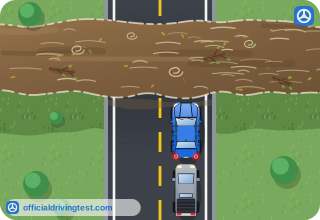
Why should you never drive through standing water on a roadway?
- Standing water always damages the brake linings beyond repair
- The water may be deeper than it looks, and the road may be washed away
- The road surface under standing water is always covered with ice
- Driving through water is allowed only when another vehicle goes first
Show answer
Correct answer: The water may be deeper than it looks, and the road may be washed away
The manual warns that water can be much higher than it appears and the roadway beneath may have washed away.
Source: North Carolina Driver Handbook (Revised May 2025), page 73 · Open this page in the manual (Manual page 73)
-
How deep can fast moving water be and still sweep a car off the highway, according to reports in the manual?
- Two inches
- Nine inches
- Twenty-four inches
- Six inches
Show answer
Correct answer: Six inches
The manual says reports show six inches of fast moving water can sweep a car off the highway.
Source: North Carolina Driver Handbook (Revised May 2025), page 73 · Open this page in the manual (Manual page 73)
-
According to the manual, how deep does fast moving water need to be to float a car or cause it to turn over?
- 12 inches
- 2 inches
- 30 inches
- 48 inches
Show answer
Correct answer: 12 inches
The manual states that 12 inches of fast moving water can float a car or cause it to turn over.
Source: North Carolina Driver Handbook (Revised May 2025), page 73 · Open this page in the manual (Manual page 73)
-
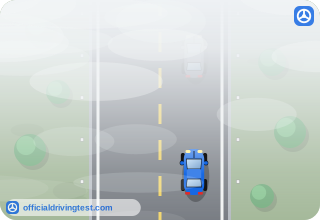
If you must drive during fog, what should you do with your headlights?
- Turn on the high beam headlights
- Turn on the low beam headlights
- Use only the parking lights
- Turn them off so you do not reflect glare
Show answer
Correct answer: Turn on the low beam headlights
The manual says to turn on the low beam headlights when you must drive during fog.
Source: North Carolina Driver Handbook (Revised May 2025), page 73 · Open this page in the manual (Manual page 73)
-
If you have extreme trouble seeing while driving in fog, what should you do?
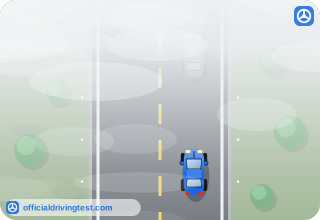
- Pull far off the road, stop, secure the vehicle and use the flashers
- Slow to a crawl and keep driving in the center of the lane
- Stop in the travel lane and turn on the high beam headlights
- Follow the tail lights of the next vehicle until the fog clears
Show answer
Correct answer: Pull far off the road, stop, secure the vehicle and use the flashers
With extreme trouble seeing, the manual says to pull far off the roadway, stop, secure the vehicle and use emergency flashers.
Source: North Carolina Driver Handbook (Revised May 2025), page 73 · Open this page in the manual (Manual page 73)
-
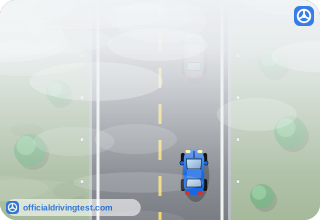
If you must drive during fog, what should you also watch for besides the tail lights ahead?
- Pedestrians walking on the shoulder
- Animals crossing at the road edge
- The vehicles behind you
- Signs warning of a railroad crossing
Show answer
Correct answer: The vehicles behind you
The manual lists watching for the vehicles behind you as one of the steps for driving in fog.
Source: North Carolina Driver Handbook (Revised May 2025), page 73 · Open this page in the manual (Manual page 73)
-
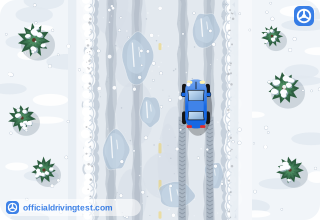
When driving in snow and ice, which places are often the first to freeze as the temperature drops?
- Sunny straight stretches of highway
- Shady spots, bridges and overpasses
- Roads with the most traffic
- Intersections controlled by traffic signals
Show answer
Correct answer: Shady spots, bridges and overpasses
The manual says shady spots, bridges and overpasses are often the first places to freeze.
Source: North Carolina Driver Handbook (Revised May 2025), page 73 · Open this page in the manual (Manual page 73)
-
According to the manual, what increases the danger of skidding?
- Dry pavement
- Light rain on a warm day
- A full tank of fuel
- Hard-packed snow
Show answer
Correct answer: Hard-packed snow
The manual states that hard-packed snow increases the danger of skidding.
Source: North Carolina Driver Handbook (Revised May 2025), page 73 · Open this page in the manual (Manual page 73)
-
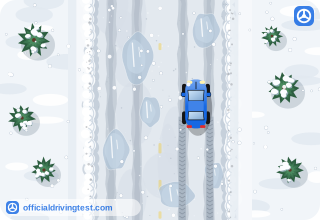
When you stop on snowy or icy roads, what does the manual tell you to do?
- Keep your foot off the brake and let the engine slow the vehicle
- Press the brake pedal hard and hold it down until you stop
- Shift into neutral and coast to the stop
- Switch off the engine and steer to the shoulder
Show answer
Correct answer: Keep your foot off the brake and let the engine slow the vehicle
The manual says to keep your foot off the brake and let the engine slow the vehicle when stopping on snow or ice.
Source: North Carolina Driver Handbook (Revised May 2025), page 73 · Open this page in the manual (Manual page 73)
-
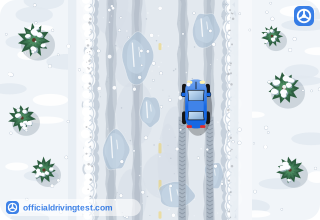
When starting or stopping on snowy or icy roads, how should you increase your speed?
- Quickly, to build traction
- In short, sudden bursts
- Slowly
- Only while braking
Show answer
Correct answer: Slowly
The manual lists increasing your speed slowly as a step when starting or stopping on snow and ice.
Source: North Carolina Driver Handbook (Revised May 2025), page 73 · Open this page in the manual (Manual page 73)
-
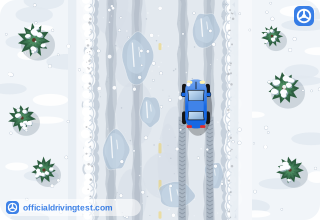
When starting or stopping on snowy or icy roads, how do you get the “feel of the road”?
- By driving faster to test tire grip
- By testing your steering control and the braking friction
- By opening the window to listen to the tire noise
- By pulling the parking brake at low speed
Show answer
Correct answer: By testing your steering control and the braking friction
The manual says to get the feel of the road by testing steering control and braking friction.
Source: North Carolina Driver Handbook (Revised May 2025), page 73 · Open this page in the manual (Manual page 73)
-
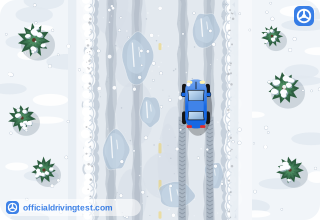
If you must drive during a snowstorm, what should you do?
- Keep your normal speed and turn on the high-beam headlights
- Use only the parking lights and drive in the center of the road
- Turn off the windshield wipers to keep the glass from freezing
- Reduce speed, use windshield wipers and turn on the low-beam headlights
Show answer
Correct answer: Reduce speed, use windshield wipers and turn on the low-beam headlights
The manual says to reduce speed, use wipers and turn on low-beam headlights in a snowstorm.
Source: North Carolina Driver Handbook (Revised May 2025), page 73 · Open this page in the manual (Manual page 73)
-
What does the manual warn about chains and snow tires?
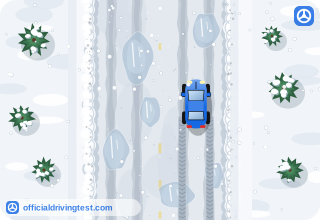
- They can still slide on ice and packed snow
- They make skidding impossible
- They work only on packed snow, never on ice
- They should never be used in North Carolina
Show answer
Correct answer: They can still slide on ice and packed snow
The manual reminds drivers that even chains and snow tires can slide on ice and packed snow.
Source: North Carolina Driver Handbook (Revised May 2025), page 74 · Open this page in the manual (Manual page 74)
-
According to the manual, why are wildlife-vehicle collisions on the rise?
- More wildlife is being released near highways by state agencies each year
- Drivers now travel much faster on rural roads at night
- Urban development cuts through wildlife corridors, forcing animals across roads
- Animals have become less afraid of headlights
Show answer
Correct answer: Urban development cuts through wildlife corridors, forcing animals across roads
The manual attributes rising collisions to urban development cutting through vital wildlife corridors.
Source: North Carolina Driver Handbook (Revised May 2025), page 74 · Open this page in the manual (Manual page 74)
-
While scanning ahead for wildlife, what does the manual tell you to watch the road and road edges for?
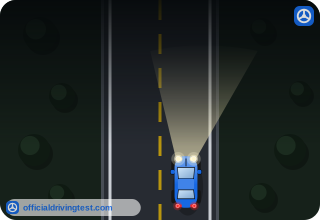
- Movement and eye shine
- Fresh tire marks and broken glass
- Litter and loose gravel
- Flashing lights and reflective signs
Show answer
Correct answer: Movement and eye shine
The manual says to watch the road and its edges for movement and eye shine.
Source: North Carolina Driver Handbook (Revised May 2025), page 74 · Open this page in the manual (Manual page 74)
-
On which kind of road does the manual say to be especially cautious about wildlife?
- Divided highways in cities
- Roads inside parking lots
- Rural, two-lane roads
- Multi-lane roads with many exits
Show answer
Correct answer: Rural, two-lane roads
The manual advises extra caution for wildlife on rural, two-lane roads.
Source: North Carolina Driver Handbook (Revised May 2025), page 74 · Open this page in the manual (Manual page 74)
-
When are wildlife most active, according to the manual?
- At noon and in the early afternoon hours of summer days
- At dawn, at dusk and in the first few hours after dark
- In the hours just before dawn only
- Only in the middle of the night
Show answer
Correct answer: At dawn, at dusk and in the first few hours after dark
The manual says wildlife are most active at dawn, dusk and in the first few hours after dark.
Source: North Carolina Driver Handbook (Revised May 2025), page 74 · Open this page in the manual (Manual page 74)
-
During which seasons should you stay especially alert for wildlife because of seasonal migrations?
- Summer and winter
- Winter only
- Summer only
- Spring and fall
Show answer
Correct answer: Spring and fall
The manual says to stay alert during seasonal migrations, especially in spring and fall.
Source: North Carolina Driver Handbook (Revised May 2025), page 74 · Open this page in the manual (Manual page 74)
-
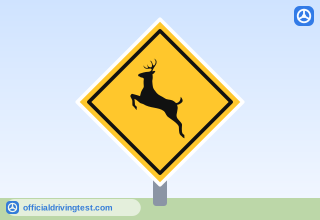
What color are the wildlife crossing signs the manual tells you to look for?
- Yellow
- Green
- White
- Blue
Show answer
Correct answer: Yellow
The manual tells drivers to look for the yellow wildlife crossing signs.
Source: North Carolina Driver Handbook (Revised May 2025), page 74 · Open this page in the manual (Manual page 74)
-
According to the manual, why is the placement of wildlife crossing signs purposeful?
- The signs mark the borders of state parks
- The signs show where hunting is allowed
- Certain areas are well-known hot spots for vehicle collisions
- The signs mark places where speed limits change often
Show answer
Correct answer: Certain areas are well-known hot spots for vehicle collisions
The manual says sign placement is purposeful because certain areas are well-known collision hot spots.
Source: North Carolina Driver Handbook (Revised May 2025), page 74 · Open this page in the manual (Manual page 74)
-
When should you use high beams, with wildlife in mind?
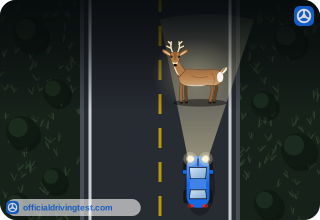
- Whenever you see a yellow wildlife crossing sign ahead
- Only when there is no oncoming traffic and no animals directly ahead
- Always, to make animals run away from the road ahead of you
- Only in the first hours after dark on rural roads
Show answer
Correct answer: Only when there is no oncoming traffic and no animals directly ahead
The manual says to use high beams only when no traffic is oncoming and no animals are directly ahead.
Source: North Carolina Driver Handbook (Revised May 2025), page 74 · Open this page in the manual (Manual page 74)
-
What effect can high beams have on some animals?
- They make the animals run away from the road
- They attract animals in groups
- They make animals move more slowly toward the road edge
- They can confuse or “freeze” them
Show answer
Correct answer: They can confuse or “freeze” them
The manual says high beams can confuse or “freeze” some animals, the familiar “deer in headlights” behavior.
Source: North Carolina Driver Handbook (Revised May 2025), page 74 · Open this page in the manual (Manual page 74)
-
What should you expect if you see one deer, elk or wild boar near the road?
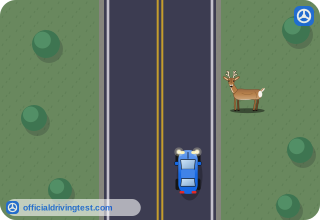
- Others may be close behind it
- It is probably alone
- It will stay off the road
- It will move away from your headlights
Show answer
Correct answer: Others may be close behind it
Many species travel in groups or family units, so others may be close behind.
Source: North Carolina Driver Handbook (Revised May 2025), page 74 · Open this page in the manual (Manual page 74)
-
Why does the manual say not to litter?
- Trash can clog the drains and flood the road
- Trash makes wildlife crossing signs harder to see
- Trash may attract wildlife closer to the road edges
- Trash can cause tire blowouts
Show answer
Correct answer: Trash may attract wildlife closer to the road edges
The manual says trash may attract wildlife and bring them closer to road edges.
Source: North Carolina Driver Handbook (Revised May 2025), page 74 · Open this page in the manual (Manual page 74)
-
If you see wildlife on the road, what does the manual tell you to do?
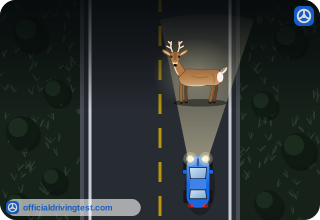
- Swerve into the next lane to avoid the animal
- Brake firmly, stay in your lane, and try to stop in time
- Speed up to get past the animal before it moves
- Stop in the middle of the road and get out of your car
Show answer
Correct answer: Brake firmly, stay in your lane, and try to stop in time
The manual says to brake firmly, stay in your lane and try to stop in time.
Source: North Carolina Driver Handbook (Revised May 2025), page 74 · Open this page in the manual (Manual page 74)
-
If you see wildlife on the road, what can you try with your horn?
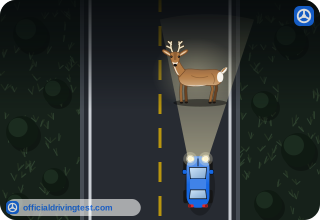
- Holding it down until the animal leaves
- Not using it, since it always frightens animals
- Honking it only after a collision
- Honking it briefly
Show answer
Correct answer: Honking it briefly
The manual says you can try honking the horn briefly.
Source: North Carolina Driver Handbook (Revised May 2025), page 74 · Open this page in the manual (Manual page 74)
-
If you hit an animal or come across an injured one, what should you do after pulling off to the side of the road safely?
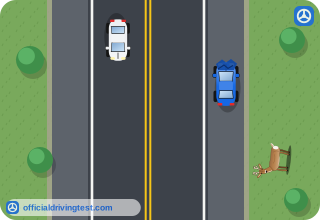
- Stay in your car, lock your doors, and turn on hazard lights
- Get out and move the animal off the road
- Get out and check whether it has young nearby
- Stay in the car with the doors unlocked and the engine off
Show answer
Correct answer: Stay in your car, lock your doors, and turn on hazard lights
The manual says to stay in the car, lock the doors and turn on hazard lights.
Source: North Carolina Driver Handbook (Revised May 2025), page 75 · Open this page in the manual (Manual page 75)
-
If you hit an animal or come across an injured one, why should you not approach it?
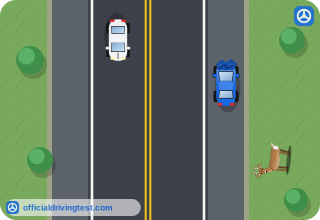
- It will always run away when approached
- It is illegal to touch any wild animal
- It may be dangerous
- It may leave a scent on your clothes
Show answer
Correct answer: It may be dangerous
The manual says not to approach the animal because it may be dangerous.
Source: North Carolina Driver Handbook (Revised May 2025), page 75 · Open this page in the manual (Manual page 75)
-
Why does the manual say to report a wildlife incident to your nearest wildlife rehabilitators?
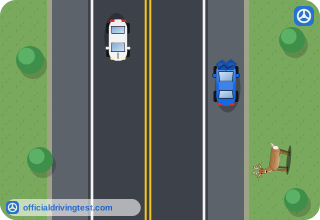
- They will remove your damaged vehicle
- They can check if the animal is alive or has young nearby
- They will file the insurance claim for you
- They decide whether your license will be suspended
Show answer
Correct answer: They can check if the animal is alive or has young nearby
Rehabilitators can check whether the animal is alive and whether it may have young nearby.
Source: North Carolina Driver Handbook (Revised May 2025), page 75 · Open this page in the manual (Manual page 75)
-
What does the manual say is most important in an emergency?
- Stop the vehicle at once, wherever you are
- Call for help before doing anything else
- Apply the brakes as hard as possible
- Do not panic, but react promptly and appropriately
Show answer
Correct answer: Do not panic, but react promptly and appropriately
The manual says that most importantly you should not panic but react promptly and appropriately.
Source: North Carolina Driver Handbook (Revised May 2025), page 75 · Open this page in the manual (Manual page 75)
-
If your brakes fail in a vehicle with a manual transmission, what should you do?
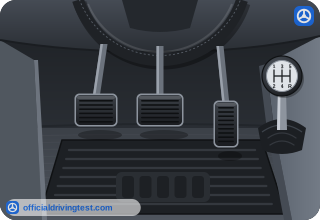
- Shift to a lower gear, release the clutch and apply the emergency brake
- Shift into neutral and press the clutch pedal all the way down
- Shift into a higher gear and pump the gas pedal
- Turn off the engine and coast to a stop
Show answer
Correct answer: Shift to a lower gear, release the clutch and apply the emergency brake
For brake failure with a manual transmission, the manual says to shift lower, release the clutch and apply the emergency brake.
Source: North Carolina Driver Handbook (Revised May 2025), page 75 · Open this page in the manual (Manual page 75)
-
If your brakes fail in a vehicle with an automatic transmission, what should you do?
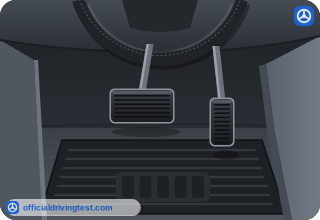
- Move the gear lever into park and steer to the shoulder
- Move the gear lever into neutral and pump the gas pedal
- Apply the emergency brake and shift the gear lever to low range
- Turn off the ignition and leave the gear lever in drive
Show answer
Correct answer: Apply the emergency brake and shift the gear lever to low range
The manual says to apply the emergency brake and move the gear lever into low range.
Source: North Carolina Driver Handbook (Revised May 2025), page 75 · Open this page in the manual (Manual page 75)
-
Why does the manual say to use the emergency brake when the regular brakes fail, even though it could cause damage?
- The emergency brake is designed to replace the regular brakes
- Under the circumstances of brake failure there is no better choice
- The transmission is not affected by the emergency brake
- Repair costs are paid by the state after a brake failure
Show answer
Correct answer: Under the circumstances of brake failure there is no better choice
The manual admits it may damage the brake and transmission, but there is no better choice in a brake failure.
Source: North Carolina Driver Handbook (Revised May 2025), page 75 · Open this page in the manual (Manual page 75)
-
How can you help to dry wet brakes?
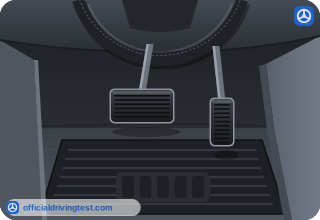
- Park and wait with the engine off for an hour
- Press the brake pedal down hard and hold it
- Drive fast for several miles without touching the brake pedal
- Drive a short distance while applying light pressure to the brake pedal
Show answer
Correct answer: Drive a short distance while applying light pressure to the brake pedal
The manual says to drive a short distance and apply light pressure to the brake pedal.
Source: North Carolina Driver Handbook (Revised May 2025), page 75 · Open this page in the manual (Manual page 75)
-
How does light pressure on the brake pedal dry wet brakes?
- The heat from the friction evaporates the water from the brake linings
- The pressure squeezes the water out of the brake fluid lines
- The pressure blows air through the wheels
- The brake pads absorb the water and store it
Show answer
Correct answer: The heat from the friction evaporates the water from the brake linings
The manual says the heat generated by the brakes' friction evaporates water from the linings.
Source: North Carolina Driver Handbook (Revised May 2025), page 75 · Open this page in the manual (Manual page 75)
-
How should you control your speed when moving down a long hill to prevent excessive wear on the brakes?
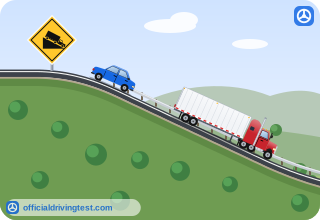
- Keep the brake pedal pressed lightly the whole way
- Shift into neutral and coast
- Use a lower gear instead of the brake pedal
- Turn the engine off to save fuel
Show answer
Correct answer: Use a lower gear instead of the brake pedal
The manual says to use a lower gear rather than the brake pedal on a long hill or steep grade.
Source: North Carolina Driver Handbook (Revised May 2025), page 75 · Open this page in the manual (Manual page 75)
-
When is it best to shift to a lower gear for a long downhill grade?
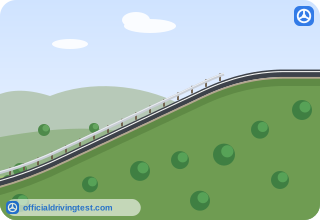
- Halfway down the hill
- At the top of the hill before you descend
- Only when the brakes begin to overheat
- At the bottom of the hill
Show answer
Correct answer: At the top of the hill before you descend
The manual says it is best to shift to the lower gear at the top of the hill before you descend.
Source: North Carolina Driver Handbook (Revised May 2025), page 75 · Open this page in the manual (Manual page 75)
-
If your gas pedal sticks, what should you do with the gear control and the brakes?
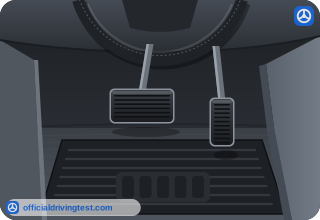
- Shift into reverse and pump the brakes rapidly
- Turn the ignition to lock and press the brake lightly
- Stay in gear and lock the wheels to stop quickly
- Shift to neutral and brake firmly without locking the wheels
Show answer
Correct answer: Shift to neutral and brake firmly without locking the wheels
The manual says to shift to neutral and brake firmly without locking the wheels.
Source: North Carolina Driver Handbook (Revised May 2025), page 75 · Open this page in the manual (Manual page 75)
-
If your gas pedal sticks, what can you try first to free the throttle?
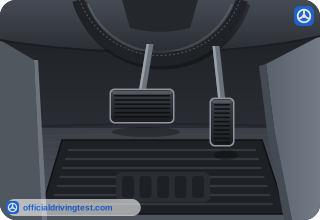
- Tap the gas pedal or lift it with your foot
- Press the clutch and the brake at the same time
- Turn the steering wheel sharply left and right
- Pull the parking brake all the way up
Show answer
Correct answer: Tap the gas pedal or lift it with your foot
The manual says to tap the gas pedal or lift it with your foot to try to unstick the throttle linkage.
Source: North Carolina Driver Handbook (Revised May 2025), page 75 · Open this page in the manual (Manual page 75)
-
After dealing with a sticking gas pedal, what should you do with the vehicle?
- Continue driving to the nearest repair shop
- Stop in the nearest travel lane and wait for help
- Find a safe place to move it completely off the road
- Drive on slowly with the flashers on
Show answer
Correct answer: Find a safe place to move it completely off the road
The manual says to find a safe place to move the vehicle completely off the road.
Source: North Carolina Driver Handbook (Revised May 2025), page 75 · Open this page in the manual (Manual page 75)
-
How can you tell that a blowout has occurred?
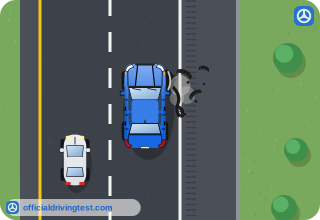
- A smell of burning rubber and a rise in engine noise
- A loud noise and the vehicle begins to swerve
- A warm steering wheel and a slowing engine
- A drop in speed and the horn sounding by itself
Show answer
Correct answer: A loud noise and the vehicle begins to swerve
The manual says a blowout is recognizable by a loud noise and the vehicle beginning to swerve.
Source: North Carolina Driver Handbook (Revised May 2025), page 76 · Open this page in the manual (Manual page 76)
-
What should you do if you feel a bumpy ride when there is no obvious reason?
- Speed up to smooth out the ride
- Check your mirrors and continue driving
- Shift into a lower gear
- Stop and check your tires
Show answer
Correct answer: Stop and check your tires
The manual says to stop and check your tires when the ride is bumpy for no obvious reason.
Source: North Carolina Driver Handbook (Revised May 2025), page 76 · Open this page in the manual (Manual page 76)
-
When changing a flat tire, what should you have all passengers do?
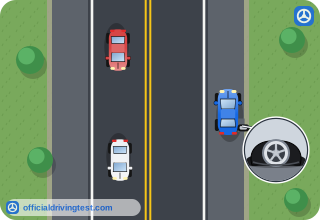
- Leave the vehicle by the passenger side and stay off the road
- Stay in the vehicle with their seat belts on
- Stand in front of the vehicle where they can be seen
- Wait behind the vehicle to warn approaching drivers
Show answer
Correct answer: Leave the vehicle by the passenger side and stay off the road
The manual says never to allow passengers to remain in the vehicle during a tire change.
Source: North Carolina Driver Handbook (Revised May 2025), page 76 · Open this page in the manual (Manual page 76)
-
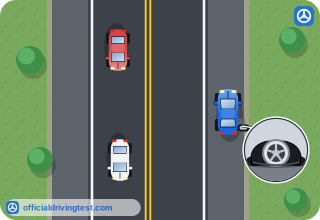
Before changing a flat tire, what should you do to prevent the vehicle from rolling?
- Shift into neutral
- Leave the engine running
- Block the wheels
- Turn the steering wheel to the center
Show answer
Correct answer: Block the wheels
The manual says to block the wheels to prevent the vehicle from rolling.
Source: North Carolina Driver Handbook (Revised May 2025), page 76 · Open this page in the manual (Manual page 76)
-
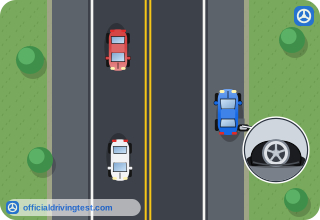
What should you use to warn other drivers when you must change a flat tire, if you have them?
- Your high beam headlights
- Emergency flares
- A white cloth on the door handle
- Your horn, sounded repeatedly
Show answer
Correct answer: Emergency flares
The manual says to set the parking brake and use emergency flares if you have them.
Source: North Carolina Driver Handbook (Revised May 2025), page 76 · Open this page in the manual (Manual page 76)
-
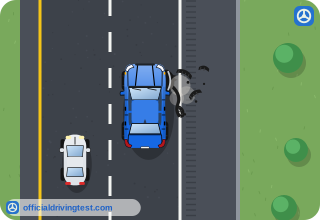
If a blowout occurs, what should you do with the steering wheel?
- Turn it sharply toward the shoulder right away to leave the road
- Let it move freely so the vehicle can settle
- Turn it toward the side of the flat tire
- Hold it tightly and keep the vehicle straight on your side of the road
Show answer
Correct answer: Hold it tightly and keep the vehicle straight on your side of the road
The manual says to hold the steering wheel tightly and keep the vehicle straight on your side of the road.
Source: North Carolina Driver Handbook (Revised May 2025), page 76 · Open this page in the manual (Manual page 76)
-
If a blowout occurs, how should you reduce your speed?
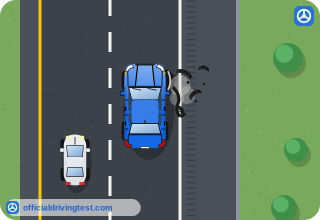
- By lifting your foot from the accelerator
- By pressing down firmly on the brake pedal
- By shifting into reverse
- By pulling the parking brake
Show answer
Correct answer: By lifting your foot from the accelerator
The manual says to reduce speed by lifting your foot from the accelerator during a blowout.
Source: North Carolina Driver Handbook (Revised May 2025), page 76 · Open this page in the manual (Manual page 76)
-
During a blowout, when may you apply the brakes?
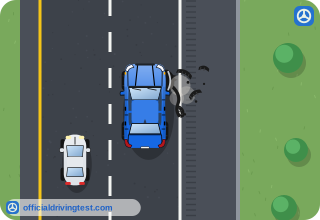
- Immediately, with firm pressure
- Only after the vehicle has come off the road completely
- Only after the engine has slowed the vehicle enough for control
- Only after you have set the parking brake
Show answer
Correct answer: Only after the engine has slowed the vehicle enough for control
The manual says not to brake until the engine has slowed the vehicle enough for you to keep control.
Source: North Carolina Driver Handbook (Revised May 2025), page 76 · Open this page in the manual (Manual page 76)
-
If your vehicle breaks down in an area exposed to other traffic, what should you do?
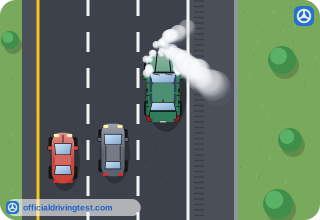
- Make quick repairs at the roadside
- Call a tow truck or mechanic instead of making repairs
- Ask a passing driver to help you make repairs
- Make repairs only during daylight hours
Show answer
Correct answer: Call a tow truck or mechanic instead of making repairs
The manual says not to make repairs in an area exposed to traffic and to call a tow truck or mechanic.
Source: North Carolina Driver Handbook (Revised May 2025), page 76 · Open this page in the manual (Manual page 76)
-
If your vehicle breaks down, where should you move it?
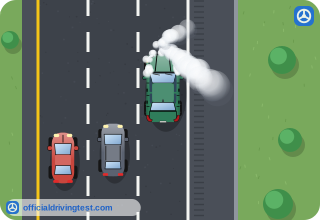
- Onto the shoulder with its rear still in the lane
- To the center of the road, in front of traffic
- Onto the shoulder with the front wheels in the lane
- Completely onto the shoulder of the road
Show answer
Correct answer: Completely onto the shoulder of the road
The manual says to move the vehicle completely onto the shoulder of the road.
Source: North Carolina Driver Handbook (Revised May 2025), page 76 · Open this page in the manual (Manual page 76)
-
If your vehicle breaks down, which side should you leave the vehicle from?
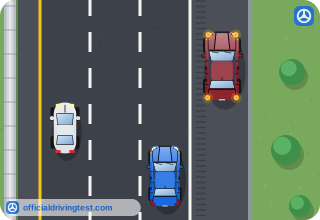
- The passenger side
- The driver side
- Whichever side is closer to the road
- The rear door only
Show answer
Correct answer: The passenger side
The manual says to leave the vehicle by the passenger side after a breakdown.
Source: North Carolina Driver Handbook (Revised May 2025), page 76 · Open this page in the manual (Manual page 76)
-
Where should you stand after your vehicle breaks down?
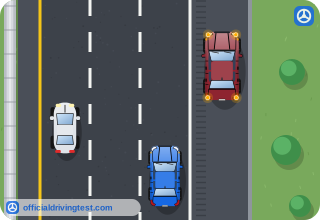
- Directly behind the vehicle to signal approaching drivers
- In front of the vehicle where it can be seen
- Off the road and away from the vehicle, not in front of or behind it
- Beside the driver door
Show answer
Correct answer: Off the road and away from the vehicle, not in front of or behind it
The manual says to stand off the road and away from the vehicle, not in front of or behind it.
Source: North Carolina Driver Handbook (Revised May 2025), page 76 · Open this page in the manual (Manual page 76)
-
If you need help after a breakdown, how does the manual say to signal it?
- Wave a red cloth from the driver window
- Tie a white cloth to the left door handle and raise the hood
- Place a white cloth on the front bumper and lower the hood
- Blow the horn in three long blasts
Show answer
Correct answer: Tie a white cloth to the left door handle and raise the hood
The manual says to tie a white cloth to the left door handle or radio aerial and raise the hood.
Source: North Carolina Driver Handbook (Revised May 2025), page 76 · Open this page in the manual (Manual page 76)
-
If your vehicle breaks down and it is dark, what should you turn on?
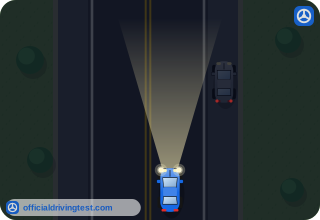
- The high beam headlights
- The interior dome light only, for visibility
- The fog lights only
- The parking lights or emergency flashers
Show answer
Correct answer: The parking lights or emergency flashers
The manual says to turn on the parking lights or emergency flashers if it is dark.
Source: North Carolina Driver Handbook (Revised May 2025), page 76 · Open this page in the manual (Manual page 76)
-
If an approaching vehicle crosses the center line into your path, what should you do about your speed and horn?
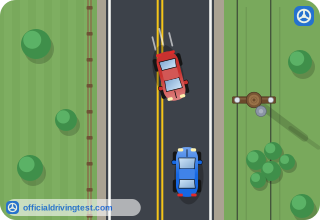
- Reduce speed immediately and sound your horn
- Keep your speed and flash your headlights
- Speed up to pass the vehicle quickly
- Brake hard and stay silent
Show answer
Correct answer: Reduce speed immediately and sound your horn
The manual says to reduce speed immediately and sound your horn.
Source: North Carolina Driver Handbook (Revised May 2025), page 76 · Open this page in the manual (Manual page 76)
-
If an approaching vehicle crosses the center line into your path, what should you do?
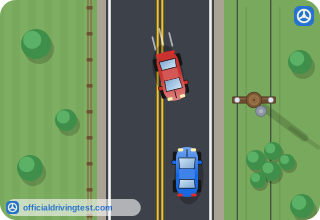
- Swerve left across the center line
- Stop in the middle of your lane and wait for it to pass
- Keep to the right, even if you have to run off the road
- Keep to the left of the center line
Show answer
Correct answer: Keep to the right, even if you have to run off the road
The manual says to keep to the right even if that means running off the road.
Source: North Carolina Driver Handbook (Revised May 2025), page 77 · Open this page in the manual (Manual page 77)
-
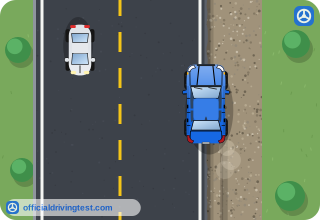
If your vehicle runs off the pavement and onto the shoulder, what should you not do immediately?
- Take your foot off the accelerator
- Apply the brakes or try to turn back
- Steer straight ahead
- Check for approaching traffic
Show answer
Correct answer: Apply the brakes or try to turn back
The manual warns that immediate braking or turning back could make you skid, lose control or overturn.
Source: North Carolina Driver Handbook (Revised May 2025), page 77 · Open this page in the manual (Manual page 77)
-
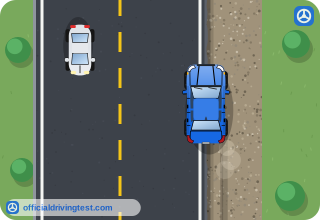
If your vehicle runs off the pavement and onto the shoulder, what should you do first?
- Steer sharply back toward the road at once, then brake
- Press the brake pedal firmly
- Shift into neutral
- Slowly take your foot off the accelerator and steer straight
Show answer
Correct answer: Slowly take your foot off the accelerator and steer straight
The manual says to remove your foot slowly from the accelerator and steer straight ahead.
Source: North Carolina Driver Handbook (Revised May 2025), page 77 · Open this page in the manual (Manual page 77)
-
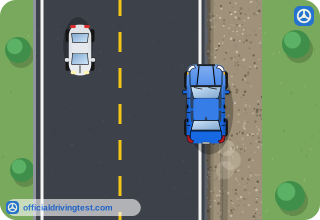
After running off the pavement, when should you check for approaching traffic and gradually drive back onto the road?
- When the vehicle is stopped or nearly stopped
- As soon as you feel the tires touch the shoulder
- While the vehicle is still at full speed
- Only after you have waited five minutes
Show answer
Correct answer: When the vehicle is stopped or nearly stopped
The manual says to check traffic and gradually return to the road when the vehicle is stopped or nearly stopped.
Source: North Carolina Driver Handbook (Revised May 2025), page 77 · Open this page in the manual (Manual page 77)
-
Which roadway conditions are more likely to cause skids?
- Dry concrete and new asphalt
- Roads with wide shoulders
- Wet roads, ice and packed snow
- Roads that are straight and level
Show answer
Correct answer: Wet roads, ice and packed snow
The manual says wet roads, ice and packed snow are more likely to cause skids.
Source: North Carolina Driver Handbook (Revised May 2025), page 77 · Open this page in the manual (Manual page 77)
-
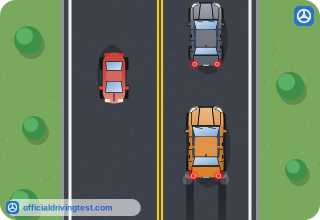
To avoid skidding on a slippery road in a vehicle with anti-lock brakes, how should you use the brake pedal?
- Pump the pedal rapidly
- Use firm, steady pressure and do not pump the brakes
- Tap the pedal lightly, then release it completely
- Press once, then release fully
Show answer
Correct answer: Use firm, steady pressure and do not pump the brakes
The manual says to use firm, steady pressure on anti-lock brakes and not to pump them.
Source: North Carolina Driver Handbook (Revised May 2025), page 77 · Open this page in the manual (Manual page 77)
-
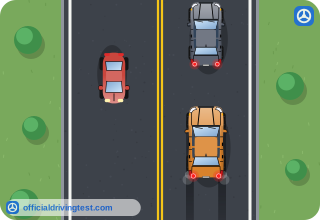
To avoid skidding on a slippery road, what should you do if your vehicle does not have anti-lock brakes?
- Hold the pedal down hard
- Shift into neutral and coast to a stop
- Use only the parking brake
- Pump the brakes gently to slow the vehicle
Show answer
Correct answer: Pump the brakes gently to slow the vehicle
The manual says that without anti-lock brakes you should pump the brakes gently.
Source: North Carolina Driver Handbook (Revised May 2025), page 77 · Open this page in the manual (Manual page 77)
-
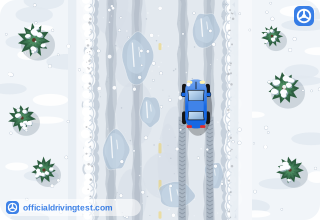
To avoid skidding on wet roads, ice and packed snow, how should you reduce speed?
- Gradually
- Suddenly
- By shifting into neutral
- By shifting into reverse
Show answer
Correct answer: Gradually
The manual says to reduce speed gradually to avoid skidding.
Source: North Carolina Driver Handbook (Revised May 2025), page 77 · Open this page in the manual (Manual page 77)
-
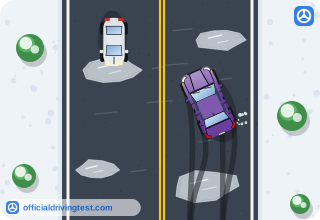
According to the manual's section on skids, in which direction should you turn the steering wheel if your vehicle starts to skid?
- Away from the direction the rear is skidding
- Back and forth in small quick turns
- In the direction the rear of the vehicle is skidding
- Toward the shoulder
Show answer
Correct answer: In the direction the rear of the vehicle is skidding
The manual says to turn the wheel in the direction the rear of the vehicle is skidding.
Source: North Carolina Driver Handbook (Revised May 2025), page 77 · Open this page in the manual (Manual page 77)
-
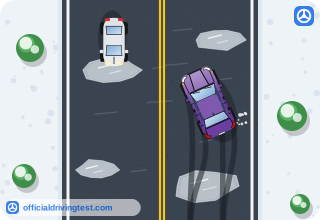
If you find yourself in a skid, what should you do with your foot first?
- Press the accelerator harder
- Ease it off the accelerator
- Press the brake pedal firmly
- Move it to the clutch pedal
Show answer
Correct answer: Ease it off the accelerator
The manual says to ease your foot off the accelerator when in a skid.
Source: North Carolina Driver Handbook (Revised May 2025), page 77 · Open this page in the manual (Manual page 77)
-
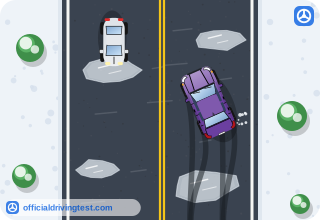
If you find yourself in a skid, what should you do as soon as the vehicle's path begins to straighten?
- Press the accelerator to gain speed
- Apply the brakes hard
- Keep the wheel turned in the same direction as before
- Turn the wheel back the other way so you will not over-steer
Show answer
Correct answer: Turn the wheel back the other way so you will not over-steer
The manual says to turn the wheel back the other way once the path starts to straighten, so you will not over-steer.
Source: North Carolina Driver Handbook (Revised May 2025), page 77 · Open this page in the manual (Manual page 77)
-
According to the manual, the law protects people who stop and render aid at the scene of an accident from what?
- Civil liability, except for intentional wrongdoing or unruly conduct
- Every kind of legal liability, with no exceptions whatsoever
- A traffic ticket for the accident itself
- Having to report the accident to the police
Show answer
Correct answer: Civil liability, except for intentional wrongdoing or unruly conduct
The manual says the law protects such persons from civil liability except for intentional wrongdoing or unruly conduct.
Source: North Carolina Driver Handbook (Revised May 2025), page 77 · Open this page in the manual (Manual page 77)
-
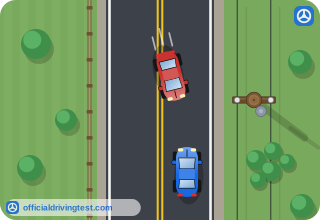
If a crash seems likely, which way should you turn?
- Toward oncoming traffic
- Toward the vehicle in front of you
- Away from oncoming traffic, even if you must leave the road
- Straight ahead, staying on the road at the same speed
Show answer
Correct answer: Away from oncoming traffic, even if you must leave the road
The manual says to turn away from oncoming traffic even if you must leave the road.
Source: North Carolina Driver Handbook (Revised May 2025), page 77 · Open this page in the manual (Manual page 77)
-
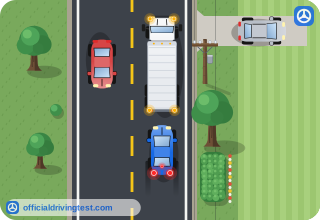
If a crash seems likely, where is it best to drive if you must leave the road?
- Toward a group of parked vehicles
- Into an open field if possible
- Toward a group of trees
- Into a ditch beside a bridge
Show answer
Correct answer: Into an open field if possible
The manual says to drive off the road into an open field if possible.
Source: North Carolina Driver Handbook (Revised May 2025), page 77 · Open this page in the manual (Manual page 77)
-
If you are about to be hit from the rear and there are no vehicles in front of you, what should you do?
- Brake hard and stay in place
- Turn the steering wheel to the left and brake hard
- Shift into neutral
- Press the accelerator and move away as fast as you can
Show answer
Correct answer: Press the accelerator and move away as fast as you can
The manual says to press the accelerator and move away as quickly as possible.
Source: North Carolina Driver Handbook (Revised May 2025), page 77 · Open this page in the manual (Manual page 77)
-
If you are about to be hit from the rear and there are no vehicles in front of you, what should you be ready to do if there is no room to move?
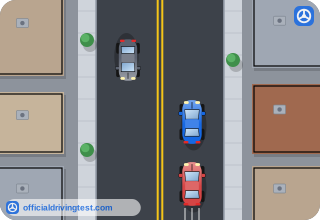
- Apply your brakes
- Turn off the engine
- Sound the horn continuously
- Open the door and leave the vehicle
Show answer
Correct answer: Apply your brakes
The manual says to be ready to apply the brakes if there is no room to move.
Source: North Carolina Driver Handbook (Revised May 2025), page 77 · Open this page in the manual (Manual page 77)
-
If you are about to be hit from the rear, what should you do with your head?
- Turn your head to look at the vehicle behind you
- Lean forward against the steering wheel
- Press the back of your head firmly against the head rest
- Lower your head toward your lap
Show answer
Correct answer: Press the back of your head firmly against the head rest
The manual says to press the back of your head firmly against the head rest.
Source: North Carolina Driver Handbook (Revised May 2025), page 77 · Open this page in the manual (Manual page 77)
-
If you are about to be hit, what should you do with the steering wheel?
- Let go of it and cover your face
- Keep a tight grip on it
- Turn it sharply away from the impact and let go
- Hold it loosely with one hand
Show answer
Correct answer: Keep a tight grip on it
The manual says to keep a tight grip on the steering wheel if you are about to be hit.
Source: North Carolina Driver Handbook (Revised May 2025), page 77 · Open this page in the manual (Manual page 77)
-
If you are about to be hit and all else fails, how should you protect yourself from breaking glass?
- Duck below the dashboard
- Cover your eyes with the sun visor and duck
- Lean toward the passenger seat
- Use your arms and hands to protect your face
Show answer
Correct answer: Use your arms and hands to protect your face
The manual says that if all else fails you should use your arms and hands to protect your face from breaking glass.
Source: North Carolina Driver Handbook (Revised May 2025), page 78 · Open this page in the manual (Manual page 78)
-
If you are involved in a crash, what must you do with your vehicle?
- Stop it immediately
- Stop only if someone is injured
- Drive to the nearest law enforcement office
- Stop after leaving the area of the crash
Show answer
Correct answer: Stop it immediately
The manual says you must stop immediately and that not stopping violates the law.
Source: North Carolina Driver Handbook (Revised May 2025), page 78 · Open this page in the manual (Manual page 78)
-
After a crash on a main lane of the highway with no injuries or fatalities, what should each vehicle do if it can be driven safely under its own power?
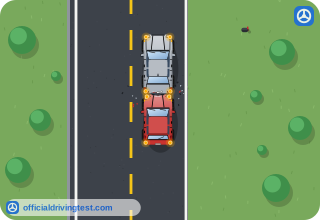
- Stay where it stopped until an officer arrives
- Be driven off at the next exit without stopping
- Be moved out of the travel lane onto the shoulder
- Be moved to the left lane
Show answer
Correct answer: Be moved out of the travel lane onto the shoulder
The manual says each vehicle should be moved onto the shoulder if it can be driven safely under its own power.
Source: North Carolina Driver Handbook (Revised May 2025), page 78 · Open this page in the manual (Manual page 78)
-
In North Carolina, a crash must be reported when property damage appears to amount to at least what total?
- $250
- $1,000
- $500
- $2,500
Show answer
Correct answer: $1,000
The manual requires an immediate report when total damage to vehicles and other property appears to be $1,000 or more.
Source: North Carolina Driver Handbook (Revised May 2025), page 78 · Open this page in the manual (Manual page 78)
-
To whom must you make an immediate report of a reportable crash?
- Your insurance company only
- The nearest DMV office only
- The owner of the other vehicle involved only
- The nearest law enforcement officer or agency
Show answer
Correct answer: The nearest law enforcement officer or agency
The manual requires an immediate report to the nearest law enforcement officer or agency.
Source: North Carolina Driver Handbook (Revised May 2025), page 78 · Open this page in the manual (Manual page 78)
-
What may happen if you fail to make a required crash report?
- Prosecution, and your driver license could be suspended
- Only a warning letter from the DMV
- A mandatory driver improvement course at the DMV
- A fine paid to your insurance company
Show answer
Correct answer: Prosecution, and your driver license could be suspended
The manual says failure to report may result in prosecution and license suspension.
Source: North Carolina Driver Handbook (Revised May 2025), page 78 · Open this page in the manual (Manual page 78)
-
Besides reporting a crash to law enforcement, what does the manual say you should also do?
- Report it to the owner of the road
- Report it only if the other driver was at fault
- Report any crash to your insurance company
- Post a notice at the scene
Show answer
Correct answer: Report any crash to your insurance company
The manual says you should also report any crash to your insurance company.
Source: North Carolina Driver Handbook (Revised May 2025), page 78 · Open this page in the manual (Manual page 78)
-
Which of these must you give to the others involved in a crash?
- Your Social Security number
- Your date of birth
- Your employer's name
- Your vehicle registration number
Show answer
Correct answer: Your vehicle registration number
The manual lists name, address, driver license number, vehicle registration number and insurance company.
Source: North Carolina Driver Handbook (Revised May 2025), page 78 · Open this page in the manual (Manual page 78)
-
If you do not know the occupants of the other vehicle or the owner of damaged property after a crash, what should you do?
- Write down all the information you can and give it to a law enforcement officer
- Leave a note with your phone number on the damaged property and drive away
- Wait at the scene for 24 hours
- Report it only to your insurance company
Show answer
Correct answer: Write down all the information you can and give it to a law enforcement officer
The manual says to write down all the information you can gather and give it to the nearest law enforcement officer.
Source: North Carolina Driver Handbook (Revised May 2025), page 78 · Open this page in the manual (Manual page 78)
-
If you are involved in a crash, what should you try to ensure regarding a law enforcement officer?
- That an officer is called only if someone is hurt
- That the other driver leaves the scene first
- That someone informs an officer immediately
- That you speak to a reporter first
Show answer
Correct answer: That someone informs an officer immediately
The manual says to try to ensure that someone informs a law enforcement officer immediately.
Source: North Carolina Driver Handbook (Revised May 2025), page 78 · Open this page in the manual (Manual page 78)
-
On snow and ice, what does the manual say you should do if necessary for better traction?
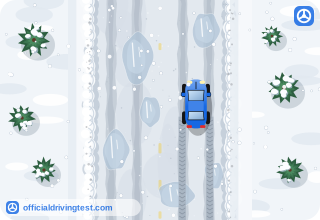
- Lower your tire pressure
- Use chains
- Drive in the center of the road
- Keep the headlights off
Show answer
Correct answer: Use chains
The manual says to use chains if necessary for better traction on snow and ice.
Source: North Carolina Driver Handbook (Revised May 2025), page 73 · Open this page in the manual (Manual page 73)
-
When you must change a flat tire, which lights does the manual say to turn on?
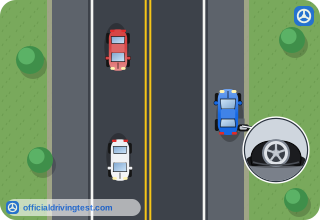
- The high beam headlights only
- The interior dome light and the horn
- The fog lights and the turn signals
- The emergency flashers and parking lights
Show answer
Correct answer: The emergency flashers and parking lights
The manual says to turn on the emergency flashers and parking lights before changing a flat tire.
Source: North Carolina Driver Handbook (Revised May 2025), page 76 · Open this page in the manual (Manual page 76)
-
If you are involved in a crash, what should you do for people who have been injured?
- Do whatever you can to help them
- Move them to your vehicle right away
- Leave them for the police and drive on
- Wait for the other driver to help them first
Show answer
Correct answer: Do whatever you can to help them
The manual says to do whatever you can to help those who have been injured.
Source: North Carolina Driver Handbook (Revised May 2025), page 78 · Open this page in the manual (Manual page 78)
-
If you are involved in a crash, what does the manual tell you to do about further crashes at the scene?
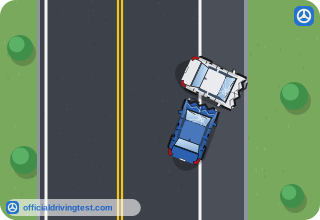
- Stand in the travel lane to warn traffic
- Turn off all lights on your vehicle
- Take precautions to prevent them
- Leave the scene before more traffic arrives
Show answer
Correct answer: Take precautions to prevent them
The manual says to take precautions to prevent further crashes at the scene.
Source: North Carolina Driver Handbook (Revised May 2025), page 78 · Open this page in the manual (Manual page 78)