North Carolina: Emergencies and special situations — Part 5 Practice Test
Questions in this part include: “If you need help after a breakdown, how does the manual say to signal it?” · “Which roadway conditions are more likely to cause skids?”
Independent educational site · not affiliated with any government agency or DMV
Ready? Test yourself
- Instant feedback with an explanation
- Every answer cites its source in the manual
- Your best score is saved on this device
Questions are original and based on the official manual "North Carolina Driver Handbook" (Revised May 2025), North Carolina Division of Motor Vehicles (NCDMV).
All 18 questions in this practice test
Take the test above first, then use this list to study. Tap “Show answer” to see the correct answer and explanation.
Show the questions and answersHide the questions
-
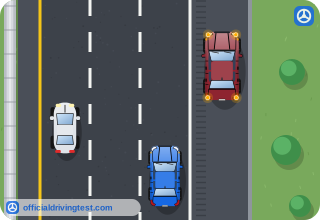
Where should you stand after your vehicle breaks down?
- Directly behind the vehicle to signal approaching drivers
- In front of the vehicle where it can be seen
- Off the road and away from the vehicle, not in front of or behind it
- Beside the driver door
Show answer
Correct answer: Off the road and away from the vehicle, not in front of or behind it
The manual says to stand off the road and away from the vehicle, not in front of or behind it.
Source: North Carolina Driver Handbook (Revised May 2025), page 76 · Open this page in the manual (Manual page 76)
-
If you need help after a breakdown, how does the manual say to signal it?
- Wave a red cloth from the driver window
- Tie a white cloth to the left door handle and raise the hood
- Place a white cloth on the front bumper and lower the hood
- Blow the horn in three long blasts
Show answer
Correct answer: Tie a white cloth to the left door handle and raise the hood
The manual says to tie a white cloth to the left door handle or radio aerial and raise the hood.
Source: North Carolina Driver Handbook (Revised May 2025), page 76 · Open this page in the manual (Manual page 76)
-
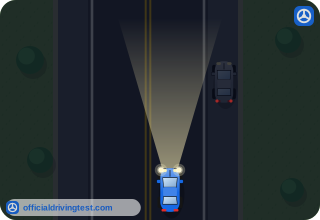
If your vehicle breaks down and it is dark, what should you turn on?
- The high beam headlights
- The interior dome light only, for visibility
- The fog lights only
- The parking lights or emergency flashers
Show answer
Correct answer: The parking lights or emergency flashers
The manual says to turn on the parking lights or emergency flashers if it is dark.
Source: North Carolina Driver Handbook (Revised May 2025), page 76 · Open this page in the manual (Manual page 76)
-
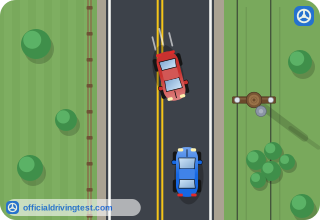
If an approaching vehicle crosses the center line into your path, what should you do about your speed and horn?
- Reduce speed immediately and sound your horn
- Keep your speed and flash your headlights
- Speed up to pass the vehicle quickly
- Brake hard and stay silent
Show answer
Correct answer: Reduce speed immediately and sound your horn
The manual says to reduce speed immediately and sound your horn.
Source: North Carolina Driver Handbook (Revised May 2025), page 76 · Open this page in the manual (Manual page 76)
-
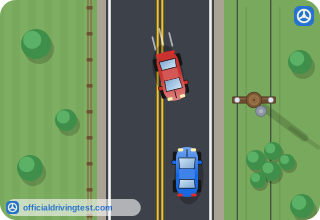
If an approaching vehicle crosses the center line into your path, what should you do?
- Swerve left across the center line
- Stop in the middle of your lane and wait for it to pass
- Keep to the right, even if you have to run off the road
- Keep to the left of the center line
Show answer
Correct answer: Keep to the right, even if you have to run off the road
The manual says to keep to the right even if that means running off the road.
Source: North Carolina Driver Handbook (Revised May 2025), page 77 · Open this page in the manual (Manual page 77)
-
If your vehicle runs off the pavement and onto the shoulder, what should you not do immediately?
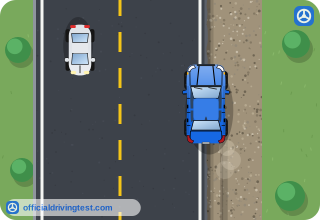
- Take your foot off the accelerator
- Apply the brakes or try to turn back
- Steer straight ahead
- Check for approaching traffic
Show answer
Correct answer: Apply the brakes or try to turn back
The manual warns that immediate braking or turning back could make you skid, lose control or overturn.
Source: North Carolina Driver Handbook (Revised May 2025), page 77 · Open this page in the manual (Manual page 77)
-
If your vehicle runs off the pavement and onto the shoulder, what should you do first?
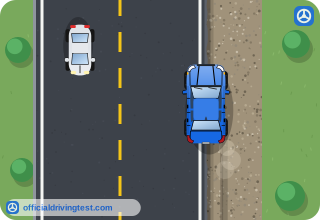
- Steer sharply back toward the road at once, then brake
- Press the brake pedal firmly
- Shift into neutral
- Slowly take your foot off the accelerator and steer straight
Show answer
Correct answer: Slowly take your foot off the accelerator and steer straight
The manual says to remove your foot slowly from the accelerator and steer straight ahead.
Source: North Carolina Driver Handbook (Revised May 2025), page 77 · Open this page in the manual (Manual page 77)
-
After running off the pavement, when should you check for approaching traffic and gradually drive back onto the road?
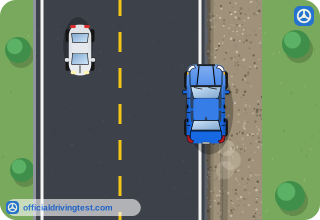
- When the vehicle is stopped or nearly stopped
- As soon as you feel the tires touch the shoulder
- While the vehicle is still at full speed
- Only after you have waited five minutes
Show answer
Correct answer: When the vehicle is stopped or nearly stopped
The manual says to check traffic and gradually return to the road when the vehicle is stopped or nearly stopped.
Source: North Carolina Driver Handbook (Revised May 2025), page 77 · Open this page in the manual (Manual page 77)
-
Which roadway conditions are more likely to cause skids?
- Dry concrete and new asphalt
- Roads with wide shoulders
- Wet roads, ice and packed snow
- Roads that are straight and level
Show answer
Correct answer: Wet roads, ice and packed snow
The manual says wet roads, ice and packed snow are more likely to cause skids.
Source: North Carolina Driver Handbook (Revised May 2025), page 77 · Open this page in the manual (Manual page 77)
-
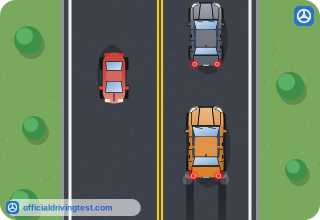
To avoid skidding on a slippery road in a vehicle with anti-lock brakes, how should you use the brake pedal?
- Pump the pedal rapidly
- Use firm, steady pressure and do not pump the brakes
- Tap the pedal lightly, then release it completely
- Press once, then release fully
Show answer
Correct answer: Use firm, steady pressure and do not pump the brakes
The manual says to use firm, steady pressure on anti-lock brakes and not to pump them.
Source: North Carolina Driver Handbook (Revised May 2025), page 77 · Open this page in the manual (Manual page 77)
-
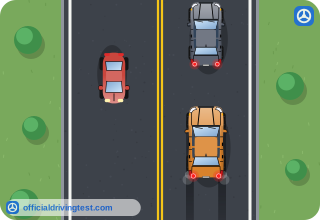
To avoid skidding on a slippery road, what should you do if your vehicle does not have anti-lock brakes?
- Hold the pedal down hard
- Shift into neutral and coast to a stop
- Use only the parking brake
- Pump the brakes gently to slow the vehicle
Show answer
Correct answer: Pump the brakes gently to slow the vehicle
The manual says that without anti-lock brakes you should pump the brakes gently.
Source: North Carolina Driver Handbook (Revised May 2025), page 77 · Open this page in the manual (Manual page 77)
-
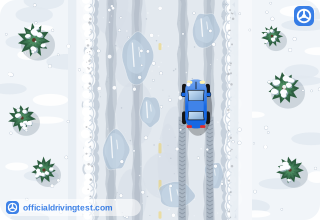
To avoid skidding on wet roads, ice and packed snow, how should you reduce speed?
- Gradually
- Suddenly
- By shifting into neutral
- By shifting into reverse
Show answer
Correct answer: Gradually
The manual says to reduce speed gradually to avoid skidding.
Source: North Carolina Driver Handbook (Revised May 2025), page 77 · Open this page in the manual (Manual page 77)
-
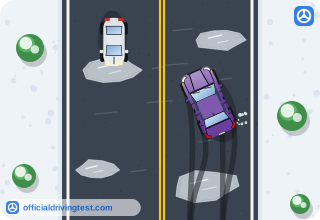
According to the manual's section on skids, in which direction should you turn the steering wheel if your vehicle starts to skid?
- Away from the direction the rear is skidding
- Back and forth in small quick turns
- In the direction the rear of the vehicle is skidding
- Toward the shoulder
Show answer
Correct answer: In the direction the rear of the vehicle is skidding
The manual says to turn the wheel in the direction the rear of the vehicle is skidding.
Source: North Carolina Driver Handbook (Revised May 2025), page 77 · Open this page in the manual (Manual page 77)
-
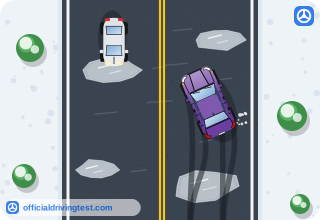
If you find yourself in a skid, what should you do with your foot first?
- Press the accelerator harder
- Ease it off the accelerator
- Press the brake pedal firmly
- Move it to the clutch pedal
Show answer
Correct answer: Ease it off the accelerator
The manual says to ease your foot off the accelerator when in a skid.
Source: North Carolina Driver Handbook (Revised May 2025), page 77 · Open this page in the manual (Manual page 77)
-
If you find yourself in a skid, what should you do as soon as the vehicle's path begins to straighten?
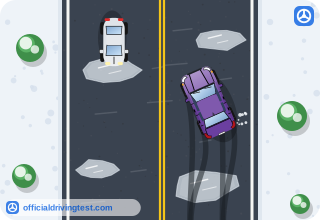
- Press the accelerator to gain speed
- Apply the brakes hard
- Keep the wheel turned in the same direction as before
- Turn the wheel back the other way so you will not over-steer
Show answer
Correct answer: Turn the wheel back the other way so you will not over-steer
The manual says to turn the wheel back the other way once the path starts to straighten, so you will not over-steer.
Source: North Carolina Driver Handbook (Revised May 2025), page 77 · Open this page in the manual (Manual page 77)
-
According to the manual, the law protects people who stop and render aid at the scene of an accident from what?
- Civil liability, except for intentional wrongdoing or unruly conduct
- Every kind of legal liability, with no exceptions whatsoever
- A traffic ticket for the accident itself
- Having to report the accident to the police
Show answer
Correct answer: Civil liability, except for intentional wrongdoing or unruly conduct
The manual says the law protects such persons from civil liability except for intentional wrongdoing or unruly conduct.
Source: North Carolina Driver Handbook (Revised May 2025), page 77 · Open this page in the manual (Manual page 77)
-
If a crash seems likely, which way should you turn?
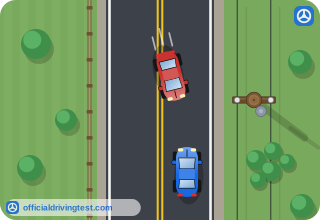
- Toward oncoming traffic
- Toward the vehicle in front of you
- Away from oncoming traffic, even if you must leave the road
- Straight ahead, staying on the road at the same speed
Show answer
Correct answer: Away from oncoming traffic, even if you must leave the road
The manual says to turn away from oncoming traffic even if you must leave the road.
Source: North Carolina Driver Handbook (Revised May 2025), page 77 · Open this page in the manual (Manual page 77)
-
If a crash seems likely, where is it best to drive if you must leave the road?
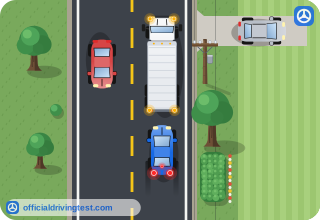
- Toward a group of parked vehicles
- Into an open field if possible
- Toward a group of trees
- Into a ditch beside a bridge
Show answer
Correct answer: Into an open field if possible
The manual says to drive off the road into an open field if possible.
Source: North Carolina Driver Handbook (Revised May 2025), page 77 · Open this page in the manual (Manual page 77)