New Jersey: Signals & vehicle controls
Turn and hand signals, lights, brakes, steering and required vehicle equipment. Split into 6 shorter tests so you're not stuck in one long quiz.
Independent educational site · not affiliated with any government agency or DMV
Choose a part
Signals & vehicle controls — Part 1
Questions in this part include: “According to the New Jersey Driver Manual, who is responsible for making sure a vehicle is in proper working condition?”
StartSignals & vehicle controls — Part 2
Questions in this part include: “What does the New Jersey Driver Manual say about mixing radial tires with other tire types?”
StartSignals & vehicle controls — Part 3
Questions in this part include: “How should the driver-side outside mirror be adjusted, according to the New Jersey Driver Manual?”
StartSignals & vehicle controls — Part 4
Questions in this part include: “According to the New Jersey Driver Manual, what should you know about your vehicle in order to brake properly?”
StartSignals & vehicle controls — Part 5
Questions in this part include: “How does the New Jersey Driver Manual describe the horn?”
StartSignals & vehicle controls — Part 6
Questions in this part include: “According to the New Jersey Driver Manual, what are parking lights used for?”
StartAll 103 Signals & vehicle controls questions with answers
Choose a part above to take a practice test, or study every question and answer here.
Show the questions and answersHide the questions
-
According to the New Jersey Driver Manual, who is responsible for making sure a vehicle is in proper working condition?
- The dealer who sold it
- The MVC inspection station
- The insurance company
- The vehicle's owner
Show answer
Correct answer: The vehicle's owner
It is the responsibility of all vehicle owners to keep their vehicles in proper working condition, checking before driving and with regular maintenance.
Source: New Jersey Driver Manual (2026), page 45 · Open this page in the manual (Manual page 45)
-
In New Jersey, it is against the law to have backup lights on when:
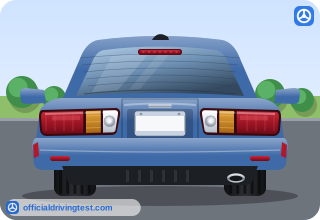
- The vehicle is moving forward
- The vehicle is backing up
- The headlights are also on
- It is raining or foggy
Show answer
Correct answer: The vehicle is moving forward
Backup lights should be on when driving in reverse, but New Jersey law forbids having any backup lights on while the vehicle is moving forward.
Source: New Jersey Driver Manual (2026), page 45 · Open this page in the manual (Manual page 45)
-
Which is a sign that your brakes must be checked?
- The vehicle stops within 25 feet at 20 mph
- The vehicle pulls to one side when you stop
- The brake lights come on when you press the pedal
- The dashboard turn-signal arrows flash
Show answer
Correct answer: The vehicle pulls to one side when you stop
If the vehicle pulls to one side when stopping, the pedal feels taut, or you hear unusual squealing or grinding, the brakes must be checked.
Source: New Jersey Driver Manual (2026), page 45 · Open this page in the manual (Manual page 45)
-
After driving through water, what should you do with conventional disc and drum brakes?
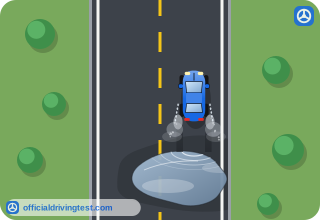
- Avoid using them for the next mile
- Drive with the parking brake partly on
- Pump them gently to test and dry them
- Brake hard once to lock the wheels and clear the water
Show answer
Correct answer: Pump them gently to test and dry them
Pump conventional disc and drum brakes gently after driving through water to test and dry them; hitting them hard could make them lock up.
Source: New Jersey Driver Manual (2026), page 45 · Open this page in the manual (Manual page 45)
-
According to the New Jersey Driver Manual, what could happen if conventional disc and drum brakes are hit hard?
- They stop the car more smoothly
- They dry out faster after rain
- The anti-lock system takes over
- They could lock up
Show answer
Correct answer: They could lock up
With conventional disc and drum brakes, the manual warns that if the brakes are hit hard they could lock up, so pump them gently to test and dry them after driving through water.
Source: New Jersey Driver Manual (2026), page 45 · Open this page in the manual (Manual page 45)
-
On which kind of surface may an anti-lock braking system (ABS) lengthen your stopping distance?
- Clean, dry concrete
- Loose gravel or unpacked snow
- Dry asphalt
- A freshly paved, dry highway surface
Show answer
Correct answer: Loose gravel or unpacked snow
On very soft surfaces, such as loose gravel or unpacked snow, ABS may lengthen stopping distance.
Source: New Jersey Driver Manual (2026), page 45 · Open this page in the manual (Manual page 45)
-
What can happen if your brake lights are not working?
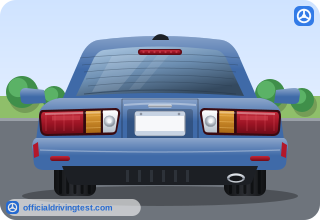
- Someone may crash into your vehicle from behind
- Your brakes may lock up the next time you stop
- Your turn signals will stop working
- Your ABS will start pumping the brakes on its own
Show answer
Correct answer: Someone may crash into your vehicle from behind
If brake lights are not working, drivers behind you may not know you are stopping and may crash into your vehicle from the back.
Source: New Jersey Driver Manual (2026), page 45 · Open this page in the manual (Manual page 45)
-
What does the New Jersey Driver Manual recommend for checking your brake lights?
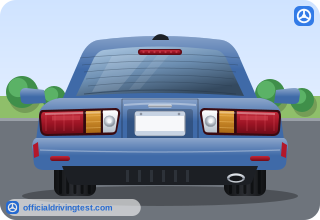
- Flash your headlights while braking
- Have someone help you check them
- Only have them checked at inspection
- Listen for a clicking sound on the dashboard
Show answer
Correct answer: Have someone help you check them
The manual says a motorist should have someone help to check the brake lights.
Source: New Jersey Driver Manual (2026), page 45 · Open this page in the manual (Manual page 45)
-
Why should broken brake light covers be replaced?
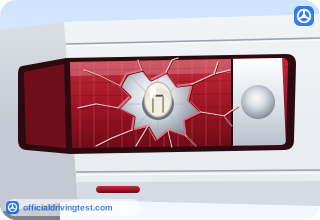
- They make the brakes wear out faster than normal
- They make the turn signals flash faster
- They may cause glare for the driver behind you
- They drain the vehicle's battery
Show answer
Correct answer: They may cause glare for the driver behind you
Broken light covers should be replaced because they may cause glare that affects the motorist in back.
Source: New Jersey Driver Manual (2026), page 45 · Open this page in the manual (Manual page 45)
-
How can you check whether your headlights work and are properly aligned?
- Shine them on a garage wall or parked vehicles
- Look at them from the driver's seat in daylight
- Check the blue high-beam indicator on the dashboard
- Listen for a click when switching beams
Show answer
Correct answer: Shine them on a garage wall or parked vehicles
Bright and dim lights must work and be properly aligned; you can check them against a garage wall or on parked vehicles.
Source: New Jersey Driver Manual (2026), page 46 · Open this page in the manual (Manual page 46)
-
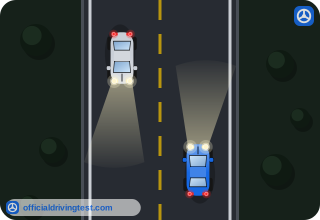
According to the New Jersey Driver Manual, if other drivers flash their lights at you while your headlights are on low beam, what could it mean?
- Your windshield wipers are off
- Your headlights may be out of line
- Your backup lights are too dim
- Your high beams are working correctly
Show answer
Correct answer: Your headlights may be out of line
If other motorists flash their lights while yours are on low beam, your lights could be out of line.
Source: New Jersey Driver Manual (2026), page 46 · Open this page in the manual (Manual page 46)
-
According to the New Jersey Driver Manual, when should you use your horn?
- Whenever the traffic light ahead turns green
- To greet a friend you see on the sidewalk
- When coming out of a blind alley or driveway
- To tell a slow driver ahead of you to hurry up
Show answer
Correct answer: When coming out of a blind alley or driveway
Use the horn when coming out of a blind alley, curve or driveway, or to warn another motorist of a potentially dangerous situation. When passing, it may be sounded only outside business or residential zones.
Source: New Jersey Driver Manual (2026), page 46 · Open this page in the manual (Manual page 46)
-
What does the New Jersey Driver Manual say about your vehicle's horn?
- It only needs to be checked at inspection
- Use it only when driving at night
- Use it often so that other drivers always notice you
- Do not overuse it, but check often that it works
Show answer
Correct answer: Do not overuse it, but check often that it works
A horn should not be overused, but you should check it often to make sure it works.
Source: New Jersey Driver Manual (2026), page 46 · Open this page in the manual (Manual page 46)
-
On a straight, level road, a vehicle with good steering should:
- Hold a straight course with no front-end shimmy
- Have a lot of free play in the steering wheel
- Drift slightly toward the shoulder
- Need constant small corrections to stay straight
Show answer
Correct answer: Hold a straight course with no front-end shimmy
On straight level roads a vehicle should hold a straight course, the front end should not vibrate (shimmy), and steering should not have too much play.
Source: New Jersey Driver Manual (2026), page 46 · Open this page in the manual (Manual page 46)
-
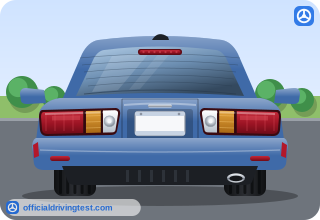
Why must tail and side lights be kept in working order?
- They are needed only to pass inspection
- They warn you when your tire pressure is low
- They signal other drivers in the dark
- They light up the road ahead of you at night
Show answer
Correct answer: They signal other drivers in the dark
Tail and side lights signal other motorists in the dark and help prevent crashes.
Source: New Jersey Driver Manual (2026), page 46 · Open this page in the manual (Manual page 46)
-
If you feel or hear an unusual thumping while driving, what should you check?
- The horn
- The tires
- The backup lights
- The windshield wipers
Show answer
Correct answer: The tires
Unusual thumping while driving is a reason to check the tires.
Source: New Jersey Driver Manual (2026), page 46 · Open this page in the manual (Manual page 46)
-
What can cause a tire blowout?
- Keeping the tires properly inflated
- Checking the pressure when tires are cold
- Using a matching set of radial tires
- Bumps, cuts or bad tread
Show answer
Correct answer: Bumps, cuts or bad tread
Bumps, cuts or bad tread can cause blowouts.
Source: New Jersey Driver Manual (2026), page 46 · Open this page in the manual (Manual page 46)
-
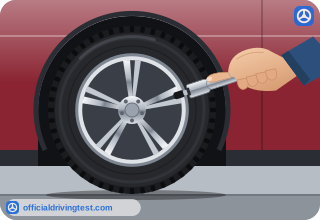
When is it especially good to check tire pressure?
- Right after a long highway drive
- When the tires are cold
- Only when a tire looks flat
- Only once a year at inspection
Show answer
Correct answer: When the tires are cold
Tire pressure should be checked often, especially when the tires are cold.
Source: New Jersey Driver Manual (2026), page 46 · Open this page in the manual (Manual page 46)
-
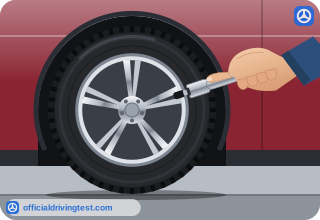
Where can you find the proper tire pressure for your vehicle?
- On the back of the vehicle registration card
- On the insurance identification card
- On the windshield inspection sticker
- Owner's manual or driver's door jamb
Show answer
Correct answer: Owner's manual or driver's door jamb
Check the owner's manual or the door jamb of the driver's door for proper tire pressure, or ask at a service station.
Source: New Jersey Driver Manual (2026), page 46 · Open this page in the manual (Manual page 46)
-
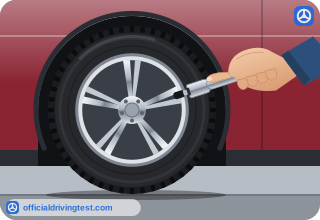
According to the New Jersey Driver Manual, what is one benefit of properly inflated tires?
- They make it safe to mix tire types
- They make ABS unnecessary
- They save money on fuel
- They let you drive on less tread
Show answer
Correct answer: They save money on fuel
Properly inflated tires save money in fuel consumption.
Source: New Jersey Driver Manual (2026), page 46 · Open this page in the manual (Manual page 46)
-
According to the New Jersey Driver Manual, what is the minimum tire tread depth you should drive on?
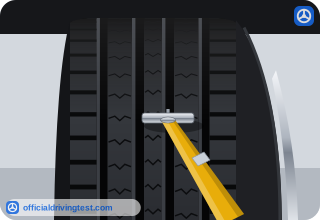
- 1/16 inch
- 1/4 inch
- 1/8 inch
- 1/32 inch
Show answer
Correct answer: 1/16 inch
A vehicle should not be driven with tires that have less than 1/16 inch of tread, about the edge of a penny.
Source: New Jersey Driver Manual (2026), page 46 · Open this page in the manual (Manual page 46)
-
What does the New Jersey Driver Manual say about mixing radial tires with other tire types?
- Mixing improves traction in winter
- Mixing is allowed on the rear axle only
- Do not mix them; tires must match
- Mixing is fine if the radials are on the front
Show answer
Correct answer: Do not mix them; tires must match
To hold the road properly, tires must match (do not mix radials with other tire types) and must have enough tread.
Source: New Jersey Driver Manual (2026), page 46 · Open this page in the manual (Manual page 46)
-
How can you tell from inside the vehicle that your turn signals are working?
- The steering wheel vibrates gently in your hands
- The horn gives a short beep each time
- The headlights dim for a moment each time
- Clicking and flashing arrows on the dashboard
Show answer
Correct answer: Clicking and flashing arrows on the dashboard
You should be able to hear the clicking and see the lighted turn-signal arrows flash on the dashboard.
Source: New Jersey Driver Manual (2026), page 46 · Open this page in the manual (Manual page 46)
-
If your turn signals stop working, what should you do until they are repaired?
- Use hand signals
- Use your hazard lights to signal turns
- Tap the horn before each turn
- Flash your headlights before turning
Show answer
Correct answer: Use hand signals
Broken turn signals must be fixed as soon as possible; use hand signals until they are repaired.
Source: New Jersey Driver Manual (2026), page 46 · Open this page in the manual (Manual page 46)
-
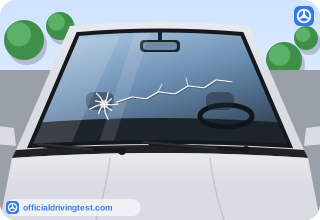
Why should cracks or chips in a windshield be repaired?
- They can set off the air bags on bumpy roads
- They could cause the windshield to break
- They cause the defroster to fail
- They make the wipers stop working
Show answer
Correct answer: They could cause the windshield to break
Cracks or chips could cause the windshield to break, creating a dangerous condition, so broken windshields should be repaired or replaced.
Source: New Jersey Driver Manual (2026), page 47 · Open this page in the manual (Manual page 47)
-
According to the New Jersey Driver Manual, how should a windshield be kept?
- Clean inside and out, with wipers that always work
- Clean on the outside only; the inside does not matter
- Cleaned only before the yearly inspection
- Covered with a tint film to cut glare
Show answer
Correct answer: Clean inside and out, with wipers that always work
A windshield should always be clean, inside and out, and the wipers should always work.
Source: New Jersey Driver Manual (2026), page 47 · Open this page in the manual (Manual page 47)
-
What does the New Jersey Driver Manual suggest to stop windshield icing?
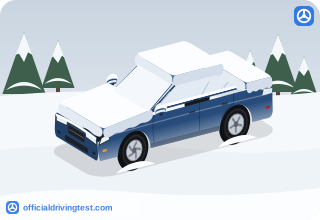
- Running the wipers on dry glass
- Add-on tinting film
- Non-freezing spray
- Turning off the defroster
Show answer
Correct answer: Non-freezing spray
A motorist can use non-freezing spray to stop windshield icing.
Source: New Jersey Driver Manual (2026), page 47 · Open this page in the manual (Manual page 47)
-
New Jersey law prohibits add-on tinting on which windows?
- Only the rear side windows
- The windshield and front side windows
- None; add-on tinting is allowed on every window
- Only the rear window
Show answer
Correct answer: The windshield and front side windows
New Jersey law prohibits add-on tinting on windshields and front side windows.
Source: New Jersey Driver Manual (2026), page 47 · Open this page in the manual (Manual page 47)
-
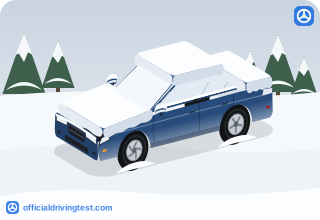
Under New Jersey law, before driving you must make all reasonable efforts to remove snow and ice from:
- Only the roof, when the snow is over 6 inches deep
- Only the windshield, side windows and outside mirrors
- Only the windshield and the front lights
- All exposed surfaces, including hood, trunk and roof
Show answer
Correct answer: All exposed surfaces, including hood, trunk and roof
State law requires removing accumulated ice or snow from the vehicle's exposed surfaces before driving, including the hood, trunk, roof and windshield.
Source: New Jersey Driver Manual (2026), page 47 · Open this page in the manual (Manual page 47)
-
What should you do before getting into your vehicle?
- Look both behind it and in front of it
- Rely on the mirrors once you are seated
- Honk the horn twice
- Start it with a remote starter first
Show answer
Correct answer: Look both behind it and in front of it
Look behind and in front of the vehicle before getting in, because there are blind spots from the driver's seat where children or objects may be.
Source: New Jersey Driver Manual (2026), page 48 · Open this page in the manual (Manual page 48)
-
According to the New Jersey Driver Manual's starting checklist, what should be true of your windows before you drive?
- Only the windshield must be clean; side windows do not matter
- Clean, with nothing blocking your vision
- Rolled down halfway for fresh air
- Covered with add-on tint to cut glare
Show answer
Correct answer: Clean, with nothing blocking your vision
The starting checklist says all windows should be clean and nothing should block the motorist's vision.
Source: New Jersey Driver Manual (2026), page 48 · Open this page in the manual (Manual page 48)
-
For most motorists, how should the driver's seat be adjusted, according to the New Jersey Driver Manual?
- As far back as it goes, so your legs are fully straight
- So you sit about two arm's lengths from the steering wheel
- So you sit about an arm's length from the steering wheel
- So your chest is only a few inches from the steering wheel
Show answer
Correct answer: So you sit about an arm's length from the steering wheel
The seat must let you reach all pedals and controls easily; for most motorists that means sitting about an arm's length from the steering wheel.
Source: New Jersey Driver Manual (2026), page 49 · Open this page in the manual (Manual page 49)
-
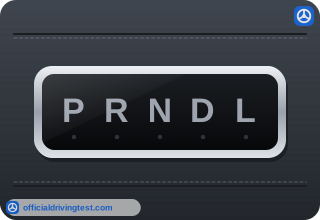
According to the New Jersey starting checklist, what gear should the vehicle be in when you start it?
- Drive, with your foot pressing firmly on the brake
- Park or neutral, with the parking brake set
- Reverse, with the parking brake released
- Low gear, with the parking brake released
Show answer
Correct answer: Park or neutral, with the parking brake set
The starting checklist says the vehicle should be in park or neutral gear and the parking brake should be set.
Source: New Jersey Driver Manual (2026), page 49 · Open this page in the manual (Manual page 49)
-
Which of these is part of the New Jersey Driver Manual's checklist before starting your car?
- Adjust the mirrors only after you start moving
- Leave your seat belt unfastened until you reach the road
- Lock the doors
- Leave the doors unlocked so help can reach you
Show answer
Correct answer: Lock the doors
The starting checklist includes locking the doors, along with adjusting the seat and mirrors and fastening seat belts before driving.
Source: New Jersey Driver Manual (2026), page 49 · Open this page in the manual (Manual page 49)
-
According to the New Jersey Driver Manual, when is a motorist properly positioned behind the wheel?
- When they can see clearly and can glance to the rear
- When their knees are touching the bottom of the wheel
- When they must stretch slightly to reach the pedals
- When their arms are fully straight and locked on the wheel
Show answer
Correct answer: When they can see clearly and can glance to the rear
The manual says a motorist is properly positioned when they can see clearly and can glance to the rear, without straining to reach controls.
Source: New Jersey Driver Manual (2026), page 49 · Open this page in the manual (Manual page 49)
-
How should the driver-side outside mirror be adjusted, according to the New Jersey Driver Manual?
- So only the sky and the car behind are visible
- So the tip of the front door handle shows in its lower right
- So your car's side fills half of the mirror
- So the rear wheel and tire show in its upper left corner
Show answer
Correct answer: So the tip of the front door handle shows in its lower right
The outside mirror should be adjusted so you can see the tip of the driver-side front door handle in the lower right of the mirror, which shows part of the lanes to the left and rear.
Source: New Jersey Driver Manual (2026), page 50 · Open this page in the manual (Manual page 50)
-
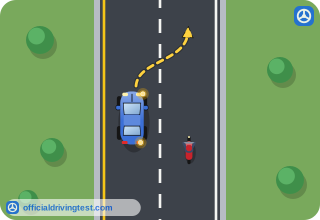
Blind spots are areas behind your vehicle, on both sides, that you cannot see through the mirrors. How does the New Jersey Driver Manual say you can check them?
- By using only the inside rearview mirror
- By sounding the horn before moving
- By turning your head
- By leaning toward the passenger window
Show answer
Correct answer: By turning your head
Blind spots cannot be seen through the mirrors, so the manual says to check them by turning your head.
Source: New Jersey Driver Manual (2026), page 50 · Open this page in the manual (Manual page 50)
-
After starting the engine, how should you make sure your path is clear before moving?
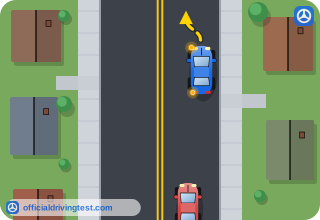
- Flash the headlights and move out slowly
- Sound the horn twice and then pull out
- Check the inside and both outside rearview mirrors only
- Turn and look back instead of depending on the mirrors
Show answer
Correct answer: Turn and look back instead of depending on the mirrors
The manual says to make sure your path is clear by turning and looking back, and not to depend on the rearview mirrors.
Source: New Jersey Driver Manual (2026), page 50 · Open this page in the manual (Manual page 50)
-
To check your mirrors on the road, you let a vehicle pass you on the left. As it disappears from your inside rearview mirror, what should you be able to see?
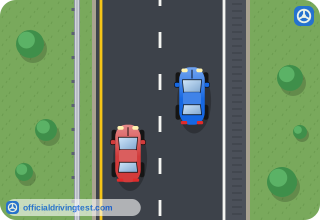
- Its rear bumper in the outside rearview mirror
- Nothing, because it is fully in your blind spot
- Its front bumper in the outside rearview mirror
- Its headlights again in the inside mirror
Show answer
Correct answer: Its front bumper in the outside rearview mirror
If the mirrors are set correctly, as the passing vehicle disappears from the inside mirror you should see its front bumper in the outside mirror.
Source: New Jersey Driver Manual (2026), page 50 · Open this page in the manual (Manual page 50)
-
For normal driving, where does the New Jersey Driver Manual say to grip the steering wheel?
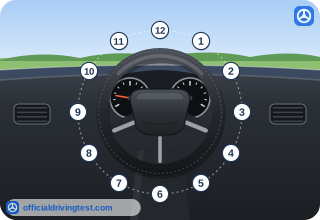
- At the 12 o'clock position with one hand
- At the 10 and 2 o'clock positions
- At the 9 and 3 o'clock positions
- At the 6 o'clock position with both hands
Show answer
Correct answer: At the 9 and 3 o'clock positions
For normal driving, grip the outside rim of the wheel at the 9 and 3 o'clock positions, with your thumbs along the face of the wheel.
Source: New Jersey Driver Manual (2026), page 51 · Open this page in the manual (Manual page 51)
-
Which way of holding the steering wheel does the New Jersey Driver Manual say you should never use when turning it?
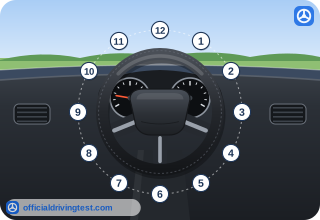
- Gripping it from the inside of the rim, hand facing inward
- Using hand-over-hand steering through a turn
- Holding it firmly with both hands on the rim
- Gripping the outside rim with your thumbs along the wheel's face
Show answer
Correct answer: Gripping it from the inside of the rim, hand facing inward
The manual says a motorist should never turn the wheel while gripping it from the inside of the rim with the hand facing inward.
Source: New Jersey Driver Manual (2026), page 51 · Open this page in the manual (Manual page 51)
-
According to the New Jersey Driver Manual, when may you take a hand off the steering wheel?
- Only when shifting gears or giving hand signals
- Whenever you are driving below 25 mph
- Whenever you adjust the radio or the climate controls
- Whenever you are driving in a straight line
Show answer
Correct answer: Only when shifting gears or giving hand signals
Both hands should always be kept on the wheel, except when shifting gears or giving hand signals.
Source: New Jersey Driver Manual (2026), page 51 · Open this page in the manual (Manual page 51)
-
How tightly should you hold the steering wheel, according to the New Jersey Driver Manual?
- As tightly as possible at all times
- Loosely, so it can move freely
- Firmly, but not too tight
- Tightly at low speed, loosely at high speed
Show answer
Correct answer: Firmly, but not too tight
The wheel should be held firmly but not too tight, and as steady as possible as the vehicle's speed increases.
Source: New Jersey Driver Manual (2026), page 51 · Open this page in the manual (Manual page 51)
-
Where in its lane should a motorist keep the vehicle while driving?
- Straddling one of the lane lines
- In the center of the lane
- Wherever the lane feels widest
- Close to the left lane line
Show answer
Correct answer: In the center of the lane
The manual says the motorist should keep the vehicle in the center of the lane it is traveling in.
Source: New Jersey Driver Manual (2026), page 51 · Open this page in the manual (Manual page 51)
-
On a two-lane road with traffic coming toward you, where does the New Jersey Driver Manual say you should keep your vehicle?
- Keep close to the center line
- Keep to the left to see ahead
- Straddle the center line when clear
- Keep to the right
Show answer
Correct answer: Keep to the right
On a two-lane road with oncoming traffic, the manual says the motorist should keep to the right.
Source: New Jersey Driver Manual (2026), page 51 · Open this page in the manual (Manual page 51)
-
Hand-over-hand steering lets you make steering adjustments of up to how much, while keeping both hands on the wheel?
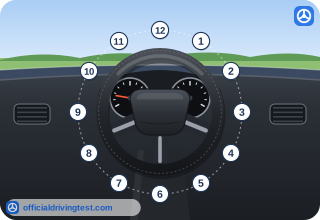
- Up to one full turn of the wheel
- Up to a quarter turn of the wheel
- Up to a half turn of the wheel
- Up to two full turns of the wheel
Show answer
Correct answer: Up to a half turn of the wheel
Hand-over-hand steering permits adjustments ranging from very minor up to a half turn of the wheel while keeping both hands on it.
Source: New Jersey Driver Manual (2026), page 51 · Open this page in the manual (Manual page 51)
-
With hand-over-hand steering, how far may your hands move when moving through a turn?
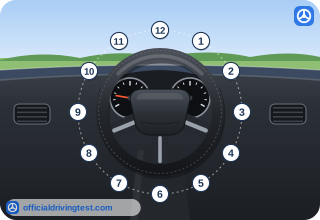
- As much as 90 degrees
- As much as 165 degrees
- As much as 45 degrees
- As much as 360 degrees
Show answer
Correct answer: As much as 165 degrees
The manual says that when moving through a turn, the hands may move as much as 165 degrees.
Source: New Jersey Driver Manual (2026), page 51 · Open this page in the manual (Manual page 51)
-
When steering through a slight curve, what do your hands typically do?
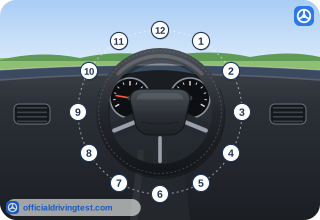
- Let go briefly so the wheel can straighten itself
- Cross over each other using hand-over-hand steering
- Slide together to the 12 o'clock position
- Keep their grip and make only slight finger or wrist moves
Show answer
Correct answer: Keep their grip and make only slight finger or wrist moves
In a slight curve both hands typically keep their original grip, making only slight finger or wrist adjustments to hold the path.
Source: New Jersey Driver Manual (2026), page 51 · Open this page in the manual (Manual page 51)
-
When gripping the steering wheel at the 9 and 3 o'clock positions, where does the New Jersey Driver Manual say to keep your thumbs?
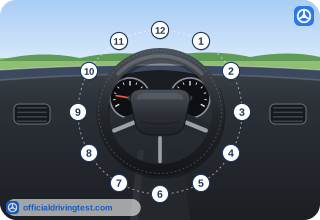
- Along the face of the wheel
- Hooked around the inside of the rim
- Resting on the center horn pad
- Wrapped tightly under the rim
Show answer
Correct answer: Along the face of the wheel
For normal driving, grip the outside rim at the 9 and 3 o'clock positions, keeping your thumbs along the face of the wheel.
Source: New Jersey Driver Manual (2026), page 51 · Open this page in the manual (Manual page 51)
-
In hand-over-hand steering, after one hand pushes the wheel up toward 12 o'clock, what does the opposite hand do?
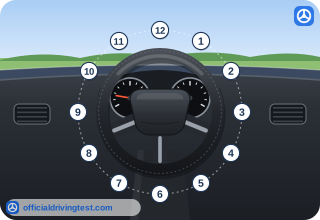
- Lets go of the wheel until the turn is finished
- Moves to the inside of the rim, with the palm facing inward
- Crosses over and down to the 9 or 3 o'clock position
- Stays at the bottom of the wheel at 6 o'clock
Show answer
Correct answer: Crosses over and down to the 9 or 3 o'clock position
As one hand pushes the wheel up toward 12 o'clock, the opposite hand crosses over and down to the 9 or 3 o'clock position to provide input or stabilize steering.
Source: New Jersey Driver Manual (2026), page 52 · Open this page in the manual (Manual page 52)
-
Coming out of a turn, what is 'controlled slipping' of the steering wheel?
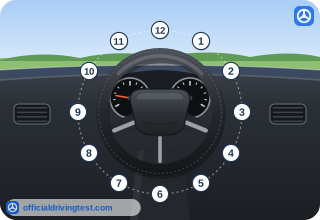
- Letting the rear tires slide to finish the turn
- Pumping the brakes as the wheels straighten out
- Releasing the wheel completely so it spins back on its own
- Letting the wheel slip through your fingers to straighten
Show answer
Correct answer: Letting the wheel slip through your fingers to straighten
When coming out of a turn, the wheel can be allowed to slip through the fingers (controlled slipping) to straighten, while both hands stay on the wheel.
Source: New Jersey Driver Manual (2026), page 52 · Open this page in the manual (Manual page 52)
-
Hand-over-hand steering is particularly well suited for which of these?
- Holding a steady course on a straight highway
- Skid recovery
- Backing straight with one hand on top of the wheel
- Steering with one hand on the inside of the rim
Show answer
Correct answer: Skid recovery
The manual says hand-over-hand steering is well suited for precision maneuvers, steering through curves, entering and exiting intersections, and skid recovery.
Source: New Jersey Driver Manual (2026), page 52 · Open this page in the manual (Manual page 52)
-
According to the New Jersey Driver Manual, what should you know about your vehicle in order to brake properly?
- How many miles the brake pads have been used
- Whether it has conventional brakes or anti-lock brakes (ABS)
- Whether the engine powers the front wheels or the rear wheels
- Whether its tires are all-season or winter tires
Show answer
Correct answer: Whether it has conventional brakes or anti-lock brakes (ABS)
A motorist should know the type of braking system (conventional drum and disc, or ABS); whether the vehicle is front- or rear-wheel drive does not determine proper braking.
Source: New Jersey Driver Manual (2026), page 53 · Open this page in the manual (Manual page 53)
-
What common braking mistake does the New Jersey Driver Manual say many new motorists make?
- Slamming on the brake pedal when there is no emergency
- Starting to brake much too early when approaching a red light
- Shifting into neutral just before stopping
- Braking too gently when approaching a stop sign
Show answer
Correct answer: Slamming on the brake pedal when there is no emergency
Many new motorists slam on the brake pedal even when there is no emergency, which jerks the vehicle to a stop and wears out brakes and tires.
Source: New Jersey Driver Manual (2026), page 53 · Open this page in the manual (Manual page 53)
-
How should you press the brake to bring your vehicle to a controlled stop?
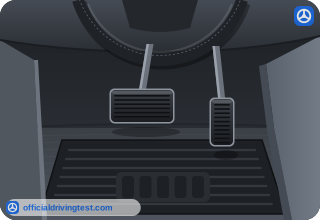
- With your left foot while the right stays on the gas
- By slamming it and then releasing it
- With quick, hard pumps
- With steady, gentle pressure
Show answer
Correct answer: With steady, gentle pressure
Steady, gentle pressure should be applied to the brake to bring the vehicle to a controlled stop.
Source: New Jersey Driver Manual (2026), page 53 · Open this page in the manual (Manual page 53)
-
An ABS-equipped vehicle may lose control at only what speed if the motorist violently jerks the steering wheel and brakes, even on dry pavement?
- 35 mph
- 65 mph
- 15 mph
- 55 mph
Show answer
Correct answer: 35 mph
The manual warns that an ABS-equipped vehicle may lose control at only 35 mph if the motorist violently jerks the wheel and brakes, even on dry pavement.
Source: New Jersey Driver Manual (2026), page 53 · Open this page in the manual (Manual page 53)
-
Where does the New Jersey Driver Manual suggest new motorists practice hard braking and steering until they are used to ABS?
- On a quiet highway late at night
- During the road test, with the examiner
- In an empty parking lot or similar open space
- On a residential street with little traffic
Show answer
Correct answer: In an empty parking lot or similar open space
New motorists should practice hard braking and steering in an empty parking lot or similar open space until they are accustomed to ABS.
Source: New Jersey Driver Manual (2026), page 53 · Open this page in the manual (Manual page 53)
-
Which foot should you use for the brake and the gas pedal?
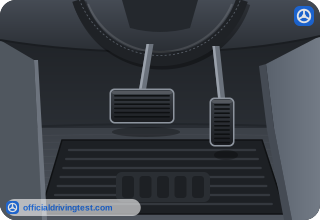
- Whichever foot is more comfortable
- Your right foot for both
- Your left foot for both
- Your left foot for the brake, right for the gas
Show answer
Correct answer: Your right foot for both
The manual says a motorist should always use their right foot for both the brake and the gas pedal.
Source: New Jersey Driver Manual (2026), page 53 · Open this page in the manual (Manual page 53)
-
In a vehicle with a manual transmission, which foot should operate the clutch?
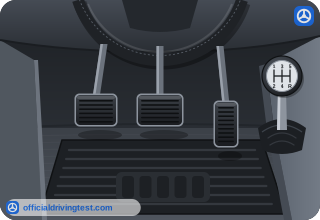
- The right foot, switching from the brake
- The left foot
- Either foot
- The right foot
Show answer
Correct answer: The left foot
With a manual transmission, the left foot should be used for the clutch, while the right foot works the brake and gas.
Source: New Jersey Driver Manual (2026), page 53 · Open this page in the manual (Manual page 53)
-
According to the New Jersey Driver Manual, when should a motorist give a proper signal?
- Only when turning at an intersection
- Only when changing lanes on a multi-lane highway
- When turning, changing lanes, stopping or slowing down
- Only when other vehicles or pedestrians are close enough to see
Show answer
Correct answer: When turning, changing lanes, stopping or slowing down
A motorist should always give a proper signal when turning, changing lanes, stopping or slowing down.
Source: New Jersey Driver Manual (2026), page 54 · Open this page in the manual (Manual page 54)
-
In New Jersey, how far before a turn should you put on your turn signal?
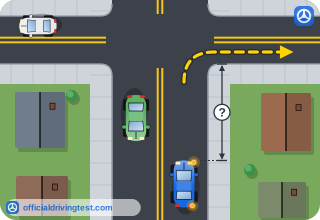
- At least 100 feet
- At least 50 feet
- At least 500 feet
- At least 200 feet
Show answer
Correct answer: At least 100 feet
A motorist should put on the turn signal at least 100 feet before turning (N.J.S.A. 39:4-126).
Source: New Jersey Driver Manual (2026), page 54 · Open this page in the manual (Manual page 54)
-
Why should you cancel your turn signal after making a turn?
- Leaving it on causes the vehicle to fail inspection
- Leaving it on drains the battery and stalls the engine
- Leaving it on makes the signal bulbs overheat
- Leaving it on could mislead other motorists
Show answer
Correct answer: Leaving it on could mislead other motorists
The manual says to cancel the signal after a turn because not doing so could mislead other motorists.
Source: New Jersey Driver Manual (2026), page 54 · Open this page in the manual (Manual page 54)
-
What is the correct hand signal for stopping or slowing down?
- Hand and arm downward, palm facing to the rear
- Hand and arm upward
- Hand and arm straight out
- Hand and arm waving forward, palm facing the front
Show answer
Correct answer: Hand and arm downward, palm facing to the rear
The stop or slow-down signal is the hand and arm pointed downward with the palm facing to the rear.
Source: New Jersey Driver Manual (2026), page 54 · Open this page in the manual (Manual page 54)
-
What is the correct hand signal a motorist gives for a right turn?
- Hand and arm downward
- Hand and arm straight out
- Hand and arm upward
- Hand pointing right across the roof
Show answer
Correct answer: Hand and arm upward
A motorist signals a right turn with the (left) hand and arm pointed upward.
Source: New Jersey Driver Manual (2026), page 54 · Open this page in the manual (Manual page 54)
-
What is the correct hand signal for a left turn?
- Hand circling above the roof
- Hand and arm downward
- Hand and arm upward
- Hand and arm straight out
Show answer
Correct answer: Hand and arm straight out
A left turn is signaled with the hand and arm held straight out.
Source: New Jersey Driver Manual (2026), page 54 · Open this page in the manual (Manual page 54)
-
When giving a hand signal, how should you hold your arm?
- Across your chest toward the passenger side
- Well out of the vehicle so others can see it
- Resting on the window frame, hand inside
- Just inside the window, where it is safe from traffic
Show answer
Correct answer: Well out of the vehicle so others can see it
To give a hand signal, put your arm well out of the vehicle so that it is visible to other motorists.
Source: New Jersey Driver Manual (2026), page 54 · Open this page in the manual (Manual page 54)
-
According to the New Jersey Driver Manual, when may motorists sound the horn when passing another vehicle?
- Only when in a business or residential zone
- Never; the horn is only for emergencies
- When not in a business or residential zone
- Only between sunset and sunrise
Show answer
Correct answer: When not in a business or residential zone
The horn is a warning signal; motorists may sound it when passing another vehicle when not in a business or residential zone.
Source: New Jersey Driver Manual (2026), page 54 · Open this page in the manual (Manual page 54)
-
Under normal conditions, a vehicle's horn should be able to be heard for at least how far?
- 100 feet
- 200 feet
- 500 feet
- 50 feet
Show answer
Correct answer: 200 feet
Under normal conditions, the horn should be able to be heard for at least 200 feet (N.J.S.A. 39:3-69).
Source: New Jersey Driver Manual (2026), page 54 · Open this page in the manual (Manual page 54)
-
While driving in reverse, what happens when you turn the steering wheel to the right?
- The vehicle keeps moving straight back
- The vehicle moves to the left
- The steering does not work in reverse
- The vehicle moves to the right
Show answer
Correct answer: The vehicle moves to the right
In reverse, turning the wheel to the right directs the vehicle to the right, and steering left directs it to the left.
Source: New Jersey Driver Manual (2026), page 54 · Open this page in the manual (Manual page 54)
-
New Jersey law requires motorists to know the correct hand signals for stopping and turning. What does the manual say about these signals?
- They apply only to bicyclists
- They are standard in all states
- They differ from state to state
- They are needed only for the road test
Show answer
Correct answer: They are standard in all states
The manual says New Jersey law requires you to know the correct hand signals for stopping and turning, and that these signals are standard in all states.
Source: New Jersey Driver Manual (2026), page 54 · Open this page in the manual (Manual page 54)
-
How does the New Jersey Driver Manual describe the horn?
- A warning signal that calls attention to you
- A signal that you are yielding the right of way
- A courtesy signal to greet motorists you know
- A way to tell a slow driver ahead to speed up
Show answer
Correct answer: A warning signal that calls attention to you
The manual calls the horn a warning signal: it calls attention to what the motorist is doing.
Source: New Jersey Driver Manual (2026), page 54 · Open this page in the manual (Manual page 54)
-
To drive in reverse, how should your head and body be turned?
- Facing forward, watching the inside rearview mirror closely
- Toward the driver-side outside mirror
- To the right, until you see clearly through the back window
- To the left, looking back over your left shoulder only
Show answer
Correct answer: To the right, until you see clearly through the back window
To drive in reverse, turn your head and body to the right until you can see clearly through the back window without using the mirrors.
Source: New Jersey Driver Manual (2026), page 55 · Open this page in the manual (Manual page 55)
-
When backing up in a straight line, where should your right hand and arm be?
- Over the back of the front passenger seat
- At the 3 o'clock position on the steering wheel
- At the bottom of the steering wheel
- On the gearshift lever
Show answer
Correct answer: Over the back of the front passenger seat
For backing straight, place your right hand and arm over the back of the front passenger seat, with your left hand at the top of the steering wheel.
Source: New Jersey Driver Manual (2026), page 55 · Open this page in the manual (Manual page 55)
-
When backing up in a straight line, where should your left hand hold the steering wheel?
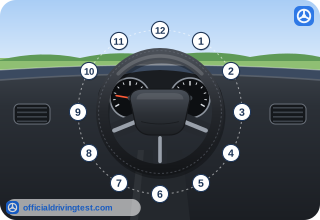
- At the 3 o'clock position
- At the bottom of the wheel
- On the inside of the rim, palm inward
- At the top of the wheel
Show answer
Correct answer: At the top of the wheel
In the straight-line reversing position, the left hand grasps the top of the steering wheel while the right arm rests over the passenger seat.
Source: New Jersey Driver Manual (2026), page 55 · Open this page in the manual (Manual page 55)
-
How fast should a vehicle typically be driven in reverse?
- About 5 to 10 mph, like slow city traffic
- At walking speed, about 2 to 4 mph
- About 10 to 15 mph
- No faster than 1 mph
Show answer
Correct answer: At walking speed, about 2 to 4 mph
A vehicle should be driven slowly in reverse, typically at walking speed (2 to 4 mph).
Source: New Jersey Driver Manual (2026), page 55 · Open this page in the manual (Manual page 55)
-
If you must turn the wheel while reversing, such as when parallel parking, how should you steer?
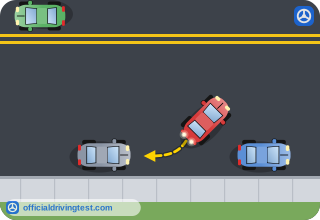
- By watching only the backup camera screen on the dashboard
- With two hands on the wheel, looking out the rear window
- By palming the wheel with one hand
- With only your left hand at the top of the wheel
Show answer
Correct answer: With two hands on the wheel, looking out the rear window
When turning the wheel in reverse, two hands must be on the wheel while your head and body are turned to look out the rear window.
Source: New Jersey Driver Manual (2026), page 55 · Open this page in the manual (Manual page 55)
-
When you turn while backing up, which way does the front of the vehicle swing?
- In the opposite direction of the turn
- In the same direction as the turn
- It stays in line with the rear wheels
- Always toward the nearest curb
Show answer
Correct answer: In the opposite direction of the turn
The manual reminds motorists that the front of the vehicle will swing in the opposite direction of a turn.
Source: New Jersey Driver Manual (2026), page 55 · Open this page in the manual (Manual page 55)
-
In New Jersey, headlights must be used during which period of the day?
- From one-half hour before sunset until sunrise
- From one-half hour after sunset to one-half hour before sunrise
- From sunset until sunrise, and at no other time
- From one full hour after sunset until one full hour before sunrise
Show answer
Correct answer: From one-half hour after sunset to one-half hour before sunrise
New Jersey law requires headlights between one-half hour after sunset and one-half hour before sunrise.
Source: New Jersey Driver Manual (2026), page 83 · Open this page in the manual (Manual page 83)
-
In New Jersey, you must use your headlights when visibility is how many feet or less?
- 1,000 feet
- 300 feet
- 200 feet
- 500 feet
Show answer
Correct answer: 500 feet
Headlights must also be used whenever visibility is 500 feet or less.
Source: New Jersey Driver Manual (2026), page 83 · Open this page in the manual (Manual page 83)
-
In New Jersey, when you are using your windshield wipers because of rain, snow, or ice, what must you also do?
- Turn on your hazard flashers
- Turn on only your parking lights
- Turn on your headlights
- Turn on your high beams
Show answer
Correct answer: Turn on your headlights
New Jersey law requires headlights whenever you are using your windshield wipers, such as during rain, snow, and ice.
Source: New Jersey Driver Manual (2026), page 83 · Open this page in the manual (Manual page 83)
-
In New Jersey, headlights must be used when you encounter which of these conditions, even in daytime?
- Fog, mist, or smoke
- Heavy traffic on a sunny day
- Driving through a school zone
- Driving on a toll road
Show answer
Correct answer: Fog, mist, or smoke
Headlights must be used when encountering fog, mist, smoke, or other factors that reduce visibility.
Source: New Jersey Driver Manual (2026), page 83 · Open this page in the manual (Manual page 83)
-
In New Jersey, can parking lights be used in place of headlights when headlights are required?
- Yes, during light rain only
- Yes, for short trips only
- No, that is not legal
- Yes, on well-lit city streets
Show answer
Correct answer: No, that is not legal
Parking or auxiliary lights cannot legally be used in place of headlights when headlights are required.
Source: New Jersey Driver Manual (2026), page 83 · Open this page in the manual (Manual page 83)
-
According to the New Jersey Driver Manual, when is the bright (high) beam meant to be used?
- When following close behind another vehicle
- In open country when no traffic is in sight
- Whenever another vehicle is approaching
- On city streets that are well lit
Show answer
Correct answer: In open country when no traffic is in sight
The bright beam is for open country driving when there is no traffic in sight.
Source: New Jersey Driver Manual (2026), page 83 · Open this page in the manual (Manual page 83)
-
How does the bright (high) beam help a motorist?
- It lets you see farther ahead and at a wider angle
- It reduces the glare from oncoming headlights
- It lights only the road right in front of the bumper
- It lets other drivers judge your speed better
Show answer
Correct answer: It lets you see farther ahead and at a wider angle
The bright beam helps a motorist see farther ahead and to the sides, at a wider angle.
Source: New Jersey Driver Manual (2026), page 83 · Open this page in the manual (Manual page 83)
-
According to the New Jersey Driver Manual, when are dim (low) beams used?
- Only on roads without streetlights
- Only while parked on a shoulder
- Only in open country with no traffic
- For city driving and driving in traffic
Show answer
Correct answer: For city driving and driving in traffic
Dim beams are used for city driving and driving in traffic, including when traveling behind other vehicles or when another vehicle is approaching.
Source: New Jersey Driver Manual (2026), page 83 · Open this page in the manual (Manual page 83)
-
Where are a vehicle's dim (low) beams focused?
- Out to both sides
- Down on the road
- High and far ahead
- Up toward the road signs
Show answer
Correct answer: Down on the road
Dim beams are focused down on the road; they are the beams to use when traveling behind other vehicles or when another vehicle is approaching.
Source: New Jersey Driver Manual (2026), page 83 · Open this page in the manual (Manual page 83)
-
According to the New Jersey Driver Manual, what are parking lights used for?
- Showing others, for a short time, where a car is parked
- Driving at dusk before it is fully dark outside
- Warning the drivers behind you that you are about to stop suddenly
- Replacing the headlights in light rain or fog
Show answer
Correct answer: Showing others, for a short time, where a car is parked
Parking lights are used for a short period of time, such as when a vehicle is left in a permitted zone, to show other motorists where it is parked.
Source: New Jersey Driver Manual (2026), page 83 · Open this page in the manual (Manual page 83)
-
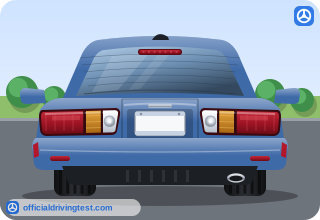
When do a vehicle's taillights turn on?
- Only when the vehicle is shifted into reverse
- Only when the brakes are applied after dark
- At the same time as the headlights and parking lights
- Only when the hazard flashers have been switched on by the driver
Show answer
Correct answer: At the same time as the headlights and parking lights
Taillights turn on at the same time as a vehicle's headlights and parking lights.
Source: New Jersey Driver Manual (2026), page 84 · Open this page in the manual (Manual page 84)
-
During the day, with the headlights off, what happens to a vehicle's taillights when you apply the brakes?
- They stay off
- They turn on
- They flash on and off
- They turn amber
Show answer
Correct answer: They turn on
During the day, without headlights, the taillights also turn on as a motorist applies the brakes.
Source: New Jersey Driver Manual (2026), page 84 · Open this page in the manual (Manual page 84)
-
What do brake lights do when a motorist applies the brakes?
- Change color from red to amber briefly
- Switch off until the vehicle moves again
- Flash rapidly to warn others of a sudden emergency stop
- Get brighter to show you are slowing or stopping
Show answer
Correct answer: Get brighter to show you are slowing or stopping
Brake lights become brighter when a motorist applies the brakes, showing that the vehicle is slowing or stopping.
Source: New Jersey Driver Manual (2026), page 84 · Open this page in the manual (Manual page 84)
-
According to the New Jersey Driver Manual, how should interior (overhead) lights be used while driving?
- Only briefly, when necessary
- Whenever passengers want to read
- Throughout any night drive
- Only when the high beams are on
Show answer
Correct answer: Only briefly, when necessary
Interior (overhead) lights should be used only briefly, when necessary, while driving, or when a police officer asks you to light the inside of the vehicle during a stop.
Source: New Jersey Driver Manual (2026), page 84 · Open this page in the manual (Manual page 84)
-
How bright should your dashboard lights be while driving?
- As bright as they will go at all times
- Switched off completely at night
- Bright only when driving in the city
- Dim, but light enough to read the dials
Show answer
Correct answer: Dim, but light enough to read the dials
Dashboard lights that are too bright can create glare and impede vision, so keep them dim but still light enough to read the dials.
Source: New Jersey Driver Manual (2026), page 84 · Open this page in the manual (Manual page 84)
-
According to the New Jersey Driver Manual, when may spotlights be used?
- Only in emergencies
- To light up dark rural roads while driving
- In place of high beams in the country
- To read house numbers while driving
Show answer
Correct answer: Only in emergencies
Spotlights should be used only in emergencies and may not be used for driving purposes.
Source: New Jersey Driver Manual (2026), page 84 · Open this page in the manual (Manual page 84)
-
According to the New Jersey Driver Manual, when should emergency flashers (hazard lights) be used?
- Whenever you stop briefly in a no-parking zone
- Only in emergencies
- Whenever you drive slower than other traffic
- Whenever you drive in heavy rain
Show answer
Correct answer: Only in emergencies
The manual says spotlights should be used only in emergencies, and that this also applies to emergency flashers (hazard lights).
Source: New Jersey Driver Manual (2026), page 84 · Open this page in the manual (Manual page 84)
-
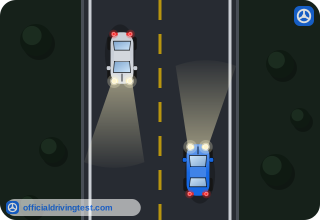
At night, which headlight signal does the New Jersey Driver Manual say might help you communicate with other motorists?
- Turning on your hazard flashers while moving
- A quick flip from low beams to high and back to low
- Turning your headlights off and then on again
- Leaving your high beams on until the other driver notices
Show answer
Correct answer: A quick flip from low beams to high and back to low
At night, a quick flip of the headlights from low to high and back to low might be helpful to communicate with other motorists.
Source: New Jersey Driver Manual (2026), page 93 · Open this page in the manual (Manual page 93)
-
Besides using turn signals, what does the New Jersey Driver Manual call another good method of communicating with other motorists?
- Flashing your high beams during the day
- Waving out the window at every intersection
- Braking suddenly to get their attention
- Catching other motorists' eyes
Show answer
Correct answer: Catching other motorists' eyes
Turn signals tell other motorists what you are going to do, and another good method is catching other motorists' eyes.
Source: New Jersey Driver Manual (2026), page 93 · Open this page in the manual (Manual page 93)
-
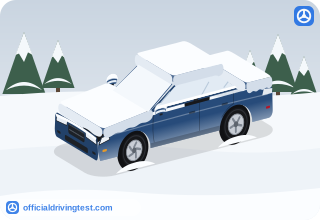
For cold-weather driving, what does the New Jersey Driver Manual say you should always make sure your vehicle has?
- Studded snow tires on all four wheels
- The proper windshield washing fluid
- A spare set of windshield wiper blades
- A full tank of premium-grade fuel
Show answer
Correct answer: The proper windshield washing fluid
In its cold-weather advice, the manual says to always make sure the vehicle has the proper type of windshield washing fluid.
Source: New Jersey Driver Manual (2026), page 98 · Open this page in the manual (Manual page 98)
-
If your brakes lock, what does the New Jersey Driver Manual say to do?
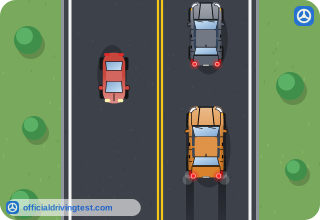
- Release, then reapply with slightly less pressure
- Turn the engine off and let the car coast to a stop
- Push the pedal even harder until you stop
- Keep holding the locked brakes and steer sharply
Show answer
Correct answer: Release, then reapply with slightly less pressure
If the brakes lock, release the brake pedal and immediately reapply with slightly less pressure, repeating with less and less pressure until the vehicle is under control.
Source: New Jersey Driver Manual (2026), page 99 · Open this page in the manual (Manual page 99)
-
What does the New Jersey Driver Manual say about snow tires on ice?
- They grip ice better than tire chains
- They are required by law on icy roads
- They do not provide good traction on ice
- They give the best traction on ice
Show answer
Correct answer: They do not provide good traction on ice
Snow tires give better traction for starting, steering and stopping in winter, but they do not provide good traction on ice.
Source: New Jersey Driver Manual (2026), page 99 · Open this page in the manual (Manual page 99)
-
According to the New Jersey Driver Manual, what gives the best traction on ice and in hard-packed or deep snow?
- All-season tires
- Tire chains
- Snow tires
- Wider tires
Show answer
Correct answer: Tire chains
Tire chains give the best traction on ice and in hard-packed or deep snow.
Source: New Jersey Driver Manual (2026), page 99 · Open this page in the manual (Manual page 99)
-
In New Jersey, during what period may motorists use studded snow tires?
- December 1 to March 1
- October 1 to May 1
- November 1 to April 15
- November 15 to April 1
Show answer
Correct answer: November 15 to April 1
In New Jersey, studded snow tires may be used between November 15 and April 1.
Source: New Jersey Driver Manual (2026), page 99 · Open this page in the manual (Manual page 99)
-
A vehicle's ignition system permits the key to be removed only when the transmission is in:
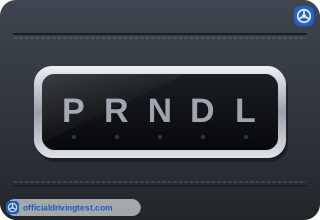
- Reverse
- Neutral
- Park
- Drive
Show answer
Correct answer: Park
To prevent theft and roll-away, an ignition system permits key removal only when the transmission is in the Park position.
Source: New Jersey Driver Manual (2026), page 104 · Open this page in the manual (Manual page 104)
-
When used properly, what are the ignition systems in today's vehicles designed to prevent?
- Air bags going off in minor bumps
- Vehicle theft and roll-away
- Engine overheating and stalling
- Battery drain overnight
Show answer
Correct answer: Vehicle theft and roll-away
Today's ignition systems, used properly, prevent the theft of an automobile and vehicle roll-away.
Source: New Jersey Driver Manual (2026), page 104 · Open this page in the manual (Manual page 104)