New Jersey: Signals & vehicle controls — Part 1 Practice Test
Questions in this part include: “According to the New Jersey Driver Manual, who is responsible for making sure a vehicle is in proper working condition?” · “How can you check whether your headlights work and are properly aligned?”
Independent educational site · not affiliated with any government agency or DMV
Ready? Test yourself
- Instant feedback with an explanation
- Every answer cites its source in the manual
- Your best score is saved on this device
Questions are original and based on the official manual "New Jersey Driver Manual" (2026), New Jersey Motor Vehicle Commission (MVC).
All 18 questions in this practice test
Take the test above first, then use this list to study. Tap “Show answer” to see the correct answer and explanation.
Show the questions and answersHide the questions
-
According to the New Jersey Driver Manual, who is responsible for making sure a vehicle is in proper working condition?
- The dealer who sold it
- The MVC inspection station
- The insurance company
- The vehicle's owner
Show answer
Correct answer: The vehicle's owner
It is the responsibility of all vehicle owners to keep their vehicles in proper working condition, checking before driving and with regular maintenance.
Source: New Jersey Driver Manual (2026), page 45 · Open this page in the manual (Manual page 45)
-
In New Jersey, it is against the law to have backup lights on when:
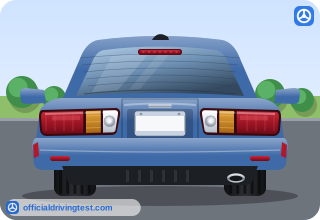
- The vehicle is moving forward
- The vehicle is backing up
- The headlights are also on
- It is raining or foggy
Show answer
Correct answer: The vehicle is moving forward
Backup lights should be on when driving in reverse, but New Jersey law forbids having any backup lights on while the vehicle is moving forward.
Source: New Jersey Driver Manual (2026), page 45 · Open this page in the manual (Manual page 45)
-
Which is a sign that your brakes must be checked?
- The vehicle stops within 25 feet at 20 mph
- The vehicle pulls to one side when you stop
- The brake lights come on when you press the pedal
- The dashboard turn-signal arrows flash
Show answer
Correct answer: The vehicle pulls to one side when you stop
If the vehicle pulls to one side when stopping, the pedal feels taut, or you hear unusual squealing or grinding, the brakes must be checked.
Source: New Jersey Driver Manual (2026), page 45 · Open this page in the manual (Manual page 45)
-
After driving through water, what should you do with conventional disc and drum brakes?
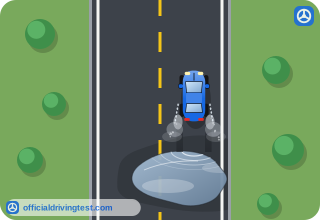
- Avoid using them for the next mile
- Drive with the parking brake partly on
- Pump them gently to test and dry them
- Brake hard once to lock the wheels and clear the water
Show answer
Correct answer: Pump them gently to test and dry them
Pump conventional disc and drum brakes gently after driving through water to test and dry them; hitting them hard could make them lock up.
Source: New Jersey Driver Manual (2026), page 45 · Open this page in the manual (Manual page 45)
-
According to the New Jersey Driver Manual, what could happen if conventional disc and drum brakes are hit hard?
- They stop the car more smoothly
- They dry out faster after rain
- The anti-lock system takes over
- They could lock up
Show answer
Correct answer: They could lock up
With conventional disc and drum brakes, the manual warns that if the brakes are hit hard they could lock up, so pump them gently to test and dry them after driving through water.
Source: New Jersey Driver Manual (2026), page 45 · Open this page in the manual (Manual page 45)
-
On which kind of surface may an anti-lock braking system (ABS) lengthen your stopping distance?
- Clean, dry concrete
- Loose gravel or unpacked snow
- Dry asphalt
- A freshly paved, dry highway surface
Show answer
Correct answer: Loose gravel or unpacked snow
On very soft surfaces, such as loose gravel or unpacked snow, ABS may lengthen stopping distance.
Source: New Jersey Driver Manual (2026), page 45 · Open this page in the manual (Manual page 45)
-
What can happen if your brake lights are not working?
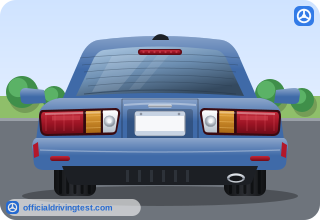
- Someone may crash into your vehicle from behind
- Your brakes may lock up the next time you stop
- Your turn signals will stop working
- Your ABS will start pumping the brakes on its own
Show answer
Correct answer: Someone may crash into your vehicle from behind
If brake lights are not working, drivers behind you may not know you are stopping and may crash into your vehicle from the back.
Source: New Jersey Driver Manual (2026), page 45 · Open this page in the manual (Manual page 45)
-
What does the New Jersey Driver Manual recommend for checking your brake lights?
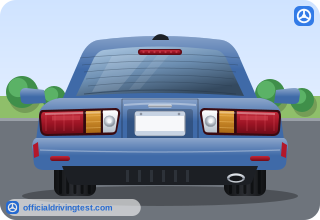
- Flash your headlights while braking
- Have someone help you check them
- Only have them checked at inspection
- Listen for a clicking sound on the dashboard
Show answer
Correct answer: Have someone help you check them
The manual says a motorist should have someone help to check the brake lights.
Source: New Jersey Driver Manual (2026), page 45 · Open this page in the manual (Manual page 45)
-
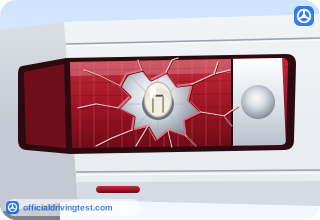
Why should broken brake light covers be replaced?
- They make the brakes wear out faster than normal
- They make the turn signals flash faster
- They may cause glare for the driver behind you
- They drain the vehicle's battery
Show answer
Correct answer: They may cause glare for the driver behind you
Broken light covers should be replaced because they may cause glare that affects the motorist in back.
Source: New Jersey Driver Manual (2026), page 45 · Open this page in the manual (Manual page 45)
-
How can you check whether your headlights work and are properly aligned?
- Shine them on a garage wall or parked vehicles
- Look at them from the driver's seat in daylight
- Check the blue high-beam indicator on the dashboard
- Listen for a click when switching beams
Show answer
Correct answer: Shine them on a garage wall or parked vehicles
Bright and dim lights must work and be properly aligned; you can check them against a garage wall or on parked vehicles.
Source: New Jersey Driver Manual (2026), page 46 · Open this page in the manual (Manual page 46)
-
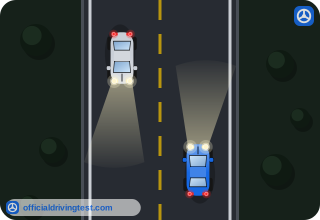
According to the New Jersey Driver Manual, if other drivers flash their lights at you while your headlights are on low beam, what could it mean?
- Your windshield wipers are off
- Your headlights may be out of line
- Your backup lights are too dim
- Your high beams are working correctly
Show answer
Correct answer: Your headlights may be out of line
If other motorists flash their lights while yours are on low beam, your lights could be out of line.
Source: New Jersey Driver Manual (2026), page 46 · Open this page in the manual (Manual page 46)
-
According to the New Jersey Driver Manual, when should you use your horn?
- Whenever the traffic light ahead turns green
- To greet a friend you see on the sidewalk
- When coming out of a blind alley or driveway
- To tell a slow driver ahead of you to hurry up
Show answer
Correct answer: When coming out of a blind alley or driveway
Use the horn when coming out of a blind alley, curve or driveway, or to warn another motorist of a potentially dangerous situation. When passing, it may be sounded only outside business or residential zones.
Source: New Jersey Driver Manual (2026), page 46 · Open this page in the manual (Manual page 46)
-
What does the New Jersey Driver Manual say about your vehicle's horn?
- It only needs to be checked at inspection
- Use it only when driving at night
- Use it often so that other drivers always notice you
- Do not overuse it, but check often that it works
Show answer
Correct answer: Do not overuse it, but check often that it works
A horn should not be overused, but you should check it often to make sure it works.
Source: New Jersey Driver Manual (2026), page 46 · Open this page in the manual (Manual page 46)
-
On a straight, level road, a vehicle with good steering should:
- Hold a straight course with no front-end shimmy
- Have a lot of free play in the steering wheel
- Drift slightly toward the shoulder
- Need constant small corrections to stay straight
Show answer
Correct answer: Hold a straight course with no front-end shimmy
On straight level roads a vehicle should hold a straight course, the front end should not vibrate (shimmy), and steering should not have too much play.
Source: New Jersey Driver Manual (2026), page 46 · Open this page in the manual (Manual page 46)
-
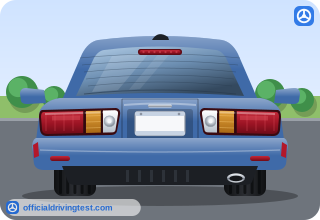
Why must tail and side lights be kept in working order?
- They are needed only to pass inspection
- They warn you when your tire pressure is low
- They signal other drivers in the dark
- They light up the road ahead of you at night
Show answer
Correct answer: They signal other drivers in the dark
Tail and side lights signal other motorists in the dark and help prevent crashes.
Source: New Jersey Driver Manual (2026), page 46 · Open this page in the manual (Manual page 46)
-
If you feel or hear an unusual thumping while driving, what should you check?
- The horn
- The tires
- The backup lights
- The windshield wipers
Show answer
Correct answer: The tires
Unusual thumping while driving is a reason to check the tires.
Source: New Jersey Driver Manual (2026), page 46 · Open this page in the manual (Manual page 46)
-
What can cause a tire blowout?
- Keeping the tires properly inflated
- Checking the pressure when tires are cold
- Using a matching set of radial tires
- Bumps, cuts or bad tread
Show answer
Correct answer: Bumps, cuts or bad tread
Bumps, cuts or bad tread can cause blowouts.
Source: New Jersey Driver Manual (2026), page 46 · Open this page in the manual (Manual page 46)
-
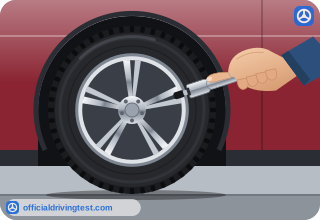
When is it especially good to check tire pressure?
- Right after a long highway drive
- When the tires are cold
- Only when a tire looks flat
- Only once a year at inspection
Show answer
Correct answer: When the tires are cold
Tire pressure should be checked often, especially when the tires are cold.
Source: New Jersey Driver Manual (2026), page 46 · Open this page in the manual (Manual page 46)