New Jersey: Signals & vehicle controls — Part 2 Practice Test
Questions in this part include: “What does the New Jersey Driver Manual say about mixing radial tires with other tire types?” · “What should you do before getting into your vehicle?”
Independent educational site · not affiliated with any government agency or DMV
Ready? Test yourself
- Instant feedback with an explanation
- Every answer cites its source in the manual
- Your best score is saved on this device
Questions are original and based on the official manual "New Jersey Driver Manual" (2026), New Jersey Motor Vehicle Commission (MVC).
All 17 questions in this practice test
Take the test above first, then use this list to study. Tap “Show answer” to see the correct answer and explanation.
Show the questions and answersHide the questions
-
Where can you find the proper tire pressure for your vehicle?
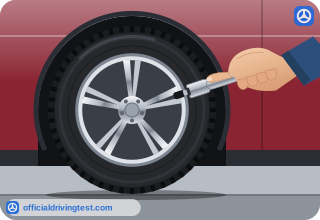
- On the back of the vehicle registration card
- On the insurance identification card
- On the windshield inspection sticker
- Owner's manual or driver's door jamb
Show answer
Correct answer: Owner's manual or driver's door jamb
Check the owner's manual or the door jamb of the driver's door for proper tire pressure, or ask at a service station.
Source: New Jersey Driver Manual (2026), page 46 · Open this page in the manual (Manual page 46)
-
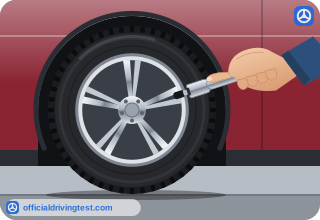
According to the New Jersey Driver Manual, what is one benefit of properly inflated tires?
- They make it safe to mix tire types
- They make ABS unnecessary
- They save money on fuel
- They let you drive on less tread
Show answer
Correct answer: They save money on fuel
Properly inflated tires save money in fuel consumption.
Source: New Jersey Driver Manual (2026), page 46 · Open this page in the manual (Manual page 46)
-
According to the New Jersey Driver Manual, what is the minimum tire tread depth you should drive on?
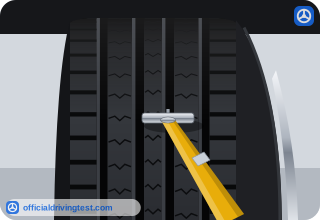
- 1/16 inch
- 1/4 inch
- 1/8 inch
- 1/32 inch
Show answer
Correct answer: 1/16 inch
A vehicle should not be driven with tires that have less than 1/16 inch of tread, about the edge of a penny.
Source: New Jersey Driver Manual (2026), page 46 · Open this page in the manual (Manual page 46)
-
What does the New Jersey Driver Manual say about mixing radial tires with other tire types?
- Mixing improves traction in winter
- Mixing is allowed on the rear axle only
- Do not mix them; tires must match
- Mixing is fine if the radials are on the front
Show answer
Correct answer: Do not mix them; tires must match
To hold the road properly, tires must match (do not mix radials with other tire types) and must have enough tread.
Source: New Jersey Driver Manual (2026), page 46 · Open this page in the manual (Manual page 46)
-
How can you tell from inside the vehicle that your turn signals are working?
- The steering wheel vibrates gently in your hands
- The horn gives a short beep each time
- The headlights dim for a moment each time
- Clicking and flashing arrows on the dashboard
Show answer
Correct answer: Clicking and flashing arrows on the dashboard
You should be able to hear the clicking and see the lighted turn-signal arrows flash on the dashboard.
Source: New Jersey Driver Manual (2026), page 46 · Open this page in the manual (Manual page 46)
-
If your turn signals stop working, what should you do until they are repaired?
- Use hand signals
- Use your hazard lights to signal turns
- Tap the horn before each turn
- Flash your headlights before turning
Show answer
Correct answer: Use hand signals
Broken turn signals must be fixed as soon as possible; use hand signals until they are repaired.
Source: New Jersey Driver Manual (2026), page 46 · Open this page in the manual (Manual page 46)
-
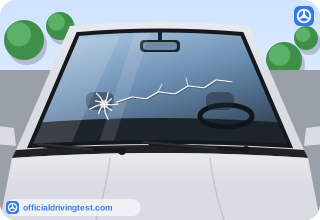
Why should cracks or chips in a windshield be repaired?
- They can set off the air bags on bumpy roads
- They could cause the windshield to break
- They cause the defroster to fail
- They make the wipers stop working
Show answer
Correct answer: They could cause the windshield to break
Cracks or chips could cause the windshield to break, creating a dangerous condition, so broken windshields should be repaired or replaced.
Source: New Jersey Driver Manual (2026), page 47 · Open this page in the manual (Manual page 47)
-
According to the New Jersey Driver Manual, how should a windshield be kept?
- Clean inside and out, with wipers that always work
- Clean on the outside only; the inside does not matter
- Cleaned only before the yearly inspection
- Covered with a tint film to cut glare
Show answer
Correct answer: Clean inside and out, with wipers that always work
A windshield should always be clean, inside and out, and the wipers should always work.
Source: New Jersey Driver Manual (2026), page 47 · Open this page in the manual (Manual page 47)
-
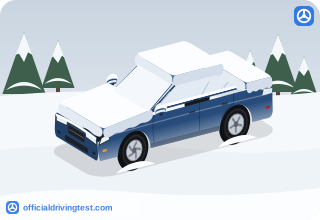
What does the New Jersey Driver Manual suggest to stop windshield icing?
- Running the wipers on dry glass
- Add-on tinting film
- Non-freezing spray
- Turning off the defroster
Show answer
Correct answer: Non-freezing spray
A motorist can use non-freezing spray to stop windshield icing.
Source: New Jersey Driver Manual (2026), page 47 · Open this page in the manual (Manual page 47)
-
New Jersey law prohibits add-on tinting on which windows?
- Only the rear side windows
- The windshield and front side windows
- None; add-on tinting is allowed on every window
- Only the rear window
Show answer
Correct answer: The windshield and front side windows
New Jersey law prohibits add-on tinting on windshields and front side windows.
Source: New Jersey Driver Manual (2026), page 47 · Open this page in the manual (Manual page 47)
-
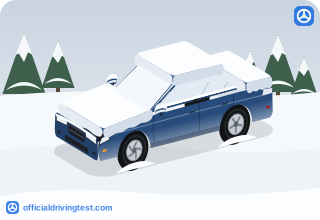
Under New Jersey law, before driving you must make all reasonable efforts to remove snow and ice from:
- Only the roof, when the snow is over 6 inches deep
- Only the windshield, side windows and outside mirrors
- Only the windshield and the front lights
- All exposed surfaces, including hood, trunk and roof
Show answer
Correct answer: All exposed surfaces, including hood, trunk and roof
State law requires removing accumulated ice or snow from the vehicle's exposed surfaces before driving, including the hood, trunk, roof and windshield.
Source: New Jersey Driver Manual (2026), page 47 · Open this page in the manual (Manual page 47)
-
What should you do before getting into your vehicle?
- Look both behind it and in front of it
- Rely on the mirrors once you are seated
- Honk the horn twice
- Start it with a remote starter first
Show answer
Correct answer: Look both behind it and in front of it
Look behind and in front of the vehicle before getting in, because there are blind spots from the driver's seat where children or objects may be.
Source: New Jersey Driver Manual (2026), page 48 · Open this page in the manual (Manual page 48)
-
According to the New Jersey Driver Manual's starting checklist, what should be true of your windows before you drive?
- Only the windshield must be clean; side windows do not matter
- Clean, with nothing blocking your vision
- Rolled down halfway for fresh air
- Covered with add-on tint to cut glare
Show answer
Correct answer: Clean, with nothing blocking your vision
The starting checklist says all windows should be clean and nothing should block the motorist's vision.
Source: New Jersey Driver Manual (2026), page 48 · Open this page in the manual (Manual page 48)
-
For most motorists, how should the driver's seat be adjusted, according to the New Jersey Driver Manual?
- As far back as it goes, so your legs are fully straight
- So you sit about two arm's lengths from the steering wheel
- So you sit about an arm's length from the steering wheel
- So your chest is only a few inches from the steering wheel
Show answer
Correct answer: So you sit about an arm's length from the steering wheel
The seat must let you reach all pedals and controls easily; for most motorists that means sitting about an arm's length from the steering wheel.
Source: New Jersey Driver Manual (2026), page 49 · Open this page in the manual (Manual page 49)
-
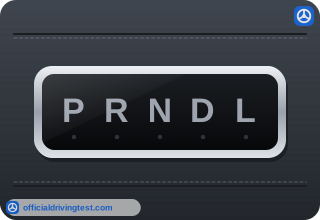
According to the New Jersey starting checklist, what gear should the vehicle be in when you start it?
- Drive, with your foot pressing firmly on the brake
- Park or neutral, with the parking brake set
- Reverse, with the parking brake released
- Low gear, with the parking brake released
Show answer
Correct answer: Park or neutral, with the parking brake set
The starting checklist says the vehicle should be in park or neutral gear and the parking brake should be set.
Source: New Jersey Driver Manual (2026), page 49 · Open this page in the manual (Manual page 49)
-
Which of these is part of the New Jersey Driver Manual's checklist before starting your car?
- Adjust the mirrors only after you start moving
- Leave your seat belt unfastened until you reach the road
- Lock the doors
- Leave the doors unlocked so help can reach you
Show answer
Correct answer: Lock the doors
The starting checklist includes locking the doors, along with adjusting the seat and mirrors and fastening seat belts before driving.
Source: New Jersey Driver Manual (2026), page 49 · Open this page in the manual (Manual page 49)
-
According to the New Jersey Driver Manual, when is a motorist properly positioned behind the wheel?
- When they can see clearly and can glance to the rear
- When their knees are touching the bottom of the wheel
- When they must stretch slightly to reach the pedals
- When their arms are fully straight and locked on the wheel
Show answer
Correct answer: When they can see clearly and can glance to the rear
The manual says a motorist is properly positioned when they can see clearly and can glance to the rear, without straining to reach controls.
Source: New Jersey Driver Manual (2026), page 49 · Open this page in the manual (Manual page 49)