New Hampshire: Right-of-way and turning — Part 3 Practice Test
Questions in this part include: “On what type of roadway should a three-point turn only be used?”
Independent educational site · not affiliated with any government agency or DMV
Ready? Test yourself
- Instant feedback with an explanation
- Every answer cites its source in the manual
- Your best score is saved on this device
- Keyboard: press 1 to 4 to answer and Enter for the next question
Questions are original and based on the official manual "New Hampshire Driver’s Manual" (DSMV 360 (Rev. 11/25)), New Hampshire Division of Motor Vehicles (DMV).
All 17 questions in this practice test
Take the test above first, then use this list to study. Tap “Show answer” to see the correct answer and explanation.
Show the questions and answersHide the questions
-
When should drivers use a three-point turn?
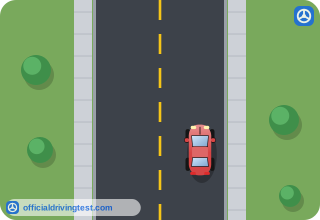
- Only when the road is too narrow to make a U-turn
- Whenever a driver misses an exit on a highway
- Whenever traffic is heavy in both directions
- Only when a driveway is not available nearby
Show answer
Correct answer: Only when the road is too narrow to make a U-turn
Drivers should use a three-point turn only when the road or street is too narrow to make a U-turn.
Source: New Hampshire Driver’s Manual (DSMV 360 (Rev. 11/25)), page 26 · Open this page in the manual (Manual page 26)
-
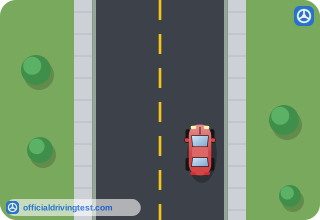
On what type of roadway should a three-point turn only be used?
- A divided highway
- A one-way street
- A two-lane roadway
- A four-lane roadway
Show answer
Correct answer: A two-lane roadway
A three-point turn should only be used on a two-lane roadway.
Source: New Hampshire Driver’s Manual (DSMV 360 (Rev. 11/25)), page 26 · Open this page in the manual (Manual page 26)
-
What is the first thing a driver does in a three-point turn after checking the mirrors?
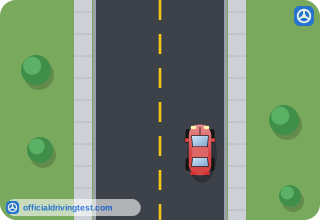
- Activate the left turn signal and turn hard left
- Signal right to pull off to the right side of the road
- Shift into reverse and back up to the curb
- Turn on the hazard lights and stop in the lane
Show answer
Correct answer: Signal right to pull off to the right side of the road
In a three-point turn the driver checks the mirrors and activates the right turn signal to communicate the intention to pull off to the right side of the road.
Source: New Hampshire Driver’s Manual (DSMV 360 (Rev. 11/25)), page 26 · Open this page in the manual (Manual page 26)
-
In a three-point turn, how do drivers check their blind spots after stopping on the right?
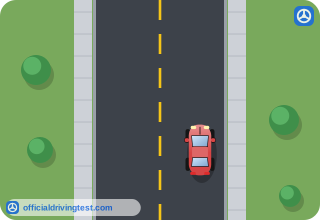
- By using only the mirrors
- By using the hazard lights
- By relying on the turn signal
- By using head checks
Show answer
Correct answer: By using head checks
In a three-point turn the driver checks blind spots by utilizing head checks.
Source: New Hampshire Driver’s Manual (DSMV 360 (Rev. 11/25)), page 26 · Open this page in the manual (Manual page 26)
-
In a three-point turn, what does the driver do after turning hard left to the other side of the road and stopping?
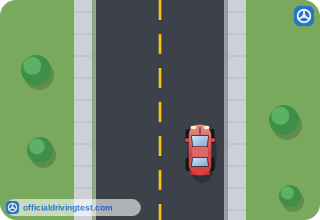
- Put the vehicle in park and wait for all traffic to clear
- Drive forward into the right lane of traffic right away
- Shift to reverse, check traffic and blind spots, and turn hard right
- Turn off the turn signal and back up to the curb again
Show answer
Correct answer: Shift to reverse, check traffic and blind spots, and turn hard right
After stopping on the other side the driver places the vehicle in reverse, checks traffic and blind spots, and turns hard right to the other side of the road.
Source: New Hampshire Driver’s Manual (DSMV 360 (Rev. 11/25)), page 26 · Open this page in the manual (Manual page 26)
-
At the end of a three-point turn, which lane does the driver drive forward into?
- The right lane of traffic heading in the new direction
- The left lane of traffic heading in the new direction
- The shoulder on the far side of the road
- The center of the road
Show answer
Correct answer: The right lane of traffic heading in the new direction
The driver makes a hard left and drives forward into the right lane of traffic heading in the new direction.
Source: New Hampshire Driver’s Manual (DSMV 360 (Rev. 11/25)), page 26 · Open this page in the manual (Manual page 26)
-
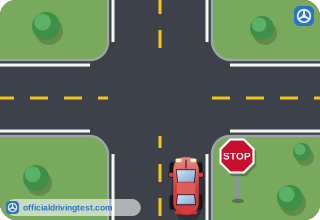
What should drivers do about other road users obeying traffic control signals and signs at an intersection?
- Assume they will obey, because signals and signs are the law
- Trust a driver who has a green light to have checked for traffic
- Expect them to stop whenever a pedestrian is nearby
- Not rely on them to obey, and be prepared to avoid a collision
Show answer
Correct answer: Not rely on them to obey, and be prepared to avoid a collision
Drivers should not rely on other road users to obey signals or signs and should always be prepared to avoid a collision.
Source: New Hampshire Driver’s Manual (DSMV 360 (Rev. 11/25)), page 26 · Open this page in the manual (Manual page 26)
-
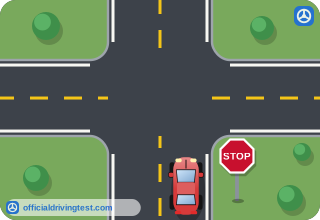
What does the manual recommend that drivers do before entering an intersection after stopping?
- Look right, then left and right again
- Look left, then right and left again
- Look left once and go if it is clear
- Look straight ahead until the light changes
Show answer
Correct answer: Look left, then right and left again
It is recommended that drivers look left, then right and left again before entering the intersection.
Source: New Hampshire Driver’s Manual (DSMV 360 (Rev. 11/25)), page 26 · Open this page in the manual (Manual page 26)
-
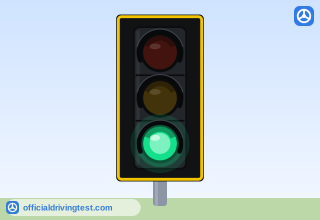
At a traffic signal, what should a driver do when the light turns green?
- Avoid moving in immediately and make sure the path is clear
- Move at once because crossing traffic is required to stop
- Accelerate quickly to clear the intersection fast
- Wait until the driver behind sounds the horn
Show answer
Correct answer: Avoid moving in immediately and make sure the path is clear
When the light turns green drivers should avoid immediately moving into the intersection and take the time to make sure the path of travel is clear and there is no crossing traffic.
Source: New Hampshire Driver’s Manual (DSMV 360 (Rev. 11/25)), page 26 · Open this page in the manual (Manual page 26)
-
What kind of gap do drivers need before crossing a roadway at an intersection?
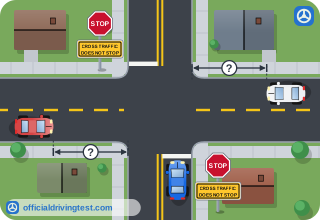
- One large enough to cross while the other vehicle slows down
- One as long as the vehicle that is approaching
- One large enough to get across, turn into the lane and get up to speed
- One that lets the driver turn without using a signal
Show answer
Correct answer: One large enough to get across, turn into the lane and get up to speed
Drivers need a large enough gap to get their vehicle across the roadway and enough space to turn into the appropriate lane and get up to speed.
Source: New Hampshire Driver’s Manual (DSMV 360 (Rev. 11/25)), page 26 · Open this page in the manual (Manual page 26)
-
Why should a driver not turn in front of a vehicle just because it has its turn signal on?
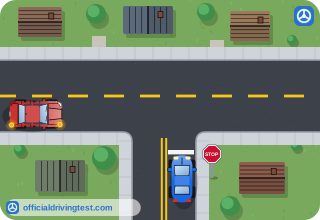
- A turn signal means the vehicle must stop at once
- The driver may plan to turn later or forgot to cancel the signal
- A turn signal is only used in the left lane
- The vehicle with the signal always has the right of way
Show answer
Correct answer: The driver may plan to turn later or forgot to cancel the signal
The driver with an active turn signal may plan to turn after passing the intersection or may have forgotten to turn the signal off from a prior turn.
Source: New Hampshire Driver’s Manual (DSMV 360 (Rev. 11/25)), page 26 · Open this page in the manual (Manual page 26)
-
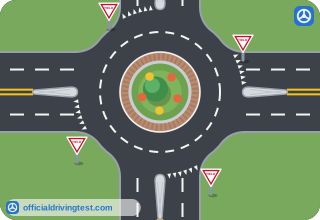
How many lanes can a roundabout have?
- Only one lane
- Always two lanes
- Exactly three lanes
- One or more lanes
Show answer
Correct answer: One or more lanes
Roundabouts may have one or more lanes.
Source: New Hampshire Driver’s Manual (DSMV 360 (Rev. 11/25)), page 27 · Open this page in the manual (Manual page 27)
-
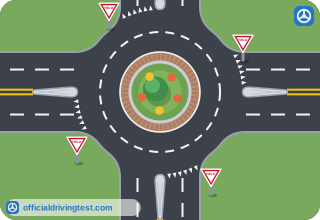
Before entering a multi-lane roundabout, what should drivers pay close attention to?
- Only the vehicles already inside the roundabout
- Only the pedestrians waiting at the crosswalks
- Signs for exits and lane uses, and pavement markings
- The color of the curbs around the center island
Show answer
Correct answer: Signs for exits and lane uses, and pavement markings
Before entering the roundabout drivers should pay close attention to the signs indicating exits and lane uses and to the pavement markings, then choose the appropriate lane to exit.
Source: New Hampshire Driver’s Manual (DSMV 360 (Rev. 11/25)), page 27 · Open this page in the manual (Manual page 27)
-
When entering a multi-lane roundabout, drivers should yield to traffic in which lanes?
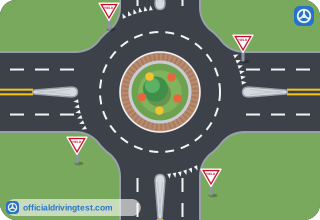
- Both lanes in the roundabout
- Only the lane closest to the driver
- Only the lane next to the center island
- Neither lane, since entering traffic goes first
Show answer
Correct answer: Both lanes in the roundabout
Drivers should yield to the traffic in both lanes in the roundabout and enter when there is an appropriate gap in traffic.
Source: New Hampshire Driver’s Manual (DSMV 360 (Rev. 11/25)), page 27 · Open this page in the manual (Manual page 27)
-
What should drivers do about their lane position once inside a multi-lane roundabout?
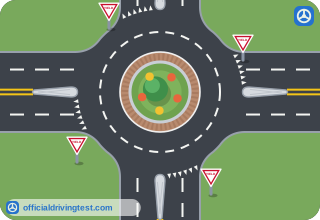
- Move to the inside lane just before exiting the circle
- Change lanes freely to pass slower vehicles
- Switch to the outside lane at each entrance
- Keep their lane position until exiting and avoid lane changes
Show answer
Correct answer: Keep their lane position until exiting and avoid lane changes
Drivers should maintain lane position until exiting and avoid lane changes while inside the roundabout.
Source: New Hampshire Driver’s Manual (DSMV 360 (Rev. 11/25)), page 27 · Open this page in the manual (Manual page 27)
-
In a multi-lane roundabout, which of these should drivers not do?
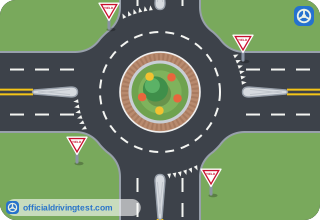
- Yield to traffic already in the roundabout
- Drive beside or try to pass other vehicles
- Choose a lane before entering
- Stay in one lane until exiting
Show answer
Correct answer: Drive beside or try to pass other vehicles
Drivers should not drive beside or attempt to overtake or pass any vehicles in the roundabout.
Source: New Hampshire Driver’s Manual (DSMV 360 (Rev. 11/25)), page 27 · Open this page in the manual (Manual page 27)
-
Why should drivers not drive beside large trucks and trailers within a multi-lane roundabout?
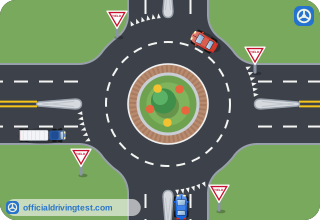
- They may need to straddle both lanes
- They are required to stop at every exit
- They must always use the inside lane only
- They may not enter a roundabout at all
Show answer
Correct answer: They may need to straddle both lanes
Large trucks and trailers within the roundabout may need to straddle both lanes.
Source: New Hampshire Driver’s Manual (DSMV 360 (Rev. 11/25)), page 27 · Open this page in the manual (Manual page 27)