New Hampshire: Emergencies and crashes — Part 3 Practice Test
Questions in this part include: “What should drivers be aware of if the engine shuts off while the vehicle is in motion?” · “If the accelerator becomes stuck, where should drivers keep their eyes?”
Independent educational site · not affiliated with any government agency or DMV
Ready? Test yourself
- Instant feedback with an explanation
- Every answer cites its source in the manual
- Your best score is saved on this device
- Keyboard: press 1 to 4 to answer and Enter for the next question
Questions are original and based on the official manual "New Hampshire Driver’s Manual" (DSMV 360 (Rev. 11/25)), New Hampshire Division of Motor Vehicles (DMV).
All 18 questions in this practice test
Take the test above first, then use this list to study. Tap “Show answer” to see the correct answer and explanation.
Show the questions and answersHide the questions
-
After a tire blowout, what should the driver do if possible?
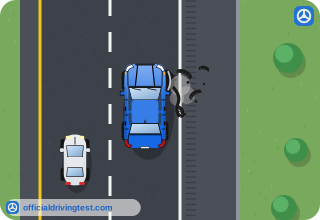
- Pull off the road in a safe place and turn on the emergency flashers
- Stop in the nearest traffic lane and turn on the high beams
- Keep driving until the next exit before stopping
- Stop in the lane and get out to look at the tire
Show answer
Correct answer: Pull off the road in a safe place and turn on the emergency flashers
If possible, the driver should pull off the road in a safe place and turn on the emergency flashers after a tire blowout.
Source: New Hampshire Driver’s Manual (DSMV 360 (Rev. 11/25)), page 35 · Open this page in the manual (Manual page 35)
-
What should drivers be aware of if the engine shuts off while the vehicle is in motion?
- The brakes will stop working completely
- The headlights will switch to high beam
- The steering wheel may be difficult to turn
- The vehicle will lock into park
Show answer
Correct answer: The steering wheel may be difficult to turn
If the engine shuts off while moving, drivers should keep a strong grip on the wheel and be aware that the steering wheel may be difficult to turn.
Source: New Hampshire Driver’s Manual (DSMV 360 (Rev. 11/25)), page 35 · Open this page in the manual (Manual page 35)
-
How should a driver brake if the engine shuts off while the vehicle is in motion?
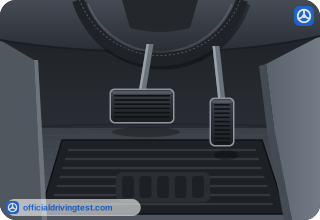
- Pump the brake pedal quickly several times in a row
- Do not brake hard; use steady pressure on the pedal
- Brake as hard as possible to stop at once
- Do not use the brakes until the vehicle has stopped rolling
Show answer
Correct answer: Do not brake hard; use steady pressure on the pedal
After a power failure the driver should not brake hard but brake with steady pressure on the pedal, slow down, then pull off the roadway.
Source: New Hampshire Driver’s Manual (DSMV 360 (Rev. 11/25)), page 35 · Open this page in the manual (Manual page 35)
-
After a power failure, the engine cannot be restarted. What should the driver do?
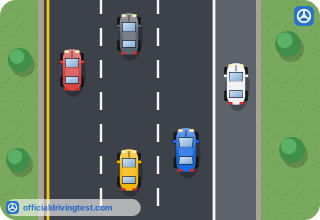
- Leave the vehicle and walk to the nearest exit ramp
- Keep trying to restart the engine until the battery dies
- Turn off the flashers to save the battery and wait
- Raise the hood, turn on emergency flashers and call for help
Show answer
Correct answer: Raise the hood, turn on emergency flashers and call for help
If the engine cannot be restarted, the driver should raise the hood, turn on emergency flashers and call for help.
Source: New Hampshire Driver’s Manual (DSMV 360 (Rev. 11/25)), page 35 · Open this page in the manual (Manual page 35)
-
If the accelerator becomes stuck, into which gear should drivers shift the vehicle?
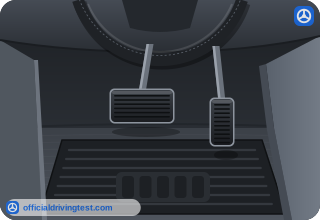
- Neutral
- Park
- Reverse
- Low gear
Show answer
Correct answer: Neutral
With a stuck accelerator, drivers should shift the vehicle into the neutral gear.
Source: New Hampshire Driver’s Manual (DSMV 360 (Rev. 11/25)), page 35 · Open this page in the manual (Manual page 35)
-
If the accelerator becomes stuck, where should drivers keep their eyes?
- On the pedals
- On the instrument panel
- On the road
- On the rear-view mirror
Show answer
Correct answer: On the road
With a stuck accelerator, drivers should keep their eyes on the road.
Source: New Hampshire Driver’s Manual (DSMV 360 (Rev. 11/25)), page 35 · Open this page in the manual (Manual page 35)
-
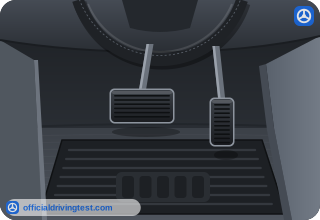
How should a driver use the brake when the accelerator is stuck?
- Brake gently, only after the engine has been turned off
- Brake firmly to counteract the effects of the acceleration
- Brake lightly, a little at a time, to avoid overheating the brakes
- Pump the pedal quickly while steering sharply
Show answer
Correct answer: Brake firmly to counteract the effects of the acceleration
The driver should brake firmly to counteract the effects of the acceleration.
Source: New Hampshire Driver’s Manual (DSMV 360 (Rev. 11/25)), page 35 · Open this page in the manual (Manual page 35)
-
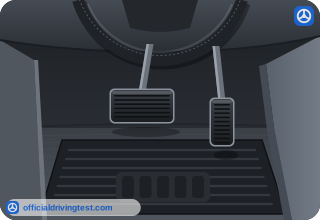
With a stuck accelerator, what should drivers do after bringing the vehicle to a stop?
- Shift into reverse
- Turn on the high beams
- Release the parking brake
- Turn off the engine
Show answer
Correct answer: Turn off the engine
Drivers should bring the vehicle to a stop and turn off the engine.
Source: New Hampshire Driver’s Manual (DSMV 360 (Rev. 11/25)), page 35 · Open this page in the manual (Manual page 35)
-
If the headlights suddenly go out, what should drivers try?
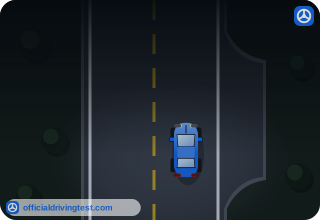
- The turn signals or emergency flashers
- The interior dome light or the glove box light
- The windshield wipers and the washer fluid
- The horn and the radio together
Show answer
Correct answer: The turn signals or emergency flashers
If the headlights go out, drivers should try the turn signals or emergency flashers.
Source: New Hampshire Driver’s Manual (DSMV 360 (Rev. 11/25)), page 35 · Open this page in the manual (Manual page 35)
-
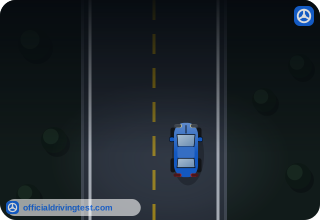
After headlight failure, how should the driver pull off the road?
- Only after reaching a service area, driving with the flashers off
- After slowing to a crawl in the traffic lane to look for a spot
- As quickly and safely as possible, with the emergency flashers left on
- Once the headlights come back on by themselves in a few minutes
Show answer
Correct answer: As quickly and safely as possible, with the emergency flashers left on
After headlight failure the driver should pull off the road as quickly and safely as possible and leave the emergency flashers on.
Source: New Hampshire Driver’s Manual (DSMV 360 (Rev. 11/25)), page 35 · Open this page in the manual (Manual page 35)
-
What should a driver turn on when a vehicle breaks down to show it is disabled?
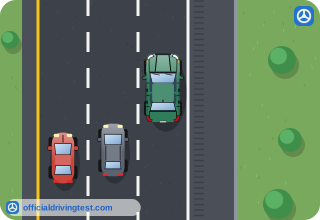
- The high beams
- The emergency flashers
- The windshield wipers
- The left turn signal
Show answer
Correct answer: The emergency flashers
When a vehicle breaks down, drivers should turn on the emergency flashers to show the vehicle is disabled.
Source: New Hampshire Driver’s Manual (DSMV 360 (Rev. 11/25)), page 35 · Open this page in the manual (Manual page 35)
-
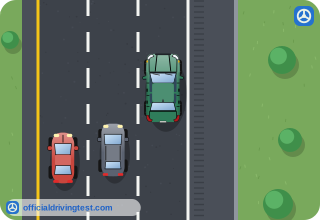
When a vehicle breaks down, what should drivers do if possible?
- Leave it in the lane and stand behind it
- Push it onto the center line
- Leave it where it stopped and walk into traffic for help
- Get the vehicle off the road and away from traffic
Show answer
Correct answer: Get the vehicle off the road and away from traffic
If possible, drivers should get the vehicle off the road and away from traffic as safely and quickly as possible.
Source: New Hampshire Driver’s Manual (DSMV 360 (Rev. 11/25)), page 35 · Open this page in the manual (Manual page 35)
-
How far in front of and behind a broken-down vehicle should emergency flares or reflectors be placed, if available?
- 200 feet
- 50 feet
- 100 feet
- 500 feet
Show answer
Correct answer: 200 feet
If available, drivers should place emergency flares or reflectors 200 feet in front of and behind the vehicle.
Source: New Hampshire Driver’s Manual (DSMV 360 (Rev. 11/25)), page 35 · Open this page in the manual (Manual page 35)
-
After a breakdown, a driver has no cell phone or other device. What color cloth should be tied to the door handle or antenna in a snowstorm?

- White
- Yellow
- Red
- Orange
Show answer
Correct answer: Red
Drivers should raise the hood and tie a white cloth, or a red cloth in a snowstorm, to the door handle or antenna to alert others that help is needed.
Source: New Hampshire Driver’s Manual (DSMV 360 (Rev. 11/25)), page 35 · Open this page in the manual (Manual page 35)
-
Once a vehicle has stopped after breaking down, how should the driver notify authorities?
- Sound the horn in short bursts until help arrives
- Use a cell phone or other device
- Walk along the highway to the nearest exit
- Stop passing police cars from the roadway
Show answer
Correct answer: Use a cell phone or other device
Once stopped, the driver should use a cell phone or other device to notify authorities that the vehicle has broken down.
Source: New Hampshire Driver’s Manual (DSMV 360 (Rev. 11/25)), page 35 · Open this page in the manual (Manual page 35)
-
If possible, what should the driver of a broken-down vehicle do until help arrives?
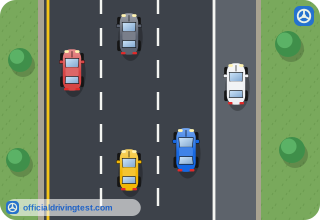
- Walk along the shoulder to the nearest exit
- Wait inside a nearby business
- Flag down passing vehicles from the roadway
- Stay with the vehicle
Show answer
Correct answer: Stay with the vehicle
If possible, the driver should stay with the vehicle until help arrives.
Source: New Hampshire Driver’s Manual (DSMV 360 (Rev. 11/25)), page 35 · Open this page in the manual (Manual page 35)
-
A broken-down vehicle is in a hazardous location. What should be done with the passengers?
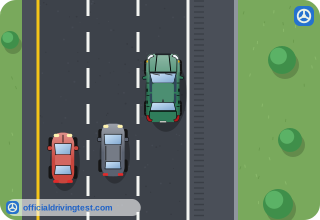
- Get them out of the vehicle and well away from traffic
- Keep them seated with their seat belts fastened
- Have them stand beside the vehicle on the traffic side
- Have them wait behind the vehicle with the flashers on
Show answer
Correct answer: Get them out of the vehicle and well away from traffic
If the vehicle is in a hazardous location, get all passengers out of the vehicle and well away from traffic.
Source: New Hampshire Driver’s Manual (DSMV 360 (Rev. 11/25)), page 35 · Open this page in the manual (Manual page 35)
-
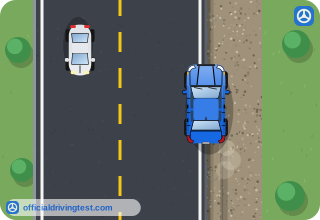
Your vehicle drifts off the paved road surface onto an uneven edge. What should you do?
- Steer back onto the pavement right away
- Brake hard and stop on the road edge
- Slow down gradually, then return when safe
- Speed up to climb back onto the pavement
Show answer
Correct answer: Slow down gradually, then return when safe
Drivers should avoid panic steering back onto the pavement. If the vehicle leaves the paved road surface, slow down gradually and turn back onto the pavement when it is safe to do so.
Source: New Hampshire Driver’s Manual (DSMV 360 (Rev. 11/25)), page 34 · Open this page in the manual (Manual page 34)