New Hampshire: Emergencies and crashes
Braking, swerving and skids, road-edge drop-offs, tire, brake and engine failures, breakdowns, and what to do and report after a crash. Split into 3 shorter tests so you're not stuck in one long quiz.
Independent educational site · not affiliated with any government agency or DMV
Choose a part
Emergencies and crashes — Part 1
Questions in this part include: “Which information should drivers get for all people involved in a crash?”
StartEmergencies and crashes — Part 2
Questions in this part include: “What should drivers follow to greatly reduce the chance that the vehicle will have a problem?”
StartEmergencies and crashes — Part 3
Questions in this part include: “What should drivers be aware of if the engine shuts off while the vehicle is in motion?”
StartAll 54 Emergencies and crashes questions with answers
Choose a part above to take a practice test, or study every question and answer here.
Show the questions and answersHide the questions
-
What should a driver do if a road is flooded?
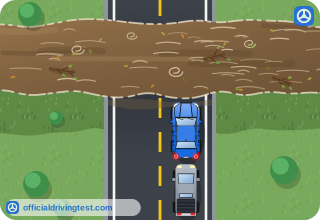
- Drive through slowly in a low gear
- Find another route to travel
- Follow another vehicle through the water
- Drive through quickly to reach the dry road
Show answer
Correct answer: Find another route to travel
Drivers should not drive through large bodies of standing water on a road. If there is a flooded roadway, they should find another route to travel.
Source: New Hampshire Driver’s Manual (DSMV 360 (Rev. 11/25)), page 18 · Open this page in the manual (Manual page 18)
-
If possible, what should a driver do with the vehicle after a crash?
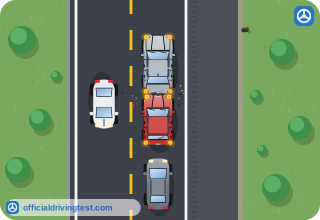
- Move it off the road so traffic is not blocked
- Leave it exactly where it stopped until police arrive
- Park it facing oncoming traffic as a warning
- Move it into the nearest lane to slow traffic
Show answer
Correct answer: Move it off the road so traffic is not blocked
After a crash, drivers should if possible move the vehicle off the road so that traffic is not blocked from passing the site of the crash.
Source: New Hampshire Driver’s Manual (DSMV 360 (Rev. 11/25)), page 32 · Open this page in the manual (Manual page 32)
-
When should a driver involved in a crash call 911?
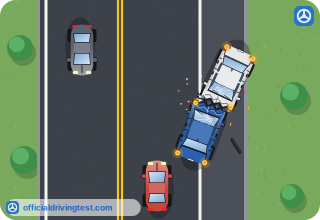
- Only if a vehicle cannot be driven
- Only if the other driver has no insurance
- If there are injuries
- Only if a police officer is not nearby
Show answer
Correct answer: If there are injuries
Drivers should call 911 if there are injuries.
Source: New Hampshire Driver’s Manual (DSMV 360 (Rev. 11/25)), page 32 · Open this page in the manual (Manual page 32)
-
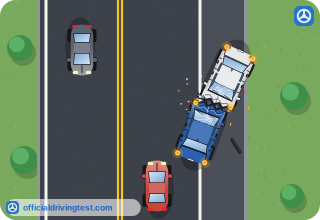
How should drivers treat injured people at the scene of a crash?
- Move them away from the vehicles right away
- Give aid but do not move them unless necessary
- Wait for the other driver to give aid first
- Help them walk to the shoulder of the road
Show answer
Correct answer: Give aid but do not move them unless necessary
Drivers should give aid to injured people but not move them unless necessary, and be sure an ambulance has been called.
Source: New Hampshire Driver’s Manual (DSMV 360 (Rev. 11/25)), page 32 · Open this page in the manual (Manual page 32)
-
Which information should drivers get for all people involved in a crash?
- Social Security numbers and dates of birth
- Employer names and work phone numbers
- Vehicle purchase dates and loan balances
- Driver's license numbers and state(s) of issue
Show answer
Correct answer: Driver's license numbers and state(s) of issue
Drivers should get names and addresses, driver's license numbers and state(s) of issue, plate numbers, make, model and year of vehicles and insurance information.
Source: New Hampshire Driver’s Manual (DSMV 360 (Rev. 11/25)), page 32 · Open this page in the manual (Manual page 32)
-
After a crash, the manual says to get the names and addresses of any injured persons and of whom else?
- Any witnesses
- The tow truck operator
- The owner of the nearest business
- Police dispatchers
Show answer
Correct answer: Any witnesses
Drivers should get the names and addresses of any witnesses or injured persons.
Source: New Hampshire Driver’s Manual (DSMV 360 (Rev. 11/25)), page 32 · Open this page in the manual (Manual page 32)
-
Within how many days must an accident report be filed with the Division of Motor Vehicles when there is a fatality, injuries or enough property damage?
- 5 days
- 10 days
- 15 days
- 30 days
Show answer
Correct answer: 15 days
New Hampshire law requires that the report be filed with the Division of Motor Vehicles within fifteen (15) days.
Source: New Hampshire Driver’s Manual (DSMV 360 (Rev. 11/25)), page 32 · Open this page in the manual (Manual page 32)
-
An accident report must be filed with the DMV if the combined property damage totals more than what amount?
- $500
- $1,000
- $2,500
- $5,000
Show answer
Correct answer: $1,000
A report must be filed if there is a fatality, injuries or combined property damage of more than $1,000.
Source: New Hampshire Driver’s Manual (DSMV 360 (Rev. 11/25)), page 32 · Open this page in the manual (Manual page 32)
-
A crash is investigated by a police officer. What is the driver's duty to report it to the DMV?
- The driver must still file a separate report with the DMV
- The driver must file a report with the police department only
- The driver must file a report with the insurance company instead
- No separate report to the DMV is required
Show answer
Correct answer: No separate report to the DMV is required
If the crash is investigated by a police officer, drivers are not required to file a separate report because the police report satisfies the requirement.
Source: New Hampshire Driver’s Manual (DSMV 360 (Rev. 11/25)), page 32 · Open this page in the manual (Manual page 32)
-
An injured driver cannot complete the Operator Accident Report. Who may file it?
- A passenger or the owner of the vehicle
- A witness or a police dispatcher
- Only the other driver in the crash
- A doctor or hospital staff member
Show answer
Correct answer: A passenger or the owner of the vehicle
If the driver is injured and unable to complete the report, it may be filed by a passenger or the owner of the vehicle.
Source: New Hampshire Driver’s Manual (DSMV 360 (Rev. 11/25)), page 32 · Open this page in the manual (Manual page 32)
-
A driver is unsure whether the combined property damage is over $1,000. What is recommended?
- Wait to see if the other driver files a report
- Ask the police not to investigate the crash
- File an Operator Report with the DMV to ensure compliance
- Skip the report unless the other driver complains
Show answer
Correct answer: File an Operator Report with the DMV to ensure compliance
If a driver is uncertain whether the damage is over $1,000, it is recommended to file an Operator Report with the DMV to ensure compliance with the law.
Source: New Hampshire Driver’s Manual (DSMV 360 (Rev. 11/25)), page 32 · Open this page in the manual (Manual page 32)
-
What is the name of the form used to report a crash to the DMV?
- Driver Collision Statement (DSMV 100)
- Operator Accident Report (DSMV 400)
- Motor Vehicle Crash Notice (DSMV 250)
- Vehicle Damage Affidavit (DSMV 310)
Show answer
Correct answer: Operator Accident Report (DSMV 400)
The Operator Accident Report (DSMV 400) is the form drivers use to report a crash to the DMV.
Source: New Hampshire Driver’s Manual (DSMV 360 (Rev. 11/25)), page 32 · Open this page in the manual (Manual page 32)
-
What could a panic reaction in a driving emergency result in?
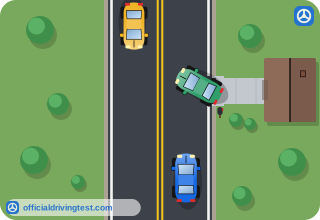
- Making the situation worse
- A safer outcome for other drivers
- A quicker recovery of vehicle control
- Less need to brake
Show answer
Correct answer: Making the situation worse
The manual warns that a panic reaction could result in making the situation worse, so drivers should think before taking action.
Source: New Hampshire Driver’s Manual (DSMV 360 (Rev. 11/25)), page 34 · Open this page in the manual (Manual page 34)
-
What does ABS (Anti-lock Braking System) allow a driver to do?
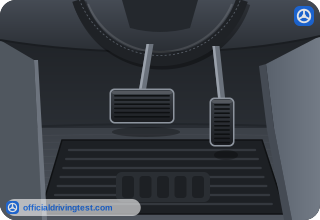
- Brake without keeping pressure on the brake pedal
- Drive on ice without reducing speed
- Stop without skidding and keep steering control
- Avoid reading the vehicle's owner's manual
Show answer
Correct answer: Stop without skidding and keep steering control
Vehicles equipped with ABS allow a driver to stop the vehicle without skidding and keep steering control.
Source: New Hampshire Driver’s Manual (DSMV 360 (Rev. 11/25)), page 34 · Open this page in the manual (Manual page 34)
-
ABS will work only if the driver does what?
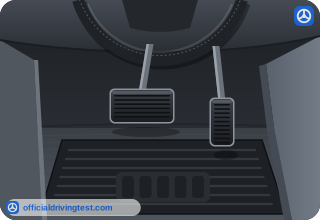
- Pumps the brake pedal repeatedly
- Keeps pressure on the brake pedal
- Releases the brake pedal when it vibrates
- Presses the brake pedal only once
Show answer
Correct answer: Keeps pressure on the brake pedal
Drivers should press on the brake pedal and keep applying pressure, because ABS will work only if the driver keeps the pressure on the brake pedal.
Source: New Hampshire Driver’s Manual (DSMV 360 (Rev. 11/25)), page 34 · Open this page in the manual (Manual page 34)
-
What is normal for a driver to feel and hear when ABS is working?

- The steering wheel locks in place while braking
- The brake warning light stays on after stopping
- The vehicle pulls sharply to one side when braking
- The pedal vibrates and a clicking noise is heard
Show answer
Correct answer: The pedal vibrates and a clicking noise is heard
A driver may feel the pedal vibrate and hear a clicking noise, which is normal when ABS is working.
Source: New Hampshire Driver’s Manual (DSMV 360 (Rev. 11/25)), page 34 · Open this page in the manual (Manual page 34)
-
Where should a driver look for the proper braking procedure if the vehicle is not equipped with ABS?
- The vehicle's owner's manual
- A label on the dashboard
- The vehicle's registration papers
- The local police department
Show answer
Correct answer: The vehicle's owner's manual
If the vehicle is not equipped with ABS, the driver should refer to the vehicle's owner's manual for the proper braking procedure.
Source: New Hampshire Driver’s Manual (DSMV 360 (Rev. 11/25)), page 34 · Open this page in the manual (Manual page 34)
-
Which statement about swerving to avoid a crash is correct?
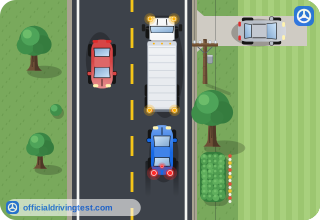
- Always swerve to the left, toward the opposite lane
- Always swerve to the right, even into other traffic
- Never swerve to the left to avoid a crash
- Never use swerving to avoid a collision under any condition
Show answer
Correct answer: Never swerve to the left to avoid a crash
When swerving, drivers should steer in the direction they want to go while trying to avoid other traffic, and never swerve to the left to avoid a crash.
Source: New Hampshire Driver’s Manual (DSMV 360 (Rev. 11/25)), page 34 · Open this page in the manual (Manual page 34)
-
What should a driver make sure of when swerving around a problem?
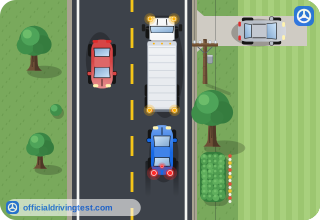
- One hand is on the wheel and one is on the horn
- A good grip with both hands on the steering wheel
- The headlights are on high beam
- Both feet are resting on the floor, off the pedals
Show answer
Correct answer: A good grip with both hands on the steering wheel
Drivers who swerve should make sure they have a good grip with both hands on the steering wheel.
Source: New Hampshire Driver’s Manual (DSMV 360 (Rev. 11/25)), page 34 · Open this page in the manual (Manual page 34)
-
After swerving, once the problem has cleared, what should the driver do?
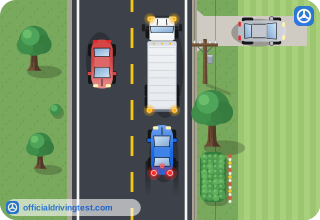
- Brake hard to stop the vehicle at once on the roadway
- Continue steering in the same direction to move farther away
- Let go of the steering wheel so the vehicle straightens itself
- Steer in the opposite direction to straighten out and gain control
Show answer
Correct answer: Steer in the opposite direction to straighten out and gain control
Once the problem has cleared, the driver should steer in the opposite direction to straighten out and gain control.
Source: New Hampshire Driver’s Manual (DSMV 360 (Rev. 11/25)), page 34 · Open this page in the manual (Manual page 34)
-
Which of these can cause a vehicle to skid?
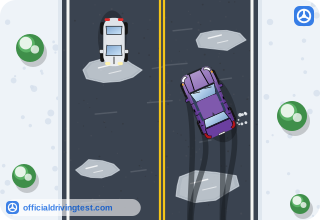
- Traveling too fast for conditions
- Driving too slowly for the road
- Using the turn signal too early
- Checking the mirrors before turning
Show answer
Correct answer: Traveling too fast for conditions
Skidding is caused when a driver is traveling too fast for conditions, stops too suddenly or when the tires can no longer grip the roadway.
Source: New Hampshire Driver’s Manual (DSMV 360 (Rev. 11/25)), page 34 · Open this page in the manual (Manual page 34)
-
Which driver action can cause a skid?
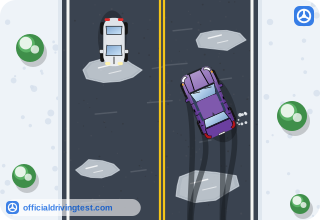
- Signaling early before a turn
- Keeping a steady speed on a dry road
- Stopping too suddenly
- Checking the mirrors often
Show answer
Correct answer: Stopping too suddenly
Skidding is caused when a driver stops too suddenly, travels too fast for conditions or when the tires can no longer grip the roadway.
Source: New Hampshire Driver’s Manual (DSMV 360 (Rev. 11/25)), page 34 · Open this page in the manual (Manual page 34)
-
Once a vehicle begins to skid, how much control does the driver have?
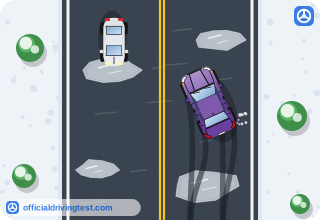
- Full control if the driver brakes hard
- Little control of the vehicle
- Complete control of steering but none of the brakes
- The same control as before the skid
Show answer
Correct answer: Little control of the vehicle
Once the vehicle begins to skid, a driver has little control of the vehicle.
Source: New Hampshire Driver’s Manual (DSMV 360 (Rev. 11/25)), page 34 · Open this page in the manual (Manual page 34)
-
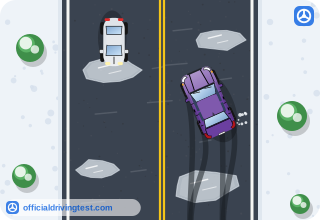
If the vehicle begins to skid, what should drivers do with the accelerator?
- Press it harder to regain traction
- Hold it steady until the skid stops
- Switch to the brake and the accelerator together
- Ease up on it
Show answer
Correct answer: Ease up on it
If the vehicle begins to skid, drivers should ease up on the accelerator.
Source: New Hampshire Driver’s Manual (DSMV 360 (Rev. 11/25)), page 34 · Open this page in the manual (Manual page 34)
-
In which direction should a driver steer if the vehicle begins to skid?

- In the direction that the rear of the vehicle is sliding
- Away from the direction that the rear of the vehicle is sliding
- Toward the nearest edge of the road surface
- Straight ahead, keeping the wheel locked in place
Show answer
Correct answer: In the direction that the rear of the vehicle is sliding
Steering in the direction that the rear of the vehicle is sliding allows the vehicle to go straight instead of sideways.
Source: New Hampshire Driver’s Manual (DSMV 360 (Rev. 11/25)), page 34 · Open this page in the manual (Manual page 34)
-
A skidding vehicle starts swerving in the other direction. What should the driver be prepared to do?

- Release the wheel and brake hard
- Turn off the engine at once
- Steer in the opposite direction
- Shift into reverse to slow down
Show answer
Correct answer: Steer in the opposite direction
Drivers should be prepared to steer in the opposite direction if the vehicle starts swerving in the other direction.
Source: New Hampshire Driver’s Manual (DSMV 360 (Rev. 11/25)), page 34 · Open this page in the manual (Manual page 34)
-
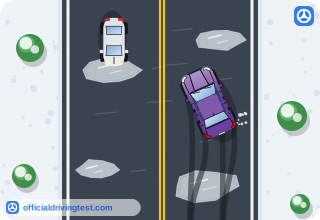
Once the vehicle stops skidding, what should the driver do?
- Keep the wheels turned until the vehicle has stopped completely
- Straighten the front wheels and steer back in the original direction
- Accelerate and steer toward the nearest road shoulder
- Turn off the engine and wait on the roadway for help
Show answer
Correct answer: Straighten the front wheels and steer back in the original direction
Once the vehicle stops skidding, the driver should straighten the front wheels and steer back in the original direction of travel.
Source: New Hampshire Driver’s Manual (DSMV 360 (Rev. 11/25)), page 34 · Open this page in the manual (Manual page 34)
-
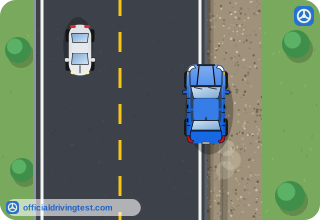
A vehicle leaves the paved road surface. What should drivers do?
- Brake hard and steer sharply back onto the pavement
- Accelerate to regain control, then steer back onto the road
- Stop on the soft shoulder and wait for help
- Slow down gradually and turn back onto the pavement when it is safe
Show answer
Correct answer: Slow down gradually and turn back onto the pavement when it is safe
Drivers should avoid panic steering back onto the pavement, slow down gradually and turn back when it is safe to do so.
Source: New Hampshire Driver’s Manual (DSMV 360 (Rev. 11/25)), page 34 · Open this page in the manual (Manual page 34)
-
What should drivers follow to greatly reduce the chance that the vehicle will have a problem?
- The recommended maintenance schedule in the vehicle owner's manual
- The maintenance schedule posted by the Division of Motor Vehicles
- A yearly inspection schedule set by the local police department
- The service intervals advertised by the tire manufacturer
Show answer
Correct answer: The recommended maintenance schedule in the vehicle owner's manual
Drivers should follow the recommended maintenance schedule listed in the vehicle owner's manual, which greatly reduces the chance of a vehicle problem.
Source: New Hampshire Driver’s Manual (DSMV 360 (Rev. 11/25)), page 34 · Open this page in the manual (Manual page 34)
-
Besides a malfunction, what can cause brakes to fail?
- Driving too long on a smooth highway
- Cold temperatures overnight
- Contact with a large amount of water
- Heavy loads in the trunk
Show answer
Correct answer: Contact with a large amount of water
Brakes can fail due to a malfunction, or if they have come in contact with a large amount of water.
Source: New Hampshire Driver’s Manual (DSMV 360 (Rev. 11/25)), page 34 · Open this page in the manual (Manual page 34)
-
When the brakes fail, why should a driver push the parking brake foot pedal slowly?
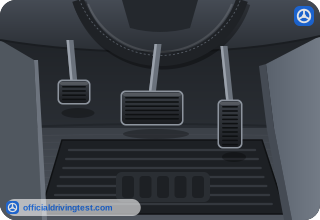
- To avoid draining the battery of the vehicle
- To avoid locking the rear wheels and causing a skid
- To avoid stalling the engine while moving
- To avoid setting off the air bags
Show answer
Correct answer: To avoid locking the rear wheels and causing a skid
The parking brake should be applied slowly to avoid locking the rear wheels and causing a skid, and the driver should be ready to release it if the vehicle skids.
Source: New Hampshire Driver’s Manual (DSMV 360 (Rev. 11/25)), page 35 · Open this page in the manual (Manual page 35)
-
The parking brake does not stop a vehicle whose brakes have failed. What should the driver do?
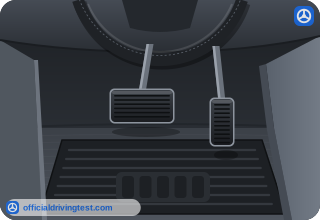
- Shift into park and steer toward the other lane of traffic
- Keep driving at the same speed until reaching a repair shop
- Turn off the headlights and sound the horn continuously
- Turn off the engine and find a safe place to stop off the road
Show answer
Correct answer: Turn off the engine and find a safe place to stop off the road
If engaging the brake does not work, the driver should turn off the engine and look for a safe place to slow to a stop off the roadway.
Source: New Hampshire Driver’s Manual (DSMV 360 (Rev. 11/25)), page 35 · Open this page in the manual (Manual page 35)
-
What will the vehicle do if a front tire blows out?
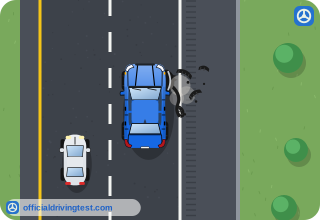
- Pull sharply in the direction of the blowout
- Pull sharply away from the direction of the blowout
- Slow down on its own with no change in steering
- Drift straight ahead without any pulling
Show answer
Correct answer: Pull sharply in the direction of the blowout
If a front tire blows out, the vehicle will pull sharply in the direction of the blowout.
Source: New Hampshire Driver’s Manual (DSMV 360 (Rev. 11/25)), page 35 · Open this page in the manual (Manual page 35)
-
What will the vehicle do if a rear tire blows out?
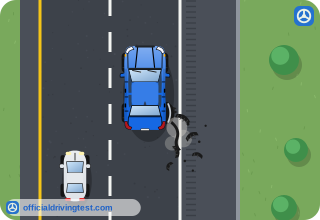
- Spin immediately to face the opposite direction
- Stay steady and show no change in handling
- Wobble, shake and pull some in the direction of the blowout
- Pull sharply in the opposite direction of the blowout
Show answer
Correct answer: Wobble, shake and pull some in the direction of the blowout
If a rear tire blows out, the vehicle will wobble, shake and pull some in the direction of the blowout.
Source: New Hampshire Driver’s Manual (DSMV 360 (Rev. 11/25)), page 35 · Open this page in the manual (Manual page 35)
-
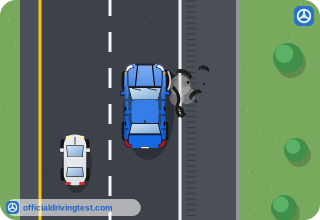
A tire blows out or suddenly goes flat. How should the driver handle the steering wheel?
- Turn sharply toward the shoulder to stop quickly
- Grip it firmly and keep the vehicle going straight
- Release it and let the vehicle straighten itself
- Turn it toward the side of the flat tire
Show answer
Correct answer: Grip it firmly and keep the vehicle going straight
If a tire blows out or goes flat, the driver should grip the steering wheel firmly and keep the vehicle going straight.
Source: New Hampshire Driver’s Manual (DSMV 360 (Rev. 11/25)), page 35 · Open this page in the manual (Manual page 35)
-
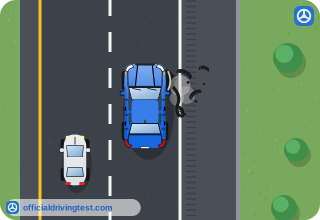
How should a driver slow down after a tire blowout?
- Quickly, by braking hard as soon as the tire fails
- Right away, by turning off the engine
- By shifting into park while still moving
- Gradually, by relieving pressure on the accelerator pedal
Show answer
Correct answer: Gradually, by relieving pressure on the accelerator pedal
After a tire blowout the driver should slow down gradually by relieving pressure on the accelerator pedal, and brake gently only if necessary.
Source: New Hampshire Driver’s Manual (DSMV 360 (Rev. 11/25)), page 35 · Open this page in the manual (Manual page 35)
-
After a tire blowout, what should the driver do if possible?
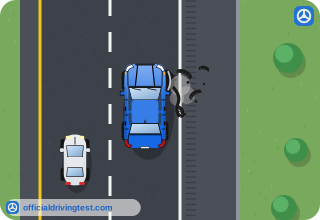
- Pull off the road in a safe place and turn on the emergency flashers
- Stop in the nearest traffic lane and turn on the high beams
- Keep driving until the next exit before stopping
- Stop in the lane and get out to look at the tire
Show answer
Correct answer: Pull off the road in a safe place and turn on the emergency flashers
If possible, the driver should pull off the road in a safe place and turn on the emergency flashers after a tire blowout.
Source: New Hampshire Driver’s Manual (DSMV 360 (Rev. 11/25)), page 35 · Open this page in the manual (Manual page 35)
-
What should drivers be aware of if the engine shuts off while the vehicle is in motion?
- The brakes will stop working completely
- The headlights will switch to high beam
- The steering wheel may be difficult to turn
- The vehicle will lock into park
Show answer
Correct answer: The steering wheel may be difficult to turn
If the engine shuts off while moving, drivers should keep a strong grip on the wheel and be aware that the steering wheel may be difficult to turn.
Source: New Hampshire Driver’s Manual (DSMV 360 (Rev. 11/25)), page 35 · Open this page in the manual (Manual page 35)
-
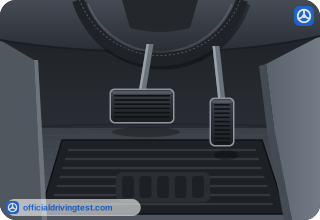
How should a driver brake if the engine shuts off while the vehicle is in motion?
- Pump the brake pedal quickly several times in a row
- Do not brake hard; use steady pressure on the pedal
- Brake as hard as possible to stop at once
- Do not use the brakes until the vehicle has stopped rolling
Show answer
Correct answer: Do not brake hard; use steady pressure on the pedal
After a power failure the driver should not brake hard but brake with steady pressure on the pedal, slow down, then pull off the roadway.
Source: New Hampshire Driver’s Manual (DSMV 360 (Rev. 11/25)), page 35 · Open this page in the manual (Manual page 35)
-
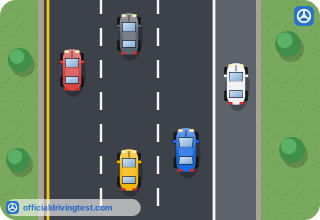
After a power failure, the engine cannot be restarted. What should the driver do?
- Leave the vehicle and walk to the nearest exit ramp
- Keep trying to restart the engine until the battery dies
- Turn off the flashers to save the battery and wait
- Raise the hood, turn on emergency flashers and call for help
Show answer
Correct answer: Raise the hood, turn on emergency flashers and call for help
If the engine cannot be restarted, the driver should raise the hood, turn on emergency flashers and call for help.
Source: New Hampshire Driver’s Manual (DSMV 360 (Rev. 11/25)), page 35 · Open this page in the manual (Manual page 35)
-
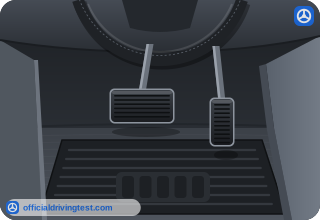
If the accelerator becomes stuck, into which gear should drivers shift the vehicle?
- Neutral
- Park
- Reverse
- Low gear
Show answer
Correct answer: Neutral
With a stuck accelerator, drivers should shift the vehicle into the neutral gear.
Source: New Hampshire Driver’s Manual (DSMV 360 (Rev. 11/25)), page 35 · Open this page in the manual (Manual page 35)
-
If the accelerator becomes stuck, where should drivers keep their eyes?
- On the pedals
- On the instrument panel
- On the road
- On the rear-view mirror
Show answer
Correct answer: On the road
With a stuck accelerator, drivers should keep their eyes on the road.
Source: New Hampshire Driver’s Manual (DSMV 360 (Rev. 11/25)), page 35 · Open this page in the manual (Manual page 35)
-
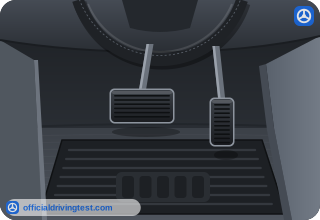
How should a driver use the brake when the accelerator is stuck?
- Brake gently, only after the engine has been turned off
- Brake firmly to counteract the effects of the acceleration
- Brake lightly, a little at a time, to avoid overheating the brakes
- Pump the pedal quickly while steering sharply
Show answer
Correct answer: Brake firmly to counteract the effects of the acceleration
The driver should brake firmly to counteract the effects of the acceleration.
Source: New Hampshire Driver’s Manual (DSMV 360 (Rev. 11/25)), page 35 · Open this page in the manual (Manual page 35)
-
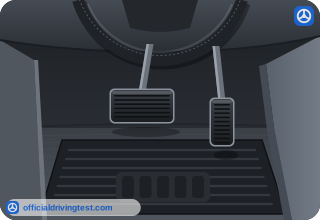
With a stuck accelerator, what should drivers do after bringing the vehicle to a stop?
- Shift into reverse
- Turn on the high beams
- Release the parking brake
- Turn off the engine
Show answer
Correct answer: Turn off the engine
Drivers should bring the vehicle to a stop and turn off the engine.
Source: New Hampshire Driver’s Manual (DSMV 360 (Rev. 11/25)), page 35 · Open this page in the manual (Manual page 35)
-
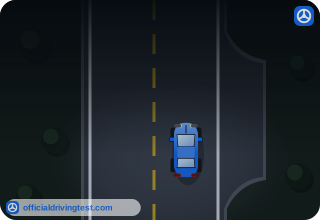
If the headlights suddenly go out, what should drivers try?
- The turn signals or emergency flashers
- The interior dome light or the glove box light
- The windshield wipers and the washer fluid
- The horn and the radio together
Show answer
Correct answer: The turn signals or emergency flashers
If the headlights go out, drivers should try the turn signals or emergency flashers.
Source: New Hampshire Driver’s Manual (DSMV 360 (Rev. 11/25)), page 35 · Open this page in the manual (Manual page 35)
-
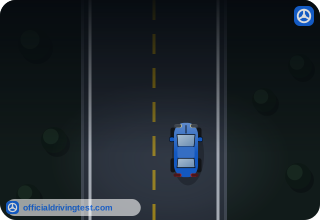
After headlight failure, how should the driver pull off the road?
- Only after reaching a service area, driving with the flashers off
- After slowing to a crawl in the traffic lane to look for a spot
- As quickly and safely as possible, with the emergency flashers left on
- Once the headlights come back on by themselves in a few minutes
Show answer
Correct answer: As quickly and safely as possible, with the emergency flashers left on
After headlight failure the driver should pull off the road as quickly and safely as possible and leave the emergency flashers on.
Source: New Hampshire Driver’s Manual (DSMV 360 (Rev. 11/25)), page 35 · Open this page in the manual (Manual page 35)
-
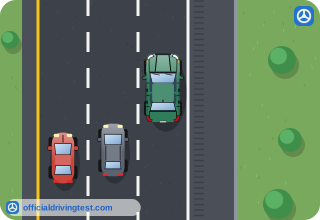
What should a driver turn on when a vehicle breaks down to show it is disabled?
- The high beams
- The emergency flashers
- The windshield wipers
- The left turn signal
Show answer
Correct answer: The emergency flashers
When a vehicle breaks down, drivers should turn on the emergency flashers to show the vehicle is disabled.
Source: New Hampshire Driver’s Manual (DSMV 360 (Rev. 11/25)), page 35 · Open this page in the manual (Manual page 35)
-
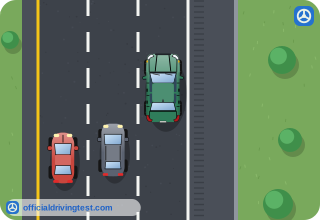
When a vehicle breaks down, what should drivers do if possible?
- Leave it in the lane and stand behind it
- Push it onto the center line
- Leave it where it stopped and walk into traffic for help
- Get the vehicle off the road and away from traffic
Show answer
Correct answer: Get the vehicle off the road and away from traffic
If possible, drivers should get the vehicle off the road and away from traffic as safely and quickly as possible.
Source: New Hampshire Driver’s Manual (DSMV 360 (Rev. 11/25)), page 35 · Open this page in the manual (Manual page 35)
-
How far in front of and behind a broken-down vehicle should emergency flares or reflectors be placed, if available?
- 200 feet
- 50 feet
- 100 feet
- 500 feet
Show answer
Correct answer: 200 feet
If available, drivers should place emergency flares or reflectors 200 feet in front of and behind the vehicle.
Source: New Hampshire Driver’s Manual (DSMV 360 (Rev. 11/25)), page 35 · Open this page in the manual (Manual page 35)
-
After a breakdown, a driver has no cell phone or other device. What color cloth should be tied to the door handle or antenna in a snowstorm?

- White
- Yellow
- Red
- Orange
Show answer
Correct answer: Red
Drivers should raise the hood and tie a white cloth, or a red cloth in a snowstorm, to the door handle or antenna to alert others that help is needed.
Source: New Hampshire Driver’s Manual (DSMV 360 (Rev. 11/25)), page 35 · Open this page in the manual (Manual page 35)
-
Once a vehicle has stopped after breaking down, how should the driver notify authorities?
- Sound the horn in short bursts until help arrives
- Use a cell phone or other device
- Walk along the highway to the nearest exit
- Stop passing police cars from the roadway
Show answer
Correct answer: Use a cell phone or other device
Once stopped, the driver should use a cell phone or other device to notify authorities that the vehicle has broken down.
Source: New Hampshire Driver’s Manual (DSMV 360 (Rev. 11/25)), page 35 · Open this page in the manual (Manual page 35)
-
If possible, what should the driver of a broken-down vehicle do until help arrives?
- Walk along the shoulder to the nearest exit
- Wait inside a nearby business
- Flag down passing vehicles from the roadway
- Stay with the vehicle
Show answer
Correct answer: Stay with the vehicle
If possible, the driver should stay with the vehicle until help arrives.
Source: New Hampshire Driver’s Manual (DSMV 360 (Rev. 11/25)), page 35 · Open this page in the manual (Manual page 35)
-
A broken-down vehicle is in a hazardous location. What should be done with the passengers?
- Get them out of the vehicle and well away from traffic
- Keep them seated with their seat belts fastened
- Have them stand beside the vehicle on the traffic side
- Have them wait behind the vehicle with the flashers on
Show answer
Correct answer: Get them out of the vehicle and well away from traffic
If the vehicle is in a hazardous location, get all passengers out of the vehicle and well away from traffic.
Source: New Hampshire Driver’s Manual (DSMV 360 (Rev. 11/25)), page 35 · Open this page in the manual (Manual page 35)
-
Your vehicle drifts off the paved road surface onto an uneven edge. What should you do?
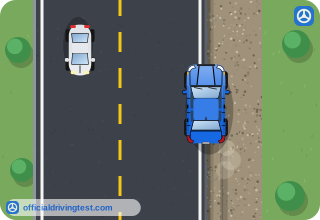
- Steer back onto the pavement right away
- Brake hard and stop on the road edge
- Slow down gradually, then return when safe
- Speed up to climb back onto the pavement
Show answer
Correct answer: Slow down gradually, then return when safe
Drivers should avoid panic steering back onto the pavement. If the vehicle leaves the paved road surface, slow down gradually and turn back onto the pavement when it is safe to do so.
Source: New Hampshire Driver’s Manual (DSMV 360 (Rev. 11/25)), page 34 · Open this page in the manual (Manual page 34)