New Hampshire: Emergencies and crashes — Part 2 Practice Test
Questions in this part include: “What should drivers follow to greatly reduce the chance that the vehicle will have a problem?” · “Besides a malfunction, what can cause brakes to fail?”
Independent educational site · not affiliated with any government agency or DMV
Ready? Test yourself
- Instant feedback with an explanation
- Every answer cites its source in the manual
- Your best score is saved on this device
- Keyboard: press 1 to 4 to answer and Enter for the next question
Questions are original and based on the official manual "New Hampshire Driver’s Manual" (DSMV 360 (Rev. 11/25)), New Hampshire Division of Motor Vehicles (DMV).
All 18 questions in this practice test
Take the test above first, then use this list to study. Tap “Show answer” to see the correct answer and explanation.
Show the questions and answersHide the questions
-
What should a driver make sure of when swerving around a problem?
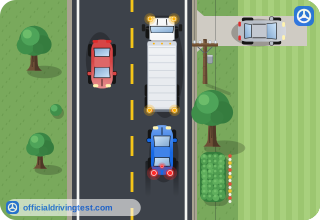
- One hand is on the wheel and one is on the horn
- A good grip with both hands on the steering wheel
- The headlights are on high beam
- Both feet are resting on the floor, off the pedals
Show answer
Correct answer: A good grip with both hands on the steering wheel
Drivers who swerve should make sure they have a good grip with both hands on the steering wheel.
Source: New Hampshire Driver’s Manual (DSMV 360 (Rev. 11/25)), page 34 · Open this page in the manual (Manual page 34)
-
After swerving, once the problem has cleared, what should the driver do?
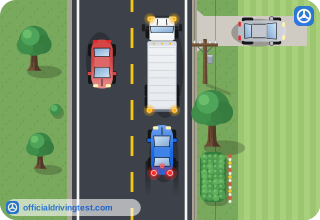
- Brake hard to stop the vehicle at once on the roadway
- Continue steering in the same direction to move farther away
- Let go of the steering wheel so the vehicle straightens itself
- Steer in the opposite direction to straighten out and gain control
Show answer
Correct answer: Steer in the opposite direction to straighten out and gain control
Once the problem has cleared, the driver should steer in the opposite direction to straighten out and gain control.
Source: New Hampshire Driver’s Manual (DSMV 360 (Rev. 11/25)), page 34 · Open this page in the manual (Manual page 34)
-
Which of these can cause a vehicle to skid?
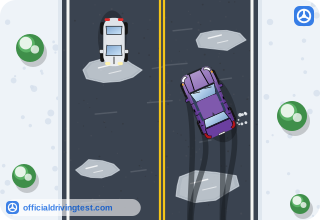
- Traveling too fast for conditions
- Driving too slowly for the road
- Using the turn signal too early
- Checking the mirrors before turning
Show answer
Correct answer: Traveling too fast for conditions
Skidding is caused when a driver is traveling too fast for conditions, stops too suddenly or when the tires can no longer grip the roadway.
Source: New Hampshire Driver’s Manual (DSMV 360 (Rev. 11/25)), page 34 · Open this page in the manual (Manual page 34)
-
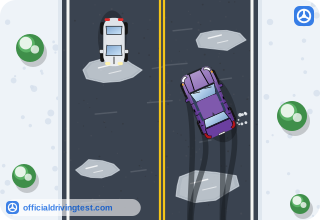
Which driver action can cause a skid?
- Signaling early before a turn
- Keeping a steady speed on a dry road
- Stopping too suddenly
- Checking the mirrors often
Show answer
Correct answer: Stopping too suddenly
Skidding is caused when a driver stops too suddenly, travels too fast for conditions or when the tires can no longer grip the roadway.
Source: New Hampshire Driver’s Manual (DSMV 360 (Rev. 11/25)), page 34 · Open this page in the manual (Manual page 34)
-
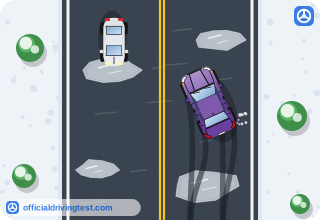
Once a vehicle begins to skid, how much control does the driver have?
- Full control if the driver brakes hard
- Little control of the vehicle
- Complete control of steering but none of the brakes
- The same control as before the skid
Show answer
Correct answer: Little control of the vehicle
Once the vehicle begins to skid, a driver has little control of the vehicle.
Source: New Hampshire Driver’s Manual (DSMV 360 (Rev. 11/25)), page 34 · Open this page in the manual (Manual page 34)
-
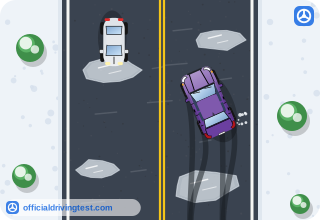
If the vehicle begins to skid, what should drivers do with the accelerator?
- Press it harder to regain traction
- Hold it steady until the skid stops
- Switch to the brake and the accelerator together
- Ease up on it
Show answer
Correct answer: Ease up on it
If the vehicle begins to skid, drivers should ease up on the accelerator.
Source: New Hampshire Driver’s Manual (DSMV 360 (Rev. 11/25)), page 34 · Open this page in the manual (Manual page 34)
-
In which direction should a driver steer if the vehicle begins to skid?
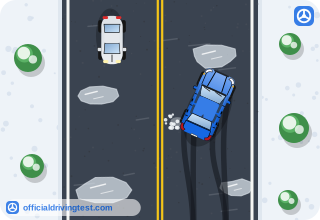
- In the direction that the rear of the vehicle is sliding
- Away from the direction that the rear of the vehicle is sliding
- Toward the nearest edge of the road surface
- Straight ahead, keeping the wheel locked in place
Show answer
Correct answer: In the direction that the rear of the vehicle is sliding
Steering in the direction that the rear of the vehicle is sliding allows the vehicle to go straight instead of sideways.
Source: New Hampshire Driver’s Manual (DSMV 360 (Rev. 11/25)), page 34 · Open this page in the manual (Manual page 34)
-
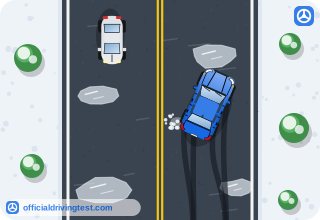
A skidding vehicle starts swerving in the other direction. What should the driver be prepared to do?
- Release the wheel and brake hard
- Turn off the engine at once
- Steer in the opposite direction
- Shift into reverse to slow down
Show answer
Correct answer: Steer in the opposite direction
Drivers should be prepared to steer in the opposite direction if the vehicle starts swerving in the other direction.
Source: New Hampshire Driver’s Manual (DSMV 360 (Rev. 11/25)), page 34 · Open this page in the manual (Manual page 34)
-
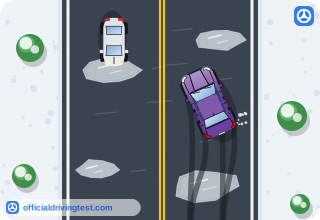
Once the vehicle stops skidding, what should the driver do?
- Keep the wheels turned until the vehicle has stopped completely
- Straighten the front wheels and steer back in the original direction
- Accelerate and steer toward the nearest road shoulder
- Turn off the engine and wait on the roadway for help
Show answer
Correct answer: Straighten the front wheels and steer back in the original direction
Once the vehicle stops skidding, the driver should straighten the front wheels and steer back in the original direction of travel.
Source: New Hampshire Driver’s Manual (DSMV 360 (Rev. 11/25)), page 34 · Open this page in the manual (Manual page 34)
-
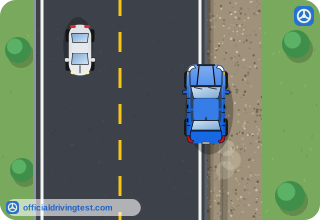
A vehicle leaves the paved road surface. What should drivers do?
- Brake hard and steer sharply back onto the pavement
- Accelerate to regain control, then steer back onto the road
- Stop on the soft shoulder and wait for help
- Slow down gradually and turn back onto the pavement when it is safe
Show answer
Correct answer: Slow down gradually and turn back onto the pavement when it is safe
Drivers should avoid panic steering back onto the pavement, slow down gradually and turn back when it is safe to do so.
Source: New Hampshire Driver’s Manual (DSMV 360 (Rev. 11/25)), page 34 · Open this page in the manual (Manual page 34)
-
What should drivers follow to greatly reduce the chance that the vehicle will have a problem?
- The recommended maintenance schedule in the vehicle owner's manual
- The maintenance schedule posted by the Division of Motor Vehicles
- A yearly inspection schedule set by the local police department
- The service intervals advertised by the tire manufacturer
Show answer
Correct answer: The recommended maintenance schedule in the vehicle owner's manual
Drivers should follow the recommended maintenance schedule listed in the vehicle owner's manual, which greatly reduces the chance of a vehicle problem.
Source: New Hampshire Driver’s Manual (DSMV 360 (Rev. 11/25)), page 34 · Open this page in the manual (Manual page 34)
-
Besides a malfunction, what can cause brakes to fail?
- Driving too long on a smooth highway
- Cold temperatures overnight
- Contact with a large amount of water
- Heavy loads in the trunk
Show answer
Correct answer: Contact with a large amount of water
Brakes can fail due to a malfunction, or if they have come in contact with a large amount of water.
Source: New Hampshire Driver’s Manual (DSMV 360 (Rev. 11/25)), page 34 · Open this page in the manual (Manual page 34)
-
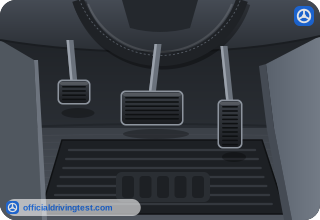
When the brakes fail, why should a driver push the parking brake foot pedal slowly?
- To avoid draining the battery of the vehicle
- To avoid locking the rear wheels and causing a skid
- To avoid stalling the engine while moving
- To avoid setting off the air bags
Show answer
Correct answer: To avoid locking the rear wheels and causing a skid
The parking brake should be applied slowly to avoid locking the rear wheels and causing a skid, and the driver should be ready to release it if the vehicle skids.
Source: New Hampshire Driver’s Manual (DSMV 360 (Rev. 11/25)), page 35 · Open this page in the manual (Manual page 35)
-
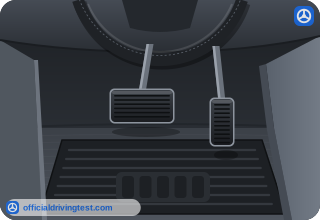
The parking brake does not stop a vehicle whose brakes have failed. What should the driver do?
- Shift into park and steer toward the other lane of traffic
- Keep driving at the same speed until reaching a repair shop
- Turn off the headlights and sound the horn continuously
- Turn off the engine and find a safe place to stop off the road
Show answer
Correct answer: Turn off the engine and find a safe place to stop off the road
If engaging the brake does not work, the driver should turn off the engine and look for a safe place to slow to a stop off the roadway.
Source: New Hampshire Driver’s Manual (DSMV 360 (Rev. 11/25)), page 35 · Open this page in the manual (Manual page 35)
-
What will the vehicle do if a front tire blows out?
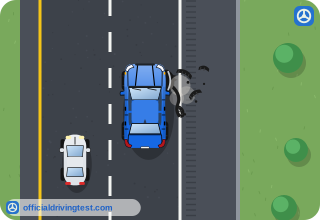
- Pull sharply in the direction of the blowout
- Pull sharply away from the direction of the blowout
- Slow down on its own with no change in steering
- Drift straight ahead without any pulling
Show answer
Correct answer: Pull sharply in the direction of the blowout
If a front tire blows out, the vehicle will pull sharply in the direction of the blowout.
Source: New Hampshire Driver’s Manual (DSMV 360 (Rev. 11/25)), page 35 · Open this page in the manual (Manual page 35)
-
What will the vehicle do if a rear tire blows out?
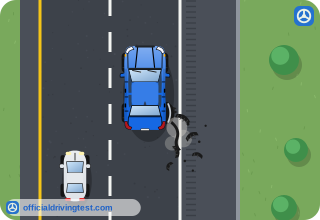
- Spin immediately to face the opposite direction
- Stay steady and show no change in handling
- Wobble, shake and pull some in the direction of the blowout
- Pull sharply in the opposite direction of the blowout
Show answer
Correct answer: Wobble, shake and pull some in the direction of the blowout
If a rear tire blows out, the vehicle will wobble, shake and pull some in the direction of the blowout.
Source: New Hampshire Driver’s Manual (DSMV 360 (Rev. 11/25)), page 35 · Open this page in the manual (Manual page 35)
-
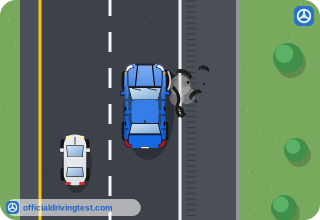
A tire blows out or suddenly goes flat. How should the driver handle the steering wheel?
- Turn sharply toward the shoulder to stop quickly
- Grip it firmly and keep the vehicle going straight
- Release it and let the vehicle straighten itself
- Turn it toward the side of the flat tire
Show answer
Correct answer: Grip it firmly and keep the vehicle going straight
If a tire blows out or goes flat, the driver should grip the steering wheel firmly and keep the vehicle going straight.
Source: New Hampshire Driver’s Manual (DSMV 360 (Rev. 11/25)), page 35 · Open this page in the manual (Manual page 35)
-
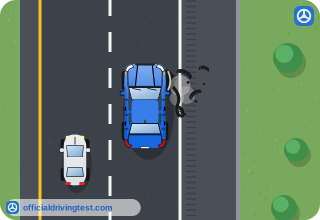
How should a driver slow down after a tire blowout?
- Quickly, by braking hard as soon as the tire fails
- Right away, by turning off the engine
- By shifting into park while still moving
- Gradually, by relieving pressure on the accelerator pedal
Show answer
Correct answer: Gradually, by relieving pressure on the accelerator pedal
After a tire blowout the driver should slow down gradually by relieving pressure on the accelerator pedal, and brake gently only if necessary.
Source: New Hampshire Driver’s Manual (DSMV 360 (Rev. 11/25)), page 35 · Open this page in the manual (Manual page 35)