New Hampshire: Emergencies and crashes — Part 1 Practice Test
Questions in this part include: “Which information should drivers get for all people involved in a crash?” · “An injured driver cannot complete the Operator Accident Report. Who may file it?”
Independent educational site · not affiliated with any government agency or DMV
Ready? Test yourself
- Instant feedback with an explanation
- Every answer cites its source in the manual
- Your best score is saved on this device
- Keyboard: press 1 to 4 to answer and Enter for the next question
Questions are original and based on the official manual "New Hampshire Driver’s Manual" (DSMV 360 (Rev. 11/25)), New Hampshire Division of Motor Vehicles (DMV).
All 18 questions in this practice test
Take the test above first, then use this list to study. Tap “Show answer” to see the correct answer and explanation.
Show the questions and answersHide the questions
-
What should a driver do if a road is flooded?
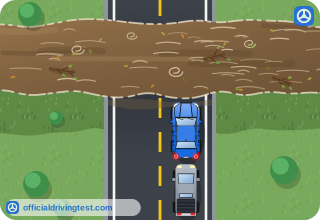
- Drive through slowly in a low gear
- Find another route to travel
- Follow another vehicle through the water
- Drive through quickly to reach the dry road
Show answer
Correct answer: Find another route to travel
Drivers should not drive through large bodies of standing water on a road. If there is a flooded roadway, they should find another route to travel.
Source: New Hampshire Driver’s Manual (DSMV 360 (Rev. 11/25)), page 18 · Open this page in the manual (Manual page 18)
-
If possible, what should a driver do with the vehicle after a crash?
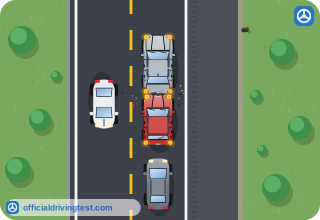
- Move it off the road so traffic is not blocked
- Leave it exactly where it stopped until police arrive
- Park it facing oncoming traffic as a warning
- Move it into the nearest lane to slow traffic
Show answer
Correct answer: Move it off the road so traffic is not blocked
After a crash, drivers should if possible move the vehicle off the road so that traffic is not blocked from passing the site of the crash.
Source: New Hampshire Driver’s Manual (DSMV 360 (Rev. 11/25)), page 32 · Open this page in the manual (Manual page 32)
-
When should a driver involved in a crash call 911?
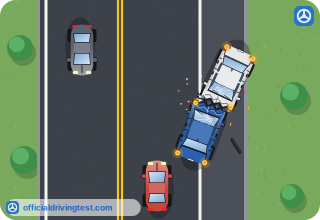
- Only if a vehicle cannot be driven
- Only if the other driver has no insurance
- If there are injuries
- Only if a police officer is not nearby
Show answer
Correct answer: If there are injuries
Drivers should call 911 if there are injuries.
Source: New Hampshire Driver’s Manual (DSMV 360 (Rev. 11/25)), page 32 · Open this page in the manual (Manual page 32)
-
How should drivers treat injured people at the scene of a crash?
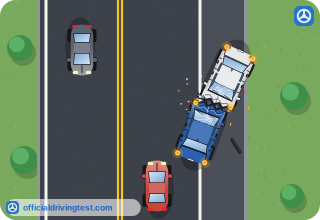
- Move them away from the vehicles right away
- Give aid but do not move them unless necessary
- Wait for the other driver to give aid first
- Help them walk to the shoulder of the road
Show answer
Correct answer: Give aid but do not move them unless necessary
Drivers should give aid to injured people but not move them unless necessary, and be sure an ambulance has been called.
Source: New Hampshire Driver’s Manual (DSMV 360 (Rev. 11/25)), page 32 · Open this page in the manual (Manual page 32)
-
Which information should drivers get for all people involved in a crash?
- Social Security numbers and dates of birth
- Employer names and work phone numbers
- Vehicle purchase dates and loan balances
- Driver's license numbers and state(s) of issue
Show answer
Correct answer: Driver's license numbers and state(s) of issue
Drivers should get names and addresses, driver's license numbers and state(s) of issue, plate numbers, make, model and year of vehicles and insurance information.
Source: New Hampshire Driver’s Manual (DSMV 360 (Rev. 11/25)), page 32 · Open this page in the manual (Manual page 32)
-
After a crash, the manual says to get the names and addresses of any injured persons and of whom else?
- Any witnesses
- The tow truck operator
- The owner of the nearest business
- Police dispatchers
Show answer
Correct answer: Any witnesses
Drivers should get the names and addresses of any witnesses or injured persons.
Source: New Hampshire Driver’s Manual (DSMV 360 (Rev. 11/25)), page 32 · Open this page in the manual (Manual page 32)
-
Within how many days must an accident report be filed with the Division of Motor Vehicles when there is a fatality, injuries or enough property damage?
- 5 days
- 10 days
- 15 days
- 30 days
Show answer
Correct answer: 15 days
New Hampshire law requires that the report be filed with the Division of Motor Vehicles within fifteen (15) days.
Source: New Hampshire Driver’s Manual (DSMV 360 (Rev. 11/25)), page 32 · Open this page in the manual (Manual page 32)
-
An accident report must be filed with the DMV if the combined property damage totals more than what amount?
- $500
- $1,000
- $2,500
- $5,000
Show answer
Correct answer: $1,000
A report must be filed if there is a fatality, injuries or combined property damage of more than $1,000.
Source: New Hampshire Driver’s Manual (DSMV 360 (Rev. 11/25)), page 32 · Open this page in the manual (Manual page 32)
-
A crash is investigated by a police officer. What is the driver's duty to report it to the DMV?
- The driver must still file a separate report with the DMV
- The driver must file a report with the police department only
- The driver must file a report with the insurance company instead
- No separate report to the DMV is required
Show answer
Correct answer: No separate report to the DMV is required
If the crash is investigated by a police officer, drivers are not required to file a separate report because the police report satisfies the requirement.
Source: New Hampshire Driver’s Manual (DSMV 360 (Rev. 11/25)), page 32 · Open this page in the manual (Manual page 32)
-
An injured driver cannot complete the Operator Accident Report. Who may file it?
- A passenger or the owner of the vehicle
- A witness or a police dispatcher
- Only the other driver in the crash
- A doctor or hospital staff member
Show answer
Correct answer: A passenger or the owner of the vehicle
If the driver is injured and unable to complete the report, it may be filed by a passenger or the owner of the vehicle.
Source: New Hampshire Driver’s Manual (DSMV 360 (Rev. 11/25)), page 32 · Open this page in the manual (Manual page 32)
-
A driver is unsure whether the combined property damage is over $1,000. What is recommended?
- Wait to see if the other driver files a report
- Ask the police not to investigate the crash
- File an Operator Report with the DMV to ensure compliance
- Skip the report unless the other driver complains
Show answer
Correct answer: File an Operator Report with the DMV to ensure compliance
If a driver is uncertain whether the damage is over $1,000, it is recommended to file an Operator Report with the DMV to ensure compliance with the law.
Source: New Hampshire Driver’s Manual (DSMV 360 (Rev. 11/25)), page 32 · Open this page in the manual (Manual page 32)
-
What is the name of the form used to report a crash to the DMV?
- Driver Collision Statement (DSMV 100)
- Operator Accident Report (DSMV 400)
- Motor Vehicle Crash Notice (DSMV 250)
- Vehicle Damage Affidavit (DSMV 310)
Show answer
Correct answer: Operator Accident Report (DSMV 400)
The Operator Accident Report (DSMV 400) is the form drivers use to report a crash to the DMV.
Source: New Hampshire Driver’s Manual (DSMV 360 (Rev. 11/25)), page 32 · Open this page in the manual (Manual page 32)
-
What could a panic reaction in a driving emergency result in?
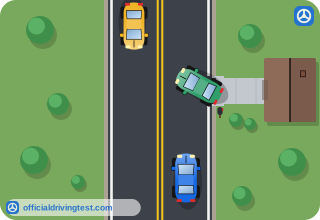
- Making the situation worse
- A safer outcome for other drivers
- A quicker recovery of vehicle control
- Less need to brake
Show answer
Correct answer: Making the situation worse
The manual warns that a panic reaction could result in making the situation worse, so drivers should think before taking action.
Source: New Hampshire Driver’s Manual (DSMV 360 (Rev. 11/25)), page 34 · Open this page in the manual (Manual page 34)
-
What does ABS (Anti-lock Braking System) allow a driver to do?
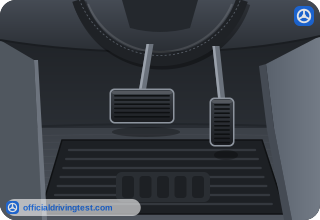
- Brake without keeping pressure on the brake pedal
- Drive on ice without reducing speed
- Stop without skidding and keep steering control
- Avoid reading the vehicle's owner's manual
Show answer
Correct answer: Stop without skidding and keep steering control
Vehicles equipped with ABS allow a driver to stop the vehicle without skidding and keep steering control.
Source: New Hampshire Driver’s Manual (DSMV 360 (Rev. 11/25)), page 34 · Open this page in the manual (Manual page 34)
-
ABS will work only if the driver does what?
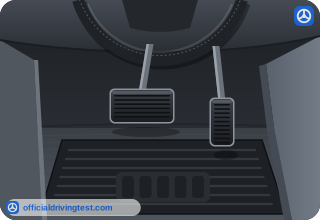
- Pumps the brake pedal repeatedly
- Keeps pressure on the brake pedal
- Releases the brake pedal when it vibrates
- Presses the brake pedal only once
Show answer
Correct answer: Keeps pressure on the brake pedal
Drivers should press on the brake pedal and keep applying pressure, because ABS will work only if the driver keeps the pressure on the brake pedal.
Source: New Hampshire Driver’s Manual (DSMV 360 (Rev. 11/25)), page 34 · Open this page in the manual (Manual page 34)
-
What is normal for a driver to feel and hear when ABS is working?

- The steering wheel locks in place while braking
- The brake warning light stays on after stopping
- The vehicle pulls sharply to one side when braking
- The pedal vibrates and a clicking noise is heard
Show answer
Correct answer: The pedal vibrates and a clicking noise is heard
A driver may feel the pedal vibrate and hear a clicking noise, which is normal when ABS is working.
Source: New Hampshire Driver’s Manual (DSMV 360 (Rev. 11/25)), page 34 · Open this page in the manual (Manual page 34)
-
Where should a driver look for the proper braking procedure if the vehicle is not equipped with ABS?
- The vehicle's owner's manual
- A label on the dashboard
- The vehicle's registration papers
- The local police department
Show answer
Correct answer: The vehicle's owner's manual
If the vehicle is not equipped with ABS, the driver should refer to the vehicle's owner's manual for the proper braking procedure.
Source: New Hampshire Driver’s Manual (DSMV 360 (Rev. 11/25)), page 34 · Open this page in the manual (Manual page 34)
-
Which statement about swerving to avoid a crash is correct?
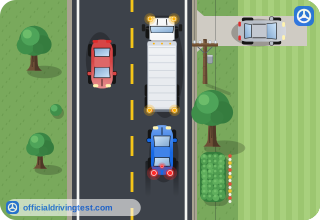
- Always swerve to the left, toward the opposite lane
- Always swerve to the right, even into other traffic
- Never swerve to the left to avoid a crash
- Never use swerving to avoid a collision under any condition
Show answer
Correct answer: Never swerve to the left to avoid a crash
When swerving, drivers should steer in the direction they want to go while trying to avoid other traffic, and never swerve to the left to avoid a crash.
Source: New Hampshire Driver’s Manual (DSMV 360 (Rev. 11/25)), page 34 · Open this page in the manual (Manual page 34)