Nevada: Sharing the road — Part 4 Practice Test
Questions in this part include: “What may a motorist be charged with for causing even a minor collision with a bicycle?” · “Why must cyclists use hand signals?”
Independent educational site · not affiliated with any government agency or DMV
Ready? Test yourself
- Instant feedback with an explanation
- Every answer cites its source in the manual
- Your best score is saved on this device
- Keyboard: press 1 to 4 to answer and Enter for the next question
Questions are original and based on the official manual "Nevada Driver's Handbook" (March 2024 (DMV 700)), Nevada Department of Motor Vehicles.
All 16 questions in this practice test
Take the test above first, then use this list to study. Tap “Show answer” to see the correct answer and explanation.
Show the questions and answersHide the questions
-
What may a motorist be charged with for causing even a minor collision with a bicycle?
- Failure to yield only
- A parking violation
- Reckless driving
- Nothing, if no one is hurt
Show answer
Correct answer: Reckless driving
Motorists who cause even a minor collision with a bicycle or pedestrian may be charged with reckless driving.
Source: Nevada Driver's Handbook (March 2024 (DMV 700)), page 65 · Open this page in the manual (Manual page 65)
-
Bicyclists may not intentionally do what?
- Interfere with the movement of a motor vehicle
- Ride in a traffic lane with other vehicles
- Use hand signals when turning at intersections
- Ride on streets that have a marked bike lane
Show answer
Correct answer: Interfere with the movement of a motor vehicle
The handbook says bicyclists may not intentionally interfere with the movement of a motor vehicle.
Source: Nevada Driver's Handbook (March 2024 (DMV 700)), page 65 · Open this page in the manual (Manual page 65)
-
Where should a cyclist riding in a traffic lane stay?
- In the center of the lane
- As far to the left as practicable
- On the sidewalk
- As far to the right as practicable
Show answer
Correct answer: As far to the right as practicable
Cyclists may ride in a traffic lane, staying as far to the right as practicable unless preparing to turn or overtaking another vehicle.
Source: Nevada Driver's Handbook (March 2024 (DMV 700)), page 65 · Open this page in the manual (Manual page 65)
-
What should a cyclist do if choosing to cross an intersection in a crosswalk?
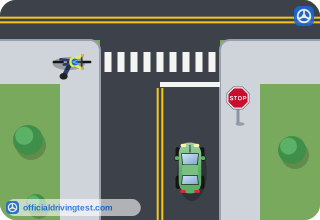
- Ride across quickly
- Dismount and cross as a pedestrian
- Ride across giving a hand signal
- Walk the bike on the left side
Show answer
Correct answer: Dismount and cross as a pedestrian
If a cyclist chooses to cross an intersection in a crosswalk, they should dismount and cross as a pedestrian.
Source: Nevada Driver's Handbook (March 2024 (DMV 700)), page 65 · Open this page in the manual (Manual page 65)
-
Why must cyclists use hand signals?
- To show other road users that they are under 18
- To let others know what they plan to do
- To request the right-of-way from every driver
- To warn only the pedestrians who are nearby
Show answer
Correct answer: To let others know what they plan to do
The handbook says cyclists must use hand signals to let others know what they plan to do.
Source: Nevada Driver's Handbook (March 2024 (DMV 700)), page 65 · Open this page in the manual (Manual page 65)
-
Which arm may a cyclist use to signal a right turn?
- The left arm only
- Either hand on the handlebar
- No arm signal is allowed
- The right arm
Show answer
Correct answer: The right arm
The handbook says the cyclist may use their right arm to signal a right turn.
Source: Nevada Driver's Handbook (March 2024 (DMV 700)), page 65 · Open this page in the manual (Manual page 65)
-
At intersections, how must motorists treat cyclists?
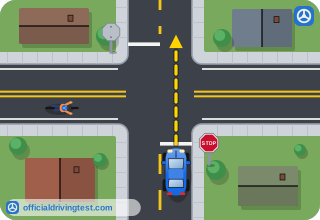
- Expect them to yield at all times to every vehicle
- Ignore them unless they are riding in a crosswalk
- Yield to them as for other vehicles and pedestrians
- Pass them before the intersection if you can
Show answer
Correct answer: Yield to them as for other vehicles and pedestrians
At intersections, motorists must yield to cyclists as they would for other vehicles and pedestrians.
Source: Nevada Driver's Handbook (March 2024 (DMV 700)), page 65 · Open this page in the manual (Manual page 65)
-
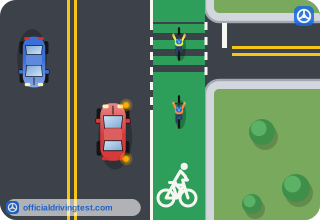
Who must yield the right-of-way on a bicycle path or in a bike lane?
- Cyclists
- Motorists
- Whoever arrived first
- No one
Show answer
Correct answer: Motorists
Motorists must yield the right-of-way to a cyclist on a bicycle path or in a bike lane.
Source: Nevada Driver's Handbook (March 2024 (DMV 700)), page 65 · Open this page in the manual (Manual page 65)
-
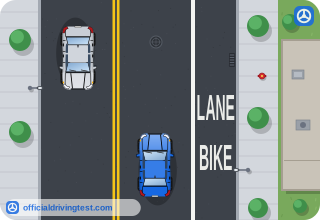
In which situation may a motorist stop or drive on a designated bicycle lane?
- When no bicyclists are in sight
- When turning right at the next intersection
- When passing a slower vehicle
- When directed by a police officer
Show answer
Correct answer: When directed by a police officer
Motorists may not stop, park or drive on a designated bicycle path or lane unless entering or leaving an alley or driveway, directed by a police officer, or in an emergency.
Source: Nevada Driver's Handbook (March 2024 (DMV 700)), page 65 · Open this page in the manual (Manual page 65)
-
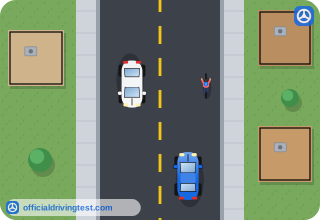
How should you treat inexperienced riders, especially children?
- Expect them to know all rules
- Pass them as closely as possible
- Sound your horn to warn them
- With special courtesy and care
Show answer
Correct answer: With special courtesy and care
Inexperienced riders require special courtesy and care and may not always follow traffic rules.
Source: Nevada Driver's Handbook (March 2024 (DMV 700)), page 65 · Open this page in the manual (Manual page 65)
-
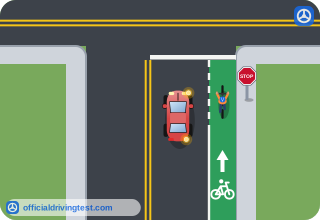
What should you do when turning at an intersection or driveway?
- Check only the direction of traffic
- Check both ways for cyclists
- Turn before checking for cyclists
- Rely on cyclists to yield
Show answer
Correct answer: Check both ways for cyclists
The handbook says to check both ways for cyclists when turning at an intersection or driveway.
Source: Nevada Driver's Handbook (March 2024 (DMV 700)), page 65 · Open this page in the manual (Manual page 65)
-
What should you never do just before you make a turn?
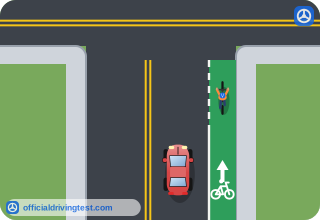
- Speed up to pass a cyclist
- Slow down for a cyclist
- Check your mirrors
- Use your turn signal
Show answer
Correct answer: Speed up to pass a cyclist
The handbook says to never speed up to pass a cyclist just before you make a turn.
Source: Nevada Driver's Handbook (March 2024 (DMV 700)), page 65 · Open this page in the manual (Manual page 65)
-
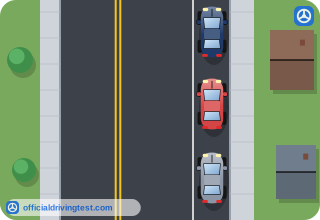
When parked on the street, what should you check before opening your car door?
- For pedestrians in front of the car only
- That your engine is turned off and keys out
- For cyclists approaching from behind
- For parking signs on the curb behind you
Show answer
Correct answer: For cyclists approaching from behind
The handbook says to check for cyclists approaching from behind before you open your car door.
Source: Nevada Driver's Handbook (March 2024 (DMV 700)), page 65 · Open this page in the manual (Manual page 65)
-
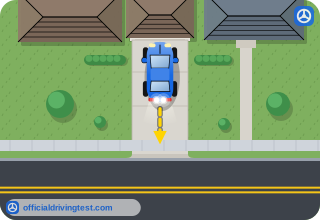
What should you do when backing out of a driveway or parking lot?
- Check behind only
- Honk once
- Check both ways for cyclists
- Back out quickly to clear the area
Show answer
Correct answer: Check both ways for cyclists
The handbook says to check both ways for cyclists when backing out of a driveway or parking lot.
Source: Nevada Driver's Handbook (March 2024 (DMV 700)), page 65 · Open this page in the manual (Manual page 65)
-
Which is something the handbook says cyclists should do?
- Wear a helmet
- Wear a headset when riding
- Ride on the wrong side of the road
- Ride at night without lights
Show answer
Correct answer: Wear a helmet
The handbook says cyclists should obey the law, wear a helmet, wear brightly colored clothing, and keep bikes in good repair.
Source: Nevada Driver's Handbook (March 2024 (DMV 700)), page 65 · Open this page in the manual (Manual page 65)
-
Which is something the handbook says cyclists should not do?
- Wear a helmet
- Wear brightly colored clothing
- Keep bikes in good repair
- Wear a headset when riding
Show answer
Correct answer: Wear a headset when riding
The handbook says cyclists should not wear a headset, such as headphones or a cellular phone earpiece, when riding.
Source: Nevada Driver's Handbook (March 2024 (DMV 700)), page 65 · Open this page in the manual (Manual page 65)