Minnesota: Emergencies and winter driving
Crashes, winter driving and survival, skids, hydroplaning, fog, deer, blowouts, brake or steering failure, deep water, fire, overheating and carbon monoxide. Split into 5 shorter tests so you're not stuck in one long quiz.
Independent educational site · not affiliated with any government agency or DMV
Choose a part
Emergencies and winter driving — Part 1
Questions in this part include: “If someone is injured or killed in a crash, what should you do?”
StartEmergencies and winter driving — Part 2
Questions in this part include: “If you are involved in a crash that results in injury, what should you do?”
StartEmergencies and winter driving — Part 3
Crashes, winter driving and survival, skids, hydroplaning, fog, deer, blowouts, brake or steering failure, deep water, fire, overheating and carbon monoxide. — Part 3
StartEmergencies and winter driving — Part 4
Questions in this part include: “How much water will reach the bottom of most passenger cars, causing loss of control or possible stalling?”
StartEmergencies and winter driving — Part 5
Questions in this part include: “What is the only cure for carbon monoxide poisoning?”
StartAll 84 Emergencies and winter driving questions with answers
Choose a part above to take a practice test, or study every question and answer here.
Show the questions and answersHide the questions
-
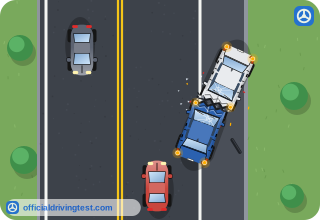
If you are in a crash and able to, why should you turn off the ignition?
- To save the battery
- To keep the airbags from inflating again
- To reduce the risk of fire
- To stop the vehicle from being towed
Show answer
Correct answer: To reduce the risk of fire
After a crash, if you are able, turn off the ignition to reduce the risk of fire.
Source: Minnesota Driver’s Manual (June 2026), page 39
-
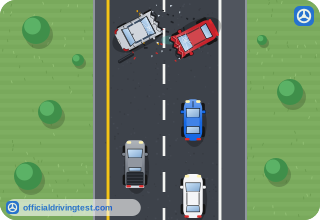
After a crash, what should you use to warn other drivers of danger?
- Your horn and your high beams flashing at traffic
- Emergency warning lights, flares or a flashlight
- Your parking brake
- Your windshield wipers
Show answer
Correct answer: Emergency warning lights, flares or a flashlight
To protect yourself and the crash scene, use emergency warning lights, flares or a flashlight to warn other drivers of danger.
Source: Minnesota Driver’s Manual (June 2026), page 39
-
If someone is injured or killed in a crash, what should you do?
- Call the Driver and Vehicle Services office within 24 hours
- Wait for another driver to call
- Call your insurance agent first
- Call the nearest law enforcement agency or 911 as quickly as possible
Show answer
Correct answer: Call the nearest law enforcement agency or 911 as quickly as possible
If someone is injured or killed, call the nearest law enforcement agency or 911 as quickly as possible.
Source: Minnesota Driver’s Manual (June 2026), page 39
-
What does the manual say you are required by law to do for crash victims?
- Move them to the shoulder
- Give them a ride to a hospital
- Provide reasonable assistance
- Wait with them until their family arrives
Show answer
Correct answer: Provide reasonable assistance
You are required by law to provide reasonable assistance to crash victims.
Source: Minnesota Driver’s Manual (June 2026), page 39
-
After a crash, what information must you give to other drivers and any law enforcement officer at the scene?
- Your name, address, date of birth and vehicle registration number
- Your name, address, phone number and vehicle color
- Your name, address, Social Security number and vehicle title
- Your name, address, employer and insurance policy number
Show answer
Correct answer: Your name, address, date of birth and vehicle registration number
After a crash, provide your name, address, date of birth and vehicle registration number to other drivers and any law enforcement officer at the scene.
Source: Minnesota Driver’s Manual (June 2026), page 39
-
After a crash, to whom must you show your driver’s license?
- Only a law enforcement officer who is at the scene
- Only the other driver
- Only your insurance agent
- Anyone who asks for it and any law enforcement officer
Show answer
Correct answer: Anyone who asks for it and any law enforcement officer
Show your driver’s license to anyone who asks for it and to any law enforcement officer.
Source: Minnesota Driver’s Manual (June 2026), page 39
-
After a crash, if asked, what insurance information must you give to the investigating law enforcement officer?
- The name of your insurance carrier and the amount of your coverage
- The name and address of your insurance carrier and the name of your agent
- Your policy number and the date you bought it
- The amount of coverage and your monthly premium
Show answer
Correct answer: The name and address of your insurance carrier and the name of your agent
If asked, give the name and address of your insurance carrier and the name of your agent to the investigating law enforcement officer.
Source: Minnesota Driver’s Manual (June 2026), page 39
-
If you do not have your insurance information with you after a crash, within what time must you provide it?
- 24 hours
- 72 hours
- 48 hours
- 7 days
Show answer
Correct answer: 72 hours
If you do not have your insurance information with you, you must provide it within 72 hours.
Source: Minnesota Driver’s Manual (June 2026), page 39
-
If a crash results only in property damage, what does the manual say about notifying law enforcement?
- You must call 911 immediately
- You must report to a police station within 24 hours
- You must report to DVS within 10 days
- You do not need to notify law enforcement
Show answer
Correct answer: You do not need to notify law enforcement
If the crash only results in property damage, you do not need to notify law enforcement.
Source: Minnesota Driver’s Manual (June 2026), page 39
-
If you damage property other than a vehicle in a crash, what should you do?
- Inform the property owner
- Drive away if the damage is minor
- Report it only to your insurance agent
- Wait for a deputy registrar
Show answer
Correct answer: Inform the property owner
If you damage property other than a vehicle, inform the property owner.
Source: Minnesota Driver’s Manual (June 2026), page 39
-
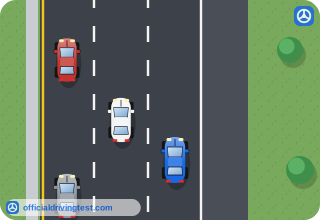
When is it legal to stop or park a vehicle on an interstate freeway?
- When traffic is heavy
- When you need to check a map
- When you stop briefly to let a passenger out
- Only in an emergency
Show answer
Correct answer: Only in an emergency
It is illegal to stop or park on an interstate freeway except in an emergency.
Source: Minnesota Driver’s Manual (June 2026), page 77
-
What does the manual say about running out of fuel on an interstate freeway?
- It is not considered an emergency, and you could be cited
- It is an emergency, so you may stop on the shoulder and wait
- It is an emergency only if you have passengers with you
- It is an emergency only if it happens at night
Show answer
Correct answer: It is not considered an emergency, and you could be cited
Running out of fuel is not considered an emergency, and you could receive a citation.
Source: Minnesota Driver’s Manual (June 2026), page 77
-
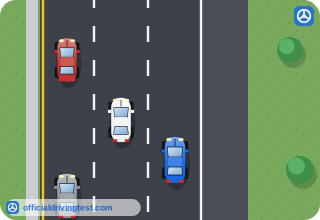
If you must stop on the freeway because of an emergency, where should you park?
- In the right lane, as close to the shoulder as possible
- In the acceleration lane of the next entry ramp
- On the shoulder, as far from the main roadway as possible
- In the left lane next to the median
Show answer
Correct answer: On the shoulder, as far from the main roadway as possible
The manual says to park on the shoulder, as far from the main roadway as possible.
Source: Minnesota Driver’s Manual (June 2026), page 77
-
What can you do to signal that your vehicle has stopped on the freeway in an emergency?
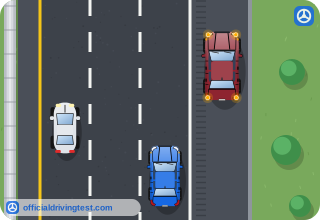
- Tie a red cloth to the rear bumper or the trunk lid
- Tie a white cloth to the radio antenna or a door handle
- Hang a dark cloth from the rear window or a mirror
- Place a traffic cone on the road behind your car
Show answer
Correct answer: Tie a white cloth to the radio antenna or a door handle
The manual says to open the trunk and raise the hood, or tie a white cloth to the radio antenna or a door handle.
Source: Minnesota Driver’s Manual (June 2026), page 77
-
If you have flares or reflectors during an emergency stop on a freeway, how far behind your vehicle should you place them?
- From 10 to 50 feet
- From 50 to 100 feet
- From 500 to 1,000 feet
- From 100 to 500 feet
Show answer
Correct answer: From 100 to 500 feet
The manual says to place flares or reflectors from 100 to 500 feet behind your vehicle on the right edge of the main road.
Source: Minnesota Driver’s Manual (June 2026), page 77
-
After stopping on the freeway because of an emergency, what should you do if possible?
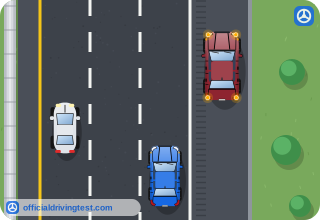
- Stay with your vehicle
- Walk to the next exit
- Flag down passing drivers
- Wait in a traffic lane
Show answer
Correct answer: Stay with your vehicle
The manual says to stay with your vehicle, if possible.
Source: Minnesota Driver’s Manual (June 2026), page 77
-
If you must leave your vehicle after an emergency stop on a freeway, what must you not do?
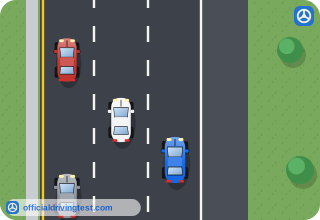
- Walk on the right shoulder as far from traffic as you can
- Move a safe distance away from the vehicle on the shoulder
- Walk on the area of the highway reserved for vehicle traffic
- Stay on the shoulder, away from traffic, until help arrives
Show answer
Correct answer: Walk on the area of the highway reserved for vehicle traffic
The manual says that walking on the area of the highway reserved for vehicle traffic is illegal and extremely dangerous.
Source: Minnesota Driver’s Manual (June 2026), page 77
-
If you are involved in a crash that results in injury, what should you do?
- Leave the scene once you have called your insurance company
- Drive to the nearest law enforcement agency to report it
- Wait for a passing driver to report the crash for you
- Stay where you are and, if able, call 911 or law enforcement
Show answer
Correct answer: Stay where you are and, if able, call 911 or law enforcement
The manual says to stay where you are after an injury crash and, if you are able, call 911 or the nearest law enforcement agency.
Source: Minnesota Driver’s Manual (June 2026), page 78
-
If a crash results only in property damage, when should you step out of your vehicle?
- After you have moved to a safe location away from traffic
- Immediately, so you can inspect the damage to each vehicle
- Only after law enforcement has arrived at the scene
- Only after you have photographed the other vehicle
Show answer
Correct answer: After you have moved to a safe location away from traffic
For a property-damage-only crash you move to a safe location, and you do not step out of your vehicle until you are away from traffic.
Source: Minnesota Driver’s Manual (June 2026), page 78
-
After a crash, which of these should you write down?
- The posted speed limit at the scene of the crash
- The names of every passenger in the other vehicles
- The license plate numbers of other vehicles involved
- The interior color of every vehicle involved
Show answer
Correct answer: The license plate numbers of other vehicles involved
The manual says to write down the license plate numbers of other vehicles involved in the crash.
Source: Minnesota Driver’s Manual (June 2026), page 78
-
Which of these is among the items recommended for a winter survival kit?
- A portable gas stove for cooking
- A red flag for your vehicle’s antenna
- A can of spare gasoline and a funnel
- Spare brake fluid
Show answer
Correct answer: A red flag for your vehicle’s antenna
Recommended winter survival kit items include a red flag for your vehicle’s antenna, along with a shovel, blanket, flares and more.
Source: Minnesota Driver’s Manual (June 2026), page 81
-
If you become stranded while traveling in cold weather, what should you do?
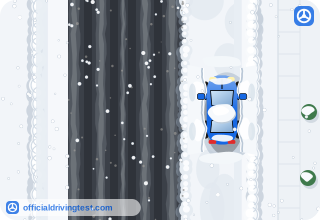
- Stay with your vehicle
- Walk to the nearest building
- Follow the road to find help
- Walk along the highway to flag down a driver
Show answer
Correct answer: Stay with your vehicle
The manual says to stay with your vehicle because most deaths occur when people leave, become lost and suffer prolonged exposure to the cold.
Source: Minnesota Driver’s Manual (June 2026), page 82
-
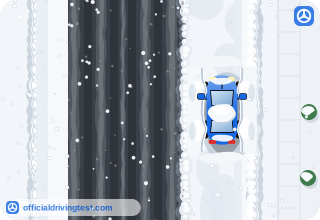
If you become stranded while traveling in cold weather, what should you attach to your radio antenna or door handle?
- A bright orange cloth
- A reflective vest
- A red flag
- A blue light
Show answer
Correct answer: A red flag
One of the steps for a stranded driver is to attach a red flag to the radio antenna or door handle.
Source: Minnesota Driver’s Manual (June 2026), page 82
-
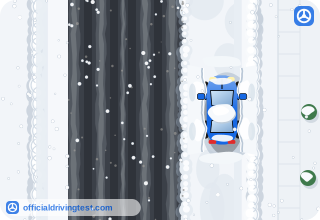
While stranded and running the engine for warmth, what should you keep clear of snow and debris?
- The tail lamps
- The exhaust pipe
- The windshield wipers
- The hood latch
Show answer
Correct answer: The exhaust pipe
A stranded driver should keep the exhaust pipe clear of snow and debris.
Source: Minnesota Driver’s Manual (June 2026), page 82
-
When stranded, how long is it recommended to run the engine each hour to charge the battery and warm the interior?
- About 30 minutes
- About 45 minutes
- About 2 minutes
- About 10 minutes
Show answer
Correct answer: About 10 minutes
Running the engine for about 10 minutes each hour to charge the battery and warm the interior is recommended.
Source: Minnesota Driver’s Manual (June 2026), page 82
-
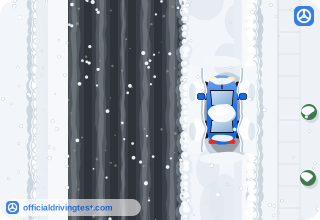
Why should you leave at least one window partially open when stranded in cold weather with the engine idling?
- To keep the windshield from fogging so rescuers can see inside
- To let in fresh air because occupants can suffer carbon monoxide poisoning
- To let the cold air keep everyone awake while waiting
- To let heat escape so the engine does not overheat
Show answer
Correct answer: To let in fresh air because occupants can suffer carbon monoxide poisoning
Occupants of an idling vehicle can suffer carbon monoxide poisoning if ventilation is not adequate, so leave at least one window partially open.
Source: Minnesota Driver’s Manual (June 2026), page 82
-
When stranded in cold weather, how many people in the vehicle should remain awake at all times?
- Every passenger
- Only the driver
- Two people
- At least one
Show answer
Correct answer: At least one
At least one person in the vehicle should remain awake at all times.
Source: Minnesota Driver’s Manual (June 2026), page 82
-
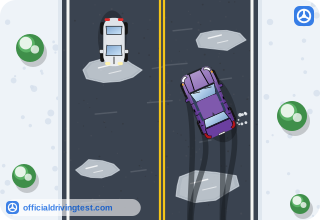
What causes a vehicle to skid?
- The engine runs at too high a speed
- The tires lose their grip on the road surface
- The brake fluid becomes too cold
- The steering wheel is held too tightly
Show answer
Correct answer: The tires lose their grip on the road surface
A vehicle skids when its tires lose their grip on the road surface.
Source: Minnesota Driver’s Manual (June 2026), page 82
-
What should you do if your vehicle skids?
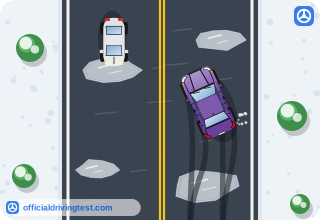
- Stay calm, take your foot off the accelerator and brake until you can turn in the desired direction
- Slam on the brakes and hold the steering wheel firmly in the direction in which the vehicle skids
- Press the accelerator to pull out of the skid and steer back toward the lane
- Stay calm and shift into neutral while steering sharply away from the skid
Show answer
Correct answer: Stay calm, take your foot off the accelerator and brake until you can turn in the desired direction
If your vehicle skids, stay calm, do not slam on the brakes, take your foot off the accelerator and brake until you can turn in the desired direction.
Source: Minnesota Driver’s Manual (June 2026), page 82
-
If your vehicle has anti-lock brakes, how should you brake when you need to stop quickly?
- Pump the brake pedal as you would regular brakes
- Tap the brake pedal lightly and let go several times
- Press down on the brake pedal and continue to steer
- Press the pedal once and take both hands off the wheel
Show answer
Correct answer: Press down on the brake pedal and continue to steer
With anti-lock brakes, do not pump them; press down on the brake pedal and continue to steer the vehicle until you regain control.
Source: Minnesota Driver’s Manual (June 2026), page 83
-
What happens when your tires hydroplane?
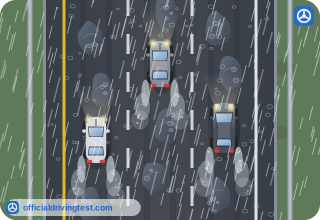
- They lose some grip but you can still brake and turn normally
- They heat up and the tire treads grip the water more firmly
- They lose all contact with the road and you cannot brake or steer
- They grip the road better because water cools the tread
Show answer
Correct answer: They lose all contact with the road and you cannot brake or steer
When tires hydroplane they lose all contact with the road, so you are unable to brake, accelerate or change direction.
Source: Minnesota Driver’s Manual (June 2026), page 83
-
What should you do if your tires begin to hydroplane?
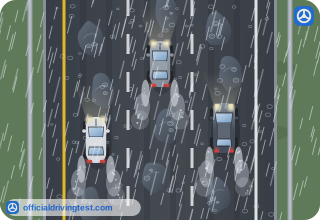
- Brake hard right away
- Turn the steering wheel sharply
- Shift into neutral and accelerate
- Take your foot off the gas pedal
Show answer
Correct answer: Take your foot off the gas pedal
If your tires begin to hydroplane, take your foot off the gas pedal.
Source: Minnesota Driver’s Manual (June 2026), page 83
-
What are possible warning signs before a blowout?
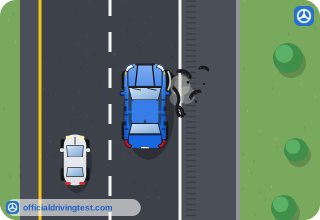
- A burning smell and thin smoke rising from beneath the hood
- A brake pedal that sinks slowly when you press it
- A thumping sound or the steering wheel pulling to the right or left
- A warning light that stays on after the engine starts
Show answer
Correct answer: A thumping sound or the steering wheel pulling to the right or left
Before a blowout you may hear a thumping sound or notice the steering wheel pulling to the right or left.
Source: Minnesota Driver’s Manual (June 2026), page 83
-
What should you do if you experience a blowout?
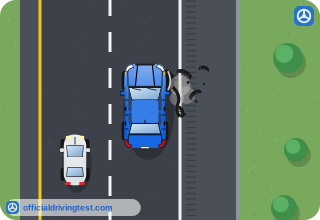
- Brake hard right away and steer toward the nearest shoulder to stop quickly
- Hold the steering wheel tightly, steer straight and slowly ease off the accelerator
- Turn the steering wheel sharply toward the shoulder and shift into neutral
- Release the steering wheel so the vehicle can straighten out by itself
Show answer
Correct answer: Hold the steering wheel tightly, steer straight and slowly ease off the accelerator
After a blowout, hold the steering wheel tightly, steer straight ahead and slowly ease your foot off the accelerator.
Source: Minnesota Driver’s Manual (June 2026), page 83
-
After a blowout, when should you brake?
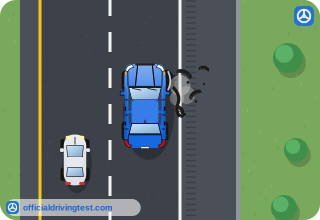
- Immediately, as hard as you can
- As soon as you hear the tire burst
- Only after you have pulled onto the shoulder
- Not until the vehicle is back under your control
Show answer
Correct answer: Not until the vehicle is back under your control
The manual says not to brake until the vehicle is back under your control.
Source: Minnesota Driver’s Manual (June 2026), page 83
-
What should you do if the front wheels of your vehicle do not respond when you turn the steering wheel?
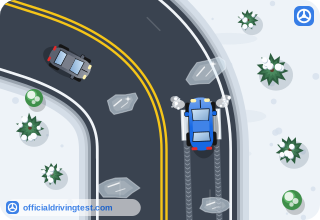
- Brake hard to stop the vehicle before it leaves the road
- Ease up on the accelerator and brake only to avoid a crash
- Shift into a lower gear and press the accelerator
- Turn the wheel sharply back and forth to regain control
Show answer
Correct answer: Ease up on the accelerator and brake only to avoid a crash
With steering failure, ease up on the accelerator and do not brake unless it is necessary to avoid a crash.
Source: Minnesota Driver’s Manual (June 2026), page 84
-
If you must brake after your steering fails, how should you apply the brake?
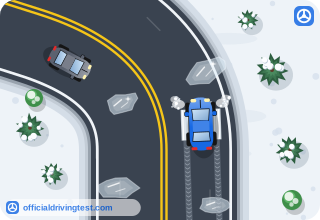
- Suddenly
- Repeatedly in short bursts
- As hard as possible
- Gently
Show answer
Correct answer: Gently
If you must apply the brake, do so gently, because braking suddenly or shifting gears may throw the vehicle off balance and out of control.
Source: Minnesota Driver’s Manual (June 2026), page 84
-
What is a sign that your vehicle’s brakes may be failing?
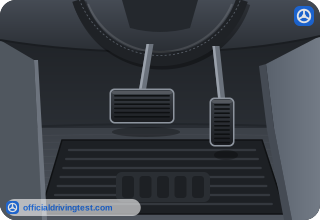
- A brake pedal that sinks slowly when pressure is applied
- A brake pedal that feels very hard when pressed
- A steering wheel that pulls to one side when you drive
- A thumping sound that gets faster as you speed up
Show answer
Correct answer: A brake pedal that sinks slowly when pressure is applied
A brake pedal that sinks slowly when pressure is applied is a sign the brakes may be failing.
Source: Minnesota Driver’s Manual (June 2026), page 84
-
If your brake pedal suddenly sinks all the way to the floor, what should you try first?
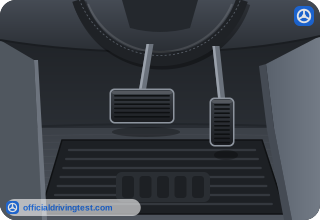
- Slowly applying the emergency/parking brake
- Shifting into neutral right away
- Pumping the pedal to build pressure
- Turning off the ignition
Show answer
Correct answer: Pumping the pedal to build pressure
If the brake pedal sinks to the floor, try pumping the pedal to build pressure; if that does not work, slowly apply the emergency/parking brake.
Source: Minnesota Driver’s Manual (June 2026), page 84
-
Why should you apply the emergency/parking brake slowly if your brakes fail?
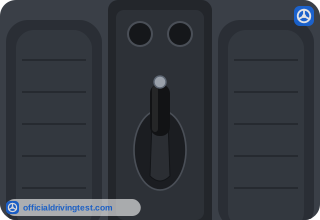
- Applying it quickly could make the brake lights go out
- Applying it too hard could lock the front wheels at once
- Applying it too fast could cause the engine to stall
- Applying it too abruptly could throw the vehicle into a skid
Show answer
Correct answer: Applying it too abruptly could throw the vehicle into a skid
Applying the brake too abruptly could throw the vehicle into a skid, and the emergency/parking brake engages only the rear brakes.
Source: Minnesota Driver’s Manual (June 2026), page 84
-
Which brakes does the emergency/parking brake engage?
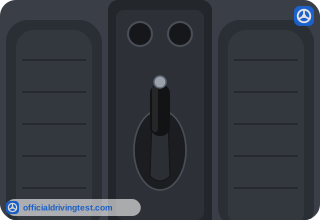
- Only the rear brakes
- Only the front brakes
- All four brakes
- The brakes on the left side
Show answer
Correct answer: Only the rear brakes
The emergency/parking brake engages only the rear brakes.
Source: Minnesota Driver’s Manual (June 2026), page 84
-
If your brakes fail and road conditions allow you to coast to a stop, what should you do?
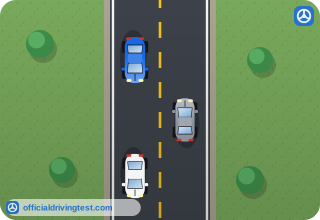
- Shift into neutral and let the vehicle coast to a stop on its own
- Turn off the ignition and steer to the shoulder
- Shift into a lower gear and continue to downshift as you slow down
- Shift into reverse once your speed has dropped
Show answer
Correct answer: Shift into a lower gear and continue to downshift as you slow down
Shift your car into a lower gear and continue to downshift as you decelerate until you can safely pull over and stop.
Source: Minnesota Driver’s Manual (June 2026), page 84
-
If your wheels drift onto the shoulder of the road, what should you do?
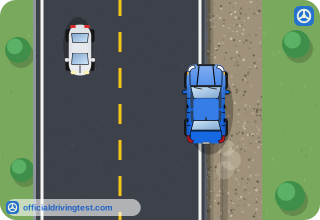
- Swerve back onto the pavement right away
- Stay on the shoulder and slowly release the gas pedal
- Brake hard to stop on the shoulder
- Steer sharply back onto the pavement and speed up
Show answer
Correct answer: Stay on the shoulder and slowly release the gas pedal
Do not try to swerve back onto the pavement; stay on the shoulder, slowly release the gas pedal, and turn back after you have reduced your speed.
Source: Minnesota Driver’s Manual (June 2026), page 84
-
During which hours are deer most active?
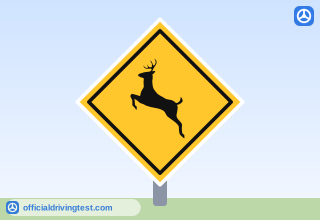
- From dusk to dawn
- From noon to sunset
- From midnight to early morning only
- From sunrise to midday
Show answer
Correct answer: From dusk to dawn
Deer are most active from dusk to dawn, so you should be especially alert during those times.
Source: Minnesota Driver’s Manual (June 2026), page 84
-
What should you do if you see the reflection of your headlights in the eyes of deer at the side of the road?
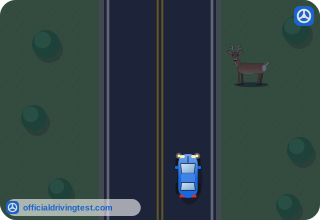
- Turn off your headlights so the deer stay calm
- Speed up to pass the deer before they move
- Slow down, blow the horn and be ready to stop
- Flash your high beams and keep your speed
Show answer
Correct answer: Slow down, blow the horn and be ready to stop
If you see such a reflection, slow down, blow the horn and be ready to stop.
Source: Minnesota Driver’s Manual (June 2026), page 84
-
What should you remember when you see one deer near the road?
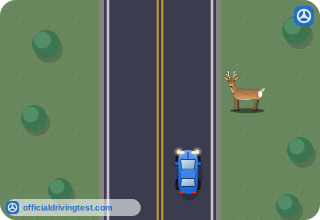
- A single deer will not cross in front of you
- Always watch for more than one deer
- Deer cross only in rural settings
- Deer cross only at marked crossings
Show answer
Correct answer: Always watch for more than one deer
The manual says to always watch for more than one deer, and that deer may cross anywhere, anytime.
Source: Minnesota Driver’s Manual (June 2026), page 84
-
What should you do if a vehicle is traveling toward you in your lane?
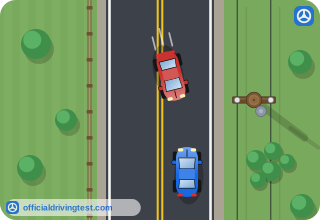
- Move to the left lane and go around the vehicle
- Stop in the middle of your lane
- Speed up to pass it quickly
- Move to the right and do not use the left lane
Show answer
Correct answer: Move to the right and do not use the left lane
If a vehicle is traveling toward you in your lane, move to the right; the driver may return to the correct lane and be in your path if you use the left lane.
Source: Minnesota Driver’s Manual (June 2026), page 84
-
What may help a sleepy or distracted driver who is coming toward you in your lane become alert?
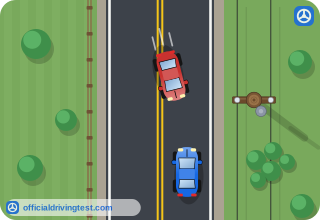
- Turning on your hazard warning lights and slowing
- Sounding your horn and flashing your headlights
- Slowing to a stop in the lane
- Moving into the left lane
Show answer
Correct answer: Sounding your horn and flashing your headlights
Sounding your horn and flashing your headlights may help a sleepy or distracted driver become alert.
Source: Minnesota Driver’s Manual (June 2026), page 84
-
Another driver tries to pass you on a two-lane road and is nearly in position to move back into the right lane. What should you do?
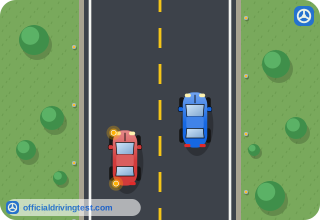
- Speed up and stay beside the passing vehicle so it cannot cut in
- Move to the left to block the passing vehicle
- Brake hard and stop in your lane
- Slow down and let the driver complete the pass as quickly as possible
Show answer
Correct answer: Slow down and let the driver complete the pass as quickly as possible
If the passing vehicle is nearly in position to move back into the right lane, slow down and allow the driver to complete the pass as quickly as possible.
Source: Minnesota Driver’s Manual (June 2026), page 84
-
A passing vehicle must drop back behind you on a two-lane road. What should you do?
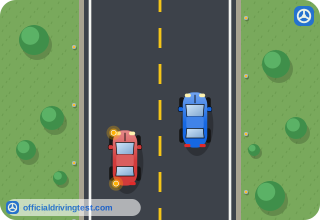
- Speed up so there is adequate room for it to move into the lane behind you
- Slow down so the vehicle can move back into the lane ahead of you
- Stay at your speed and sound your horn
- Move to the left lane and let it pass
Show answer
Correct answer: Speed up so there is adequate room for it to move into the lane behind you
If the passing vehicle must drop back, speed up to make sure there is adequate room for it to move into the lane behind you.
Source: Minnesota Driver’s Manual (June 2026), page 84
-
A crash seems likely because a passing vehicle cannot complete its pass. What should you do if the right shoulder is wide enough for your vehicle?
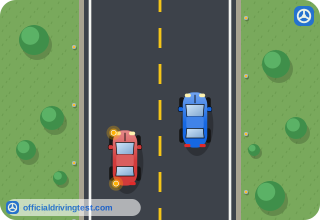
- Stay in your lane, brake hard and flash your headlights at the passing driver
- Move left to give the passing vehicle more room
- Move quickly to the right and let the passing vehicle into your lane
- Speed up and stay on the pavement
Show answer
Correct answer: Move quickly to the right and let the passing vehicle into your lane
If a crash seems likely and the right shoulder is wide enough for your vehicle, quickly move to the right and allow the passing vehicle to move into your lane.
Source: Minnesota Driver’s Manual (June 2026), page 84
-
What should you do if you see a flooded roadway ahead?
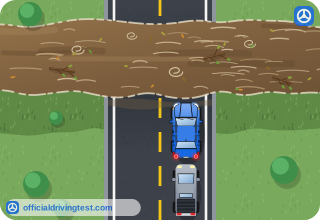
- Drive through slowly in a low gear
- Turn around and find another route
- Follow the car ahead through the water
- Wait in the road until the water goes down
Show answer
Correct answer: Turn around and find another route
Do not drive through flooded areas; if you see a flooded roadway ahead, turn around and find another route.
Source: Minnesota Driver’s Manual (June 2026), page 85
-
How much water will reach the bottom of most passenger cars, causing loss of control or possible stalling?
- 6 inches
- 3 inches
- 12 inches
- 18 inches
Show answer
Correct answer: 6 inches
6 inches of water will reach the bottom of most passenger cars, causing loss of control or possible stalling.
Source: Minnesota Driver’s Manual (June 2026), page 85
-
How much moving water can carry away most vehicles, including SUVs and pickup trucks?
- 1 foot
- 3 feet
- 2 feet
- 4 feet
Show answer
Correct answer: 2 feet
2 feet of moving water can carry away most vehicles, including SUVs and pickup trucks.
Source: Minnesota Driver’s Manual (June 2026), page 85
-
Why should you not attempt to cross a flooded road even if the water appears shallow?
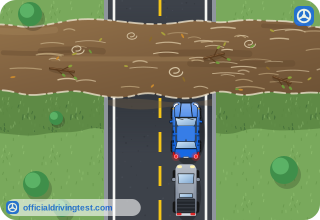
- Shallow water always hides large objects that can puncture the tires
- Water can hide dips or damage roadways by washing away the surface
- Shallow water makes the road surface too slippery to stop on
- Shallow water floods the exhaust system and stops the engine at once
Show answer
Correct answer: Water can hide dips or damage roadways by washing away the surface
Even if the water appears shallow, water can hide dips or damage roadways by washing away the surface.
Source: Minnesota Driver’s Manual (June 2026), page 85
-
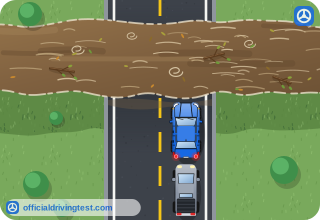
If there is no other route around a flooded road, what should you do?
- Drive across slowly in the middle of the road
- Park in the water and wait for help
- Wait where you are until the water reaches the road
- Proceed to higher ground and wait for the waters to subside
Show answer
Correct answer: Proceed to higher ground and wait for the waters to subside
If there is no other route, proceed to higher ground and wait for the waters to subside.
Source: Minnesota Driver’s Manual (June 2026), page 85
-
For how long will most vehicles float on the surface of the water?
- 5 to 10 seconds
- 30 to 60 seconds
- 2 to 3 minutes
- 10 to 15 minutes
Show answer
Correct answer: 30 to 60 seconds
Most vehicles will float on the surface of the water for 30 to 60 seconds.
Source: Minnesota Driver’s Manual (June 2026), page 85
-
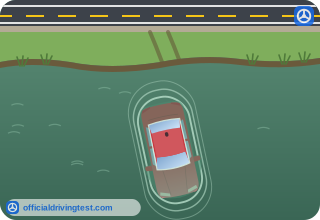
If your vehicle enters deep water, what should you do?
- Stay inside and call for help until the vehicle stops floating
- Wait for the vehicle to fill with water before trying the doors
- Roll up the windows and stay in the car until help arrives
- Get out immediately, through an open window if possible
Show answer
Correct answer: Get out immediately, through an open window if possible
If your vehicle enters deep water, get out of the vehicle immediately, and if possible exit through open windows before the water reaches the window level.
Source: Minnesota Driver’s Manual (June 2026), page 85
-
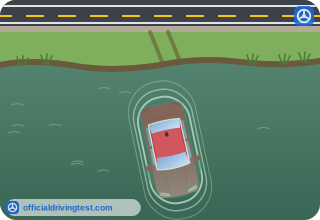
When can the doors of a submerged vehicle be opened?
- When the water pressure inside equals the pressure outside
- As soon as the vehicle starts to sink
- Only after the windows have been rolled up
- When the front end of the car has stopped sinking
Show answer
Correct answer: When the water pressure inside equals the pressure outside
Vehicle doors cannot be opened until the water pressure inside the car is equal to that outside.
Source: Minnesota Driver’s Manual (June 2026), page 85
-
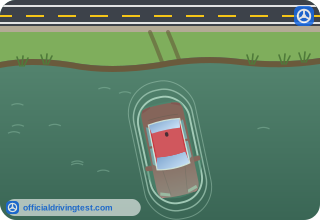
Which end of a vehicle sinks first when it is submerged, and what may the rear passenger compartment provide?
- The rear end, because of the weight of the trunk, and an air pocket
- The front end, because of the weight of the engine, and a dry exit
- The front end, because of the weight of the engine, and an air pocket
- The rear end, because of the weight of the trunk, and a dry exit
Show answer
Correct answer: The front end, because of the weight of the engine, and an air pocket
The weight of the engine causes the front end of the car to sink first, and the rear passenger compartment may provide an air pocket while you plan your escape.
Source: Minnesota Driver’s Manual (June 2026), page 85
-
If you see smoke rising from beneath the hood of your vehicle, what should you do?
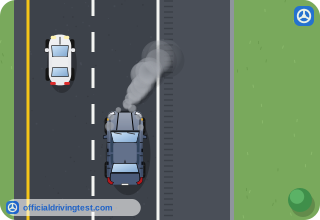
- Open the hood to see where the smoke is coming from
- Keep driving to the nearest service station
- Pour water on the engine to cool it down
- Pull off the road, turn off the ignition and get out
Show answer
Correct answer: Pull off the road, turn off the ignition and get out
If you notice smoke rising from beneath the hood, pull off the road, turn off the ignition and exit the vehicle immediately.
Source: Minnesota Driver’s Manual (June 2026), page 85
-
Why should you not use water to put out a vehicle fire?
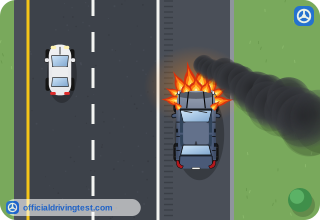
- It will actually spread the blaze
- It will damage the vehicle’s electrical system
- It will not reach the source of the fire
- It will make the smoke more dangerous to breathe
Show answer
Correct answer: It will actually spread the blaze
The manual says not to use water to put out the fire because this will actually spread the blaze.
Source: Minnesota Driver’s Manual (June 2026), page 85
-
When your engine becomes hot, what should you do first?
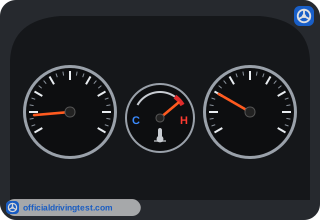
- Pull over and open the radiator cap
- Turn the heater off and turn the air conditioning up high
- Turn off unnecessary equipment, such as the air conditioning
- Pour cold water on the engine
Show answer
Correct answer: Turn off unnecessary equipment, such as the air conditioning
When your engine becomes hot, turn off any unnecessary vehicle equipment, such as the air conditioning; if the temperature is still too high, turning on the heater helps draw hot air away.
Source: Minnesota Driver’s Manual (June 2026), page 85
-
What should you do if the engine temperature suddenly increases or steam rises from the engine?
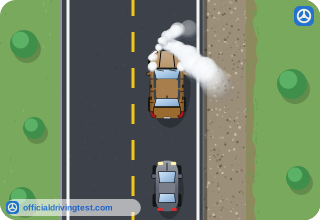
- Turn on the heater and keep driving to the next exit
- Pull over, stop and turn off the ignition immediately
- Open the hood while you keep the engine running
- Turn on the air conditioning and slow down
Show answer
Correct answer: Pull over, stop and turn off the ignition immediately
If the engine temperature suddenly increases or steam rises from the engine, pull over to the side of the road, stop the vehicle and turn off the ignition immediately.
Source: Minnesota Driver’s Manual (June 2026), page 85
-
If your headlights suddenly go out, what might give you enough light to guide you off the road?
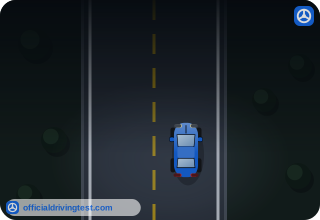
- Parking lights, hazard lights or turn signals
- The interior dome light and the glove box light
- The high beams
- The fog lights
Show answer
Correct answer: Parking lights, hazard lights or turn signals
If your headlights go out, try your parking lights, hazard warning lights or turn signals; one of them may give you enough light to guide you off the road.
Source: Minnesota Driver’s Manual (June 2026), page 86
-
If all your lights fail on a dark, deserted road, what should you do?
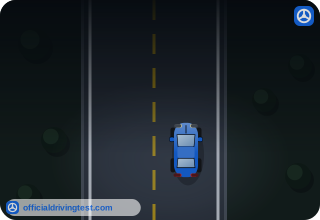
- Stop right where you are in the lane
- Pull onto the shoulder at once and keep driving slowly
- Slow down and keep on the pavement until you can reach the shoulder
- Speed up to reach a lighted area as soon as you possibly can
Show answer
Correct answer: Slow down and keep on the pavement until you can reach the shoulder
If all lights fail on a dark, deserted road, slow down and keep your vehicle on the pavement until you can move safely onto the shoulder.
Source: Minnesota Driver’s Manual (June 2026), page 86
-
If your windshield wipers suddenly fail in heavy rain or snow, what should you do?
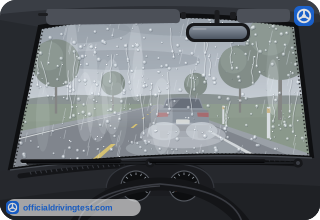
- Brake suddenly to stop in the lane of traffic
- Slow down and activate your hazard warning lights
- Speed up to leave the storm behind
- Turn on your high beams and continue
Show answer
Correct answer: Slow down and activate your hazard warning lights
If your wipers fail in heavy rain or snow, slow down and activate your hazard warning lights, and do not brake suddenly if other vehicles are behind you.
Source: Minnesota Driver’s Manual (June 2026), page 86
-
If the hood of your vehicle suddenly opens and blocks your view, how might you be able to see the road?
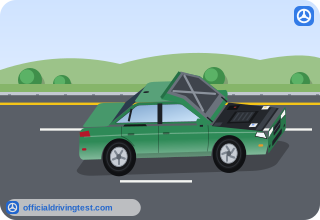
- By opening the door and leaning out of the vehicle
- By turning on the windshield wipers
- By slowing to a stop in your lane
- Through the space between the hood and the dashboard
Show answer
Correct answer: Through the space between the hood and the dashboard
You may be able to see through the space between the hood and the dashboard; if not, roll down the window and lean over to look past the side of the hood.
Source: Minnesota Driver’s Manual (June 2026), page 86
-
If your gas pedal sticks, what might free it?
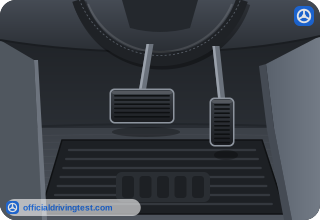
- Pressing the brake and accelerator together
- Hooking your toe under the pedal and raising it
- Shifting into park while driving
- Turning off the ignition
Show answer
Correct answer: Hooking your toe under the pedal and raising it
If your gas pedal sticks, you may be able to free it by hooking your toe under the pedal and raising it.
Source: Minnesota Driver’s Manual (June 2026), page 86
-
If you cannot free a stuck gas pedal, what should you do next?
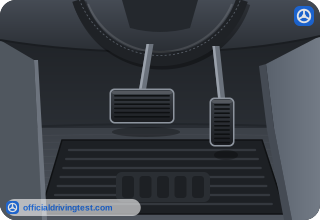
- Turn off the ignition and let the vehicle coast
- Shift into reverse while steering to the shoulder
- Pump the accelerator until the pedal comes loose
- Apply the brakes and shift into neutral
Show answer
Correct answer: Apply the brakes and shift into neutral
If hooking your toe under the pedal does not work, apply the brakes and shift into neutral to disengage the engine, then steer to the shoulder.
Source: Minnesota Driver’s Manual (June 2026), page 86
-
After a gas pedal sticks, what should you do if the shoulder is not paved?
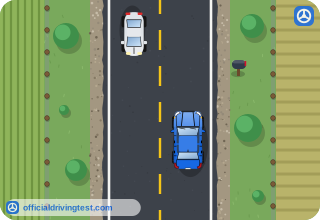
- Switch on your hazard lights and keep steering straight until you can pull over
- Steer onto the unpaved shoulder at once and stop as quickly as you can
- Stop in the lane and wait for help
- Turn off the ignition and steer onto the shoulder
Show answer
Correct answer: Switch on your hazard lights and keep steering straight until you can pull over
If the shoulder is not paved, switch on your hazard lights and continue steering straight until you can safely pull over to the shoulder.
Source: Minnesota Driver’s Manual (June 2026), page 86
-
If your car comes into contact with a utility pole, wire or power box, what should you do?
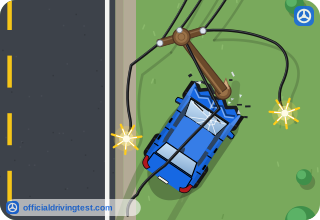
- Get out and move away at once
- Get out and check for damage
- Stay in your vehicle and call 911
- Stay in your vehicle and turn on the engine
Show answer
Correct answer: Stay in your vehicle and call 911
After contact with a utility pole, wire or power box, stay in your vehicle and call 911.
Source: Minnesota Driver’s Manual (June 2026), page 86
-
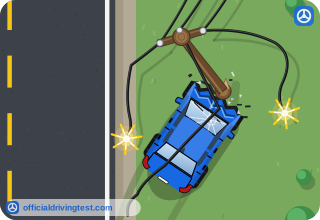
After your vehicle hits a utility pole or power box, when should you get out of the vehicle?
- As soon as the vehicle stops moving
- Once the engine has been turned off
- After a passerby says it is safe
- Only if it is on fire
Show answer
Correct answer: Only if it is on fire
You should only get out of the vehicle if it is on fire.
Source: Minnesota Driver’s Manual (June 2026), page 86
-
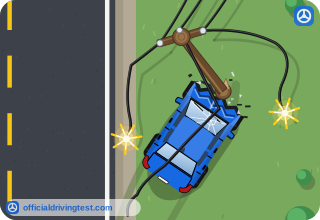
If you must get out of a vehicle that has touched a power line, how should you leave it?
- Jump with both feet together and shuffle your feet as you move away
- Step out with one foot at a time and run from the vehicle
- Hold onto the door and lower yourself to the ground slowly
- Climb out through a window and walk away on your toes
Show answer
Correct answer: Jump with both feet together and shuffle your feet as you move away
If you must get out, jump from the vehicle with both feet together and shuffle your feet on the ground as you move away from the scene.
Source: Minnesota Driver’s Manual (June 2026), page 86
-
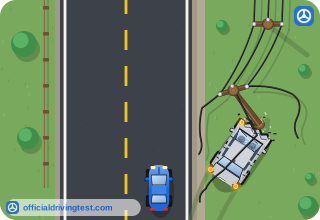
After a crash with a utility pole or power box, what should you always assume about the wires and equipment?
- That they are not live once the vehicle is turned off
- That they are safe if they are not sparking
- That they are electrified
- That they are safe if they are lying on the ground
Show answer
Correct answer: That they are electrified
Always assume all wires and equipment are electrified.
Source: Minnesota Driver’s Manual (June 2026), page 86
-
What is the only cure for carbon monoxide poisoning?
- A cup of warm water
- A good supply of fresh air
- Rest in a warm place
- Leaving the engine idling
Show answer
Correct answer: A good supply of fresh air
The only cure for carbon monoxide poisoning is a good supply of fresh air.
Source: Minnesota Driver’s Manual (June 2026), page 86
-
Which of these are early symptoms of carbon monoxide poisoning?
- Sudden fatigue, headache, dizziness and nausea
- Fever, coughing and sore throat
- Sweating, chest pain and blurred vision
- Thirst, muscle cramps and a stiff neck
Show answer
Correct answer: Sudden fatigue, headache, dizziness and nausea
Early symptoms of carbon monoxide poisoning include sudden fatigue, headache, dizziness and nausea.
Source: Minnesota Driver’s Manual (June 2026), page 86
-
If you notice symptoms of carbon monoxide poisoning, what should you do?
- Close the windows and turn on the heater to warm up
- Turn on the air conditioning and keep driving
- Open the windows, turn off the ignition and get out as soon as possible
- Rest in the vehicle with the engine running until the symptoms pass
Show answer
Correct answer: Open the windows, turn off the ignition and get out as soon as possible
If you have carbon monoxide symptoms, open the windows, turn off the ignition, and get out of the vehicle or garage as soon as possible.
Source: Minnesota Driver’s Manual (June 2026), page 86
-
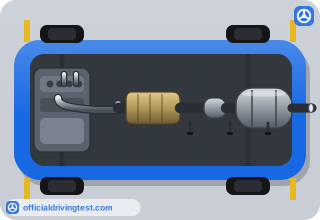
What should you do if you suspect your vehicle’s exhaust system is leaking?
- Drive with all windows closed
- Have the exhaust system inspected
- Idle the vehicle in the garage
- Wait until winter to check it
Show answer
Correct answer: Have the exhaust system inspected
The manual says to have the vehicle’s exhaust system inspected if you suspect it is leaking.
Source: Minnesota Driver’s Manual (June 2026), page 86
-
When does carbon monoxide poisoning occur most frequently?
- During summer months, when engines run much hotter
- During spring, when roads are wet
- During heavy rain, when visibility is poor
- During winter months, when vehicle windows tend to be closed
Show answer
Correct answer: During winter months, when vehicle windows tend to be closed
Carbon monoxide poisoning occurs most frequently during winter months when vehicle windows tend to be closed.
Source: Minnesota Driver’s Manual (June 2026), page 87
-
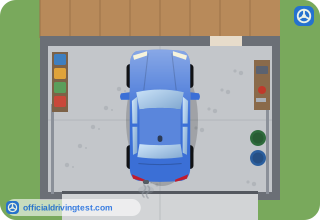
In cold temperatures, what can happen to carbon monoxide in a garage even when the garage door is open completely?
- It always clears out within a few minutes
- It can get trapped inside the garage
- It rises and leaves through the roof
- It is pushed out by the cold air
Show answer
Correct answer: It can get trapped inside the garage
When temperatures are cold, carbon monoxide can get trapped inside the garage even when the garage door is open completely.
Source: Minnesota Driver’s Manual (June 2026), page 87
-
Where is a safer place to warm up a vehicle than a garage?
- With the garage door half open
- Inside the garage with the door open
- Next to the garage wall
- In the driveway
Show answer
Correct answer: In the driveway
Avoid idling a vehicle in a garage; a safer place to warm up a vehicle is in the driveway.
Source: Minnesota Driver’s Manual (June 2026), page 87
-
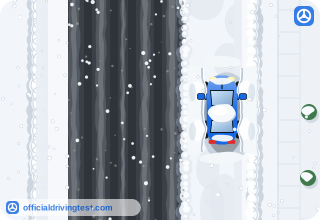
To reduce the risk of carbon monoxide poisoning, what should you avoid when your vehicle is stuck in snow or mud?
- Idling the vehicle
- Opening the windows
- Turning on the heater
- Keeping the exhaust clear
Show answer
Correct answer: Idling the vehicle
To reduce the risk of carbon monoxide poisoning, avoid idling a vehicle when stuck in the snow or mud.
Source: Minnesota Driver’s Manual (June 2026), page 87
-
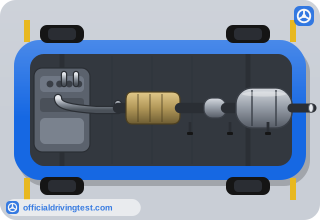
To reduce the risk of carbon monoxide poisoning, what should you make sure about your vehicle’s exhaust system?
- That it is checked once a year
- That it is covered when parked in a garage
- That it does not leak and is not blocked
- That it is cold before you start the engine
Show answer
Correct answer: That it does not leak and is not blocked
Make sure your vehicle’s exhaust system does not leak and is not blocked.
Source: Minnesota Driver’s Manual (June 2026), page 87