Idaho: Emergencies
Car trouble, skids, blowouts, running off the road, flash floods, winter emergencies and what to do after a crash. Split into 5 shorter tests so you're not stuck in one long quiz.
Independent educational site · not affiliated with any government agency or DMV
Choose a part
Emergencies — Part 1
Questions in this part include: “In the crash prevention formula, what does the manual say to avoid when scanning?”
StartEmergencies — Part 2
Questions in this part include: “How little fast-moving water can knock you off your feet?”
StartEmergencies — Part 3
Questions in this part include: “Where does skidding occur most often?”
StartEmergencies — Part 4
Questions in this part include: “When may accelerating soften the impact or prevent a crash?”
StartEmergencies — Part 5
Questions in this part include: “What does Idaho’s Good Samaritan Law protect you from if you help an injured person in good faith?”
StartAll 86 Emergencies questions with answers
Choose a part above to take a practice test, or study every question and answer here.
Show the questions and answersHide the questions
-
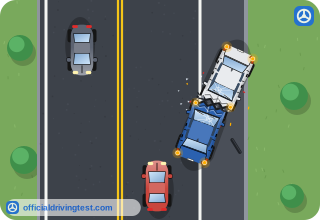
What does Idaho law require you to do when you are involved in a crash?
- Leave if the damage looks minor
- Stop
- Drive to the nearest county office first
- Keep driving and report it later
Show answer
Correct answer: Stop
Idaho law requires you to stop when you are involved in a crash.
Source: Idaho Driver's Handbook (July 2026), page 70 · Open this page in the manual (Manual page 70)
-
In the crash prevention formula, what does the manual say to avoid when scanning?
- Moving your eyes from side to side
- Reading the road ahead
- Checking traffic behind you
- A fixed, straight-ahead stare
Show answer
Correct answer: A fixed, straight-ahead stare
Scanning means keeping your eyes moving and learning to read the road, not staring straight ahead.
Source: Idaho Driver's Handbook (July 2026), page 89 · Open this page in the manual (Manual page 89)
-
In the crash prevention formula, what does the "Identify" step mean?
- Name each traffic sign you pass
- Check your vehicle for mechanical problems
- Read the license plates of vehicles ahead
- Scan ahead for potential hazards
Show answer
Correct answer: Scan ahead for potential hazards
Identify means scanning ahead for potential hazards such as a vehicle, pedestrian, animal or situation.
Source: Idaho Driver's Handbook (July 2026), page 90 · Open this page in the manual (Manual page 90)
-
After spotting a potential hazard, what does the manual say it is safest to do in the "Predict" step?
- Predict that nothing will happen
- Predict that the hazard will go away
- Predict the worst
- Predict what other drivers want you to do
Show answer
Correct answer: Predict the worst
After spotting a hazard, you predict what will happen, and it is safest to predict the worst.
Source: Idaho Driver's Handbook (July 2026), page 90 · Open this page in the manual (Manual page 90)
-
What does the manual say is the key to defensive driving?
- Making a sound decision ahead of time
- Driving faster than other traffic
- Relying on other drivers' signals
- Using the horn to warn others
Show answer
Correct answer: Making a sound decision ahead of time
The key to defensive driving is making a sound decision ahead of time rather than reacting at the last second.
Source: Idaho Driver's Handbook (July 2026), page 90 · Open this page in the manual (Manual page 90)
-
What is the final step of the crash prevention formula?
- Scan the road for the next potential hazard
- Look behind you for tailgating vehicles
- Predict the worst outcome of the hazard
- Execute your decision smoothly and predictably
Show answer
Correct answer: Execute your decision smoothly and predictably
The final step is to execute your decision in a smooth, predictable manner in time to avoid a crash.
Source: Idaho Driver's Handbook (July 2026), page 90 · Open this page in the manual (Manual page 90)
-
What number do you dial for Idaho travel information?
- 511
- 411
- 211
- 311
Show answer
Correct answer: 511
The manual says to dial 511 for up-to-date travel information.
Source: Idaho Driver's Handbook (July 2026), page 107 · Open this page in the manual (Manual page 107)
-
Which information is available through Idaho's 511 traveler services?
- Vehicle registration renewal status
- Driver's license test appointments
- Weather-related road conditions
- Insurance verification for your vehicle
Show answer
Correct answer: Weather-related road conditions
The 511 service gives up-to-date information on emergency road closures, roadwork projects, tourism, traffic incidents and delays, and weather-related road conditions.
Source: Idaho Driver's Handbook (July 2026), page 107 · Open this page in the manual (Manual page 107)
-
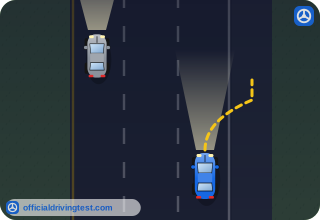
If you must park on a highway shoulder at night, what should you turn on?
- Your high beams and your fog lights together
- Your low beams and nothing else
- Your emergency flashers or parking lights
- Your interior dome light and radio
Show answer
Correct answer: Your emergency flashers or parking lights
The manual says to turn on your emergency flashers or parking lights if you must park on a highway shoulder at night.
Source: Idaho Driver's Handbook (July 2026), page 109 · Open this page in the manual (Manual page 109)
-
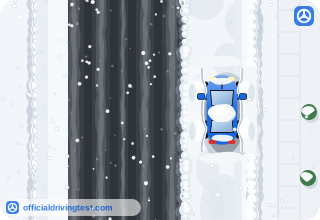
If you must abandon your car in winter conditions, where should you leave it?
- Right at the edge of the traffic lane so it is easy to see
- As far off the road as possible
- In the lane with the emergency flashers on
- Under a bridge or overpass out of the snow
Show answer
Correct answer: As far off the road as possible
Abandoned cars can interfere with road clearing and endanger snow removal equipment and its operators if they are hidden or buried by snow.
Source: Idaho Driver's Handbook (July 2026), page 110 · Open this page in the manual (Manual page 110)
-
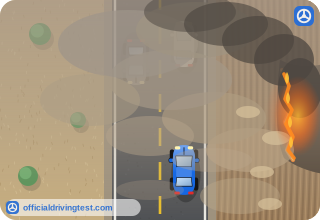
In fog, smoke, dust or rain, what should you do if conditions get too bad to drive?
- Creep along with your emergency flashers on
- Keep following the taillights ahead
- Stay in your lane and slow to a crawl
- Pull off the road and stop
Show answer
Correct answer: Pull off the road and stop
If conditions get too bad, pull off the road and stop; do not creep along.
Source: Idaho Driver's Handbook (July 2026), page 111 · Open this page in the manual (Manual page 111)
-
At about what speed may tires lose all contact with a wet road and hydroplane?
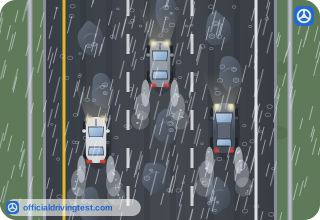
- 55 miles per hour
- 35 miles per hour
- 25 miles per hour
- 45 miles per hour
Show answer
Correct answer: 55 miles per hour
At 55 miles per hour, the tires may lose all contact with the road and begin to hydroplane.
Source: Idaho Driver's Handbook (July 2026), page 111 · Open this page in the manual (Manual page 111)
-
What happens when tires hydroplane?
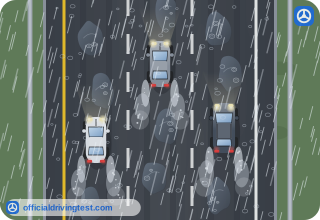
- The tires lock up and the engine stalls until you slow down
- Only the steering is lost; braking works normally
- They ride on a film of water and you cannot brake, accelerate or turn
- The brakes work better because the water cools them
Show answer
Correct answer: They ride on a film of water and you cannot brake, accelerate or turn
When tires ride on a film of water like water skis, you cannot brake, accelerate or turn.
Source: Idaho Driver's Handbook (July 2026), page 111 · Open this page in the manual (Manual page 111)
-
Which action helps reduce the chances of hydroplaning?
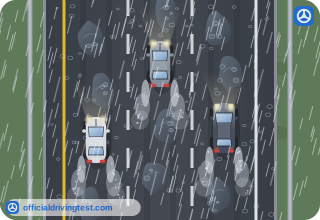
- Speeding up through standing water
- Keeping your tires properly inflated
- Lowering tire pressure for more grip
- Keeping worn tires until the next service
Show answer
Correct answer: Keeping your tires properly inflated
The handbook lists keeping tires properly inflated as a way to reduce the chances of hydroplaning.
Source: Idaho Driver's Handbook (July 2026), page 111 · Open this page in the manual (Manual page 111)
-
When should you replace worn tires to reduce the chances of hydroplaning?
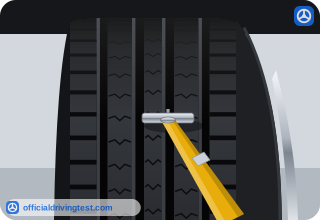
- Only when they go flat
- Once a year in the fall
- Only after a hydroplaning skid
- As soon as they become worn
Show answer
Correct answer: As soon as they become worn
The handbook says to replace tires as soon as they become worn.
Source: Idaho Driver's Handbook (July 2026), page 111 · Open this page in the manual (Manual page 111)
-
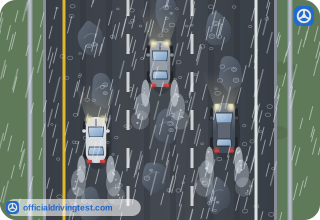
You think your car has started to hydroplane. What should you do?
- Brake hard and turn toward the shoulder to regain grip
- Press the gas pedal firmly to get through the water
- Steer sharply back and forth to regain grip
- Keep a steady speed straight ahead and slowly ease off the gas
Show answer
Correct answer: Keep a steady speed straight ahead and slowly ease off the gas
The handbook says to maintain a steady speed, keep moving straight, and slowly take your foot off the gas pedal.
Source: Idaho Driver's Handbook (July 2026), page 111 · Open this page in the manual (Manual page 111)
-
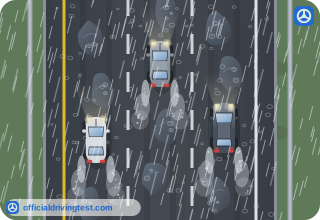
You must use the brakes while hydroplaning and your car has no anti-lock brakes. How should you brake?
- Press hard and hold the pedal down
- Pump them gently
- Stomp on the pedal once
- Use only the parking brake
Show answer
Correct answer: Pump them gently
If you must brake, pump the brakes gently unless your car has an anti-lock braking system.
Source: Idaho Driver's Handbook (July 2026), page 111 · Open this page in the manual (Manual page 111)
-
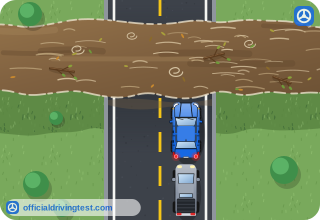
What causes flash floods?
- Slow, light rain that falls for several days
- Melting snow on the mountains only
- Intense rain that falls in a short amount of time
- Strong winds that blow across rivers
Show answer
Correct answer: Intense rain that falls in a short amount of time
Flash floods are caused by intense rain that falls in a short amount of time.
Source: Idaho Driver's Handbook (July 2026), page 112 · Open this page in the manual (Manual page 112)
-
When do flash floods generally occur in Idaho?
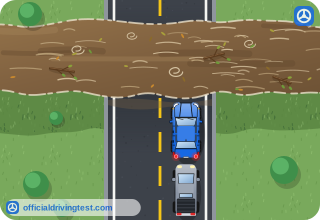
- During or right after a severe thunderstorm
- Only during the spring snow melt
- Only after several days of light rain
- Mostly during the coldest winter weeks
Show answer
Correct answer: During or right after a severe thunderstorm
Flash floods generally occur during or right after a severe thunderstorm.
Source: Idaho Driver's Handbook (July 2026), page 112 · Open this page in the manual (Manual page 112)
-
How little fast-moving water can knock you off your feet?
- Six inches
- Two inches
- Twelve inches
- Two feet
Show answer
Correct answer: Six inches
As little as six inches of fast moving water can knock you off your feet.
Source: Idaho Driver's Handbook (July 2026), page 112 · Open this page in the manual (Manual page 112)
-
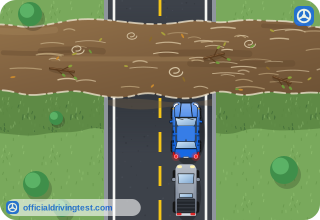
Fast-moving water of what depth can wash away a vehicle?
- Six inches
- Twelve inches
- Two feet
- Three inches
Show answer
Correct answer: Two feet
Fast-moving water two feet deep can wash away a vehicle.
Source: Idaho Driver's Handbook (July 2026), page 112 · Open this page in the manual (Manual page 112)
-
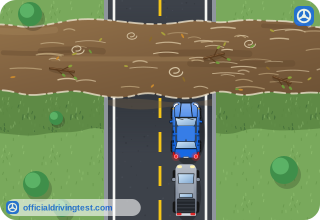
What should you do if the National Weather Service issues a Flash Flood Warning or you see water rising quickly?
- Wait for a second warning before moving
- Take action immediately
- Continue your trip but drive slowly
- Wait until the water reaches the road
Show answer
Correct answer: Take action immediately
The handbook says to take action immediately in either case.
Source: Idaho Driver's Handbook (July 2026), page 112 · Open this page in the manual (Manual page 112)
-
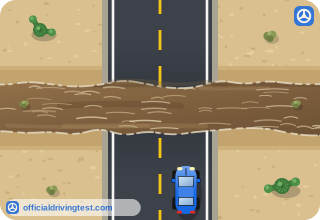
What should you do if you see a flooded roadway ahead?
- Drive through slowly in a low gear
- Follow a vehicle that is crossing it
- Cross where the water looks shallowest
- Turn around and find another route
Show answer
Correct answer: Turn around and find another route
The handbook says never to drive through flooded areas; turn around and find another route.
Source: Idaho Driver's Handbook (July 2026), page 112 · Open this page in the manual (Manual page 112)
-
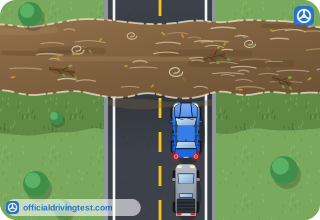
Why should you never drive through a flooded roadway?
- Flood water always stalls the engine at once
- Underwater roads are closed to traffic by law
- Traffic signals do not work in flood water
- Roads that are underwater may no longer be intact
Show answer
Correct answer: Roads that are underwater may no longer be intact
Roads that are underwater may no longer be intact.
Source: Idaho Driver's Handbook (July 2026), page 112 · Open this page in the manual (Manual page 112)
-
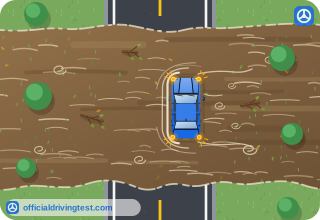
If your vehicle stalls in a flooded area, what should you do?
- Stay inside until the water stops rising
- Leave it immediately and seek higher ground
- Keep restarting the engine
- Close the windows and wait for the water to go down
Show answer
Correct answer: Leave it immediately and seek higher ground
Rapidly rising water may engulf the vehicle and sweep it away, so you should leave it immediately and seek higher ground.
Source: Idaho Driver's Handbook (July 2026), page 112 · Open this page in the manual (Manual page 112)
-
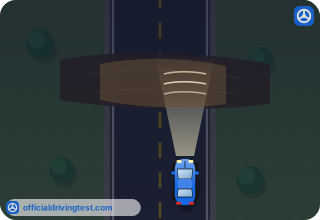
Why should you be very careful near flood-prone areas at night?
- Flood water is deeper at night
- Flash flood warnings are not issued at night
- It is harder to see flood dangers
- Rain always falls harder at night
Show answer
Correct answer: It is harder to see flood dangers
The handbook says to be very careful at night when it is harder to see flood dangers.
Source: Idaho Driver's Handbook (July 2026), page 112 · Open this page in the manual (Manual page 112)
-
During threatening weather, where should you not park your vehicle or camp?
- Along streams or dry stream beds
- On a hillside above any stream
- On high, safe ground
- Near a ridge top
Show answer
Correct answer: Along streams or dry stream beds
The handbook says not to park or camp along streams or dry stream beds during threatening conditions.
Source: Idaho Driver's Handbook (July 2026), page 112 · Open this page in the manual (Manual page 112)
-
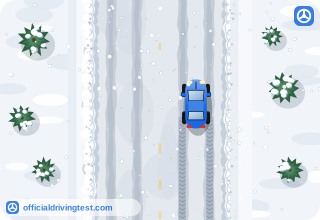
What is a small sack of sand or cat litter for in an emergency winter driving kit?
- Absorbing fuel spilled in the trunk
- Melting ice on the windshield
- Generating traction under the wheels
- Keeping the engine warm
Show answer
Correct answer: Generating traction under the wheels
The handbook lists a small sack of sand or cat litter for generating traction under the wheels.
Source: Idaho Driver's Handbook (July 2026), page 114 · Open this page in the manual (Manual page 114)
-
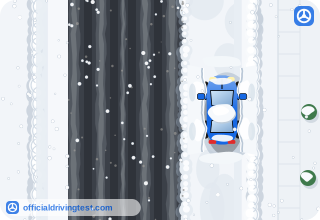
What is the brightly-colored scarf in an emergency winter driving kit for?
- To cover the exhaust pipe
- To attract attention in case of an emergency
- To wipe condensation from the windows
- To keep the battery warm
Show answer
Correct answer: To attract attention in case of an emergency
The kit includes a brightly-colored scarf to attract attention in case of an emergency.
Source: Idaho Driver's Handbook (July 2026), page 114 · Open this page in the manual (Manual page 114)
-
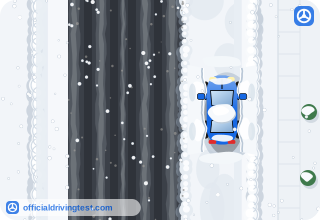
If you run your car for heat while stranded in snow, what must you make sure of?
- That the windows are fully closed
- That the headlights are on high beam
- That the hood is covered with a blanket
- That the exhaust pipe is clear of snow
Show answer
Correct answer: That the exhaust pipe is clear of snow
The handbook says to make sure your exhaust pipe is clear of snow if you run your car for heat.
Source: Idaho Driver's Handbook (July 2026), page 114 · Open this page in the manual (Manual page 114)
-
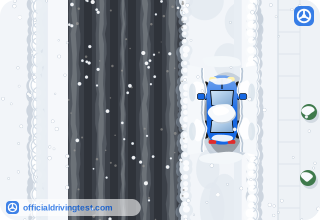
If available, what should you tie on the car antenna when stranded in snow?
- A reflective triangle
- A flashlight
- A small flag
- A scarf or bright cloth
Show answer
Correct answer: A scarf or bright cloth
The handbook says to tie a scarf or bright cloth on the antenna for snow crews to see.
Source: Idaho Driver's Handbook (July 2026), page 114 · Open this page in the manual (Manual page 114)
-
Which of these does the handbook list for an emergency winter driving kit?
- A tow chain
- Booster cables
- A portable stove
- A spare battery
Show answer
Correct answer: Booster cables
Booster cables are on the handbook list of items for an emergency winter driving kit.
Source: Idaho Driver's Handbook (July 2026), page 114 · Open this page in the manual (Manual page 114)
-
What should you tell someone before a winter trip?
- Your destination and the type of vehicle you drive
- Your license number, the vehicle registration and your insurance company
- Your route, estimated departure and arrival times, and where you will stay
- Your insurance company and policy number
Show answer
Correct answer: Your route, estimated departure and arrival times, and where you will stay
The handbook says to let someone know your travel plans, including estimated departure and arrival times, route, and where you will stay.
Source: Idaho Driver's Handbook (July 2026), page 115 · Open this page in the manual (Manual page 115)
-
If you get stranded while heavy snow is falling, what should you do?
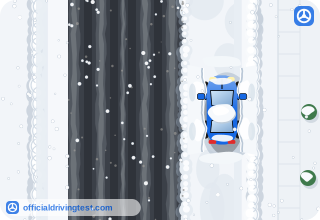
- Stay with your vehicle
- Leave the car and walk for help
- Leave the car and look for a shelter
- Walk along the road toward the nearest town
Show answer
Correct answer: Stay with your vehicle
The handbook says to stay with your vehicle if heavy snow is falling, because most deaths occur when people leave their car, get lost, and freeze.
Source: Idaho Driver's Handbook (July 2026), page 115 · Open this page in the manual (Manual page 115)
-
Whom should you call in a medical emergency in an area where the roads have not been plowed?
- The local or state police
- A tow truck company
- The county driver license office
- The National Weather Service
Show answer
Correct answer: The local or state police
The handbook says to call the local or state police, who work with search and rescue personnel and the Idaho Transportation Department.
Source: Idaho Driver's Handbook (July 2026), page 115 · Open this page in the manual (Manual page 115)
-
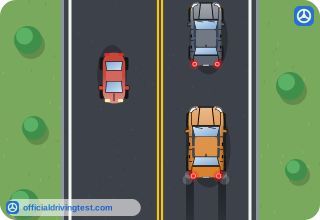
What can happen if you hit the brakes so hard that the wheels lock?
- The car stops in a shorter distance
- The brakes cool down faster
- You could lose control of your car
- The tires grip the road better
Show answer
Correct answer: You could lose control of your car
The handbook says never to hit the brakes so hard you lock the wheels or you could lose control of your car.
Source: Idaho Driver's Handbook (July 2026), page 115 · Open this page in the manual (Manual page 115)
-
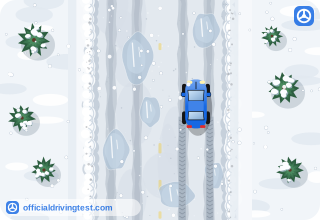
In most skids, which wheels lose their grip on the pavement?
- The front wheels
- The rear wheels
- The left-side wheels
- The right-side wheels
Show answer
Correct answer: The rear wheels
In most skids, the rear wheels lose their grip on the pavement and slide left or right.
Source: Idaho Driver's Handbook (July 2026), page 115 · Open this page in the manual (Manual page 115)
-
Where does skidding occur most often?
- On dry pavement at low speeds
- On wet gravel
- On new pavement
- On ice or packed snow
Show answer
Correct answer: On ice or packed snow
Skidding occurs most often on ice or packed snow.
Source: Idaho Driver's Handbook (July 2026), page 115 · Open this page in the manual (Manual page 115)
-
On dry pavement, when can a skid happen?
- Never; skids happen only on ice or wet roads
- Only when the tires are new
- Only when driving uphill
- When traveling at high speeds or stopping quickly
Show answer
Correct answer: When traveling at high speeds or stopping quickly
A skid can happen even on dry pavement when traveling at high speeds or stopping quickly.
Source: Idaho Driver's Handbook (July 2026), page 115 · Open this page in the manual (Manual page 115)
-
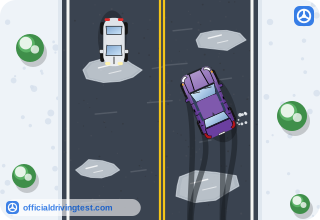
What should you do first when a skid starts?
- Hit the brake hard
- Take your foot off the gas pedal
- Steer away from the direction of the skid
- Shift the transmission into neutral
Show answer
Correct answer: Take your foot off the gas pedal
When a skid starts, do not hit the brake; immediately take your foot off the gas pedal, then steer in the direction of the skid.
Source: Idaho Driver's Handbook (July 2026), page 116 · Open this page in the manual (Manual page 116)
-
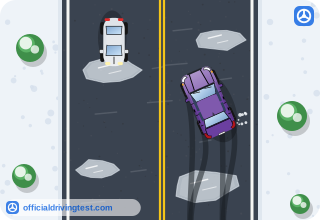
If your rear wheels slide to the right in a skid, which way should you turn your front wheels?
- Toward the left
- Straight ahead
- Toward the right
- Back and forth quickly
Show answer
Correct answer: Toward the right
You steer in the direction of the skid, so if the rear wheels slide right, turn the front wheels toward the right.
Source: Idaho Driver's Handbook (July 2026), page 116 · Open this page in the manual (Manual page 116)
-
How should you prepare for trouble before traveling on ice or snow?
- Practice stops and skid recovery in a safe place, ideally on private property
- Practice on an empty public highway at night when traffic is light
- Read about skid recovery but never practice it
- Practice only after you start to skid
Show answer
Correct answer: Practice stops and skid recovery in a safe place, ideally on private property
The handbook says to practice stops and skid recovery in a safe place, ideally on private property.
Source: Idaho Driver's Handbook (July 2026), page 116 · Open this page in the manual (Manual page 116)
-
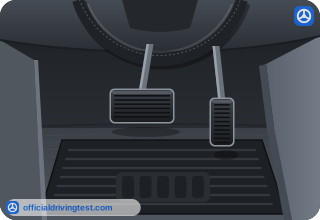
How should you apply the brake pedal during an emergency stop in a vehicle with ABS?
- Apply continuous pressure and do not pump it
- Pump it quickly several times as you slow down
- Tap it lightly and release it
- Press it once and then let off
Show answer
Correct answer: Apply continuous pressure and do not pump it
With ABS, apply continuous pressure on the brake pedal; pumping defeats the system, reduces its effectiveness and increases stopping distance.
Source: Idaho Driver's Handbook (July 2026), page 116 · Open this page in the manual (Manual page 116)
-
What does ABS allow you to keep during hard braking and on slippery surfaces?
- A shorter stopping distance than any other system
- Full braking power with no pedal pressure
- Full steering control
- The ability to pump the brakes yourself
Show answer
Correct answer: Full steering control
The ABS activates immediately, allowing you to retain full steering control during hard braking and on slippery surfaces.
Source: Idaho Driver's Handbook (July 2026), page 116 · Open this page in the manual (Manual page 116)
-
What does ABS do to your stopping distance?
- It always cuts the distance in half
- It does not decrease stopping distances
- It shortens the distance on every surface
- It doubles the distance on dry roads
Show answer
Correct answer: It does not decrease stopping distances
The handbook states that ABS does not decrease stopping distances.
Source: Idaho Driver's Handbook (July 2026), page 116 · Open this page in the manual (Manual page 116)
-
You feel a pulse through the brake pedal and hear a noise from the pump motor during hard braking with ABS. What does this mean?
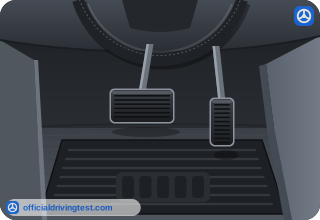
- The brakes are failing
- The tires are hydroplaning
- The ABS pump needs repair
- It is normal for ABS
Show answer
Correct answer: It is normal for ABS
The handbook says the noise and pulsation are normal for ABS and you should not remove your foot from the pedal.
Source: Idaho Driver's Handbook (July 2026), page 116 · Open this page in the manual (Manual page 116)
-
In a vehicle without ABS, you brake hard and feel the vehicle begin to skid. What should you do?
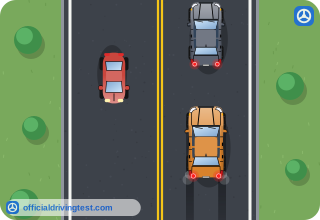
- Press the brake pedal harder
- Hold the pedal steady until the vehicle stops
- Quickly let up on the brake pedal
- Shift into reverse
Show answer
Correct answer: Quickly let up on the brake pedal
Locked brakes show up as a skid, so you quickly let up on the pedal.
Source: Idaho Driver's Handbook (July 2026), page 117 · Open this page in the manual (Manual page 117)
-
In a vehicle without ABS, what do you do as soon as the vehicle stops skidding?
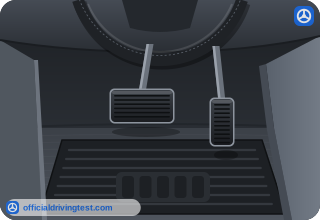
- Keep your foot off the brake pedal until the vehicle stops by itself
- Press the brake pedal again, repeating the press and release cycle if needed
- Turn off the engine and let the vehicle coast to a stop slowly
- Pull the parking brake and steer to the left side of the road
Show answer
Correct answer: Press the brake pedal again, repeating the press and release cycle if needed
The manual tells you to press down again and repeat the press and release cycle until the vehicle has stopped.
Source: Idaho Driver's Handbook (July 2026), page 117 · Open this page in the manual (Manual page 117)
-
If your car stalls on the highway and it is possible, what should you do with it?
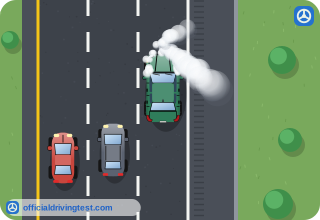
- Leave it in the lane so others see it
- Stop with the right wheels on the road
- Push it to the center of the road
- Pull all the way off the road
Show answer
Correct answer: Pull all the way off the road
The manual's first rule for a stalled car is to pull all the way off the road if possible.
Source: Idaho Driver's Handbook (July 2026), page 117 · Open this page in the manual (Manual page 117)
-
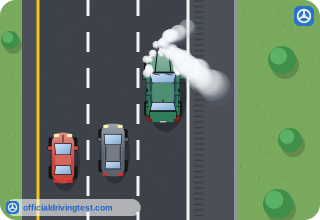
Which lights should you turn on when your car stalls on the highway?
- High beams
- Turn signals only
- Emergency flashers
- Fog lights
Show answer
Correct answer: Emergency flashers
The stalled-car rules include turning on your emergency flashers.
Source: Idaho Driver's Handbook (July 2026), page 117 · Open this page in the manual (Manual page 117)
-
Besides turning on your flashers, how can you let other drivers know your stalled car has a problem?
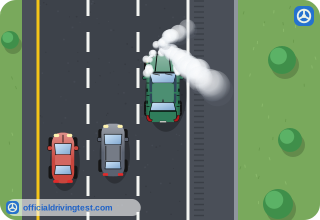
- Lift the hood
- Open the trunk lid
- Open all the doors
- Remove a front wheel
Show answer
Correct answer: Lift the hood
The manual says to lift the hood to let others know you have a problem.
Source: Idaho Driver's Handbook (July 2026), page 117 · Open this page in the manual (Manual page 117)
-
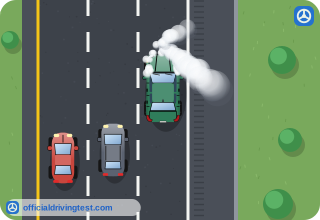
If your stalled car cannot be moved off the road, where should you stop it?
- Just over a hill, where oncoming traffic can see you well
- Just around a curve, so traffic has time to slow down
- Beside the center line, where both directions see your car
- Where people have a clear view of you and your car from behind
Show answer
Correct answer: Where people have a clear view of you and your car from behind
You should stop where people have a clear view from behind, never just over a hill or around a curve.
Source: Idaho Driver's Handbook (July 2026), page 117 · Open this page in the manual (Manual page 117)
-
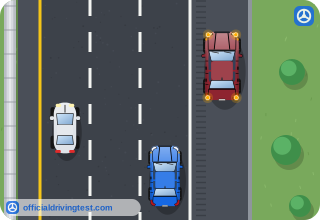
If you have emergency flares for your stalled car, how far behind it should you place them?
- 20 to 30 feet
- 200 to 300 feet
- 50 to 100 feet
- 500 to 600 feet
Show answer
Correct answer: 200 to 300 feet
The manual says to place flares 200 to 300 feet behind your car to give others warning.
Source: Idaho Driver's Handbook (July 2026), page 117 · Open this page in the manual (Manual page 117)
-
If you have no flares when your car stalls, what should you do?
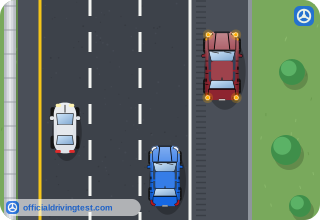
- Stand in the traffic lane behind your car and wave
- Stand by the side of the road and wave traffic around
- Sit inside the car with the doors locked and wait
- Walk along the center line and stop approaching cars
Show answer
Correct answer: Stand by the side of the road and wave traffic around
Without flares, you stand beside the road and wave traffic around, staying off the roadway.
Source: Idaho Driver's Handbook (July 2026), page 117 · Open this page in the manual (Manual page 117)
-
When you stand beside the road to wave traffic around your stalled car, what should you use if you have it?
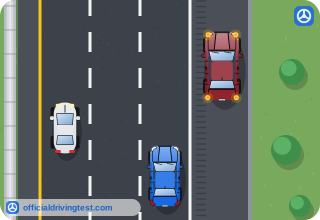
- A dark jacket
- A flashlight shined at drivers
- A floor mat
- A white cloth or flag
Show answer
Correct answer: A white cloth or flag
The manual suggests a white cloth or flag, and says to stay off the roadway.
Source: Idaho Driver's Handbook (July 2026), page 117 · Open this page in the manual (Manual page 117)
-
What are the two choices you have to avoid a crash?
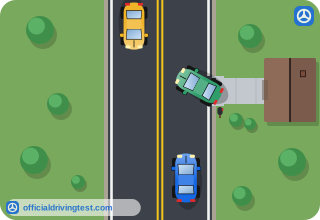
- Change direction by steering, or change speed by braking or accelerating
- Pull off onto the shoulder, or stop in the traffic lane
- Sound the horn to warn others, or flash the headlights twice
- Shift into a lower gear, or turn the engine off quickly
Show answer
Correct answer: Change direction by steering, or change speed by braking or accelerating
The manual says you can steer to change direction or brake or accelerate to change speed.
Source: Idaho Driver's Handbook (July 2026), page 118 · Open this page in the manual (Manual page 118)
-
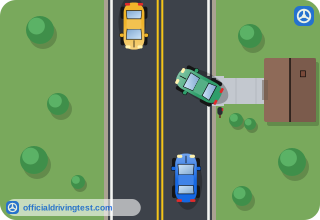
If you do not think you can stop in time and try to turn out of the way, what should you do about the brakes if possible?
- Brake as hard as you can while you turn
- Pump the brakes while you turn
- Stay off the brakes while you turn
- Use the parking brake while you turn
Show answer
Correct answer: Stay off the brakes while you turn
You have more control if you stay off the brakes while you turn.
Source: Idaho Driver's Handbook (July 2026), page 118 · Open this page in the manual (Manual page 118)
-
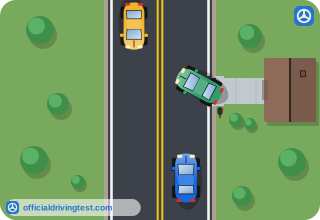
Why should a driver without anti-lock brakes avoid slamming on the brakes to avoid a crash?
- It damages the engine and the transmission over a long time
- It turns off the brake lights while the pedal is down
- It makes the tires wear out much sooner than usual
- Locking the brakes may throw you into a skid and make things worse
Show answer
Correct answer: Locking the brakes may throw you into a skid and make things worse
The manual warns that locked brakes may cause a skid and make things worse.
Source: Idaho Driver's Handbook (July 2026), page 118 · Open this page in the manual (Manual page 118)
-
When may accelerating soften the impact or prevent a crash?
- When another car is about to hit you from the front
- When your wheels drop off the pavement
- When another car is about to hit you from the side or rear
- When your brakes have locked
Show answer
Correct answer: When another car is about to hit you from the side or rear
Accelerating may soften the impact or prevent the crash when you are about to be hit from the side or rear.
Source: Idaho Driver's Handbook (July 2026), page 118 · Open this page in the manual (Manual page 118)
-
If you are about to be hit from the rear and have a headrest, what should you do?
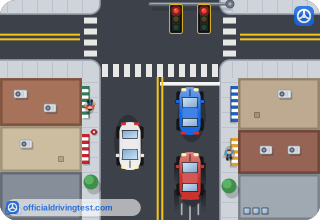
- Press the back of your head against it
- Lean forward over the steering wheel
- Turn your head to look behind you
- Take your hands off the wheel
Show answer
Correct answer: Press the back of your head against it
The manual says to press the back of your head against the headrest and be ready to brake to avoid hitting cars ahead.
Source: Idaho Driver's Handbook (July 2026), page 118 · Open this page in the manual (Manual page 118)
-
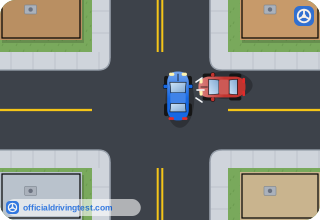
If you are about to be hit from the side, what should you be prepared to do?
- Brake as hard as you can right away
- Release the steering wheel and brace yourself
- Steer to recover from the impact
- Lean away from the impact and unbuckle your belt
Show answer
Correct answer: Steer to recover from the impact
Be prepared to steer to recover from the impact of a side hit.
Source: Idaho Driver's Handbook (July 2026), page 118 · Open this page in the manual (Manual page 118)
-
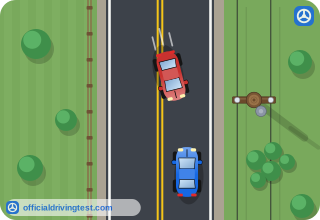
If you are about to be hit from the front and you are wearing a seat belt, what should you do?
- Unbuckle your seat belt and brace yourself
- Use your arms and hands to protect your face
- Duck below the dashboard
- Lean toward the passenger seat
Show answer
Correct answer: Use your arms and hands to protect your face
With a seat belt on, use your arms and hands to protect your face from a frontal hit.
Source: Idaho Driver's Handbook (July 2026), page 118 · Open this page in the manual (Manual page 118)
-
What must you do if you hit an unattended vehicle and cannot locate its owner?
- Leave without a note if no one was hurt
- Leave a note with only your license plate number
- Wait with your own vehicle until a tow truck arrives
- Leave a note about the crash with your name and phone number
Show answer
Correct answer: Leave a note about the crash with your name and phone number
You must make a reasonable effort to find the owner and, if you cannot, leave a note with your name and phone number.
Source: Idaho Driver's Handbook (July 2026), page 119 · Open this page in the manual (Manual page 119)
-
If you are threatened with a head-on crash and have some time, what should you do to warn the other driver?
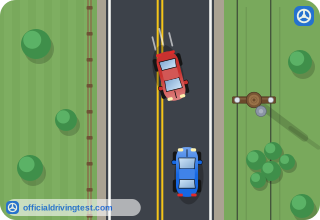
- Speed up and flash your headlights only to warn
- Slow down and flash your lights and honk your horn
- Stop in the lane and turn off all of your lights
- Turn on your emergency flashers and let the car coast
Show answer
Correct answer: Slow down and flash your lights and honk your horn
The manual says to slow down and try to warn the other driver by flashing your lights and honking your horn.
Source: Idaho Driver's Handbook (July 2026), page 119 · Open this page in the manual (Manual page 119)
-
An oncoming car is in your lane and you have some time. Which way should you steer?
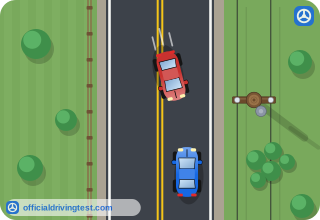
- To the left, across the center line
- To the right as far as possible
- Straight ahead, staying in the middle
- Toward the oncoming car’s headlights
Show answer
Correct answer: To the right as far as possible
The manual says to pull to the right as far as possible and not to go left, where the other driver may recover and hit you broadside.
Source: Idaho Driver's Handbook (July 2026), page 119 · Open this page in the manual (Manual page 119)
-
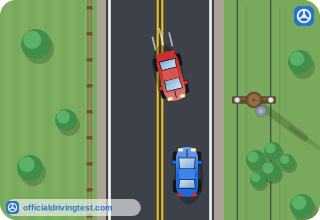
If you cannot avoid a crash with an oncoming car, how should you steer?
- Straight ahead so the cars meet squarely
- So the cars hit at the exact center of your bumper
- Sharply into the oncoming lane
- So the cars hit at an angle and avoid a head-on crash
Show answer
Correct answer: So the cars hit at an angle and avoid a head-on crash
Steering so the cars hit at an angle avoids a head-on crash.
Source: Idaho Driver's Handbook (July 2026), page 119 · Open this page in the manual (Manual page 119)
-
After a tire blowout, what should you do with the steering wheel instead of stomping on the brakes?
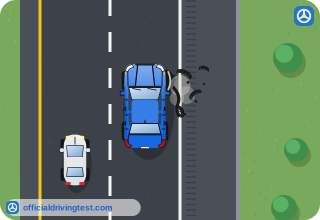
- Hold it tightly and keep the car headed straight down the road
- Turn it sharply toward the shoulder as quickly as possible
- Let it turn freely until the car has slowed down
- Turn it back and forth quickly to slow the car down
Show answer
Correct answer: Hold it tightly and keep the car headed straight down the road
The manual says to hold the steering wheel tightly and keep the car headed straight down the road.
Source: Idaho Driver's Handbook (July 2026), page 120 · Open this page in the manual (Manual page 120)
-
After a tire blowout, what should you do with the gas pedal and the brakes?
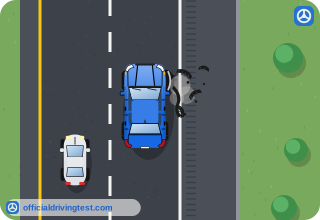
- Press the gas to hold your speed, and brake lightly right away
- Brake hard at once, and take your foot off the gas
- Ease off the gas, and do not brake until you have complete control
- Hold the gas steady, and brake after a few seconds
Show answer
Correct answer: Ease off the gas, and do not brake until you have complete control
The manual says to ease off the gas but not apply the brakes until you have complete control.
Source: Idaho Driver's Handbook (July 2026), page 120 · Open this page in the manual (Manual page 120)
-
After a blowout, once the car is under control, what should you do?
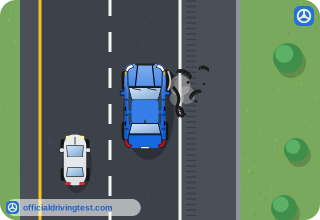
- Brake hard and stop right there in the traffic lane
- Keep driving at the same speed until the next exit
- Stop at once, wherever you are, with your foot on the brake
- Brake gently and pull off the road at the nearest safe location
Show answer
Correct answer: Brake gently and pull off the road at the nearest safe location
When the car is under control you brake gently and pull off at the nearest safe location.
Source: Idaho Driver's Handbook (July 2026), page 120 · Open this page in the manual (Manual page 120)
-
If the wheels drop off the pavement, what should you do with the steering wheel?
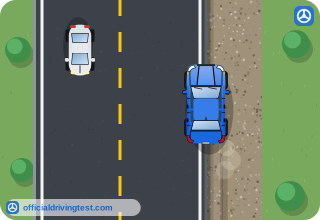
- Turn it sharply back toward the pavement
- Grip it tightly and steer straight ahead
- Let it turn freely
- Turn it away from the road
Show answer
Correct answer: Grip it tightly and steer straight ahead
The manual says to grip the wheel tightly, steer straight ahead, and stay on the shoulder if there are no immediate obstacles.
Source: Idaho Driver's Handbook (July 2026), page 120 · Open this page in the manual (Manual page 120)
-
If the wheels drop off the pavement, what should you do with the pedals?
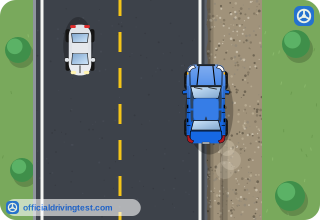
- Press the accelerator to climb back onto the pavement
- Apply the brakes hard to stop as fast as you can
- Take your foot off the accelerator and apply the brakes gently
- Press the clutch and coast without using the brakes
Show answer
Correct answer: Take your foot off the accelerator and apply the brakes gently
You take your foot off the accelerator and apply the brakes gently.
Source: Idaho Driver's Handbook (July 2026), page 120 · Open this page in the manual (Manual page 120)
-
When you steer back onto the pavement after running off the road, what should you be careful not to do?
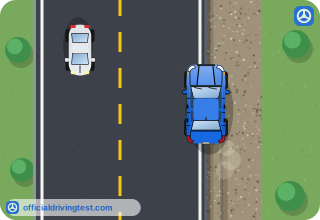
- Oversteer and drive across the center line
- Use your turn signal before you move over
- Check traffic for an opening before you steer
- Slow down below the speed limit before you steer
Show answer
Correct answer: Oversteer and drive across the center line
After checking traffic and when it is safe, steer onto the pavement carefully so you do not oversteer across the center line.
Source: Idaho Driver's Handbook (July 2026), page 120 · Open this page in the manual (Manual page 120)
-
What should you do if you come upon a traffic crash where police or medical help is already there?
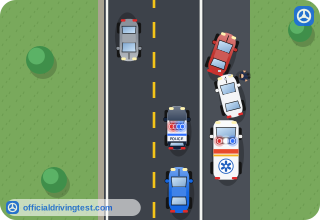
- Do not stop; move on as officers direct
- Stop and help the injured
- Stop and take photographs
- Slow down and watch from the road
Show answer
Correct answer: Do not stop; move on as officers direct
If help is already there, you do not stop and you move on as officers direct.
Source: Idaho Driver's Handbook (July 2026), page 120 · Open this page in the manual (Manual page 120)
-
If you are the first to arrive at a crash with serious injuries, what should you do?
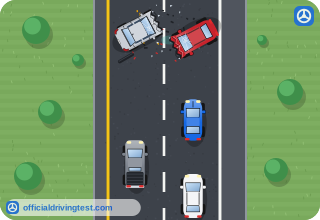
- Drive on and tell the next officer you see
- Stop and move all injured people to the roadside
- Stop, call 911, and assist if you are able
- Wait for another driver to stop
Show answer
Correct answer: Stop, call 911, and assist if you are able
The first person to arrive should stop and call 911 and assist if able.
Source: Idaho Driver's Handbook (July 2026), page 120 · Open this page in the manual (Manual page 120)
-
If you are involved in a crash, how must you stop?
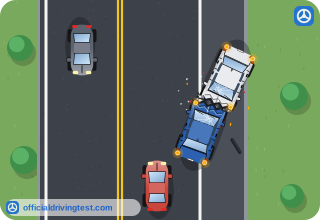
- Immediately, in the lane where the crash happened
- As near to the scene as possible without blocking traffic
- Only after you have reached the next exit ramp
- At least one mile away from the scene of the crash
Show answer
Correct answer: As near to the scene as possible without blocking traffic
You must stop as near to the scene as possible without blocking traffic.
Source: Idaho Driver's Handbook (July 2026), page 121 · Open this page in the manual (Manual page 121)
-
What may you do with vehicles that pose a traffic hazard after a crash, before the police arrive?
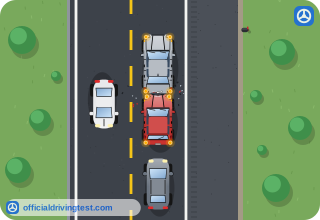
- Leave them exactly where they stopped
- Tow them yourself
- Cover them with a tarp
- Move them
Show answer
Correct answer: Move them
The manual says you may move vehicles that pose a traffic hazard before the police arrive.
Source: Idaho Driver's Handbook (July 2026), page 121 · Open this page in the manual (Manual page 121)
-
What does Idaho’s Quick Clearance law require after a crash on an interstate or major divided highway that causes no death or injury?
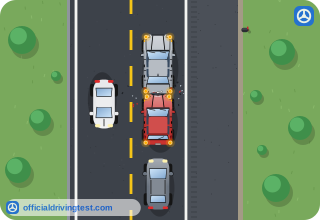
- Leave the vehicles exactly in place until the police arrive
- Move the vehicle onto the nearest city street, off the highway
- Safely move the vehicle to a shoulder, median, or emergency lane
- Turn off the engine and wait in the traffic lane
Show answer
Correct answer: Safely move the vehicle to a shoulder, median, or emergency lane
The law requires anyone involved in such a crash to safely move the vehicle to a shoulder, median, or emergency lane.
Source: Idaho Driver's Handbook (July 2026), page 121 · Open this page in the manual (Manual page 121)
-
What does Idaho’s Good Samaritan Law protect you from if you help an injured person in good faith?
- Civil liability
- Paying for your own vehicle repairs
- A speeding citation on the way
- Having to report the crash
Show answer
Correct answer: Civil liability
The manual says the Good Samaritan Law protects you from civil liability if you act in good faith.
Source: Idaho Driver's Handbook (July 2026), page 121 · Open this page in the manual (Manual page 121)
-
When may you try to move an injured person from a wrecked vehicle?
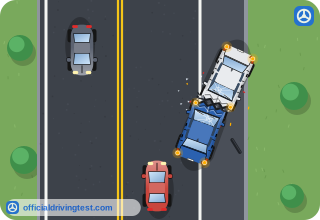
- Only if the injured person asks you to move him or her right away
- Only if the police have not arrived within a few minutes of the crash
- Only if the wrecked vehicle is blocking a lane of traffic ahead
- Only if you have medical training or there is immediate danger, such as fire
Show answer
Correct answer: Only if you have medical training or there is immediate danger, such as fire
The manual says not to move an injured person unless you have the necessary medical training or there is immediate danger such as fire.
Source: Idaho Driver's Handbook (July 2026), page 121 · Open this page in the manual (Manual page 121)
-
After a crash, what should you do about police and medical help?
- Wait one hour before calling
- Call for them as soon as possible
- Call only if the other driver agrees
- Call only if a vehicle cannot be driven
Show answer
Correct answer: Call for them as soon as possible
You are required to call for police and medical help as soon as possible.
Source: Idaho Driver's Handbook (July 2026), page 121 · Open this page in the manual (Manual page 121)
-
You must report to police any crash in which someone is injured or property damage is more than what amount?
- $500
- $1,500
- $1,000
- $2,500
Show answer
Correct answer: $1,500
The manual requires a police report for injury or damage of more than $1,500.
Source: Idaho Driver's Handbook (July 2026), page 121 · Open this page in the manual (Manual page 121)
-
At the scene of a crash, which information must you exchange about the injured?
- Names, addresses, and Social Security numbers
- Names, employers, and telephone numbers
- Addresses, ages, and insurance policy numbers
- Names, addresses, and driver’s license numbers
Show answer
Correct answer: Names, addresses, and driver’s license numbers
The manual lists names, addresses, and driver’s license numbers of the injured.
Source: Idaho Driver's Handbook (July 2026), page 121 · Open this page in the manual (Manual page 121)
-
At the scene of a crash, what information must you get about any witnesses?
- Their names and addresses
- Their insurance policy numbers
- Their driver’s license numbers only
- Their vehicle registration numbers
Show answer
Correct answer: Their names and addresses
The manual lists names and addresses of any witnesses.
Source: Idaho Driver's Handbook (July 2026), page 121 · Open this page in the manual (Manual page 121)
-
At the scene of a crash, which of these must you exchange with the other vehicle owners?
- Names, employers, and Social Security numbers
- Addresses, ages, and vehicle purchase prices
- Names, addresses, and insurance policy numbers
- Names, addresses, and insurance premium amounts
Show answer
Correct answer: Names, addresses, and insurance policy numbers
The manual lists names, addresses, and insurance policy numbers of the other vehicle owners.
Source: Idaho Driver's Handbook (July 2026), page 121 · Open this page in the manual (Manual page 121)
-
What may happen if you provide false information when exchanging information after a crash?
- Nothing, if the other driver is not hurt
- You will only be asked to sign a new form
- Your vehicle will be towed on the spot
- You may be guilty of a misdemeanor
Show answer
Correct answer: You may be guilty of a misdemeanor
The manual says that giving false information may make you guilty of a misdemeanor.
Source: Idaho Driver's Handbook (July 2026), page 121 · Open this page in the manual (Manual page 121)
-
Who will help you exchange information with the other drivers after a crash, when present?
- Your insurance agent
- A police officer
- A tow truck driver
- The county clerk
Show answer
Correct answer: A police officer
The manual says a police officer, when present, will help you exchange information with the other drivers.
Source: Idaho Driver's Handbook (July 2026), page 121 · Open this page in the manual (Manual page 121)