Idaho: Emergencies — Part 4 Practice Test
Questions in this part include: “When may accelerating soften the impact or prevent a crash?” · “What must you do if you hit an unattended vehicle and cannot locate its owner?”
Independent educational site · not affiliated with any government agency or DMV
Ready? Test yourself
- Instant feedback with an explanation
- Every answer cites its source in the manual
- Your best score is saved on this device
Questions are original and based on the official manual "Idaho Driver's Handbook" (July 2026), Idaho Transportation Department.
All 17 questions in this practice test
Take the test above first, then use this list to study. Tap “Show answer” to see the correct answer and explanation.
Show the questions and answersHide the questions
-
If you have emergency flares for your stalled car, how far behind it should you place them?
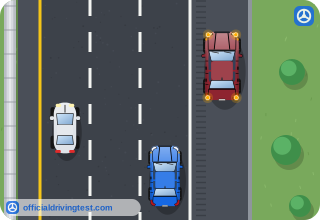
- 20 to 30 feet
- 200 to 300 feet
- 50 to 100 feet
- 500 to 600 feet
Show answer
Correct answer: 200 to 300 feet
The manual says to place flares 200 to 300 feet behind your car to give others warning.
Source: Idaho Driver's Handbook (July 2026), page 117 · Open this page in the manual (Manual page 117)
-
If you have no flares when your car stalls, what should you do?
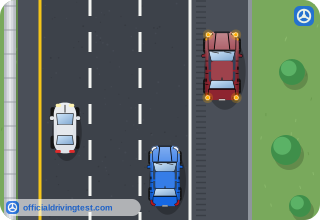
- Stand in the traffic lane behind your car and wave
- Stand by the side of the road and wave traffic around
- Sit inside the car with the doors locked and wait
- Walk along the center line and stop approaching cars
Show answer
Correct answer: Stand by the side of the road and wave traffic around
Without flares, you stand beside the road and wave traffic around, staying off the roadway.
Source: Idaho Driver's Handbook (July 2026), page 117 · Open this page in the manual (Manual page 117)
-
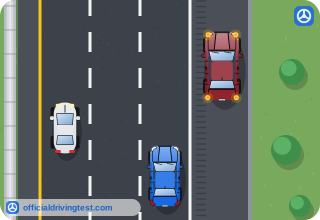
When you stand beside the road to wave traffic around your stalled car, what should you use if you have it?
- A dark jacket
- A flashlight shined at drivers
- A floor mat
- A white cloth or flag
Show answer
Correct answer: A white cloth or flag
The manual suggests a white cloth or flag, and says to stay off the roadway.
Source: Idaho Driver's Handbook (July 2026), page 117 · Open this page in the manual (Manual page 117)
-
What are the two choices you have to avoid a crash?
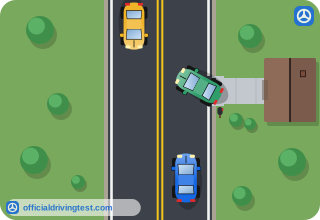
- Change direction by steering, or change speed by braking or accelerating
- Pull off onto the shoulder, or stop in the traffic lane
- Sound the horn to warn others, or flash the headlights twice
- Shift into a lower gear, or turn the engine off quickly
Show answer
Correct answer: Change direction by steering, or change speed by braking or accelerating
The manual says you can steer to change direction or brake or accelerate to change speed.
Source: Idaho Driver's Handbook (July 2026), page 118 · Open this page in the manual (Manual page 118)
-
If you do not think you can stop in time and try to turn out of the way, what should you do about the brakes if possible?
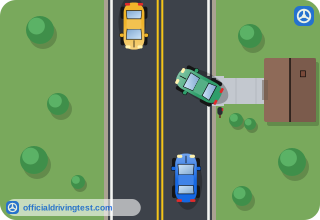
- Brake as hard as you can while you turn
- Pump the brakes while you turn
- Stay off the brakes while you turn
- Use the parking brake while you turn
Show answer
Correct answer: Stay off the brakes while you turn
You have more control if you stay off the brakes while you turn.
Source: Idaho Driver's Handbook (July 2026), page 118 · Open this page in the manual (Manual page 118)
-
Why should a driver without anti-lock brakes avoid slamming on the brakes to avoid a crash?
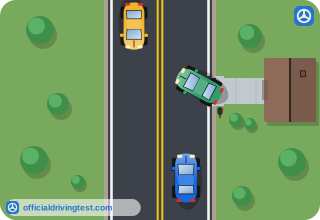
- It damages the engine and the transmission over a long time
- It turns off the brake lights while the pedal is down
- It makes the tires wear out much sooner than usual
- Locking the brakes may throw you into a skid and make things worse
Show answer
Correct answer: Locking the brakes may throw you into a skid and make things worse
The manual warns that locked brakes may cause a skid and make things worse.
Source: Idaho Driver's Handbook (July 2026), page 118 · Open this page in the manual (Manual page 118)
-
When may accelerating soften the impact or prevent a crash?
- When another car is about to hit you from the front
- When your wheels drop off the pavement
- When another car is about to hit you from the side or rear
- When your brakes have locked
Show answer
Correct answer: When another car is about to hit you from the side or rear
Accelerating may soften the impact or prevent the crash when you are about to be hit from the side or rear.
Source: Idaho Driver's Handbook (July 2026), page 118 · Open this page in the manual (Manual page 118)
-
If you are about to be hit from the rear and have a headrest, what should you do?
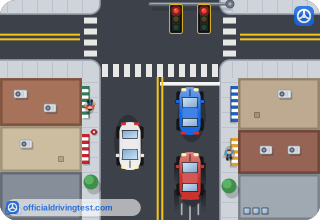
- Press the back of your head against it
- Lean forward over the steering wheel
- Turn your head to look behind you
- Take your hands off the wheel
Show answer
Correct answer: Press the back of your head against it
The manual says to press the back of your head against the headrest and be ready to brake to avoid hitting cars ahead.
Source: Idaho Driver's Handbook (July 2026), page 118 · Open this page in the manual (Manual page 118)
-
If you are about to be hit from the side, what should you be prepared to do?
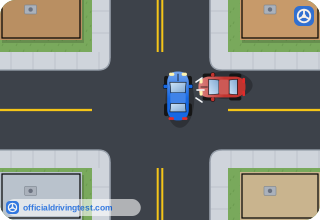
- Brake as hard as you can right away
- Release the steering wheel and brace yourself
- Steer to recover from the impact
- Lean away from the impact and unbuckle your belt
Show answer
Correct answer: Steer to recover from the impact
Be prepared to steer to recover from the impact of a side hit.
Source: Idaho Driver's Handbook (July 2026), page 118 · Open this page in the manual (Manual page 118)
-
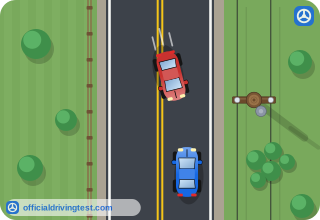
If you are about to be hit from the front and you are wearing a seat belt, what should you do?
- Unbuckle your seat belt and brace yourself
- Use your arms and hands to protect your face
- Duck below the dashboard
- Lean toward the passenger seat
Show answer
Correct answer: Use your arms and hands to protect your face
With a seat belt on, use your arms and hands to protect your face from a frontal hit.
Source: Idaho Driver's Handbook (July 2026), page 118 · Open this page in the manual (Manual page 118)
-
What must you do if you hit an unattended vehicle and cannot locate its owner?
- Leave without a note if no one was hurt
- Leave a note with only your license plate number
- Wait with your own vehicle until a tow truck arrives
- Leave a note about the crash with your name and phone number
Show answer
Correct answer: Leave a note about the crash with your name and phone number
You must make a reasonable effort to find the owner and, if you cannot, leave a note with your name and phone number.
Source: Idaho Driver's Handbook (July 2026), page 119 · Open this page in the manual (Manual page 119)
-
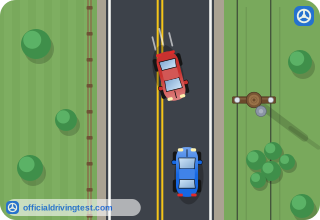
If you are threatened with a head-on crash and have some time, what should you do to warn the other driver?
- Speed up and flash your headlights only to warn
- Slow down and flash your lights and honk your horn
- Stop in the lane and turn off all of your lights
- Turn on your emergency flashers and let the car coast
Show answer
Correct answer: Slow down and flash your lights and honk your horn
The manual says to slow down and try to warn the other driver by flashing your lights and honking your horn.
Source: Idaho Driver's Handbook (July 2026), page 119 · Open this page in the manual (Manual page 119)
-
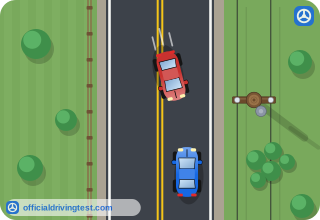
An oncoming car is in your lane and you have some time. Which way should you steer?
- To the left, across the center line
- To the right as far as possible
- Straight ahead, staying in the middle
- Toward the oncoming car’s headlights
Show answer
Correct answer: To the right as far as possible
The manual says to pull to the right as far as possible and not to go left, where the other driver may recover and hit you broadside.
Source: Idaho Driver's Handbook (July 2026), page 119 · Open this page in the manual (Manual page 119)
-
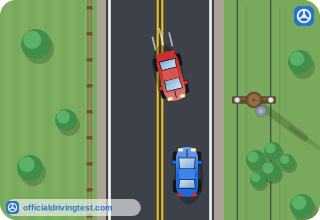
If you cannot avoid a crash with an oncoming car, how should you steer?
- Straight ahead so the cars meet squarely
- So the cars hit at the exact center of your bumper
- Sharply into the oncoming lane
- So the cars hit at an angle and avoid a head-on crash
Show answer
Correct answer: So the cars hit at an angle and avoid a head-on crash
Steering so the cars hit at an angle avoids a head-on crash.
Source: Idaho Driver's Handbook (July 2026), page 119 · Open this page in the manual (Manual page 119)
-
After a tire blowout, what should you do with the steering wheel instead of stomping on the brakes?
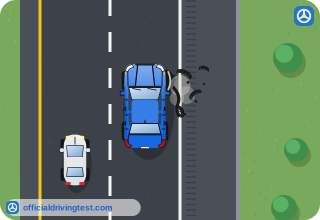
- Hold it tightly and keep the car headed straight down the road
- Turn it sharply toward the shoulder as quickly as possible
- Let it turn freely until the car has slowed down
- Turn it back and forth quickly to slow the car down
Show answer
Correct answer: Hold it tightly and keep the car headed straight down the road
The manual says to hold the steering wheel tightly and keep the car headed straight down the road.
Source: Idaho Driver's Handbook (July 2026), page 120 · Open this page in the manual (Manual page 120)
-
After a tire blowout, what should you do with the gas pedal and the brakes?
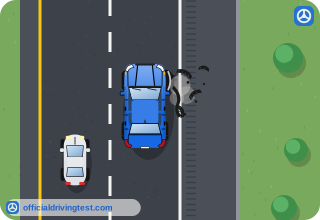
- Press the gas to hold your speed, and brake lightly right away
- Brake hard at once, and take your foot off the gas
- Ease off the gas, and do not brake until you have complete control
- Hold the gas steady, and brake after a few seconds
Show answer
Correct answer: Ease off the gas, and do not brake until you have complete control
The manual says to ease off the gas but not apply the brakes until you have complete control.
Source: Idaho Driver's Handbook (July 2026), page 120 · Open this page in the manual (Manual page 120)
-
After a blowout, once the car is under control, what should you do?
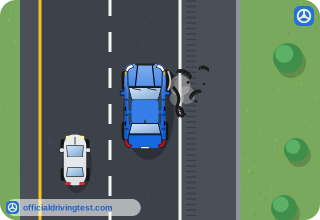
- Brake hard and stop right there in the traffic lane
- Keep driving at the same speed until the next exit
- Stop at once, wherever you are, with your foot on the brake
- Brake gently and pull off the road at the nearest safe location
Show answer
Correct answer: Brake gently and pull off the road at the nearest safe location
When the car is under control you brake gently and pull off at the nearest safe location.
Source: Idaho Driver's Handbook (July 2026), page 120 · Open this page in the manual (Manual page 120)