Idaho: Emergencies — Part 3 Practice Test
Questions in this part include: “Where does skidding occur most often?” · “How should you prepare for trouble before traveling on ice or snow?”
Independent educational site · not affiliated with any government agency or DMV
Ready? Test yourself
- Instant feedback with an explanation
- Every answer cites its source in the manual
- Your best score is saved on this device
Questions are original and based on the official manual "Idaho Driver's Handbook" (July 2026), Idaho Transportation Department.
All 17 questions in this practice test
Take the test above first, then use this list to study. Tap “Show answer” to see the correct answer and explanation.
Show the questions and answersHide the questions
-
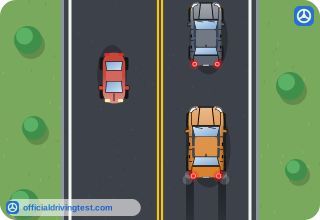
What can happen if you hit the brakes so hard that the wheels lock?
- The car stops in a shorter distance
- The brakes cool down faster
- You could lose control of your car
- The tires grip the road better
Show answer
Correct answer: You could lose control of your car
The handbook says never to hit the brakes so hard you lock the wheels or you could lose control of your car.
Source: Idaho Driver's Handbook (July 2026), page 115 · Open this page in the manual (Manual page 115)
-
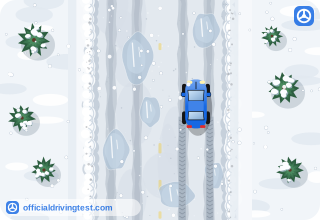
In most skids, which wheels lose their grip on the pavement?
- The front wheels
- The rear wheels
- The left-side wheels
- The right-side wheels
Show answer
Correct answer: The rear wheels
In most skids, the rear wheels lose their grip on the pavement and slide left or right.
Source: Idaho Driver's Handbook (July 2026), page 115 · Open this page in the manual (Manual page 115)
-
Where does skidding occur most often?
- On dry pavement at low speeds
- On wet gravel
- On new pavement
- On ice or packed snow
Show answer
Correct answer: On ice or packed snow
Skidding occurs most often on ice or packed snow.
Source: Idaho Driver's Handbook (July 2026), page 115 · Open this page in the manual (Manual page 115)
-
On dry pavement, when can a skid happen?
- Never; skids happen only on ice or wet roads
- Only when the tires are new
- Only when driving uphill
- When traveling at high speeds or stopping quickly
Show answer
Correct answer: When traveling at high speeds or stopping quickly
A skid can happen even on dry pavement when traveling at high speeds or stopping quickly.
Source: Idaho Driver's Handbook (July 2026), page 115 · Open this page in the manual (Manual page 115)
-
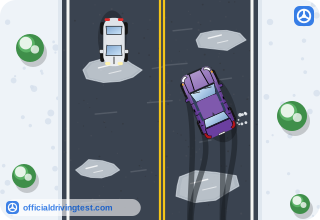
What should you do first when a skid starts?
- Hit the brake hard
- Take your foot off the gas pedal
- Steer away from the direction of the skid
- Shift the transmission into neutral
Show answer
Correct answer: Take your foot off the gas pedal
When a skid starts, do not hit the brake; immediately take your foot off the gas pedal, then steer in the direction of the skid.
Source: Idaho Driver's Handbook (July 2026), page 116 · Open this page in the manual (Manual page 116)
-
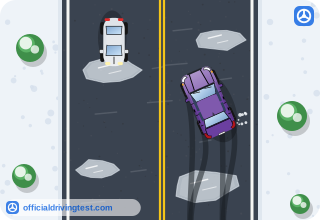
If your rear wheels slide to the right in a skid, which way should you turn your front wheels?
- Toward the left
- Straight ahead
- Toward the right
- Back and forth quickly
Show answer
Correct answer: Toward the right
You steer in the direction of the skid, so if the rear wheels slide right, turn the front wheels toward the right.
Source: Idaho Driver's Handbook (July 2026), page 116 · Open this page in the manual (Manual page 116)
-
How should you prepare for trouble before traveling on ice or snow?
- Practice stops and skid recovery in a safe place, ideally on private property
- Practice on an empty public highway at night when traffic is light
- Read about skid recovery but never practice it
- Practice only after you start to skid
Show answer
Correct answer: Practice stops and skid recovery in a safe place, ideally on private property
The handbook says to practice stops and skid recovery in a safe place, ideally on private property.
Source: Idaho Driver's Handbook (July 2026), page 116 · Open this page in the manual (Manual page 116)
-
How should you apply the brake pedal during an emergency stop in a vehicle with ABS?
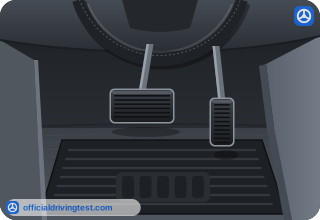
- Apply continuous pressure and do not pump it
- Pump it quickly several times as you slow down
- Tap it lightly and release it
- Press it once and then let off
Show answer
Correct answer: Apply continuous pressure and do not pump it
With ABS, apply continuous pressure on the brake pedal; pumping defeats the system, reduces its effectiveness and increases stopping distance.
Source: Idaho Driver's Handbook (July 2026), page 116 · Open this page in the manual (Manual page 116)
-
What does ABS allow you to keep during hard braking and on slippery surfaces?
- A shorter stopping distance than any other system
- Full braking power with no pedal pressure
- Full steering control
- The ability to pump the brakes yourself
Show answer
Correct answer: Full steering control
The ABS activates immediately, allowing you to retain full steering control during hard braking and on slippery surfaces.
Source: Idaho Driver's Handbook (July 2026), page 116 · Open this page in the manual (Manual page 116)
-
What does ABS do to your stopping distance?
- It always cuts the distance in half
- It does not decrease stopping distances
- It shortens the distance on every surface
- It doubles the distance on dry roads
Show answer
Correct answer: It does not decrease stopping distances
The handbook states that ABS does not decrease stopping distances.
Source: Idaho Driver's Handbook (July 2026), page 116 · Open this page in the manual (Manual page 116)
-
You feel a pulse through the brake pedal and hear a noise from the pump motor during hard braking with ABS. What does this mean?
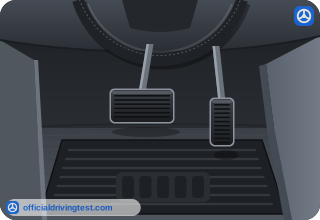
- The brakes are failing
- The tires are hydroplaning
- The ABS pump needs repair
- It is normal for ABS
Show answer
Correct answer: It is normal for ABS
The handbook says the noise and pulsation are normal for ABS and you should not remove your foot from the pedal.
Source: Idaho Driver's Handbook (July 2026), page 116 · Open this page in the manual (Manual page 116)
-
In a vehicle without ABS, you brake hard and feel the vehicle begin to skid. What should you do?
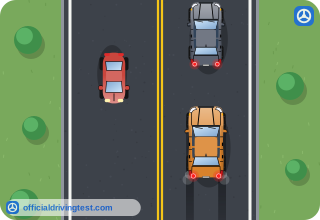
- Press the brake pedal harder
- Hold the pedal steady until the vehicle stops
- Quickly let up on the brake pedal
- Shift into reverse
Show answer
Correct answer: Quickly let up on the brake pedal
Locked brakes show up as a skid, so you quickly let up on the pedal.
Source: Idaho Driver's Handbook (July 2026), page 117 · Open this page in the manual (Manual page 117)
-
In a vehicle without ABS, what do you do as soon as the vehicle stops skidding?
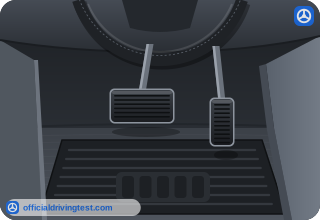
- Keep your foot off the brake pedal until the vehicle stops by itself
- Press the brake pedal again, repeating the press and release cycle if needed
- Turn off the engine and let the vehicle coast to a stop slowly
- Pull the parking brake and steer to the left side of the road
Show answer
Correct answer: Press the brake pedal again, repeating the press and release cycle if needed
The manual tells you to press down again and repeat the press and release cycle until the vehicle has stopped.
Source: Idaho Driver's Handbook (July 2026), page 117 · Open this page in the manual (Manual page 117)
-
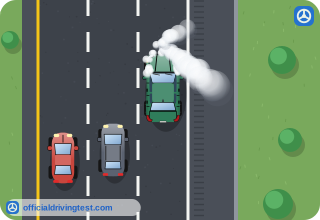
If your car stalls on the highway and it is possible, what should you do with it?
- Leave it in the lane so others see it
- Stop with the right wheels on the road
- Push it to the center of the road
- Pull all the way off the road
Show answer
Correct answer: Pull all the way off the road
The manual's first rule for a stalled car is to pull all the way off the road if possible.
Source: Idaho Driver's Handbook (July 2026), page 117 · Open this page in the manual (Manual page 117)
-
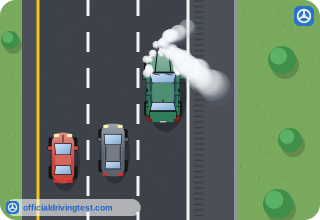
Which lights should you turn on when your car stalls on the highway?
- High beams
- Turn signals only
- Emergency flashers
- Fog lights
Show answer
Correct answer: Emergency flashers
The stalled-car rules include turning on your emergency flashers.
Source: Idaho Driver's Handbook (July 2026), page 117 · Open this page in the manual (Manual page 117)
-
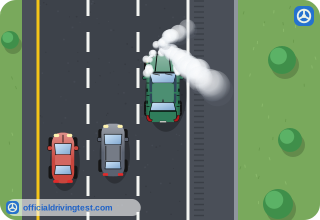
Besides turning on your flashers, how can you let other drivers know your stalled car has a problem?
- Lift the hood
- Open the trunk lid
- Open all the doors
- Remove a front wheel
Show answer
Correct answer: Lift the hood
The manual says to lift the hood to let others know you have a problem.
Source: Idaho Driver's Handbook (July 2026), page 117 · Open this page in the manual (Manual page 117)
-
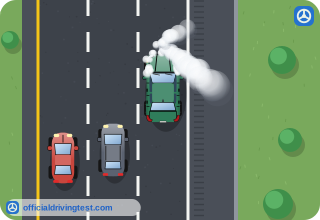
If your stalled car cannot be moved off the road, where should you stop it?
- Just over a hill, where oncoming traffic can see you well
- Just around a curve, so traffic has time to slow down
- Beside the center line, where both directions see your car
- Where people have a clear view of you and your car from behind
Show answer
Correct answer: Where people have a clear view of you and your car from behind
You should stop where people have a clear view from behind, never just over a hill or around a curve.
Source: Idaho Driver's Handbook (July 2026), page 117 · Open this page in the manual (Manual page 117)