Hawaii: Signals and vehicle controls
Turn signals and hand signals, vehicle equipment, starting, steering, backing, lane changes, transmissions and headlights. Split into 6 shorter tests so you're not stuck in one long quiz.
Independent educational site · not affiliated with any government agency or DMV
Choose a part
Signals and vehicle controls — Part 1
Questions in this part include: “Which equipment is prohibited on a vehicle that is not an authorized emergency vehicle?”
StartSignals and vehicle controls — Part 2
Questions in this part include: “Every vehicle is required to be equipped with a horn in good working condition to give what?”
StartSignals and vehicle controls — Part 3
Questions in this part include: “In the manual's hand signal picture for a left turn, how is the driver's arm held?”
StartSignals and vehicle controls — Part 4
Questions in this part include: “When stopping in traffic, how far behind the vehicle ahead should you stop?”
StartSignals and vehicle controls — Part 5
Questions in this part include: “Failure to cancel an electric turn signal is usually caused by what?”
StartSignals and vehicle controls — Part 6
Questions in this part include: “How should you prepare your eyes for night driving?”
StartAll 105 Signals and vehicle controls questions with answers
Choose a part above to take a practice test, or study every question and answer here.
Show the questions and answersHide the questions
-
Which of these is prohibited on a motor vehicle other than an authorized emergency vehicle?
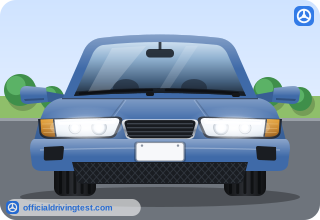
- A red light showing from the front
- A head lamp that is correctly adjusted
- A brake lamp that works when braking
- A tail lamp that is clean and working
Show answer
Correct answer: A red light showing from the front
A red light showing from the front, or a blue light visible outside of the vehicle, is prohibited except on authorized emergency vehicles.
Source: Hawaii Driver's Manual (2023), page 18 · Open this page in the manual (Manual page 18)
-
Which equipment is prohibited on a vehicle that is not an authorized emergency vehicle?
- A horn in good working order
- Windshield washers that work
- A bell, exhaust whistle or siren
- A rear-view mirror kept clean
Show answer
Correct answer: A bell, exhaust whistle or siren
A bell, exhaust whistle or siren is prohibited except on authorized emergency vehicles.
Source: Hawaii Driver's Manual (2023), page 18 · Open this page in the manual (Manual page 18)
-
Which muffler is prohibited?
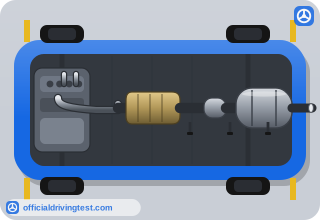
- One that carries exhaust gases to an exit point
- One that is louder than an original equipment muffler
- One that has no leaks in the exhaust system
- One that reduces the noise to an acceptable level
Show answer
Correct answer: One that is louder than an original equipment muffler
A muffler cut-out or by-pass, or a muffler that makes more noise than an original equipment manufacturer muffler, is prohibited.
Source: Hawaii Driver's Manual (2023), page 18 · Open this page in the manual (Manual page 18)
-
Which item is included in the equipment every motor vehicle operated on Hawaii highways must have?
- A rear spoiler
- A roof rack
- A GPS unit
- An odometer
Show answer
Correct answer: An odometer
The manual lists the odometer among the equipment every motor vehicle must have, meeting established standards.
Source: Hawaii Driver's Manual (2023), page 18 · Open this page in the manual (Manual page 18)
-
Who is responsible for the condition of the vehicle you are driving?
- You, even if you are not the owner
- Only the registered owner of the car
- The garage that inspected it
- The lien holder
Show answer
Correct answer: You, even if you are not the owner
The manual says you are responsible for the condition of the vehicle you are driving even though you may not be the owner.
Source: Hawaii Driver's Manual (2023), page 19 · Open this page in the manual (Manual page 19)
-
What is a common brake test described in the manual?
- Applying the brakes lightly at 20 to 25 mph
- Applying the brakes rather hard at 35 to 40 mph
- Applying the brakes rather hard at a speed of 4 to 8 mph
- Applying the brakes gently at 12 to 16 mph
Show answer
Correct answer: Applying the brakes rather hard at a speed of 4 to 8 mph
A common brake test is to apply the brakes rather hard at a speed of 4 to 8 mph.
Source: Hawaii Driver's Manual (2023), page 19 · Open this page in the manual (Manual page 19)
-
During a brake test, what should the vehicle do?
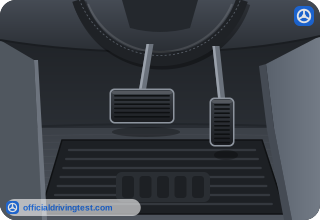
- Pull slightly to the right
- Pull slightly to the left
- Slow down only after a few seconds
- Not pull to either side
Show answer
Correct answer: Not pull to either side
The vehicle should not pull to either side during the brake test.
Source: Hawaii Driver's Manual (2023), page 19 · Open this page in the manual (Manual page 19)
-
Where should you try out antilock brakes so you know what to expect in an emergency brake application?
- On a busy city street while other cars are moving
- In an open area such as a deserted parking lot
- On a freeway on-ramp during rush hour traffic
- On a narrow road lined with parked cars
Show answer
Correct answer: In an open area such as a deserted parking lot
The manual says to go to an open area such as a deserted section of a parking lot and try antilock brakes out.
Source: Hawaii Driver's Manual (2023), page 19 · Open this page in the manual (Manual page 19)
-
You usually need to be going over what speed for antilock brakes to activate?
- 20 mph
- 30 mph
- 10 mph
- 40 mph
Show answer
Correct answer: 10 mph
The manual says you usually need to be going over 10 mph for antilock brakes to activate.
Source: Hawaii Driver's Manual (2023), page 19 · Open this page in the manual (Manual page 19)
-
On what kind of surface is it easier to activate antilock brakes (ABS)?
- A wet and slippery surface
- A dry, clean surface
- A freshly painted surface
- A surface covered with gravel only
Show answer
Correct answer: A wet and slippery surface
The manual says it is easier to activate ABS on a wet and slippery surface.
Source: Hawaii Driver's Manual (2023), page 19 · Open this page in the manual (Manual page 19)
-
What does the manual say to practice when you have antilock brakes?
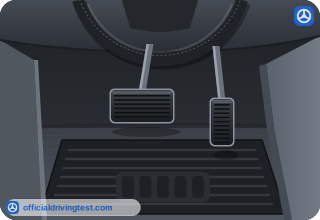
- Not pumping the brake pedal
- Pumping the brake pedal quickly
- Tapping the brake pedal twice
- Releasing the brake pedal before stopping
Show answer
Correct answer: Not pumping the brake pedal
The manual says to practice NOT pumping the brake pedal with antilock brakes.
Source: Hawaii Driver's Manual (2023), page 19 · Open this page in the manual (Manual page 19)
-
What do brake or stop lamps warn other drivers of?
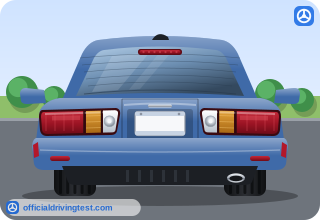
- That you are about to turn left
- That you are passing another car
- That you are slowing or stopping
- That you are parked at the curb
Show answer
Correct answer: That you are slowing or stopping
Brake or stop lamps warn other drivers that you are slowing or stopping.
Source: Hawaii Driver's Manual (2023), page 19 · Open this page in the manual (Manual page 19)
-
What should you use if your directional signals fail, until you can have them repaired?
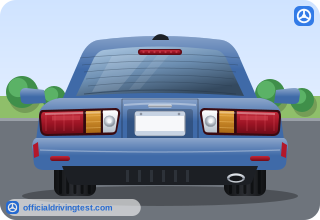
- The horn
- Hand signals
- The hazard flashers
- Your head lamps
Show answer
Correct answer: Hand signals
If the directional signals fail, use hand signals until you can have them repaired.
Source: Hawaii Driver's Manual (2023), page 19 · Open this page in the manual (Manual page 19)
-
What does any change in the dash light indication of your directional signals reflect?
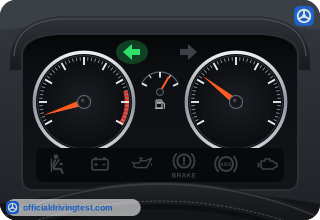
- A low battery
- A worn tire
- A normal signal
- Improper operation
Show answer
Correct answer: Improper operation
Any change in the dash light indication reflects improper operation of the directional signals.
Source: Hawaii Driver's Manual (2023), page 19 · Open this page in the manual (Manual page 19)
-
What should you be sure of regarding your vehicle's door latches and locks?
- Only the driver's door latches
- They are lubricated every month
- All doors latch and lock properly
- Rear doors are always locked while driving
Show answer
Correct answer: All doors latch and lock properly
Door latches and locks provide safety and security, so all doors must latch and lock properly.
Source: Hawaii Driver's Manual (2023), page 19 · Open this page in the manual (Manual page 19)
-
What should you do to prevent carbon monoxide poisoning?
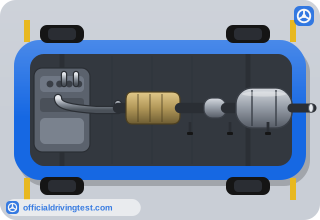
- Keep your exhaust system free of leaks
- Keep your windows closed
- Replace the muffler every year
- Keep the engine running while parked
Show answer
Correct answer: Keep your exhaust system free of leaks
To prevent carbon monoxide poisoning, keep your exhaust system free of leaks.
Source: Hawaii Driver's Manual (2023), page 19 · Open this page in the manual (Manual page 19)
-
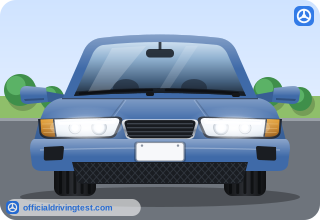
The head lamps must work properly and be correctly adjusted when?
- Only at night
- Only in rain or fog
- Only when driving through tunnels
- At all times
Show answer
Correct answer: At all times
The manual says head lamps must work properly and be correctly adjusted at all times.
Source: Hawaii Driver's Manual (2023), page 19 · Open this page in the manual (Manual page 19)
-
What are front opening hoods equipped with?
- Two identical primary latches
- A primary latch and a secondary catch
- A single safety pin
- A lock operated from the driver's seat
Show answer
Correct answer: A primary latch and a secondary catch
Front opening hoods have a primary latch and a secondary catch so the hood will not open and block your vision.
Source: Hawaii Driver's Manual (2023), page 19 · Open this page in the manual (Manual page 19)
-
Every vehicle is required to be equipped with a horn in good working condition to give what?
- Visual warning
- Audible warning
- Right-of-way
- Speed information
Show answer
Correct answer: Audible warning
The horn must be in good working condition to give audible warning.
Source: Hawaii Driver's Manual (2023), page 19 · Open this page in the manual (Manual page 19)
-
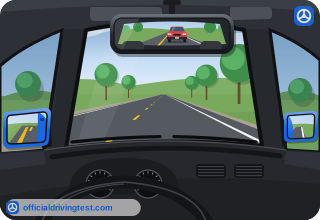
How should rear-view mirrors be adjusted?
- To show only the vehicle's rear bumper
- To show only the lane beside you
- So the driver does not need to turn the head
- To give you the maximum view to the rear horizon
Show answer
Correct answer: To give you the maximum view to the rear horizon
Rear-view mirrors should be adjusted to give you the maximum view to the rear horizon.
Source: Hawaii Driver's Manual (2023), page 19 · Open this page in the manual (Manual page 19)
-
How much free play should there be at most in the steering wheel of a vehicle with power steering (checked with the motor running)?
- Two inches
- Five inches
- Four inches
- One inch
Show answer
Correct answer: Two inches
There should be no more than two inches of free play in the steering wheel with power steering.
Source: Hawaii Driver's Manual (2023), page 20 · Open this page in the manual (Manual page 20)
-
How much free play should there be at most in the steering wheel of a vehicle without power steering?
- 3 inches
- 1 inch
- 5 inches
- 6 inches
Show answer
Correct answer: 3 inches
Without power steering, there should be no more than 3 inches of free play in the steering wheel.
Source: Hawaii Driver's Manual (2023), page 20 · Open this page in the manual (Manual page 20)
-
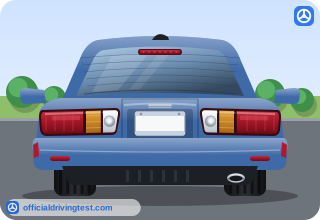
What do tail lamps and side marker lamps do?
- Show the driver the road ahead
- Signal that you are turning
- Warn other drivers of your presence
- Show that the brakes are applied
Show answer
Correct answer: Warn other drivers of your presence
Tail lamps and side marker lamps warn other drivers of your presence.
Source: Hawaii Driver's Manual (2023), page 20 · Open this page in the manual (Manual page 20)
-
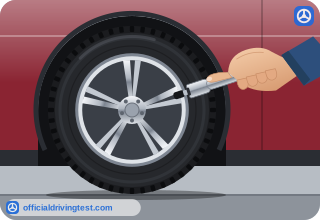
How often should you check your tires at a minimum?
- At least once a year
- At least once a month
- Only before long trips
- Only at each inspection
Show answer
Correct answer: At least once a month
The manual says to check tires at least once a month.
Source: Hawaii Driver's Manual (2023), page 20 · Open this page in the manual (Manual page 20)
-
Where can you find the vehicle manufacturer's recommended tire pressure and tire size?
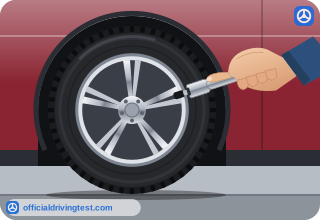
- In the glove compartment
- On the dashboard
- Under the hood
- In the door jamb
Show answer
Correct answer: In the door jamb
The manual says to check the door jamb for the manufacturer's recommended pressure and tire size.
Source: Hawaii Driver's Manual (2023), page 20 · Open this page in the manual (Manual page 20)
-
What does proper tire pressure do?
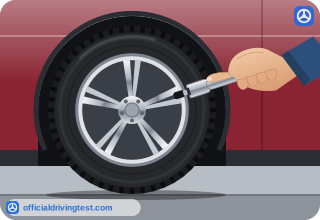
- Reduces the need for a spare tire
- Makes the tread wear unevenly
- Extends tire life and improves handling
- Lets the steering wheel vibrate slightly
Show answer
Correct answer: Extends tire life and improves handling
Proper pressure extends tire life and improves handling.
Source: Hawaii Driver's Manual (2023), page 20 · Open this page in the manual (Manual page 20)
-
You should replace tires that have less than how much tire tread?
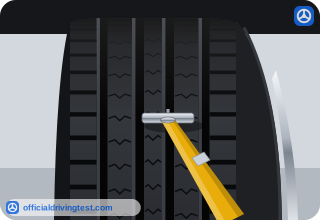
- 1/16 inch
- 1/4 inch
- 1/2 inch
- 1/8 inch
Show answer
Correct answer: 1/16 inch
The manual says to replace tires that have less than 1/16 inch of tire tread.
Source: Hawaii Driver's Manual (2023), page 20 · Open this page in the manual (Manual page 20)
-
When you place a Lincoln penny upside down within the tire tread, what shows that the tire needs to be replaced?
- The top of Lincoln's head is hidden
- The penny stands up in the tread
- The penny touches the tire sidewall
- The top of Lincoln's head is visible
Show answer
Correct answer: The top of Lincoln's head is visible
If the top of Lincoln's head is visible, the tire needs to be replaced.
Source: Hawaii Driver's Manual (2023), page 20 · Open this page in the manual (Manual page 20)
-
Which condition should you check tires for, besides pressure and tread depth?
- Fading, stains, dust and loose paint chips
- Cuts, bulges, tread separation and uneven wear
- Wax, shine, color and brand lettering marks
- Odor, noise, temperature and humidity
Show answer
Correct answer: Cuts, bulges, tread separation and uneven wear
Check tires for cuts, bulges, tread separation and uneven wear.
Source: Hawaii Driver's Manual (2023), page 20 · Open this page in the manual (Manual page 20)
-
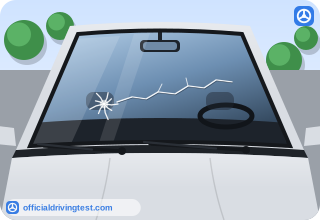
The windshield should be free of cracks and breaks of what kind?
- Those located on the left side only
- Those that interfere with your vision
- Those smaller than one inch across
- Those on the passenger side only
Show answer
Correct answer: Those that interfere with your vision
The windshield should be free of cracks and breaks that interfere with your vision.
Source: Hawaii Driver's Manual (2023), page 20 · Open this page in the manual (Manual page 20)
-
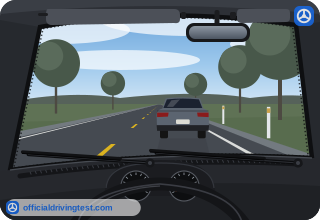
What do windshield washers enable you to do?
- Defog the rear window while parked
- Clean the head lamps while driving
- Adjust the wiper blades while driving
- Clean the windshield while you are driving
Show answer
Correct answer: Clean the windshield while you are driving
Windshield washers enable you to clean the windshield while you are driving.
Source: Hawaii Driver's Manual (2023), page 20 · Open this page in the manual (Manual page 20)
-
When must you signal before slowing down, turning or changing lanes?
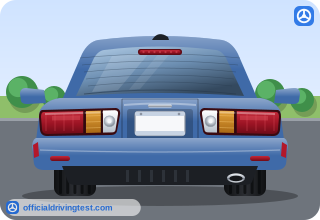
- Every time, even if no vehicles are in sight
- Only when other vehicles are in sight
- Only at night
- Only on roads that have three or more lanes of traffic
Show answer
Correct answer: Every time, even if no vehicles are in sight
You must signal every time, even when there are no other vehicles in sight.
Source: Hawaii Driver's Manual (2023), page 27 · Open this page in the manual (Manual page 27)
-
How far before you change lanes, turn or stop must you signal?
- At least 25 feet (7.6m)
- At least 50 feet (15m)
- At least 200 feet (61m)
- At least 100 feet (30.5m)
Show answer
Correct answer: At least 100 feet (30.5m)
Signals must be given for at least 100 feet (30.5m) before you change lanes, turn or stop, which is about five car lengths.
Source: Hawaii Driver's Manual (2023), page 27 · Open this page in the manual (Manual page 27)
-
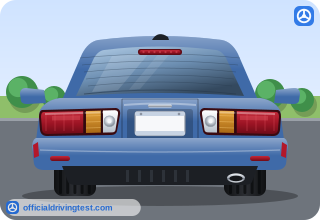
When must you use hand signals?
- When driving on a freeway
- When the vehicle turn signals are not operating
- When turning at an intersection with a traffic signal
- Only when a police officer is directing traffic
Show answer
Correct answer: When the vehicle turn signals are not operating
Hand signals must be used when the vehicle turn signals are not operating.
Source: Hawaii Driver's Manual (2023), page 27 · Open this page in the manual (Manual page 27)
-
After you signal a turn or lane change, what must you still do?
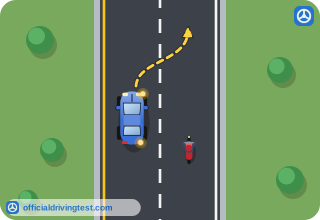
- Nothing, because the signal gives you the right to make the maneuver at once
- Check that it can be safely completed without interfering with other traffic
- Wait for other drivers to wave you through
- Sound your horn before you move
Show answer
Correct answer: Check that it can be safely completed without interfering with other traffic
Signaling does not give you the right to make the maneuver; you must check that it can be completed safely without interfering with other traffic.
Source: Hawaii Driver's Manual (2023), page 27 · Open this page in the manual (Manual page 27)
-
Why should you not rest your foot on the brake pedal when you are not braking?
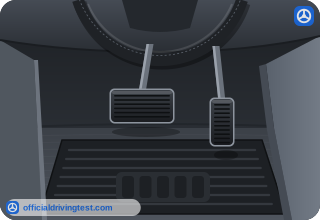
- It can turn off your turn signals while you are turning
- It can cause the engine to stall while you wait at a light
- It can lock the steering wheel when you turn
- It can give following drivers a false stop lamp signal
Show answer
Correct answer: It can give following drivers a false stop lamp signal
Resting your foot on the brake pedal gives following drivers a false stop lamp signal.
Source: Hawaii Driver's Manual (2023), page 27 · Open this page in the manual (Manual page 27)
-
In the manual's hand signal picture for a left turn, how is the driver's arm held?
- Extended straight out to the left
- Bent with the forearm pointing up
- Bent with the forearm pointing down
- Held straight out and angled up
Show answer
Correct answer: Extended straight out to the left
The manual's picture labeled LEFT TURN shows the driver's arm extended straight out from the window.
Source: Hawaii Driver's Manual (2023), page 27 · Open this page in the manual (Manual page 27)
-
In the manual's hand signal picture for a right turn, how is the driver's arm held?
- Extended straight out from the window to the left
- Bent at the elbow with the forearm pointing down
- Bent at the elbow with the forearm pointing up
- Held out straight and angled down at the hand
Show answer
Correct answer: Bent at the elbow with the forearm pointing up
The manual's picture labeled RIGHT TURN shows the driver's arm bent upward.
Source: Hawaii Driver's Manual (2023), page 27 · Open this page in the manual (Manual page 27)
-
In the manual's hand signal picture for slowing down or stopping, how is the driver's arm held?
- Extended straight out from the window to the left
- Bent at the elbow with the forearm pointing up
- Held out straight and angled up at the hand
- Bent at the elbow with the forearm pointing down
Show answer
Correct answer: Bent at the elbow with the forearm pointing down
The manual's picture labeled SLOW DOWN OR STOP shows the driver's arm bent downward.
Source: Hawaii Driver's Manual (2023), page 27 · Open this page in the manual (Manual page 27)
-
The manual says that failing to always do what, before changing lanes or driving away from the curb, is a “bad” habit?
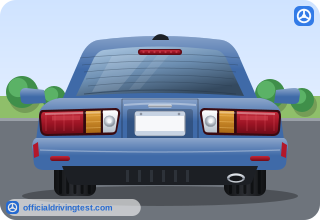
- Sound your horn
- Signal your intentions
- Turn on your headlights
- Check your instrument panel
Show answer
Correct answer: Signal your intentions
Failing to always signal your intentions before changing lanes or driving away from the curb is named as a “bad” habit.
Source: Hawaii Driver's Manual (2023), page 57 · Open this page in the manual (Manual page 57)
-
How often does the manual say the engine coolant, engine oil, battery water, tire condition and pressure, and lamps should have been checked?
- Within the previous day
- Within the previous month
- Before each year’s inspection
- Within the previous week
Show answer
Correct answer: Within the previous week
If these have not been checked within the previous week, you should check them or have them checked before you continue your trip.
Source: Hawaii Driver's Manual (2023), page 60 · Open this page in the manual (Manual page 60)
-
What does the manual say about any defect that may affect the safe operation of your vehicle?
- It can wait until the next inspection
- It should be corrected as soon as possible
- It can be ignored on short trips
- It must be reported to the police
Show answer
Correct answer: It should be corrected as soon as possible
Any defect which may affect the safe operation of the vehicle should be corrected as soon as possible.
Source: Hawaii Driver's Manual (2023), page 60 · Open this page in the manual (Manual page 60)
-
What does the manual say you should ensure before you start a trip?
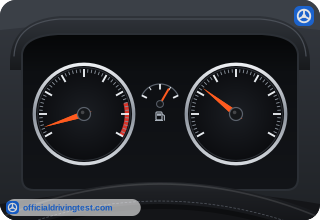
- That the fuel tank is exactly half full
- That a spare fuel container is on board
- That the vehicle has enough fuel for the trip
- That the fuel gauge has been replaced
Show answer
Correct answer: That the vehicle has enough fuel for the trip
The manual says to ensure that the vehicle contains enough fuel to complete the trip.
Source: Hawaii Driver's Manual (2023), page 60 · Open this page in the manual (Manual page 60)
-
What should you do for a few minutes when you are about to drive an unfamiliar vehicle?
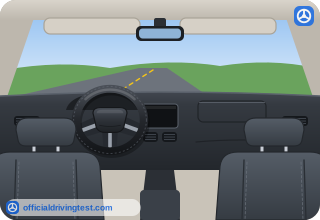
- Learn where its controls are and how they work
- Warm up the engine at full throttle for a while
- Test the brakes on a busy road
- Adjust the radio and the stereo
Show answer
Correct answer: Learn where its controls are and how they work
The manual says to take a few minutes to learn the turn and hazard warning signals, head lamps and beam selector, wipers and washers, brakes, gear selector and horn.
Source: Hawaii Driver's Manual (2023), page 60 · Open this page in the manual (Manual page 60)
-
When must any defects found in an unfamiliar vehicle be corrected?
- Before the vehicle is driven
- Within one week
- At the next service station stop
- After the trip is finished
Show answer
Correct answer: Before the vehicle is driven
The manual says any defects should be corrected before the vehicle is driven.
Source: Hawaii Driver's Manual (2023), page 60 · Open this page in the manual (Manual page 60)
-
When you turn the ignition switch on, what should the equipment warning lamps on the instrument panel do?
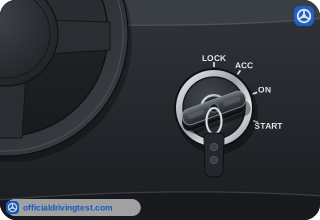
- All stay dark
- Flash on and off
- Light up only after the engine warms up
- All be illuminated
Show answer
Correct answer: All be illuminated
The warning lamps should all be illuminated when the ignition is turned on; a lamp that is not illuminated is not functioning.
Source: Hawaii Driver's Manual (2023), page 60 · Open this page in the manual (Manual page 60)
-
If a warning lamp does not light when the ignition switch is turned on, what does that indicate?
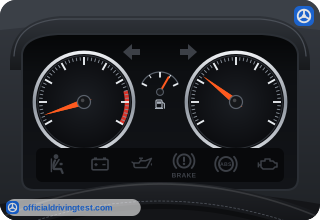
- The system is working perfectly
- The engine is too cold
- The lamp is not functioning
- The battery has been replaced
Show answer
Correct answer: The lamp is not functioning
A warning lamp that is not illuminated indicates that the lamp is not functioning.
Source: Hawaii Driver's Manual (2023), page 60 · Open this page in the manual (Manual page 60)
-
After the computer check, a red light remains lit on the instrument panel. What does the manual say this means?
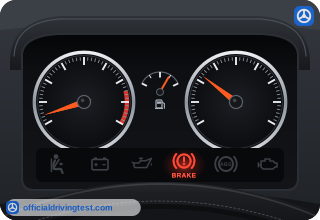
- Danger; check it immediately
- A warning only, so it can wait
- The lamp has burned out
- A normal part of starting the engine
Show answer
Correct answer: Danger; check it immediately
A red light indicates danger and should be checked immediately, while a yellow light that remains lit is a warning.
Source: Hawaii Driver's Manual (2023), page 60 · Open this page in the manual (Manual page 60)
-
After the computer check, a yellow light remains lit on the instrument panel. What does the manual say this is?
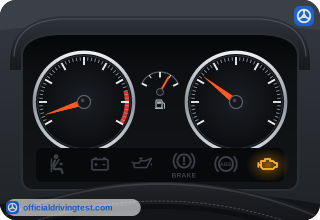
- A sign of danger needing immediate attention
- A normal reading that can be ignored
- A sign that the lamp is not working
- A warning
Show answer
Correct answer: A warning
The manual says that if a yellow light remains lit, it is a warning.
Source: Hawaii Driver's Manual (2023), page 60 · Open this page in the manual (Manual page 60)
-
When should the brake warning lamp go out?
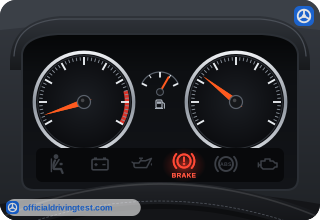
- When the engine reaches operating temperature
- When the parking brake is released
- When the foot brake pedal is pressed
- When the vehicle reaches 10 miles per hour
Show answer
Correct answer: When the parking brake is released
The brake warning lamp should go out when the parking brake is released.
Source: Hawaii Driver's Manual (2023), page 61 · Open this page in the manual (Manual page 61)
-
The brake warning lamp lights up when you press the foot brake pedal. What does the manual say about the vehicle?
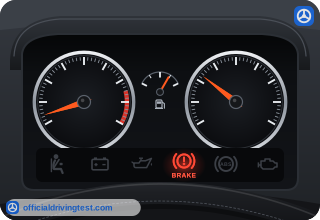
- The brakes are working normally
- The brake system is defective; do not drive it
- The parking brake needs adjusting
- You can drive it to the nearest service station
Show answer
Correct answer: The brake system is defective; do not drive it
If the lamp illuminates when the foot brake pedal is pressed, the brake system is defective and the vehicle should not be driven.
Source: Hawaii Driver's Manual (2023), page 61 · Open this page in the manual (Manual page 61)
-
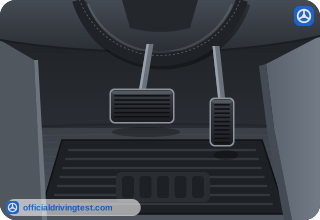
How do brakes stop a vehicle?
- By storing the vehicle's energy for later use
- By turning the vehicle's energy into fuel
- By converting the vehicle's energy of motion into heat
- By transferring the vehicle's energy to the tires
Show answer
Correct answer: By converting the vehicle's energy of motion into heat
Brakes stop a vehicle by converting the vehicle's energy of motion into heat and wasting it.
Source: Hawaii Driver's Manual (2023), page 69 · Open this page in the manual (Manual page 69)
-
What can a hard application of the brakes cause?
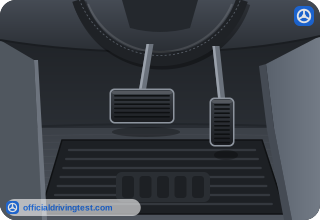
- One or more wheels to slide on the road
- The brakes to cool down more quickly
- The tires to grip the road much better
- The brake lamps to become dimmer than normal
Show answer
Correct answer: One or more wheels to slide on the road
A hard application of the brakes can cause one or more wheels to slide, and if the front wheels keep sliding you will not have control of the vehicle.
Source: Hawaii Driver's Manual (2023), page 69 · Open this page in the manual (Manual page 69)
-
You are in danger of striking another vehicle, a person or an object. What should you do?
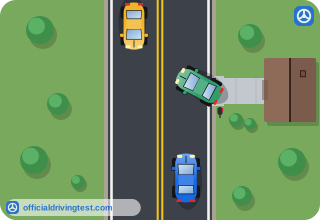
- Jam on the brakes hard and let the wheels slide
- Hold the brake pedal down hard and sound your horn
- Release the brakes completely and steer straight ahead
- Apply and release the brakes quickly and steer to a clear area
Show answer
Correct answer: Apply and release the brakes quickly and steer to a clear area
Instead of jamming on the brakes and sliding the wheels, you apply and release the brakes rapidly and steer the vehicle toward a clear area.
Source: Hawaii Driver's Manual (2023), page 70 · Open this page in the manual (Manual page 70)
-
How should you use the brakes if there is water, ice, snow, frost, sand or gravel on the road?

- Firmly and quickly
- Very cautiously
- Not at all
- Only with the parking brake
Show answer
Correct answer: Very cautiously
You use the brakes very cautiously if there is water, ice, snow, frost, sand or gravel on the surface of the road.
Source: Hawaii Driver's Manual (2023), page 70 · Open this page in the manual (Manual page 70)
-
After driving through water, what should you do about the brakes?
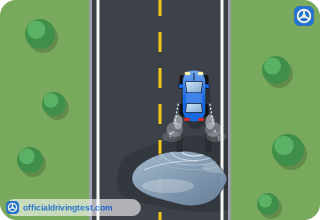
- Test the brakes, and apply them lightly several times if they are weaker
- Press the brake pedal down hard until all the water has cleared
- Shift to neutral and coast for a while to dry the brakes out
- Apply the parking brake for a short distance to dry them
Show answer
Correct answer: Test the brakes, and apply them lightly several times if they are weaker
You always test the brakes after driving through water, and if braking action has been reduced you apply them lightly several times until it is restored.
Source: Hawaii Driver's Manual (2023), page 70 · Open this page in the manual (Manual page 70)
-
Why should you avoid resting your foot on the brake pedal while you drive?
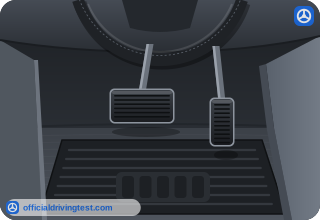
- It keeps the brake lamps off while the vehicle is still moving along
- It cools the brakes and helps them to last much longer
- It lights the brake lamps and gives other drivers an improper signal
- It improves your control of the vehicle on wet roads
Show answer
Correct answer: It lights the brake lamps and gives other drivers an improper signal
Resting your foot on the pedal activates the brake (stop) lamps, gives a false signal, and can partly apply the brakes and cause excessive wear.
Source: Hawaii Driver's Manual (2023), page 70 · Open this page in the manual (Manual page 70)
-
The brake warning lamp on the instrument panel lights up when you apply the brakes. What does this mean?
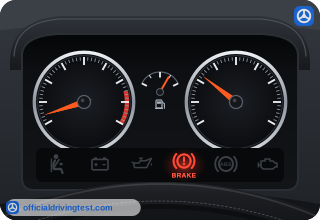
- The brakes are working normally and no repair is needed now
- The brake system has partially failed and immediate repair is required
- The brake fluid has just been topped off and is now full
- The brake pads are brand new and still need to be broken in
Show answer
Correct answer: The brake system has partially failed and immediate repair is required
A brake warning lamp that lights when you apply the brakes means the brake system has partially failed and immediate repair is required.
Source: Hawaii Driver's Manual (2023), page 70 · Open this page in the manual (Manual page 70)
-
When should you start slowing your vehicle?
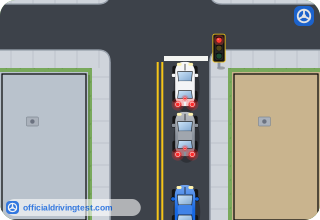
- At the last possible moment, using one firm hard stop
- Only after the vehicle ahead of you has completely stopped moving
- Only when you can see the brake lamps of the car ahead
- As soon as it becomes apparent that braking will be required ahead
Show answer
Correct answer: As soon as it becomes apparent that braking will be required ahead
You always start slowing as soon as it becomes apparent that braking will be required, using smooth steady brake applications.
Source: Hawaii Driver's Manual (2023), page 70 · Open this page in the manual (Manual page 70)
-
When stopping in traffic, how far behind the vehicle ahead should you stop?
- Close enough to touch its bumper
- One full car length exactly
- Far enough to see where its rear tires rest on the road
- Far enough that its brake lamps are out of sight
Show answer
Correct answer: Far enough to see where its rear tires rest on the road
Stopping far enough back to see where the rear tires of the vehicle ahead rest on the road leaves room to go around it if it cannot proceed.
Source: Hawaii Driver's Manual (2023), page 70 · Open this page in the manual (Manual page 70)
-
What does a prolonged brake application cause, and how can you usually avoid it?
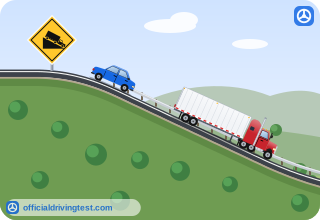
- The brakes heat up and lose effectiveness; shift to a lower gear
- The brakes cool down and work better; shift to a higher gear
- The tires grip the road more; stay in the same gear
- The engine stalls out; shift into neutral to coast
Show answer
Correct answer: The brakes heat up and lose effectiveness; shift to a lower gear
Prolonged braking heats up the brakes and makes them much less effective; it can usually be avoided by shifting to a lower gear so the engine helps hold the speed down.
Source: Hawaii Driver's Manual (2023), page 70 · Open this page in the manual (Manual page 70)
-
What is downshifting?
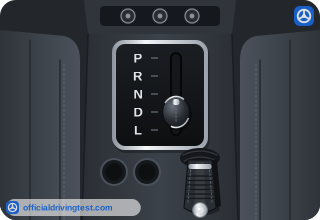
- Selecting a lower gear only after the vehicle has come to a stop
- Shifting into neutral to coast down a long and steep grade
- Releasing the clutch pedal slowly after every stop sign
- Selecting a lower transmission gear range while the vehicle is in motion
Show answer
Correct answer: Selecting a lower transmission gear range while the vehicle is in motion
Downshifting is the procedure of selecting a lower transmission gear range while the vehicle is in motion, and it can be used with manual and automatic transmissions.
Source: Hawaii Driver's Manual (2023), page 70 · Open this page in the manual (Manual page 70)
-
Which is a purpose of downshifting?
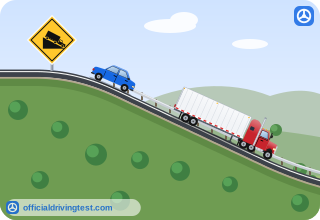
- To save fuel on every trip
- To obtain greater braking action from the engine
- To warn following drivers you are stopping
- To rest the brakes when the vehicle is parked
Show answer
Correct answer: To obtain greater braking action from the engine
Downshifting is used to obtain greater braking action from the engine when reducing speed or holding a reduced speed on a downgrade.
Source: Hawaii Driver's Manual (2023), page 70 · Open this page in the manual (Manual page 70)
-
When should you make the downshift for a steep downgrade?

- Before starting down the grade
- Halfway down the grade
- At the bottom of the grade
- Only after the brakes begin to fade
Show answer
Correct answer: Before starting down the grade
The downshift should be made before starting the downgrade because it is more difficult to downshift at higher speeds.
Source: Hawaii Driver's Manual (2023), page 70 · Open this page in the manual (Manual page 70)
-
What is the downshift procedure for a synchronized manual transmission?
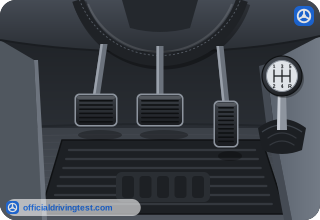
- Release the clutch pedal, move to the next lower gear, and quickly press the pedal
- Shift to neutral, rev the engine, then select the lower gear
- Depress the clutch pedal, move to the next lower gear, and slowly release the clutch
- Press the brake and clutch together and shift to first gear
Show answer
Correct answer: Depress the clutch pedal, move to the next lower gear, and slowly release the clutch
The downshift procedure is to depress the clutch pedal, move the shift lever to the next lower gear, and slowly release the clutch pedal.
Source: Hawaii Driver's Manual (2023), page 70 · Open this page in the manual (Manual page 70)
-
What does the manual say about "double clutching" on a non-synchronized manual transmission?
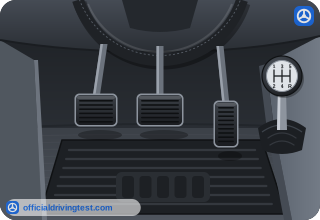
- It should be done at every stop to protect the gears
- It should not be attempted without prior practice and experience
- It is simple and needs no practice before you use it
- It is required in every modern passenger car sold today
Show answer
Correct answer: It should not be attempted without prior practice and experience
On non-synchronized transmissions the engine speed must be matched to vehicle speed, which is sometimes called double clutching and should not be attempted without prior practice and experience.
Source: Hawaii Driver's Manual (2023), page 70 · Open this page in the manual (Manual page 70)
-
At high speeds of 60+ miles per hour, what happens with most automatic transmissions, and what must you do to downshift?
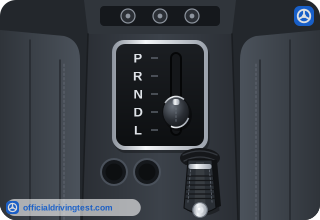
- They lock in the lowest gear; keep driving as usual
- They shift into neutral by themselves; coast to a full stop
- They downshift only while in park; stop the vehicle first
- They will not downshift; reduce vehicle speed to let them downshift
Show answer
Correct answer: They will not downshift; reduce vehicle speed to let them downshift
At high speeds (60+ mph) most automatic transmissions will not downshift, so you must reduce the vehicle speed to allow the transmission to downshift.
Source: Hawaii Driver's Manual (2023), page 71 · Open this page in the manual (Manual page 71)
-
Why is downshifting as a regular routine not recommended?
- It always causes serious damage to the brakes and tires
- It makes the brake lamps flash on and off as you slow
- It slows you quickly with no stop lamp warning to drivers behind
- It is against the law on every downgrade in the state
Show answer
Correct answer: It slows you quickly with no stop lamp warning to drivers behind
Regular downshifting is not recommended because it causes a rapid deceleration of the vehicle without a warning (stop lamp) signal to following drivers.
Source: Hawaii Driver's Manual (2023), page 71 · Open this page in the manual (Manual page 71)
-
When you downshift to reduce speed, how should it be used?
- Only to supplement brake action
- Instead of using the brakes
- Only on level roads
- Before every stop
Show answer
Correct answer: Only to supplement brake action
Downshifting to reduce speed should be used only to supplement brake action.
Source: Hawaii Driver's Manual (2023), page 71 · Open this page in the manual (Manual page 71)
-
What can downshifting at higher speeds actually do?
- Turn on the brake lamps automatically for you
- Raise the fuel economy of the vehicle
- Make the brake lamps brighter
- Decrease the ability of the vehicle to accelerate
Show answer
Correct answer: Decrease the ability of the vehicle to accelerate
The manual cautions that downshifting at higher speeds may actually decrease the ability of the vehicle to accelerate.
Source: Hawaii Driver's Manual (2023), page 71 · Open this page in the manual (Manual page 71)
-
When may downshifting be used as an emergency procedure?
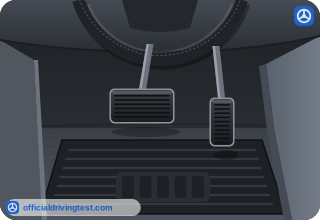
- To stop more quickly than the brakes can on a dry road
- To slow the vehicle if the brakes partly or fully fail
- To pass a slower vehicle that is ahead of you on the road
- To park the vehicle on a steep hill with no curb
Show answer
Correct answer: To slow the vehicle if the brakes partly or fully fail
Downshifting may properly be used as an emergency procedure to slow the vehicle in case of a partial or complete brake failure.
Source: Hawaii Driver's Manual (2023), page 71 · Open this page in the manual (Manual page 71)
-
Why should you use extra care when downshifting on a slippery road surface?

- Unequal forces may cause vehicle control problems
- The brake lamps will not work on a slippery surface
- The clutch pedal will lock in the down position
- Automatic transmissions cannot downshift at all
Show answer
Correct answer: Unequal forces may cause vehicle control problems
Downshifting on a slippery surface develops unequal forces that may cause vehicle control problems.
Source: Hawaii Driver's Manual (2023), page 71 · Open this page in the manual (Manual page 71)
-
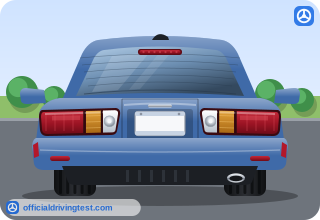
Which is an advantage of electric turn signals over hand signals?
- They are usually not subject to failure
- They require that the driver’s window be open
- They can be used when the vehicle has no indicator lamp
- They allow the driver to use both hands to control the vehicle
Show answer
Correct answer: They allow the driver to use both hands to control the vehicle
Electric signals allow the driver to use both hands to control the vehicle while signaling.
Source: Hawaii Driver's Manual (2023), page 73 · Open this page in the manual (Manual page 73)
-
Failure to cancel an electric turn signal is usually caused by what?
- Using the hazard warning signals while the vehicle is moving in traffic
- Signaling for longer than 100 feet before the turn
- A turn or lane change too small to operate the self-cancelling mechanism
- A burned-out stop lamp
Show answer
Correct answer: A turn or lane change too small to operate the self-cancelling mechanism
Failure to cancel is usually caused by a turn or lane change too small to cause operation of the self-cancelling mechanism, and by the driver not observing the instrument panel indicator.
Source: Hawaii Driver's Manual (2023), page 73 · Open this page in the manual (Manual page 73)
-
What is an abnormal function of the turn signal indicator lamp a clue to?
- Improper operation of the signal system
- A fully charged battery
- That the self-cancelling mechanism is working
- That the hazard warning signals are on
Show answer
Correct answer: Improper operation of the signal system
The manual says any abnormal function of the indicator lamp is a clue to improper operation of the signal system.
Source: Hawaii Driver's Manual (2023), page 73 · Open this page in the manual (Manual page 73)
-
When is knowledge of the proper hand signals required of a driver?
- Only when driving on a freeway
- Only when driving at night
- Whenever the driver’s window is closed
- If the electric signals fail
Show answer
Correct answer: If the electric signals fail
The manual says knowledge of the proper hand signals is required if the electric signals fail.
Source: Hawaii Driver's Manual (2023), page 73 · Open this page in the manual (Manual page 73)
-
Which is a disadvantage of hand signals?
- They fail to cancel after a turn
- They require that the driver’s window be open
- They cannot be used if the electric signals fail
- They cannot be seen from the front of the vehicle
Show answer
Correct answer: They require that the driver’s window be open
One listed disadvantage of hand signals is that they require the driver’s window to be open.
Source: Hawaii Driver's Manual (2023), page 73 · Open this page in the manual (Manual page 73)
-
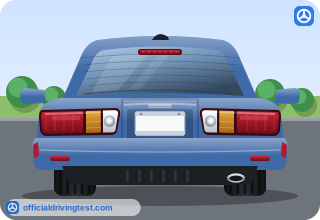
What are hazard warning signals (4-way flash) intended to do?
- Show that you are about to change lanes or turn at the next intersection
- Warn other drivers that a vehicle is in a hazardous position on the roadway
- Tell other drivers to pass you on the left
- Show that you are slowing in traffic
Show answer
Correct answer: Warn other drivers that a vehicle is in a hazardous position on the roadway
Hazard warning signals are intended to warn other drivers that a vehicle is in a hazardous position on the roadway.
Source: Hawaii Driver's Manual (2023), page 73 · Open this page in the manual (Manual page 73)
-
When should the hazard warning signal (4-way flash) never be used?
- When the vehicle is parked at night
- When the vehicle has broken down
- When the vehicle is in a hazardous position
- When the vehicle is moving
Show answer
Correct answer: When the vehicle is moving
The manual says the hazard warning signal should never be used when the vehicle is moving.
Source: Hawaii Driver's Manual (2023), page 73 · Open this page in the manual (Manual page 73)
-
How is the operation of the hazard warning signals shown?
- By the flashing of all turn signal indicators
- By the flashing of the stop lamps only
- By the flashing of the left turn indicator only
- By the head lamps flashing on and off
Show answer
Correct answer: By the flashing of all turn signal indicators
Operation of the hazard warning signal is shown by the flashing of all turn signal indicators.
Source: Hawaii Driver's Manual (2023), page 73 · Open this page in the manual (Manual page 73)
-
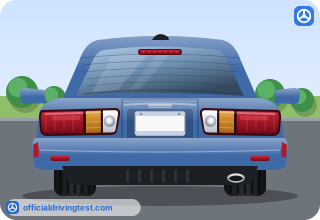
When are electric stop lamps automatically operated?
- When the turn signal is turned on
- When the accelerator is released
- When the service brake is used
- When the head lamps are turned on
Show answer
Correct answer: When the service brake is used
Electric stop lamps are automatically operated when the service brake is used.
Source: Hawaii Driver's Manual (2023), page 74 · Open this page in the manual (Manual page 74)
-
What may a driver use a hand signal to indicate, besides turns?
- That the vehicle is in a hazardous position
- That the vehicle is about to be parked
- That the high beams are on
- Either braking or slowing of the vehicle
Show answer
Correct answer: Either braking or slowing of the vehicle
The manual says a hand signal may be used to indicate either braking or slowing of the vehicle.
Source: Hawaii Driver's Manual (2023), page 74 · Open this page in the manual (Manual page 74)
-
What does using a turn signal give you?
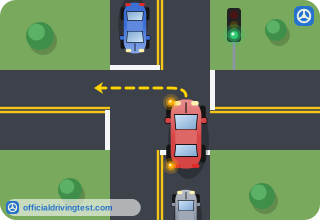
- The right of way to make the movement you have signaled
- It shows your intent but gives no right to make the movement
- Release from responsibility for the movement
- The right to change lanes without looking
Show answer
Correct answer: It shows your intent but gives no right to make the movement
The use of a signal does not give you the right to make the intended movement; you alone are responsible for making it safely.
Source: Hawaii Driver's Manual (2023), page 74 · Open this page in the manual (Manual page 74)
-
For at least how far before making every turn or lane change must you display a turn signal?
- 50 feet (15 meters)
- 200 feet (60 meters)
- 100 feet (30 meters)
- 300 feet (90 meters)
Show answer
Correct answer: 100 feet (30 meters)
Traffic regulations require a turn signal for at least 100 feet (30 meters) before every turn or lane change.
Source: Hawaii Driver's Manual (2023), page 74 · Open this page in the manual (Manual page 74)
-
If you must slow your vehicle before making a turn or lane change, when should you begin signaling?
- Before slowing your vehicle
- After you have finished slowing
- Just as you begin the turn
- Only when you are stopped
Show answer
Correct answer: Before slowing your vehicle
Begin signaling before slowing so other drivers are alerted that you might reduce speed.
Source: Hawaii Driver's Manual (2023), page 74 · Open this page in the manual (Manual page 74)
-
You are about to turn and it appears that no one is around to see your signal. What does the manual say?
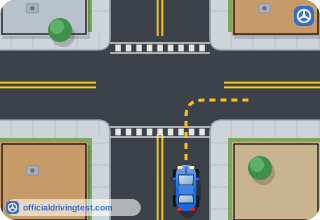
- Skip the signal, since no one is there to see it
- Signal only after the turn has started
- Use the hazard warning signals instead
- Signal anyway; skipping it is a common signaling error
Show answer
Correct answer: Signal anyway; skipping it is a common signaling error
The manual lists failure to signal when it appears that there is no one to observe the signal as a common signaling error.
Source: Hawaii Driver's Manual (2023), page 74 · Open this page in the manual (Manual page 74)
-
According to the manual, what does failure to signal properly show?
- A lack of consideration and courtesy towards others
- That the vehicle’s signal system has failed
- Skill at merging into traffic
- A good defensive driving habit
Show answer
Correct answer: A lack of consideration and courtesy towards others
Failure to signal properly indicates driver ignorance, arrogance, or uncertainty and shows a lack of consideration and courtesy towards others.
Source: Hawaii Driver's Manual (2023), page 74 · Open this page in the manual (Manual page 74)
-
When heavy rain reduces your visibility, what lights should you turn on?
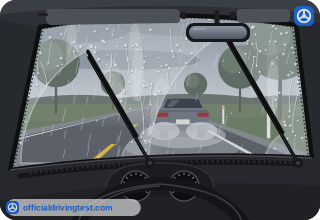
- Head lamps on high beam
- Hazard warning signals only
- Parking lights only
- Head lamps on low beam
Show answer
Correct answer: Head lamps on low beam
The manual says to reduce your speed and turn on your head lamps (low beam) so that others may see you.
Source: Hawaii Driver's Manual (2023), page 76 · Open this page in the manual (Manual page 76)
-
Which head lamp setting should you use when driving in fog?
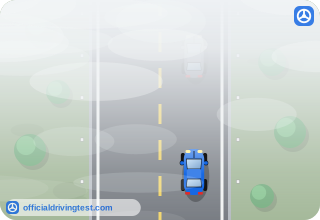
- Low beam
- High beam
- Parking lights only
- No change from normal
Show answer
Correct answer: Low beam
The manual says to sharply reduce speed and turn on low beam head lamps, and never to use the high beam in fog.
Source: Hawaii Driver's Manual (2023), page 76 · Open this page in the manual (Manual page 76)
-
What should you use when driving towards the rising or setting sun?
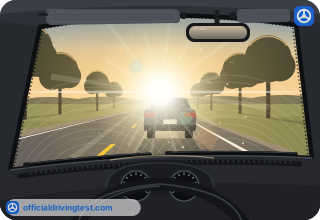
- High beam head lamps
- Hazard warning signals
- Sun visors and sun glasses
- Parking lights only
Show answer
Correct answer: Sun visors and sun glasses
When driving towards the rising or setting sun, use sun visors and sun glasses and keep the windshield absolutely clean.
Source: Hawaii Driver's Manual (2023), page 77 · Open this page in the manual (Manual page 77)
-
For a short period before sunrise and after sunset there is not enough light to see objects clearly. How should the head lamps be used?
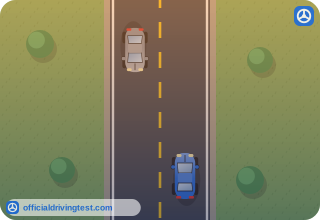
- On low beam so others can see you
- On high beam to light the road
- Off, since it is still daylight
- On parking lights only
Show answer
Correct answer: On low beam so others can see you
The manual says to turn the head lamps on low beam during this time so others can see you.
Source: Hawaii Driver's Manual (2023), page 77 · Open this page in the manual (Manual page 77)
-
What should you do with your high beam head lamps when approaching or following other vehicles at night?
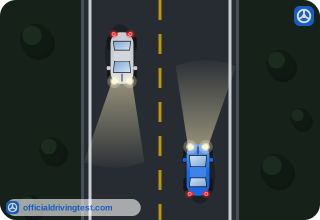
- Use them to be seen better
- Do not use them
- Use them only for a few seconds at a time
- Use them only when following
Show answer
Correct answer: Do not use them
The manual says not to use high beam head lamps when approaching or following other vehicles.
Source: Hawaii Driver's Manual (2023), page 77 · Open this page in the manual (Manual page 77)
-
If the lights of an approaching vehicle are too bright at night, where should you look?
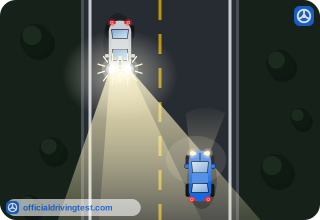
- Directly at the approaching head lamps
- At the center line
- At your rear-view mirror
- At the right edge of the road
Show answer
Correct answer: At the right edge of the road
The manual says to flash your high beams once and look at the right edge of the road, using lane markings or reflectors as a guide.
Source: Hawaii Driver's Manual (2023), page 77 · Open this page in the manual (Manual page 77)
-
How should you prepare your eyes for night driving?
- Expose them to alternating light and darkness before you drive
- Look at bright lights just before you drive
- Protect them from bright light for several hours before you drive
- Wear sun glasses while you drive
Show answer
Correct answer: Protect them from bright light for several hours before you drive
The manual says to protect your eyes from bright light for several hours before you drive.
Source: Hawaii Driver's Manual (2023), page 77 · Open this page in the manual (Manual page 77)
-
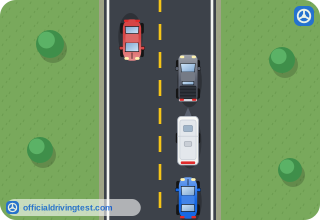
When towing, when must you have outside rear-view mirrors on both sides of your car?
- When the trailer weighs more than half the weight of the towing vehicle
- When the trailer blocks your view in the inside mirror
- Whenever you tow any trailer at night
- When the trailer is longer than the towing vehicle
Show answer
Correct answer: When the trailer blocks your view in the inside mirror
If the trailer is large enough to obstruct your view through the inside rear-view mirror, you must have outside rear-view mirrors of proper size on both sides.
Source: Hawaii Driver's Manual (2023), page 87 · Open this page in the manual (Manual page 87)
-
When must a loaded trailer be equipped with brakes and breakaway protection?
- If it weighs more than the towing vehicle or is 5,000 pounds or more
- If it weighs more than a quarter of the towing vehicle or is 2,000 pounds or more
- If it is longer than the towing vehicle or weighs 6,000 pounds or more
- If it weighs more than half the weight of the towing vehicle or is 3,000 pounds or more
Show answer
Correct answer: If it weighs more than half the weight of the towing vehicle or is 3,000 pounds or more
A loaded trailer needs brakes and breakaway protection when it weighs more than half of the towing vehicle or is 3,000 pounds or more.
Source: Hawaii Driver's Manual (2023), page 87 · Open this page in the manual (Manual page 87)
-
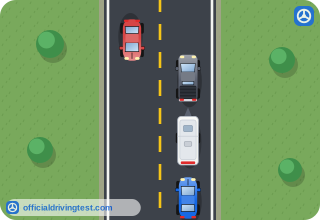
To what must a trailer’s safety chains be attached?
- A part of the trailer hitch
- The bumper of the towing vehicle and the trailer tongue
- The frame of the towing vehicle and the trailer
- The rear axle of the towing vehicle and the trailer
Show answer
Correct answer: The frame of the towing vehicle and the trailer
Safety chains must be attached to the frame of the towing vehicle and the trailer, not to a part of the trailer hitch.
Source: Hawaii Driver's Manual (2023), page 87 · Open this page in the manual (Manual page 87)
-
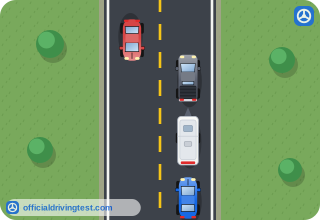
What does the manual say about relying on bumper hitches for towing trailers?
- They are fine for small trailers
- Don’t rely on them for any trailer
- They are required for large trailers
- They are best for heavy loads
Show answer
Correct answer: Don’t rely on them for any trailer
The manual says not to rely on bumper hitches for any trailer.
Source: Hawaii Driver's Manual (2023), page 88 · Open this page in the manual (Manual page 88)
-
About what share of the trailer weight should be on the vehicle’s trailer hitch?
- About 25% to 30%
- About 1% to 5%
- About 50%
- About 10% to 15%
Show answer
Correct answer: About 10% to 15%
About 10% to 15% of the trailer weight should be on the vehicle’s trailer hitch.
Source: Hawaii Driver's Manual (2023), page 88 · Open this page in the manual (Manual page 88)
-
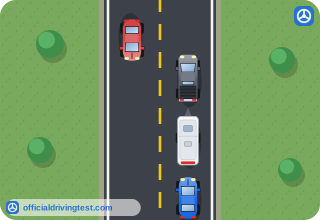
What happens if too little weight is on the trailer hitch?
- The trailer will “fishtail”
- The trailer tires will wear out faster
- The trailer brakes will lock up
- The load will shift forward
Show answer
Correct answer: The trailer will “fishtail”
If the weight on the hitch is too small, the trailer will “fishtail.”
Source: Hawaii Driver's Manual (2023), page 88 · Open this page in the manual (Manual page 88)
-
What happens if too much weight is on the vehicle’s trailer hitch?
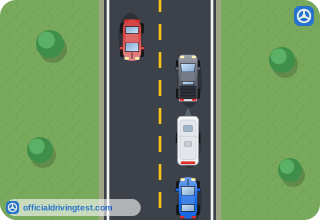
- The trailer will lift up off the hitch ball
- The trailer lights will stop working properly
- You will have difficulty steering the vehicle
- The vehicle will accelerate much too fast
Show answer
Correct answer: You will have difficulty steering the vehicle
If the weight on the hitch is too great, you will have difficulty steering the vehicle.
Source: Hawaii Driver's Manual (2023), page 88 · Open this page in the manual (Manual page 88)
-
Besides being balanced, what should be true of a trailer load?
- It should be placed mostly over the rear axle
- It should be held securely in place
- It should be covered at all times
- It should be lighter than the towing vehicle
Show answer
Correct answer: It should be held securely in place
The manual says to be sure the load is held securely in place.
Source: Hawaii Driver's Manual (2023), page 88 · Open this page in the manual (Manual page 88)
-
What should cover the wheels of a trailer?
- Hubcaps or wheel covers
- Canvas or plastic covers
- Reflective tape strips
- Fenders or mud guards
Show answer
Correct answer: Fenders or mud guards
A trailer should have wheels properly mounted and lubricated, and covered with fenders or mud guards.
Source: Hawaii Driver's Manual (2023), page 88 · Open this page in the manual (Manual page 88)
-
What should the tires of a trailer be?
- Good tires properly inflated
- Matched to the tires of the towing vehicle
- Inflated to the maximum pressure whatever the load
- Slightly under-inflated for a softer ride
Show answer
Correct answer: Good tires properly inflated
The manual says a trailer should have good tires properly inflated.
Source: Hawaii Driver's Manual (2023), page 88 · Open this page in the manual (Manual page 88)
-
Which lamps should a trailer have?
- Headlamps, fog lamps and a roof-mounted beacon
- Hazard flashers, cornering lamps and a spotlight
- Tail, stop, turn signal and license plate lamps
- Parking lamps, fog lamps and a warning beacon
Show answer
Correct answer: Tail, stop, turn signal and license plate lamps
A trailer should have tail, stop, turn signal and license plate lamps and, if required, side marker lamps and reflectors.
Source: Hawaii Driver's Manual (2023), page 88 · Open this page in the manual (Manual page 88)