Hawaii: Signals and vehicle controls — Part 1 Practice Test
Questions in this part include: “Which equipment is prohibited on a vehicle that is not an authorized emergency vehicle?” · “Where should you try out antilock brakes so you know what to expect in an emergency brake application?”
Independent educational site · not affiliated with any government agency or DMV
Ready? Test yourself
- Instant feedback with an explanation
- Every answer cites its source in the manual
- Your best score is saved on this device
Questions are original and based on the official manual "Hawaii Driver's Manual" (2023), Hawaii Department of Transportation.
All 18 questions in this practice test
Take the test above first, then use this list to study. Tap “Show answer” to see the correct answer and explanation.
Show the questions and answersHide the questions
-
Which of these is prohibited on a motor vehicle other than an authorized emergency vehicle?
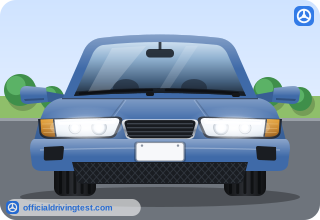
- A red light showing from the front
- A head lamp that is correctly adjusted
- A brake lamp that works when braking
- A tail lamp that is clean and working
Show answer
Correct answer: A red light showing from the front
A red light showing from the front, or a blue light visible outside of the vehicle, is prohibited except on authorized emergency vehicles.
Source: Hawaii Driver's Manual (2023), page 18 · Open this page in the manual (Manual page 18)
-
Which equipment is prohibited on a vehicle that is not an authorized emergency vehicle?
- A horn in good working order
- Windshield washers that work
- A bell, exhaust whistle or siren
- A rear-view mirror kept clean
Show answer
Correct answer: A bell, exhaust whistle or siren
A bell, exhaust whistle or siren is prohibited except on authorized emergency vehicles.
Source: Hawaii Driver's Manual (2023), page 18 · Open this page in the manual (Manual page 18)
-
Which muffler is prohibited?
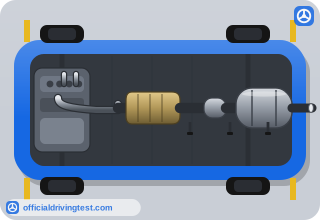
- One that carries exhaust gases to an exit point
- One that is louder than an original equipment muffler
- One that has no leaks in the exhaust system
- One that reduces the noise to an acceptable level
Show answer
Correct answer: One that is louder than an original equipment muffler
A muffler cut-out or by-pass, or a muffler that makes more noise than an original equipment manufacturer muffler, is prohibited.
Source: Hawaii Driver's Manual (2023), page 18 · Open this page in the manual (Manual page 18)
-
Which item is included in the equipment every motor vehicle operated on Hawaii highways must have?
- A rear spoiler
- A roof rack
- A GPS unit
- An odometer
Show answer
Correct answer: An odometer
The manual lists the odometer among the equipment every motor vehicle must have, meeting established standards.
Source: Hawaii Driver's Manual (2023), page 18 · Open this page in the manual (Manual page 18)
-
Who is responsible for the condition of the vehicle you are driving?
- You, even if you are not the owner
- Only the registered owner of the car
- The garage that inspected it
- The lien holder
Show answer
Correct answer: You, even if you are not the owner
The manual says you are responsible for the condition of the vehicle you are driving even though you may not be the owner.
Source: Hawaii Driver's Manual (2023), page 19 · Open this page in the manual (Manual page 19)
-
What is a common brake test described in the manual?
- Applying the brakes lightly at 20 to 25 mph
- Applying the brakes rather hard at 35 to 40 mph
- Applying the brakes rather hard at a speed of 4 to 8 mph
- Applying the brakes gently at 12 to 16 mph
Show answer
Correct answer: Applying the brakes rather hard at a speed of 4 to 8 mph
A common brake test is to apply the brakes rather hard at a speed of 4 to 8 mph.
Source: Hawaii Driver's Manual (2023), page 19 · Open this page in the manual (Manual page 19)
-
During a brake test, what should the vehicle do?
- Pull slightly to the right
- Pull slightly to the left
- Slow down only after a few seconds
- Not pull to either side
Show answer
Correct answer: Not pull to either side
The vehicle should not pull to either side during the brake test.
Source: Hawaii Driver's Manual (2023), page 19 · Open this page in the manual (Manual page 19)
-
Where should you try out antilock brakes so you know what to expect in an emergency brake application?
- On a busy city street while other cars are moving
- In an open area such as a deserted parking lot
- On a freeway on-ramp during rush hour traffic
- On a narrow road lined with parked cars
Show answer
Correct answer: In an open area such as a deserted parking lot
The manual says to go to an open area such as a deserted section of a parking lot and try antilock brakes out.
Source: Hawaii Driver's Manual (2023), page 19 · Open this page in the manual (Manual page 19)
-
You usually need to be going over what speed for antilock brakes to activate?
- 20 mph
- 30 mph
- 10 mph
- 40 mph
Show answer
Correct answer: 10 mph
The manual says you usually need to be going over 10 mph for antilock brakes to activate.
Source: Hawaii Driver's Manual (2023), page 19 · Open this page in the manual (Manual page 19)
-
On what kind of surface is it easier to activate antilock brakes (ABS)?
- A wet and slippery surface
- A dry, clean surface
- A freshly painted surface
- A surface covered with gravel only
Show answer
Correct answer: A wet and slippery surface
The manual says it is easier to activate ABS on a wet and slippery surface.
Source: Hawaii Driver's Manual (2023), page 19 · Open this page in the manual (Manual page 19)
-
What does the manual say to practice when you have antilock brakes?
- Not pumping the brake pedal
- Pumping the brake pedal quickly
- Tapping the brake pedal twice
- Releasing the brake pedal before stopping
Show answer
Correct answer: Not pumping the brake pedal
The manual says to practice NOT pumping the brake pedal with antilock brakes.
Source: Hawaii Driver's Manual (2023), page 19 · Open this page in the manual (Manual page 19)
-
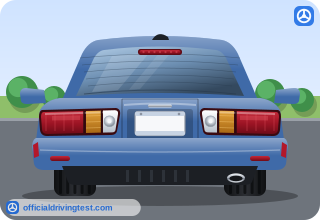
What do brake or stop lamps warn other drivers of?
- That you are about to turn left
- That you are passing another car
- That you are slowing or stopping
- That you are parked at the curb
Show answer
Correct answer: That you are slowing or stopping
Brake or stop lamps warn other drivers that you are slowing or stopping.
Source: Hawaii Driver's Manual (2023), page 19 · Open this page in the manual (Manual page 19)
-
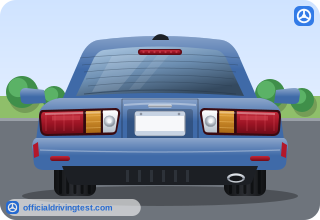
What should you use if your directional signals fail, until you can have them repaired?
- The horn
- Hand signals
- The hazard flashers
- Your head lamps
Show answer
Correct answer: Hand signals
If the directional signals fail, use hand signals until you can have them repaired.
Source: Hawaii Driver's Manual (2023), page 19 · Open this page in the manual (Manual page 19)
-
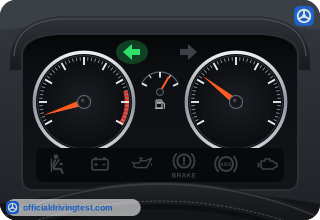
What does any change in the dash light indication of your directional signals reflect?
- A low battery
- A worn tire
- A normal signal
- Improper operation
Show answer
Correct answer: Improper operation
Any change in the dash light indication reflects improper operation of the directional signals.
Source: Hawaii Driver's Manual (2023), page 19 · Open this page in the manual (Manual page 19)
-
What should you be sure of regarding your vehicle's door latches and locks?
- Only the driver's door latches
- They are lubricated every month
- All doors latch and lock properly
- Rear doors are always locked while driving
Show answer
Correct answer: All doors latch and lock properly
Door latches and locks provide safety and security, so all doors must latch and lock properly.
Source: Hawaii Driver's Manual (2023), page 19 · Open this page in the manual (Manual page 19)
-
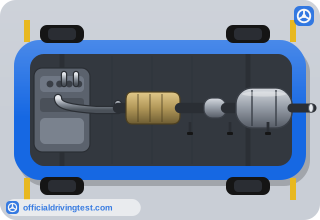
What should you do to prevent carbon monoxide poisoning?
- Keep your exhaust system free of leaks
- Keep your windows closed
- Replace the muffler every year
- Keep the engine running while parked
Show answer
Correct answer: Keep your exhaust system free of leaks
To prevent carbon monoxide poisoning, keep your exhaust system free of leaks.
Source: Hawaii Driver's Manual (2023), page 19 · Open this page in the manual (Manual page 19)
-
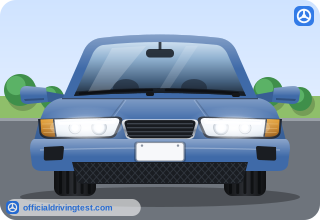
The head lamps must work properly and be correctly adjusted when?
- Only at night
- Only in rain or fog
- Only when driving through tunnels
- At all times
Show answer
Correct answer: At all times
The manual says head lamps must work properly and be correctly adjusted at all times.
Source: Hawaii Driver's Manual (2023), page 19 · Open this page in the manual (Manual page 19)
-
What are front opening hoods equipped with?
- Two identical primary latches
- A primary latch and a secondary catch
- A single safety pin
- A lock operated from the driver's seat
Show answer
Correct answer: A primary latch and a secondary catch
Front opening hoods have a primary latch and a secondary catch so the hood will not open and block your vision.
Source: Hawaii Driver's Manual (2023), page 19 · Open this page in the manual (Manual page 19)