Hawaii: Signals and vehicle controls — Part 3 Practice Test
Questions in this part include: “In the manual's hand signal picture for a left turn, how is the driver's arm held?” · “In the manual's hand signal picture for slowing down or stopping, how is the driver's arm held?”
Independent educational site · not affiliated with any government agency or DMV
Ready? Test yourself
- Instant feedback with an explanation
- Every answer cites its source in the manual
- Your best score is saved on this device
Questions are original and based on the official manual "Hawaii Driver's Manual" (2023), Hawaii Department of Transportation.
All 18 questions in this practice test
Take the test above first, then use this list to study. Tap “Show answer” to see the correct answer and explanation.
Show the questions and answersHide the questions
-
In the manual's hand signal picture for a left turn, how is the driver's arm held?
- Extended straight out to the left
- Bent with the forearm pointing up
- Bent with the forearm pointing down
- Held straight out and angled up
Show answer
Correct answer: Extended straight out to the left
The manual's picture labeled LEFT TURN shows the driver's arm extended straight out from the window.
Source: Hawaii Driver's Manual (2023), page 27 · Open this page in the manual (Manual page 27)
-
In the manual's hand signal picture for a right turn, how is the driver's arm held?
- Extended straight out from the window to the left
- Bent at the elbow with the forearm pointing down
- Bent at the elbow with the forearm pointing up
- Held out straight and angled down at the hand
Show answer
Correct answer: Bent at the elbow with the forearm pointing up
The manual's picture labeled RIGHT TURN shows the driver's arm bent upward.
Source: Hawaii Driver's Manual (2023), page 27 · Open this page in the manual (Manual page 27)
-
In the manual's hand signal picture for slowing down or stopping, how is the driver's arm held?
- Extended straight out from the window to the left
- Bent at the elbow with the forearm pointing up
- Held out straight and angled up at the hand
- Bent at the elbow with the forearm pointing down
Show answer
Correct answer: Bent at the elbow with the forearm pointing down
The manual's picture labeled SLOW DOWN OR STOP shows the driver's arm bent downward.
Source: Hawaii Driver's Manual (2023), page 27 · Open this page in the manual (Manual page 27)
-
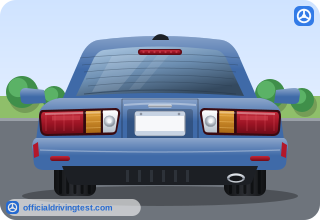
The manual says that failing to always do what, before changing lanes or driving away from the curb, is a “bad” habit?
- Sound your horn
- Signal your intentions
- Turn on your headlights
- Check your instrument panel
Show answer
Correct answer: Signal your intentions
Failing to always signal your intentions before changing lanes or driving away from the curb is named as a “bad” habit.
Source: Hawaii Driver's Manual (2023), page 57 · Open this page in the manual (Manual page 57)
-
How often does the manual say the engine coolant, engine oil, battery water, tire condition and pressure, and lamps should have been checked?
- Within the previous day
- Within the previous month
- Before each year’s inspection
- Within the previous week
Show answer
Correct answer: Within the previous week
If these have not been checked within the previous week, you should check them or have them checked before you continue your trip.
Source: Hawaii Driver's Manual (2023), page 60 · Open this page in the manual (Manual page 60)
-
What does the manual say about any defect that may affect the safe operation of your vehicle?
- It can wait until the next inspection
- It should be corrected as soon as possible
- It can be ignored on short trips
- It must be reported to the police
Show answer
Correct answer: It should be corrected as soon as possible
Any defect which may affect the safe operation of the vehicle should be corrected as soon as possible.
Source: Hawaii Driver's Manual (2023), page 60 · Open this page in the manual (Manual page 60)
-
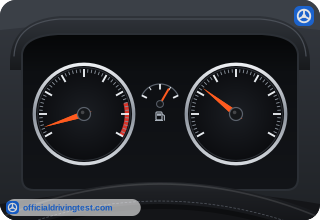
What does the manual say you should ensure before you start a trip?
- That the fuel tank is exactly half full
- That a spare fuel container is on board
- That the vehicle has enough fuel for the trip
- That the fuel gauge has been replaced
Show answer
Correct answer: That the vehicle has enough fuel for the trip
The manual says to ensure that the vehicle contains enough fuel to complete the trip.
Source: Hawaii Driver's Manual (2023), page 60 · Open this page in the manual (Manual page 60)
-
What should you do for a few minutes when you are about to drive an unfamiliar vehicle?
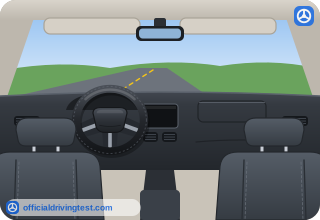
- Learn where its controls are and how they work
- Warm up the engine at full throttle for a while
- Test the brakes on a busy road
- Adjust the radio and the stereo
Show answer
Correct answer: Learn where its controls are and how they work
The manual says to take a few minutes to learn the turn and hazard warning signals, head lamps and beam selector, wipers and washers, brakes, gear selector and horn.
Source: Hawaii Driver's Manual (2023), page 60 · Open this page in the manual (Manual page 60)
-
When must any defects found in an unfamiliar vehicle be corrected?
- Before the vehicle is driven
- Within one week
- At the next service station stop
- After the trip is finished
Show answer
Correct answer: Before the vehicle is driven
The manual says any defects should be corrected before the vehicle is driven.
Source: Hawaii Driver's Manual (2023), page 60 · Open this page in the manual (Manual page 60)
-
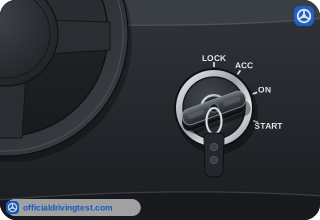
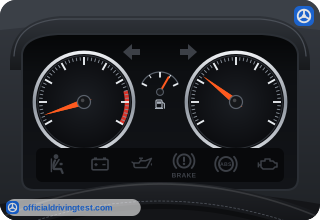
When you turn the ignition switch on, what should the equipment warning lamps on the instrument panel do?
- All stay dark
- Flash on and off
- Light up only after the engine warms up
- All be illuminated
Show answer
Correct answer: All be illuminated
The warning lamps should all be illuminated when the ignition is turned on; a lamp that is not illuminated is not functioning.
Source: Hawaii Driver's Manual (2023), page 60 · Open this page in the manual (Manual page 60)
-
If a warning lamp does not light when the ignition switch is turned on, what does that indicate?
- The system is working perfectly
- The engine is too cold
- The lamp is not functioning
- The battery has been replaced
Show answer
Correct answer: The lamp is not functioning
A warning lamp that is not illuminated indicates that the lamp is not functioning.
Source: Hawaii Driver's Manual (2023), page 60 · Open this page in the manual (Manual page 60)
-
After the computer check, a red light remains lit on the instrument panel. What does the manual say this means?
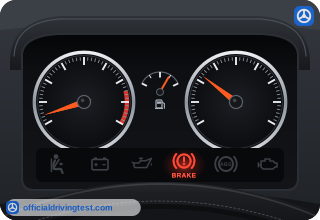
- Danger; check it immediately
- A warning only, so it can wait
- The lamp has burned out
- A normal part of starting the engine
Show answer
Correct answer: Danger; check it immediately
A red light indicates danger and should be checked immediately, while a yellow light that remains lit is a warning.
Source: Hawaii Driver's Manual (2023), page 60 · Open this page in the manual (Manual page 60)
-
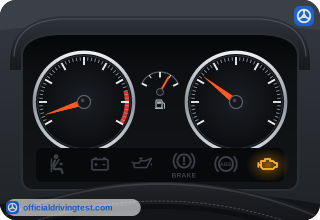
After the computer check, a yellow light remains lit on the instrument panel. What does the manual say this is?
- A sign of danger needing immediate attention
- A normal reading that can be ignored
- A sign that the lamp is not working
- A warning
Show answer
Correct answer: A warning
The manual says that if a yellow light remains lit, it is a warning.
Source: Hawaii Driver's Manual (2023), page 60 · Open this page in the manual (Manual page 60)
-
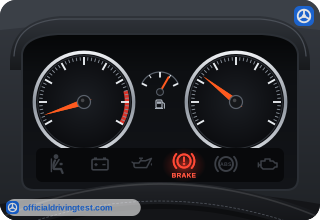
When should the brake warning lamp go out?
- When the engine reaches operating temperature
- When the parking brake is released
- When the foot brake pedal is pressed
- When the vehicle reaches 10 miles per hour
Show answer
Correct answer: When the parking brake is released
The brake warning lamp should go out when the parking brake is released.
Source: Hawaii Driver's Manual (2023), page 61 · Open this page in the manual (Manual page 61)
-
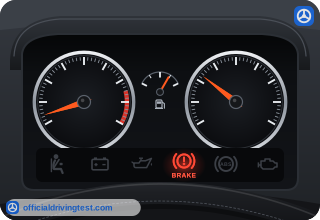
The brake warning lamp lights up when you press the foot brake pedal. What does the manual say about the vehicle?
- The brakes are working normally
- The brake system is defective; do not drive it
- The parking brake needs adjusting
- You can drive it to the nearest service station
Show answer
Correct answer: The brake system is defective; do not drive it
If the lamp illuminates when the foot brake pedal is pressed, the brake system is defective and the vehicle should not be driven.
Source: Hawaii Driver's Manual (2023), page 61 · Open this page in the manual (Manual page 61)
-
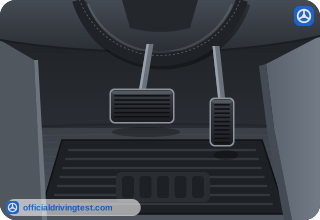
How do brakes stop a vehicle?
- By storing the vehicle's energy for later use
- By turning the vehicle's energy into fuel
- By converting the vehicle's energy of motion into heat
- By transferring the vehicle's energy to the tires
Show answer
Correct answer: By converting the vehicle's energy of motion into heat
Brakes stop a vehicle by converting the vehicle's energy of motion into heat and wasting it.
Source: Hawaii Driver's Manual (2023), page 69 · Open this page in the manual (Manual page 69)
-
What can a hard application of the brakes cause?
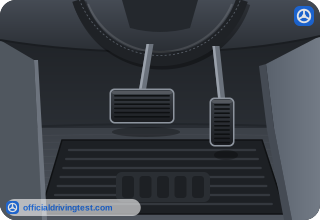
- One or more wheels to slide on the road
- The brakes to cool down more quickly
- The tires to grip the road much better
- The brake lamps to become dimmer than normal
Show answer
Correct answer: One or more wheels to slide on the road
A hard application of the brakes can cause one or more wheels to slide, and if the front wheels keep sliding you will not have control of the vehicle.
Source: Hawaii Driver's Manual (2023), page 69 · Open this page in the manual (Manual page 69)
-
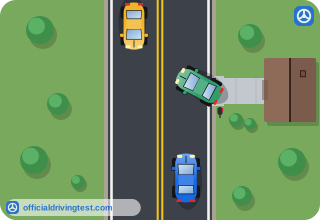
You are in danger of striking another vehicle, a person or an object. What should you do?
- Jam on the brakes hard and let the wheels slide
- Hold the brake pedal down hard and sound your horn
- Release the brakes completely and steer straight ahead
- Apply and release the brakes quickly and steer to a clear area
Show answer
Correct answer: Apply and release the brakes quickly and steer to a clear area
Instead of jamming on the brakes and sliding the wheels, you apply and release the brakes rapidly and steer the vehicle toward a clear area.
Source: Hawaii Driver's Manual (2023), page 70 · Open this page in the manual (Manual page 70)