Hawaii: Signals and vehicle controls — Part 4 Practice Test
Questions in this part include: “When stopping in traffic, how far behind the vehicle ahead should you stop?” · “When you downshift to reduce speed, how should it be used?”
Independent educational site · not affiliated with any government agency or DMV
Ready? Test yourself
- Instant feedback with an explanation
- Every answer cites its source in the manual
- Your best score is saved on this device
Questions are original and based on the official manual "Hawaii Driver's Manual" (2023), Hawaii Department of Transportation.
All 17 questions in this practice test
Take the test above first, then use this list to study. Tap “Show answer” to see the correct answer and explanation.
Show the questions and answersHide the questions
-
How should you use the brakes if there is water, ice, snow, frost, sand or gravel on the road?

- Firmly and quickly
- Very cautiously
- Not at all
- Only with the parking brake
Show answer
Correct answer: Very cautiously
You use the brakes very cautiously if there is water, ice, snow, frost, sand or gravel on the surface of the road.
Source: Hawaii Driver's Manual (2023), page 70 · Open this page in the manual (Manual page 70)
-
After driving through water, what should you do about the brakes?
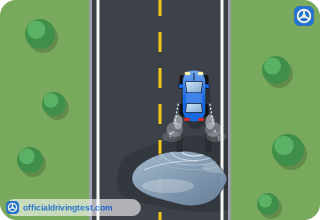
- Test the brakes, and apply them lightly several times if they are weaker
- Press the brake pedal down hard until all the water has cleared
- Shift to neutral and coast for a while to dry the brakes out
- Apply the parking brake for a short distance to dry them
Show answer
Correct answer: Test the brakes, and apply them lightly several times if they are weaker
You always test the brakes after driving through water, and if braking action has been reduced you apply them lightly several times until it is restored.
Source: Hawaii Driver's Manual (2023), page 70 · Open this page in the manual (Manual page 70)
-
Why should you avoid resting your foot on the brake pedal while you drive?
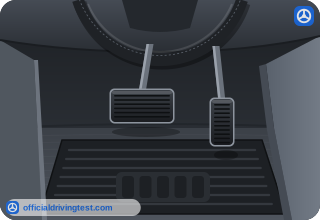
- It keeps the brake lamps off while the vehicle is still moving along
- It cools the brakes and helps them to last much longer
- It lights the brake lamps and gives other drivers an improper signal
- It improves your control of the vehicle on wet roads
Show answer
Correct answer: It lights the brake lamps and gives other drivers an improper signal
Resting your foot on the pedal activates the brake (stop) lamps, gives a false signal, and can partly apply the brakes and cause excessive wear.
Source: Hawaii Driver's Manual (2023), page 70 · Open this page in the manual (Manual page 70)
-
The brake warning lamp on the instrument panel lights up when you apply the brakes. What does this mean?
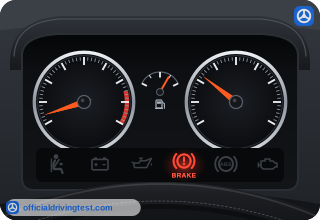
- The brakes are working normally and no repair is needed now
- The brake system has partially failed and immediate repair is required
- The brake fluid has just been topped off and is now full
- The brake pads are brand new and still need to be broken in
Show answer
Correct answer: The brake system has partially failed and immediate repair is required
A brake warning lamp that lights when you apply the brakes means the brake system has partially failed and immediate repair is required.
Source: Hawaii Driver's Manual (2023), page 70 · Open this page in the manual (Manual page 70)
-
When should you start slowing your vehicle?
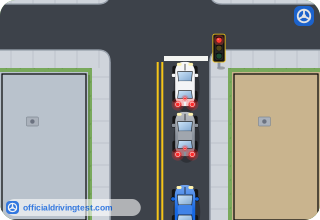
- At the last possible moment, using one firm hard stop
- Only after the vehicle ahead of you has completely stopped moving
- Only when you can see the brake lamps of the car ahead
- As soon as it becomes apparent that braking will be required ahead
Show answer
Correct answer: As soon as it becomes apparent that braking will be required ahead
You always start slowing as soon as it becomes apparent that braking will be required, using smooth steady brake applications.
Source: Hawaii Driver's Manual (2023), page 70 · Open this page in the manual (Manual page 70)
-
When stopping in traffic, how far behind the vehicle ahead should you stop?
- Close enough to touch its bumper
- One full car length exactly
- Far enough to see where its rear tires rest on the road
- Far enough that its brake lamps are out of sight
Show answer
Correct answer: Far enough to see where its rear tires rest on the road
Stopping far enough back to see where the rear tires of the vehicle ahead rest on the road leaves room to go around it if it cannot proceed.
Source: Hawaii Driver's Manual (2023), page 70 · Open this page in the manual (Manual page 70)
-
What does a prolonged brake application cause, and how can you usually avoid it?
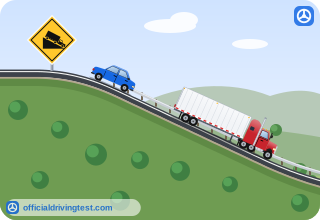
- The brakes heat up and lose effectiveness; shift to a lower gear
- The brakes cool down and work better; shift to a higher gear
- The tires grip the road more; stay in the same gear
- The engine stalls out; shift into neutral to coast
Show answer
Correct answer: The brakes heat up and lose effectiveness; shift to a lower gear
Prolonged braking heats up the brakes and makes them much less effective; it can usually be avoided by shifting to a lower gear so the engine helps hold the speed down.
Source: Hawaii Driver's Manual (2023), page 70 · Open this page in the manual (Manual page 70)
-
What is downshifting?
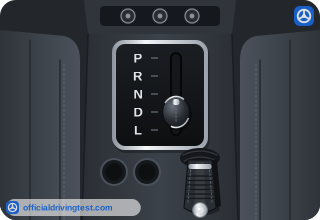
- Selecting a lower gear only after the vehicle has come to a stop
- Shifting into neutral to coast down a long and steep grade
- Releasing the clutch pedal slowly after every stop sign
- Selecting a lower transmission gear range while the vehicle is in motion
Show answer
Correct answer: Selecting a lower transmission gear range while the vehicle is in motion
Downshifting is the procedure of selecting a lower transmission gear range while the vehicle is in motion, and it can be used with manual and automatic transmissions.
Source: Hawaii Driver's Manual (2023), page 70 · Open this page in the manual (Manual page 70)
-
Which is a purpose of downshifting?
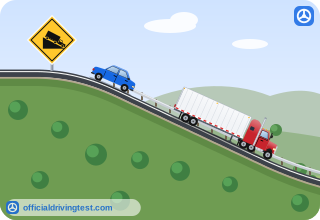
- To save fuel on every trip
- To obtain greater braking action from the engine
- To warn following drivers you are stopping
- To rest the brakes when the vehicle is parked
Show answer
Correct answer: To obtain greater braking action from the engine
Downshifting is used to obtain greater braking action from the engine when reducing speed or holding a reduced speed on a downgrade.
Source: Hawaii Driver's Manual (2023), page 70 · Open this page in the manual (Manual page 70)
-
When should you make the downshift for a steep downgrade?

- Before starting down the grade
- Halfway down the grade
- At the bottom of the grade
- Only after the brakes begin to fade
Show answer
Correct answer: Before starting down the grade
The downshift should be made before starting the downgrade because it is more difficult to downshift at higher speeds.
Source: Hawaii Driver's Manual (2023), page 70 · Open this page in the manual (Manual page 70)
-
What is the downshift procedure for a synchronized manual transmission?
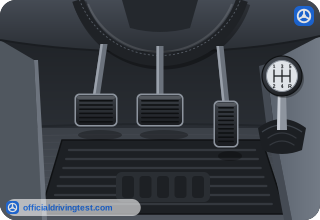
- Release the clutch pedal, move to the next lower gear, and quickly press the pedal
- Shift to neutral, rev the engine, then select the lower gear
- Depress the clutch pedal, move to the next lower gear, and slowly release the clutch
- Press the brake and clutch together and shift to first gear
Show answer
Correct answer: Depress the clutch pedal, move to the next lower gear, and slowly release the clutch
The downshift procedure is to depress the clutch pedal, move the shift lever to the next lower gear, and slowly release the clutch pedal.
Source: Hawaii Driver's Manual (2023), page 70 · Open this page in the manual (Manual page 70)
-
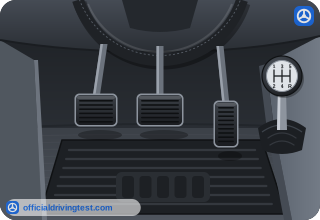
What does the manual say about "double clutching" on a non-synchronized manual transmission?
- It should be done at every stop to protect the gears
- It should not be attempted without prior practice and experience
- It is simple and needs no practice before you use it
- It is required in every modern passenger car sold today
Show answer
Correct answer: It should not be attempted without prior practice and experience
On non-synchronized transmissions the engine speed must be matched to vehicle speed, which is sometimes called double clutching and should not be attempted without prior practice and experience.
Source: Hawaii Driver's Manual (2023), page 70 · Open this page in the manual (Manual page 70)
-
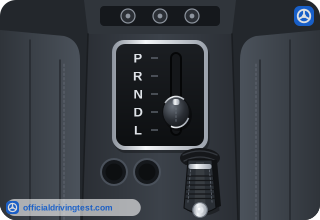
At high speeds of 60+ miles per hour, what happens with most automatic transmissions, and what must you do to downshift?
- They lock in the lowest gear; keep driving as usual
- They shift into neutral by themselves; coast to a full stop
- They downshift only while in park; stop the vehicle first
- They will not downshift; reduce vehicle speed to let them downshift
Show answer
Correct answer: They will not downshift; reduce vehicle speed to let them downshift
At high speeds (60+ mph) most automatic transmissions will not downshift, so you must reduce the vehicle speed to allow the transmission to downshift.
Source: Hawaii Driver's Manual (2023), page 71 · Open this page in the manual (Manual page 71)
-
Why is downshifting as a regular routine not recommended?
- It always causes serious damage to the brakes and tires
- It makes the brake lamps flash on and off as you slow
- It slows you quickly with no stop lamp warning to drivers behind
- It is against the law on every downgrade in the state
Show answer
Correct answer: It slows you quickly with no stop lamp warning to drivers behind
Regular downshifting is not recommended because it causes a rapid deceleration of the vehicle without a warning (stop lamp) signal to following drivers.
Source: Hawaii Driver's Manual (2023), page 71 · Open this page in the manual (Manual page 71)
-
When you downshift to reduce speed, how should it be used?
- Only to supplement brake action
- Instead of using the brakes
- Only on level roads
- Before every stop
Show answer
Correct answer: Only to supplement brake action
Downshifting to reduce speed should be used only to supplement brake action.
Source: Hawaii Driver's Manual (2023), page 71 · Open this page in the manual (Manual page 71)
-
What can downshifting at higher speeds actually do?
- Turn on the brake lamps automatically for you
- Raise the fuel economy of the vehicle
- Make the brake lamps brighter
- Decrease the ability of the vehicle to accelerate
Show answer
Correct answer: Decrease the ability of the vehicle to accelerate
The manual cautions that downshifting at higher speeds may actually decrease the ability of the vehicle to accelerate.
Source: Hawaii Driver's Manual (2023), page 71 · Open this page in the manual (Manual page 71)
-
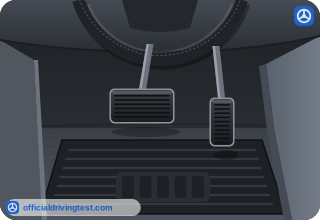
When may downshifting be used as an emergency procedure?
- To stop more quickly than the brakes can on a dry road
- To slow the vehicle if the brakes partly or fully fail
- To pass a slower vehicle that is ahead of you on the road
- To park the vehicle on a steep hill with no curb
Show answer
Correct answer: To slow the vehicle if the brakes partly or fully fail
Downshifting may properly be used as an emergency procedure to slow the vehicle in case of a partial or complete brake failure.
Source: Hawaii Driver's Manual (2023), page 71 · Open this page in the manual (Manual page 71)