Hawaii: Signals and vehicle controls — Part 2 Practice Test
Questions in this part include: “Every vehicle is required to be equipped with a horn in good working condition to give what?” · “When you place a Lincoln penny upside down within the tire tread, what shows that the tire needs to be replaced?”
Independent educational site · not affiliated with any government agency or DMV
Ready? Test yourself
- Instant feedback with an explanation
- Every answer cites its source in the manual
- Your best score is saved on this device
Questions are original and based on the official manual "Hawaii Driver's Manual" (2023), Hawaii Department of Transportation.
All 18 questions in this practice test
Take the test above first, then use this list to study. Tap “Show answer” to see the correct answer and explanation.
Show the questions and answersHide the questions
-
Every vehicle is required to be equipped with a horn in good working condition to give what?
- Visual warning
- Audible warning
- Right-of-way
- Speed information
Show answer
Correct answer: Audible warning
The horn must be in good working condition to give audible warning.
Source: Hawaii Driver's Manual (2023), page 19 · Open this page in the manual (Manual page 19)
-
How should rear-view mirrors be adjusted?
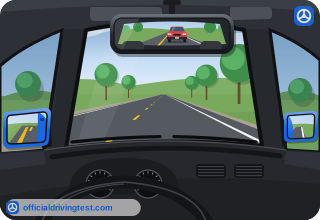
- To show only the vehicle's rear bumper
- To show only the lane beside you
- So the driver does not need to turn the head
- To give you the maximum view to the rear horizon
Show answer
Correct answer: To give you the maximum view to the rear horizon
Rear-view mirrors should be adjusted to give you the maximum view to the rear horizon.
Source: Hawaii Driver's Manual (2023), page 19 · Open this page in the manual (Manual page 19)
-
How much free play should there be at most in the steering wheel of a vehicle with power steering (checked with the motor running)?
- Two inches
- Five inches
- Four inches
- One inch
Show answer
Correct answer: Two inches
There should be no more than two inches of free play in the steering wheel with power steering.
Source: Hawaii Driver's Manual (2023), page 20 · Open this page in the manual (Manual page 20)
-
How much free play should there be at most in the steering wheel of a vehicle without power steering?
- 3 inches
- 1 inch
- 5 inches
- 6 inches
Show answer
Correct answer: 3 inches
Without power steering, there should be no more than 3 inches of free play in the steering wheel.
Source: Hawaii Driver's Manual (2023), page 20 · Open this page in the manual (Manual page 20)
-
What do tail lamps and side marker lamps do?
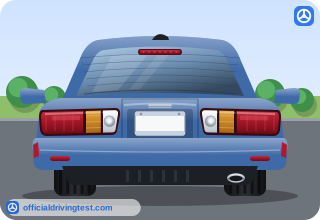
- Show the driver the road ahead
- Signal that you are turning
- Warn other drivers of your presence
- Show that the brakes are applied
Show answer
Correct answer: Warn other drivers of your presence
Tail lamps and side marker lamps warn other drivers of your presence.
Source: Hawaii Driver's Manual (2023), page 20 · Open this page in the manual (Manual page 20)
-
How often should you check your tires at a minimum?
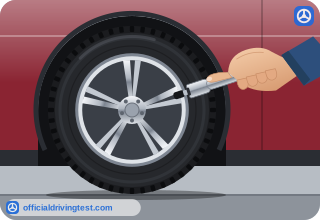
- At least once a year
- At least once a month
- Only before long trips
- Only at each inspection
Show answer
Correct answer: At least once a month
The manual says to check tires at least once a month.
Source: Hawaii Driver's Manual (2023), page 20 · Open this page in the manual (Manual page 20)
-
Where can you find the vehicle manufacturer's recommended tire pressure and tire size?
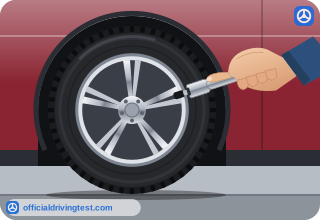
- In the glove compartment
- On the dashboard
- Under the hood
- In the door jamb
Show answer
Correct answer: In the door jamb
The manual says to check the door jamb for the manufacturer's recommended pressure and tire size.
Source: Hawaii Driver's Manual (2023), page 20 · Open this page in the manual (Manual page 20)
-
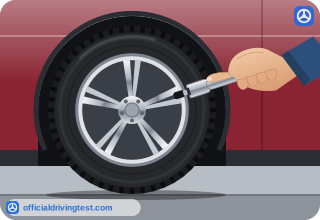
What does proper tire pressure do?
- Reduces the need for a spare tire
- Makes the tread wear unevenly
- Extends tire life and improves handling
- Lets the steering wheel vibrate slightly
Show answer
Correct answer: Extends tire life and improves handling
Proper pressure extends tire life and improves handling.
Source: Hawaii Driver's Manual (2023), page 20 · Open this page in the manual (Manual page 20)
-
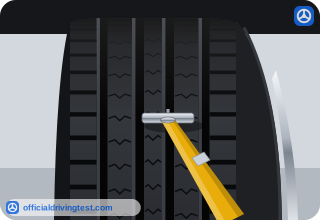
You should replace tires that have less than how much tire tread?
- 1/16 inch
- 1/4 inch
- 1/2 inch
- 1/8 inch
Show answer
Correct answer: 1/16 inch
The manual says to replace tires that have less than 1/16 inch of tire tread.
Source: Hawaii Driver's Manual (2023), page 20 · Open this page in the manual (Manual page 20)
-
When you place a Lincoln penny upside down within the tire tread, what shows that the tire needs to be replaced?
- The top of Lincoln's head is hidden
- The penny stands up in the tread
- The penny touches the tire sidewall
- The top of Lincoln's head is visible
Show answer
Correct answer: The top of Lincoln's head is visible
If the top of Lincoln's head is visible, the tire needs to be replaced.
Source: Hawaii Driver's Manual (2023), page 20 · Open this page in the manual (Manual page 20)
-
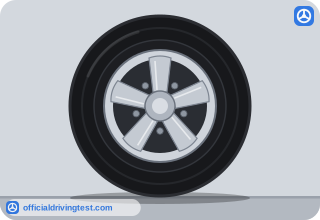
Which condition should you check tires for, besides pressure and tread depth?
- Fading, stains, dust and loose paint chips
- Cuts, bulges, tread separation and uneven wear
- Wax, shine, color and brand lettering marks
- Odor, noise, temperature and humidity
Show answer
Correct answer: Cuts, bulges, tread separation and uneven wear
Check tires for cuts, bulges, tread separation and uneven wear.
Source: Hawaii Driver's Manual (2023), page 20 · Open this page in the manual (Manual page 20)
-
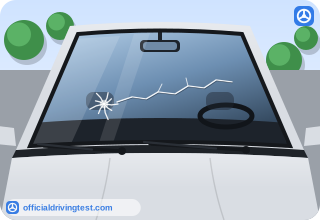
The windshield should be free of cracks and breaks of what kind?
- Those located on the left side only
- Those that interfere with your vision
- Those smaller than one inch across
- Those on the passenger side only
Show answer
Correct answer: Those that interfere with your vision
The windshield should be free of cracks and breaks that interfere with your vision.
Source: Hawaii Driver's Manual (2023), page 20 · Open this page in the manual (Manual page 20)
-
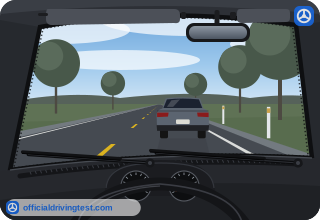
What do windshield washers enable you to do?
- Defog the rear window while parked
- Clean the head lamps while driving
- Adjust the wiper blades while driving
- Clean the windshield while you are driving
Show answer
Correct answer: Clean the windshield while you are driving
Windshield washers enable you to clean the windshield while you are driving.
Source: Hawaii Driver's Manual (2023), page 20 · Open this page in the manual (Manual page 20)
-
When must you signal before slowing down, turning or changing lanes?
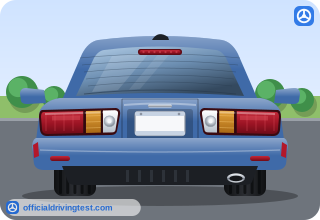
- Every time, even if no vehicles are in sight
- Only when other vehicles are in sight
- Only at night
- Only on roads that have three or more lanes of traffic
Show answer
Correct answer: Every time, even if no vehicles are in sight
You must signal every time, even when there are no other vehicles in sight.
Source: Hawaii Driver's Manual (2023), page 27 · Open this page in the manual (Manual page 27)
-
How far before you change lanes, turn or stop must you signal?
- At least 25 feet (7.6m)
- At least 50 feet (15m)
- At least 200 feet (61m)
- At least 100 feet (30.5m)
Show answer
Correct answer: At least 100 feet (30.5m)
Signals must be given for at least 100 feet (30.5m) before you change lanes, turn or stop, which is about five car lengths.
Source: Hawaii Driver's Manual (2023), page 27 · Open this page in the manual (Manual page 27)
-
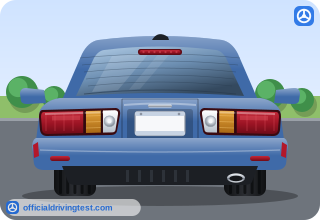
When must you use hand signals?
- When driving on a freeway
- When the vehicle turn signals are not operating
- When turning at an intersection with a traffic signal
- Only when a police officer is directing traffic
Show answer
Correct answer: When the vehicle turn signals are not operating
Hand signals must be used when the vehicle turn signals are not operating.
Source: Hawaii Driver's Manual (2023), page 27 · Open this page in the manual (Manual page 27)
-
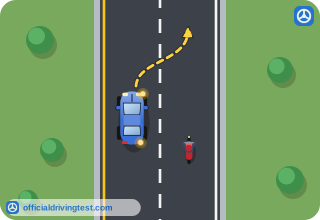
After you signal a turn or lane change, what must you still do?
- Nothing, because the signal gives you the right to make the maneuver at once
- Check that it can be safely completed without interfering with other traffic
- Wait for other drivers to wave you through
- Sound your horn before you move
Show answer
Correct answer: Check that it can be safely completed without interfering with other traffic
Signaling does not give you the right to make the maneuver; you must check that it can be completed safely without interfering with other traffic.
Source: Hawaii Driver's Manual (2023), page 27 · Open this page in the manual (Manual page 27)
-
Why should you not rest your foot on the brake pedal when you are not braking?
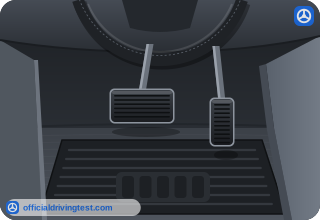
- It can turn off your turn signals while you are turning
- It can cause the engine to stall while you wait at a light
- It can lock the steering wheel when you turn
- It can give following drivers a false stop lamp signal
Show answer
Correct answer: It can give following drivers a false stop lamp signal
Resting your foot on the brake pedal gives following drivers a false stop lamp signal.
Source: Hawaii Driver's Manual (2023), page 27 · Open this page in the manual (Manual page 27)