Connecticut: Speed and following distance
Speed limits, stopping distances, the space cushion around your vehicle, night driving and bad weather. Split into 6 shorter tests so you're not stuck in one long quiz.
Independent educational site · not affiliated with any government agency or DMV
Choose a part
Speed and following distance — Part 1
Questions in this part include: “During the road test, what kind of "space cushion" should you maintain around your vehicle?”
StartSpeed and following distance — Part 2
Questions in this part include: “What is the shortest time interval at which you should ever follow a truck?”
StartSpeed and following distance — Part 3
Questions in this part include: “With the three-second rule, how close may you follow the vehicle ahead?”
StartSpeed and following distance — Part 4
Questions in this part include: “On a two-lane road, where is it generally safest to drive?”
StartSpeed and following distance — Part 5
Questions in this part include: “In Connecticut, when are studded tires permitted?”
StartSpeed and following distance — Part 6
Questions in this part include: “Speed limits are posted for what kind of conditions?”
StartAll 111 Speed and following distance questions with answers
Choose a part above to take a practice test, or study every question and answer here.
Show the questions and answersHide the questions
-
During the road test, what kind of "space cushion" should you maintain around your vehicle?
- A fixed space of one car length, whatever the speed or road
- The smallest gap that still lets traffic keep moving smoothly
- One suited to the existing speed, road and traffic conditions
- A larger gap only when another vehicle is behind you
Show answer
Correct answer: One suited to the existing speed, road and traffic conditions
The space cushion should be appropriate for the existing speed, road, and traffic conditions.
Source: Connecticut Driver's Manual (Revised March 2023), page 7 · Open this page in the manual (Manual page 7)
-
To be a good driver and know what is happening around your vehicle, which directions must you look?
- Only ahead and behind
- Only ahead and to the sides
- Only straight ahead
- Ahead, to the sides, and behind
Show answer
Correct answer: Ahead, to the sides, and behind
The manual says you must look ahead, to the sides, and behind your vehicle.
Source: Connecticut Driver's Manual (Revised March 2023), page 14 · Open this page in the manual (Manual page 14)
-
Safer drivers tend to look at least how many seconds ahead of their vehicles?
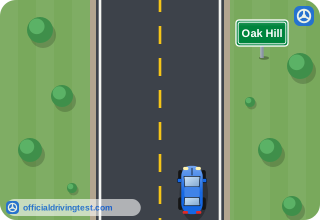
- 12 seconds
- 3 seconds
- 5 seconds
- 20 seconds
Show answer
Correct answer: 12 seconds
The manual says safer drivers tend to look at least 12 seconds ahead.
Source: Connecticut Driver's Manual (Revised March 2023), page 14 · Open this page in the manual (Manual page 14)
-
In the city, about how far ahead is 12 seconds?
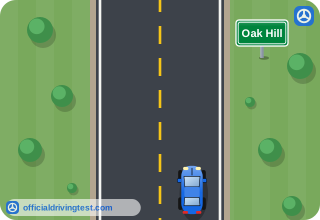
- About four city blocks
- About a quarter of a mile
- About one block
- About half a block
Show answer
Correct answer: About one block
In the city, 12 seconds is about one block.
Source: Connecticut Driver's Manual (Revised March 2023), page 14 · Open this page in the manual (Manual page 14)
-
On the highway, about how far ahead is 12 seconds?
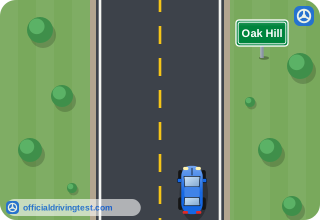
- About one city block
- About four city blocks, or a quarter of a mile
- About two city blocks, or an eighth of a mile
- About eight city blocks, or half a mile
Show answer
Correct answer: About four city blocks, or a quarter of a mile
On the highway, 12 seconds is about four city blocks, or a quarter of a mile.
Source: Connecticut Driver's Manual (Revised March 2023), page 14 · Open this page in the manual (Manual page 14)
-
To figure how far ahead you are looking, what kind of object should you find near the road?
- A moving vehicle ahead of you, such as a truck
- A car that is passing you
- The vehicle directly in front of you
- A non-moving object, such as a sign or a telephone pole
Show answer
Correct answer: A non-moving object, such as a sign or a telephone pole
The manual says to find a non-moving object (a sign, a telephone pole, etc.) about as far ahead as you are looking.
Source: Connecticut Driver's Manual (Revised March 2023), page 14 · Open this page in the manual (Manual page 14)
-
You count “one-one-thousand, two-one-thousand” until you reach the object. What does the number you counted tell you?
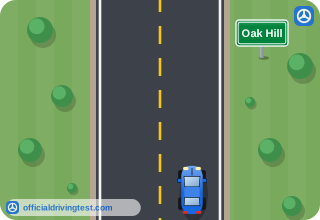
- How many seconds ahead you were looking
- How fast the vehicle ahead is traveling
- How long your stopping distance is
- How many seconds until the signal changes
Show answer
Correct answer: How many seconds ahead you were looking
The number of seconds you counted is the number of seconds ahead that you were looking.
Source: Connecticut Driver's Manual (Revised March 2023), page 14 · Open this page in the manual (Manual page 14)
-
Why does looking well ahead help you save fuel?
- You can drive in a higher gear on every road
- You can coast with the engine off
- You avoid unnecessary braking and quick stops
- You can avoid using the headlights
Show answer
Correct answer: You avoid unnecessary braking and quick stops
The manual says drivers who look ahead avoid unnecessary braking, which leads to lower miles-per-gallon.
Source: Connecticut Driver's Manual (Revised March 2023), page 14 · Open this page in the manual (Manual page 14)
-
Looking well down the road helps you steer in what way?
- With more frequent corrections
- More straightly with less weaving
- With greater speed
- With less need to check mirrors
Show answer
Correct answer: More straightly with less weaving
The manual says looking well down the road helps you steer more straightly with less weaving.
Source: Connecticut Driver's Manual (Revised March 2023), page 14 · Open this page in the manual (Manual page 14)
-
Why does making driving changes early help the drivers behind you?
- It lets them follow more closely
- It lets them pass you sooner
- It removes their need to scan ahead
- It gives them more time to react
Show answer
Correct answer: It gives them more time to react
Making changes early gives drivers behind you more time to react.
Source: Connecticut Driver's Manual (Revised March 2023), page 14 · Open this page in the manual (Manual page 14)
-
When is it especially important to look to the sides?
- At intersections and railroad crossings
- On long straight highways with no traffic
- While parked in a driveway
- On roads with no side streets
Show answer
Correct answer: At intersections and railroad crossings
The manual says looking to the sides is especially important at intersections and railroad crossings, or while changing lanes.
Source: Connecticut Driver's Manual (Revised March 2023), page 14 · Open this page in the manual (Manual page 14)
-
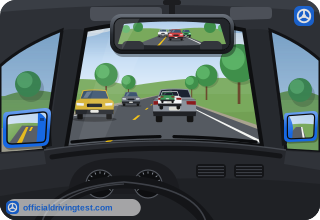
When do you need to check the traffic behind you more often?
- When traffic is light
- When driving on a straight road
- When traffic is heavy
- When driving at night
Show answer
Correct answer: When traffic is heavy
The manual says you need to check more often when traffic is heavy.
Source: Connecticut Driver's Manual (Revised March 2023), page 14 · Open this page in the manual (Manual page 14)
-
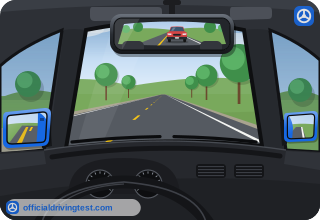
Checking behind you is the only way to know what?
- If a vehicle ahead is about to turn at the corner
- If someone is following too closely or coming up too fast
- If the road ahead is slippery or covered with ice
- If a traffic signal ahead is about to change
Show answer
Correct answer: If someone is following too closely or coming up too fast
Checking behind is the only way you will know if someone is following too closely or coming up too fast.
Source: Connecticut Driver's Manual (Revised March 2023), page 14 · Open this page in the manual (Manual page 14)
-
In which situation is it very important to look for vehicles behind you?
- When driving on a flat, empty road
- When parked with the engine off
- When stopped at a red light with no one around
- When driving down a long or steep hill
Show answer
Correct answer: When driving down a long or steep hill
The manual says it is very important to look behind when you change lanes, slow down, back up or drive down a long or steep hill.
Source: Connecticut Driver's Manual (Revised March 2023), page 14 · Open this page in the manual (Manual page 14)
-
In which situation should you always increase your following distance?
- On dry roads in full daylight
- In areas of poor illumination
- On roads you know very well
- When traffic is light and slow
Show answer
Correct answer: In areas of poor illumination
The manual says to always increase your following distance when road or weather conditions are bad, in areas of poor illumination, and in unfamiliar areas.
Source: Connecticut Driver's Manual (Revised March 2023), page 18 · Open this page in the manual (Manual page 18)
-
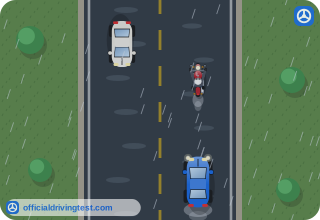
How much following distance should you allow behind a motorcyclist in wet conditions?
- 1 to 2 seconds at most
- 2 to 3 seconds at most
- One car length per 10 mph
- 3 to 4 seconds or more
Show answer
Correct answer: 3 to 4 seconds or more
When following a motorcyclist, allow a 3 to 4 second following distance or more in wet conditions.
Source: Connecticut Driver's Manual (Revised March 2023), page 18 · Open this page in the manual (Manual page 18)
-
To be sure you are not driving too fast for conditions, at what speed should you drive?
- At the speed of the traffic around you
- At the posted speed limit at all times
- At a speed where you can always safely stop
- At a speed that matches the vehicle ahead
Show answer
Correct answer: At a speed where you can always safely stop
The manual says to drive at a speed where you can always safely stop.
Source: Connecticut Driver's Manual (Revised March 2023), page 18 · Open this page in the manual (Manual page 18)
-
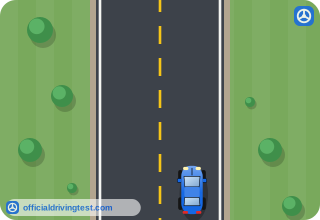
What does it mean if you reach a stationary object ahead before you finish counting “four-one-thousand”?
- You are following the vehicle ahead too closely
- You are going too fast for your sight-distance
- You are driving at a safe speed
- You should speed up to keep pace
Show answer
Correct answer: You are going too fast for your sight-distance
Under the four-second sight-distance rule, reaching the object before you finish counting means you need to slow down because you are going too fast for your sight-distance.
Source: Connecticut Driver's Manual (Revised March 2023), page 18 · Open this page in the manual (Manual page 18)
-
What do you pick out when you use the four-second sight-distance rule?
- A moving vehicle as far ahead as you can see
- A landmark exactly four seconds ahead of you
- The bumper of the car directly in front of you
- A stationary object as far ahead as you clearly see
Show answer
Correct answer: A stationary object as far ahead as you clearly see
You pick out a stationary object, such as a sign or a telephone pole, as far ahead as you can clearly see and then count “one-one-thousand” through “four-one-thousand.”
Source: Connecticut Driver's Manual (Revised March 2023), page 18 · Open this page in the manual (Manual page 18)
-
What is the shortest time interval at which you should ever follow a truck?
- Three seconds
- One second
- Two seconds
- Five seconds
Show answer
Correct answer: Three seconds
The manual says never to follow a truck at a time interval of less than three seconds.
Source: Connecticut Driver's Manual (Revised March 2023), page 20 · Open this page in the manual (Manual page 20)
-
After the rear of a truck passes a landmark, you pass the same landmark before finishing counting “three-one-thousand.” What does this mean?
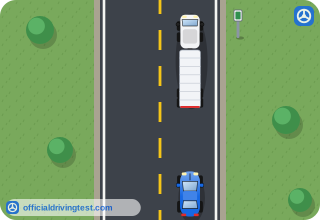
- You are following at the recommended interval
- You are following too far behind
- You are following the truck too closely
- You should change lanes right away
Show answer
Correct answer: You are following the truck too closely
Passing the point before finishing the count means you are following the truck too closely.
Source: Connecticut Driver's Manual (Revised March 2023), page 20 · Open this page in the manual (Manual page 20)
-
When do you begin counting to check your following distance behind a truck?
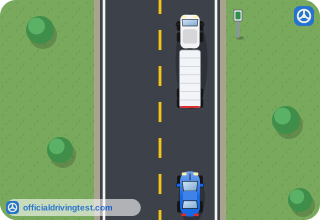
- When the front of the truck passes the landmark
- When the rear of the truck passes a landmark
- When the truck’s brake lights come on
- When your own vehicle passes the landmark
Show answer
Correct answer: When the rear of the truck passes a landmark
You pick a landmark on the side of the road and start counting when the rear of the truck passes it.
Source: Connecticut Driver's Manual (Revised March 2023), page 20 · Open this page in the manual (Manual page 20)
-
Why are you “driving blind” if you follow a truck closely?
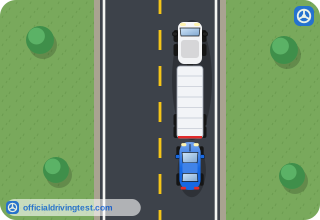
- Its tires throw up dust and water that cover your headlights
- The truck’s headlights shine into your mirrors and blind you
- Its driver can see you, but you cannot see its brake lights
- You can’t see around it and its driver can’t see you in the mirrors
Show answer
Correct answer: You can’t see around it and its driver can’t see you in the mirrors
If you follow a truck closely, you can’t see around it and the truck driver can’t see you in the mirrors.
Source: Connecticut Driver's Manual (Revised March 2023), page 20 · Open this page in the manual (Manual page 20)
-
What may happen if you edge out to the left to see whether there is room to pass a truck you are following closely?
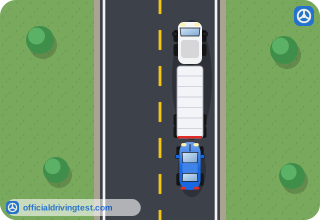
- You may find yourself face-to-face with an oncoming vehicle
- The truck driver will move to the right to let you pass
- You will always have a clear view of the road beyond the truck
- The truck’s wind will pull you safely past it
Show answer
Correct answer: You may find yourself face-to-face with an oncoming vehicle
Edging out may put you face-to-face with an oncoming vehicle that you could have seen had you followed at a safe distance.
Source: Connecticut Driver's Manual (Revised March 2023), page 20 · Open this page in the manual (Manual page 20)
-
What hazard might you hit if you follow a truck too closely, one the truck has safely passed over?
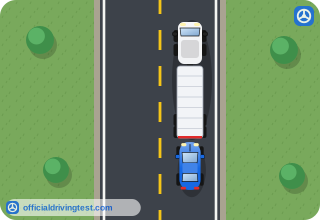
- Ice on the road
- A traffic cone
- A pothole or debris
- A stopped vehicle
Show answer
Correct answer: A pothole or debris
You may hit a pothole or debris that the truck has safely passed over.
Source: Connecticut Driver's Manual (Revised March 2023), page 20 · Open this page in the manual (Manual page 20)
-
What is the benefit of keeping more distance between yourself and other road users?
- Faster travel time
- A wider travel lane
- Better headlight range
- More time to react
Show answer
Correct answer: More time to react
The more distance you keep, the more time you have to react; the space acts like a safety cushion.
Source: Connecticut Driver's Manual (Revised March 2023), page 20 · Open this page in the manual (Manual page 20)
-
How large an opening do you need any time you want to merge with other traffic?
- About one second
- About two seconds
- About six seconds
- About four seconds
Show answer
Correct answer: About four seconds
Any time you merge with other traffic you need an opening of about four seconds.
Source: Connecticut Driver's Manual (Revised March 2023), page 20 · Open this page in the manual (Manual page 20)
-
If you move into the middle of a four-second opening, what following distance do you and the vehicle behind you each have?
- Two seconds
- One second
- Three seconds
- Four seconds
Show answer
Correct answer: Two seconds
In the middle of a four-second opening, you and the vehicle behind you each have a two-second following distance.
Source: Connecticut Driver's Manual (Revised March 2023), page 20 · Open this page in the manual (Manual page 20)
-
When do you need an opening of about four seconds?
- When you are driving straight in your lane at a steady speed
- When you are stopped at a red light in your lane
- When your lane merges with another travel lane
- When you are slowing down behind a stopped car
Show answer
Correct answer: When your lane merges with another travel lane
A four-second opening is needed when you change lanes or enter a roadway and when your lane merges with another travel lane.
Source: Connecticut Driver's Manual (Revised March 2023), page 20 · Open this page in the manual (Manual page 20)
-
Why should you not try to merge into an opening that is too small?
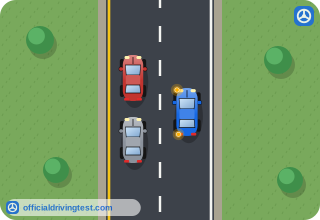
- Other drivers are required to stop for a small opening
- A small opening can quickly become even smaller
- Other drivers cannot see you in a small opening
- You will have to speed up to the limit to use it
Show answer
Correct answer: A small opening can quickly become even smaller
A small opening can quickly become even smaller, so enter one that gives you a big enough space cushion.
Source: Connecticut Driver's Manual (Revised March 2023), page 20 · Open this page in the manual (Manual page 20)
-
How much time does the manual say speeding saves?
- No more than a few minutes an hour
- About half an hour for every hour
- An hour or more on a long trip
- Several minutes for every mile driven
Show answer
Correct answer: No more than a few minutes an hour
The manual says speeding does not save more than a few minutes an hour.
Source: Connecticut Driver's Manual (Revised March 2023), page 21 · Open this page in the manual (Manual page 21)
-
According to the manual, when do crashes involving two or more vehicles often happen?
- When all drivers travel at the same speed in one direction
- When drivers keep a large gap behind the car ahead of them
- When drivers go faster or slower than other vehicles on the road
- When drivers always stay in the right-hand lane on the road
Show answer
Correct answer: When drivers go faster or slower than other vehicles on the road
The manual says such crashes often happen when drivers go faster or slower than the other vehicles.
Source: Connecticut Driver's Manual (Revised March 2023), page 21 · Open this page in the manual (Manual page 21)
-
What happens if you drive faster than the traffic around you?
- You will reach every exit ramp before the other drivers do
- You will have to keep passing others, and each pass risks a collision
- You will be able to avoid passing any other vehicles on the road
- You will no longer need to watch for oncoming vehicles ahead
Show answer
Correct answer: You will have to keep passing others, and each pass risks a collision
Going faster than traffic means you keep passing others, and each pass is a chance for a collision.
Source: Connecticut Driver's Manual (Revised March 2023), page 21 · Open this page in the manual (Manual page 21)
-
On a road that has exit ramps, when should you slow down to leave the road?
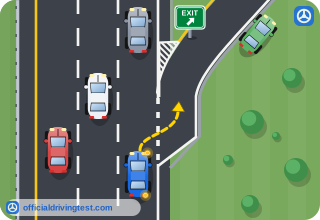
- As soon as you see the exit sign
- A half mile before the exit
- When you first put on your turn signal
- Only once you have moved onto the exit ramp
Show answer
Correct answer: Only once you have moved onto the exit ramp
The manual says to keep up with traffic and not slow down until you move onto the exit ramp.
Source: Connecticut Driver's Manual (Revised March 2023), page 21 · Open this page in the manual (Manual page 21)
-
You turn from a high-speed, two-lane roadway with traffic following you. What does the manual advise?
- Begin slowing gradually well ahead of the turn to warn the drivers behind
- Coast to a stop before reaching the turn and then proceed slowly
- Stay in the center of the road until you are ready to make the turn
- Do not slow down too early; tap your brakes and reduce speed quickly but safely
Show answer
Correct answer: Do not slow down too early; tap your brakes and reduce speed quickly but safely
The manual says to try not to slow down too early and to tap your brakes and reduce speed quickly but safely.
Source: Connecticut Driver's Manual (Revised March 2023), page 21 · Open this page in the manual (Manual page 21)
-
What causes rear-end crashes, which are very common?
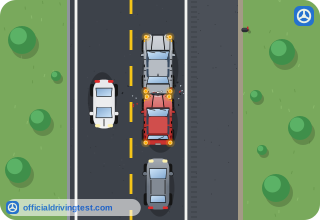
- Drivers who slow down too early before reaching an exit ramp on the road
- Drivers following too closely to stop when the vehicle ahead suddenly stops
- Drivers leaving too much room between them and the vehicle in front
- Drivers who use their turn signals too early before a lane change
Show answer
Correct answer: Drivers following too closely to stop when the vehicle ahead suddenly stops
The manual says drivers who follow too closely cannot stop before hitting the vehicle ahead.
Source: Connecticut Driver's Manual (Revised March 2023), page 21 · Open this page in the manual (Manual page 21)
-
What is the first step of the three-second rule?
- Look at your speedometer and write down your current speed
- Count the seconds before the vehicle ahead puts on its brakes
- Measure the gap between the two vehicles in car lengths ahead
- Watch for the rear of the vehicle ahead to pass a sign or pole
Show answer
Correct answer: Watch for the rear of the vehicle ahead to pass a sign or pole
The manual says to watch for when the rear of the vehicle ahead passes a stationary point such as a sign or pole.
Source: Connecticut Driver's Manual (Revised March 2023), page 21 · Open this page in the manual (Manual page 21)
-
How do you know you are following too closely using the three-second rule?
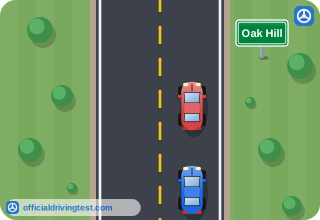
- You pass the mark after counting to five
- The vehicle ahead is not visible
- The vehicle ahead passes the mark before you count
- You pass the mark before you finish counting
Show answer
Correct answer: You pass the mark before you finish counting
The manual says you are following too closely if you pass the mark before you finish counting.
Source: Connecticut Driver's Manual (Revised March 2023), page 21 · Open this page in the manual (Manual page 21)
-
The three-second rule shows that you are following too closely. What do you do next?
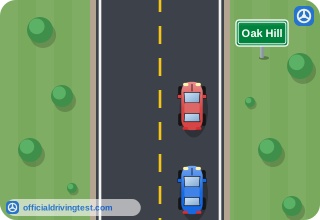
- Speed up to pass the vehicle ahead
- Drop back and count again at another spot
- Keep your distance and stop counting
- Move onto the shoulder and stop
Show answer
Correct answer: Drop back and count again at another spot
The manual says to drop back and count again at another spot to check the new following distance.
Source: Connecticut Driver's Manual (Revised March 2023), page 21 · Open this page in the manual (Manual page 21)
-
With the three-second rule, how close may you follow the vehicle ahead?
- No closer than one second
- No closer than two seconds
- No closer than three seconds
- No closer than ten seconds
Show answer
Correct answer: No closer than three seconds
The manual says to repeat until you are following no closer than three seconds.
Source: Connecticut Driver's Manual (Revised March 2023), page 21 · Open this page in the manual (Manual page 21)
-
In the manual, how many seconds of following distance may you need in some situations, such as on slippery roads?
- Four seconds
- Two seconds
- Six seconds
- Eight seconds
Show answer
Correct answer: Four seconds
The manual says that in certain situations you may need a four-second following distance to be safe.
Source: Connecticut Driver's Manual (Revised March 2023), page 21 · Open this page in the manual (Manual page 21)
-
Why must you leave more space in front of you on slippery roads?
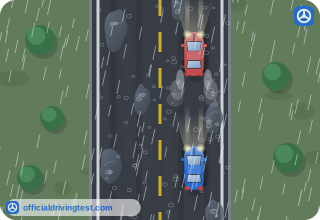
- Slippery roads make vehicles slower to start
- You need more distance to stop your vehicle
- Other drivers will pass you more often
- Your headlights shine less far ahead
Show answer
Correct answer: You need more distance to stop your vehicle
The manual says you need more distance to stop on slippery roads, so you must leave more space in front.
Source: Connecticut Driver's Manual (Revised March 2023), page 21 · Open this page in the manual (Manual page 21)
-
A car behind you wants to pass. To keep a space cushion, what should you do?
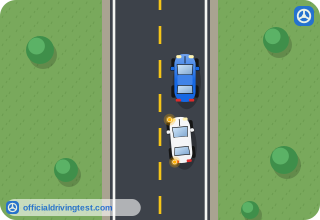
- Speed up to stay ahead of the driver
- Move to the center of the road
- Brake hard to signal the driver to stay back
- Slow down to allow room in front of your vehicle
Show answer
Correct answer: Slow down to allow room in front of your vehicle
The manual says slowing down allows room in front of you and lets the pass be completed sooner.
Source: Connecticut Driver's Manual (Revised March 2023), page 21 · Open this page in the manual (Manual page 21)
-
You are being followed closely. What should you do?
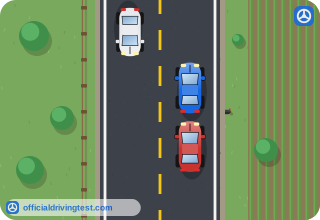
- Speed up to increase the gap between you and the other car
- Pull to the right and allow the vehicle behind you to pass
- Brake quickly to warn the other driver to back off
- Move to the left lane and slow down until it passes
Show answer
Correct answer: Pull to the right and allow the vehicle behind you to pass
The manual says to pull to the right and let the vehicle behind you pass.
Source: Connecticut Driver's Manual (Revised March 2023), page 21 · Open this page in the manual (Manual page 21)
-
Why do you need a longer following distance when pulling a trailer?
- A trailer blocks your rearview mirror
- A trailer reduces your turning radius
- Trailers must stay below the speed of traffic
- The extra weight increases your stopping distance
Show answer
Correct answer: The extra weight increases your stopping distance
The manual says the extra weight increases your stopping distance.
Source: Connecticut Driver's Manual (Revised March 2023), page 21 · Open this page in the manual (Manual page 21)
-
What should you do when it is hard to see ahead because of darkness or bad weather?
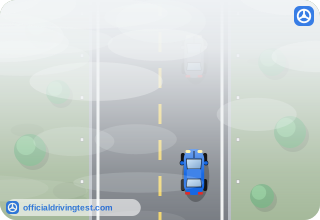
- Follow closely to use the lights ahead
- Keep your following distance the same
- Drive in the center of the road
- Increase your following distance
Show answer
Correct answer: Increase your following distance
The manual says low visibility calls for a longer following distance.
Source: Connecticut Driver's Manual (Revised March 2023), page 21 · Open this page in the manual (Manual page 21)
-
Why leave extra space behind a vehicle stopped on a hill or incline?
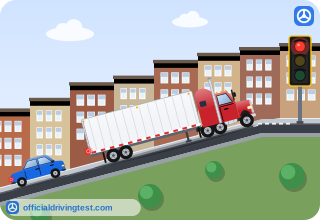
- It may roll back when it starts up
- Its brake lights may not work uphill
- It may be waiting for a train
- It must make a turn at the top
Show answer
Correct answer: It may roll back when it starts up
The manual says the vehicle ahead may roll back when it starts up.
Source: Connecticut Driver's Manual (Revised March 2023), page 21 · Open this page in the manual (Manual page 21)
-
How can you help keep the driver behind you at a safe distance?
- Drive in the center of the road and never change lanes at all
- Keep a steady speed and signal in advance when you slow down or turn
- Tap your brakes often to warn the driver behind you of danger
- Flash your headlights at the driver behind you every so often
Show answer
Correct answer: Keep a steady speed and signal in advance when you slow down or turn
The manual says a steady speed and early signals help keep the driver behind at a safe distance.
Source: Connecticut Driver's Manual (Revised March 2023), page 22 · Open this page in the manual (Manual page 22)
-
Where should you try to stop to pick up or let off passengers?
- In the nearest travel lane
- Next to the center line
- At the next intersection
- In a safe place out of traffic
Show answer
Correct answer: In a safe place out of traffic
The manual says to try to find a safe place out of traffic to stop.
Source: Connecticut Driver's Manual (Revised March 2023), page 22 · Open this page in the manual (Manual page 22)
-
You have to drive so slowly that you slow down other vehicles. What should you do?
- Speed up until you are well ahead of all of them
- Stay in the lane and signal for them to go around
- Pull to the side of the road when safe and let them pass
- Stop in the lane to let them go around you
Show answer
Correct answer: Pull to the side of the road when safe and let them pass
The manual says to pull to the side when it is safe and let them pass.
Source: Connecticut Driver's Manual (Revised March 2023), page 22 · Open this page in the manual (Manual page 22)
-
What areas on some two-lane roads can you use to let faster traffic pass?
- Turnout areas
- Rest stops
- Median strips
- Weigh stations
Show answer
Correct answer: Turnout areas
The manual says some two-lane roads have turnout areas, and others have passing lanes.
Source: Connecticut Driver's Manual (Revised March 2023), page 22 · Open this page in the manual (Manual page 22)
-
When should you always check behind your vehicle?
- Only when you plan to pass
- Only on roads with several lanes
- Whenever you slow down or stop
- Only when you hear a horn
Show answer
Correct answer: Whenever you slow down or stop
The manual says to always check behind whenever you slow down or stop.
Source: Connecticut Driver's Manual (Revised March 2023), page 22 · Open this page in the manual (Manual page 22)
-
Where is checking behind most important when you slow down?
- On roads that have a wide shoulder next to the travel lanes
- Where drivers would not expect it, such as driveways or parking spaces
- At long straight sections of highway with clear visibility
- In rural areas where there is hardly any other traffic around
Show answer
Correct answer: Where drivers would not expect it, such as driveways or parking spaces
The manual names private driveways and parking spaces, where following drivers do not expect you to slow.
Source: Connecticut Driver's Manual (Revised March 2023), page 22 · Open this page in the manual (Manual page 22)
-
You are being tailgated and there is a right lane. What should you do?
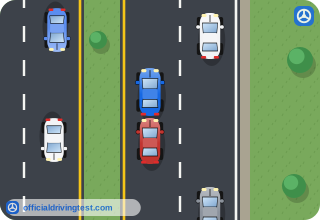
- Move over to the left
- Slow down quickly
- Speed up and stay ahead
- Move over to the right
Show answer
Correct answer: Move over to the right
The manual says that if there is a right lane, you should move over to the right.
Source: Connecticut Driver's Manual (Revised March 2023), page 22 · Open this page in the manual (Manual page 22)
-
You are being tailgated and there is no right lane. What does the manual advise?
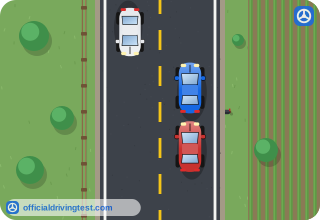
- Brake hard to make the tailgater back off from your vehicle
- Move onto the shoulder at once and wait for it to pass
- Speed up to leave the tailgater far behind your vehicle
- Wait until the road ahead is clear, then reduce speed slowly
Show answer
Correct answer: Wait until the road ahead is clear, then reduce speed slowly
The manual says to wait until the road ahead is clear, then reduce speed slowly so the tailgater drives around you.
Source: Connecticut Driver's Manual (Revised March 2023), page 22 · Open this page in the manual (Manual page 22)
-
Why should you never slow down quickly to discourage a tailgater?
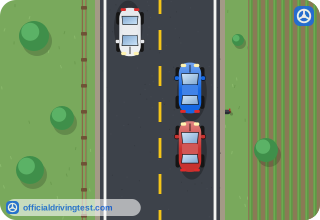
- It makes your brake lights flash for the other driver
- It increases your risk of being hit from behind
- It is a traffic violation for the vehicle following you
- It always makes the tailgater speed up and pass you
Show answer
Correct answer: It increases your risk of being hit from behind
The manual says slowing quickly increases your risk of being hit from behind.
Source: Connecticut Driver's Manual (Revised March 2023), page 22 · Open this page in the manual (Manual page 22)
-
On a multi-lane road, what should you do about driving next to other vehicles?
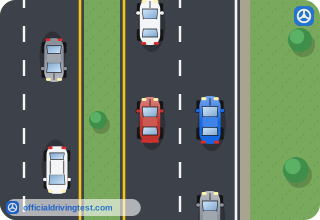
- Stay beside them so that you can keep pace with traffic
- Drive next to them because it saves fuel on long trips
- Avoid it, and move ahead of or drop behind the other vehicle
- Stay next to a truck, since trucks make the road safer
Show answer
Correct answer: Avoid it, and move ahead of or drop behind the other vehicle
The manual says someone may crowd your lane or pull into you, so move ahead of or drop behind the other vehicle.
Source: Connecticut Driver's Manual (Revised March 2023), page 22 · Open this page in the manual (Manual page 22)
-
On a two-lane road, where is it generally safest to drive?
- In the center of your lane
- Close to the centerline
- Along the right edge of the road
- On the shoulder when it is clear
Show answer
Correct answer: In the center of your lane
The manual says to keep space from oncoming vehicles without crowding the centerline, and it is safest in the center of your lane.
Source: Connecticut Driver's Manual (Revised March 2023), page 22 · Open this page in the manual (Manual page 22)
-
On a roadway with two or more lanes, what should you do to make room for entering vehicles?
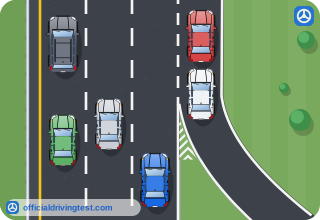
- Speed up to pass the entering vehicles
- Move over a lane if no one is next to you
- Stay in your lane and brake
- Move into the lane with the least space
Show answer
Correct answer: Move over a lane if no one is next to you
The manual says to move over a lane if there is no one next to you.
Source: Connecticut Driver's Manual (Revised March 2023), page 22 · Open this page in the manual (Manual page 22)
-
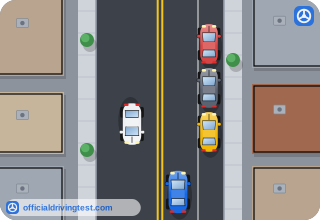
Why keep extra space between your vehicle and parked cars?
- Parked cars always have their doors wide open to traffic
- Parked cars can block the view of your turn signals ahead
- Parked cars lower the speed limit on residential streets
- Someone could step out or a parked vehicle could pull out
Show answer
Correct answer: Someone could step out or a parked vehicle could pull out
The manual says someone could step out from a parked vehicle or between vehicles, or a parked vehicle could pull out.
Source: Connecticut Driver's Manual (Revised March 2023), page 22 · Open this page in the manual (Manual page 22)
-
What does it mean to “split the difference” between two hazards?
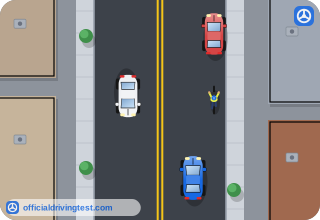
- Steer a middle course between them
- Drive faster to get past them
- Stop until both of them are gone
- Move toward the hazard farther away
Show answer
Correct answer: Steer a middle course between them
The manual says to steer a middle course, giving more space to the more dangerous side.
Source: Connecticut Driver's Manual (Revised March 2023), page 22 · Open this page in the manual (Manual page 22)
-
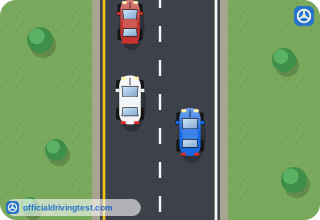
What should you do if you are driving slightly to the rear and on either side of another vehicle?
- Stay in that spot and keep watching the other driver
- Move closer to the other vehicle so it sees you
- Flash your lights and hold your position beside it
- Speed up or drop back so the other driver can see you
Show answer
Correct answer: Speed up or drop back so the other driver can see you
The manual says you will be in their blind spot, so speed up or drop back.
Source: Connecticut Driver's Manual (Revised March 2023), page 22 · Open this page in the manual (Manual page 22)
-
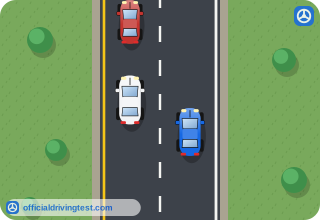
When passing another vehicle, how should you get through the other driver's blind spot?
- As slowly as possible
- As quickly as you can
- By staying beside it for a while
- By matching its speed
Show answer
Correct answer: As quickly as you can
The manual says the longer you stay there, the longer you are in danger of the driver turning toward you.
Source: Connecticut Driver's Manual (Revised March 2023), page 22 · Open this page in the manual (Manual page 22)
-
Wherever people or traffic gather, what should you do?
- Lower your speed to have time to react
- Keep your speed to match other drivers
- Use your horn to clear a path
- Stay in the left lane
Show answer
Correct answer: Lower your speed to have time to react
The manual says room to maneuver is limited, so lower your speed to have time to react.
Source: Connecticut Driver's Manual (Revised March 2023), page 22 · Open this page in the manual (Manual page 22)
-
Why may you need to slow down at toll plazas?
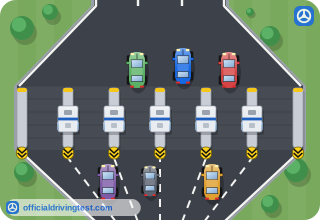
- Vehicles always have to stop there for several minutes
- Vehicles change lanes and stop and start; lanes can change
- The speed limit usually increases once you reach the plaza
- Toll plazas always have only one lane for all vehicles
Show answer
Correct answer: Vehicles change lanes and stop and start; lanes can change
The manual says vehicles are changing lanes, preparing to stop and speeding up again, and the lane count could change.
Source: Connecticut Driver's Manual (Revised March 2023), page 22 · Open this page in the manual (Manual page 22)
-
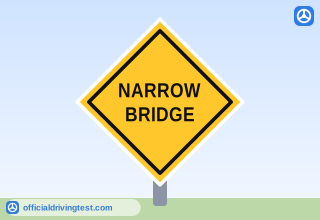
Why may you need to slow down on narrow bridges and in tunnels?
- The road surface is always icy in these locations
- Vehicles must come to a complete stop at the entrance
- Passing other vehicles is required in these places
- Vehicles approaching each other are closer together
Show answer
Correct answer: Vehicles approaching each other are closer together
The manual says vehicles approaching each other are closer together on narrow bridges and tunnels.
Source: Connecticut Driver's Manual (Revised March 2023), page 22 · Open this page in the manual (Manual page 22)
-
At a speed of 55 mph, about how long do you need to pass another vehicle?
- About 3 seconds
- About 5 seconds
- About 20 seconds
- About 10 seconds
Show answer
Correct answer: About 10 seconds
At 55 mph you need about 10 seconds to pass, so you need a 10-second opening in oncoming traffic.
Source: Connecticut Driver's Manual (Revised March 2023), page 23 · Open this page in the manual (Manual page 23)
-
At 55 mph, how far do you travel in 10 seconds?
- Over 800 feet
- About 200 feet
- About 400 feet
- Over 2,000 feet
Show answer
Correct answer: Over 800 feet
At 55 mph you will travel over 800 feet in 10 seconds, and so will an oncoming vehicle.
Source: Connecticut Driver's Manual (Revised March 2023), page 23 · Open this page in the manual (Manual page 23)
-
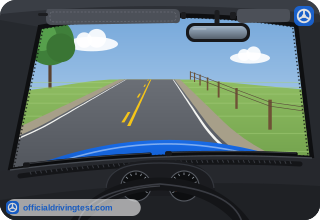
How far ahead should you be able to see on hills and curves?
- At least 100 feet
- At least one-tenth of a mile
- At least one full mile
- At least one-third of a mile
Show answer
Correct answer: At least one-third of a mile
The manual says you have to be able to see at least one-third of a mile ahead.
Source: Connecticut Driver's Manual (Revised March 2023), page 24 · Open this page in the manual (Manual page 24)
-
When a curve or hill blocks your view, what should you assume?
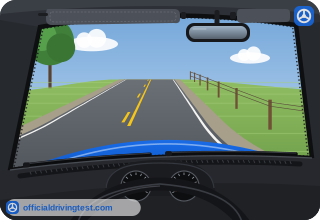
- An oncoming vehicle is just out of sight
- The road ahead is empty of traffic
- The speed limit is lower ahead
- Other drivers will move aside for you
Show answer
Correct answer: An oncoming vehicle is just out of sight
The manual says to assume an oncoming vehicle is just out of sight and to treat a curve or hill as an oncoming vehicle.
Source: Connecticut Driver's Manual (Revised March 2023), page 24 · Open this page in the manual (Manual page 24)
-
When should you not start to pass in relation to a hill or curve?
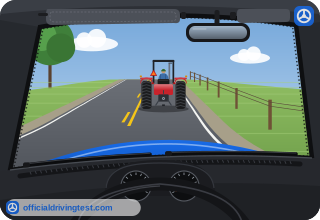
- When you are within 100 feet of it
- When you are within one mile of it
- When within one-third of a mile of it
- Only when you are on the hill itself
Show answer
Correct answer: When within one-third of a mile of it
You should treat a curve or hill as an oncoming vehicle, so do not start to pass within one-third of a mile of it.
Source: Connecticut Driver's Manual (Revised March 2023), page 24 · Open this page in the manual (Manual page 24)
-
Why should you check your mirrors when going down hills or mountains?
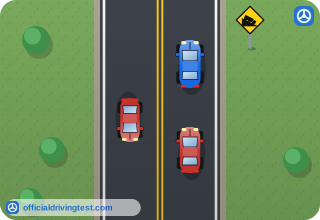
- Mirrors show the road signs that are far ahead of you
- Vehicles speed up downhill; trucks and buses may be too fast
- Vehicles in front always slow down on steep hills
- Other drivers must signal before going down hills
Show answer
Correct answer: Vehicles speed up downhill; trucks and buses may be too fast
The manual says to be alert for large trucks and buses that may be going too fast on a steep grade.
Source: Connecticut Driver's Manual (Revised March 2023), page 24 · Open this page in the manual (Manual page 24)
-
According to the manual, through what is your vehicle’s only contact with the road?
- The tires
- The suspension
- The steering wheel
- The brake pads
Show answer
Correct answer: The tires
The manual says the only contact the vehicle has with the road is through the tires.
Source: Connecticut Driver's Manual (Revised March 2023), page 25 · Open this page in the manual (Manual page 25)
-
Where does the manual tell you to look for the correct tire pressure?
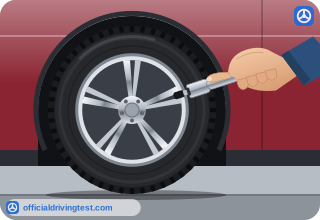
- At any DMV office
- On the tire’s tread wear bars
- In the vehicle owner’s manual
- On the speedometer
Show answer
Correct answer: In the vehicle owner’s manual
The manual says to see the vehicle owner’s manual for correct tire pressure.
Source: Connecticut Driver's Manual (Revised March 2023), page 25 · Open this page in the manual (Manual page 25)
-
How does driving on gravel or dirt differ from driving on concrete or asphalt?
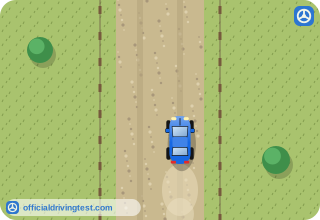
- You have more traction because the loose surface grips the tires
- You have less traction and skid more easily when turning
- Stopping takes less distance because the surface is soft
- Traction is the same, so no change in speed is needed
Show answer
Correct answer: You have less traction and skid more easily when turning
The manual says traction is lower on gravel or dirt, stopping takes much longer and it is easier to skid when turning, so you must slow down.
Source: Connecticut Driver's Manual (Revised March 2023), page 25 · Open this page in the manual (Manual page 25)
-
What happens if you go too fast in a curve?
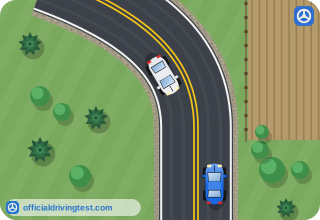
- The tires grip better as the vehicle speeds up
- The steering gets lighter and easier to control
- The vehicle straightens and leaves the curve safely
- The tires cannot grip the road and the vehicle skids
Show answer
Correct answer: The tires cannot grip the road and the vehicle skids
The manual says that if you go too fast in a curve, the tires will not be able to grip the road and the vehicle will skid.
Source: Connecticut Driver's Manual (Revised March 2023), page 25 · Open this page in the manual (Manual page 25)
-
When should you slow down for a curve?
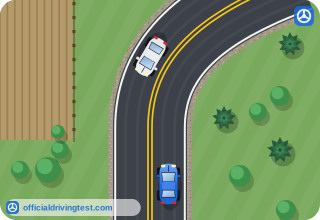
- Before entering it, so you need not brake in it
- Halfway through it, by braking firmly and steadily
- Only after the vehicle begins to skid in it
- At the end of it, by coasting out of it
Show answer
Correct answer: Before entering it, so you need not brake in it
The manual says to slow down before you enter the curve so you do not have to brake in the curve.
Source: Connecticut Driver's Manual (Revised March 2023), page 25 · Open this page in the manual (Manual page 25)
-
When should you slow down for rain, snow, or sleet?
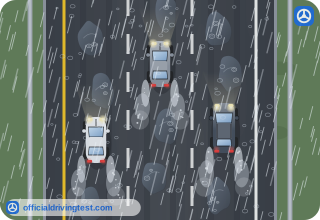
- Only once the road is completely covered
- At the first sign of it
- After your tires begin to slide
- When the temperature drops below freezing
Show answer
Correct answer: At the first sign of it
The manual says to slow down at the first sign of rain, snow, or sleet because they make the roadway slippery.
Source: Connecticut Driver's Manual (Revised March 2023), page 25 · Open this page in the manual (Manual page 25)
-
By about how much should you reduce your speed on a wet road?
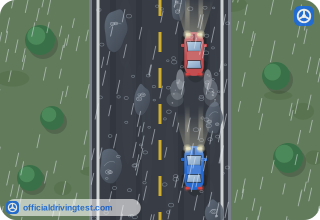
- 5 mph
- 20 mph
- 25 mph
- 10 mph
Show answer
Correct answer: 10 mph
The manual says to reduce your speed by about 10 mph on a wet road.
Source: Connecticut Driver's Manual (Revised March 2023), page 25 · Open this page in the manual (Manual page 25)
-
On packed snow, how much should you reduce your speed?
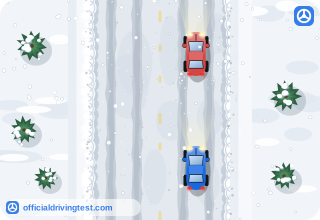
- Cut it in half
- Reduce it by about 10 mph
- Reduce it by about one third
- Reduce it by about 5 mph
Show answer
Correct answer: Cut it in half
The manual says to cut your speed in half on packed snow.
Source: Connecticut Driver's Manual (Revised March 2023), page 25 · Open this page in the manual (Manual page 25)
-
What should you use when the road has snow on it?
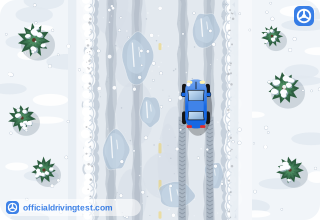
- Tires inflated below normal pressure
- Wider tires with extra tread
- Snow tires or chains
- Summer tires with extra air
Show answer
Correct answer: Snow tires or chains
The manual says to use snow tires or chains when the road has snow on it.
Source: Connecticut Driver's Manual (Revised March 2023), page 25 · Open this page in the manual (Manual page 25)
-
How slowly must you drive on ice?
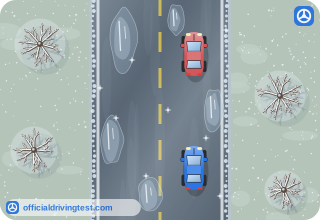
- Cut your speed in half
- Slow to a crawl
- Reduce your speed by about 10 mph
- Stay below 35 mph
Show answer
Correct answer: Slow to a crawl
The manual says that on ice you must slow to a crawl, and that it is very dangerous to drive on ice.
Source: Connecticut Driver's Manual (Revised March 2023), page 25 · Open this page in the manual (Manual page 25)
-
In Connecticut, when are studded tires permitted?
- October 1st through March 31st
- December 1st through March 15th
- November 1st through May 15th
- November 15th through April 30th
Show answer
Correct answer: November 15th through April 30th
The manual says studded tires are permitted in Connecticut from November 15th through April 30th.
Source: Connecticut Driver's Manual (Revised March 2023), page 25 · Open this page in the manual (Manual page 25)
-
On cold, wet days, which spots can be icy because they freeze first and dry out last?
- Shady spots
- Sunny spots
- Open straight stretches
- Spots under street lights
Show answer
Correct answer: Shady spots
The manual says shady spots can be icy on cold, wet days because they freeze first and dry out last.
Source: Connecticut Driver's Manual (Revised March 2023), page 25 · Open this page in the manual (Manual page 25)
-
Why can the pavement on a bridge be icy even when other pavement is not?
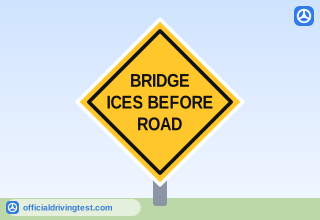
- Bridges are built with a smoother surface than other roads
- Bridge pavement is never treated for winter weather
- Bridges have no earth underneath to insulate them from the cold
- Bridges sit lower than the roads around them and collect water
Show answer
Correct answer: Bridges have no earth underneath to insulate them from the cold
The manual says bridges lack earth underneath to insulate them, so they can be colder and icier than other roadways.
Source: Connecticut Driver's Manual (Revised March 2023), page 25 · Open this page in the manual (Manual page 25)
-
When is ice more slippery?
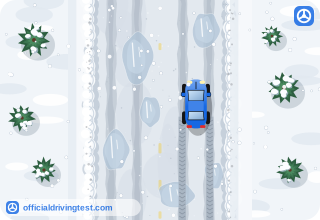
- Well below freezing, when it is hardest
- Around the freezing point, when it becomes wet
- Only while snow is actively falling
- Only after the sun has gone down
Show answer
Correct answer: Around the freezing point, when it becomes wet
The manual says ice that becomes wet near the freezing point is more slippery than ice well below freezing.
Source: Connecticut Driver's Manual (Revised March 2023), page 25 · Open this page in the manual (Manual page 25)
-
Why can pavement be more slippery in the first few minutes of rain on a hot day?
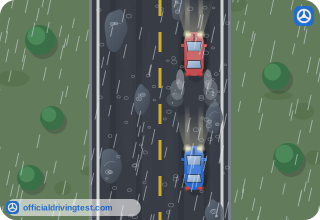
- The hot rain freezes on contact with the pavement
- The tires soften and cannot grip the road well
- The rain washes loose gravel onto the roadway
- Heat brings the oil in the asphalt to the surface
Show answer
Correct answer: Heat brings the oil in the asphalt to the surface
The manual says heat causes the oil in the asphalt to come to the surface, so the road is more slippery until the oil is washed off.
Source: Connecticut Driver's Manual (Revised March 2023), page 25 · Open this page in the manual (Manual page 25)
-
On a wet road, up to about what speed do most tires have good traction?
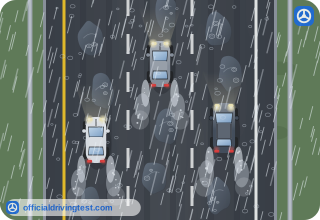
- 35 mph
- 25 mph
- 45 mph
- 55 mph
Show answer
Correct answer: 35 mph
The manual says most tires have good traction on a wet road up to about 35 mph.
Source: Connecticut Driver's Manual (Revised March 2023), page 25 · Open this page in the manual (Manual page 25)
-
How do bald or badly worn tires behave on a wet road?
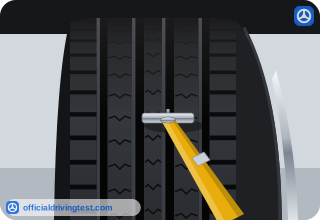
- They lose traction only above 55 mph
- They lose traction at much lower speeds
- They behave like tires in good condition
- They keep traction up to about 35 mph
Show answer
Correct answer: They lose traction at much lower speeds
The manual says bald or badly worn tires lose traction at much lower speeds.
Source: Connecticut Driver's Manual (Revised March 2023), page 25 · Open this page in the manual (Manual page 25)
-
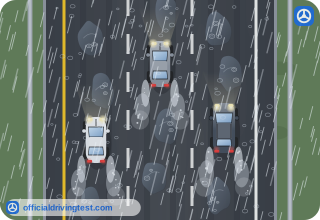
What is the best way to keep from hydroplaning?
- Speed up slightly to push through the water
- Pump the brakes while you are driving
- Steer in short, quick movements
- Slow down in the rain or when the road is wet
Show answer
Correct answer: Slow down in the rain or when the road is wet
The manual says the best way to keep from hydroplaning is to slow down in the rain or when the road is wet.
Source: Connecticut Driver's Manual (Revised March 2023), page 25 · Open this page in the manual (Manual page 25)
-
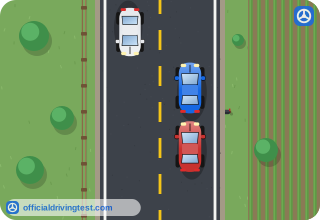
What does the manual say to maintain to avoid the trouble caused by tailgating?
- Constant eye contact with the driver ahead
- A position close behind slower vehicles
- A safe distance from the vehicle in front of you
- The speed of the vehicle behind you
Show answer
Correct answer: A safe distance from the vehicle in front of you
The manual says to maintain a safe distance from the vehicle in front of you.
Source: Connecticut Driver's Manual (Revised March 2023), page 26 · Open this page in the manual (Manual page 26)
-
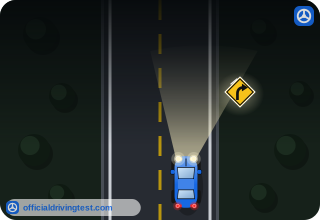
Which rule does the manual say to use at night so you are not “over-driving” your headlights?
- The “ten-second scanning rule”
- The “six-second reaction rule”
- The “four-second sight-distance rule”
- The “eight-second stopping rule”
Show answer
Correct answer: The “four-second sight-distance rule”
The manual says to use the “four-second sight-distance rule” at night to avoid over-driving your headlights.
Source: Connecticut Driver's Manual (Revised March 2023), page 26 · Open this page in the manual (Manual page 26)
-
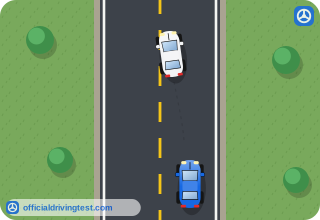
What following distance does the manual say to keep behind a distracted driver?
- 1 to 2 seconds
- 3 to 4 seconds
- 5 to 6 seconds
- Half a second
Show answer
Correct answer: 3 to 4 seconds
The manual says to give a distracted driver plenty of room and maintain a safe following distance of 3 to 4 seconds.
Source: Connecticut Driver's Manual (Revised March 2023), page 27 · Open this page in the manual (Manual page 27)
-
Speed limits are posted for what kind of conditions?
- Ideal conditions
- Heavy traffic
- Wet or icy roads
- Poor visibility
Show answer
Correct answer: Ideal conditions
The manual says limits are posted for ideal conditions, so you must slow down when the road is wet or icy, you cannot see well, or traffic is heavy.
Source: Connecticut Driver's Manual (Revised March 2023), page 36 · Open this page in the manual (Manual page 36)
-
If you drive exactly the posted speed limit, what can still happen when conditions are bad?
- You cannot be ticketed as long as you stay at the posted limit
- You can be ticketed only if you pass another vehicle on the road
- You can get a ticket for traveling too fast for road conditions
- You can be ticketed only when you are inside a school zone area
Show answer
Correct answer: You can get a ticket for traveling too fast for road conditions
Speed must fit road conditions, so even the posted limit can be too fast.
Source: Connecticut Driver's Manual (Revised March 2023), page 36 · Open this page in the manual (Manual page 36)
-
What does the manual say is the best way to prevent speeding?
- Match the speed of the vehicle that is ahead of you on the road
- Know how fast you are going by checking the speedometer often
- Judge your speed by how the road feels to you as you drive
- Stay in the left lane so that you are able to pass others
Show answer
Correct answer: Know how fast you are going by checking the speedometer often
Knowing your speed, by checking the speedometer often, is the manual's best way to prevent speeding.
Source: Connecticut Driver's Manual (Revised March 2023), page 36 · Open this page in the manual (Manual page 36)
-
When is it especially easy to be traveling much faster than you think?
- When you drive at night on a well-lit highway for a long time
- When you follow a slower truck for a long distance on a road
- When you begin driving on a wet road after a long rainstorm
- When you leave high-speed roads and are driving on local roads
Show answer
Correct answer: When you leave high-speed roads and are driving on local roads
People misjudge speed most when going from high-speed roads to local roads.
Source: Connecticut Driver's Manual (Revised March 2023), page 36 · Open this page in the manual (Manual page 36)
-
Compared with the distance it takes to stop at 30 mph, how much distance does stopping at 60 mph take?
- Exactly twice the distance
- About one and a half times the distance
- The same distance if the brakes are good
- Over three times the distance
Show answer
Correct answer: Over three times the distance
The manual says stopping at 60 mph takes over three times the distance needed at 30 mph.
Source: Connecticut Driver's Manual (Revised March 2023), page 36 · Open this page in the manual (Manual page 36)
-
Why can driving much slower than other vehicles be as bad as speeding?
- It uses more fuel and wears out your tires much faster than usual
- It makes vehicles bunch up behind you and causes other traffic to pass you
- It makes your brake lights harder for other drivers to see at night
- It gives pedestrians more time to cross the road in front of you
Show answer
Correct answer: It makes vehicles bunch up behind you and causes other traffic to pass you
Driving much slower than traffic bunches up vehicles and makes others pass.
Source: Connecticut Driver's Manual (Revised March 2023), page 36 · Open this page in the manual (Manual page 36)
-
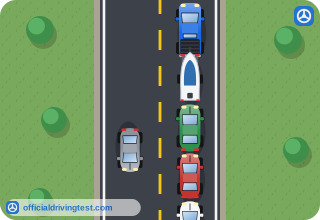
What should you do if vehicles are piled up behind you because you are driving slowly?
- Speed up to a little above the posted limit
- Stop in your lane and wave the drivers around you
- Pull over when it is safe to do so and let them pass
- Turn on your hazard lights and keep the same speed
Show answer
Correct answer: Pull over when it is safe to do so and let them pass
The manual tells you to pull over when safe and let the vehicles pass.
Source: Connecticut Driver's Manual (Revised March 2023), page 36 · Open this page in the manual (Manual page 36)
-
According to the manual, stopping suddenly usually points to what?
- A driver who was not paying attention
- A driver with a defective vehicle
- A driver who is new to the road
- A driver who is going too slowly
Show answer
Correct answer: A driver who was not paying attention
Sudden stops usually point to a driver who was not paying attention.
Source: Connecticut Driver's Manual (Revised March 2023), page 36 · Open this page in the manual (Manual page 36)
-
What could happen when you brake quickly?
- Your brakes will cool down faster
- You could skid and lose control of your vehicle
- Drivers behind you will find it easier to stop
- Your tires will grip the road better than usual
Show answer
Correct answer: You could skid and lose control of your vehicle
Quick braking can cause a skid and loss of control, and it makes it harder for drivers behind you to stop.
Source: Connecticut Driver's Manual (Revised March 2023), page 36 · Open this page in the manual (Manual page 36)
-
Where must you come to a complete stop?
- Only where a police officer is standing
- Only when other vehicles are approaching
- Only at a stop sign that is on a four-way stop
- At a stop sign or stop line
Show answer
Correct answer: At a stop sign or stop line
The manual says you must come to a complete stop at a stop sign or stop line.
Source: Connecticut Driver's Manual (Revised March 2023), page 36 · Open this page in the manual (Manual page 36)
-
If the pavement is dry and you have good tires and brakes, about how many feet can it take to react and stop at 50 mph?
- 400 feet
- 200 feet
- 300 feet
- 600 feet
Show answer
Correct answer: 400 feet
At 50 mph it can take about 400 feet, about the length of a city block.
Source: Connecticut Driver's Manual (Revised March 2023), page 36 · Open this page in the manual (Manual page 36)
-
If the pavement is dry and you have good tires and brakes, about how many feet can it take to stop at 30 mph?
- 100 feet
- 300 feet
- 200 feet
- 400 feet
Show answer
Correct answer: 200 feet
At 30 mph it can take about 200 feet, almost half a city block.
Source: Connecticut Driver's Manual (Revised March 2023), page 36 · Open this page in the manual (Manual page 36)
-
If you cannot see 400 feet ahead, what does that mean?
- You may not be driving safely at 30 mph
- You must stop and wait until the road clears
- You may not be driving safely at 50 mph
- You should switch on your high beams
Show answer
Correct answer: You may not be driving safely at 50 mph
With less than 400 feet of sight distance, 50 mph may be too fast to stop in time.
Source: Connecticut Driver's Manual (Revised March 2023), page 36 · Open this page in the manual (Manual page 36)
-
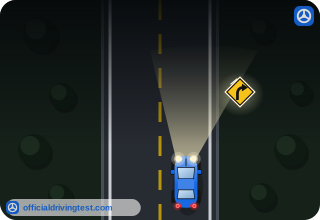
According to the manual, how far ahead do high beam headlights let you see at night?
- About 200 feet
- About 600 feet
- About 400 feet
- About 1,000 feet
Show answer
Correct answer: About 400 feet
The manual says high beams let you see about 400 feet ahead, and you should be able to stop within that distance.
Source: Connecticut Driver's Manual (Revised March 2023), page 38 · Open this page in the manual (Manual page 38)
-
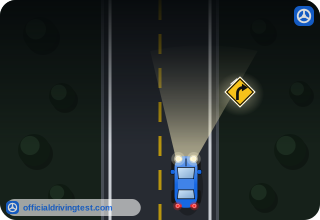
At night, you should drive at a speed that lets you stop within the distance your high beams show. About what speed is that?
- About 35 mph
- About 50 mph
- About 65 mph
- About 25 mph
Show answer
Correct answer: About 50 mph
Because high beams show about 400 feet ahead, the manual says to drive at about 50 mph so you can stop within that distance.
Source: Connecticut Driver's Manual (Revised March 2023), page 38 · Open this page in the manual (Manual page 38)
-
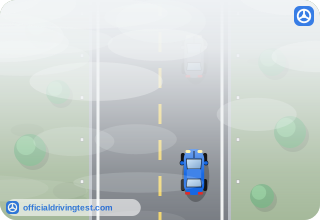
In a very heavy rain, snowstorm, or thick fog, about how far ahead may you be able to see?
- About 400 feet
- About 600 feet
- About 1,000 feet
- About 200 feet
Show answer
Correct answer: About 200 feet
The manual says that in very heavy rain, snowstorm, or thick fog you may not see much more than 200 feet ahead.
Source: Connecticut Driver's Manual (Revised March 2023), page 38 · Open this page in the manual (Manual page 38)
-
What should you do when you come to a hill or curve where you cannot see over or around it?
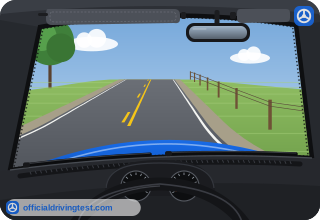
- Sound a sharp blast on your horn
- Speed up to clear the hill or curve quickly
- Adjust your speed so you can stop if necessary
- Move onto the shoulder
Show answer
Correct answer: Adjust your speed so you can stop if necessary
A vehicle may be stalled just over a hill or around a curve, so you must be able to stop.
Source: Connecticut Driver's Manual (Revised March 2023), page 38 · Open this page in the manual (Manual page 38)
-
According to the manual, when do skids happen?
- Only on roads covered with snow or ice
- Only when a driver brakes too softly
- Only at night
- When a driver travels too fast for conditions
Show answer
Correct answer: When a driver travels too fast for conditions
The manual says skids happen when a driver travels too fast for conditions.
Source: Connecticut Driver's Manual (Revised March 2023), page 40 · Open this page in the manual (Manual page 40)