Air Brakes: Using air brakes — Part 2
Questions in this part include: “In the controlled braking method, how hard do you press the brakes?” · “What is "brake lag" in a vehicle with air brakes?”
Independent educational site · not affiliated with any government agency or DMV
Ready? Test yourself
Answer to start, or tap Start below:
In stab braking, after you let off the brakes, how long can the wheels take to begin rolling?
- Instant feedback with an explanation
- Every answer cites its source in the manual
- Your best score is saved on this device
- Keyboard: press 1 to 3 to answer and Enter for the next question
Questions are written in our own words from the CDL manual; they are not the real test's questions. With your state chosen, every answer gives its page in your state's CDL manual. Without a state, answers cite the CDL manual, national model as printed by New Jersey (July 2017).
All 16 questions in this practice test
Take the test above first, then use this list to study. Tap “Show answer” to see the correct answer and explanation.
Show the questions and answersHide the questions
-
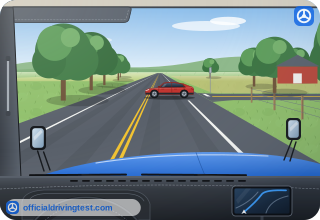
In the controlled braking method, how hard do you press the brakes?
- About half of full pedal travel
- Lightly enough that the wheels never come near locking
- Hard, but never so hard that the wheels lock
Show answer
Correct answer: Hard, but never so hard that the wheels lock
Controlled braking means pressing as hard as possible while the wheels keep turning.
Source: CDL manual, national model as printed by New Jersey, Section 5 (July 2017)
-
During controlled braking, how much should you move the steering wheel?
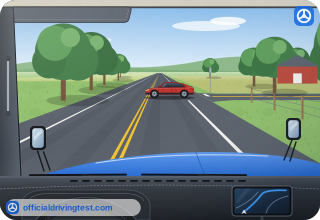
- Very small movements only
- Large movements to keep the vehicle straight
- Full turns to steer around the obstacle while braking hard
Show answer
Correct answer: Very small movements only
Keep steering movements very small while braking hard; if you need a bigger steering change or the wheels lock, release the brakes.
Source: CDL manual, national model as printed by New Jersey, Section 5 (July 2017)
-
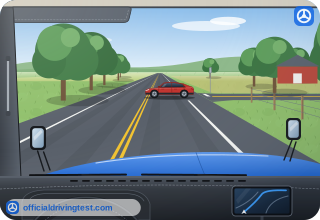
In controlled braking, what do you do if the wheels lock?
- Hold the pedal down until the vehicle has stopped
- Keep full pressure on and steer harder to recover
- Release the brakes, then brake again as soon as you can
Show answer
Correct answer: Release the brakes, then brake again as soon as you can
If the wheels lock, or you need a bigger steering change, let off the brakes and put them back on as soon as possible.
Source: CDL manual, national model as printed by New Jersey, Section 5 (July 2017)
-
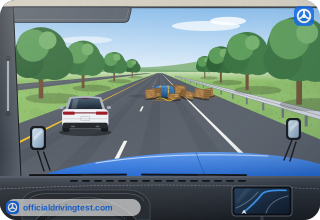
In stab braking, you press the brakes all the way down. When do you release them?
- As soon as the vehicle starts to slow
- When the wheels lock up
- When the low air pressure warning comes on
Show answer
Correct answer: When the wheels lock up
Apply the brakes fully, release them when the wheels lock, then apply fully again once the wheels start rolling.
Source: CDL manual, national model as printed by New Jersey, Section 5 (July 2017)
-
In stab braking, what do you do once the wheels begin to roll again?
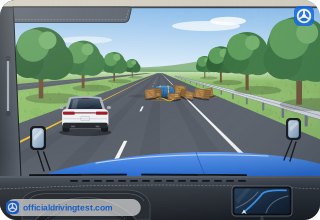
- Put the brakes fully on again
- Brake at about half pressure
- Coast until the speed drops
Show answer
Correct answer: Put the brakes fully on again
Once the wheels are rolling again, you apply the brakes all the way once more.
Source: CDL manual, national model as printed by New Jersey, Section 5 (July 2017)
-
In stab braking, after you let off the brakes, how long can the wheels take to begin rolling?
- About a quarter of a second at most
- Up to five seconds
- Up to one second
Show answer
Correct answer: Up to one second
The wheels may need up to one second to begin turning again once you let off.
Source: CDL manual, national model as printed by New Jersey, Section 5 (July 2017)
-
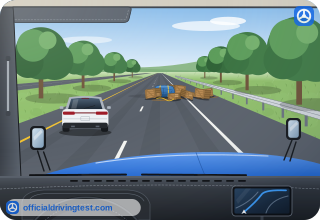
What happens in stab braking if you apply the brakes again before the wheels start rolling?
- The brakes overheat and fade at once
- The vehicle will not straighten out
- The ABS malfunction lamp comes on
Show answer
Correct answer: The vehicle will not straighten out
Braking again while the wheels are still locked keeps the vehicle sliding, so it does not straighten out.
Source: CDL manual, national model as printed by New Jersey, Section 5 (July 2017)
-
What is "brake lag" in a vehicle with air brakes?
- The time air pressure needs to rebuild after a stop
- The time the brakes need to work after the pedal is pushed
- The time a driver needs to see a hazard and react
Show answer
Correct answer: The time the brakes need to work after the pedal is pushed
Brake lag is the delay between pushing the brake pedal and the brakes actually working, because air must travel through the lines.
Source: CDL manual, national model as printed by New Jersey, Section 5 (July 2017)
-
With air brakes, how long can air take to reach the brakes through the lines?
- One half second or more
- Less than a tenth of a second
- Five seconds or more
Show answer
Correct answer: One half second or more
Air needs one half second or more to reach the brakes, while hydraulic brakes act instantly.
Source: CDL manual, national model as printed by New Jersey, Section 5 (July 2017)
-
Besides perception distance, reaction distance and braking distance, which distance is part of the total stopping distance of an air brake vehicle?
- Skid distance
- Following distance
- Brake lag distance
Show answer
Correct answer: Brake lag distance
Air brakes add brake lag distance to the other three parts of total stopping distance.
Source: CDL manual, national model as printed by New Jersey, Section 5 (July 2017)
-
At 55 mph on dry pavement, about how much distance does air brake lag add?
- About 32 feet
- About 16 feet
- About 64 feet
Show answer
Correct answer: About 32 feet
Brake lag adds about 32 feet at 55 mph on dry pavement.
Source: CDL manual, national model as printed by New Jersey, Section 5 (July 2017)
-
An average driver with good traction and good brakes goes 55 mph in an air brake vehicle. What is the total stopping distance?
- More than 450 feet
- About 250 feet
- About 350 feet
Show answer
Correct answer: More than 450 feet
Counting perception, reaction, brake lag and braking, the total is over 450 feet at 55 mph.
Source: CDL manual, national model as printed by New Jersey, Section 5 (July 2017)
-
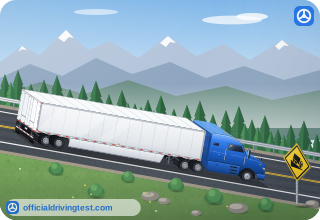
What can cause brakes to fade or fail?
- Running the compressor with the tanks completely full
- Heat from overusing the brakes and not using engine braking
- Applying the parking brake while the truck rolls slowly
Show answer
Correct answer: Heat from overusing the brakes and not using engine braking
Overusing the brakes and not using the engine to help slow down builds too much heat, which can make brakes fade or fail.
Source: CDL manual, national model as printed by New Jersey, Section 5 (July 2017)
-
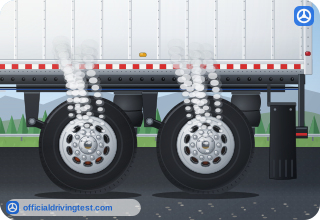
During brake fade, what does excessive heat do to the brake lining?
- It hardens the lining so that it grips better
- It causes chemical changes that lower friction
- It makes the lining swell against the drum
Show answer
Correct answer: It causes chemical changes that lower friction
Too much heat changes the lining chemically, so it gives less friction.
Source: CDL manual, national model as printed by New Jersey, Section 5 (July 2017)
-
What happens to the brake shoes when overheated drums expand?
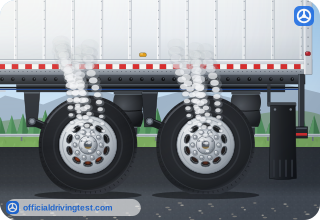
- They reach the drums sooner and press harder
- They stay where they are and the drums cool down
- They travel farther and press on the drums less firmly
Show answer
Correct answer: They travel farther and press on the drums less firmly
Expanded drums sit farther away, so the shoes have to travel more and press on the drum with less force.
Source: CDL manual, national model as printed by New Jersey, Section 5 (July 2017)
-
Why can brakes that are out of adjustment cause the other brakes to fade?
- They take too much air from the other brakes
- They do less work, so other brakes overheat
- They lock first and slow the whole vehicle
Show answer
Correct answer: They do less work, so other brakes overheat
Brakes that are out of adjustment do less work, so the remaining brakes carry more load and can overheat and fade.
Source: CDL manual, national model as printed by New Jersey, Section 5 (July 2017)