Wisconsin: Sharing the road — Part 2 Practice Test
Questions in this part include: “When are deer the most active?” · “What must vehicles in a funeral procession have on?”
Independent educational site · not affiliated with any government agency or DMV
Ready? Test yourself
Answer to start, or tap Start below:
When are deer the most active?
- Instant feedback with an explanation
- Every answer cites its source in the manual
- Your best score is saved on this device
- Keyboard: press 1 to 4 to answer and Enter for the next question
Questions are original and based on the official manual "Wisconsin Motorists' Handbook" (2026 (BDS126)), Wisconsin Department of Transportation, Division of Motor Vehicles (DMV).
All 19 questions in this practice test
Take the test above first, then use this list to study. Tap “Show answer” to see the correct answer and explanation.
Show the questions and answersHide the questions
-
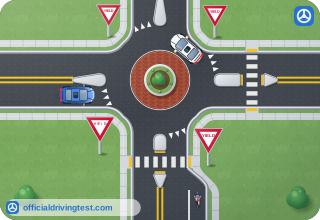
How can a bicyclist get through a one-lane roundabout?
- Use the crosswalk only and never ride in the roundabout
- Ride through it only, in the center of the lane
- Stop at the entrance and walk the bike through
- Ride through it or use the crosswalk
Show answer
Correct answer: Ride through it or use the crosswalk
Bicyclists can go through the roundabout or use the crosswalk.
Source: Wisconsin Motorists' Handbook (2026 (BDS126)), page 40 · Open this page in the manual (Manual page 40)
-
When are deer the most active?
- Sunrise to noon
- Noon to sunset
- Only on cold mornings
- Sunset to sunrise
Show answer
Correct answer: Sunset to sunrise
Deer are the most active in the sunset to sunrise hours.
Source: Wisconsin Motorists' Handbook (2026 (BDS126)), page 43 · Open this page in the manual (Manual page 43)
-
You see the reflection of your headlights in the eyes of deer. What should you do?
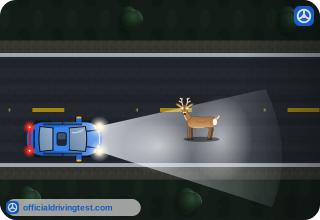
- Slow down, use your horn and be ready to stop
- Speed up to get past before they cross
- Turn off your headlights so you do not blind them
- Swerve onto the shoulder and keep your speed
Show answer
Correct answer: Slow down, use your horn and be ready to stop
If you see deer eyes, you slow down, use your horn and are ready to stop.
Source: Wisconsin Motorists' Handbook (2026 (BDS126)), page 43 · Open this page in the manual (Manual page 43)
-
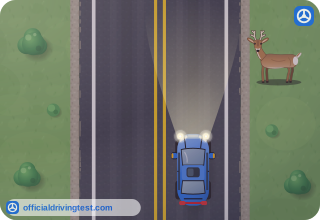
What should you remember after you see one deer near the road?
- Once one deer has crossed, the road is generally clear
- Deer appear only in groups of three or more
- Watch for more than one deer
- Only a single deer will cross at one spot
Show answer
Correct answer: Watch for more than one deer
The handbook says to watch for more than one deer.
Source: Wisconsin Motorists' Handbook (2026 (BDS126)), page 43 · Open this page in the manual (Manual page 43)
-
Where are deer usually found, according to the handbook?
- Only in rural areas, and never in towns or cities
- In rural areas, but they do wander into towns and cities
- Mainly in large cities and nearby suburbs
- Only on roads that run next to forests
Show answer
Correct answer: In rural areas, but they do wander into towns and cities
Deer are usually in rural areas but do wander into towns or even cities.
Source: Wisconsin Motorists' Handbook (2026 (BDS126)), page 43 · Open this page in the manual (Manual page 43)
-
When and where may deer cross the road?
- Only at deer crossing signs
- Only between sunset and sunrise
- Only on roads with no center line
- Anywhere, at any time
Show answer
Correct answer: Anywhere, at any time
Deer may cross anywhere, at any time.
Source: Wisconsin Motorists' Handbook (2026 (BDS126)), page 43 · Open this page in the manual (Manual page 43)
-
A funeral procession travels from a funeral home or place of worship to where?
- A cemetery or a crematorium
- A hospital or a courthouse
- The home of the deceased
- A park or a town hall
Show answer
Correct answer: A cemetery or a crematorium
A funeral procession goes from a funeral home or place of worship to a cemetery or a crematorium.
Source: Wisconsin Motorists' Handbook (2026 (BDS126)), page 43 · Open this page in the manual (Manual page 43)
-
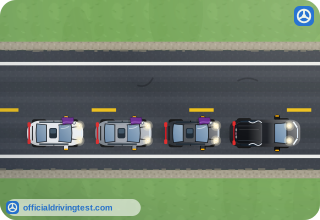
In a funeral procession, which vehicle must follow traffic signs and signals?
- The last vehicle in the line
- Only the vehicle in the middle
- The first vehicle in the line
- Only a police escort
Show answer
Correct answer: The first vehicle in the line
The first vehicle in a funeral line must follow traffic signs and signals.
Source: Wisconsin Motorists' Handbook (2026 (BDS126)), page 43 · Open this page in the manual (Manual page 43)
-
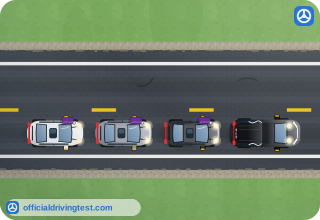
What must vehicles in a funeral procession have on?
- Their high beams
- Their headlights
- Their parking lights
- Their hazard lights
Show answer
Correct answer: Their headlights
Vehicles in the funeral line must have their headlights on.
Source: Wisconsin Motorists' Handbook (2026 (BDS126)), page 43 · Open this page in the manual (Manual page 43)
-
What should you do when you meet a funeral procession?
- Merge into the line if there is a gap
- Pass the line using the shoulder
- Follow closely behind the last vehicle to get through
- Do not cut into the line or interfere with it
Show answer
Correct answer: Do not cut into the line or interfere with it
You do not cut into a funeral line or interfere with it.
Source: Wisconsin Motorists' Handbook (2026 (BDS126)), page 43 · Open this page in the manual (Manual page 43)
-
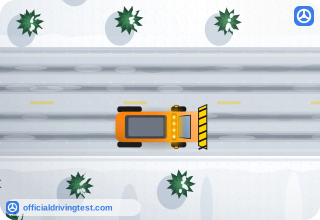
How much room should you give snowplows when their lights are flashing red, amber or green?
- At least 20 feet
- At least 100 feet
- At least 200 feet
- At least 500 feet
Show answer
Correct answer: At least 200 feet
Give snowplows at least 200 feet of room when their lights are flashing.
Source: Wisconsin Motorists' Handbook (2026 (BDS126)), page 45 · Open this page in the manual (Manual page 45)
-
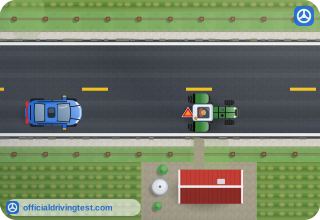
What may be true of farm equipment on the road?
- It always has flashing red lights
- It may not have brake lights or turn signals
- It never travels on public roads
- It always has a flag held by a driver
Show answer
Correct answer: It may not have brake lights or turn signals
The handbook warns that farm equipment may lack brake lights or turn signals.
Source: Wisconsin Motorists' Handbook (2026 (BDS126)), page 45 · Open this page in the manual (Manual page 45)
-
What difficulty may farmers have on rural roads?
- Seeing the road surface
- Judging the weight of their equipment
- Finding a place to turn around
- Seeing or hearing other traffic
Show answer
Correct answer: Seeing or hearing other traffic
Farmers may have difficulty seeing or hearing other traffic.
Source: Wisconsin Motorists' Handbook (2026 (BDS126)), page 45 · Open this page in the manual (Manual page 45)
-
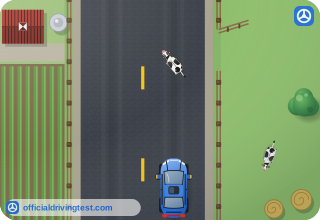
What should you do about livestock on or along the highway?
- Yield the right-of-way to the livestock
- Honk to move the animals away
- Drive around them at normal speed
- Stop your car and shine your high beams at them
Show answer
Correct answer: Yield the right-of-way to the livestock
The handbook says you should yield the right-of-way to livestock on or along the highway.
Source: Wisconsin Motorists' Handbook (2026 (BDS126)), page 45 · Open this page in the manual (Manual page 45)
-
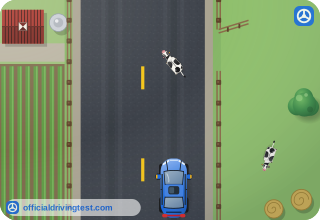
Why should you not honk your horn near livestock?
- It might wake the farmer
- It might damage the farm equipment
- It might scare the animal
- It is illegal on all rural roads
Show answer
Correct answer: It might scare the animal
The handbook says not to honk because it might scare the animal; slow down and keep a safe distance.
Source: Wisconsin Motorists' Handbook (2026 (BDS126)), page 45 · Open this page in the manual (Manual page 45)
-
Under what age can no one operate a farm tractor or self-propelled farm machinery on highways?
- 14
- 16
- 15
- 18
Show answer
Correct answer: 16
No one under 16 years old can operate a farm tractor or self-propelled farm machinery on highways.
Source: Wisconsin Motorists' Handbook (2026 (BDS126)), page 45 · Open this page in the manual (Manual page 45)
-
What does the handbook say to do to avoid driving right next to other drivers on a multi-lane road?
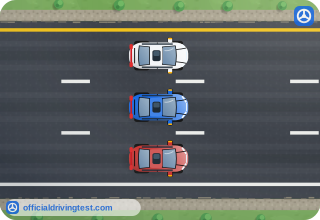
- Move ahead or drop back from other vehicles
- Drive at exactly the speed they are driving
- Move closer to the lane line beside them
- Flash your headlights at the other driver
Show answer
Correct answer: Move ahead or drop back from other vehicles
The handbook says to avoid driving right next to other drivers and to move ahead or drop back.
Source: Wisconsin Motorists' Handbook (2026 (BDS126)), page 51 · Open this page in the manual (Manual page 51)
-
What does the handbook say to give extra room for on the side of the road?
- Road signs
- Guardrails
- Parked vehicles
- Street lights
Show answer
Correct answer: Parked vehicles
The handbook says to give extra room for parked vehicles on the side of the road.
Source: Wisconsin Motorists' Handbook (2026 (BDS126)), page 51 · Open this page in the manual (Manual page 51)
-
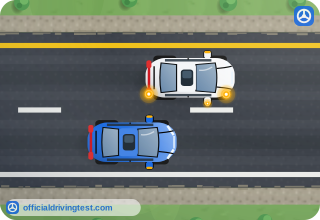
Why should you avoid driving in another driver’s blind spot?
- The other driver’s brake lights cannot be seen
- That driver’s view of you is blocked
- You cannot see your own mirrors
- The other driver must slow down
Show answer
Correct answer: That driver’s view of you is blocked
A blind spot is where another driver’s view of you is blocked, so you should avoid driving there.
Source: Wisconsin Motorists' Handbook (2026 (BDS126)), page 51 · Open this page in the manual (Manual page 51)