Wisconsin: Cheat Sheet
Key facts and numbers from the driver's manual, on two printable pages — free to print or save.
Independent educational site · not affiliated with any government agency or DMV
Driving Test Practiceofficialdrivingtest.com
Road signs
- Each mile marker shows the direction of travel, the route number and the mile number.
- Yellow and red X signals tell drivers to merge into the next lane after an incident.
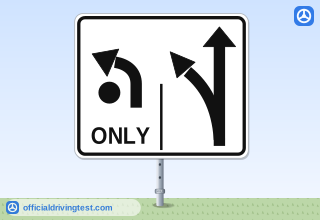 On a lane-use sign at a roundabout, the line on the sign indicates the different lanes.
- Warning signs warn you about a special situation or a hazard that is ahead.
- Destination signs give directions and distance to places such as cities, states and airports.
- Reserved lane signs and the roadway often show a white diamond.
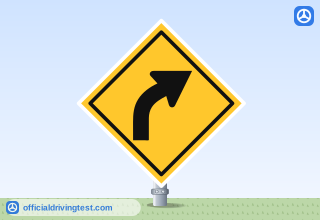 The Curved Road sign means the road will slowly move to the right or left; slow down if needed to drive it safely.
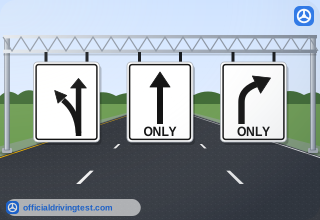 When three lane signs show a straight arrow with a left branch, a straight arrow with ONLY and a right-turn arrow with ONLY, the far-left lane is used to go left or stay straight.
Sign shapes and colors
- Construction signs are an orange diamond or rectangle, and their lettering and symbols are black.
- The State Road sign looks like a milk jug with a spout at the bottom.
Traffic signals
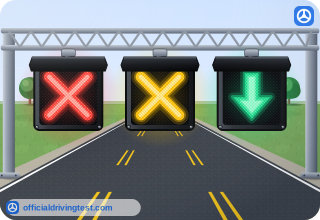 A yellow X means the lane is changing, so you move to a lane with a green arrow.
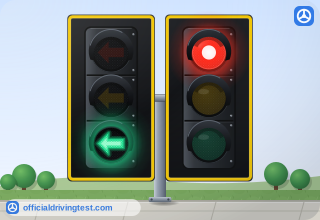 Drivers should have no oncoming or crossing traffic while the arrow is green.
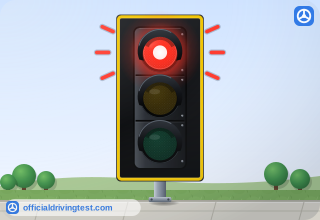 A flashing red light requires a full stop, after which you may go when it is safe.
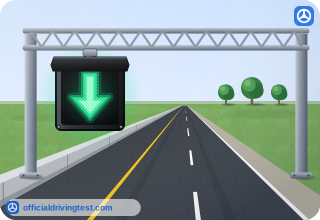 A green arrow shows the flex lane is open.
- You must follow the directions of police, school crossing guards and other workers, even when they differ from the traffic light or sign on the road.
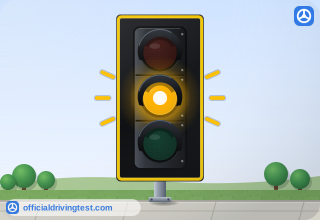 A flashing yellow light means slowing down, checking for cross traffic and proceeding with caution.
Right-of-way, turning and passing
- You enter the roundabout when there is a safe gap in traffic.
- If you cannot see across the intersection, you should move forward with caution.
- After signaling left and checking your blind spot, you turn left to the opposite curb and stop.
- A U-turn is a single smooth U-shaped motion that ends with you traveling the opposite way.
- A driver who was stopped must let cross traffic clear before moving on a new green light.
- When crossing traffic or a multi-lane road, make sure there is enough room to get all the way across.
- A right turn on red is allowed after a full stop if it is safe and no sign prohibits it.
Alcohol and drugs
- Under the Implied Consent rule, you must agree to take the PAC test when an officer asks.
- Drivers under 21 may not have any alcohol in their system while driving, so the limit is 0.00%.
- A PAC test uses a breathalyzer or a blood test to find a measurable amount of alcohol.
- Only time will sober a person up, so a drinker needs a sober ride instead of driving.
- The handbook says that a label warning against operating heavy machinery includes motor vehicles, so you should not drive.
- The handbook says it is illegal to drive under the influence of any drugs, including prescription and non-prescription drugs.
Speed and space
- A Speed Limit sign shows the maximum speed you can drive in good driving conditions.
- You pull over so that others can pass on the left.
- The handbook says to reduce speed, be ready to stop and use your headlights so you can see better.
- The handbook says to add a second for every adverse condition such as heavier traffic, rain, snow or ice.
- The handbook says to try to avoid driving if the roads are icy.
- The handbook explains that people are not used to driving on the first day of snowfall.
- If you cannot see 10 to 15 seconds ahead, you must slow down to keep better control.
Licensing basics
- At night the handbook requires a qualified instructor or a licensed person 25 with at least two years of licensed driving experience in the seat beside you.
- You need 40 correct answers (80%) to pass the knowledge test.
- Changing lanes is one of the driving skills listed for the skills test, along with turning, backing and parking.
- The restrictions help reduce distractions for new drivers and limit the number of people in the car.
Vehicle controls and signals
- Coasting means putting the car in the neutral position; the handbook says to stay in gear for full control.
- You can use your high beams when no vehicles are coming toward you.
- When backing up is necessary you should move slowly, no faster than a slow walk.
- The handbook says to clear snow and ice from all parts of the vehicle, including all windows, lamps, side mirrors and license plates.
Pavement markings and special lanes
- A solid yellow line separates the flex lane.
- Road lines show when you can pass, when there are curves on the road and if you are close to a curb.
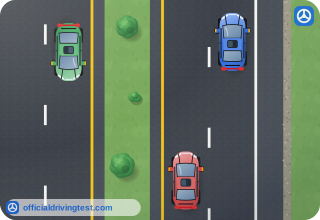 A solid or dashed yellow line marks the left edge of the lanes going in your direction.
- Each reversible lane has double dashed yellow lines.
Highways and ramps
- On a metered ramp you may go and merge with traffic when your signal turns green.
- A DDI is described as helping with safety, getting rid of crowding and lowering the cost for new roads.
- In the acceleration lane you speed up as you merge with the traffic flow.
Parking rules
- If you are parked downhill, you move your wheels all the way to the right.
- You may park in a reserved parking space only if you hold a valid disabled parking identification permit or a valid disabled license plate.
- Once your bumper clears the vehicle in front, you turn the wheel sharply the other way and back up slowly until you are parallel with the curb.
- You are responsible for making sure your vehicle is not a hazard when it is parked.
Railroad crossings
- The handbook says never to try to beat a train across the tracks.
- You should look ahead to see whether there is room for your car on the opposite side of the crossing.
Pedestrians
- The Pedestrian Crossing sign tells you to yield to crossing pedestrians.
- Pedestrians at the curb side look left for oncoming traffic before crossing at a roundabout.
- The handbook warns that children or others may run out into the road without looking, so you should be alert.
Sharing the road
- Deer may cross anywhere, at any time.
- Bicyclists can move into your path quickly and without warning, so you should not share a lane with them.
- The handbook says you should yield the right-of-way to livestock on or along the highway.
- With a bicyclist in the reserved lane, you move behind them and turn when it is safe.
Seat belts and child safety
- The handbook says to always fasten your seat belt before you start driving.
- The handbook says to adjust the belt so that a fist fits between the belt and your chest.
- You should fasten your own seatbelt and make sure every passenger is wearing a seatbelt before you drive.
Distracted and drowsy driving
- The handbook says not to drive with headsets or headphones that cover or go in both ears.
- The handbook says not to hang things from your rearview mirror or clutter your windows with decals.
- Emotions can have a great effect on your ability to drive safely, so do not drive when you are very worried, excited, afraid, angry or depressed.
- The handbook says not to look at drivers who have been pulled over or other roadside activity because it could cause a crash.
Hazards and emergencies
- The handbook says to put on your emergency flashers and low lights.
- Some drivers steer away from one collision only to end up in another, so you must keep control.
- The handbook says to record any damages to the vehicles involved.
Emergency vehicles and work zones
- The handbook says to move over or slow down, because it is the law and gives the officer room.
- When you see emergency lights flashing you pull off to the right-hand side of the road.
Insurance and financial responsibility
- A driver from a different state can provide proof from the insurance company from that driver’s own state.
- To reinstate a license you may need to file proof of financial responsibility with the DMV.
Points and your driving privilege
- A conviction for violating a traffic law can add demerit points to your driving record.
- For a probationary license holder, points on second or future convictions double.