Wisconsin: Hazards and emergencies — Part 3 Practice Test
Questions in this part include: “If there are witnesses to a crash, what should you do?” · “At what amount of government property damage (for example signs or guard rails) do you need to report a crash to police?”
Independent educational site · not affiliated with any government agency or DMV
Ready? Test yourself
Answer to start, or tap Start below:
If there are witnesses to a crash, what should you do?
- Instant feedback with an explanation
- Every answer cites its source in the manual
- Your best score is saved on this device
- Keyboard: press 1 to 4 to answer and Enter for the next question
Questions are original and based on the official manual "Wisconsin Motorists' Handbook" (2026 (BDS126)), Wisconsin Department of Transportation, Division of Motor Vehicles (DMV).
All 17 questions in this practice test
Take the test above first, then use this list to study. Tap “Show answer” to see the correct answer and explanation.
Show the questions and answersHide the questions
-
If there are witnesses to a crash, what should you do?
- Ask them to leave the scene
- Get their information too
- Ask them to move the vehicles
- Tell them to wait for the other driver
Show answer
Correct answer: Get their information too
The handbook says that if there are any witnesses, get their information too.
Source: Wisconsin Motorists' Handbook (2026 (BDS126)), page 47 · Open this page in the manual (Manual page 47)
-
At what amount of property damage do you need to report a crash to police?
- $2,500 or more
- $500 or more
- $5,000 or more
- $1,000 or more
Show answer
Correct answer: $1,000 or more
A crash with property damage of $1,000 or more must be reported to police.
Source: Wisconsin Motorists' Handbook (2026 (BDS126)), page 47 · Open this page in the manual (Manual page 47)
-
At what amount of government property damage (for example signs or guard rails) do you need to report a crash to police?
- $200 or more
- $100 or more
- $500 or more
- $50 or more
Show answer
Correct answer: $200 or more
Damage of $200 or more to government property such as signs or guard rails must be reported to police.
Source: Wisconsin Motorists' Handbook (2026 (BDS126)), page 47 · Open this page in the manual (Manual page 47)
-
You are in a crash and a driver appears to be under the influence of alcohol or drugs. What does the handbook say about reporting it?
- You need to report it only if damage is $1,000 or more
- You need to report it only if someone is killed
- You need to report the crash to police
- You need to report it only if your vehicle cannot move
Show answer
Correct answer: You need to report the crash to police
A driver who appears to be under the influence of alcohol or drugs is one of the reasons a crash must be reported to police.
Source: Wisconsin Motorists' Handbook (2026 (BDS126)), page 47 · Open this page in the manual (Manual page 47)
-
What should you turn on at the start of a roadside emergency?
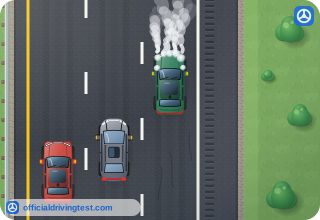
- Your high beams
- Your emergency flashers
- Your parking lights
- Your windshield wipers
Show answer
Correct answer: Your emergency flashers
The handbook says to turn on your emergency flashers in a roadside emergency.
Source: Wisconsin Motorists' Handbook (2026 (BDS126)), page 48 · Open this page in the manual (Manual page 48)
-
If your brakes stop working, what should you do first?
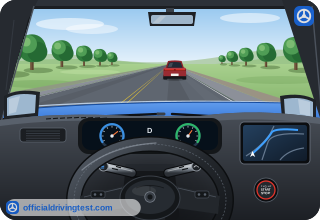
- Turn on your high beams
- Turn off the engine and restart it
- Pull off to the side at once
- Pump the brake pedal several times
Show answer
Correct answer: Pump the brake pedal several times
The first step listed for brake failure is to pump the brake pedal several times.
Source: Wisconsin Motorists' Handbook (2026 (BDS126)), page 48 · Open this page in the manual (Manual page 48)
-
If your brakes stop working, what should you do with the parking brake?
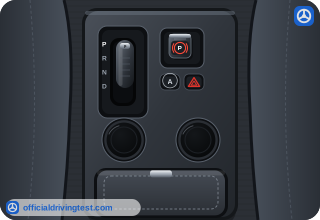
- Pull it, and take it off if you start to skid
- Leave it alone so the car does not skid
- Pull it and keep it on even if you skid
- Pull it only after the car has stopped
Show answer
Correct answer: Pull it, and take it off if you start to skid
The handbook says to pull the parking brake and, if you start to skid, take it off.
Source: Wisconsin Motorists' Handbook (2026 (BDS126)), page 48 · Open this page in the manual (Manual page 48)
-
If your brakes stop working, what should you look for?
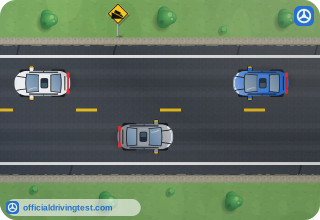
- A steep hill to roll up
- A car ahead to follow closely
- A safe place to slow to a stop
- A guard rail to rub against
Show answer
Correct answer: A safe place to slow to a stop
The handbook says to look for a safe place to slow to a stop.
Source: Wisconsin Motorists' Handbook (2026 (BDS126)), page 48 · Open this page in the manual (Manual page 48)
-
If you have a tire blowout, what should you do with the steering wheel?
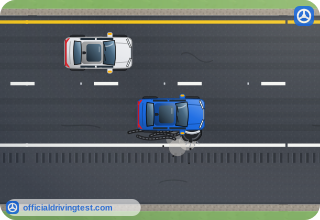
- Turn it toward the shoulder right away
- Hold it to keep your vehicle going straight
- Let go of it until the car stops
- Turn it back and forth to slow down
Show answer
Correct answer: Hold it to keep your vehicle going straight
After a blowout, hold the wheel so the vehicle keeps going straight.
Source: Wisconsin Motorists' Handbook (2026 (BDS126)), page 48 · Open this page in the manual (Manual page 48)
-
If you have a tire blowout, how should you slow down?
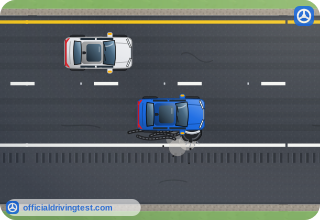
- Brake as hard as you can to stop right away
- Turn the wheel hard toward the shoulder to slow down
- Speed up slightly and steer onto the shoulder at once
- Lift your foot off the gas and slow down little by little
Show answer
Correct answer: Lift your foot off the gas and slow down little by little
The handbook says to lift your foot off the gas pedal and slow down little by little.
Source: Wisconsin Motorists' Handbook (2026 (BDS126)), page 48 · Open this page in the manual (Manual page 48)
-
If your engine stops working, what should you do with the key?
- Keep it in the "on" position
- Turn it to the "off" position
- Take it out of the ignition
- Turn it to "start" repeatedly while driving
Show answer
Correct answer: Keep it in the "on" position
The handbook says to hold the steering wheel and keep the key in the "on" position.
Source: Wisconsin Motorists' Handbook (2026 (BDS126)), page 48 · Open this page in the manual (Manual page 48)
-
What should you expect if your engine stops working while you are driving?
- The steering wheel will lock completely
- The brakes will stop working at once
- The steering wheel will be hard to turn
- The headlights will turn off
Show answer
Correct answer: The steering wheel will be hard to turn
The handbook warns that the steering wheel will be hard to turn after the engine stops.
Source: Wisconsin Motorists' Handbook (2026 (BDS126)), page 48 · Open this page in the manual (Manual page 48)
-
If your headlights stop working, what should you do first to check them?
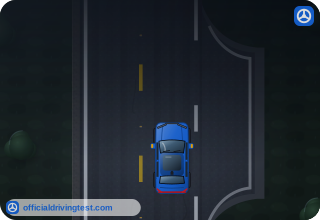
- Switch to your high beams for the rest of the trip and keep driving
- Flip them on and off to see if you are driving with parking lights on
- Turn off all your lights and coast to the side of the road
- Press the horn several times to reset the light circuit
Show answer
Correct answer: Flip them on and off to see if you are driving with parking lights on
The handbook says to flip the headlights on and off to see if you are driving with only parking lights on.
Source: Wisconsin Motorists' Handbook (2026 (BDS126)), page 48 · Open this page in the manual (Manual page 48)
-
If your headlights stop working, what should you put on?
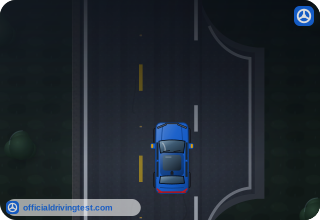
- Only your high beams and parking lights
- Only your parking lights and horn
- Only your parking lights and left signal
- Your emergency flashers and low lights
Show answer
Correct answer: Your emergency flashers and low lights
The handbook says to put on your emergency flashers and low lights.
Source: Wisconsin Motorists' Handbook (2026 (BDS126)), page 48 · Open this page in the manual (Manual page 48)
-
If your gas pedal sticks, what should you keep doing?
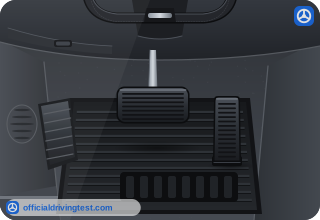
- Keeping your eyes on the road
- Pumping the gas pedal up and down
- Honking the horn
- Looking at the pedal
Show answer
Correct answer: Keeping your eyes on the road
The first step listed for a stuck gas pedal is to keep your eyes on the road.
Source: Wisconsin Motorists' Handbook (2026 (BDS126)), page 48 · Open this page in the manual (Manual page 48)
-
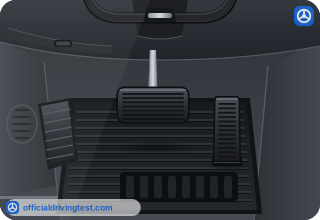
If your gas pedal sticks, what should you switch the car to?
- Park
- Reverse
- Neutral
- Low gear
Show answer
Correct answer: Neutral
The handbook says to switch the car to neutral when the gas pedal sticks.
Source: Wisconsin Motorists' Handbook (2026 (BDS126)), page 48 · Open this page in the manual (Manual page 48)
-
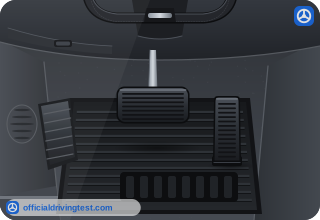
If your gas pedal sticks and you have pulled off to the side of the road, what is the last step?
- Turn off the headlights
- Turn off the engine
- Pump the gas pedal
- Get out and push the car
Show answer
Correct answer: Turn off the engine
After pulling off to the side of the road, the handbook says to turn off the engine.
Source: Wisconsin Motorists' Handbook (2026 (BDS126)), page 48 · Open this page in the manual (Manual page 48)