Wisconsin: Hazards and emergencies
Reduced visibility, hydroplaning, skids, winter driving, avoiding crashes, what to do after a crash, and vehicle failures. Split into 3 shorter tests so you're not stuck in one long quiz.
Independent educational site · not affiliated with any government agency or DMV
Choose a part
Hazards and emergencies — Part 1
Questions in this part include: “After you hit a deer, you should record the time, place and incident. What is this record for?”
Hazards and emergencies — Part 2
Questions in this part include: “If you turn to avoid a crash, how should you grip the steering wheel?”
Hazards and emergencies — Part 3
Questions in this part include: “If there are witnesses to a crash, what should you do?”
Questions are original and based on the official manual "Wisconsin Motorists' Handbook" (2026 (BDS126)), Wisconsin Department of Transportation, Division of Motor Vehicles (DMV).
All 53 Hazards and emergencies questions with answers
Choose a part above to take a practice test, or study every question and answer here.
Show the questions and answersHide the questions
1Part 118 questions
-
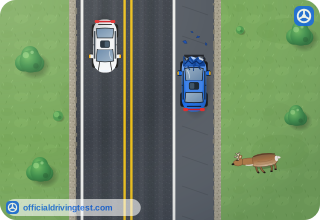
After you hit a deer, what should you check?
- That your vehicle is still safe to drive
- Whether the deer is still alive and breathing
- Whether other deer are nearby on the road
- Whether the deer already has a tag
Show answer
Correct answer: That your vehicle is still safe to drive
The first step after hitting a deer is to check that your vehicle is still safe to drive.
Source: Wisconsin Motorists' Handbook (2026 (BDS126)), page 43 · Open this page in the manual (Manual page 43)
-
After you hit a deer, you should record the time, place and incident. What is this record for?
- A hunting license application
- Vehicle registration renewal
- Insurance and crash reporting
- Demerit points on your record
Show answer
Correct answer: Insurance and crash reporting
The time, place and incident are recorded for insurance and crash reporting.
Source: Wisconsin Motorists' Handbook (2026 (BDS126)), page 43 · Open this page in the manual (Manual page 43)
-
If you hit a deer and do not want to keep it, who can keep it?
- The nearest landowner
- The next motorist
- The county that owns the road
- The first police officer on the scene
Show answer
Correct answer: The next motorist
If you hit a deer you can keep it; if you do not want it, the next motorist can keep it.
Source: Wisconsin Motorists' Handbook (2026 (BDS126)), page 43 · Open this page in the manual (Manual page 43)
-
What should you do after hitting a deer so a tag can be issued for it?
- Call your insurance company
- Take the deer to the DMV
- Tie a note to the deer's leg
- Call the police
Show answer
Correct answer: Call the police
You call the police so they can issue a tag for the deer.
Source: Wisconsin Motorists' Handbook (2026 (BDS126)), page 43 · Open this page in the manual (Manual page 43)
-
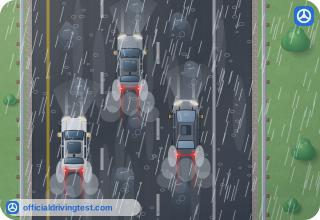
What does hydroplaning mean?
- Your tires bounce up and down on the road
- Your tires lock up when you brake on ice
- Your engine floods because of heavy rain
- Your tires slide on top of the water
Show answer
Correct answer: Your tires slide on top of the water
Hydroplaning is when the tires ride on a layer of water instead of gripping the road.
Source: Wisconsin Motorists' Handbook (2026 (BDS126)), page 44 · Open this page in the manual (Manual page 44)
-
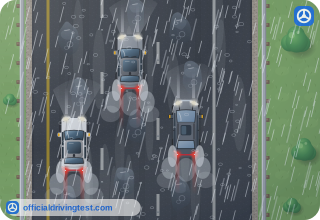
When can hydroplaning happen at low speeds?
- If your tires are bald
- If your tires are new
- If your headlights are on
- If you are driving on a bridge
Show answer
Correct answer: If your tires are bald
Bald tires can hydroplane even at low speeds.
Source: Wisconsin Motorists' Handbook (2026 (BDS126)), page 44 · Open this page in the manual (Manual page 44)
-
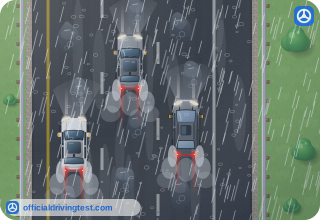
If you find yourself hydroplaning, what should you do with the gas pedal?
- Press the gas pedal harder to get across the water
- Tap the gas pedal several times
- Ease your foot off the gas pedal
- Hold the gas pedal steady
Show answer
Correct answer: Ease your foot off the gas pedal
When you are hydroplaning, the first step is to ease your foot off the gas pedal.
Source: Wisconsin Motorists' Handbook (2026 (BDS126)), page 44 · Open this page in the manual (Manual page 44)
-
If your car is hydroplaning, what should you do with the steering wheel?
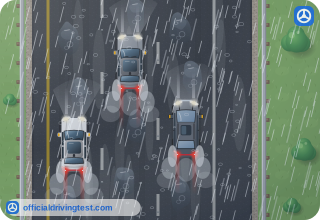
- Turn it sharply toward the shoulder
- Keep the wheel straight
- Turn it back and forth to find grip
- Turn it toward the center line
Show answer
Correct answer: Keep the wheel straight
The handbook says to keep the wheel straight while the tires slide on water.
Source: Wisconsin Motorists' Handbook (2026 (BDS126)), page 44 · Open this page in the manual (Manual page 44)
-
When hydroplaning, when may you try to stop or turn?
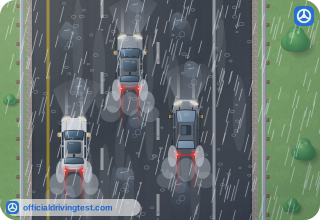
- As soon as you feel the car slide
- After you have sped up slightly
- After you have turned on your flashers
- After your tires are gripping the road again
Show answer
Correct answer: After your tires are gripping the road again
Do not try to stop or turn until the tires grip the road again.
Source: Wisconsin Motorists' Handbook (2026 (BDS126)), page 44 · Open this page in the manual (Manual page 44)
-
In the handbook, what is skidding?
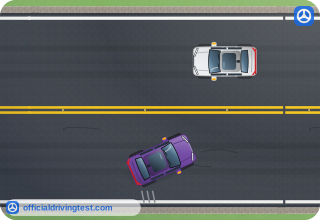
- Tires bounce up and down and you lose control of the vehicle
- Your tires slide on top of a thin layer of water on the road
- Your tires wear down quickly because of repeated hard braking
- Your vehicle slows down because the engine stops working
Show answer
Correct answer: Tires bounce up and down and you lose control of the vehicle
The handbook describes skidding as bouncing tires and a loss of control of the vehicle.
Source: Wisconsin Motorists' Handbook (2026 (BDS126)), page 45 · Open this page in the manual (Manual page 45)
-
If your car starts to skid, what should you do about the brake?
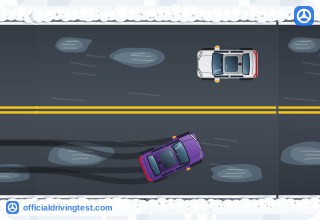
- Pump the brake quickly
- Press the brake as hard as possible
- Stay off the brake
- Pull the parking brake
Show answer
Correct answer: Stay off the brake
In a skid the handbook says to stay off the brake.
Source: Wisconsin Motorists' Handbook (2026 (BDS126)), page 45 · Open this page in the manual (Manual page 45)
-
While your car is skidding, which way should you turn the steering wheel?
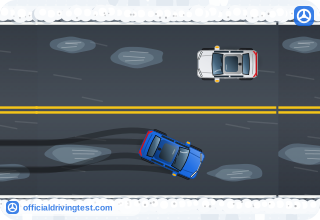
- Away from the direction you want the vehicle to go
- In the direction you want the vehicle to go
- Toward the shoulder of the road
- Toward the center line
Show answer
Correct answer: In the direction you want the vehicle to go
The handbook says to turn the wheel in the direction you want the vehicle to go.
Source: Wisconsin Motorists' Handbook (2026 (BDS126)), page 45 · Open this page in the manual (Manual page 45)
-
During a skid, what should you do as soon as your car begins to straighten?
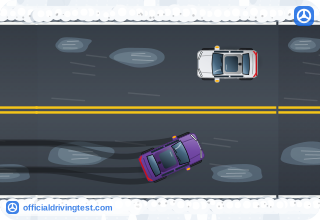
- Brake firmly to stop the skid
- Keep the wheel turned until you stop
- Speed up to regain grip
- Turn the wheel back the other way
Show answer
Correct answer: Turn the wheel back the other way
Once the car begins to straighten, turn the wheel back the other way.
Source: Wisconsin Motorists' Handbook (2026 (BDS126)), page 45 · Open this page in the manual (Manual page 45)
-
According to the handbook, what is it important to do first in an emergency if you or someone else is hurt?
- Move the vehicles off the road
- Get the other driver's information
- Turn off the engine
- Call 911
Show answer
Correct answer: Call 911
The handbook says it is important to first call 911 if you are hurt or someone else is hurt.
Source: Wisconsin Motorists' Handbook (2026 (BDS126)), page 46 · Open this page in the manual (Manual page 46)
-
If you see a vehicle on the side of the road, how can you warn the vehicles behind you?
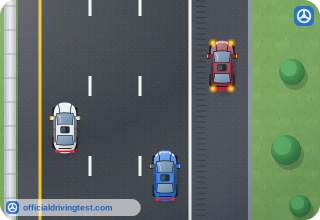
- Tap your brake pedal three or four times
- Hold your horn down for three seconds
- Flash your high beams once
- Turn on your left turn signal
Show answer
Correct answer: Tap your brake pedal three or four times
Tapping the brake pedal three or four times warns other vehicles behind you.
Source: Wisconsin Motorists' Handbook (2026 (BDS126)), page 46 · Open this page in the manual (Manual page 46)
-
How many options does the handbook give you to try to avoid a crash?
- Two
- Four
- Three
- Five
Show answer
Correct answer: Three
The handbook gives three options to avoid a crash: stop, turn or speed up.
Source: Wisconsin Motorists' Handbook (2026 (BDS126)), page 46 · Open this page in the manual (Manual page 46)
-
If your vehicle has ABS, what is the proper way to use it in an emergency stop?
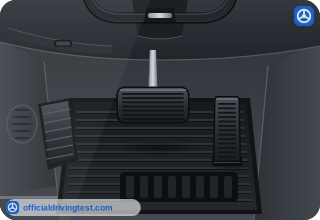
- Pump the brake pedal quickly and repeatedly in short bursts
- Apply firm, continuous pressure to the brake pedal
- Tap the brake pedal lightly and release it every second
- Press the brake pedal once and then lift your foot off it
Show answer
Correct answer: Apply firm, continuous pressure to the brake pedal
In an emergency, ABS works best with firm, continuous pressure on the brake until the vehicle stops or the danger passes.
Source: Wisconsin Motorists' Handbook (2026 (BDS126)), page 46 · Open this page in the manual (Manual page 46)
-
How long should you keep firm pressure on the brake when using ABS in an emergency?
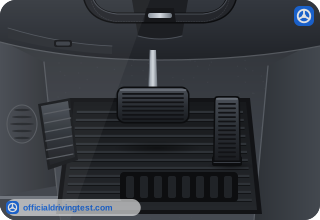
- For three or four seconds, then release the pedal
- Until the car has slowed to half of its speed
- Until you feel the wheels begin to lock up
- Until the vehicle has stopped or the danger has passed
Show answer
Correct answer: Until the vehicle has stopped or the danger has passed
The handbook says to continue until the vehicle has stopped, or the danger has passed.
Source: Wisconsin Motorists' Handbook (2026 (BDS126)), page 46 · Open this page in the manual (Manual page 46)
2Part 218 questions
-
What does ABS do when you brake?
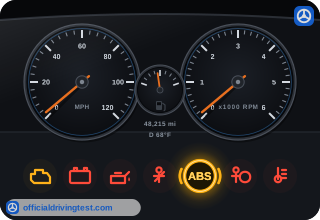
- Keeps the wheels from locking up so you skid little or not at all
- Makes the vehicle stop faster by locking the wheels when you brake
- Warns the drivers behind you that you are braking hard
- Keeps your car from turning while you are braking hard
Show answer
Correct answer: Keeps the wheels from locking up so you skid little or not at all
ABS keeps the wheels from locking up when you brake, so there is little or no skidding.
Source: Wisconsin Motorists' Handbook (2026 (BDS126)), page 46 · Open this page in the manual (Manual page 46)
-
What should you watch out for when you avoid a crash by stopping quickly?
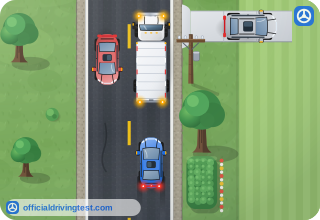
- Cars in the oncoming lane that could cross over
- Cars on the shoulder that could pull out
- Cars behind you that could crash into you
- Pedestrians who could run in front of you
Show answer
Correct answer: Cars behind you that could crash into you
Stopping quickly can cause someone behind you to crash into you.
Source: Wisconsin Motorists' Handbook (2026 (BDS126)), page 46 · Open this page in the manual (Manual page 46)
-
If you turn to avoid a crash, how should you grip the steering wheel?
- With one hand at the top
- With both hands
- With one hand at the bottom
- With your fingertips only
Show answer
Correct answer: With both hands
The handbook says to have a good grip with both hands on the steering wheel.
Source: Wisconsin Motorists' Handbook (2026 (BDS126)), page 46 · Open this page in the manual (Manual page 46)
-
After you have turned away or changed lanes to avoid a crash, what must you be ready to do?
- Stop in the new lane at once
- Sound your horn to warn others
- Speed up to pass the vehicle
- Keep the vehicle under control
Show answer
Correct answer: Keep the vehicle under control
Some drivers steer away from one collision only to end up in another, so you must keep control.
Source: Wisconsin Motorists' Handbook (2026 (BDS126)), page 46 · Open this page in the manual (Manual page 46)
-
When you steer to avoid a crash, where should you not steer?
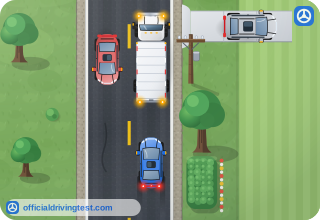
- Into the oncoming lane of traffic
- Onto the shoulder of the road
- Into the lane next to you
- Toward the right side of the road
Show answer
Correct answer: Into the oncoming lane of traffic
The handbook says not to steer into the oncoming lane of traffic.
Source: Wisconsin Motorists' Handbook (2026 (BDS126)), page 46 · Open this page in the manual (Manual page 46)
-
When is it sometimes best to speed up to avoid a crash?
- When a vehicle is stopped in the road ahead of you and cannot move
- When a vehicle is coming toward you in your own lane
- When another vehicle is about to hit you from the side or from behind
- When a vehicle is passing you on the left at a high speed
Show answer
Correct answer: When another vehicle is about to hit you from the side or from behind
Speeding up can help when another vehicle is about to hit you from the side or from behind.
Source: Wisconsin Motorists' Handbook (2026 (BDS126)), page 46 · Open this page in the manual (Manual page 46)
-
After you speed up to avoid a crash, what should you do once the danger has passed?
- Keep your speed
- Slow down
- Stop at once
- Pull onto the shoulder
Show answer
Correct answer: Slow down
The handbook says to be sure to slow down once the danger has passed.
Source: Wisconsin Motorists' Handbook (2026 (BDS126)), page 46 · Open this page in the manual (Manual page 46)
-
When must you stay at the scene of a crash?
- Only if the crash happened on a highway or freeway
- Only if a police officer at the scene asks you to
- Only if your vehicle cannot be moved off the road
- If you are involved or emergency help has not arrived
Show answer
Correct answer: If you are involved or emergency help has not arrived
The handbook says to stay at the crash if you are involved or emergency help has not arrived.
Source: Wisconsin Motorists' Handbook (2026 (BDS126)), page 47 · Open this page in the manual (Manual page 47)
-
What should you turn on at a crash to warn other drivers?
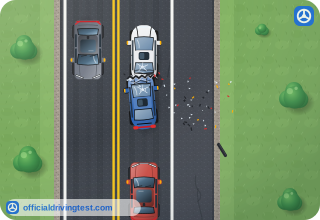
- Emergency flashers or flares
- Parking lights and high beams
- Your left turn signal
- Your high beams and horn
Show answer
Correct answer: Emergency flashers or flares
The handbook says to turn on your emergency flashers or flares to warn other drivers.
Source: Wisconsin Motorists' Handbook (2026 (BDS126)), page 47 · Open this page in the manual (Manual page 47)
-
In a crash where someone is injured or killed, what should you do with the vehicles?
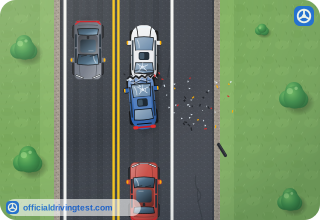
- Move them off the road at once
- Move them only if the other driver agrees
- Do not move them
- Move them only to the next intersection
Show answer
Correct answer: Do not move them
In a crash with an injury or death, stay on the scene and do not move the vehicles.
Source: Wisconsin Motorists' Handbook (2026 (BDS126)), page 47 · Open this page in the manual (Manual page 47)
-
In a crash where someone is injured or killed, where should you stay if it is safe to do so?
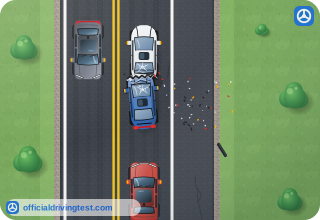
- Beside the road
- In the vehicle
- Behind a guard rail
- In a nearby building
Show answer
Correct answer: In the vehicle
The handbook says to stay in the vehicle if it is safe to do so.
Source: Wisconsin Motorists' Handbook (2026 (BDS126)), page 47 · Open this page in the manual (Manual page 47)
-
What does the handbook say about leaving the scene of a crash in which someone is injured or killed?
- It is allowed if you call 911 first
- It is allowed if another driver stays
- It is allowed once your vehicle is off the road
- It is a crime
Show answer
Correct answer: It is a crime
Leaving the scene of a crash with an injury or death is a crime.
Source: Wisconsin Motorists' Handbook (2026 (BDS126)), page 47 · Open this page in the manual (Manual page 47)
-
If there are no injuries but your vehicle cannot move after a crash, what should you do?
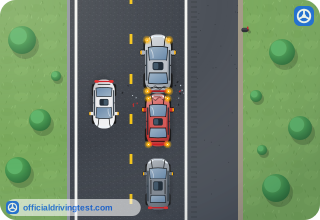
- Call 911 and follow their directions
- Push the vehicle off the road yourself
- Wait for the other driver to leave
- Drive away slowly on the shoulder
Show answer
Correct answer: Call 911 and follow their directions
With no injuries and a vehicle that cannot move, call 911 and follow their directions.
Source: Wisconsin Motorists' Handbook (2026 (BDS126)), page 47 · Open this page in the manual (Manual page 47)
-
If there are no injuries but your vehicle cannot move after a crash, what should you make sure to do?
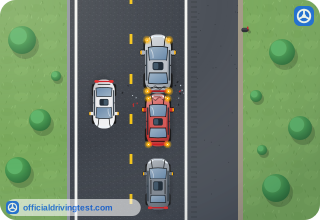
- Stand in the middle of the road to warn others
- Sit in the vehicle with the engine running
- Stay away from traffic
- Open all the doors of your vehicle
Show answer
Correct answer: Stay away from traffic
The handbook says to make sure to stay away from traffic.
Source: Wisconsin Motorists' Handbook (2026 (BDS126)), page 47 · Open this page in the manual (Manual page 47)
-
If there are no injuries and you can move your vehicle after a crash, what should you do when it is safe?
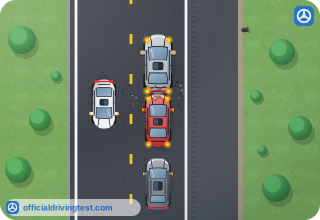
- Stop in the middle of the road
- Move your vehicle off the road
- Leave it where it is and call a tow truck
- Drive to the next town before you stop
Show answer
Correct answer: Move your vehicle off the road
When it is safe, move the vehicle off the road and do not block traffic.
Source: Wisconsin Motorists' Handbook (2026 (BDS126)), page 47 · Open this page in the manual (Manual page 47)
-
After a crash with no injuries, what information should you get from the other driver(s)?
- Only their name and home telephone number
- Only their license plate number and car color
- Only the name and address of their employer
- Driver license, vehicle and insurance information
Show answer
Correct answer: Driver license, vehicle and insurance information
The handbook says to get driver license, vehicle and insurance information from the other driver(s).
Source: Wisconsin Motorists' Handbook (2026 (BDS126)), page 47 · Open this page in the manual (Manual page 47)
-
After a crash with no injuries, what should you do about damage to the vehicles involved?
- Record any damages to the vehicles involved
- Repair the damage before you leave
- Ask the other driver to pay at the scene
- Move the vehicles so the damage is not seen
Show answer
Correct answer: Record any damages to the vehicles involved
The handbook says to record any damages to the vehicles involved.
Source: Wisconsin Motorists' Handbook (2026 (BDS126)), page 47 · Open this page in the manual (Manual page 47)
-
After a crash with no injuries, what should you write down about how it happened?
- Only who you think was at fault
- Only the time of day
- The facts of how the crash happened
- Only the speed of the other vehicle
Show answer
Correct answer: The facts of how the crash happened
The handbook says to write down the facts of how the crash happened.
Source: Wisconsin Motorists' Handbook (2026 (BDS126)), page 47 · Open this page in the manual (Manual page 47)
3Part 317 questions
-
If there are witnesses to a crash, what should you do?
- Ask them to leave the scene
- Get their information too
- Ask them to move the vehicles
- Tell them to wait for the other driver
Show answer
Correct answer: Get their information too
The handbook says that if there are any witnesses, get their information too.
Source: Wisconsin Motorists' Handbook (2026 (BDS126)), page 47 · Open this page in the manual (Manual page 47)
-
At what amount of property damage do you need to report a crash to police?
- $2,500 or more
- $500 or more
- $5,000 or more
- $1,000 or more
Show answer
Correct answer: $1,000 or more
A crash with property damage of $1,000 or more must be reported to police.
Source: Wisconsin Motorists' Handbook (2026 (BDS126)), page 47 · Open this page in the manual (Manual page 47)
-
At what amount of government property damage (for example signs or guard rails) do you need to report a crash to police?
- $200 or more
- $100 or more
- $500 or more
- $50 or more
Show answer
Correct answer: $200 or more
Damage of $200 or more to government property such as signs or guard rails must be reported to police.
Source: Wisconsin Motorists' Handbook (2026 (BDS126)), page 47 · Open this page in the manual (Manual page 47)
-
You are in a crash and a driver appears to be under the influence of alcohol or drugs. What does the handbook say about reporting it?
- You need to report it only if damage is $1,000 or more
- You need to report it only if someone is killed
- You need to report the crash to police
- You need to report it only if your vehicle cannot move
Show answer
Correct answer: You need to report the crash to police
A driver who appears to be under the influence of alcohol or drugs is one of the reasons a crash must be reported to police.
Source: Wisconsin Motorists' Handbook (2026 (BDS126)), page 47 · Open this page in the manual (Manual page 47)
-
What should you turn on at the start of a roadside emergency?
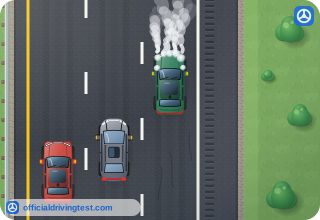
- Your high beams
- Your emergency flashers
- Your parking lights
- Your windshield wipers
Show answer
Correct answer: Your emergency flashers
The handbook says to turn on your emergency flashers in a roadside emergency.
Source: Wisconsin Motorists' Handbook (2026 (BDS126)), page 48 · Open this page in the manual (Manual page 48)
-
If your brakes stop working, what should you do first?
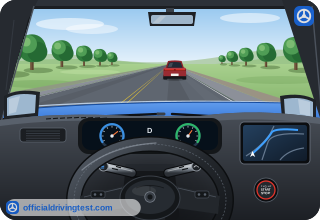
- Turn on your high beams
- Turn off the engine and restart it
- Pull off to the side at once
- Pump the brake pedal several times
Show answer
Correct answer: Pump the brake pedal several times
The first step listed for brake failure is to pump the brake pedal several times.
Source: Wisconsin Motorists' Handbook (2026 (BDS126)), page 48 · Open this page in the manual (Manual page 48)
-
If your brakes stop working, what should you do with the parking brake?
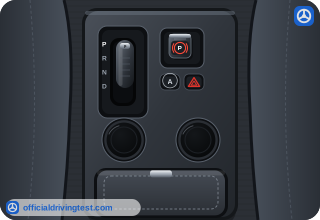
- Pull it, and take it off if you start to skid
- Leave it alone so the car does not skid
- Pull it and keep it on even if you skid
- Pull it only after the car has stopped
Show answer
Correct answer: Pull it, and take it off if you start to skid
The handbook says to pull the parking brake and, if you start to skid, take it off.
Source: Wisconsin Motorists' Handbook (2026 (BDS126)), page 48 · Open this page in the manual (Manual page 48)
-
If your brakes stop working, what should you look for?
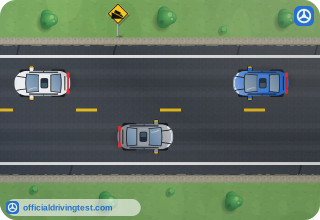
- A steep hill to roll up
- A car ahead to follow closely
- A safe place to slow to a stop
- A guard rail to rub against
Show answer
Correct answer: A safe place to slow to a stop
The handbook says to look for a safe place to slow to a stop.
Source: Wisconsin Motorists' Handbook (2026 (BDS126)), page 48 · Open this page in the manual (Manual page 48)
-
If you have a tire blowout, what should you do with the steering wheel?
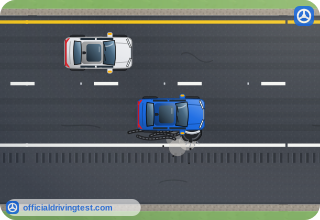
- Turn it toward the shoulder right away
- Hold it to keep your vehicle going straight
- Let go of it until the car stops
- Turn it back and forth to slow down
Show answer
Correct answer: Hold it to keep your vehicle going straight
After a blowout, hold the wheel so the vehicle keeps going straight.
Source: Wisconsin Motorists' Handbook (2026 (BDS126)), page 48 · Open this page in the manual (Manual page 48)
-
If you have a tire blowout, how should you slow down?
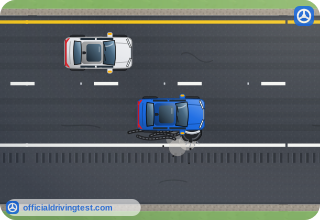
- Brake as hard as you can to stop right away
- Turn the wheel hard toward the shoulder to slow down
- Speed up slightly and steer onto the shoulder at once
- Lift your foot off the gas and slow down little by little
Show answer
Correct answer: Lift your foot off the gas and slow down little by little
The handbook says to lift your foot off the gas pedal and slow down little by little.
Source: Wisconsin Motorists' Handbook (2026 (BDS126)), page 48 · Open this page in the manual (Manual page 48)
-
If your engine stops working, what should you do with the key?
- Keep it in the "on" position
- Turn it to the "off" position
- Take it out of the ignition
- Turn it to "start" repeatedly while driving
Show answer
Correct answer: Keep it in the "on" position
The handbook says to hold the steering wheel and keep the key in the "on" position.
Source: Wisconsin Motorists' Handbook (2026 (BDS126)), page 48 · Open this page in the manual (Manual page 48)
-
What should you expect if your engine stops working while you are driving?
- The steering wheel will lock completely
- The brakes will stop working at once
- The steering wheel will be hard to turn
- The headlights will turn off
Show answer
Correct answer: The steering wheel will be hard to turn
The handbook warns that the steering wheel will be hard to turn after the engine stops.
Source: Wisconsin Motorists' Handbook (2026 (BDS126)), page 48 · Open this page in the manual (Manual page 48)
-
If your headlights stop working, what should you do first to check them?
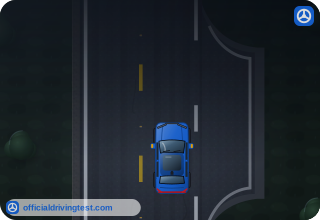
- Switch to your high beams for the rest of the trip and keep driving
- Flip them on and off to see if you are driving with parking lights on
- Turn off all your lights and coast to the side of the road
- Press the horn several times to reset the light circuit
Show answer
Correct answer: Flip them on and off to see if you are driving with parking lights on
The handbook says to flip the headlights on and off to see if you are driving with only parking lights on.
Source: Wisconsin Motorists' Handbook (2026 (BDS126)), page 48 · Open this page in the manual (Manual page 48)
-
If your headlights stop working, what should you put on?
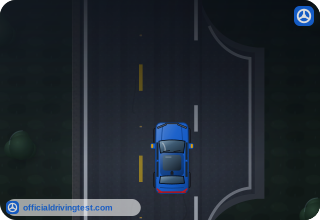
- Only your high beams and parking lights
- Only your parking lights and horn
- Only your parking lights and left signal
- Your emergency flashers and low lights
Show answer
Correct answer: Your emergency flashers and low lights
The handbook says to put on your emergency flashers and low lights.
Source: Wisconsin Motorists' Handbook (2026 (BDS126)), page 48 · Open this page in the manual (Manual page 48)
-
If your gas pedal sticks, what should you keep doing?
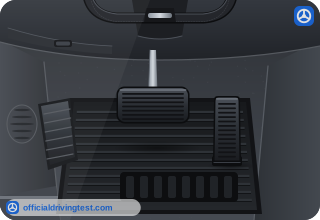
- Keeping your eyes on the road
- Pumping the gas pedal up and down
- Honking the horn
- Looking at the pedal
Show answer
Correct answer: Keeping your eyes on the road
The first step listed for a stuck gas pedal is to keep your eyes on the road.
Source: Wisconsin Motorists' Handbook (2026 (BDS126)), page 48 · Open this page in the manual (Manual page 48)
-
If your gas pedal sticks, what should you switch the car to?
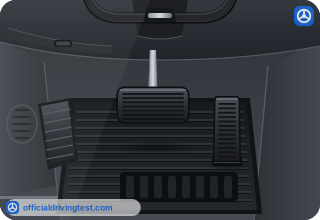
- Park
- Reverse
- Neutral
- Low gear
Show answer
Correct answer: Neutral
The handbook says to switch the car to neutral when the gas pedal sticks.
Source: Wisconsin Motorists' Handbook (2026 (BDS126)), page 48 · Open this page in the manual (Manual page 48)
-
If your gas pedal sticks and you have pulled off to the side of the road, what is the last step?
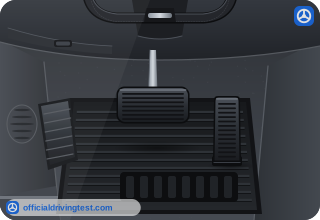
- Turn off the headlights
- Turn off the engine
- Pump the gas pedal
- Get out and push the car
Show answer
Correct answer: Turn off the engine
After pulling off to the side of the road, the handbook says to turn off the engine.
Source: Wisconsin Motorists' Handbook (2026 (BDS126)), page 48 · Open this page in the manual (Manual page 48)