Virginia: Speed and space — Part 4 Practice Test
Questions in this part include: “What should be your first response to decreased visibility and dangerous road conditions?” · “In heavy fog, what can you look for to guide you?”
Independent educational site · not affiliated with any government agency or DMV
Ready? Test yourself
- Instant feedback with an explanation
- Every answer cites its source in the manual
- Your best score is saved on this device
- Keyboard: press 1 to 4 to answer and Enter for the next question
Questions are original and based on the official manual "Virginia Driver's Manual" (DMV 39 (April 27, 2026)), Virginia Department of Motor Vehicles (DMV).
All 18 questions in this practice test
Take the test above first, then use this list to study. Tap “Show answer” to see the correct answer and explanation.
Show the questions and answersHide the questions
-
What should be your first response to decreased visibility and dangerous road conditions?
- Turn on your hazard lights
- Move to the left lane
- Pull onto the shoulder and stop
- Reduce your speed
Show answer
Correct answer: Reduce your speed
Reducing speed is the first response to poor visibility or a slick road.
Source: Virginia Driver's Manual (DMV 39 (April 27, 2026)), page 23 · Open this page in the manual (Manual page 23)
-
How should you increase your space cushion when driving becomes hazardous?
- By keeping your normal following distance and braking earlier
- By increasing your following distance by about one-half
- By staying in the lane next to the shoulder
- By doubling your normal following distance
Show answer
Correct answer: By doubling your normal following distance
The manual says to increase the space cushion by doubling your normal following distance.
Source: Virginia Driver's Manual (DMV 39 (April 27, 2026)), page 23 · Open this page in the manual (Manual page 23)
-
In heavy fog, what can you look for to guide you?
- Road edge markings
- The glare of your own high beams
- The horns of other vehicles
- The headlights of oncoming vehicles
Show answer
Correct answer: Road edge markings
In heavy fog the road edge markings help you stay on the road.
Source: Virginia Driver's Manual (DMV 39 (April 27, 2026)), page 23 · Open this page in the manual (Manual page 23)
-
What can fog do to your own headlights?
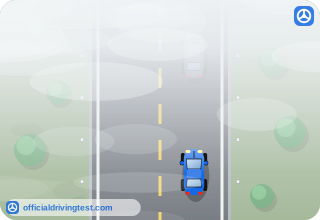
- Make them shine farther down the road
- Dim them so they burn out
- Bend them toward the edge of the road
- Reflect them back into your eyes
Show answer
Correct answer: Reflect them back into your eyes
Fog reflects light, including your own headlights, back toward your eyes.
Source: Virginia Driver's Manual (DMV 39 (April 27, 2026)), page 23 · Open this page in the manual (Manual page 23)
-
Even light fog reduces visibility and your ability to judge distances. What should you do?
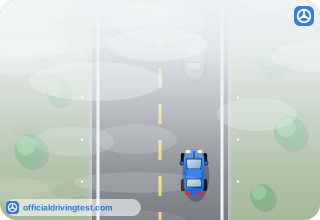
- Speed up to leave the fog sooner
- Slow down
- Follow the vehicle ahead more closely
- Turn off your headlights
Show answer
Correct answer: Slow down
Because even light fog hurts visibility and distance judgment, you should slow down.
Source: Virginia Driver's Manual (DMV 39 (April 27, 2026)), page 23 · Open this page in the manual (Manual page 23)
-
Driving in heavy rain can be as hazardous as driving in what, especially if the wind is blowing?
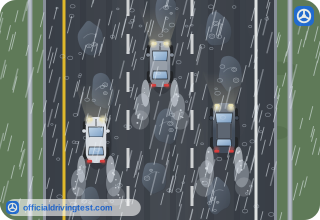
- Fog
- Snow
- Sleet
- Darkness
Show answer
Correct answer: Fog
The manual compares heavy rain, especially with wind, to the hazard of driving in fog.
Source: Virginia Driver's Manual (DMV 39 (April 27, 2026)), page 23 · Open this page in the manual (Manual page 23)
-
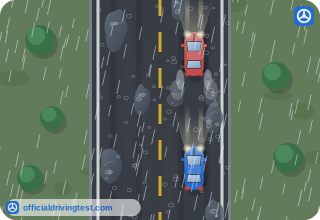
In the rain, which other vehicles are especially difficult to see?
- Those directly ahead of you in your own lane
- Those parked on the shoulder
- Those to the rear and in blind spot areas
- Those that are coming toward you
Show answer
Correct answer: Those to the rear and in blind spot areas
Vehicles behind you and in your blind spots are the hardest to see in the rain.
Source: Virginia Driver's Manual (DMV 39 (April 27, 2026)), page 23 · Open this page in the manual (Manual page 23)
-
When rain begins, during which period are roads more likely to be slippery?
- The first two hours
- The first half-hour
- Only after the rain stops
- Only when the road is completely covered with water
Show answer
Correct answer: The first half-hour
Roads are more likely to be slippery during the first half-hour of rain.
Source: Virginia Driver's Manual (DMV 39 (April 27, 2026)), page 23 · Open this page in the manual (Manual page 23)
-
What makes roads slippery during the first half-hour of rain?
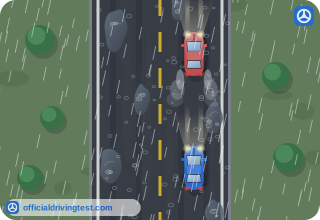
- Leaves and gravel washed into the lane
- Ice forming under the water
- Oil on the road surface mixing with water
- Water freezing on bridges
Show answer
Correct answer: Oil on the road surface mixing with water
Oil on the road surface mixes with the rain and makes the surface slippery.
Source: Virginia Driver's Manual (DMV 39 (April 27, 2026)), page 23 · Open this page in the manual (Manual page 23)
-
What should you do when you come to ponded water on the road?
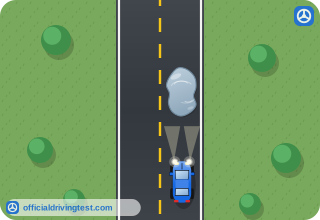
- Use caution and avoid it if possible
- Drive through it quickly to clear your tires
- Follow the tracks of the vehicle ahead through it
- Drive through it with your high beams on
Show answer
Correct answer: Use caution and avoid it if possible
Ponded water can make a vehicle lose control, so avoid it if you can.
Source: Virginia Driver's Manual (DMV 39 (April 27, 2026)), page 23 · Open this page in the manual (Manual page 23)
-
What can ponded water cause vehicles to do?
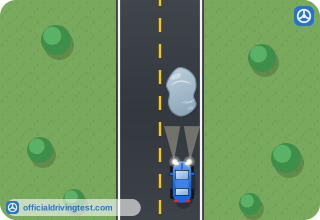
- Pull toward the shoulder of the road
- Hydroplane or otherwise lose control
- Stop in a much shorter distance
- Slow down on their own
Show answer
Correct answer: Hydroplane or otherwise lose control
Ponded water can make a vehicle hydroplane or lose control.
Source: Virginia Driver's Manual (DMV 39 (April 27, 2026)), page 23 · Open this page in the manual (Manual page 23)
-
Driving on packed snow is similar to driving on what?
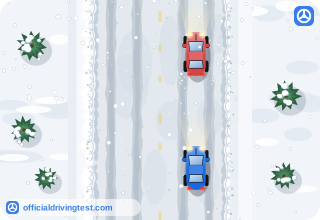
- Ice
- Wet pavement
- Loose gravel
- Dry pavement
Show answer
Correct answer: Ice
The manual says packed snow is similar to ice.
Source: Virginia Driver's Manual (DMV 39 (April 27, 2026)), page 23 · Open this page in the manual (Manual page 23)
-
When you brake on packed snow, how should you apply the brakes?
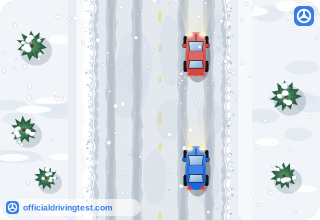
- Hard
- In short, hard pumps
- Only at the last moment
- Gently
Show answer
Correct answer: Gently
On packed snow you brake gently.
Source: Virginia Driver's Manual (DMV 39 (April 27, 2026)), page 23 · Open this page in the manual (Manual page 23)
-
On packed snow, when should you slow down?
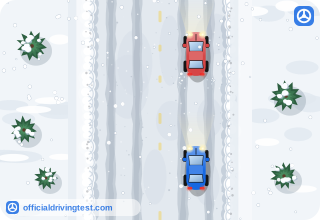
- After you start the turn
- Before stopping or turning
- Only after the car begins to skid
- Only while you are braking
Show answer
Correct answer: Before stopping or turning
You slow down before stopping or turning on packed snow.
Source: Virginia Driver's Manual (DMV 39 (April 27, 2026)), page 23 · Open this page in the manual (Manual page 23)
-
On a slippery surface, what should you do when you need to stop?
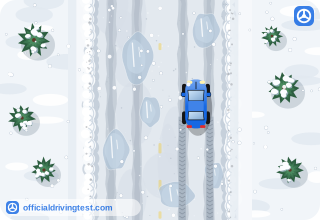
- Release the accelerator and apply the brakes gently
- Brake as hard as you can until the car stops
- Shift to neutral and let the car coast to a stop
- Pump the accelerator, then brake as hard as needed
Show answer
Correct answer: Release the accelerator and apply the brakes gently
You ease off the accelerator and brake gently when stopping on a slippery surface.
Source: Virginia Driver's Manual (DMV 39 (April 27, 2026)), page 23 · Open this page in the manual (Manual page 23)
-
On slippery surfaces, when do you have the most traction and control?
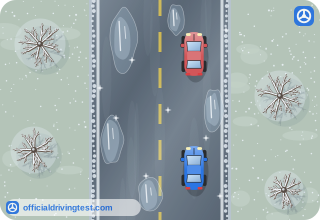
- When the front wheels are locked
- When all four tires are skidding
- When the front tires are rolling
- When you are braking hard
Show answer
Correct answer: When the front tires are rolling
Front tires that are rolling give you the most traction and control.
Source: Virginia Driver's Manual (DMV 39 (April 27, 2026)), page 23 · Open this page in the manual (Manual page 23)
-
What will allow you to control your vehicle on a slippery surface?
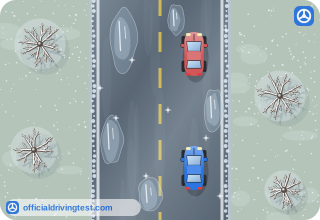
- Braking hard and early
- Keeping a slow, steady speed rather than hard braking
- Speeding up slightly before every curve you reach
- Shifting into a lower gear and coasting
Show answer
Correct answer: Keeping a slow, steady speed rather than hard braking
A slow, steady speed rather than hard braking lets you control the vehicle.
Source: Virginia Driver's Manual (DMV 39 (April 27, 2026)), page 23 · Open this page in the manual (Manual page 23)
-
Which of these freezes before other road surfaces?
- Tunnels
- Hill crests
- Road shoulders
- Bridges
Show answer
Correct answer: Bridges
The manual says bridges freeze before other road surfaces.
Source: Virginia Driver's Manual (DMV 39 (April 27, 2026)), page 23 · Open this page in the manual (Manual page 23)