Virginia: Seat belts and child safety — Part 1 Practice Test
Questions in this part include: “Under Virginia law, who must wear safety belts?” · “All children under what age must be properly secured in a child safety seat or booster seat?”
Independent educational site · not affiliated with any government agency or DMV
Ready? Test yourself
- Instant feedback with an explanation
- Every answer cites its source in the manual
- Your best score is saved on this device
- Keyboard: press 1 to 4 to answer and Enter for the next question
Questions are original and based on the official manual "Virginia Driver's Manual" (DMV 39 (April 27, 2026)), Virginia Department of Motor Vehicles (DMV).
All 17 questions in this practice test
Take the test above first, then use this list to study. Tap “Show answer” to see the correct answer and explanation.
Show the questions and answersHide the questions
-
Under Virginia law, who must wear safety belts?
- The driver and all passengers, both front and rear
- Only the driver and front seat passengers
- Only the driver and passengers under age 18
- Only passengers sitting in the front seat
Show answer
Correct answer: The driver and all passengers, both front and rear
Virginia law requires the driver and every passenger, front and rear, to wear a safety belt.
Source: Virginia Driver's Manual (DMV 39 (April 27, 2026)), page 26 · Open this page in the manual (Manual page 26)
-
A driver transporting anyone younger than what age must make sure that person is properly secured in a safety belt, booster seat or child safety seat, wherever he or she sits?
- 14
- 16
- 18
- 21
Show answer
Correct answer: 18
The driver must ensure anyone younger than 18 is secured, no matter where that person is seated.
Source: Virginia Driver's Manual (DMV 39 (April 27, 2026)), page 26 · Open this page in the manual (Manual page 26)
-
How should you wear a lap belt?
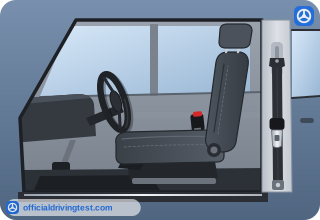
- High across your stomach
- Low on your lap and against your thighs
- Loosely around your hips so you can move
- Across your ribs, above your waist
Show answer
Correct answer: Low on your lap and against your thighs
The lap belt belongs low on your lap and against your thighs.
Source: Virginia Driver's Manual (DMV 39 (April 27, 2026)), page 26 · Open this page in the manual (Manual page 26)
-
How should you wear a shoulder belt?
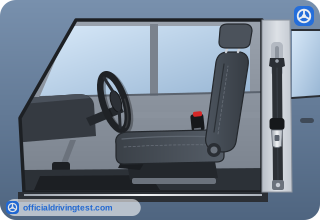
- Under your arm and across your ribs
- Behind your back and across your lap
- Across your neck and over your stomach
- Over your shoulder and across your chest
Show answer
Correct answer: Over your shoulder and across your chest
The shoulder belt goes over your shoulder and across your chest, never behind your back or under your arm.
Source: Virginia Driver's Manual (DMV 39 (April 27, 2026)), page 26 · Open this page in the manual (Manual page 26)
-
How should your shoulder and lap belts fit?
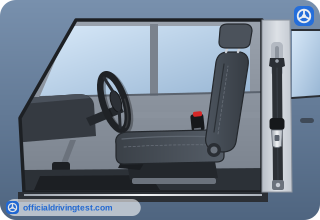
- Snug
- Loose enough to move freely
- Loose enough to lean forward
- Loose across the chest, tight at the lap
Show answer
Correct answer: Snug
The manual says both belts should be snug.
Source: Virginia Driver's Manual (DMV 39 (April 27, 2026)), page 26 · Open this page in the manual (Manual page 26)
-
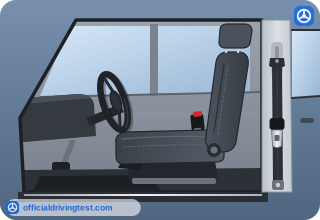
How should a pregnant woman wear a safety belt?
- Across the upper stomach
- Over the widest part of the belly
- As low on the pelvis as possible
- Across the lower ribs
Show answer
Correct answer: As low on the pelvis as possible
Pregnant women are much safer when the belt is worn as low on the pelvis as possible.
Source: Virginia Driver's Manual (DMV 39 (April 27, 2026)), page 26 · Open this page in the manual (Manual page 26)
-
A licensed physician may grant a waiver of the seat belt requirement when:
- The person is only riding in the back seat of the vehicle
- A physical or medical condition makes a belt unreasonable
- The person says that safety belts are uncomfortable to wear
- The trip is only a short drive close to home
Show answer
Correct answer: A physical or medical condition makes a belt unreasonable
A physician may grant a waiver if safety belt use is not reasonable due to the driver’s or passenger’s physical or medical condition.
Source: Virginia Driver's Manual (DMV 39 (April 27, 2026)), page 26 · Open this page in the manual (Manual page 26)
-
What must a person granted a seat belt waiver carry?
- A waiver card issued by the DMV
- A court order allowing the exemption
- A signed letter from the driver’s employer
- The physician’s signed written statement
Show answer
Correct answer: The physician’s signed written statement
The person must carry the physician’s signed statement identifying the person and the reason for the waiver.
Source: Virginia Driver's Manual (DMV 39 (April 27, 2026)), page 26 · Open this page in the manual (Manual page 26)
-
If your vehicle has air bags, how far from the steering wheel should you sit, at least?
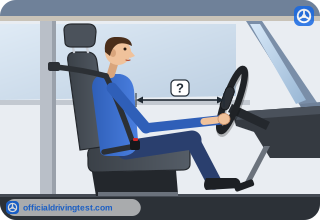
- Ten inches
- Four inches
- Six inches
- Fifteen inches
Show answer
Correct answer: Ten inches
The manual says to move your seat back so you are at least ten inches from the steering wheel.
Source: Virginia Driver's Manual (DMV 39 (April 27, 2026)), page 27 · Open this page in the manual (Manual page 27)
-
If your vehicle has air bags and your steering wheel is adjustable, how should you tilt it?
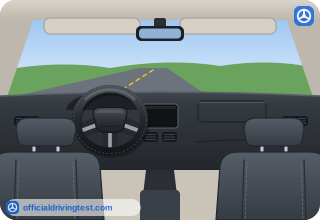
- Upward, to point the air bag at your head
- Upward, to keep the air bag away from your chest
- Downward, to point the air bag at your chest
- Do not move it; steering wheel position does not matter
Show answer
Correct answer: Downward, to point the air bag at your chest
Tilting the wheel downward points the air bag toward your chest instead of your head and neck.
Source: Virginia Driver's Manual (DMV 39 (April 27, 2026)), page 27 · Open this page in the manual (Manual page 27)
-
Where are children ages 12 and under safer when your vehicle has air bags?
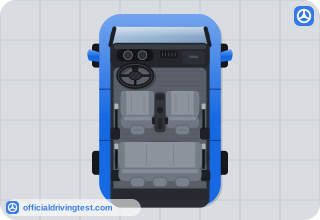
- In the front seat, beside an adult
- Buckled up in the back seat
- On a parent’s lap in the front seat
- In the front seat with a lap belt only
Show answer
Correct answer: Buckled up in the back seat
The manual says children ages 12 and under are safer buckled up in the back seat.
Source: Virginia Driver's Manual (DMV 39 (April 27, 2026)), page 27 · Open this page in the manual (Manual page 27)
-
When used properly with safety belts, air bags keep which parts of the body from hitting the steering column or dashboard?
- The knees, feet and legs
- The hands, wrists and arms
- The shoulders, hips and back
- The head, neck and chest
Show answer
Correct answer: The head, neck and chest
An air bag cushions the head, neck and chest so they do not hit the steering column or dashboard.
Source: Virginia Driver's Manual (DMV 39 (April 27, 2026)), page 27 · Open this page in the manual (Manual page 27)
-
All children under what age must be properly secured in a child safety seat or booster seat?
- Age 8
- Age 4
- Age 6
- Age 10
Show answer
Correct answer: Age 8
Virginia requires every child under age 8 to be in a child safety seat or booster seat.
Source: Virginia Driver's Manual (DMV 39 (April 27, 2026)), page 27 · Open this page in the manual (Manual page 27)
-
The child safety seat or booster seat requirement applies to vehicles manufactured after which date?
- January 1, 1958
- January 1, 1978
- January 1, 1968
- January 1, 1988
Show answer
Correct answer: January 1, 1968
The requirement covers vehicles manufactured after January 1, 1968.
Source: Virginia Driver's Manual (DMV 39 (April 27, 2026)), page 27 · Open this page in the manual (Manual page 27)
-
Children should ride rear facing from birth to what age, or as long as the safety seat manufacturer allows?
- 1 year
- 2 years
- 4 years
- 6 months
Show answer
Correct answer: 2 years
The manual says children should ride rear facing from birth to 2 years or as long as the manufacturer allows.
Source: Virginia Driver's Manual (DMV 39 (April 27, 2026)), page 27 · Open this page in the manual (Manual page 27)
-
When may a rear facing child seat be placed in the front passenger seat?
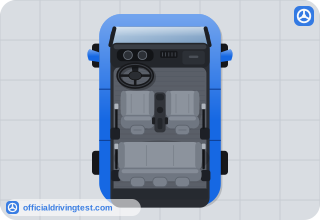
- The back seat is full, even if the air bag is on
- Whenever the child is fussy in the back seat
- Whenever the passenger air bag is turned on
- No back seat, and no passenger air bag or it is off
Show answer
Correct answer: No back seat, and no passenger air bag or it is off
This is allowed only if the vehicle has no back seat and either has no passenger air bag or has it turned off.
Source: Virginia Driver's Manual (DMV 39 (April 27, 2026)), page 27 · Open this page in the manual (Manual page 27)
-
According to the manual, children should ride facing forward in a child safety seat or booster seat until at least age 8, or until they can do what?
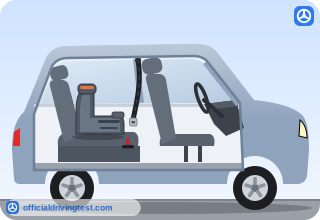
- Attain a proper seat belt fit
- Ride only on short trips
- Have a parent sit beside them
- Buckle the belt alone
Show answer
Correct answer: Attain a proper seat belt fit
Children should ride facing forward in a child safety seat or booster seat until at least age 8, or until they can attain a proper seat belt fit.
Source: Virginia Driver's Manual (DMV 39 (April 27, 2026)), page 27 · Open this page in the manual (Manual page 27)