Warning signs in Virginia
The Virginia Driver's Manual shows or names everything on this page: 34 in all, on pages 5, 7–9.
Independent educational site · not affiliated with any government agency or DMV
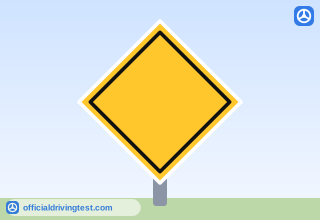
Diamond (Warning Shape)
Diamond (Warning): These signs warn you of special conditions or hazards ahead. Slow down and drive with caution. Be ready to stop. (p7) / Yellow used with black conveys a warning. (p6)
Manual page 7 · Open this page in the manual (Manual page 7)
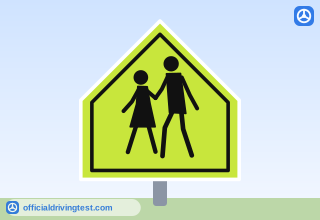
School Zone / School Crossing
Pentagon (School Zone/School Crossing): This five-sided shape marks school zones and warns you about school crossings. (p7) / School Zone/School Crossing: Watch out for children crossing the street or playing. Be ready to slow down or stop at school zones and surrounding areas. Obey the speed limit and signals from crossing guards. (p8) / A specialized class of warning signs uses a strong yellow/green color with black to advise of school zone, pedestrian and/or bicyclist activities. (p6)
Manual page 7 · Open this page in the manual (Manual page 7)
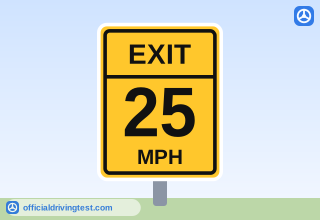
EXIT 25 MPH
Warning signs alert you to possible hazards ahead. Slow down and watch for other pavement markings, signs, signals or work zones that may follow. / Advisory Speed: This sign indicates the maximum safe speed for a highway exit.
Manual page 8 · Open this page in the manual (Manual page 8)
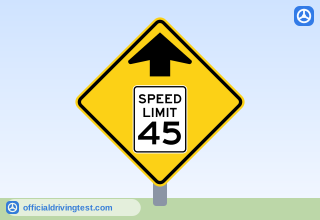
Reduced Speed Limit Ahead (45)
Reduced Speed Limit Ahead: Prepare to reduce your speed; the speed limit is changing ahead.
Manual page 8 · Open this page in the manual (Manual page 8)
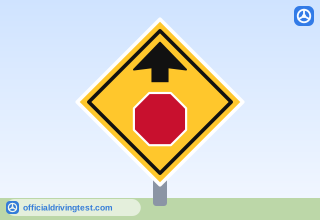
Stop Ahead
Stop Ahead/Yield Ahead: A stop sign or yield sign is ahead. Slow down and be ready to stop.
Manual page 8 · Open this page in the manual (Manual page 8)
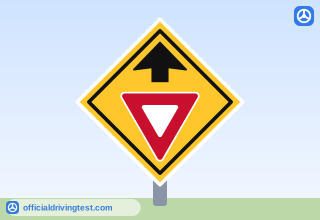
Yield Ahead
Stop Ahead/Yield Ahead: A stop sign or yield sign is ahead. Slow down and be ready to stop.
Manual page 8 · Open this page in the manual (Manual page 8)
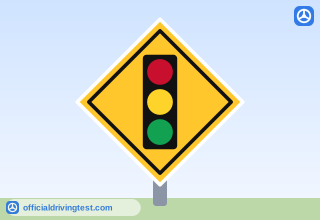
Signal Ahead
Signal Ahead: Traffic signals are ahead. Slow down and be ready to stop.
Manual page 8 · Open this page in the manual (Manual page 8)
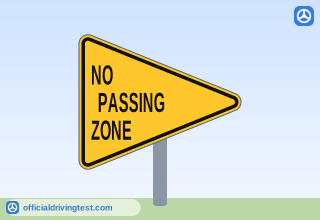
NO PASSING ZONE
No Passing Zone: This sign marks the beginning of a no passing zone. You may not pass cars ahead of you in your lane, even if the way is clear. (p8) / complete the pass before you reach a No Passing zone. If you’re still in the left lane when you reach the zone, you’re breaking the law. (p17)
Manual page 8 · Open this page in the manual (Manual page 8)
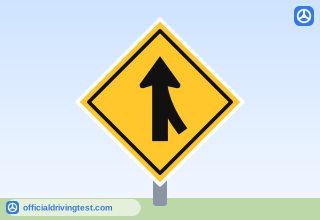
Merge
Merge: Two lanes of traffic moving in the same direction are about to become one. Drivers in both lanes are responsible for merging safely.
Manual page 8 · Open this page in the manual (Manual page 8)
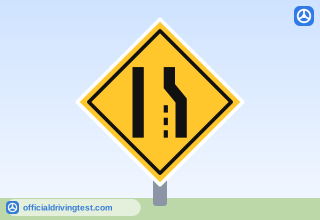
Lane Reduction
Lane Reduction: The right lane ends soon. Drivers in the right lane must merge left when space opens up. Drivers in the left lane should allow other vehicles to merge smoothly.
Manual page 8 · Open this page in the manual (Manual page 8)
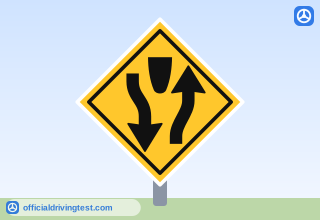
Divided Highway Begins
Divided Highway Begins: The highway ahead is split into two separate roadways by a median or divider and each roadway is one-way. Keep right.
Manual page 8 · Open this page in the manual (Manual page 8)
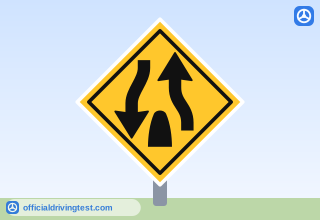
Divided Highway Ends
Divided Highway Ends: The highway ahead no longer has a median or divider. Traffic goes in both directions. Keep right.
Manual page 8 · Open this page in the manual (Manual page 8)
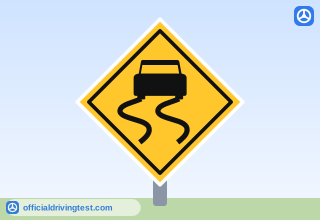
Slippery When Wet
Slippery When Wet: When pavement is wet, reduce your speed. Do not brake hard or change direction suddenly. Increase the distance between your car and the one ahead of you.
Manual page 8 · Open this page in the manual (Manual page 8)
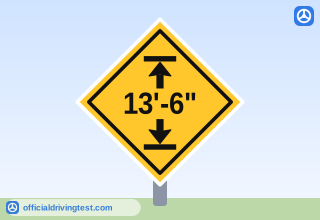
Low Clearance (13'-6")
Low Clearance Sign: The overpass ahead has a low clearance. Do not proceed if your vehicle is taller than the height shown on the sign.
Manual page 8 · Open this page in the manual (Manual page 8)
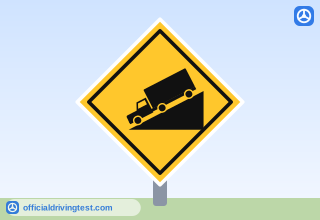
Hill (Steep Grade)
Hill: A steep grade is ahead. Check your brakes.
Manual page 8 · Open this page in the manual (Manual page 8)
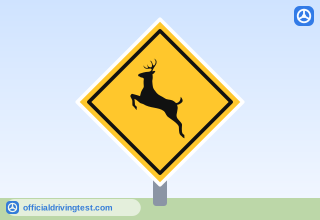
Deer Crossing
Deer Crossing: Deer cross the roadway in this area. Slow down, be alert and be ready to stop.
Manual page 8 · Open this page in the manual (Manual page 8)
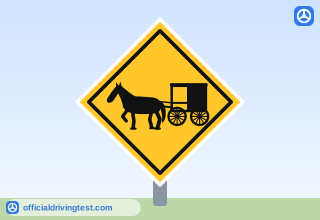
Horse-Drawn Buggies
Horse-Drawn Buggies: Regularly travel in this area. Slow down and don’t use the horn. State law requires motorists to pass with at least three feet of clearance when the way is clear.
Manual page 8 · Open this page in the manual (Manual page 8)
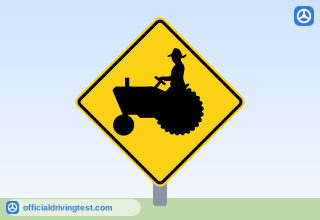
Tractors and Farm Equipment
Tractors and Farm Equipment: Regularly travel in this area. Be ready to slow down or stop. Only pass when the way is clear.
Manual page 8 · Open this page in the manual (Manual page 8)
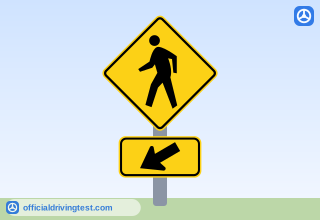
Pedestrian Crossing
Pedestrian Crossing: Watch for people who are walking, riding bicycles or other devices entering a crosswalk or crossing your path. Slow down and be prepared to stop. A second sign with an arrow may show the actual location of the crosswalk.
Manual page 8 · Open this page in the manual (Manual page 8)
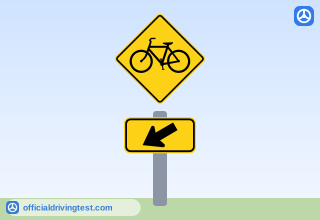
Bicycle Crossing
Bicycle Crossing/Bike Path: Bicycles regularly cross or ride beside traffic in this area. Drive with caution. A second sign with an arrow may show the actual location of the bike crossing.
Manual page 8 · Open this page in the manual (Manual page 8)
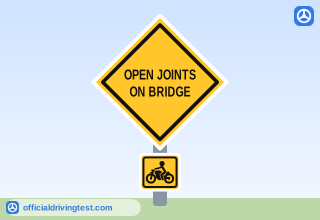
OPEN JOINTS ON BRIDGE
Open Joints: Slow down. Open joints on bridges or ramps could cause a motorcyclist to lose control of the motorcycle.
Manual page 9 · Open this page in the manual (Manual page 9)
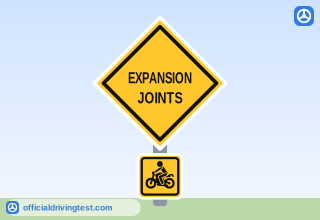
EXPANSION JOINTS
Expansion Joints: This sign is used when a joint across lanes creates a bump or is wide enough to cause loss of traction in wet weather.
Manual page 9 · Open this page in the manual (Manual page 9)
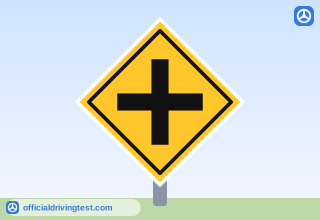
Crossroad (Intersection Ahead)
Intersections: An intersection is ahead. Be alert for vehicles entering the road on which you are traveling.
Manual page 9 · Open this page in the manual (Manual page 9)
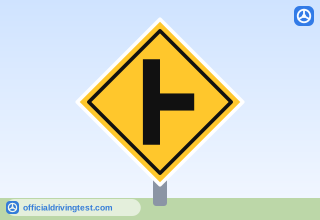
Side Road (Intersection Ahead)
Intersections: An intersection is ahead. Be alert for vehicles entering the road on which you are traveling.
Manual page 9 · Open this page in the manual (Manual page 9)
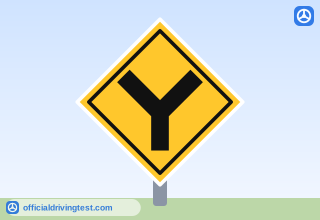
Y Intersection
Y Intersection: You must bear either right or left ahead.
Manual page 9 · Open this page in the manual (Manual page 9)
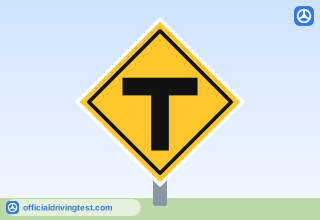
T Intersection
T Intersection: The roadway you are traveling on ends ahead at a stop sign. You must turn right or left after yielding to oncoming traffic and pedestrians.
Manual page 9 · Open this page in the manual (Manual page 9)
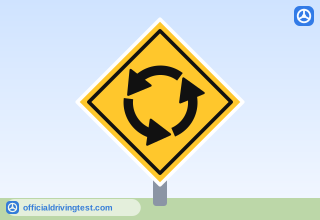
Roundabout Ahead
Roundabout: These signs indicate a circular intersection with an island in the center is ahead. Also called traffic circles, these intersections may have one or more lanes. Entering traffic must yield the right-of-way to traffic already in the circle and travel in a counter clockwise direction. (p9) / Roundabouts are circular intersections with an island in the center and have one or more lanes. Entering traffic must yield the right-of-way to pedestrians, and to traffic already in the circle. ... After entering the roundabout, drivers must travel in a counter-clockwise direction. (p16)
Manual page 9 · Open this page in the manual (Manual page 9)
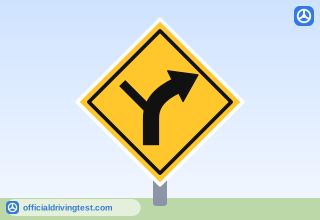
Right Curve with Side Road
Right Curve – Side Road: The road ahead curves right and a side road joins from the left within the curve. Be alert for vehicles entering the roadway you are traveling on.
Manual page 9 · Open this page in the manual (Manual page 9)
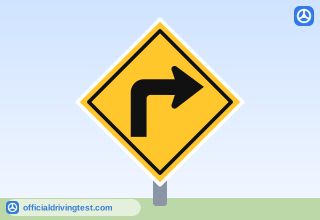
Sharp Right Turn
Sharp Right Turn: Slow down and be prepared for a sharp right turn in the road ahead.
Manual page 9 · Open this page in the manual (Manual page 9)
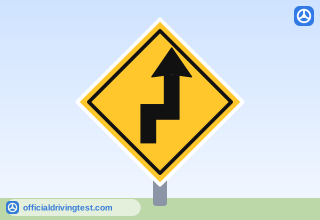
Sharp Right and Left Turns
Sharp Right and Left Turns: Slow down and be prepared for the road ahead to turn sharply right, then left.
Manual page 9 · Open this page in the manual (Manual page 9)
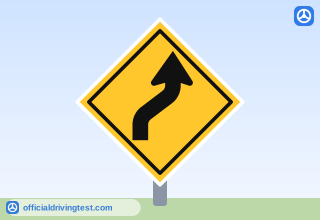
Right and Left Curves
Right and Left Curves: The road ahead curves right, then left. Slow down.
Manual page 9 · Open this page in the manual (Manual page 9)
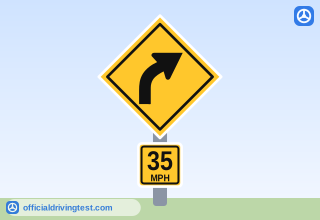
Right Curve with 35 MPH Advisory Speed
Right Curve with Safe Speed Indicator: The road ahead curves right. Slow down to the safe speed indicated.
Manual page 9 · Open this page in the manual (Manual page 9)
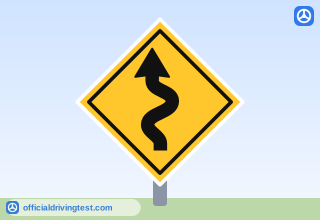
Winding Road
Winding Road: The road ahead winds with a series of turns or curves. On all curves, slow down for better control.
Manual page 9 · Open this page in the manual (Manual page 9)
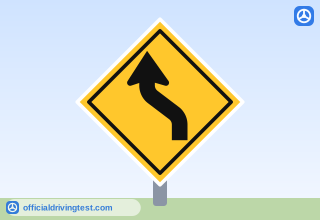
Left and Right Curves
The manual does not state it
Manual page 5 · Open this page in the manual (Manual page 5)