Virginia: Road signs
Regulatory, warning, school and work zone signs from the Virginia Driver’s Manual. Split into 2 shorter tests so you're not stuck in one long quiz.
Independent educational site · not affiliated with any government agency or DMV
All 43 Road signs questions with answers
Choose a part above to take a practice test, or study every question and answer here.
Show the questions and answersHide the questions
-
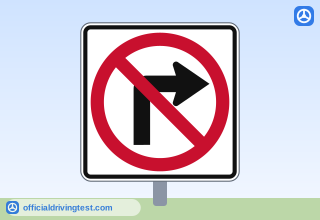
What does a red circle with a slash across it mean on a regulatory sign?
- Caution, and the symbol inside the circle shows the hazard
- Yield, and the symbol inside the circle shows who has the right-of-way
- Stop, and the symbol inside the circle shows where to stop
- NO, and the symbol inside the circle shows what is prohibited
Show answer
Correct answer: NO, and the symbol inside the circle shows what is prohibited
A red circle with a slash means NO, and the symbol drawn inside it shows the prohibited action.
Source: Virginia Driver's Manual (DMV 39 (April 27, 2026)), page 7 · Open this page in the manual (Manual page 7)
-
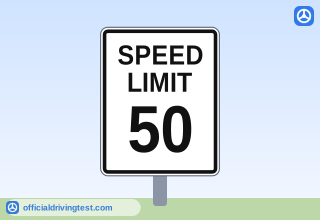
What does a speed limit sign tell you?
- The speed you must drive in any weather
- The maximum legal speed in good weather
- The minimum speed allowed on that road
- The advised speed for the next curve ahead
Show answer
Correct answer: The maximum legal speed in good weather
A speed limit sign gives the maximum legal speed in good weather.
Source: Virginia Driver's Manual (DMV 39 (April 27, 2026)), page 7 · Open this page in the manual (Manual page 7)
-
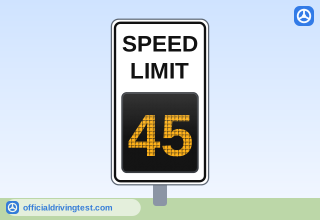
Some roads have electronic speed limit signs. What makes the posted limit on them change?
- The time of day only
- The number of lanes open
- Weather or traffic conditions
- The type of vehicle approaching
Show answer
Correct answer: Weather or traffic conditions
Electronic speed limit signs can change based on weather or traffic conditions.
Source: Virginia Driver's Manual (DMV 39 (April 27, 2026)), page 7 · Open this page in the manual (Manual page 7)
-
What does a Do Not Pass sign mark?
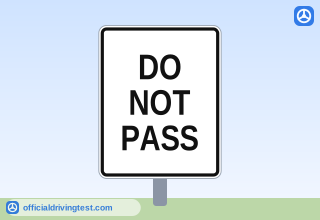
- The beginning of a no passing zone
- The end of a no passing zone
- A lane reserved for slow vehicles
- A place where passing is allowed only on the right
Show answer
Correct answer: The beginning of a no passing zone
A Do Not Pass sign marks where a no passing zone begins, and you may not pass cars in your lane even if the way is clear.
Source: Virginia Driver's Manual (DMV 39 (April 27, 2026)), page 7 · Open this page in the manual (Manual page 7)
-
What does a Left Turn Yield on Green sign, used with a traffic signal, tell you?
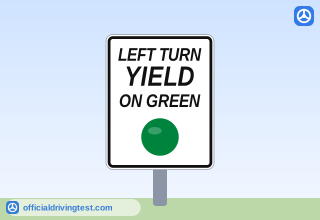
- Traffic turning left at a green light has the right-of-way over oncoming traffic
- Left turns are allowed only on a green arrow
- Traffic turning left on a green light must yield to oncoming traffic
- Left turns are not allowed at this signal
Show answer
Correct answer: Traffic turning left on a green light must yield to oncoming traffic
A Left Turn Yield on Green sign tells left-turning drivers on a green light to yield to traffic coming from the other direction.
Source: Virginia Driver's Manual (DMV 39 (April 27, 2026)), page 7 · Open this page in the manual (Manual page 7)
-
What does a Keep Right sign tell you?
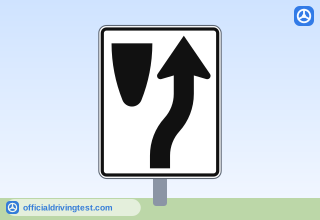
- All traffic must turn right at the next intersection ahead
- A median, island or barrier is ahead; keep to the side of the arrow
- The right lane is reserved for slower traffic and trucks
- The road ahead becomes a one-way road to the right
Show answer
Correct answer: A median, island or barrier is ahead; keep to the side of the arrow
A Keep Right sign warns of an island, median or barrier and directs you to the side the arrow shows.
Source: Virginia Driver's Manual (DMV 39 (April 27, 2026)), page 7 · Open this page in the manual (Manual page 7)
-
You realize you have driven past a Do Not Enter or Wrong Way sign. What should you do?
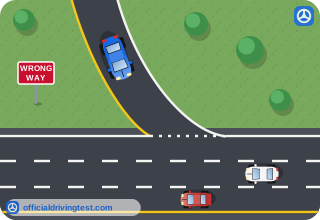
- Speed up to leave the wrong-way road as quickly as you can
- Continue to the next intersection and then turn around
- Stop in your lane and wait for the traffic to pass by you
- Immediately slow down, pull over, and cautiously turn around
Show answer
Correct answer: Immediately slow down, pull over, and cautiously turn around
Past a Do Not Enter or Wrong Way sign you are going the wrong direction, so you slow down, pull over and carefully turn around.
Source: Virginia Driver's Manual (DMV 39 (April 27, 2026)), page 7 · Open this page in the manual (Manual page 7)
-
What does a Lane Use Control sign tell drivers in the lane?
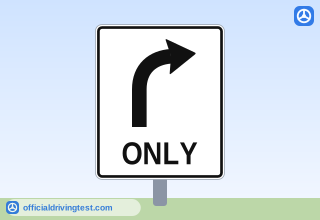
- They must go straight through the intersection
- They must turn in the direction of the arrow
- They may turn in any direction
- They must change lanes before the intersection
Show answer
Correct answer: They must turn in the direction of the arrow
Lane Use Control signs mark lanes where traffic must turn the way the arrow points.
Source: Virginia Driver's Manual (DMV 39 (April 27, 2026)), page 7 · Open this page in the manual (Manual page 7)
-
Which vehicles may use a lane marked with a High Occupancy Vehicle sign?
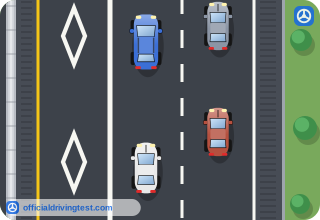
- Only buses and emergency vehicles at all hours of the day
- Only trucks and vehicles towing trailers
- Only vehicles carrying three or more passengers each
- Buses and vehicles with a driver and the passengers the sign lists
Show answer
Correct answer: Buses and vehicles with a driver and the passengers the sign lists
A High Occupancy Vehicle sign reserves a lane for buses and vehicles carrying a driver plus the passengers named on it.
Source: Virginia Driver's Manual (DMV 39 (April 27, 2026)), page 7 · Open this page in the manual (Manual page 7)
-
What does a No Left Turn sign mean for U-turns in Virginia?
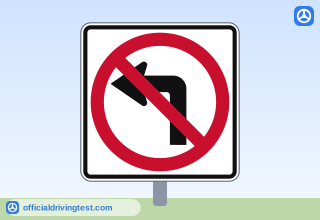
- U-turns are considered two left turns and are illegal where the sign is posted
- U-turns are still allowed where the sign is posted
- U-turns are allowed only at intersections where the sign is posted
- U-turns are allowed only for vehicles in the left lane
Show answer
Correct answer: U-turns are considered two left turns and are illegal where the sign is posted
In Virginia a U-turn counts as two left turns, so a No Left Turn sign also bans U-turns.
Source: Virginia Driver's Manual (DMV 39 (April 27, 2026)), page 7 · Open this page in the manual (Manual page 7)
-
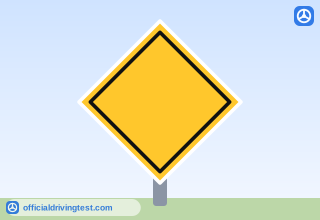
What do warning signs do?
- Tell you the law you must obey
- Give directions to destinations
- Show which lanes are reserved
- Alert you to possible hazards ahead
Show answer
Correct answer: Alert you to possible hazards ahead
Warning signs alert drivers to hazards that may be ahead.
Source: Virginia Driver's Manual (DMV 39 (April 27, 2026)), page 8 · Open this page in the manual (Manual page 8)
-
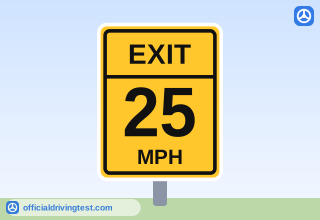
What does an Advisory Speed sign posted with a highway exit indicate?
- The minimum speed required on the exit
- The maximum safe speed for the exit
- The legal speed limit on the main highway
- The speed at which to merge back onto the highway
Show answer
Correct answer: The maximum safe speed for the exit
The Advisory Speed sign shows the maximum safe speed for a highway exit.
Source: Virginia Driver's Manual (DMV 39 (April 27, 2026)), page 8 · Open this page in the manual (Manual page 8)
-
What should you do when a Slippery When Wet sign warns of wet pavement?
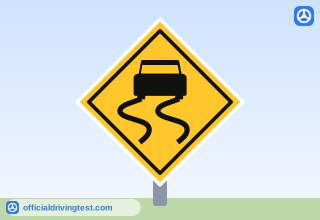
- Brake hard to test how slippery the road surface is
- Keep your speed and switch on your hazard lights now
- Reduce your speed; do not brake hard or turn suddenly
- Change lanes quickly to find a drier stretch of road
Show answer
Correct answer: Reduce your speed; do not brake hard or turn suddenly
On wet pavement you slow down and avoid braking hard or changing direction suddenly.
Source: Virginia Driver's Manual (DMV 39 (April 27, 2026)), page 8 · Open this page in the manual (Manual page 8)
-
Besides reducing speed, what does the manual say to do when a Slippery When Wet sign warns of wet pavement?
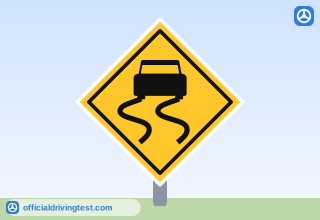
- Increase the distance between your car and the one ahead
- Decrease the distance to the car ahead to keep the traffic flowing
- Follow the vehicle ahead in its tire tracks
- Drive in the center of the road
Show answer
Correct answer: Increase the distance between your car and the one ahead
Wet roads need more room, so you increase the distance to the car ahead.
Source: Virginia Driver's Manual (DMV 39 (April 27, 2026)), page 8 · Open this page in the manual (Manual page 8)
-
What should you do when you see a Low Clearance sign showing a height?
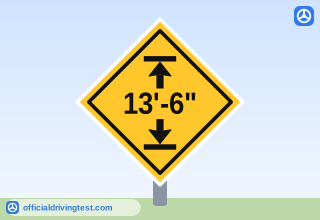
- Not proceed if your vehicle is taller than the height shown
- Proceed slowly if your vehicle is taller than the height shown
- Proceed if your vehicle is within 6 inches of the height shown
- Sound your horn before passing under the overpass
Show answer
Correct answer: Not proceed if your vehicle is taller than the height shown
A low clearance sign shows the height limit of the overpass; a taller vehicle must not proceed.
Source: Virginia Driver's Manual (DMV 39 (April 27, 2026)), page 8 · Open this page in the manual (Manual page 8)
-
What does a Reduced Speed Limit Ahead sign tell you?
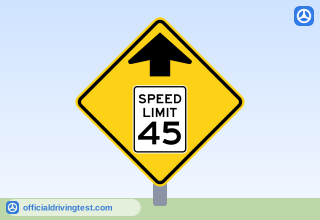
- You must already be at the lower speed when you reach the sign
- A school zone begins at the next intersection
- Prepare to reduce speed; the speed limit changes ahead
- You must come to a stop at the next intersection
Show answer
Correct answer: Prepare to reduce speed; the speed limit changes ahead
A Reduced Speed Limit Ahead sign warns that the speed limit is changing ahead, so you should prepare to slow down.
Source: Virginia Driver's Manual (DMV 39 (April 27, 2026)), page 8 · Open this page in the manual (Manual page 8)
-
A Hill warning sign is posted ahead. What does it mean, and what should you do?
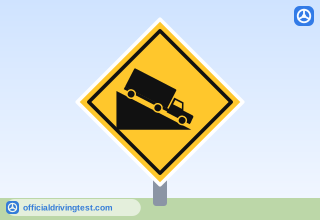
- A steep grade is ahead; speed up to climb it
- A steep grade is ahead; check your brakes
- A steep grade is ahead; move to the left lane
- A steep grade is ahead; turn on your hazard lights
Show answer
Correct answer: A steep grade is ahead; check your brakes
A Hill sign warns of a steep grade and tells you to check your brakes.
Source: Virginia Driver's Manual (DMV 39 (April 27, 2026)), page 8 · Open this page in the manual (Manual page 8)
-
What does a Stop Ahead or Yield Ahead sign tell you?
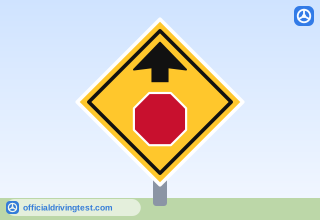
- A stop sign or yield sign is ahead; come to a stop at once
- A traffic signal is ahead; maintain your speed and keep going
- Cross traffic ahead does not have to stop or yield to you
- A stop sign or yield sign is ahead; slow down and be ready to stop
Show answer
Correct answer: A stop sign or yield sign is ahead; slow down and be ready to stop
Stop Ahead and Yield Ahead signs warn that a stop or yield sign is coming, so you slow down and are ready to stop.
Source: Virginia Driver's Manual (DMV 39 (April 27, 2026)), page 8 · Open this page in the manual (Manual page 8)
-
What does a Signal Ahead sign warn you of?
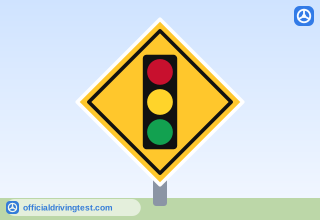
- Traffic signals ahead; stop at once
- Traffic signals ahead; slow down and be ready to stop
- Traffic signals ahead; speed up to make the green
- Traffic signals ahead; keep your speed
Show answer
Correct answer: Traffic signals ahead; slow down and be ready to stop
A Signal Ahead sign means traffic signals are coming up, so you slow down and are ready to stop.
Source: Virginia Driver's Manual (DMV 39 (April 27, 2026)), page 8 · Open this page in the manual (Manual page 8)
-
What should you do when you see a Horse-Drawn Buggies sign?
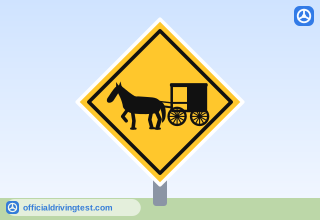
- Slow down and sound your horn to warn the driver
- Maintain your speed and pass on the right
- Stop and wait for the buggy to leave the road
- Slow down and do not use the horn
Show answer
Correct answer: Slow down and do not use the horn
Near horse-drawn buggies you slow down and avoid using the horn.
Source: Virginia Driver's Manual (DMV 39 (April 27, 2026)), page 8 · Open this page in the manual (Manual page 8)
-
What does a Merge sign warn you of?
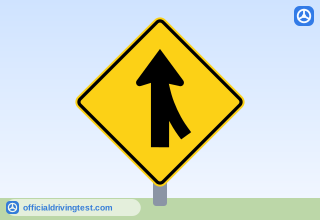
- A lane ends and only the right lane drivers must merge
- Traffic ahead must stop for a signal
- Two lanes moving in the same direction are about to become one
- A highway splits into two separate roadways
Show answer
Correct answer: Two lanes moving in the same direction are about to become one
A Merge sign warns that two same-direction lanes are about to become one.
Source: Virginia Driver's Manual (DMV 39 (April 27, 2026)), page 8 · Open this page in the manual (Manual page 8)
-
At a Merge sign, who is responsible for merging safely?
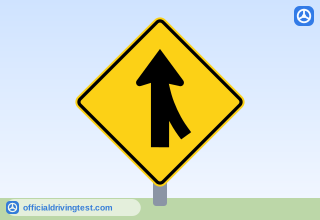
- Only drivers in the left lane
- Only drivers in the right lane
- Only the driver who arrives second
- Drivers in both lanes
Show answer
Correct answer: Drivers in both lanes
Drivers in both lanes share the responsibility for merging safely.
Source: Virginia Driver's Manual (DMV 39 (April 27, 2026)), page 8 · Open this page in the manual (Manual page 8)
-
At a Lane Reduction sign saying the right lane ends soon, what must drivers in the right lane do?
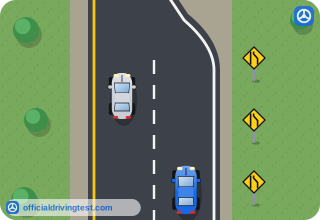
- Stop and wait for the left lane to clear
- Merge left when space opens up
- Speed up to pass vehicles in the left lane
- Move onto the shoulder
Show answer
Correct answer: Merge left when space opens up
Right-lane drivers must merge left when there is space.
Source: Virginia Driver's Manual (DMV 39 (April 27, 2026)), page 8 · Open this page in the manual (Manual page 8)
-
At a Lane Reduction sign saying the right lane ends soon, what should drivers in the left lane do?
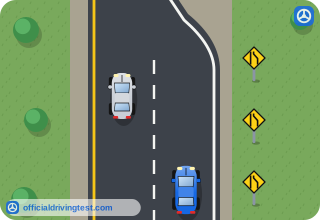
- Speed up so the right lane cannot merge
- Move to the right lane first
- Allow other vehicles to merge smoothly
- Stop to let all right-lane traffic merge
Show answer
Correct answer: Allow other vehicles to merge smoothly
Left-lane drivers should help right-lane traffic merge smoothly.
Source: Virginia Driver's Manual (DMV 39 (April 27, 2026)), page 8 · Open this page in the manual (Manual page 8)
-
What does a Divided Highway Begins sign tell you?
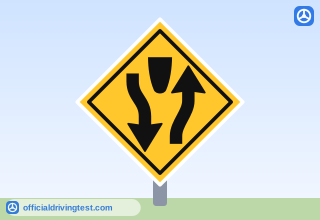
- The highway ahead is split into two one-way roadways; keep right
- The highway ahead no longer has a median or divider; keep right
- Both roadways ahead carry traffic in both directions; keep left
- The highway ahead narrows to one lane; drivers must merge
Show answer
Correct answer: The highway ahead is split into two one-way roadways; keep right
The highway splits into two separate one-way roadways, and you keep right.
Source: Virginia Driver's Manual (DMV 39 (April 27, 2026)), page 8 · Open this page in the manual (Manual page 8)
-
What does a Divided Highway Ends sign tell you?
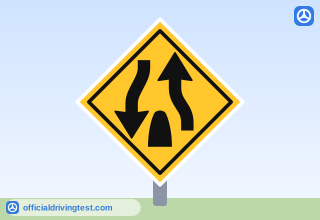
- The median or divider ends and traffic goes in both directions; keep right
- The highway ahead is split by a median and each roadway is one-way; keep right
- The highway ahead ends at a stop; prepare to turn
- The highway ahead has no median and all traffic is one-way
Show answer
Correct answer: The median or divider ends and traffic goes in both directions; keep right
Where a divided highway ends, traffic runs both directions with no median, and you keep right.
Source: Virginia Driver's Manual (DMV 39 (April 27, 2026)), page 8 · Open this page in the manual (Manual page 8)
-
What should you do when you see a Tractors and Farm Equipment sign?
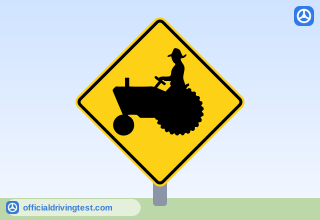
- Sound your horn and pass the equipment right away
- Stay close behind the equipment until it leaves the road
- Be ready to slow or stop; pass only when the way is clear
- Use the shoulder to pass on the right side of it
Show answer
Correct answer: Be ready to slow or stop; pass only when the way is clear
Farm equipment regularly travels there, so be ready to slow or stop and pass only when it is clear.
Source: Virginia Driver's Manual (DMV 39 (April 27, 2026)), page 8 · Open this page in the manual (Manual page 8)
-
What should you watch for at a Pedestrian Crossing sign?
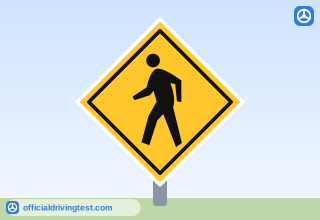
- Only people who are walking along the sidewalk beside the road
- People walking or riding bicycles who enter a crosswalk or your path
- Only vehicles that are turning in from the side roads ahead
- Only children who are walking to and from a school bus stop
Show answer
Correct answer: People walking or riding bicycles who enter a crosswalk or your path
A Pedestrian Crossing sign warns of people walking or riding bicycles and other devices entering a crosswalk or crossing your path.
Source: Virginia Driver's Manual (DMV 39 (April 27, 2026)), page 8 · Open this page in the manual (Manual page 8)
-
A second sign with an arrow appears with a Pedestrian Crossing sign. What may it show?
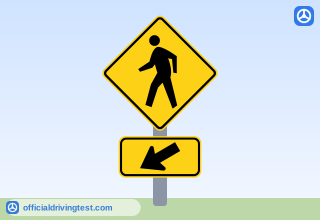
- The direction of one-way traffic
- The distance to the next crosswalk
- The speed limit near the crosswalk
- The actual location of the crosswalk
Show answer
Correct answer: The actual location of the crosswalk
The arrow sign may point out where the crosswalk actually is.
Source: Virginia Driver's Manual (DMV 39 (April 27, 2026)), page 8 · Open this page in the manual (Manual page 8)
-
What does a Bicycle Crossing or Bike Path sign tell you?
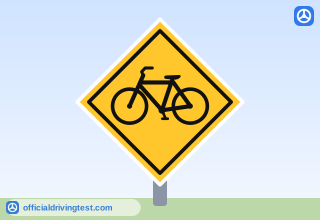
- Bicycles are not allowed to use the road in this area at all
- Bicycles regularly cross or ride beside traffic here; drive with caution
- Bicycles in this area must stop for all other traffic first
- Bicycles in this area ride only on the sidewalk beside the road
Show answer
Correct answer: Bicycles regularly cross or ride beside traffic here; drive with caution
A Bicycle Crossing or Bike Path sign warns that bicycles regularly cross or ride beside traffic, so you drive with caution.
Source: Virginia Driver's Manual (DMV 39 (April 27, 2026)), page 8 · Open this page in the manual (Manual page 8)
-
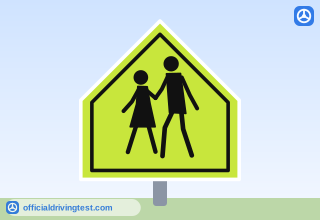
At a School Zone or School Crossing sign, what does the manual tell you to obey?
- Only the signals given by the crossing guards
- Only the posted speed limit for the school zone
- The advice of school bus drivers in the area
- The speed limit and signals from crossing guards
Show answer
Correct answer: The speed limit and signals from crossing guards
In school zones you obey the speed limit and the signals from crossing guards.
Source: Virginia Driver's Manual (DMV 39 (April 27, 2026)), page 8 · Open this page in the manual (Manual page 8)
-
What should you watch out for at a School Zone or School Crossing sign?
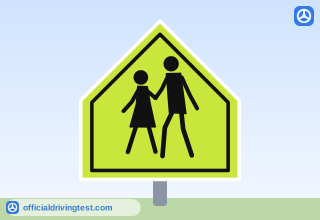
- Children crossing the street or playing
- Vehicles crossing the rail lines ahead
- Animals crossing the road at night
- Bicycles riding in the roadway ahead
Show answer
Correct answer: Children crossing the street or playing
A School Zone or School Crossing sign warns of children crossing the street or playing, so be ready to slow down or stop.
Source: Virginia Driver's Manual (DMV 39 (April 27, 2026)), page 8 · Open this page in the manual (Manual page 8)
-
What may open joints on bridges or ramps cause a motorcyclist to do?
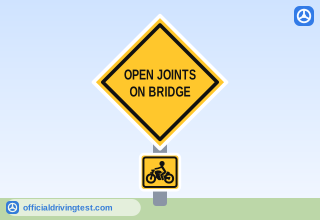
- Lose control of the motorcycle
- Lose sight of the lane markings
- Run out of room to stop at a toll plaza
- Be blown into the next lane by wind
Show answer
Correct answer: Lose control of the motorcycle
Open joints on bridges or ramps can make a motorcycle rider lose control, so the warning sign tells you to slow down.
Source: Virginia Driver's Manual (DMV 39 (April 27, 2026)), page 9 · Open this page in the manual (Manual page 9)
-
When is an expansion joints warning sign used?
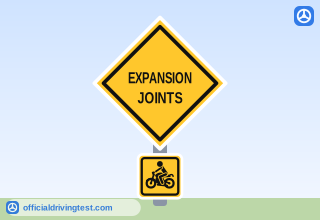
- When loose gravel or road construction makes the road surface ahead rough and uneven for motorists
- When a steep slope where railroad tracks cross the road could make low vehicles drag on the tracks
- When a joint across the lanes creates a bump or is wide enough to cause loss of traction in wet weather
- When a bridge ahead is narrower than the road that leads up to it and traffic must merge
Show answer
Correct answer: When a joint across the lanes creates a bump or is wide enough to cause loss of traction in wet weather
The sign is used where a joint across the lanes makes a bump or is wide enough that tires can lose traction when the road is wet.
Source: Virginia Driver's Manual (DMV 39 (April 27, 2026)), page 9 · Open this page in the manual (Manual page 9)
-
What should you be alert for when you see a yellow diamond warning sign that shows a plus symbol, meaning an intersection is ahead?
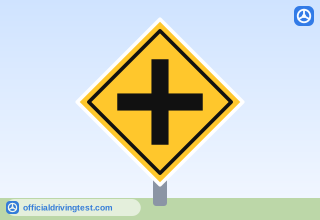
- Trains approaching from either direction
- Vehicles entering the road on which you are traveling
- Bicyclists crossing the road in a marked path
- Traffic that is traveling in the wrong direction
Show answer
Correct answer: Vehicles entering the road on which you are traveling
The intersection warning sign means an intersection is ahead, so watch for vehicles entering your road.
Source: Virginia Driver's Manual (DMV 39 (April 27, 2026)), page 9 · Open this page in the manual (Manual page 9)
-
What must you do at a Y intersection, shown by a yellow diamond sign with a Y-shaped symbol?
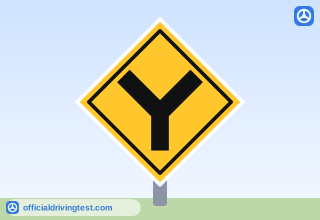
- Stop and yield to traffic coming from the left
- Continue straight ahead in your lane
- Merge into the lane on your far right
- Bear either right or left ahead
Show answer
Correct answer: Bear either right or left ahead
The Y intersection sign tells you that the road splits and you must bear right or left.
Source: Virginia Driver's Manual (DMV 39 (April 27, 2026)), page 9 · Open this page in the manual (Manual page 9)
-
A yellow diamond sign shows a large T. What does it tell you?
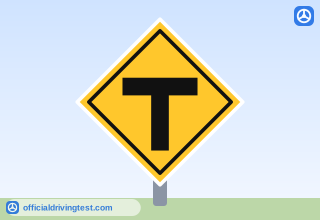
- A side road joins your road from the left ahead
- Your lane ends and traffic must merge ahead
- The road ahead becomes a one-way street
- The road you are on ends ahead at a stop sign
Show answer
Correct answer: The road you are on ends ahead at a stop sign
The T intersection sign warns that your road ends ahead at a stop sign, where you must turn right or left after yielding to oncoming traffic and pedestrians.
Source: Virginia Driver's Manual (DMV 39 (April 27, 2026)), page 9 · Open this page in the manual (Manual page 9)
-
What else are roundabouts called?
- Cloverleaf ramps
- Median loops
- Traffic circles
- Turnaround lanes
Show answer
Correct answer: Traffic circles
The manual says roundabouts, which are circular intersections with an island in the center, are also called traffic circles.
Source: Virginia Driver's Manual (DMV 39 (April 27, 2026)), page 9 · Open this page in the manual (Manual page 9)
-
A yellow diamond sign shows a curving arrow to the right with a line joining it from the left. What does it warn you about?
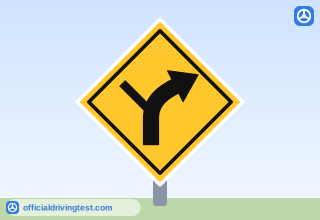
- The road curves right and a side road joins from the left within the curve
- The road curves right and a side road joins from the right within the curve
- The road curves left and a side road joins from the left within the curve
- The road curves right and then ends at a stop sign
Show answer
Correct answer: The road curves right and a side road joins from the left within the curve
A right curve with a side road warning means that a side road joins from the left within the curve, so you should watch for vehicles entering your roadway.
Source: Virginia Driver's Manual (DMV 39 (April 27, 2026)), page 9 · Open this page in the manual (Manual page 9)
-
What should you do when you see a warning sign for a sharp right turn ahead?
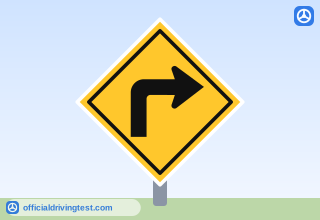
- Stop and look for traffic before you turn
- Slow down and be prepared for a sharp right turn
- Stay in the left lane until you reach the turn
- Keep your speed so traffic does not back up
Show answer
Correct answer: Slow down and be prepared for a sharp right turn
The sharp right turn sign tells you to slow down and prepare for the sharp turn in the road.
Source: Virginia Driver's Manual (DMV 39 (April 27, 2026)), page 9 · Open this page in the manual (Manual page 9)
-
What does a warning sign for sharp right and left turns tell you to prepare for?
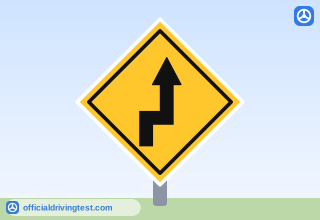
- The road ahead curving gently right, then left
- The road ahead ending at a stop sign
- A side road joining the road ahead from the left
- The road ahead turning sharply right, then left
Show answer
Correct answer: The road ahead turning sharply right, then left
A sharp right and left turns warning tells you to slow down because the road ahead turns sharply right and then left.
Source: Virginia Driver's Manual (DMV 39 (April 27, 2026)), page 9 · Open this page in the manual (Manual page 9)
-
What should you do when you see a right curve sign that also shows a speed panel such as 35 MPH?
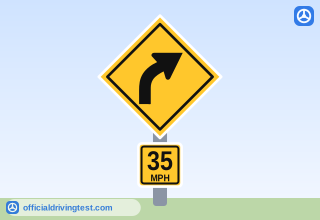
- Slow down to the safe speed indicated
- Speed up to the speed shown on the panel
- Stop before the curve and then continue
- Drive at the usual speed limit of the road
Show answer
Correct answer: Slow down to the safe speed indicated
A right curve sign with a safe speed indicator tells you to slow down to the speed shown.
Source: Virginia Driver's Manual (DMV 39 (April 27, 2026)), page 9 · Open this page in the manual (Manual page 9)
-
On a winding road, what should you do on all curves?
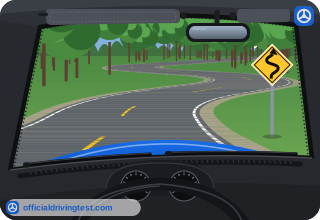
- Keep a steady speed
- Stay close to the center of the road
- Slow down for better control
- Drive in the left lane
Show answer
Correct answer: Slow down for better control
The winding road sign warns of a series of turns or curves, and the manual says to slow down on all of them for better control.
Source: Virginia Driver's Manual (DMV 39 (April 27, 2026)), page 9 · Open this page in the manual (Manual page 9)