Regulatory signs in Virginia
The Virginia Driver's Manual shows or names everything on this page: 29 in all, on pages 5–7, 13, 15, 20, 22.
Independent educational site · not affiliated with any government agency or DMV
Regulatory signs
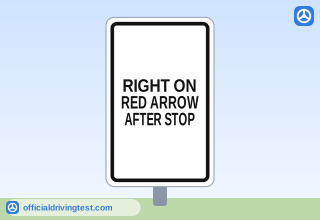
RIGHT ON RED ARROW AFTER STOP
The manual does not state it
Manual page 5 · Open this page in the manual (Manual page 5)
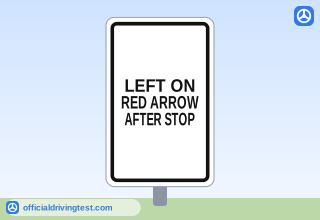
LEFT ON RED ARROW AFTER STOP
The manual does not state it
Manual page 5 · Open this page in the manual (Manual page 5)
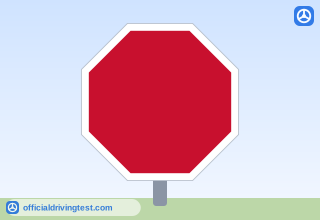
Octagon (Stop Shape)
Octagon (Stop): This eight-sided shape always means stop.
Manual page 6 · Open this page in the manual (Manual page 6)
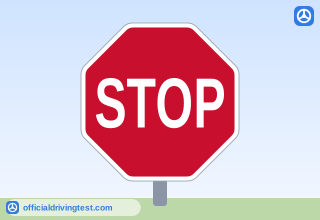
STOP
This eight-sided shape always means stop. You must come to a complete stop at the sign, stop line, pedestrian crosswalk or curb. Wait for any vehicle or pedestrian to clear the way. (p6) / You must always stop your vehicle: at all stop signs, red traffic lights and flashing red signals (p15) / When approaching a stop sign and the car in front of you proceeds, stop at the sign and proceed when the way is clear. (p15) / If there is a red traffic light or a stop sign at the intersection, come to a complete stop before you make the turn. (p18)
Manual page 6 · Open this page in the manual (Manual page 6)
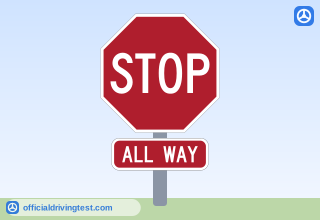
STOP with ALL WAY Plaque
At some intersections you’ll find a sign beneath the stop sign that reads “All Way” or “4 Way.” At these intersections all vehicles on all roads leading into the intersection must stop. If you get to the intersection at the same time as other vehicles, the driver on the left must yield to the driver on the right.
Manual page 6 · Open this page in the manual (Manual page 6)
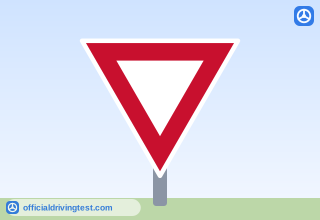
Triangle (Yield Shape)
Triangle (Yield): You must slow down as you come to the intersection. Be prepared to stop. Let any vehicles, pedestrians or bicyclists safely pass before you proceed.
Manual page 6 · Open this page in the manual (Manual page 6)
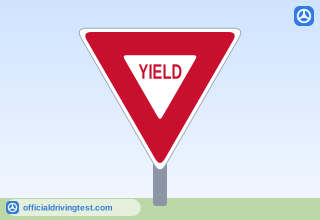
YIELD
Triangle (Yield): You must slow down as you come to the intersection. Be prepared to stop. Let any vehicles, pedestrians or bicyclists safely pass before you proceed. (p6) / Yield line is a line of triangles extending across the roadway that may be used with a yield sign to show the point at which you must yield or stop, if necessary. (p12)
Manual page 6 · Open this page in the manual (Manual page 6)
Vertical Rectangle (Regulatory Shape)
Rectangle (Regulatory or Guide): Vertical signs generally give instructions or tell you the law.
Manual page 7 · Open this page in the manual (Manual page 7)
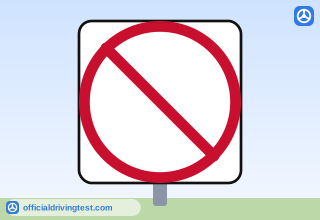
Red Circle with Slash (NO)
Regulatory signs inform you of the law; you must obey their instructions. Remember that a red circle with a slash means NO — the symbol inside the circle tells you what is prohibited. (p7) / Red used with white conveys stop, yield, do not, and no. ... the circle and slash in a no turn sign ... are examples. (p6)
Manual page 7 · Open this page in the manual (Manual page 7)
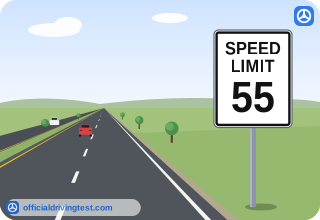
SPEED LIMIT 55
Speed Limit: These signs tell you the maximum legal speed that you may drive on the road where the sign is posted when weather conditions are good. Some roads have electronic speed limit signs that change based on weather or traffic conditions. During rain, snow and ice, you may receive a ticket for driving too fast for the conditions even if you are driving at or less than the posted speed limit. (p7) / By law you must drive slower where signs indicate a school zone speed limit or work zone speed limit is in effect (p14) / Unless there is a speed limit sign stating otherwise, the maximum speed limit for passenger vehicles and motorcycles is 25 MPH for school, business and residential areas; 35 MPH for unpaved roads and 55 MPH for all other roads. (p15)
Manual page 7 · Open this page in the manual (Manual page 7)
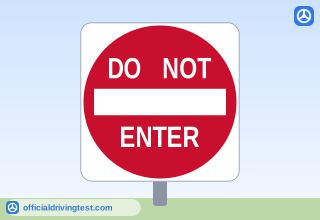
DO NOT ENTER
Do Not Enter – Wrong Way: These signs mean you cannot drive in that direction. If you drive past these signs you are going in the wrong direction and could get into a head-on crash with vehicles headed your way. Immediately slow down, pull over, and cautiously turn around.
Manual page 7 · Open this page in the manual (Manual page 7)
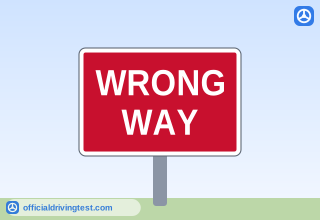
WRONG WAY
Do Not Enter – Wrong Way: These signs mean you cannot drive in that direction. If you drive past these signs you are going in the wrong direction and could get into a head-on crash with vehicles headed your way. Immediately slow down, pull over, and cautiously turn around.
Manual page 7 · Open this page in the manual (Manual page 7)
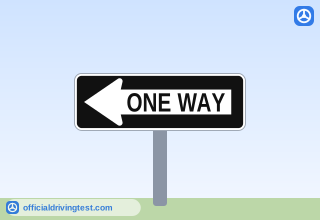
ONE WAY (Horizontal)
One Way: Traffic flows only in the direction of the arrow.
Manual page 7 · Open this page in the manual (Manual page 7)
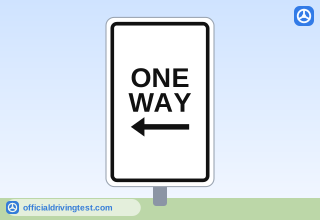
ONE WAY (Vertical)
One Way: Traffic flows only in the direction of the arrow.
Manual page 7 · Open this page in the manual (Manual page 7)
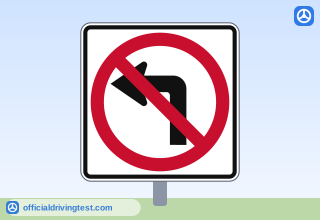
No Left Turn
No Left Turn: Left turns are against the law. In Virginia, U-turns are considered as two left turns and are illegal if this sign is posted. (p7) / U-turns are not legal everywhere. Before you make a U-turn, check for No U-Turn or No Left Turn signs. (p18)
Manual page 7 · Open this page in the manual (Manual page 7)
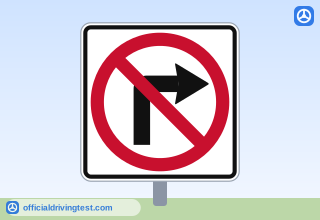
No Right Turn
No Right Turn: Right turns are illegal. Do not make a right turn when you see this sign.
Manual page 7 · Open this page in the manual (Manual page 7)
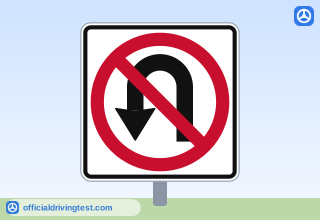
No U-Turn
No U-Turn: U-turns are illegal. Do not make a U-turn when you see this sign. (p7) / U-turns are not legal everywhere. Before you make a U-turn, check for No U-Turn or No Left Turn signs. (p18)
Manual page 7 · Open this page in the manual (Manual page 7)
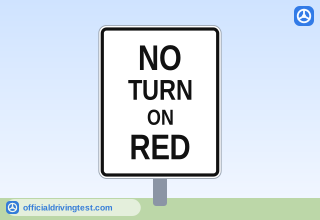
NO TURN ON RED
No Turn on Red: You may not turn on the red light. Wait for the signal to turn green. (p7) / You may not turn right on red if signs are posted at the intersection that read “No Turn on Red,” ... You may not turn left on red if signs are posted at the intersection that read “No Turn on Red,” (p5)
Manual page 7 · Open this page in the manual (Manual page 7)
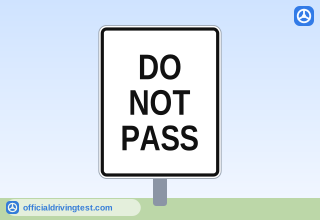
DO NOT PASS
Do Not Pass: This sign marks the beginning of a no passing zone. You may not pass cars ahead of you in your lane, even if the way is clear.
Manual page 7 · Open this page in the manual (Manual page 7)
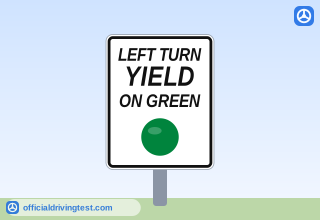
LEFT TURN YIELD ON GREEN
Left Turn Yield on Green: This sign is used with a traffic signal. It tells you that the traffic turning left at a green light does not have the right-of-way and must yield to traffic coming from the other direction. Stop and look for oncoming traffic, then proceed with caution.
Manual page 7 · Open this page in the manual (Manual page 7)
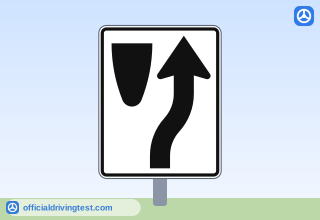
Keep Right (Median or Island)
Keep Right: A traffic island, median or barrier is ahead. Keep to the side indicated by the arrow.
Manual page 7 · Open this page in the manual (Manual page 7)
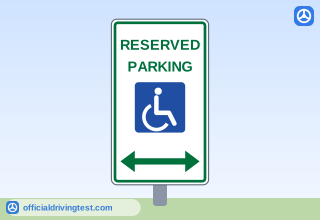
RESERVED PARKING (Disabled)
Disabled Parking: Parking spaces marked with these signs are reserved for people with disabled parking permits. (p7) / You may not park: ... in a parking space reserved for disabled persons (p22)
Manual page 7 · Open this page in the manual (Manual page 7)
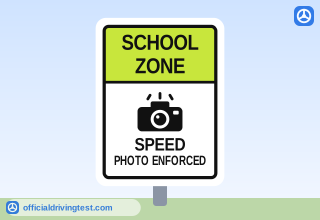
SCHOOL ZONE SPEED PHOTO ENFORCED
Some school zones may have automated photo enforcement, as indicated by signs with the message “Speed Photo Enforced” or similar.
Manual page 15 · Open this page in the manual (Manual page 15)
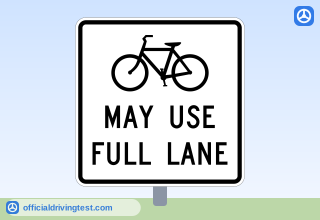
BICYCLES MAY USE FULL LANE
Bicycles: Bicyclists on a roadway generally has the same right-of-way as the driver of a motor vehicle. Bicyclists are allowed to ride in the center of the lane, when necessary, such as when they are about to turn left or when the lane is too narrow to share side-by-side with a car.
Manual page 20 · Open this page in the manual (Manual page 20)
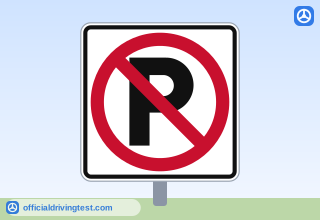
No Parking
You may not park: ... within areas where parking is prohibited by curbs painted yellow or No Parking signs (p22) / Red used with white conveys stop, yield, do not, and no. ... the restrictions in a parking sign ... are examples. (p6)
Manual page 22 · Open this page in the manual (Manual page 22)
Lane-use control signals
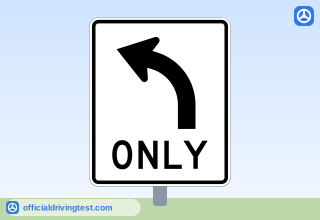
Left Turn Lane: ONLY
Lane Use Control: These signs are used where turns are required or where special turning movements are permitted for specific lanes. Traffic in the lane must turn in the direction of the arrow.
Manual page 7 · Open this page in the manual (Manual page 7)
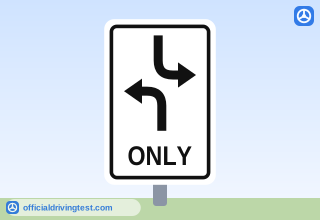
Two-Way Left-Turn Lane: ONLY
Lane Use Control: These signs are used where turns are required or where special turning movements are permitted for specific lanes. Traffic in the lane must turn in the direction of the arrow.
Manual page 7 · Open this page in the manual (Manual page 7)
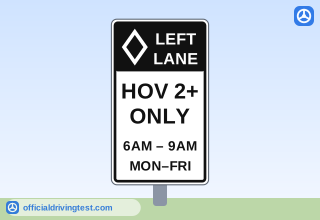
LEFT LANE HOV 2+ ONLY 6AM-9AM MON-FRI
High Occupancy Vehicle: These signs indicate lanes reserved for buses and vehicles with a driver and one or more passengers as specified on the sign.
Manual page 7 · Open this page in the manual (Manual page 7)
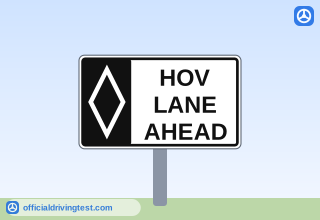
HOV LANE AHEAD
Road signs show the minimum number of passengers a vehicle must carry (excluding motorcycles and clean fuel vehicles) to use the HOV lanes and the times that HOV restrictions are in effect.
Manual page 13 · Open this page in the manual (Manual page 13)