Vermont road sign library
Every sign, signal and marking the Vermont driver manual shows or names, with its meaning in the manual's words and its page.
Independent educational site · not affiliated with any government agency or DMV
Regulatory signs - Vermont
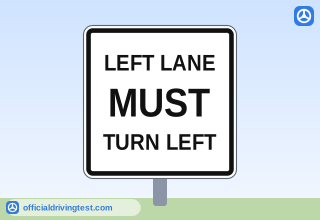
LEFT LANE MUST TURN LEFT
On a multilane road, always make sure you’re in the left lane well in advance of the turn. Never move suddenly from the right lane to the left lane.
Manual page 26 · Open this page in the manual (Manual page 26)
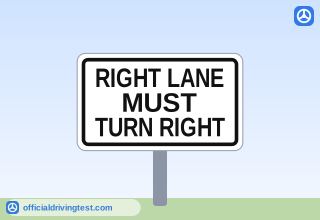
RIGHT LANE MUST TURN RIGHT
The manual does not state it
Manual page 27 · Open this page in the manual (Manual page 27)
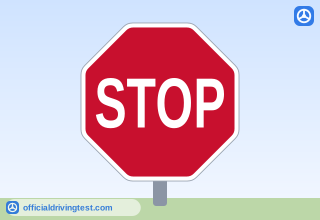
STOP
A stop sign has 8 sides. It means you must stop scan the intersection, honor the right of way, and then proceed. REMEMBER: You are required to stop before the stop line, crosswalk (marked or unmarked) or the intersecting road, whichever comes first. (p32) / By law, drivers must STOP not less than 15 feet from the nearest rail when: ... 3. When there is a STOP sign at the crossing. (p37) / If a signal light is dark, as in a power failure, stop as if there are stop signs in all directions. (p31)
Manual page 32 · Open this page in the manual (Manual page 32)
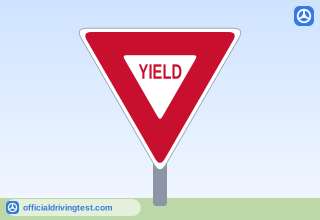
YIELD
Yield right-of-way signs are the shape of an upside down triangle, and they mean you should slow down, search and enter only if the way is clear of pedestrians, bicyclists and vehicles. (p32) / When nearing an intersection marked with a "yield right-of-way" sign, you are required to travel at a speed slow enough to be able to stop if necessary. Enter only when the way is clear. (p28)
Manual page 32 · Open this page in the manual (Manual page 32)
See them all (23) · Regulatory signs →
Warning signs - Vermont
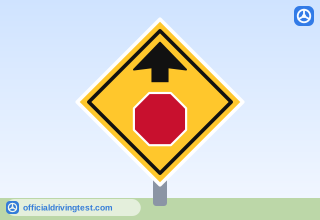
Stop Ahead
The manual does not state it
Manual page 26 · Open this page in the manual (Manual page 26)
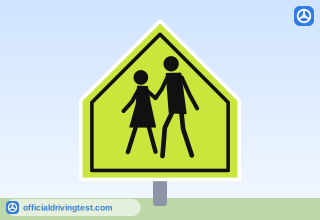
School
School (printed label). Warning signs are placed where there is danger at all times, and a driver needs to slow down. They are usually diamond-shaped and yellow or green. They may warn of sharp curves, unsafe intersections, or dips in the road. Drivers should slow down. ... A downward arrow under a school or pedestrian sign indicates a crosswalk or crossing area.
Manual page 33 · Open this page in the manual (Manual page 33)
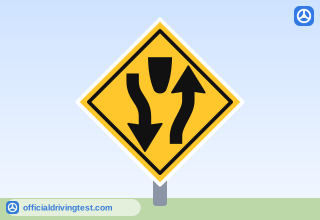
Divided Highway
Divided Highway (printed label). Warning signs are placed where there is danger at all times, and a driver needs to slow down. They are usually diamond-shaped and yellow or green. They may warn of sharp curves, unsafe intersections, or dips in the road. Drivers should slow down.
Manual page 33 · Open this page in the manual (Manual page 33)
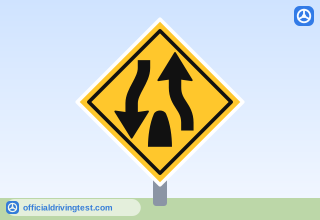
Divided Highway Ends
Divided Highway Ends (printed label). Warning signs are placed where there is danger at all times, and a driver needs to slow down. They are usually diamond-shaped and yellow or green. They may warn of sharp curves, unsafe intersections, or dips in the road. Drivers should slow down.
Manual page 33 · Open this page in the manual (Manual page 33)
See them all (15) · Warning signs →
Work zone signs - Vermont
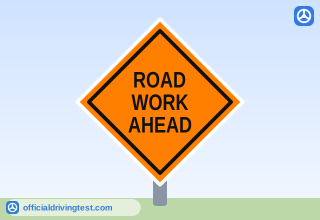
ROAD WORK AHEAD
Work zone signs are orange and diamond or rectangular shaped. They provide important information to help the driver safely drive through the work zone. They warn the driver of hazards ahead, such as closed lanes, detours, rough pavement, or flaggers.
Manual page 36 · Open this page in the manual (Manual page 36)
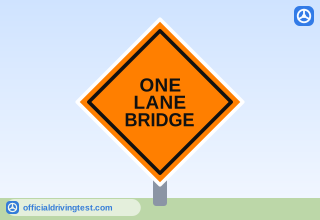
ONE LANE BRIDGE
Work zone signs are orange and diamond or rectangular shaped. They provide important information to help the driver safely drive through the work zone. They warn the driver of hazards ahead, such as closed lanes, detours, rough pavement, or flaggers.
Manual page 36 · Open this page in the manual (Manual page 36)
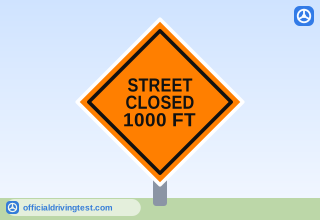
STREET CLOSED 1000 FT
Work zone signs are orange and diamond or rectangular shaped. They provide important information to help the driver safely drive through the work zone. They warn the driver of hazards ahead, such as closed lanes, detours, rough pavement, or flaggers.
Manual page 36 · Open this page in the manual (Manual page 36)
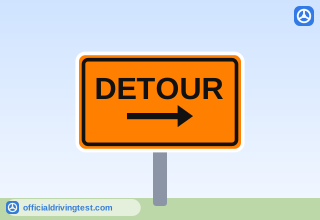
DETOUR (Arrow)
Work zone signs are orange and diamond or rectangular shaped. They provide important information to help the driver safely drive through the work zone. They warn the driver of hazards ahead, such as closed lanes, detours, rough pavement, or flaggers. (p36) / Obey all detour signs. (p46)
Manual page 36 · Open this page in the manual (Manual page 36)
See them all (16) · Work zone signs →
Guide, railroad and other signs - Vermont
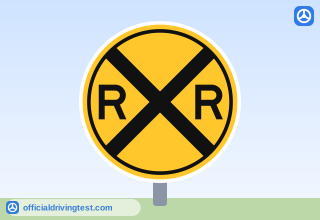
Railroad Advance Warning
Circular signs with a large X and the letters RR indicate there is a railroad crossing ahead.
Manual page 32 · Open this page in the manual (Manual page 32)
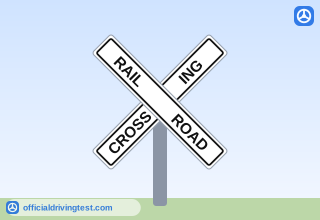
CROSSBUCK (Railroad Crossing)
Crossbuck signs are at all railroad crossings. They indicate where the tracks are. Slow down, look both ways, and listen for trains before crossing. ... When there are 2 or more tracks, one train passing might hide a train coming the other way.
Manual page 33 · Open this page in the manual (Manual page 33)
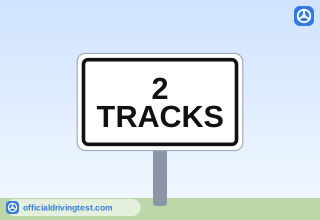
Number of Tracks Plate
The smaller signs below the crossbuck indicate how many tracks there are at the crossing. When there are 2 or more tracks, one train passing might hide a train coming the other way.
Manual page 33 · Open this page in the manual (Manual page 33)
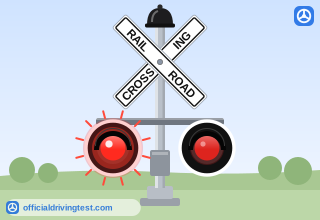
Railroad Flashing Lights
There may also be gates and/or flashing lights. (p33) / By law, drivers must STOP not less than 15 feet from the nearest rail when: 1. Flashing lights, lowered gates, or a flagman signals the approach or passage of a railroad train. (p37) / NOTE: Pedestrians, bicyclists, and moped riders also must observe railroad warning signals and may not cross railroad tracks until it is safe to do so. (p37)
Manual page 33 · Open this page in the manual (Manual page 33)
See them all (14) · Guide, railroad and other signs →
Traffic signals - Vermont
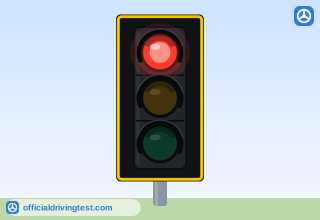
Red Light
Red Light: Stop before reaching either the stop line or the crosswalk, whichever comes first, and wait until the light is green (Green arrow signals may come on while the red light is displayed, you may proceed in the direction of the green arrow). Right turns at circular red lights are usually allowed, but only after the driver has stopped completely, scanned the intersection and yielded the right of way to pedestrians and other vehicles. Some intersections have signs or symbols that indicate you cannot turn right on red. A police officer may direct you through a red light. You should follow the officer’s directions, with caution.
Manual page 31 · Open this page in the manual (Manual page 31)
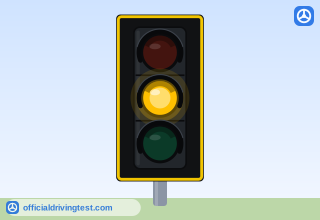
Yellow Light
Yellow Light: This light warns drivers that the light is about to turn red. If you are too close to the intersection to stop safely, proceed with caution through the intersection.
Manual page 31 · Open this page in the manual (Manual page 31)
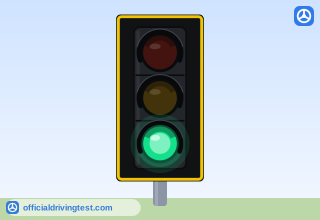
Green Light
Green Light: You may proceed on a green light if it is safe to do so. But, if you are turning left you must yield the right of way to oncoming vehicles.
Manual page 31 · Open this page in the manual (Manual page 31)
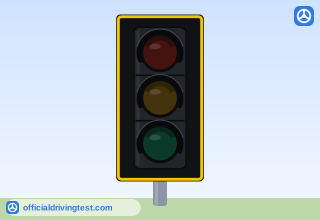
Dark Signal (Power Failure)
If a signal light is dark, as in a power failure, stop as if there are stop signs in all directions. When a traffic signal is out of order and flashes yellow or red, you must obey that signal.
Manual page 31 · Open this page in the manual (Manual page 31)
See them all (12) · Traffic signals →
Pavement markings - Vermont
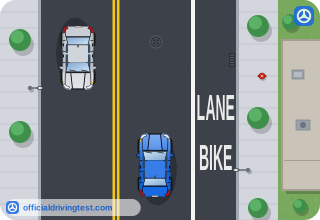
Bicycle Lane Marking
Where You May Not Park ... On a marked bicycle lane.
Manual page 29 · Open this page in the manual (Manual page 29)
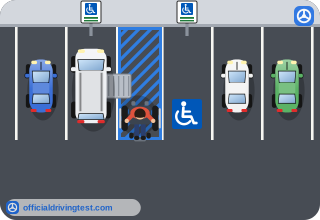
Disabled Parking Area
Where You May Not Park ... In a marked disabled parking area
Manual page 29 · Open this page in the manual (Manual page 29)
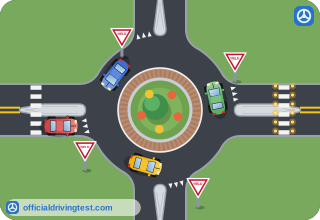
Roundabout Markings
A roundabout is an intersection control feature where traffic enters and exits only through right turns and proceeds in a counter clockwise direction. ... Drivers must yield the right of way to traffic in the roundabout. Enter the roundabout only when there is a safe gap in traffic. Like all intersections, you must also yield to pedestrians and bicyclists when entering or exiting a roundabout. Always use your signal to show your intention to exit the roundabout.
Manual page 30 · Open this page in the manual (Manual page 30)
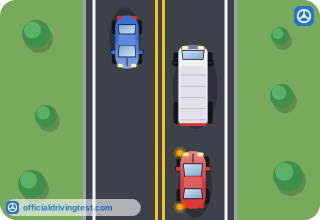
Double Solid Yellow Center Lines
Highway markings provide important information to drivers. They help a driver correctly position their vehicle, help direct them through various situations, let them know when passing is allowed and warn drivers of upcoming conditions. Major highways are marked with yellow center lines which serve two purposes: Center lines divide a highway into travel lanes. Multi-lane highways without a median have double solid lines to indicate the two opposing lanes of travel.
Manual page 34 · Open this page in the manual (Manual page 34)
See them all (12) · Pavement markings →
More signs from our practice questions
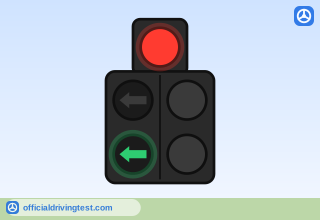
A green arrow comes on while the red light is displayed. What may you do?
Proceed in the direction of the green arrow
Source: Vermont Driver's Manual (2025 edition (VN-007 07/2024)), page 31 · Open this page in the manual (Manual page 31)
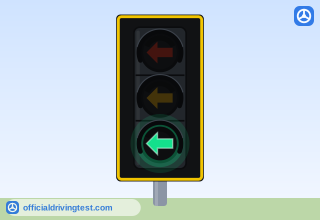
What does a solid green arrow mean for left turns?
Left turns have the right of way
Source: Vermont Driver's Manual (2025 edition (VN-007 07/2024)), page 32 · Open this page in the manual (Manual page 32)
What light does oncoming traffic have when you face a solid green left-turn arrow?
A red light
Source: Vermont Driver's Manual (2025 edition (VN-007 07/2024)), page 32 · Open this page in the manual (Manual page 32)
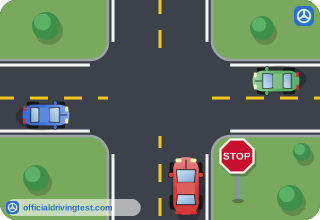
What must you do at a stop sign?
Stop, scan the intersection, honor the right of way, then proceed
Source: Vermont Driver's Manual (2025 edition (VN-007 07/2024)), page 32 · Open this page in the manual (Manual page 32)
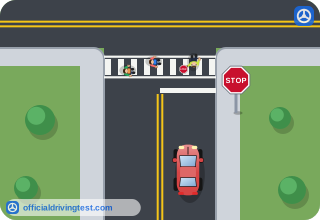
At a stop sign, where are you required to stop?
Before the stop line, crosswalk or intersecting road, whichever comes first
Source: Vermont Driver's Manual (2025 edition (VN-007 07/2024)), page 32 · Open this page in the manual (Manual page 32)
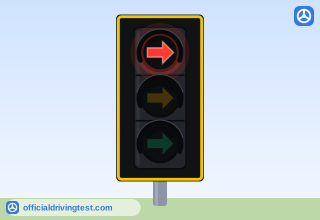
What does the manual say about turning right when the signal shows a red arrow?
Do not turn right on a red arrow
Source: Vermont Driver's Manual (2025 edition (VN-007 07/2024)), page 38 · Open this page in the manual (Manual page 38)
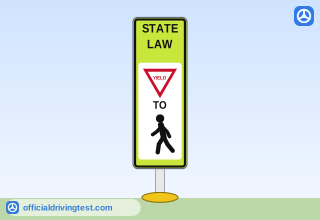
A pedestrian sign may be placed on the road at marked crosswalks. What does it remind drivers of?
They are required to yield to pedestrians within crosswalks
Source: Vermont Driver's Manual (2025 edition (VN-007 07/2024)), page 38 · Open this page in the manual (Manual page 38)
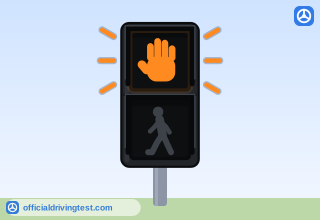
The pedestrian signal is flashing "Don’t Walk" and you have not yet started to cross. What should you do?
Not start to cross
Source: Vermont Driver's Manual (2025 edition (VN-007 07/2024)), page 39 · Open this page in the manual (Manual page 39)
You started to cross during the "walk" signal and it now flashes "Don’t Walk." What does the manual say?
You will have time to safely complete your crossing
Source: Vermont Driver's Manual (2025 edition (VN-007 07/2024)), page 39 · Open this page in the manual (Manual page 39)
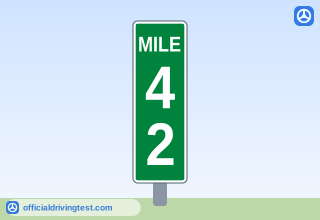
What can mile markers be used for after a crash outside a city?
To pinpoint the exact location of the crash scene
Source: Vermont Driver's Manual (2025 edition (VN-007 07/2024)), page 59 · Open this page in the manual (Manual page 59)