Utah: Vehicle controls and equipment — Vehicle Emissions and Clean Air Practice Test
Questions in this part include: “Which is one of the three easy things you can do to keep emissions as low as possible?” · “Which is a way to reduce the amount you drive?”
Independent educational site · not affiliated with any government agency or DMV
Ready? Test yourself
- Instant feedback with an explanation
- Every answer cites its source in the manual
- Your best score is saved on this device
- Keyboard: press 1 to 4 to answer and Enter for the next question
Questions are original and based on the official manual "Utah Driver Handbook" (2026 edition (new 2026 laws effective May 6, 2026)), Utah Department of Public Safety, Driver License Division.
All 24 questions in this practice test
Take the test above first, then use this list to study. Tap “Show answer” to see the correct answer and explanation.
Show the questions and answersHide the questions
-
Which is one of the three easy things you can do to keep emissions as low as possible?
- Buy a new car every few years
- Drive only at night when it is cool
- Fill the tank to the top at every stop
- Drive your car wisely
Show answer
Correct answer: Drive your car wisely
The three things are to avoid unnecessary driving, maintain your car properly, and drive your car wisely.
Source: Utah Driver Handbook (2026 edition (new 2026 laws effective May 6, 2026)), page 99 · Open this page in the manual (Manual page 99)
-
If you expect to idle for more than how many seconds, will you save gas by turning the engine off and restarting it?
- 30 seconds
- 10 seconds
- 60 seconds
- 2 minutes
Show answer
Correct answer: 30 seconds
The fact sheet says turning off the engine saves gas if you expect to idle for more than 30 seconds.
Source: Utah Driver Handbook (2026 edition (new 2026 laws effective May 6, 2026)), page 99 · Open this page in the manual (Manual page 99)
-
What does the handbook suggest instead of idling in drive-up lanes?
- Keeping the engine running but turning the radio off
- Moving forward in short bursts to keep the engine warm
- Parking and going inside the restaurant or bank
- Switching to the highest gear while waiting in line
Show answer
Correct answer: Parking and going inside the restaurant or bank
Parking and going inside avoids long idles and the pollution they cause.
Source: Utah Driver Handbook (2026 edition (new 2026 laws effective May 6, 2026)), page 99 · Open this page in the manual (Manual page 99)
-
How can you “smooth” your driving in stop-and-go traffic?
- Accelerate quickly to get through gaps
- Accelerate and decelerate gradually
- Follow closely so traffic keeps moving
- Keep the engine revved between stops
Show answer
Correct answer: Accelerate and decelerate gradually
Smoothing your driving means accelerating and decelerating gradually and anticipating stops and starts.
Source: Utah Driver Handbook (2026 edition (new 2026 laws effective May 6, 2026)), page 99 · Open this page in the manual (Manual page 99)
-
To reduce stop-and-go driving whenever possible, what does the handbook suggest?
- Plan trips for the middle of rush hour to stay in motion
- Choose routes with the most traffic lights
- Leave early and drive faster than other traffic
- Plan trips outside rush hour and peak traffic periods
Show answer
Correct answer: Plan trips outside rush hour and peak traffic periods
Planning trips outside rush hour and peak traffic periods helps avoid stop-and-go driving.
Source: Utah Driver Handbook (2026 edition (new 2026 laws effective May 6, 2026)), page 99 · Open this page in the manual (Manual page 99)
-
What can using your vehicle's air conditioner do?
- Increase emissions and decrease fuel economy
- Lower emissions by cooling the engine
- Improve fuel economy at highway speeds
- Reduce engine wear in hot weather
Show answer
Correct answer: Increase emissions and decrease fuel economy
The air conditioner increases the load on the engine, which can raise emissions and lower fuel economy.
Source: Utah Driver Handbook (2026 edition (new 2026 laws effective May 6, 2026)), page 99 · Open this page in the manual (Manual page 99)
-
Instead of using the air conditioner, what does the handbook suggest to cool the inside of your vehicle?
- Idle the engine with the doors open
- Drive faster so the air flows through
- Open the window or the fresh air vent
- Add more coolant to the radiator
Show answer
Correct answer: Open the window or the fresh air vent
Opening the window or the fresh air vent, and parking in the shade, cools the vehicle without the extra engine load.
Source: Utah Driver Handbook (2026 edition (new 2026 laws effective May 6, 2026)), page 99 · Open this page in the manual (Manual page 99)
-
Which of these creates extra load on the engine, so the car burns more gas and emits more pollution?
- Coasting down a grade
- Carrying extra weight
- Accelerating gradually
- Driving on a flat road at a steady low speed
Show answer
Correct answer: Carrying extra weight
Extra load comes from the air conditioner, quick accelerations, high-speed driving, climbing grades, revving the engine, and carrying extra weight.
Source: Utah Driver Handbook (2026 edition (new 2026 laws effective May 6, 2026)), page 99 · Open this page in the manual (Manual page 99)
-
What does the handbook say about idling for long periods in cold weather?
- It helps emission controls warm up faster
- It is needed because modern vehicles require a long warm-up
- It improves fuel economy
- It can cause excessive engine wear
Show answer
Correct answer: It can cause excessive engine wear
Idling does not help in the cold, and long idling can cause excessive engine wear.
Source: Utah Driver Handbook (2026 edition (new 2026 laws effective May 6, 2026)), page 99 · Open this page in the manual (Manual page 99)
-
According to the handbook, modern vehicles are most efficient when they are doing what?
- Being driven
- Idling
- Parked with the engine running
- Warming up for several minutes
Show answer
Correct answer: Being driven
Modern vehicles need little warm-up and are most efficient when being driven.
Source: Utah Driver Handbook (2026 edition (new 2026 laws effective May 6, 2026)), page 99 · Open this page in the manual (Manual page 99)
-
What is it best to avoid when refueling, especially in hot weather?
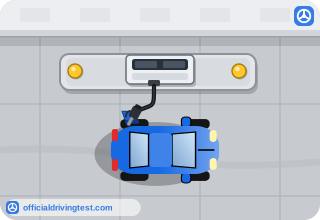
- Turning the engine off
- Refueling in the shade
- Topping off
- Paying at the pump
Show answer
Correct answer: Topping off
Avoid topping off the tank, especially in hot weather, to prevent spills and overfills.
Source: Utah Driver Handbook (2026 edition (new 2026 laws effective May 6, 2026)), page 99 · Open this page in the manual (Manual page 99)
-
Why should you watch for spills and overfills when refueling?
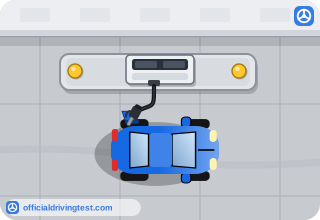
- Spilled gasoline lowers the octane rating of the fuel
- Spilled gasoline pollutes the air when it evaporates
- Spilled gasoline weakens the tires and the paint
- Spilled gasoline makes the engine idle roughly
Show answer
Correct answer: Spilled gasoline pollutes the air when it evaporates
Spilled gasoline evaporates and pollutes the air, so you should avoid spills and overfills at the gas station.
Source: Utah Driver Handbook (2026 edition (new 2026 laws effective May 6, 2026)), page 99 · Open this page in the manual (Manual page 99)
-
What is the most effective way to reduce vehicle emissions?
- Switching to premium gasoline
- Replacing the tires every year
- Warming the engine before each trip
- Using the vehicle less
Show answer
Correct answer: Using the vehicle less
The most effective way to cut vehicle emissions is to drive less.
Source: Utah Driver Handbook (2026 edition (new 2026 laws effective May 6, 2026)), page 100 · Open this page in the manual (Manual page 100)
-
Which is a way to reduce the amount you drive?
- Carpooling
- Idling in drive-up lanes
- Making a separate trip for each errand
- Driving to each destination separately
Show answer
Correct answer: Carpooling
Carpooling is one of the options listed, along with consolidating trips, telecommuting, public transit, biking, and walking.
Source: Utah Driver Handbook (2026 edition (new 2026 laws effective May 6, 2026)), page 100 · Open this page in the manual (Manual page 100)
-
How much pollution does biking or walking to your destination create?
- Very little
- About half as much as a car
- None at all
- Only a small amount in cold weather
Show answer
Correct answer: None at all
Biking or walking creates no pollution at all and also raises your fitness level.
Source: Utah Driver Handbook (2026 edition (new 2026 laws effective May 6, 2026)), page 100 · Open this page in the manual (Manual page 100)
-
What does the handbook suggest doing before you drive to the store?
- Drive by the store to see if it is open
- Call ahead to confirm the product is in stock
- Check the price at three different stores
- Ask a neighbor to buy the product instead
Show answer
Correct answer: Call ahead to confirm the product is in stock
Calling ahead to confirm the product is in stock is one of the ways to plan errands and avoid wasted driving.
Source: Utah Driver Handbook (2026 edition (new 2026 laws effective May 6, 2026)), page 100 · Open this page in the manual (Manual page 100)
-
What should you follow to reduce your vehicle's emissions and enhance performance?
- The same service schedule for every make of vehicle
- A maintenance schedule set by the Driver License Division
- The advice of other drivers on the road
- The manufacturer's recommended maintenance guidelines
Show answer
Correct answer: The manufacturer's recommended maintenance guidelines
Following the manufacturer's recommended maintenance guidelines reduces emissions and improves performance.
Source: Utah Driver Handbook (2026 edition (new 2026 laws effective May 6, 2026)), page 100 · Open this page in the manual (Manual page 100)
-
What does keeping your tires inflated to the recommended pressure do?
- Minimizes tire wear and helps fuel economy
- Removes the need for oil changes
- Reduces emissions only on the highway
- Increases tire wear but improves handling
Show answer
Correct answer: Minimizes tire wear and helps fuel economy
Correct tire pressure minimizes tire wear and gives the best possible fuel economy.
Source: Utah Driver Handbook (2026 edition (new 2026 laws effective May 6, 2026)), page 100 · Open this page in the manual (Manual page 100)
-
What does the handbook say about the simple adjustments that once occurred during tune-ups?
- They are still the best way to fix emissions
- They are now required before every registration
- They will no longer correct the problem
- They are now needed only on older vehicles
Show answer
Correct answer: They will no longer correct the problem
Modern emission control systems need a skilled technician, because the old simple tune-up adjustments no longer correct the problem.
Source: Utah Driver Handbook (2026 edition (new 2026 laws effective May 6, 2026)), page 100 · Open this page in the manual (Manual page 100)
-
Which is illegal for individual vehicle owners, fleet operators, and auto technicians?
- Changing a vehicle's oil without a certified technician
- Tampering with a vehicle's emission control system
- Keeping tires inflated to the recommended pressure
- Using the air conditioner in hot weather
Show answer
Correct answer: Tampering with a vehicle's emission control system
Tampering with an emission control system, or using leaded gasoline in a vehicle designed for unleaded, is illegal.
Source: Utah Driver Handbook (2026 edition (new 2026 laws effective May 6, 2026)), page 100 · Open this page in the manual (Manual page 100)
-
Using which fuel in a vehicle designed for unleaded gasoline is illegal?
- Premium gasoline
- Gasoline with additives
- Gasoline from an out-of-state station
- Leaded gasoline
Show answer
Correct answer: Leaded gasoline
Using leaded gasoline in a vehicle designed for unleaded gasoline is illegal and greatly increases pollution.
Source: Utah Driver Handbook (2026 edition (new 2026 laws effective May 6, 2026)), page 100 · Open this page in the manual (Manual page 100)
-
What is now illegal to do with new vehicles requiring leaded gasoline?
- Manufacture or sell them
- Drive them on public roads
- Register them in Utah
- Import them from other states
Show answer
Correct answer: Manufacture or sell them
It is illegal to manufacture or sell new vehicles that require leaded gasoline.
Source: Utah Driver Handbook (2026 edition (new 2026 laws effective May 6, 2026)), page 101 · Open this page in the manual (Manual page 101)
-
What is octane a measure of?
- How much energy a fuel contains per gallon when burned
- How quickly a fuel evaporates in hot weather conditions
- How much a fuel can be compressed before it ignites on its own
- How many additives were blended into a fuel mixture
Show answer
Correct answer: How much a fuel can be compressed before it ignites on its own
Octane measures how much a fuel can be compressed in an engine before it spontaneously combusts, not fuel power or quality.
Source: Utah Driver Handbook (2026 edition (new 2026 laws effective May 6, 2026)), page 101 · Open this page in the manual (Manual page 101)
-
Premium or super grade gasolines contain additives to increase what?
- Fuel power
- Octane
- Fuel economy
- Engine life
Show answer
Correct answer: Octane
These fuels contain additives to increase octane, which is not a measure of fuel power or quality.
Source: Utah Driver Handbook (2026 edition (new 2026 laws effective May 6, 2026)), page 101 · Open this page in the manual (Manual page 101)