Tennessee: Vehicle controls and signals — Headlights and Lighting Rules Practice Test
Questions in this part include: “Your high beams are on and an oncoming vehicle is within what distance before you must dim them?” · “Which flashing lights may display to the front of a vehicle operated in Tennessee?”
Independent educational site · not affiliated with any government agency or DMV
Ready? Test yourself
- Instant feedback with an explanation
- Every answer cites its source in the manual
- Your best score is saved on this device
- Keyboard: press 1 to 4 to answer and Enter for the next question
Questions are original and based on the official manual "Tennessee Comprehensive Driver License Manual" (March 2025 printing), Tennessee Department of Safety and Homeland Security.
All 20 questions in this practice test
Take the test above first, then use this list to study. Tap “Show answer” to see the correct answer and explanation.
Show the questions and answersHide the questions
-
During what period must a car's headlights be turned on at night?
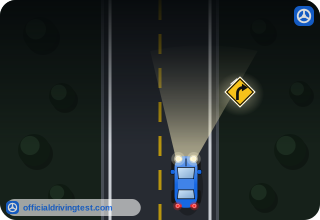
- From sunset until sunrise only
- 1 hour after sunset until 1 hour before sunrise
- From 6 p.m. until 6 a.m.
- 30 minutes after sunset until 30 minutes before sunrise
Show answer
Correct answer: 30 minutes after sunset until 30 minutes before sunrise
The night-use rule runs from 30 minutes after sunset until 30 minutes before sunrise.
Source: Tennessee Comprehensive Driver License Manual (March 2025 printing), page 45 · Open this page in the manual (Manual page 45)
-
Besides at night, when must your headlights be on during the day?
- Only when you are driving on an interstate highway
- When you cannot see people or vehicles clearly 200 feet ahead
- Only when it is raining hard enough to flood the road
- Only when you are driving through a school zone area
Show answer
Correct answer: When you cannot see people or vehicles clearly 200 feet ahead
Headlights are required whenever daylight is too poor to see people or vehicles clearly at 200 feet, and when rain, mist, snow or other precipitation requires constant wiper use.
Source: Tennessee Comprehensive Driver License Manual (March 2025 printing), page 45 · Open this page in the manual (Manual page 45)
-
Which weather condition requires your headlights to be on?
- Any day when the temperature is below freezing
- Any day with a cloud cover over the hills
- Rain, mist or snow needing constant use of the wipers
- Any day when you are driving more than 25 miles from home
Show answer
Correct answer: Rain, mist or snow needing constant use of the wipers
Using headlights whenever the wipers must run constantly is a Tennessee law, not just a safety habit.
Source: Tennessee Comprehensive Driver License Manual (March 2025 printing), page 45 · Open this page in the manual (Manual page 45)
-
Your high beams are on and an oncoming vehicle is within what distance before you must dim them?
- 500 feet
- 200 feet
- 1,000 feet
- 750 feet
Show answer
Correct answer: 500 feet
You must lower the beam when an oncoming vehicle is within 500 feet, roughly one city block.
Source: Tennessee Comprehensive Driver License Manual (March 2025 printing), page 45 · Open this page in the manual (Manual page 45)
-
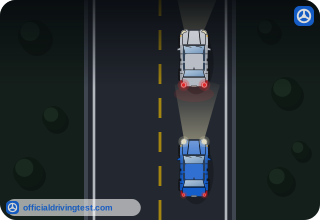
With your high beams on, when are you required to dim them while following another vehicle?
- Only when you are within 100 feet of the vehicle ahead
- Only when the vehicle ahead is a motorcycle
- When you are within 500 feet of the vehicle ahead
- Only when the vehicle ahead brakes
Show answer
Correct answer: When you are within 500 feet of the vehicle ahead
The dimming rule also applies when following another vehicle within 500 feet, because glare in the rear view mirror can blind that driver.
Source: Tennessee Comprehensive Driver License Manual (March 2025 printing), page 45 · Open this page in the manual (Manual page 45)
-
What does the law require of a vehicle stopped or parked on a road or shoulder when visibility is limited?
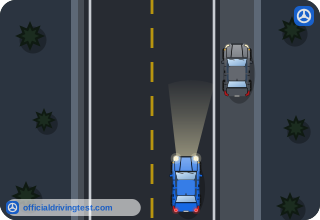
- It must have its parking lights on
- It must have its high beams on
- It must have its fog lights on alone
- It must have its interior light on
Show answer
Correct answer: It must have its parking lights on
A vehicle stopped or parked on a road or shoulder must show its parking lights when limited visibility conditions exist.
Source: Tennessee Comprehensive Driver License Manual (March 2025 printing), page 45 · Open this page in the manual (Manual page 45)
-
Why is it a problem to drive at night or in bad weather with only your parking lights on?
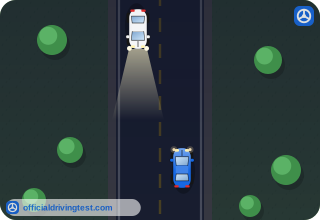
- They are too bright and blind oncoming drivers
- They drain the battery too quickly while driving
- They hide your brake lights from drivers behind you
- Their small size may make others think you are farther away
Show answer
Correct answer: Their small size may make others think you are farther away
Parking lights are small, so they can make a vehicle look farther away; using them alone when visibility is limited is unsafe and against the law.
Source: Tennessee Comprehensive Driver License Manual (March 2025 printing), page 45 · Open this page in the manual (Manual page 45)
-
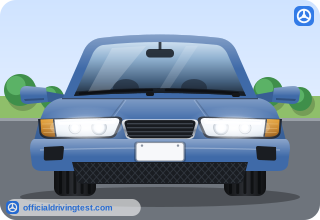
Besides having them on by themselves, when is it illegal to have auxiliary lights or fog lights on?
- Only on interstate highways when it is raining
- When you are required to dim high beam headlights
- Only when the road is dry and traffic is light
- Only during daylight hours on country roads
Show answer
Correct answer: When you are required to dim high beam headlights
The manual says it is illegal to use auxiliary or fog lights alone, or on when you must dim your high beams, because they make it hard for oncoming drivers to see.
Source: Tennessee Comprehensive Driver License Manual (March 2025 printing), page 45 · Open this page in the manual (Manual page 45)
-
Since January 1, 2018, steady-burning lights that show to the front of a vehicle operated in Tennessee must be which color or colors?
- Red or white
- White or amber
- Blue or white
- Any color if it is not flashing
Show answer
Correct answer: White or amber
No vehicle may have steady-burning front lights in any color other than white or amber, or any combination other than white and amber, with exceptions for certain vehicles.
Source: Tennessee Comprehensive Driver License Manual (March 2025 printing), page 45 · Open this page in the manual (Manual page 45)
-
Which flashing lights may display to the front of a vehicle operated in Tennessee?
- Any flashing lights in white or amber
- Any flashing lights that are not red
- Flashing lights in any one color
- Only factory installed emergency flashers
Show answer
Correct answer: Only factory installed emergency flashers
Flashing lights of any color that show to the front are not allowed, other than factory installed emergency flashers, with exceptions for certain vehicles.
Source: Tennessee Comprehensive Driver License Manual (March 2025 printing), page 46 · Open this page in the manual (Manual page 46)
-
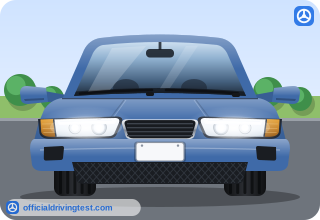
What is the benefit of daytime running lights?
- They make the vehicle easier for others to see
- They let you skip using your headlights at night
- They allow you to drive faster in daylight
- They let you drive without a turn signal
Show answer
Correct answer: They make the vehicle easier for others to see
Headlights that are on whenever the vehicle is running make it easier for others to see the vehicle in daylight, which reduces the likelihood of collisions.
Source: Tennessee Comprehensive Driver License Manual (March 2025 printing), page 45 · Open this page in the manual (Manual page 45)
-
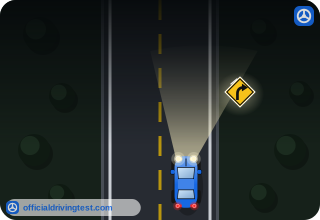
Tennessee law requires headlights that let you see a person on the highway clearly at least how far ahead of your car?
- 100 feet
- 200 feet
- 300 feet
- 500 feet
Show answer
Correct answer: 200 feet
The law requires headlights that show any person on the highway clearly at least two hundred feet ahead.
Source: Tennessee Comprehensive Driver License Manual (March 2025 printing), page 74 · Open this page in the manual (Manual page 74)
-
When driving in cities and towns at night, which lights should you always use?
- High beams
- Parking lights only
- Low beams
- Fog lights only
Show answer
Correct answer: Low beams
In cities and towns the manual says to always use your low beams.
Source: Tennessee Comprehensive Driver License Manual (March 2025 printing), page 74 · Open this page in the manual (Manual page 74)
-
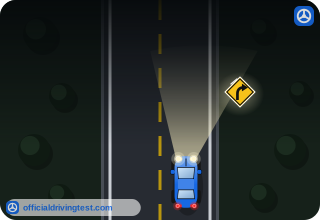
On curves or turns to the right at night, what should you avoid doing?
- Using your low beams when meeting traffic
- “Blasting” an oncoming car with high beams
- Watching the right edge of the road
- Dimming your lights for oncoming cars
Show answer
Correct answer: “Blasting” an oncoming car with high beams
On a right curve or turn your lights can sweep across oncoming traffic, so you should not hit them with high beams.
Source: Tennessee Comprehensive Driver License Manual (March 2025 printing), page 74 · Open this page in the manual (Manual page 74)
-
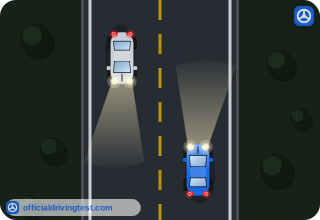
Why should you avoid flashing your high beams to warn another driver?
- It can damage the other vehicle's headlights
- It warns the other driver too early to react
- It is allowed only on interstate highways
- It might distract them and lead to a collision
Show answer
Correct answer: It might distract them and lead to a collision
Flashing high beams can distract the other driver and interfere with their driving, which could cause a collision.
Source: Tennessee Comprehensive Driver License Manual (March 2025 printing), page 74 · Open this page in the manual (Manual page 74)
-
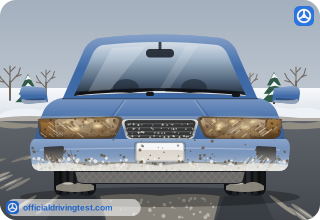
For maximum glare prevention, how often should you clean your headlights and the windows, inside and out?
- Once every three months
- Once every six months
- At least once a month
- Once a year
Show answer
Correct answer: At least once a month
Keeping every surface between your eyes and the road clean helps fight glare, and the manual says to clean at least monthly.
Source: Tennessee Comprehensive Driver License Manual (March 2025 printing), page 74 · Open this page in the manual (Manual page 74)
-
Headlights that shine up or out excessively:
- Help you see objects farther along the roadway
- Reduce glare for the drivers you are meeting
- Make your lights safe to leave on while parked
- Do not help you see the roadway and add to glare
Show answer
Correct answer: Do not help you see the roadway and add to glare
Badly aimed lights do not light the road better; they only glare into the eyes of drivers you meet or follow.
Source: Tennessee Comprehensive Driver License Manual (March 2025 printing), page 74 · Open this page in the manual (Manual page 74)
-
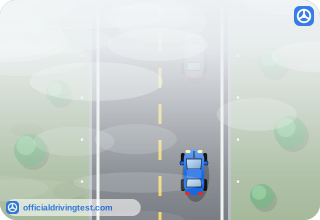
In fog or mist, why should you never put your headlights on high beam?
- The light cannot be seen by other drivers
- The light is reflected back into your eyes
- High beams burn out faster in damp air
- The light shines too far above the road
Show answer
Correct answer: The light is reflected back into your eyes
High beams bounce off the fog or mist and into your eyes, so low beams are used instead.
Source: Tennessee Comprehensive Driver License Manual (March 2025 printing), page 75 · Open this page in the manual (Manual page 75)
-
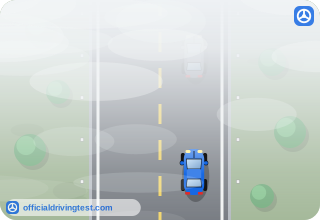
If you must drive in fog or smoke, which lights should you use?
- High beams
- Parking lights only
- Fog lights only
- Low beams
Show answer
Correct answer: Low beams
High beams impair your visibility in fog, and you should never drive with just parking or fog lights on.
Source: Tennessee Comprehensive Driver License Manual (March 2025 printing), page 75 · Open this page in the manual (Manual page 75)
-
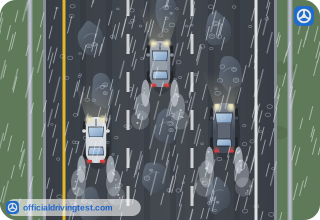
When driving through dense fog, heavy rain or snow during the daytime, which headlights does Tennessee law require?
- High beam headlights
- Low beam headlights
- Parking lights
- Auxiliary fog lights only
Show answer
Correct answer: Low beam headlights
The manual says turning on low beams in those conditions is a requirement of Tennessee law.
Source: Tennessee Comprehensive Driver License Manual (March 2025 printing), page 75 · Open this page in the manual (Manual page 75)