Tennessee: Vehicle controls and signals — Carbon Monoxide, Exhaust and Engine Care Practice Test
Questions in this part include: “What is every vehicle required to have to prevent excessive or unusual noises and polluting smoke?” · “What does the manual say to do with the fresh-air vent in congested traffic to avoid carbon monoxide poisoning?”
Independent educational site · not affiliated with any government agency or DMV
Ready? Test yourself
- Instant feedback with an explanation
- Every answer cites its source in the manual
- Your best score is saved on this device
- Keyboard: press 1 to 4 to answer and Enter for the next question
Questions are original and based on the official manual "Tennessee Comprehensive Driver License Manual" (March 2025 printing), Tennessee Department of Safety and Homeland Security.
All 16 questions in this practice test
Take the test above first, then use this list to study. Tap “Show answer” to see the correct answer and explanation.
Show the questions and answersHide the questions
-
What is every vehicle required to have to prevent excessive or unusual noises and polluting smoke?
- A catalytic heater
- A sound-absorbing roof
- A muffler
- A noise-limit sticker
Show answer
Correct answer: A muffler
Every vehicle must be equipped with a muffler.
Source: Tennessee Comprehensive Driver License Manual (March 2025 printing), page 23 · Open this page in the manual (Manual page 23)
-
What is true of carbon monoxide gas from a car engine?
- It has a strong smell of gasoline that warns you in time
- It is visible as white smoke from the exhaust
- It is harmless in a closed car
- It can kill, and it has no taste, no smell and cannot be seen
Show answer
Correct answer: It can kill, and it has no taste, no smell and cannot be seen
Carbon monoxide can kill, and you cannot taste, smell or see it.
Source: Tennessee Comprehensive Driver License Manual (March 2025 printing), page 29 · Open this page in the manual (Manual page 29)
-
In which situation does carbon monoxide generally leak into a vehicle?
- When the tires are low on air pressure
- When the exhaust system is not working properly
- When the headlights are turned on at night
- When the radio is playing loudly
Show answer
Correct answer: When the exhaust system is not working properly
The manual says it generally leaks with the heater running, a faulty exhaust system or heavy traffic fumes.
Source: Tennessee Comprehensive Driver License Manual (March 2025 printing), page 29 · Open this page in the manual (Manual page 29)
-
Which action helps you avoid carbon monoxide poisoning?
- Having the exhaust system checked regularly
- Running the engine in a closed garage to warm it
- Opening the fresh-air vent in congested traffic
- Using the heater in a parked car with the windows closed
Show answer
Correct answer: Having the exhaust system checked regularly
The manual lists regular exhaust system checks as a way to avoid carbon monoxide poisoning.
Source: Tennessee Comprehensive Driver License Manual (March 2025 printing), page 30 · Open this page in the manual (Manual page 30)
-
To avoid carbon monoxide poisoning, what should you be alert for?
- A squealing noise from the brakes
- Dash lights that flicker at night
- Unusual roars from under the car
- A rattling noise in the trunk area
Show answer
Correct answer: Unusual roars from under the car
The manual says to be alert for unusual roars from under the car, which can signal an exhaust problem.
Source: Tennessee Comprehensive Driver License Manual (March 2025 printing), page 30 · Open this page in the manual (Manual page 30)
-
Where should you never let the engine run, to avoid carbon monoxide poisoning?
- In an open driveway
- In a closed garage
- On a paved parking lot
- On a gravel shoulder
Show answer
Correct answer: In a closed garage
The manual says never to let the engine run in a closed garage.
Source: Tennessee Comprehensive Driver License Manual (March 2025 printing), page 30 · Open this page in the manual (Manual page 30)
-
In a parked car with the windows closed, what does the manual say not to use to avoid carbon monoxide poisoning?
- The radio
- The four-way hazard flashers
- The dome light
- The heater or air conditioner
Show answer
Correct answer: The heater or air conditioner
Using the heater or air conditioner in a parked car with the windows closed can expose you to carbon monoxide.
Source: Tennessee Comprehensive Driver License Manual (March 2025 printing), page 30 · Open this page in the manual (Manual page 30)
-
What does the manual say to do with the fresh-air vent in congested traffic to avoid carbon monoxide poisoning?
- Open it fully
- Leave it half open
- Set it to defrost
- Close it
Show answer
Correct answer: Close it
In congested traffic the fresh-air vent should be closed so fumes from other vehicles stay out.
Source: Tennessee Comprehensive Driver License Manual (March 2025 printing), page 30 · Open this page in the manual (Manual page 30)
-
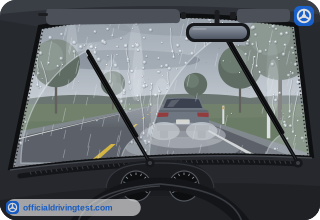
What can you use to keep windows and mirrors clear in inclement weather?
- The high-beam headlights
- The windshield washer fluid only
- The hazard warning flashers
- The defroster or air conditioner
Show answer
Correct answer: The defroster or air conditioner
The manual says to use the defroster or air conditioner to keep windows and mirrors clear.
Source: Tennessee Comprehensive Driver License Manual (March 2025 printing), page 75 · Open this page in the manual (Manual page 75)
-
If you and your passengers tend to get a sleepy feeling when driving or riding in your car, what may be wrong?
- Your windshield washer fluid level may be too low to clean it
- You may have an exhaust leak that needs to be repaired immediately
- Your tire tread may be worn
- Your battery may be run down
Show answer
Correct answer: You may have an exhaust leak that needs to be repaired immediately
Gases from a leaky exhaust can cause death in a vehicle in a very short time, and sleepiness is a warning.
Source: Tennessee Comprehensive Driver License Manual (March 2025 printing), page 101 · Open this page in the manual (Manual page 101)
-
When sitting for a prolonged period in a vehicle with the motor running, what should you do?
- Open a window to provide fresh air
- Close the vents and turn on the heater
- Keep all windows closed to hold the warmth
- Rest your head back and close your eyes
Show answer
Correct answer: Open a window to provide fresh air
Carbon monoxide can overcome people in an enclosed vehicle quicker than most people realize.
Source: Tennessee Comprehensive Driver License Manual (March 2025 printing), page 101 · Open this page in the manual (Manual page 101)
-
In which situation should you never run the motor?
- In an open driveway with the car doors and garage door open
- In a parking lot with the windows down
- In a closed garage or anywhere the tail pipe may be obstructed
- While the hood is open
Show answer
Correct answer: In a closed garage or anywhere the tail pipe may be obstructed
A blocked tail pipe, including in mud or snow, can fill the vehicle with exhaust fumes.
Source: Tennessee Comprehensive Driver License Manual (March 2025 printing), page 101 · Open this page in the manual (Manual page 101)
-
When you make an extended stop at a rest area while traveling, what should you not do?
- Walk around and get some fresh air
- Sleep or sit with the car running
- Check your tires
- Turn off the headlights
Show answer
Correct answer: Sleep or sit with the car running
The manual says not to sleep or sit with the car running during an extended stop.
Source: Tennessee Comprehensive Driver License Manual (March 2025 printing), page 101 · Open this page in the manual (Manual page 101)
-
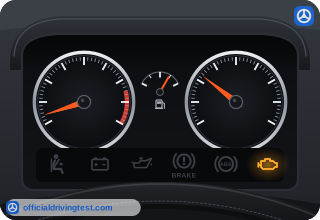
What can a poor running engine do?
- Improve fuel economy and reduce pollution of the air
- Reduce the noise from the exhaust
- Keep the battery charged longer
- Lose power needed for normal driving and emergencies
Show answer
Correct answer: Lose power needed for normal driving and emergencies
A poor running engine may lose power, fail to start, waste fuel, pollute and stall on the road.
Source: Tennessee Comprehensive Driver License Manual (March 2025 printing), page 101 · Open this page in the manual (Manual page 101)
-
What can improperly maintained antifreeze/coolant levels result in?
- A dead battery in hot weather or a flat tire in winter
- A leaking exhaust in winter
- Overheating in warm weather or engine freezing in winter
- Worn tires in warm weather
Show answer
Correct answer: Overheating in warm weather or engine freezing in winter
Wrong coolant levels can cause overheating in warm weather or engine freezing in winter.
Source: Tennessee Comprehensive Driver License Manual (March 2025 printing), page 101 · Open this page in the manual (Manual page 101)
-
When should you check your radiator?
- Only when the vehicle is cool
- Right after the engine is turned off
- While the engine is running
- Only when the engine is hot
Show answer
Correct answer: Only when the vehicle is cool
The radiator should be checked only when the vehicle is cool, not immediately after operation.
Source: Tennessee Comprehensive Driver License Manual (March 2025 printing), page 101 · Open this page in the manual (Manual page 101)