South Carolina: Speed and following distance — Part 4 Practice Test
Questions in this part include: “On a narrow rural road with ditches or drop-offs instead of shoulders, what should you do?” · “While towing a trailer, which statement about the posted speed limit is true?”
Independent educational site · not affiliated with any government agency or DMV
Ready? Test yourself
- Instant feedback with an explanation
- Every answer cites its source in the manual
- Your best score is saved on this device
- Keyboard: press 1 to 4 to answer and Enter for the next question
Questions are original and based on the official manual "South Carolina Driver's Manual" (2026 (posted April 2026)), South Carolina Department of Motor Vehicles.
All 17 questions in this practice test
Take the test above first, then use this list to study. Tap “Show answer” to see the correct answer and explanation.
Show the questions and answersHide the questions
-
What should you do on gravel or dirt roads?
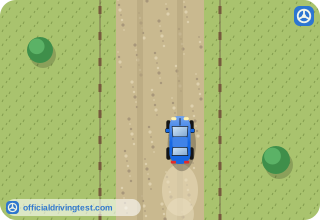
- Keep your normal speed and following distance
- Increase your speed so the tires grip better
- Reduce your speed and increase your following distance
- Stay close to the vehicle ahead to avoid dust
Show answer
Correct answer: Reduce your speed and increase your following distance
Traction is reduced on gravel or dirt, so slow down, leave more space, and expect that you may skid when stopping.
Source: South Carolina Driver's Manual (2026 (posted April 2026)), page 11-5 · Open this page in the manual (Manual page 11-5)
-
On a narrow rural road with ditches or drop-offs instead of shoulders, what should you do?
- Reduce speed and center your vehicle in your lane
- Drive on the edge to give oncoming traffic room
- Keep to the right edge of your lane
- Drive over the center line when no one is coming
Show answer
Correct answer: Reduce speed and center your vehicle in your lane
You should slow down, center your vehicle in your lane, and watch for oncoming traffic that may try to share your lane.
Source: South Carolina Driver's Manual (2026 (posted April 2026)), page 11-5 · Open this page in the manual (Manual page 11-5)
-
What should you do when crossing open bridge gratings or steel bridges?
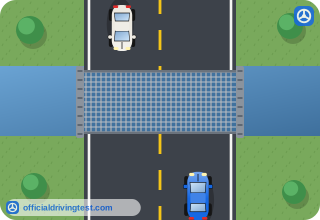
- Speed up slightly so the tires grip the surface
- Follow closely to keep up with traffic ahead
- Slow down, follow farther back, and keep a firm grip
- Loosen your grip so the wheel can move freely
Show answer
Correct answer: Slow down, follow farther back, and keep a firm grip
These surfaces reduce traction, so reduce speed, increase following distance, and hold the wheel firmly.
Source: South Carolina Driver's Manual (2026 (posted April 2026)), page 11-5 · Open this page in the manual (Manual page 11-5)
-
What are blind corners?
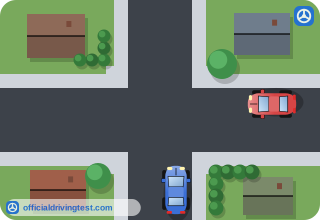
- Corners with sharp curves marked by signs
- Street corners you cannot see around
- Intersections where traffic signals are broken
- Corners where parking is not allowed
Show answer
Correct answer: Street corners you cannot see around
Blind corners are street corners you cannot see around, often caused by trees, crops, or steep hills.
Source: South Carolina Driver's Manual (2026 (posted April 2026)), page 11-5 · Open this page in the manual (Manual page 11-5)
-
In an area of reduced vision, such as a blind corner, what should you always do?
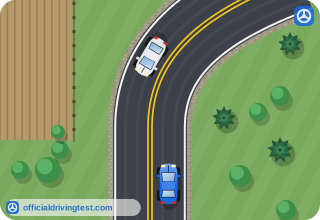
- Sound your horn and keep your speed
- Stay in the center of the road for a better view
- Speed up to clear the hazard quickly
- Reduce your speed and be prepared to stop
Show answer
Correct answer: Reduce your speed and be prepared to stop
Where you cannot see far ahead, slow down and be ready to stop.
Source: South Carolina Driver's Manual (2026 (posted April 2026)), page 11-5 · Open this page in the manual (Manual page 11-5)
-
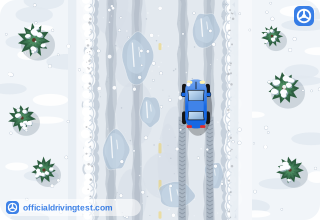
Winter weather conditions call for which kind of driving?
- Faster acceleration to avoid losing momentum
- Slower speeds, acceleration, steering, and braking
- Sharper steering to react to slick spots
- Harder braking to test road conditions
Show answer
Correct answer: Slower speeds, acceleration, steering, and braking
Winter conditions call for slower speeds, slower acceleration, slower steering, and slower braking.
Source: South Carolina Driver's Manual (2026 (posted April 2026)), page 11-6 · Open this page in the manual (Manual page 11-6)
-
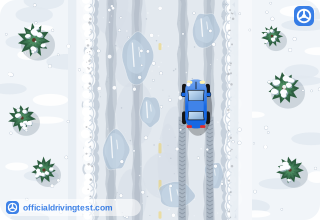
In winter conditions, what is best for slowing down or stopping?
- Applying the brakes firmly and quickly
- Taking your foot off the pedals and coasting
- Applying the brakes gently
- Waiting until the last moment to brake
Show answer
Correct answer: Applying the brakes gently
You should test road conditions carefully, and gentle braking is best for slowing or stopping.
Source: South Carolina Driver's Manual (2026 (posted April 2026)), page 11-7 · Open this page in the manual (Manual page 11-7)
-
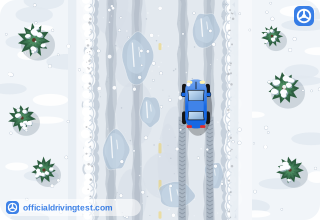
When there is snow or ice, what distance should you allow between your vehicle and others?
- Additional distance
- Less distance
- The usual distance
- Half the usual distance
Show answer
Correct answer: Additional distance
Snow and ice make it harder to stop, so you should allow additional distance between vehicles.
Source: South Carolina Driver's Manual (2026 (posted April 2026)), page 11-7 · Open this page in the manual (Manual page 11-7)
-
What is the maximum recommended speed for most vehicle-trailer combinations?
- 45 mph
- 65 mph
- 70 mph
- 55 mph
Show answer
Correct answer: 55 mph
The manual gives 55 mph as the maximum recommended speed for most vehicle-trailer combinations.
Source: South Carolina Driver's Manual (2026 (posted April 2026)), page 11-11 · Open this page in the manual (Manual page 11-11)
-
While towing a trailer, which statement about the posted speed limit is true?
- You may exceed it by 5 mph on level roads
- It does not apply to vehicles towing trailers
- You may exceed it to pass a truck safely
- You must never exceed it
Show answer
Correct answer: You must never exceed it
Even though 55 mph is recommended, you must never exceed the posted speed limit.
Source: South Carolina Driver's Manual (2026 (posted April 2026)), page 11-11 · Open this page in the manual (Manual page 11-11)
-
If driving conditions worsen while towing a trailer, what must you do?
- Keep the same speed
- Reduce speed even more
- Stop and unhook the trailer
- Switch to your high beams
Show answer
Correct answer: Reduce speed even more
When conditions worsen you must slow down even more.
Source: South Carolina Driver's Manual (2026 (posted April 2026)), page 11-11 · Open this page in the manual (Manual page 11-11)
-
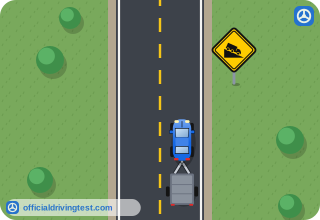
When towing a trailer, when should you slow down for a downgrade?
- Halfway down the hill
- At the bottom of the hill
- Before starting down the hill
- Once the trailer starts to push
Show answer
Correct answer: Before starting down the hill
Slow down before you start down the hill.
Source: South Carolina Driver's Manual (2026 (posted April 2026)), page 11-11 · Open this page in the manual (Manual page 11-11)
-
How does a vehicle-trailer combination compare with a car when stopping?
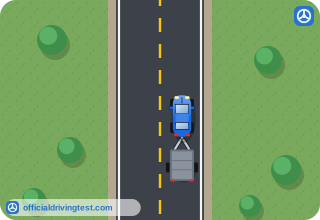
- It requires more distance to stop
- It stops in the same distance
- It stops in a shorter distance when dry
- It stops faster when loaded heavily in front
Show answer
Correct answer: It requires more distance to stop
A vehicle-trailer combination needs more distance to stop, so leave extra space ahead.
Source: South Carolina Driver's Manual (2026 (posted April 2026)), page 11-11 · Open this page in the manual (Manual page 11-11)
-
When towing a trailer in rain, snow, or fog, how much space should you allow ahead?
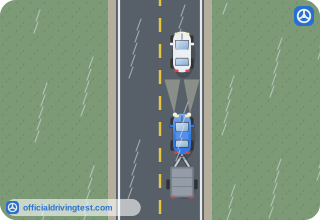
- Even more space than normal towing
- The same space as in dry weather
- Less space, since you drive slower
- Only one extra car length
Show answer
Correct answer: Even more space than normal towing
In rain, snow, or fog you should allow even more space than the extra space already needed when towing.
Source: South Carolina Driver's Manual (2026 (posted April 2026)), page 11-11 · Open this page in the manual (Manual page 11-11)
-
How does towing a trailer affect passing?
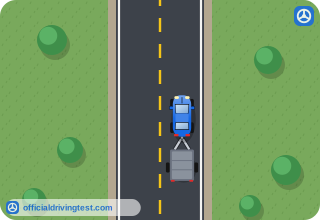
- Passing is easier because the trailer adds weight
- Your vehicle needs the same time and distance
- Your vehicle needs more time and distance to pass
- Passing is allowed only on hills
Show answer
Correct answer: Your vehicle needs more time and distance to pass
When towing, your vehicle will require more time and distance to pass.
Source: South Carolina Driver's Manual (2026 (posted April 2026)), page 11-11 · Open this page in the manual (Manual page 11-11)
-
Where should you never pass when towing a trailer?
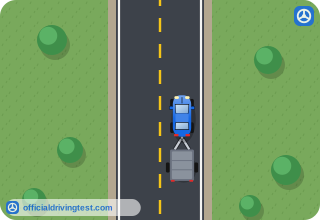
- On straight, level roads
- On hills or curves
- On roads with a wide shoulder
- On two-lane roads in daylight
Show answer
Correct answer: On hills or curves
You should have plenty of clear highway ahead and never pass on hills or curves.
Source: South Carolina Driver's Manual (2026 (posted April 2026)), page 11-12 · Open this page in the manual (Manual page 11-12)
-
What speed should you use when backing up a trailer?
- Go at a moderate pace
- Go in short bursts of speed
- Go quickly so it does not jackknife
- Go slowly
Show answer
Correct answer: Go slowly
You should back up a trailer slowly.
Source: South Carolina Driver's Manual (2026 (posted April 2026)), page 11-12 · Open this page in the manual (Manual page 11-12)