South Carolina: Seat belts and child safety Practice Test
Safety belts, air bags and South Carolina’s child passenger safety law: rear-facing, forward-facing and booster seats.
Independent educational site · not affiliated with any government agency or DMV
Ready? Test yourself
- Instant feedback with an explanation
- Every answer cites its source in the manual
- Your best score is saved on this device
- Keyboard: press 1 to 4 to answer and Enter for the next question
Questions are original and based on the official manual "South Carolina Driver's Manual" (2026 (posted April 2026)), South Carolina Department of Motor Vehicles.
All 18 questions in this practice test
Take the test above first, then use this list to study. Tap “Show answer” to see the correct answer and explanation.
Show the questions and answersHide the questions
-
Among its tips for driving without distractions, what does the manual say about children in the vehicle?
- Let them sit on an adult's lap while driving
- Be sure they are properly and safely buckled up
- Give them a toy to keep them quiet
- Let them move freely in the back seat
Show answer
Correct answer: Be sure they are properly and safely buckled up
The manual lists making sure children are properly and safely buckled up as part of avoiding distraction.
Source: South Carolina Driver's Manual (2026 (posted April 2026)), page 3-4 · Open this page in the manual (Manual page 3-4)
-
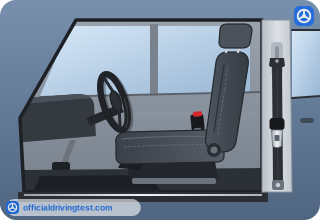
What do safety belts do for you in a collision?
- Prevent the vehicle from skidding on wet roads or when braking hard
- Take the place of air bags in a collision
- Keep you from being thrown from the vehicle and help the driver keep control
- Make the vehicle stop faster in an emergency
Show answer
Correct answer: Keep you from being thrown from the vehicle and help the driver keep control
Safety belts keep you from being thrown from the vehicle and help the driver keep control.
Source: South Carolina Driver's Manual (2026 (posted April 2026)), page 4-5 · Open this page in the manual (Manual page 4-5)
-
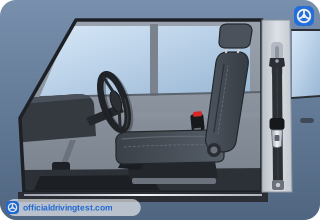
Besides fastening your own safety belt, what must you always make sure of?
- That only the passengers in the front seat are wearing belts
- That all your passengers are using safety belts or child restraints
- That passengers wear belts only on highways
- That only children under age eight are restrained
Show answer
Correct answer: That all your passengers are using safety belts or child restraints
The manual tells drivers to make sure every passenger uses a safety belt or child restraint.
Source: South Carolina Driver's Manual (2026 (posted April 2026)), page 4-5 · Open this page in the manual (Manual page 4-5)
-
What does South Carolina’s primary safety belt enforcement law allow an officer to do?
- Stop a driver only after the driver has committed another violation
- Cite a belt violation only when stopping a driver at a checkpoint
- Stop a driver only if the driver is the one without a belt
- Stop a driver when an occupant without a belt or restraint is clearly in view
Show answer
Correct answer: Stop a driver when an occupant without a belt or restraint is clearly in view
Under the primary law, an officer with a clear, unobstructed view of an unbelted or unrestrained occupant may stop the driver.
Source: South Carolina Driver's Manual (2026 (posted April 2026)), page 4-6 · Open this page in the manual (Manual page 4-6)
-
How should a shoulder harness be worn?
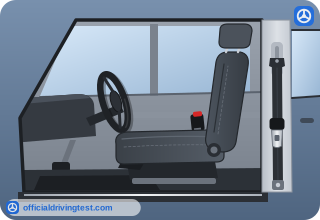
- Across the shoulder and chest with minimal, if any, slack
- Under the arm, with a little slack in the belt
- Behind the back, so that it holds you against the seat
- Across the neck with a few inches of slack
Show answer
Correct answer: Across the shoulder and chest with minimal, if any, slack
A shoulder harness goes across the shoulder and chest with little or no slack, never under the arm or behind the back.
Source: South Carolina Driver's Manual (2026 (posted April 2026)), page 4-6 · Open this page in the manual (Manual page 4-6)
-
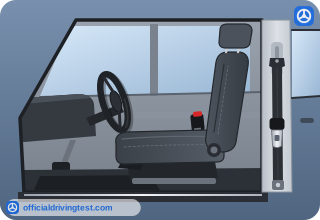
How should a lap belt be adjusted?
- Loose and across your stomach
- Snug and across your stomach
- Snug and low across your hips
- Loose and high across your ribs
Show answer
Correct answer: Snug and low across your hips
The lap belt should be snug and lie low across the hips so you do not slide out of it in a collision.
Source: South Carolina Driver's Manual (2026 (posted April 2026)), page 4-6 · Open this page in the manual (Manual page 4-6)
-
If your vehicle has air bags, what should you do about safety belts?
- Wear them only in the back seat
- Wear them anyway
- Wear them only on highways
- Skip them, because air bags protect you
Show answer
Correct answer: Wear them anyway
The manual says safety belts should be worn even if the vehicle has air bags.
Source: South Carolina Driver's Manual (2026 (posted April 2026)), page 4-6 · Open this page in the manual (Manual page 4-6)
-
How does the manual describe air bags?
- Primary restraints that can be used in place of safety belts
- Restraints that work best without safety belts
- Optional restraints for front seats only
- Supplemental restraints designed to work best with safety belts
Show answer
Correct answer: Supplemental restraints designed to work best with safety belts
Air bags are supplemental restraints, and they work best together with safety belts.
Source: South Carolina Driver's Manual (2026 (posted April 2026)), page 4-6 · Open this page in the manual (Manual page 4-6)
-
If you use a child safety seat, what must you do?
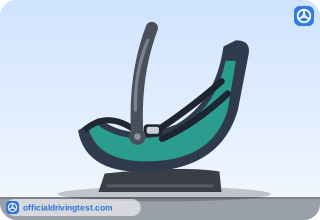
- Install it properly in your vehicle and use it correctly
- Install it only in the front passenger seat
- Have it inspected at an SCDMV office before each trip
- Replace it once every year
Show answer
Correct answer: Install it properly in your vehicle and use it correctly
The manual says a child safety seat must be installed properly and used correctly.
Source: South Carolina Driver's Manual (2026 (posted April 2026)), page 4-7 · Open this page in the manual (Manual page 4-7)
-
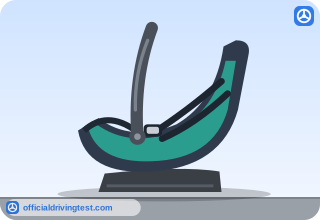
Where must you never place a rear-facing child safety seat?
- In the middle of the back seat
- Behind the driver’s seat
- In front of an air bag
- Next to another child restraint
Show answer
Correct answer: In front of an air bag
A rear-facing child safety seat must never be placed in front of an air bag.
Source: South Carolina Driver's Manual (2026 (posted April 2026)), page 4-7 · Open this page in the manual (Manual page 4-7)
-
According to South Carolina’s child passenger safety chart, an infant under age two must be secured in which type of seat?
- A forward-facing car seat
- A booster seat
- An adult safety belt
- A rear-facing car seat
Show answer
Correct answer: A rear-facing car seat
An infant under age two must be secured in a rear-facing car seat.
Source: South Carolina Driver's Manual (2026 (posted April 2026)), page 4-7 · Open this page in the manual (Manual page 4-7)
-
How long must an infant stay in a rear-facing car seat, in a rear seat of the vehicle?
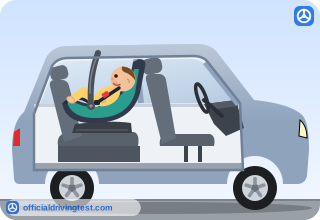
- Until the child exceeds the manufacturer’s height or weight limit for the seat
- Until the child can sit up and hold his or her head up without help
- Until the child learns to walk without help from an adult
- Until the child can buckle the harness without any help
Show answer
Correct answer: Until the child exceeds the manufacturer’s height or weight limit for the seat
The child stays rear-facing until exceeding the manufacturer’s height or weight limit for that car seat.
Source: South Carolina Driver's Manual (2026 (posted April 2026)), page 4-8 · Open this page in the manual (Manual page 4-8)
-
A child under age two has outgrown the manufacturer’s height or weight limits for a rear-facing car seat. How must the child be secured?
- In a booster seat secured in a rear seat of the vehicle
- With an adult safety belt in a rear seat
- In a forward-facing car seat in a rear seat of the vehicle
- In a rear-facing car seat in the front seat
Show answer
Correct answer: In a forward-facing car seat in a rear seat of the vehicle
Such a child must be secured in a forward-facing car seat in a rear seat.
Source: South Carolina Driver's Manual (2026 (posted April 2026)), page 4-8 · Open this page in the manual (Manual page 4-8)
-
How long must a child stay in a forward-facing car seat in a rear seat of the vehicle?
- Until the child turns three
- Until the child exceeds that seat’s height or weight requirements
- Until the child can fasten the seat belt without any help
- Until the child is tall enough to see out of the window
Show answer
Correct answer: Until the child exceeds that seat’s height or weight requirements
The child remains in a forward-facing car seat until exceeding that seat’s height or weight requirements.
Source: South Carolina Driver's Manual (2026 (posted April 2026)), page 4-8 · Open this page in the manual (Manual page 4-8)
-
Children at least age four who have outgrown their forward-facing car seat must be secured by what?
- A rear-facing car seat in a rear seat
- A forward-facing car seat in the front seat
- An adult safety belt only
- A booster seat in a rear seat of the vehicle
Show answer
Correct answer: A booster seat in a rear seat of the vehicle
After outgrowing the forward-facing seat, children at least age four must use a booster seat in a rear seat.
Source: South Carolina Driver's Manual (2026 (posted April 2026)), page 4-8 · Open this page in the manual (Manual page 4-8)
-
What type of belts must be used to secure a booster seat?
- Lap and shoulder belts
- Lap belts only
- Shoulder belts only
- A tether strap only
Show answer
Correct answer: Lap and shoulder belts
The manual says lap and shoulder belts must be used to secure the booster seat.
Source: South Carolina Driver's Manual (2026 (posted April 2026)), page 4-8 · Open this page in the manual (Manual page 4-8)
-
How long must a child stay in a booster seat in a rear seat of the vehicle?
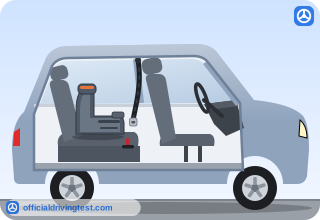
- Until the child turns six and is allowed in the front seat
- Until the child can sit in the front seat of the vehicle
- Until the child meets the height and fit requirements for an adult safety belt
- Until the child exceeds the height or weight limits of the forward-facing seat
Show answer
Correct answer: Until the child meets the height and fit requirements for an adult safety belt
The booster is used until the child meets the height and fit requirements for an adult safety seat belt.
Source: South Carolina Driver's Manual (2026 (posted April 2026)), page 4-8 · Open this page in the manual (Manual page 4-8)
-
From what age may a child be restrained by an adult safety belt, if the child can be secured properly?
- Age 6
- Age 8
- Age 10
- Age 12
Show answer
Correct answer: Age 8
A child at least age 8 may be restrained by an adult safety belt if the belt secures the child properly.
Source: South Carolina Driver's Manual (2026 (posted April 2026)), page 4-7 · Open this page in the manual (Manual page 4-7)