South Carolina: Speed and following distance — Part 1 Practice Test
Questions in this part include: “What should you do about searching for hazards while you drive?” · “Which of these is a time when you especially need to check the traffic behind you with your mirrors?”
Independent educational site · not affiliated with any government agency or DMV
Ready? Test yourself
- Instant feedback with an explanation
- Every answer cites its source in the manual
- Your best score is saved on this device
- Keyboard: press 1 to 4 to answer and Enter for the next question
Questions are original and based on the official manual "South Carolina Driver's Manual" (2026 (posted April 2026)), South Carolina Department of Motor Vehicles.
All 18 questions in this practice test
Take the test above first, then use this list to study. Tap “Show answer” to see the correct answer and explanation.
Show the questions and answersHide the questions
-
What should you do about searching for hazards while you drive?
- Develop a searching pattern and use it every time you drive
- Search for hazards only when traffic is heavy or the weather is bad
- Search for hazards only before you start the vehicle
- Look only at the vehicle directly in front of your car
Show answer
Correct answer: Develop a searching pattern and use it every time you drive
The manual says you should develop a searching pattern and use it every time you drive, looking ahead, to the sides and behind.
Source: South Carolina Driver's Manual (2026 (posted April 2026)), page 8-1 · Open this page in the manual (Manual page 8-1)
-
How should you use your eyes while searching the roadway?
- Fix them on the vehicle directly ahead of you
- Focus them on the center line of the road
- Keep them moving and avoid staring at any one thing
- Stay locked on the nearest hazard until it passes
Show answer
Correct answer: Keep them moving and avoid staring at any one thing
Staring at one thing makes you miss other problems, so you should keep your eyes moving and searching.
Source: South Carolina Driver's Manual (2026 (posted April 2026)), page 8-1 · Open this page in the manual (Manual page 8-1)
-
Ideally, how far ahead of your vehicle should you try to look?
- 2 to 3 seconds
- 20 to 30 seconds
- 5 to 8 seconds
- 12 to 15 seconds
Show answer
Correct answer: 20 to 30 seconds
The manual says you should ideally try to look at what is happening 20 to 30 seconds in front of your vehicle.
Source: South Carolina Driver's Manual (2026 (posted April 2026)), page 8-1 · Open this page in the manual (Manual page 8-1)
-
Looking well down your planned path of travel gives you extra time. What can that time help you avoid?
- Having to signal before every lane change you make
- Having to check your mirrors before you slow down
- Having to follow the posted speed limit on the road
- Being forced to use emergency braking and steering
Show answer
Correct answer: Being forced to use emergency braking and steering
Extra time from looking far ahead lets you make better decisions and possibly avoid emergency braking and steering.
Source: South Carolina Driver's Manual (2026 (posted April 2026)), page 8-1 · Open this page in the manual (Manual page 8-1)
-
Which of these limits how far you can see ahead and should be avoided?
- Checking your mirrors before changing lanes
- Adjusting your road position to see better
- Following too close to a larger vehicle
- Searching to the sides of your vehicle
Show answer
Correct answer: Following too close to a larger vehicle
A larger vehicle in front blocks your view, so avoid following it too closely and adjust your speed and road position.
Source: South Carolina Driver's Manual (2026 (posted April 2026)), page 8-2 · Open this page in the manual (Manual page 8-2)
-
Why should you search to the sides of your vehicle?
- To see if other roadway users are about to cross your path
- To check whether your tires are losing traction
- To judge how many seconds you are behind the car ahead
- To make sure your headlights are shining on the road
Show answer
Correct answer: To see if other roadway users are about to cross your path
Searching the sides shows you roadway users who are about to cross your path.
Source: South Carolina Driver's Manual (2026 (posted April 2026)), page 8-2 · Open this page in the manual (Manual page 8-2)
-
Which of these is a time when you especially need to check the traffic behind you with your mirrors?
- While parked with the engine turned off
- While waiting in a parking space for a passenger
- While reading a map before you leave home
- When entering an intersection
Show answer
Correct answer: When entering an intersection
The manual says to be aware of traffic behind you especially when changing lanes, slowing down or stopping, or entering an intersection.
Source: South Carolina Driver's Manual (2026 (posted April 2026)), page 8-2 · Open this page in the manual (Manual page 8-2)
-
What does driving safely require you to adjust your vehicle speed for?
- The age of your vehicle's tires
- Roadway and traffic conditions
- The make and model of vehicles near you
- How much fuel is left in your tank
Show answer
Correct answer: Roadway and traffic conditions
Safe driving means adjusting speed for roadway and traffic conditions, along with keeping a following distance and obeying speed limits.
Source: South Carolina Driver's Manual (2026 (posted April 2026)), page 8-2 · Open this page in the manual (Manual page 8-2)
-
What should you do before entering a curve?
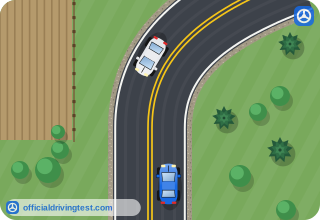
- Reduce speed to a safe speed before you enter
- Hold your speed until you reach the middle of the curve
- Brake hard once you are inside the curve
- Speed up so you can get through the curve quickly
Show answer
Correct answer: Reduce speed to a safe speed before you enter
You should always reduce speed to a safe speed before entering a curve rather than braking after you are in it.
Source: South Carolina Driver's Manual (2026 (posted April 2026)), page 8-2 · Open this page in the manual (Manual page 8-2)
-
In a curve, a safe speed is one that allows you to do what?
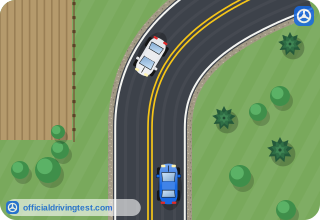
- Brake firmly at the midpoint of the curve
- Coast through the curve without touching either pedal
- Apply slight and constant acceleration through the curve
- Change lanes freely while you are in the curve
Show answer
Correct answer: Apply slight and constant acceleration through the curve
The manual defines a safe curve speed as one that lets you accelerate slightly and constantly through the curve.
Source: South Carolina Driver's Manual (2026 (posted April 2026)), page 8-2 · Open this page in the manual (Manual page 8-2)
-
When should you reduce your speed even more when approaching a curve?
- When the road is dry and traction is good
- When you cannot see the end of the curve
- When no other vehicles are on the road
- When you are not following any other vehicle
Show answer
Correct answer: When you cannot see the end of the curve
You should slow more when traction is poor, when following other vehicles, and when you cannot see the end of the curve.
Source: South Carolina Driver's Manual (2026 (posted April 2026)), page 8-2 · Open this page in the manual (Manual page 8-2)
-
Hard braking after you enter a curve could cause what?
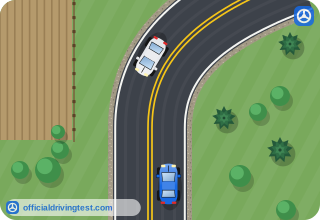
- The steering wheel to lock up
- The headlights to go dim
- The engine to overheat quickly
- The vehicle tires to lose traction
Show answer
Correct answer: The vehicle tires to lose traction
Braking hard once you are in a curve could make the tires lose traction.
Source: South Carolina Driver's Manual (2026 (posted April 2026)), page 8-2 · Open this page in the manual (Manual page 8-2)
-
When should you reduce speed on a road that may become slippery?
- Only after the road is covered with snow or ice
- Only after you begin to skid on the surface
- At the first sign of rain, snow, sleet, or ice
- Only when your tires have already started to slip
Show answer
Correct answer: At the first sign of rain, snow, sleet, or ice
The manual says to reduce speed at the first sign of rain, snow, sleet, or ice, not after problems appear.
Source: South Carolina Driver's Manual (2026 (posted April 2026)), page 8-3 · Open this page in the manual (Manual page 8-3)
-
How does a slippery road affect driving?
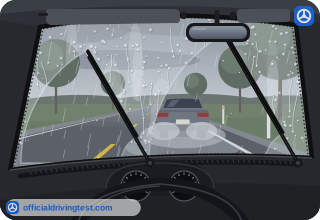
- It takes longer to stop and is harder to turn without skidding
- It takes less distance to stop but makes turning harder
- Tires grip the same as on dry roads, but you see less
- It makes stopping easier but makes accelerating harder
Show answer
Correct answer: It takes longer to stop and is harder to turn without skidding
On a slippery road tires do not grip as well, so stopping takes longer and turning without skidding is harder.
Source: South Carolina Driver's Manual (2026 (posted April 2026)), page 8-3 · Open this page in the manual (Manual page 8-3)
-
What is hydroplaning?
- When the brakes overheat and fade after driving through deep water
- When the engine stalls because water has reached the exhaust pipe
- When the rear tires lock and slide sideways on dry pavement
- When the steering tires ride on a layer of water on top of the road surface
Show answer
Correct answer: When the steering tires ride on a layer of water on top of the road surface
Hydroplaning means the steering tires ride on a layer of water on the road, much like water skis.
Source: South Carolina Driver's Manual (2026 (posted April 2026)), page 8-3 · Open this page in the manual (Manual page 8-3)
-
What is the best way to avoid traction loss from hydroplaning?
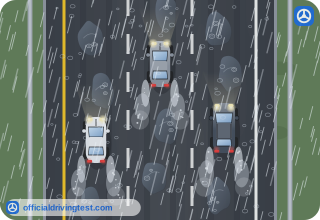
- Brake hard as soon as you notice water on the road surface
- Slow down in the rain or on roads with pooled water or puddles
- Steer back and forth to push water out from under the tires
- Speed up so your tires cross the water more quickly
Show answer
Correct answer: Slow down in the rain or on roads with pooled water or puddles
Slowing down in rain, or on a road wet with pooled water or puddles, is the best way to avoid losing traction.
Source: South Carolina Driver's Manual (2026 (posted April 2026)), page 8-3 · Open this page in the manual (Manual page 8-3)
-
What should you do if you see a flooded roadway or barricades blocking it?
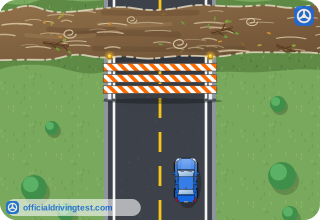
- Find another route to your destination
- Drive through slowly in a low gear
- Follow another vehicle across the water
- Go around the barricades if the water looks shallow
Show answer
Correct answer: Find another route to your destination
The manual says to find another route when you see a flooded roadway or barricades blocking one.
Source: South Carolina Driver's Manual (2026 (posted April 2026)), page 8-4 · Open this page in the manual (Manual page 8-4)
-
How quickly can flash floods occur?
- Only after several days of continuous rain
- Only after a river has been rising for a week
- Within a few minutes or hours of excessive rainfall
- Only at night after a thunderstorm has passed
Show answer
Correct answer: Within a few minutes or hours of excessive rainfall
Flash floods can come rapidly and unexpectedly, within minutes or hours of excessive rainfall.
Source: South Carolina Driver's Manual (2026 (posted April 2026)), page 8-4 · Open this page in the manual (Manual page 8-4)