South Carolina: Sharing the road
Bicyclists, motorcyclists, large trucks and their No Zones, school buses, slow-moving vehicles, golf carts and aggressive driving. Split into 5 shorter tests so you're not stuck in one long quiz.
Independent educational site · not affiliated with any government agency or DMV
Choose a part
Sharing the road — Part 1
Questions in this part include: “What are the minimum age and license requirements to drive a golf cart?”
StartSharing the road — Part 2
Questions in this part include: “What should you do when you pass a bicyclist?”
StartSharing the road — Part 3
Questions in this part include: “A bicyclist ahead holds the left arm straight out to the left. What is the bicyclist about to do?”
StartSharing the road — Part 4
Questions in this part include: “Compared with cars, how large are the blind spots of commercial vehicles?”
StartSharing the road — Part 5
Questions in this part include: “Which of these should you never do around a large vehicle?”
StartAll 81 Sharing the road questions with answers
Choose a part above to take a practice test, or study every question and answer here.
Show the questions and answersHide the questions
-
What are the minimum age and license requirements to drive a golf cart?
- At least 14 years old with a beginner’s permit
- At least 15 years old with a valid driver’s license
- At least 18 years old with a Class D license
- At least 16 years old with a valid driver’s license
Show answer
Correct answer: At least 16 years old with a valid driver’s license
Golf cart drivers must be at least 16 and hold a valid driver’s license.
Source: South Carolina Driver's Manual (2026 (posted April 2026)), page 2-2 · Open this page in the manual (Manual page 2-2)
-
What must a golf cart have affixed to it?
- An SCDMV-issued permit/registration decal
- A reflective slow-moving vehicle triangle
- An orange safety flag on a tall pole
- A county safety inspection sticker
Show answer
Correct answer: An SCDMV-issued permit/registration decal
A golf cart must display an SCDMV-issued permit/registration decal.
Source: South Carolina Driver's Manual (2026 (posted April 2026)), page 2-2 · Open this page in the manual (Manual page 2-2)
-
When may you operate a golf cart on the road under the manual’s rule?
- At night with headlights on
- Only on weekends
- During the day
- Any time of day
Show answer
Correct answer: During the day
The golf cart rule allows operation during the day within the listed limits.
Source: South Carolina Driver's Manual (2026 (posted April 2026)), page 2-2 · Open this page in the manual (Manual page 2-2)
-
A golf cart may be operated within how far of the address on its registration certificate?
- One mile
- Four miles
- Ten miles
- Twenty-five miles
Show answer
Correct answer: Four miles
The golf cart must stay within four miles of the address on its registration certificate.
Source: South Carolina Driver's Manual (2026 (posted April 2026)), page 2-2 · Open this page in the manual (Manual page 2-2)
-
On which roads may a golf cart be operated?
- Any street with a posted speed limit of 45 miles an hour or less
- Only interstate service roads
- Interstate highways during daylight hours
- Secondary streets and highways posted at 35 miles an hour or less
Show answer
Correct answer: Secondary streets and highways posted at 35 miles an hour or less
Golf carts are limited to secondary streets and highways posted at thirty-five miles an hour or less.
Source: South Carolina Driver's Manual (2026 (posted April 2026)), page 2-3 · Open this page in the manual (Manual page 2-3)
-
How does the manual define aggressive driving?
- Driving more than 10 mph over the speed limit on any road
- Driving without a valid license or with an expired permit
- Driving while a passenger in the vehicle is not buckled up
- Intentionally doing something that endangers people or property
Show answer
Correct answer: Intentionally doing something that endangers people or property
Aggressive driving is when someone intentionally does something that endangers other people or property.
Source: South Carolina Driver's Manual (2026 (posted April 2026)), page 3-5 · Open this page in the manual (Manual page 3-5)
-
Which behavior does the manual list as typically associated with aggressive driving?
- Signaling well before a turn
- Driving at a steady speed
- Following too closely
- Yielding to pedestrians
Show answer
Correct answer: Following too closely
The manual lists speeding, following too closely, and unsafe lane changes among aggressive behaviors.
Source: South Carolina Driver's Manual (2026 (posted April 2026)), page 3-5 · Open this page in the manual (Manual page 3-5)
-
Which of these does the manual name as a behavior typical of aggressive driving?
- Failing to obey traffic control devices
- Stopping for a red light
- Using a turn signal for every turn
- Driving in the right lane
Show answer
Correct answer: Failing to obey traffic control devices
Failing to obey traffic control devices such as stop signs and signals is a listed aggressive behavior.
Source: South Carolina Driver's Manual (2026 (posted April 2026)), page 3-5 · Open this page in the manual (Manual page 3-5)
-
How does the manual tell you to treat other road users?
- Stay out of their way by speeding up
- Use your horn to show you are annoyed
- Keep close behind them
- Be patient and courteous
Show answer
Correct answer: Be patient and courteous
The manual says to concentrate on driving and be patient and courteous to other road users.
Source: South Carolina Driver's Manual (2026 (posted April 2026)), page 3-5 · Open this page in the manual (Manual page 3-5)
-
For how long must you stop for a school bus with its red or amber lights flashing or its stop arm extended?
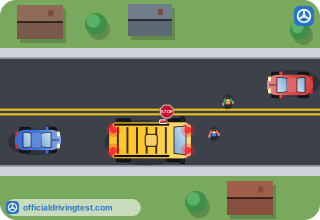
- Only while children are visible outside the bus
- For about ten seconds, then proceed slowly
- Until the bus doors have closed
- The entire time it is stopped or preparing to stop
Show answer
Correct answer: The entire time it is stopped or preparing to stop
You must stay stopped for the whole time the bus is stopped or preparing to stop with flashing red or amber lights or its stop arm out.
Source: South Carolina Driver's Manual (2026 (posted April 2026)), page 7-8 · Open this page in the manual (Manual page 7-8)
-
After a school bus has stopped flashing its lights and its stop arm is no longer visible, what should you do?
- Proceed slowly, watching for children
- Speed up to make up for lost time
- Resume normal speed at once
- Stay stopped until the bus is out of sight
Show answer
Correct answer: Proceed slowly, watching for children
Once the lights stop flashing and the stop arm is gone, you proceed slowly and watch for children.
Source: South Carolina Driver's Manual (2026 (posted April 2026)), page 7-8 · Open this page in the manual (Manual page 7-8)
-
On a two-lane road, what are you required to do when a school bus is stopped?
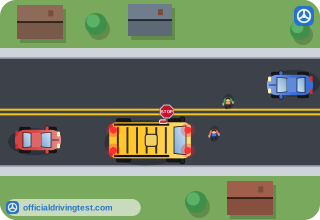
- Slow down and pass with caution
- Stop for the school bus
- Stop only if you are behind the bus
- Continue if no children are visible
Show answer
Correct answer: Stop for the school bus
A driver on a two-lane road is required to stop for a stopped school bus.
Source: South Carolina Driver's Manual (2026 (posted April 2026)), page 7-9 · Open this page in the manual (Manual page 7-9)
-
On a four-lane or multi-lane highway, when must you stop for a school bus with flashing signals?
- You are meeting it from the opposite direction
- You are in the lane farthest from the bus
- Children are standing at the roadside
- You are traveling behind the school bus
Show answer
Correct answer: You are traveling behind the school bus
On a four-lane or multi-lane highway the stopping requirement applies when traveling behind a school bus.
Source: South Carolina Driver's Manual (2026 (posted April 2026)), page 7-9 · Open this page in the manual (Manual page 7-9)
-
A school bus is in a passenger loading zone completely off the main travel lanes. In what additional case do you not have to stop?
- Pedestrians are not allowed to cross the road
- No children are visible near the bus
- The bus driver signals you to go on
- You are traveling below the speed limit
Show answer
Correct answer: Pedestrians are not allowed to cross the road
You need not stop when the bus is in a loading zone completely off the main travel lanes and pedestrians are not allowed to cross the roadway.
Source: South Carolina Driver's Manual (2026 (posted April 2026)), page 7-9 · Open this page in the manual (Manual page 7-9)
-
A school bus is stopped with its red lights flashing on a highway with four lanes, two in each direction. You are driving in the opposite direction from the bus. What are you required to do?
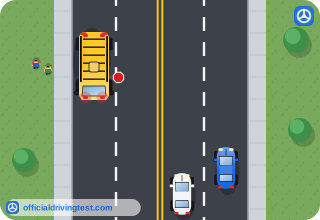
- You do not have to stop
- Stop and wait until the lights stop flashing
- Stop only if children are crossing the road
- Slow to a crawl and pass with caution
Show answer
Correct answer: You do not have to stop
On a four-lane highway with at least two lanes each way, a driver meeting a stopped school bus from the opposite direction does not have to stop.
Source: South Carolina Driver's Manual (2026 (posted April 2026)), page 7-10 · Open this page in the manual (Manual page 7-10)
-
For the school bus stopping exception, how is a multi-lane highway or multi-lane private road defined?
- Any road that has a center lane reserved for left turns
- Any road with three or more lanes going in the same direction only
- Four lanes, with at least two traffic lanes in each direction
- Any highway with a posted speed limit above 45 mph
Show answer
Correct answer: Four lanes, with at least two traffic lanes in each direction
The manual defines it as a highway or private road with four lanes and at least two traffic lanes in each direction.
Source: South Carolina Driver's Manual (2026 (posted April 2026)), page 7-10 · Open this page in the manual (Manual page 7-10)
-
You are driving behind a stopped school bus that has its red lights flashing on a four-lane highway. What must you do?
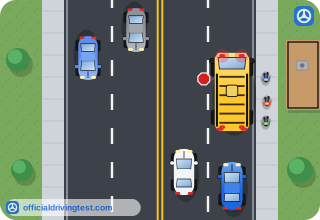
- Stop only if the bus is on a two-lane road
- Stop and stay stopped
- Slow down and pass on the left
- Pass only if no children are visible
Show answer
Correct answer: Stop and stay stopped
A driver must always stop on any highway when behind the bus.
Source: South Carolina Driver's Manual (2026 (posted April 2026)), page 7-10 · Open this page in the manual (Manual page 7-10)
-
What should you do when you pass a bicyclist?
- Sound your horn and keep your speed so that you pass the bicyclist as quickly as you can
- Pass as close to the bicyclist as possible to finish the pass quickly
- Slow down and leave as much space as possible between you and the bicyclist
- Speed up so you are alongside the bicyclist for as short a time as you can
Show answer
Correct answer: Slow down and leave as much space as possible between you and the bicyclist
Slow down, leave as much space as possible between you and the bicyclist, and consider the bicyclist's speed.
Source: South Carolina Driver's Manual (2026 (posted April 2026)), page 7-16 · Open this page in the manual (Manual page 7-16)
-
Who should you give extra space to?
- Only pedestrians who are crossing in a marked crosswalk
- Only bicyclists who are riding in a marked bike lane
- Pedestrians and bicyclists, especially children and the elderly
- Only children who are walking next to the roadway
Show answer
Correct answer: Pedestrians and bicyclists, especially children and the elderly
The manual says to give extra space to pedestrians, especially children and the elderly, and to bicyclists.
Source: South Carolina Driver's Manual (2026 (posted April 2026)), page 8-8 · Open this page in the manual (Manual page 8-8)
-
When a tractor trailer is passing you, what should you do to leave a little more space?
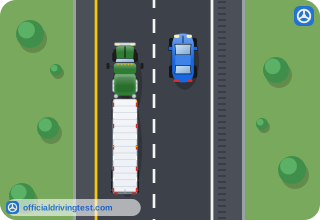
- Move to the portion of your lane nearest the tractor trailer
- Move to the outside portion of your lane, away from the tractor trailer
- Slow down sharply and stay centered in your lane
- Speed up to stay beside the tractor trailer's cab
Show answer
Correct answer: Move to the outside portion of your lane, away from the tractor trailer
You leave extra room by moving to the outside of your lane, away from the passing tractor trailer.
Source: South Carolina Driver's Manual (2026 (posted April 2026)), page 8-8 · Open this page in the manual (Manual page 8-8)
-
How does the manual describe bicycles when they are on roadways?
- They are considered vehicles
- They are considered pedestrians
- They are considered exempt from traffic laws
- They are considered special equipment
Show answer
Correct answer: They are considered vehicles
On roadways, bicycles are considered vehicles.
Source: South Carolina Driver's Manual (2026 (posted April 2026)), page 10-2 · Open this page in the manual (Manual page 10-2)
-
Which rules of the road are bicyclists required and expected to follow?
- Only the rules that apply to pedestrians
- Only the rules posted on signs
- The same rules as motorized vehicles
- Fewer rules, because they are slower
Show answer
Correct answer: The same rules as motorized vehicles
Bicyclists are required and expected to follow the same rules of the road as motorized vehicles.
Source: South Carolina Driver's Manual (2026 (posted April 2026)), page 10-2 · Open this page in the manual (Manual page 10-2)
-
How does the manual describe a skillful bicyclist?
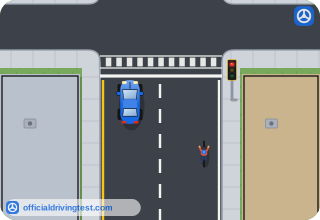
- Swerves to show where they are going
- Rides predictably and holds a steady line
- Always rides on the sidewalk
- Rides in the middle of the lane at all times
Show answer
Correct answer: Rides predictably and holds a steady line
A skillful bicyclist rides predictably and holds a steady line.
Source: South Carolina Driver's Manual (2026 (posted April 2026)), page 10-3 · Open this page in the manual (Manual page 10-3)
-
You see an unskillful bicyclist who swerves unpredictably and ignores traffic signs and signals. What should you be ready for?
- A sudden stop by every other driver
- A turn signal from the bicyclist
- The bicyclist to stay in one line
- Any sudden movements
Show answer
Correct answer: Any sudden movements
If you see an unskillful bicyclist, you should be ready for any sudden movements.
Source: South Carolina Driver's Manual (2026 (posted April 2026)), page 10-3 · Open this page in the manual (Manual page 10-3)
-
A bicycle path or bike lane crosses the road you are driving on. Who yields the right-of-way?
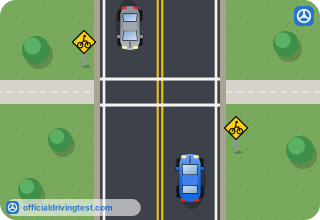
- The bicyclist yields
- The faster of the two yields
- You yield
- Whoever arrives second yields
Show answer
Correct answer: You yield
Drivers must yield right-of-way when a bicycle path or bike lane intersects a road.
Source: South Carolina Driver's Manual (2026 (posted April 2026)), page 10-3 · Open this page in the manual (Manual page 10-3)
-
When may you stop, park, or drive on a designated bicycle path or lane?
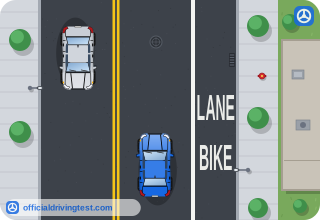
- When the road ahead is crowded
- When entering or leaving an alley or driveway
- When you need to pass a slower vehicle
- When you are turning right at an intersection
Show answer
Correct answer: When entering or leaving an alley or driveway
You may use a bike lane only to enter or leave an alley or driveway, for official duties, when directed by an officer, or in an emergency.
Source: South Carolina Driver's Manual (2026 (posted April 2026)), page 10-3 · Open this page in the manual (Manual page 10-3)
-
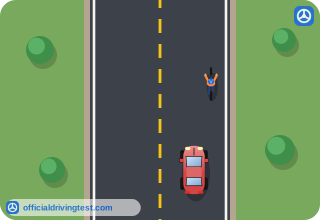
When approaching or passing a bicyclist, what should you do?
- Pass as closely as possible to save time
- Sound your horn and speed up
- Stay close behind and flash your lights
- Allow as much space as possible and slow down
Show answer
Correct answer: Allow as much space as possible and slow down
The manual says to allow as much space as possible and slow down when approaching or passing a bicyclist.
Source: South Carolina Driver's Manual (2026 (posted April 2026)), page 10-3 · Open this page in the manual (Manual page 10-3)
-
Why should you avoid slowing down or stopping quickly near bicyclists?
- A bicycle’s brakes are more powerful than a car’s, so it can always stop faster
- Bicyclists cannot see brake lights, so they will pass you
- A motor vehicle’s brakes are more powerful than a bicycle’s, so you could cause a collision
- Stopping quickly would damage your tires
Show answer
Correct answer: A motor vehicle’s brakes are more powerful than a bicycle’s, so you could cause a collision
A motor vehicle’s brakes are more powerful than a bicycle’s, so slowing down or stopping quickly near a bicyclist could cause a collision.
Source: South Carolina Driver's Manual (2026 (posted April 2026)), page 10-3 · Open this page in the manual (Manual page 10-3)
-
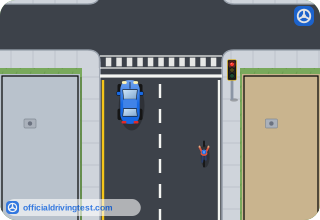
When may you sound your horn close to bicyclists?
- Whenever you want to pass them
- When there is a chance of a collision
- Whenever you approach them from behind
- Whenever they ride on the shoulder
Show answer
Correct answer: When there is a chance of a collision
The horn can startle bicyclists and make them steer into your path, so use it only when a collision is possible.
Source: South Carolina Driver's Manual (2026 (posted April 2026)), page 10-3 · Open this page in the manual (Manual page 10-3)
-
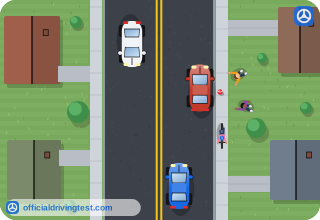
You see children riding bikes on the sidewalk. What should you watch for?
- They will stay on the sidewalk
- They will stop at every driveway
- They will signal before entering the road
- They may come onto the road
Show answer
Correct answer: They may come onto the road
The manual warns that children riding on the sidewalk may come onto the road, so you watch for bicyclists entering your lane.
Source: South Carolina Driver's Manual (2026 (posted April 2026)), page 10-4 · Open this page in the manual (Manual page 10-4)
-
What should you avoid doing around a bicyclist?
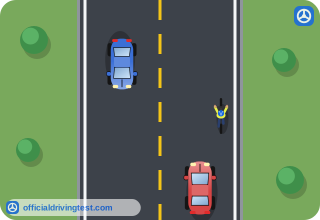
- Turning sharply in front of the bicyclist or forcing the bicyclist off the road
- Staying behind the bicyclist at a safe distance until it is safe to pass
- Slowing down as you approach the bicyclist
- Checking over your shoulder before you pass
Show answer
Correct answer: Turning sharply in front of the bicyclist or forcing the bicyclist off the road
The manual says to avoid turning sharply in front of a bicyclist and not to force a bicyclist off the road.
Source: South Carolina Driver's Manual (2026 (posted April 2026)), page 10-4 · Open this page in the manual (Manual page 10-4)
-
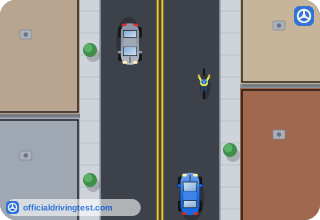
Bicyclists are required to ride in the direction of traffic. Where should you look for them?
- Only at the right edge of the road
- Only in bike lanes
- Anywhere on the roadway
- Only on the sidewalk
Show answer
Correct answer: Anywhere on the roadway
Although bicyclists must ride with traffic, the manual says to look for them riding anywhere on the roadway.
Source: South Carolina Driver's Manual (2026 (posted April 2026)), page 10-4 · Open this page in the manual (Manual page 10-4)
-
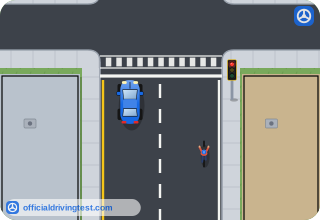
When should you be particularly careful around bicyclists?
- When the road is dry and clean
- When the road is wet or covered with sand or gravel
- When the bicyclist is wearing bright clothes
- When the bicyclist is riding in a bike lane
Show answer
Correct answer: When the road is wet or covered with sand or gravel
Wet roads and sand or gravel affect bicycles much more than vehicles, so extra care is needed.
Source: South Carolina Driver's Manual (2026 (posted April 2026)), page 10-4 · Open this page in the manual (Manual page 10-4)
-
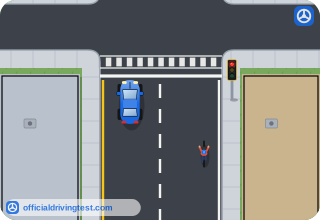
What are bicyclists required to do when turning and stopping?
- Sound a horn
- Walk the bicycle
- Pull off the road and wait
- Use hand signals
Show answer
Correct answer: Use hand signals
Bicyclists are required to use hand signals when turning and stopping.
Source: South Carolina Driver's Manual (2026 (posted April 2026)), page 10-4 · Open this page in the manual (Manual page 10-4)
-
What other clues of a bicyclist’s intent should you look for, since the bicyclist may not signal?
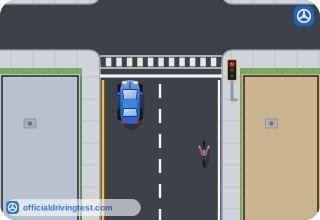
- Turning the head or looking over the shoulder
- Ringing a bell or waving to you before turning
- Riding closer to the center line
- Pedaling faster
Show answer
Correct answer: Turning the head or looking over the shoulder
The manual lists turning the head or looking over the shoulder before changing lane positions as clues to a bicyclist’s intent.
Source: South Carolina Driver's Manual (2026 (posted April 2026)), page 10-4 · Open this page in the manual (Manual page 10-4)
-
A bicyclist ahead holds the left arm straight out to the left. What is the bicyclist about to do?
- Make a right turn
- Stop
- Make a left turn
- Let you pass
Show answer
Correct answer: Make a left turn
A left arm held straight out to the left is the bicyclist’s hand signal for a left turn.
Source: South Carolina Driver's Manual (2026 (posted April 2026)), page 10-4 · Open this page in the manual (Manual page 10-4)
-
A bicyclist ahead holds the left arm out to the side, angled downward with the hand pointing down. What is the bicyclist signaling?
- A left turn
- A stop
- A right turn
- That you may pass
Show answer
Correct answer: A stop
An arm angled down with the hand pointing down is the bicyclist’s hand signal for stopping.
Source: South Carolina Driver's Manual (2026 (posted April 2026)), page 10-4 · Open this page in the manual (Manual page 10-4)
-
A bicyclist ahead holds the left arm bent upward at the elbow, or holds the right arm straight out to the right. What is the bicyclist signaling?
- A left turn
- A stop
- That the bicyclist is slowing to let you pass
- A right turn
Show answer
Correct answer: A right turn
Either a left arm bent upward or a right arm held straight out is a bicyclist’s hand signal for a right turn.
Source: South Carolina Driver's Manual (2026 (posted April 2026)), page 10-5 · Open this page in the manual (Manual page 10-5)
-
When you are parked on the street, what should you check before you open your vehicle door?
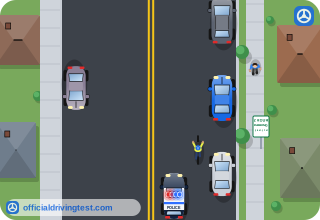
- The sides and rear of the vehicle for bicyclists
- The front of the vehicle for pedestrians
- Your mirrors for passing police vehicles
- The curb for a parking sign
Show answer
Correct answer: The sides and rear of the vehicle for bicyclists
Before opening a door on the street, check the sides and rear of the vehicle for bicyclists.
Source: South Carolina Driver's Manual (2026 (posted April 2026)), page 10-5 · Open this page in the manual (Manual page 10-5)
-
Where should you be especially cautious about bicyclists in your path when backing up?
- Only on multi-lane divided highways
- Only in construction zones
- Near schools or residential areas
- Only at railroad crossings
Show answer
Correct answer: Near schools or residential areas
Bicyclists are more likely to be present near schools and residential areas, so check your path before backing.
Source: South Carolina Driver's Manual (2026 (posted April 2026)), page 10-5 · Open this page in the manual (Manual page 10-5)
-
How do the rights and responsibilities of motorcyclists compare with those of other drivers?
- Motorcyclists have fewer responsibilities
- Motorcyclists have the same rights and responsibilities
- Motorcyclists have the right-of-way in every lane
- Motorcyclists must yield to all other vehicles
Show answer
Correct answer: Motorcyclists have the same rights and responsibilities
The manual says motorcyclists have the same rights and responsibilities as other drivers, though they may be harder to see.
Source: South Carolina Driver's Manual (2026 (posted April 2026)), page 10-5 · Open this page in the manual (Manual page 10-5)
-
How much of a lane should you allow a motorcyclist?
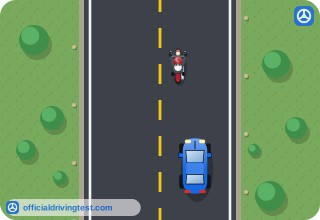
- Half of the lane
- Only the space left by your vehicle
- The width of two motorcycles
- A full lane width
Show answer
Correct answer: A full lane width
A motorcyclist should be allowed a full lane width; you must not share the lane.
Source: South Carolina Driver's Manual (2026 (posted April 2026)), page 10-5 · Open this page in the manual (Manual page 10-5)
-
Why does the manual say you should always check your mirrors and blind spots for motorcycles?
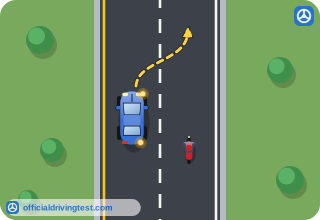
- Motorcycles are small and therefore more difficult to see
- Motorcycles always travel faster than other traffic
- Motorcycles are not allowed in the left lane
- Motorcycle riders cannot see vehicles beside them
Show answer
Correct answer: Motorcycles are small and therefore more difficult to see
Motorcycles are small and therefore more difficult to see, so always check your mirrors and blind spots for them.
Source: South Carolina Driver's Manual (2026 (posted April 2026)), page 10-6 · Open this page in the manual (Manual page 10-6)
-
Before turning left, where should you look carefully for motorcycles?
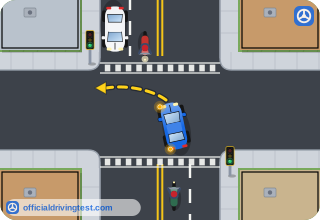
- Behind your vehicle, in your mirrors
- Far down the road ahead of the intersection
- To the front and sides of your vehicle
- Over your right shoulder only
Show answer
Correct answer: To the front and sides of your vehicle
Before a left turn you should check carefully in front of and beside your vehicle for motorcycles.
Source: South Carolina Driver's Manual (2026 (posted April 2026)), page 10-6 · Open this page in the manual (Manual page 10-6)
-
You see a motorcycle with its turn signal flashing. What should you do?
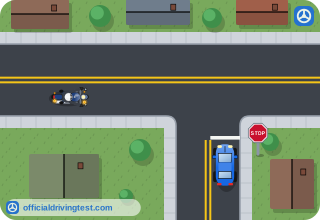
- Assume it is turning and proceed at once
- Wait until you are sure the rider will turn
- Sound your horn to warn the rider
- Move up close behind it to watch its next move
Show answer
Correct answer: Wait until you are sure the rider will turn
Motorcycle turn signals may not cancel by themselves, so the rider may have forgotten to turn them off. Wait until you are sure the rider will turn.
Source: South Carolina Driver's Manual (2026 (posted April 2026)), page 10-7 · Open this page in the manual (Manual page 10-7)
-
What minimum following distance should you allow when following a motorcyclist?
- 2 seconds
- 3 seconds
- 6 seconds
- 4 seconds
Show answer
Correct answer: 4 seconds
The manual says to allow a minimum of 4 seconds behind a motorcyclist, and more in wet conditions.
Source: South Carolina Driver's Manual (2026 (posted April 2026)), page 10-7 · Open this page in the manual (Manual page 10-7)
-
Which of these may force a motorcyclist to suddenly change speed or lane position?
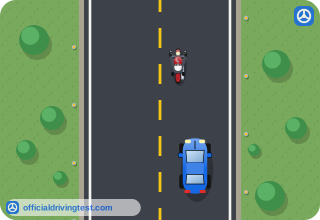
- A dry, smooth, straight road
- A wide, empty road shoulder
- Light traffic on a multilane road
- Gravel on the pavement
Show answer
Correct answer: Gravel on the pavement
Potholes, gravel, slippery surfaces, pavement seams, railroad crossings and grooved pavement are hazards that riders may have to avoid suddenly.
Source: South Carolina Driver's Manual (2026 (posted April 2026)), page 10-7 · Open this page in the manual (Manual page 10-7)
-
How does the speed of scooters and mopeds compare with that of motorcycles?
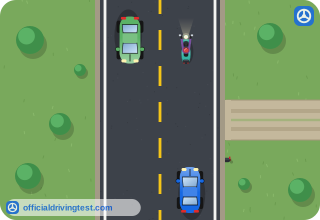
- They travel at about the same speeds
- They travel at much slower speeds
- They travel at much higher speeds
- They travel faster only on hills
Show answer
Correct answer: They travel at much slower speeds
The manual reminds drivers that scooters and mopeds move much more slowly than motorcycles.
Source: South Carolina Driver's Manual (2026 (posted April 2026)), page 10-7 · Open this page in the manual (Manual page 10-7)
-
How do commercial vehicles generally compare with cars?
- They are larger but more easily maneuverable
- They are smaller and more easily maneuverable
- They are larger and less easily maneuverable
- They are smaller but harder to see around
Show answer
Correct answer: They are larger and less easily maneuverable
Commercial vehicles are generally larger than cars and not as easy to maneuver.
Source: South Carolina Driver's Manual (2026 (posted April 2026)), page 10-7 · Open this page in the manual (Manual page 10-7)
-
Compared with cars, how large are the blind spots of commercial vehicles?
- Much larger
- About the same size
- Slightly smaller
- Much smaller
Show answer
Correct answer: Much larger
Commercial vehicles have much larger blind spots than cars.
Source: South Carolina Driver's Manual (2026 (posted April 2026)), page 10-7 · Open this page in the manual (Manual page 10-7)
-
Which statement about commercial vehicles compared with cars is correct?
- Shorter stopping distances, but more room to turn than cars
- Quicker acceleration than cars, and more room to turn
- Longer stopping and accelerating distances, and more room to turn
- Less room to turn, but longer stopping distances than cars
Show answer
Correct answer: Longer stopping and accelerating distances, and more room to turn
Commercial vehicles take longer to stop and to speed up, and they need more room to turn.
Source: South Carolina Driver's Manual (2026 (posted April 2026)), page 10-7 · Open this page in the manual (Manual page 10-7)
-
What is the "no zone" around a large truck or bus?
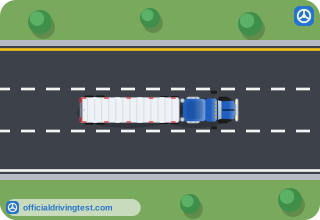
- The area where vehicles disappear into the driver's blind spots
- The area in front of it where passing is not allowed
- The distance behind it where following is against the law
- The area around it where it may not stop
Show answer
Correct answer: The area where vehicles disappear into the driver's blind spots
The no zone is made up of the blind spots around a large truck or bus where the driver cannot see other vehicles.
Source: South Carolina Driver's Manual (2026 (posted April 2026)), page 10-8 · Open this page in the manual (Manual page 10-8)
-
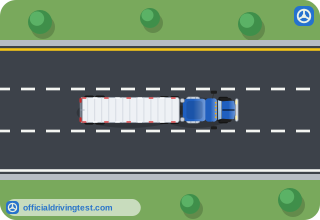
Where are the blind spots of large trucks and buses located?
- Only on the sides and the rear
- Only at the front and the rear
- Only on the right side
- On the sides, rear, and front
Show answer
Correct answer: On the sides, rear, and front
A large commercial vehicle has blind spots on its sides, at its rear and at its front.
Source: South Carolina Driver's Manual (2026 (posted April 2026)), page 10-8 · Open this page in the manual (Manual page 10-8)
-
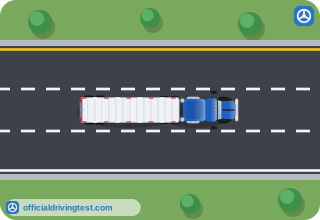
On which side do trucks have a larger blind spot?
- The left side
- The right side
- Both sides equally
- Neither side, only the rear
Show answer
Correct answer: The right side
A truck's blind spot is larger on its right side, starting behind the cab and extending up to the length of the truck.
Source: South Carolina Driver's Manual (2026 (posted April 2026)), page 10-8 · Open this page in the manual (Manual page 10-8)
-
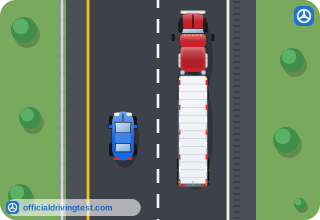
You cannot see a truck driver's face in the truck's side view mirror. What does this mean?
- The driver can see you only when braking
- The driver cannot see you
- You are in a safe position to pass
- The driver's mirror is out of adjustment
Show answer
Correct answer: The driver cannot see you
If you cannot see the driver's face in the side mirror, the driver cannot see you.
Source: South Carolina Driver's Manual (2026 (posted April 2026)), page 10-8 · Open this page in the manual (Manual page 10-8)
-
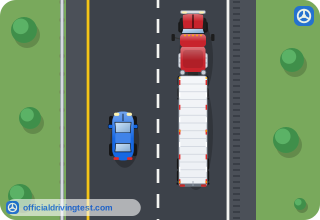
How long should you drive alongside a large vehicle?
- Until the driver signals
- As long as you stay in your lane
- Only while it is climbing a hill
- No longer than required
Show answer
Correct answer: No longer than required
Driving beside a large vehicle raises the chance of a collision if the driver swerves or changes lanes, so avoid it longer than necessary.
Source: South Carolina Driver's Manual (2026 (posted April 2026)), page 10-8 · Open this page in the manual (Manual page 10-8)
-
Under ideal conditions, what minimum distance does a loaded truck with good tires and properly adjusted brakes need to stop from 55 mph?
- 335 feet
- 165 feet
- 225 feet
- 450 feet
Show answer
Correct answer: 335 feet
The manual states a loaded truck traveling 55 mph needs a minimum of 335 feet to stop.
Source: South Carolina Driver's Manual (2026 (posted April 2026)), page 10-9 · Open this page in the manual (Manual page 10-9)
-
How does the stopping distance of a loaded truck at 55 mph compare with that of a car?
- About the same distance
- Slightly shorter than a car's
- Greater than 1½ times as long
- Less than half a car's distance
Show answer
Correct answer: Greater than 1½ times as long
A loaded truck needs more than 1½ times the stopping distance of a car.
Source: South Carolina Driver's Manual (2026 (posted April 2026)), page 10-9 · Open this page in the manual (Manual page 10-9)
-
Because large vehicles take longer to stop, what is essential?
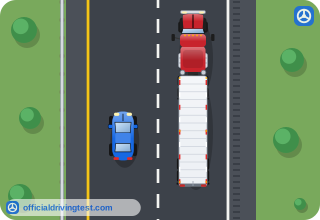
- Not to enter a roadway or change lanes in front of a large vehicle
- To change lanes quickly in front of one to keep traffic moving
- To brake hard after you pull in front of one
- To drive beside one until its driver signals
Show answer
Correct answer: Not to enter a roadway or change lanes in front of a large vehicle
Since a large vehicle needs so much room to stop, you should never pull out or change lanes right in front of it.
Source: South Carolina Driver's Manual (2026 (posted April 2026)), page 10-9 · Open this page in the manual (Manual page 10-9)
-
What should you do before pulling in front of a large vehicle that you are passing?
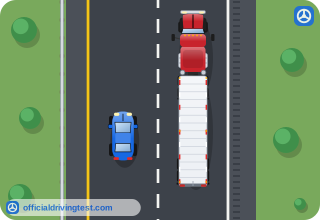
- Slow down as soon as you are beside its cab
- Check that its right turn signal is switched on
- Look for its whole front in your rear-view mirror
- Flash your headlights to tell its driver you are there
Show answer
Correct answer: Look for its whole front in your rear-view mirror
You should be able to see the whole front of the large vehicle in your rear-view mirror before you move in front of it.
Source: South Carolina Driver's Manual (2026 (posted April 2026)), page 10-9 · Open this page in the manual (Manual page 10-9)
-
When passing a large vehicle, what should you be sure to do with your speed?
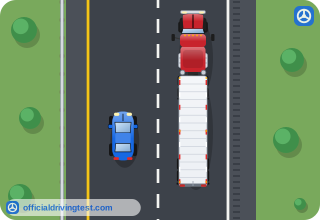
- Slow down as you pull in front
- Maintain it
- Speed up sharply, then brake
- Reduce it until the vehicle passes you
Show answer
Correct answer: Maintain it
The manual says to be sure to maintain your speed when passing a large vehicle.
Source: South Carolina Driver's Manual (2026 (posted April 2026)), page 10-9 · Open this page in the manual (Manual page 10-9)
-
How far behind a large vehicle can its rear no zone extend?
- Up to 50 feet
- Up to 100 feet
- Up to 500 feet
- Up to 200 feet
Show answer
Correct answer: Up to 200 feet
Large vehicles have huge blind spots directly behind them that extend up to 200 feet.
Source: South Carolina Driver's Manual (2026 (posted April 2026)), page 10-9 · Open this page in the manual (Manual page 10-9)
-
If you follow a large vehicle too closely and it brakes or stops suddenly, what could happen?
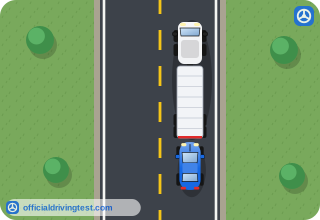
- Its driver sees you in the mirror and speeds up
- Its brake lights give you extra room to stop
- The vehicle swerves behind you
- You have no place to go and could run into it
Show answer
Correct answer: You have no place to go and could run into it
Inside the rear no zone you cannot see ahead, so a sudden stop leaves you with nowhere to go.
Source: South Carolina Driver's Manual (2026 (posted April 2026)), page 10-9 · Open this page in the manual (Manual page 10-9)
-
When following a large vehicle, how should you position your vehicle?
- Directly behind it, as close as you can safely get
- So the driver can see it in the side mirrors
- Where the driver cannot see you, to stay out of the way
- Alongside its cab, in the right-side blind spot
Show answer
Correct answer: So the driver can see it in the side mirrors
Position yourself so the driver can see your vehicle in his or her side mirrors.
Source: South Carolina Driver's Manual (2026 (posted April 2026)), page 10-10 · Open this page in the manual (Manual page 10-10)
-
About how fast must large vehicles drive when traveling up or down steep hills?
- Approximately 15 mph
- Approximately 25 mph
- Approximately 35 mph
- Approximately 45 mph
Show answer
Correct answer: Approximately 35 mph
On steep hills large vehicles must drive slowly, at approximately 35 mph, and therefore use the right lane.
Source: South Carolina Driver's Manual (2026 (posted April 2026)), page 10-10 · Open this page in the manual (Manual page 10-10)
-
Near truck weigh stations, which lane should you avoid driving in, if possible?
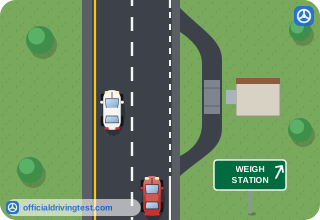
- The right lane
- The left lane
- The middle lane
- None, every lane is equally safe
Show answer
Correct answer: The right lane
Large vehicles re-enter faster traffic near weigh stations, so avoid the right lane there if possible.
Source: South Carolina Driver's Manual (2026 (posted April 2026)), page 10-10 · Open this page in the manual (Manual page 10-10)
-
What should you give large vehicles that are turning?
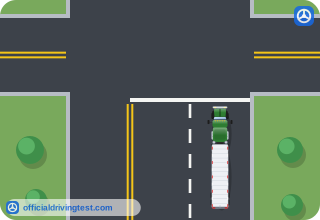
- A short horn blast as a warning
- A tight gap to squeeze past on the right
- Plenty of room to maneuver
- Your headlights flashed as a signal
Show answer
Correct answer: Plenty of room to maneuver
Pay attention to the turn signals of large vehicles and give them plenty of room to maneuver.
Source: South Carolina Driver's Manual (2026 (posted April 2026)), page 10-10 · Open this page in the manual (Manual page 10-10)
-
Why might a truck or bus driver swing the vehicle wide to the left before turning right?
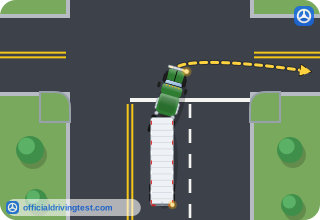
- To clear the corner of a curb or other obstruction
- To let faster traffic pass it safely on the right side
- To warn nearby drivers that its brakes are failing
- To show other drivers that it will turn left next
Show answer
Correct answer: To clear the corner of a curb or other obstruction
The driver may swing wide to the left so that the vehicle can safely clear the corner of a curb or other obstruction.
Source: South Carolina Driver's Manual (2026 (posted April 2026)), page 10-10 · Open this page in the manual (Manual page 10-10)
-
To avoid a collision with a truck or bus that is making a turn, what should you do?
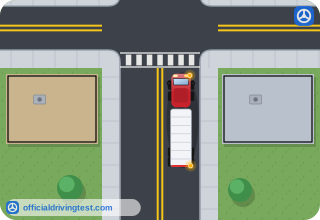
- Move in between it and the curb
- Turn at the same time, beside it
- Honk and edge ahead of it
- Wait until it completes its turn
Show answer
Correct answer: Wait until it completes its turn
If you get between a turning truck or bus and the curb you can be squeezed, so wait until its turn is finished.
Source: South Carolina Driver's Manual (2026 (posted April 2026)), page 10-10 · Open this page in the manual (Manual page 10-10)
-
When you meet a truck coming from the opposite direction, what should you do?
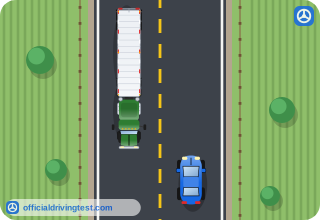
- Move toward the center line to give it room
- Keep as far to the right as possible
- Brake hard and stop in the roadway
- Speed up to get past it quickly
Show answer
Correct answer: Keep as far to the right as possible
Staying far to the right avoids a side-swept collision and reduces the wind turbulence that pushes the vehicles apart.
Source: South Carolina Driver's Manual (2026 (posted April 2026)), page 10-11 · Open this page in the manual (Manual page 10-11)
-
Many collisions with large vehicles at intersections occur because motorists cannot accurately judge what before turning left?
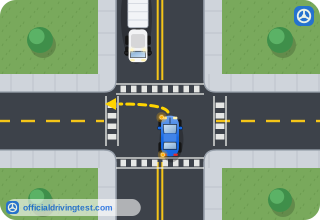
- The length of the truck's trailer
- The speed of an approaching truck
- The height of the truck
- The distance to the stop line
Show answer
Correct answer: The speed of an approaching truck
Drivers have trouble judging how fast an approaching truck is moving before they turn left in front of it.
Source: South Carolina Driver's Manual (2026 (posted April 2026)), page 10-11 · Open this page in the manual (Manual page 10-11)
-
What should you do if you are in doubt about the speed of an oncoming truck or bus when you want to turn left?
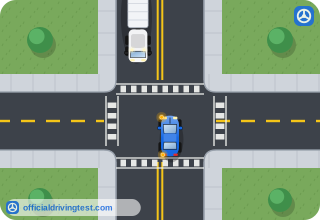
- Turn left quickly before it arrives
- Flash your lights so it slows down
- Turn only if its driver signals
- Do not turn left in its path
Show answer
Correct answer: Do not turn left in its path
A truck or bus may be going faster than you think and takes longer to stop, so do not turn left in its path.
Source: South Carolina Driver's Manual (2026 (posted April 2026)), page 10-11 · Open this page in the manual (Manual page 10-11)
-
How do stop lines at intersections help larger vehicles?
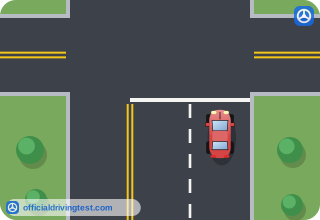
- They set you farther back, giving more turning space
- They show trucks the correct lane to use for a turn
- They require trucks to stop sooner than other vehicles
- They mark the place where trucks must park at night
Show answer
Correct answer: They set you farther back, giving more turning space
Stopping behind the line keeps you farther back, which leaves larger vehicles more space to turn.
Source: South Carolina Driver's Manual (2026 (posted April 2026)), page 10-11 · Open this page in the manual (Manual page 10-11)
-
At an intersection marked with a stop line, where should you always stop?
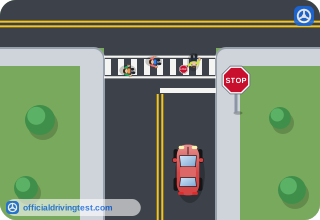
- On the stop line
- Just past the stop line
- Behind the stop line
- In the crosswalk beyond it
Show answer
Correct answer: Behind the stop line
The manual says to always stop behind stop lines.
Source: South Carolina Driver's Manual (2026 (posted April 2026)), page 10-11 · Open this page in the manual (Manual page 10-11)
-
Which of these should you never do around a large vehicle?
- Cut it off to beat it into a single-lane construction zone
- Look for its whole front in your mirror when passing
- Keep as far right as possible when meeting it
- Stay behind the stop line at an intersection
Show answer
Correct answer: Cut it off to beat it into a single-lane construction zone
The manual says not to cut off a large vehicle to reach an exit or turn or to beat it into a single-lane construction zone; the few seconds saved are not worth a life.
Source: South Carolina Driver's Manual (2026 (posted April 2026)), page 10-11 · Open this page in the manual (Manual page 10-11)
-
A fluorescent or reflective orange and red triangle is displayed on the rear of a farm vehicle. What does it mean?
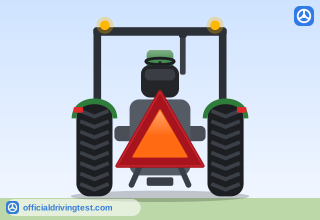
- The vehicle is traveling less than 15 mph
- The vehicle is carrying an oversize load
- The vehicle is stopped for repairs
- The vehicle is traveling less than 25 mph
Show answer
Correct answer: The vehicle is traveling less than 25 mph
The orange and red triangle on a farm, construction or animal-drawn vehicle means it is traveling less than 25 mph.
Source: South Carolina Driver's Manual (2026 (posted April 2026)), page 10-16 · Open this page in the manual (Manual page 10-16)
-
Before passing a slow-moving vehicle, what must you be sure of?
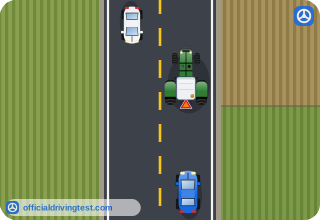
- That the driver has waved you around
- That it is safe to pass
- That your horn works
- That the vehicle is traveling under 45 mph
Show answer
Correct answer: That it is safe to pass
Use caution approaching a slow-moving vehicle and make sure passing is safe.
Source: South Carolina Driver's Manual (2026 (posted April 2026)), page 10-16 · Open this page in the manual (Manual page 10-16)
-
Why should you pass farm machinery with caution?
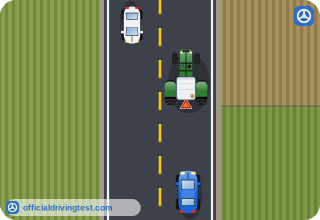
- It is not allowed to travel on state highways at all
- Its operator always signals well before every turn
- Its operator most likely cannot hear approaching vehicles
- Its operator must pull over for every vehicle behind it
Show answer
Correct answer: Its operator most likely cannot hear approaching vehicles
The noise of farm machinery means its operator most likely cannot hear you coming.
Source: South Carolina Driver's Manual (2026 (posted April 2026)), page 10-16 · Open this page in the manual (Manual page 10-16)
-
What rights do animal-drawn vehicles and horseback riders have on the road?
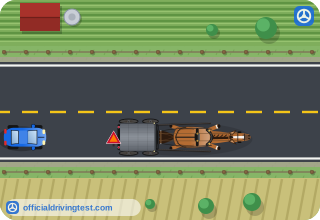
- The same rights as a motor vehicle, and they must follow the same rules
- They may use the road only when no motor vehicles are present
- They must use the shoulder and yield to every motor vehicle
- They may use the road only in rural areas on weekends
Show answer
Correct answer: The same rights as a motor vehicle, and they must follow the same rules
Animal-drawn vehicles and horseback riders share the road with the same rights and rules as motor vehicles.
Source: South Carolina Driver's Manual (2026 (posted April 2026)), page 10-16 · Open this page in the manual (Manual page 10-16)
-
When passing an animal-drawn vehicle or horseback rider, what should you not do?
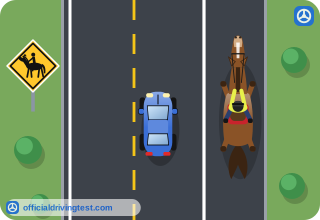
- Pass with caution
- Watch for posted warning signs
- Use your horn or rev your engine
- Anticipate left turns into fields
Show answer
Correct answer: Use your horn or rev your engine
A horn or revving engine may scare the animal and cause a collision.
Source: South Carolina Driver's Manual (2026 (posted April 2026)), page 10-16 · Open this page in the manual (Manual page 10-16)
-
What turns should you anticipate from animal-drawn vehicles?
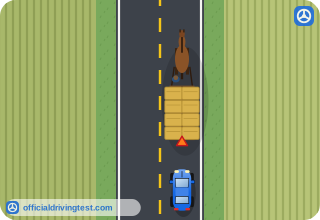
- Left turns into fields and driveways
- Right turns into side streets
- U-turns on the highway
- Left turns across railroad tracks
Show answer
Correct answer: Left turns into fields and driveways
The manual says to anticipate left turns that animal-drawn vehicles make into fields and driveways.
Source: South Carolina Driver's Manual (2026 (posted April 2026)), page 10-16 · Open this page in the manual (Manual page 10-16)