Pennsylvania: Pavement markings Practice Test
White and yellow lines, lane-use signals, and pavement symbols.
Independent educational site · not affiliated with any government agency or DMV
Ready? Test yourself
Answer to start, or tap Start below:
Most roads have permanent pavement markings that primarily show:
- Instant feedback with an explanation
- Every answer cites its source in the manual
- Your best score is saved on this device
- Keyboard: press 1 to 4 to answer and Enter for the next question
Questions are original and based on the official manual "Pennsylvania Driver's Manual" (Pub 95), Pennsylvania Department of Transportation (PennDOT), Bureau of Driver Licensing.
All 20 questions in this practice test
Take the test above first, then use this list to study. Tap “Show answer” to see the correct answer and explanation.
Show the questions and answersHide the questions
-
Most roads have permanent pavement markings that primarily show:
- The posted speed limit
- The location of the nearest exit
- Where school buses may stop
- The road's center, lanes or edges
Show answer
Correct answer: The road's center, lanes or edges
Most roads have permanent markings to show the center of the road, travel lanes or road edges.
Source: Pennsylvania Driver's Manual (Pub 95), page 22 · Open this page in the manual (Manual page 22)
-
Yellow pavement lines are used to:
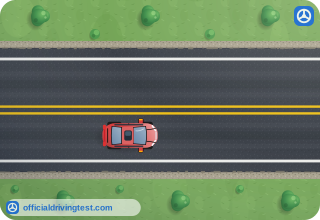
- Divide traffic traveling in opposite directions
- Divide lanes of traffic traveling in the same direction
- Mark the right edge of a one-way street
- Indicate a bike lane only
Show answer
Correct answer: Divide traffic traveling in opposite directions
Yellow lines divide traffic traveling in opposite directions and are used to mark the center of two-lane roads and the left edge of divided highways, one-way streets and ramps.
Source: Pennsylvania Driver's Manual (Pub 95), page 22 · Open this page in the manual (Manual page 22)
-
Solid white pavement lines are used to:
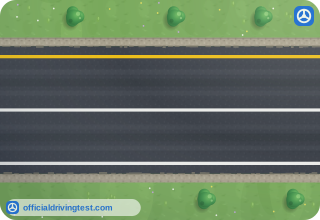
- Divide traffic traveling in opposite directions
- Divide lanes of traffic traveling in the same direction
- Mark the center of a two-lane road
- Mark the left edge of a divided highway
Show answer
Correct answer: Divide lanes of traffic traveling in the same direction
Solid white lines divide lanes of traffic traveling in the same direction and are also used to mark the right edge of the road.
Source: Pennsylvania Driver's Manual (Pub 95), page 22 · Open this page in the manual (Manual page 22)
-
As a general rule in Pennsylvania, pavement lines that may be legally crossed (except in special turning situations) are:
- Solid lines only
- Double lines of any color
- Broken lines
- Neither broken nor solid lines may ever be crossed
Show answer
Correct answer: Broken lines
As a general rule, broken traffic lines can be crossed and solid lines cannot, except when making a turn.
Source: Pennsylvania Driver's Manual (Pub 95), page 22 · Open this page in the manual (Manual page 22)
-
A single, broken yellow centerline on a two-way, two-lane road means:
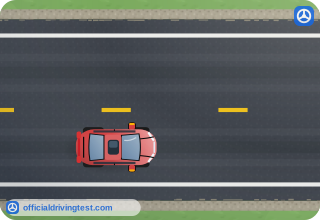
- Passing is never allowed on this road
- The road is a one-way street
- You must turn on your headlights
- Passing is permitted on either side if safe, using the lane belonging to oncoming traffic
Show answer
Correct answer: Passing is permitted on either side if safe, using the lane belonging to oncoming traffic
A single, broken yellow centerline shows the center of a two-way, two-lane road; passing is permitted on either side if safe conditions exist, using the lane belonging to oncoming traffic.
Source: Pennsylvania Driver's Manual (Pub 95), page 22 · Open this page in the manual (Manual page 22)
-
A double, solid yellow centerline on a two-way road means:
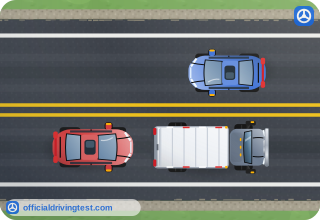
- Passing is not allowed in either direction, even without a sign
- Passing is allowed only during daylight hours
- Passing is allowed only if a NO PASSING sign is not also posted
- Passing is allowed only for the vehicle on the right
Show answer
Correct answer: Passing is not allowed in either direction, even without a sign
A double, solid yellow centerline shows the center of a two-way road; even if it is not marked with a NO PASSING sign, passing by traffic in either direction is not allowed.
Source: Pennsylvania Driver's Manual (Pub 95), page 22 · Open this page in the manual (Manual page 22)
-
Where the centerline is a combination of one solid yellow line and one broken yellow line, you:
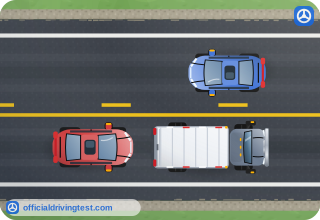
- May pass whenever the road is straight
- May pass if safe when the broken line is on your side
- May never pass on this type of road
- May pass only if the solid yellow line is on your side
Show answer
Correct answer: May pass if safe when the broken line is on your side
You may pass if the broken line is on your side of the road and safe conditions exist, but you may not pass when a solid yellow line is on your side.
Source: Pennsylvania Driver's Manual (Pub 95), page 22 · Open this page in the manual (Manual page 22)
-
On some three-lane or five-lane highways, an outside solid yellow centerline paired with a center turn lane means:
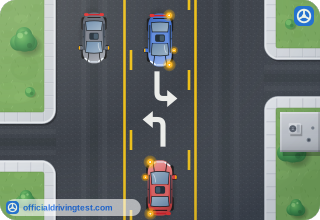
- The center lane may be used for passing
- The center lane is closed to all traffic
- You cannot use the center lane for passing
- The outside lane is for buses only
Show answer
Correct answer: You cannot use the center lane for passing
The outside, solid yellow centerline means you cannot use the center lane for passing.
Source: Pennsylvania Driver's Manual (Pub 95), page 22 · Open this page in the manual (Manual page 22)
-
On a road with a marked center turn lane (bordered by a broken yellow line on the inside and solid yellow on the outside), vehicles traveling in either direction may use that lane only to:
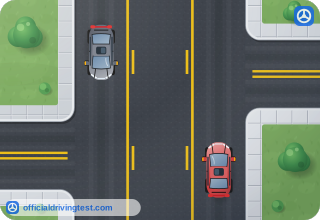
- Pass slower traffic
- Park temporarily
- Make U-turns only
- Make left turns
Show answer
Correct answer: Make left turns
The inside, broken yellow and solid yellow centerlines show vehicles traveling in either direction may use the center lane only to make left turns.
Source: Pennsylvania Driver's Manual (Pub 95), page 22 · Open this page in the manual (Manual page 22)
-
On a multi-lane highway without a median, broken white lines between lanes traveling the same direction mean you:
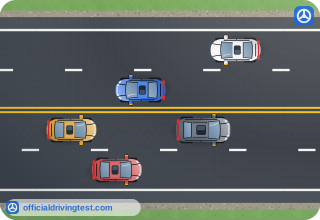
- May cross them to pass if the lane is clear
- May never change lanes
- Must stop before crossing them
- May only cross them to exit the highway
Show answer
Correct answer: May cross them to pass if the lane is clear
Broken white lines show which lanes can be used by vehicles traveling the same way; you may cross them to pass, but be sure the passing lane is clear.
Source: Pennsylvania Driver's Manual (Pub 95), page 22 · Open this page in the manual (Manual page 22)
-
On a multi-lane highway without a median, even though broken white lane lines may be crossed to pass, you may NOT cross:
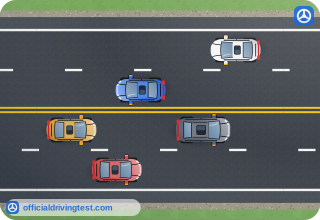
- A single broken white line
- The double yellow centerline separating opposing traffic
- The broken white line to your right, if that lane is clear
- Any pavement arrow
Show answer
Correct answer: The double yellow centerline separating opposing traffic
You may cross the broken white lines to pass, but you may not cross the double yellow centerlines to pass, since traffic is traveling in the opposite direction beyond them.
Source: Pennsylvania Driver's Manual (Pub 95), page 22 · Open this page in the manual (Manual page 22)
-
On most limited-access highways with medians, the right edge of the road is marked with:
- A broken yellow line
- A broken white line
- A solid white line
- A solid yellow line
Show answer
Correct answer: A solid white line
On most limited access highways with medians, the right edge of the road is marked with a solid white line.
Source: Pennsylvania Driver's Manual (Pub 95), page 22 · Open this page in the manual (Manual page 22)
-
On most limited-access highways with medians, the left edge of each side of the roadway is marked with:
- A broken white line
- A broken yellow line
- A double white line
- A solid yellow line
Show answer
Correct answer: A solid yellow line
The left edge of each side of a limited access highway with a median is marked by a solid yellow line.
Source: Pennsylvania Driver's Manual (Pub 95), page 22 · Open this page in the manual (Manual page 22)
-
On most limited-access highways with medians, the traffic lanes on each side are separated by:
- Broken white lines, which may be crossed
- Solid yellow lines, which may not be crossed
- Solid white lines, which may not be crossed
- Double solid white lines
Show answer
Correct answer: Broken white lines, which may be crossed
The traffic lanes for each side of a limited access highway with a median are marked by broken white lines, which may be crossed.
Source: Pennsylvania Driver's Manual (Pub 95), page 22 · Open this page in the manual (Manual page 22)
-
The words 'STOP AHEAD' painted on the pavement before an intersection are an example of a pavement marking that:
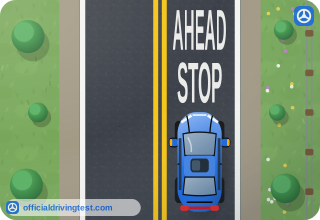
- Replaces the need for a STOP sign
- Supplements a message posted on a sign
- Only applies to trucks
- Is used exclusively in work zones
Show answer
Correct answer: Supplements a message posted on a sign
Pavement markings include words painted on the pavement that supplement messages posted on regulatory and warning signs, such as STOP AHEAD before an intersection with a STOP sign.
Source: Pennsylvania Driver's Manual (Pub 95), page 22 · Open this page in the manual (Manual page 22)
-
White triangles or the word YIELD painted across a lane on the pavement indicate that you must:
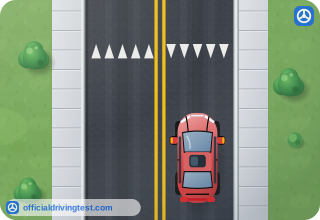
- Come to a complete stop regardless of traffic
- Merge left immediately
- Yield to approaching traffic
- Reduce speed to 15 mph
Show answer
Correct answer: Yield to approaching traffic
YIELD or white triangles painted across the lane indicate you must yield to approaching traffic.
Source: Pennsylvania Driver's Manual (Pub 95), page 22 · Open this page in the manual (Manual page 22)
-
The word 'SCHOOL' painted on the pavement is used to:
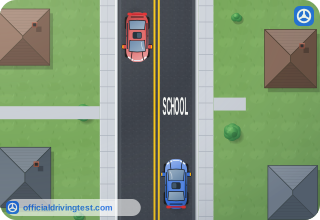
- Mark the location of a school bus stop only
- Indicate a school crossing guard is required
- Mark a bike lane near a school
- Warn drivers they are approaching a school zone
Show answer
Correct answer: Warn drivers they are approaching a school zone
The word SCHOOL is painted on the pavement before a school zone.
Source: Pennsylvania Driver's Manual (Pub 95), page 22 · Open this page in the manual (Manual page 22)
-
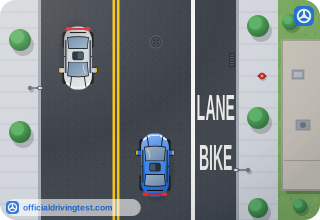
The words 'BIKE LANE' painted on the pavement indicate:
- A lane closed for construction
- A lane reserved for bicyclists
- A passing lane
- A lane for buses only
Show answer
Correct answer: A lane reserved for bicyclists
BIKE LANE is painted on the pavement for a lane reserved for bicyclists.
Source: Pennsylvania Driver's Manual (Pub 95), page 22 · Open this page in the manual (Manual page 22)
-
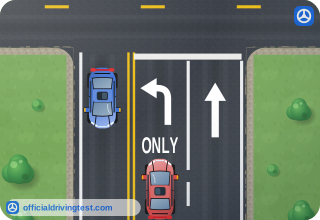
The word 'ONLY' painted on the pavement together with a left or right arrow indicates that lane is reserved:
- For emergency vehicles only
- For carpools only
- For turns only
- For parking only
Show answer
Correct answer: For turns only
ONLY with a left or right arrow indicates the lane is reserved for turns only.
Source: Pennsylvania Driver's Manual (Pub 95), page 22 · Open this page in the manual (Manual page 22)
-
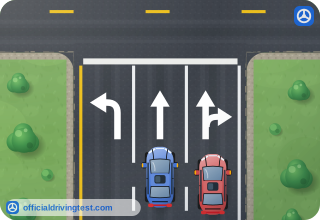
Large white arrows painted on the pavement of a one-way street or a highway off-ramp indicate:
- The location of a speed camera
- A no-passing zone
- A pedestrian crossing
- The direction of travel
Show answer
Correct answer: The direction of travel
Large white arrows indicate the direction of travel on one-way streets and highway off-ramps.
Source: Pennsylvania Driver's Manual (Pub 95), page 22 · Open this page in the manual (Manual page 22)